Introduction
In an age where misinformation can spread like wildfire, ensuring research integrity has never been more crucial. Researchers face the perennial challenge of eliminating bias to provide credible, trustworthy results. Among the myriad of methods available, random assignment stands out as a game-changing technique that not only enhances the reliability of research findings but also fortifies the integrity of the research process itself. But how does random assignment achieve this? In this article, we’ll explore how random assignment eliminates bias and enhances research integrity, drawing from real-world applications, case studies, and expert insights to provide you with a comprehensive understanding of this vital research methodology.
The Core Concept: What Is Random Assignment?
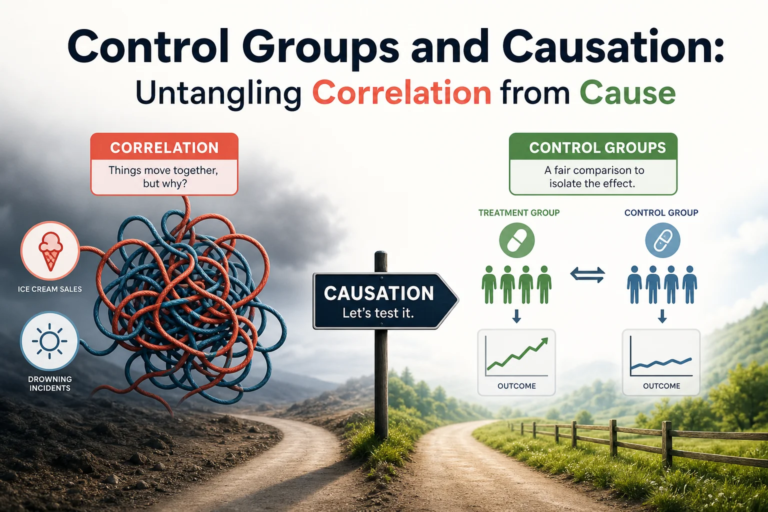
Before delving into its impact, let’s clarify what random assignment entails. In research, random assignment refers to the process of assigning participants to different groups, such as treatment and control groups, in a way that is random and free from biases. This technique ensures that every participant has an equal chance of being placed in any group, thus leading to comparable groups.
Why Random Assignment Matters
Elimination of Selection Bias: Random assignment neutralizes pre-existing differences between groups. Without it, factors unrelated to the intervention may skew results, giving a false portrayal of the treatment’s effect.
Increased Internal Validity: It enhances internal validity, allowing researchers to draw more reliable conclusions about cause-and-effect relationships.
- Generalizability: Randomly assigned samples can lead to findings that are more generalizable to larger populations, thereby enhancing the external validity of the study.
How It Works
- Randomization Techniques: Various methods such as random number tables, computer-generated random sequences, and drawing lots can be used to assign research subjects randomly.
- Sample Size Considerations: The effectiveness of random assignment often increases with larger sample sizes, as they help in balancing out known and unknown variables across groups.
The Power of Case Studies
Case Study 1: The Medical Field
A pioneering example is the clinical trials conducted for new medications. In a study published by the New England Journal of Medicine, researchers demonstrated that subjects assigned randomly to receive either a new drug or a placebo showed significant differences in health outcomes that could be attributed solely to the drug. The random assignment process ensured that both groups were statistically similar at baseline, thereby solidifying the claim that the new drug was indeed effective.
Analysis
This study highlights how random assignment can enhance research integrity by assuring that any observed effects are due to the intervention rather than external biases. It showcases how random assignment eliminates bias and enhances research integrity in clinical research.
Case Study 2: Education Research
In education, an innovative approach was taken by researchers at a leading university to assess the effectiveness of a new teaching methodology. Classes were randomly assigned to utilize either a traditional teaching format or the new method. The results revealed improved student engagement and performance in the randomly assigned group using the new method.
Analysis
This scenario illustrates how random assignment not only contributes to valid conclusions about teaching methods but also enhances the credibility of educational research, proving how random assignment eliminates bias and enhances research integrity.
Benefits of Random Assignment
1. Causal Inference
Random assignment allows researchers to make causal claims effectively. When both groups are similar, any difference in outcomes can usually be attributed directly to the independent variable under study.
2. Control of Confounding Variables
Indeed, one of the most significant advantages is its ability to control for confounding variables—those external factors that can influence the relationship between the dependent and independent variables. By assigning participants randomly, researchers are more likely to achieve balanced groups, minimizing potential biases.
3. Enhancing Sample Representativeness
Random assignment can lead to a more representative sample, allowing for better generalization of the findings beyond the study population. This is vital in fields such as psychology and public health.
Table: Comparing Random Assignment and Non-Random Assignment
| Feature | Random Assignment | Non-Random Assignment |
|---|---|---|
| Elimination of Bias | High | Low |
| Internal Validity | High | Low |
| Control of Confounders | Effective | Ineffective |
| Generalizability | Higher | Lower |
Limitations and Challenges
While random assignment is powerful, it’s not without its challenges:
Ethical Concerns: In certain scenarios, it may not be ethical to randomize treatment—such as in cases of severe medical conditions where withholding treatment could harm participants.
Practical Limitations: In some fields, logistical and practical challenges make random assignment difficult, limiting its application.
- Resource Intensive: Conducting studies with random assignment can require more resources and time, especially for large samples.
Addressing these challenges is essential for researchers aiming to maintain integrity while maximizing the benefits of random assignment.
Enhancing Research Integrity Through Random Assignment
Transparency and Reporting
To further bolster research integrity, transparency in reporting random assignment processes is crucial. Researchers must provide details on how they randomized participants, the number of participants, and any challenges faced during the process.
Robust Data Analysis
Random assignment does not absolve researchers from the responsibility of conducting robust data analyses. Post-experiment analysis is necessary to ensure that the groups remain statistically comparable throughout the study.
Conclusion
In conclusion, how random assignment eliminates bias and enhances research integrity plays a crucial role in the scientific process, providing researchers with a powerful tool to ensure that their studies yield valid and reliable results. As we have observed in various case studies, random assignment not only diminishes selection bias but also strengthens the overall integrity of research, allowing researchers to draw meaningful conclusions from their findings.
By adopting random assignment in your research methodology, you’re taking a significant step toward bolstering the integrity of your work. As we navigate through an increasingly complex world, embracing such rigorous practices will empower researchers, professionals, and policymakers alike to make informed decisions based on solid evidence.
FAQs
1. What is the difference between random assignment and random sampling?
Random assignment is used to assign participants to different groups within a study, while random sampling is used to select a sample from a larger population. The two approaches can be employed together while serving distinct purposes.
2. What if random assignment is not possible?
When random assignment is unfeasible, researchers may resort to alternative methods like quasi-experimental designs or control for potential biases through statistical techniques.
3. How does random assignment contribute to external validity?
When done correctly, random assignment increases external validity by creating a representative sample, allowing researchers to generalize findings to a larger population confidently.
4. Can random assignment eliminate all types of bias?
While random assignment greatly reduces many biases, it cannot completely eliminate all potential biases, especially those inherent in observational studies or when ethical considerations prevent randomization.
5. Are there any industries where random assignment is crucial?
Yes, random assignment is particularly vital in fields like medicine, psychology, education, and social sciences, where the integrity of research can significantly impact policy and practice.
By mastering the principles of random assignment, researchers can uphold the integrity of their work and contribute positively to their fields. With its proven effectiveness in minimizing bias, random assignment emerges as a cornerstone of credible research practice.
About the Author


The PsyForU Editorial Collective is the research and editorial team of PsyForU Research International. The collective prepares educational, psychological, mental-health-awareness, inclusion, neurodiversity, and research-methodology content for students, parents, educators, researchers, and general readers. PsyForU content is intended for awareness, education, and capacity-building and should not be treated as clinical diagnosis, therapy, medical advice, legal advice, or emergency mental-health support.