Introduction
In the ever-evolving pursuit of knowledge, one principle stands tall as a cornerstone in scientific research and various fields: randomization. Harnessing the Power of Randomization: The Backbone of Experimental Design not only strengthens the validity of research outcomes but also enhances the reliability of findings across disciplines ranging from healthcare to marketing. What makes randomization so vital? Let’s delve into this transformative tool that, when wielded correctly, has the power to eliminate bias, enhance replicability, and deliver actionable insights.
The Essence of Randomization
What Is Randomization?
At its core, randomization refers to the allocation of experimental units—be they participants, groups, or other subjects—into different treatment conditions purely by chance. This method serves to minimize the risks associated with biases and confounding variables, ensuring that the groups compared are indeed comparable.
Why Randomization Matters
Eliminates Selection Bias: One of the most significant advantages of randomization is its ability to combat selection bias. By randomly assigning participants, researchers foster equality across groups, which is essential for the integrity of the findings.
Enhances Generalizability: Results derived from randomized experiments are often more likely to be representative of a broader population. This generalizability is crucial when results are applied in real-world settings.
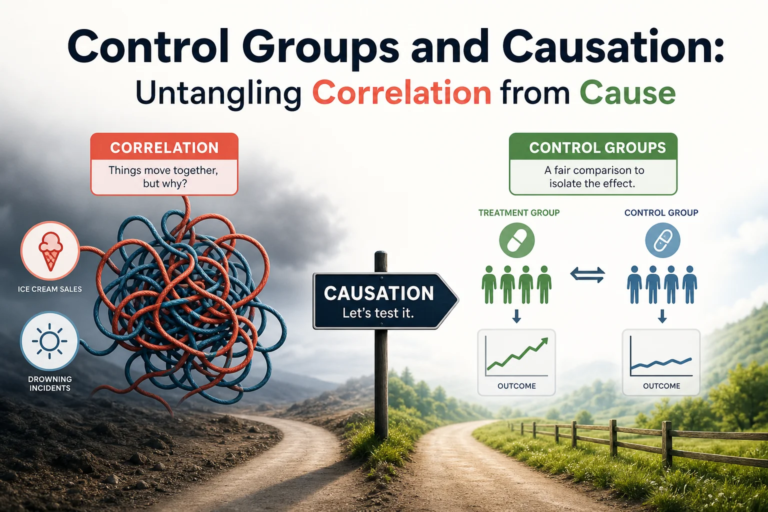
- Facilitates Causal Inference: Randomization permits a more robust inference of cause-and-effect relationships. Traditional observational studies often struggle to make these connections due to confounding variables, whereas randomized controlled trials (RCTs) place a firewall around these complexities.
A Brief History
The practice of randomization dates back to the 1920s with the famed statistician Ronald A. Fisher, who popularized the method through agricultural experiments. His groundbreaking work laid the foundation for modern experimental design, establishing randomization as an essential practice across scientific disciplines.
Practical Applications of Randomization
Case Study 1: Medical Trials
One of the most impactful applications of randomization can be seen in clinical trials. In the development of a new medication, researchers might randomly assign participants to either receive the drug or a placebo.
Analysis: This method ensures that any observed effects can be confidently attributed to the medication rather than other external factors, thereby illustrating the immense benefit of Harnessing the Power of Randomization: The Backbone of Experimental Design in healthcare.
Case Study 2: Marketing Research
A digital marketing agency wanted to test two different website designs. By randomizing traffic to each design, they were able to measure conversion rates effectively.
Analysis: This case underscores how businesses can utilize randomization to make data-driven decisions, significantly enhancing outcomes based on customer interactions. Winning strategies often arise from meticulously designed experiments.
Case Study 3: Education
In education, randomization comes into play when assessing the effectiveness of teaching methods. Schools may randomly assign students to different teaching styles to measure which yields better learning outcomes.
Analysis: This application of randomization illustrates its versatility, proving beneficial not only for research but also for practical implementation in varied sectors.
Table 1: Benefits of Randomization Across Fields
| Field | Benefit | Example |
|---|---|---|
| Healthcare | Eliminates selection bias | Clinical trials for new medications |
| Marketing | Provides actionable insights | A/B testing website designs |
| Education | Enhances learning outcome comparisons | Testing different teaching methods |
| Sociology | Strengthens causal inference | Studying the impact of policies |
Implementing Randomization: Best Practices
Designing a Randomized Experiment
Define Objectives: Clearly articulate the research question and objectives.
Select Participants: Establish inclusion criteria and select a sample that represents the target population.
Random Assignment: Use appropriate methods (e.g., random number generators, draw lots) to assign participants to different groups.
Data Collection: Ensure the data collected is relevant, consistent, and unbiased.
- Analyze Results: Utilize statistical analysis to interpret the results, accounting for any randomization effects.
Common Pitfalls to Avoid
Inadequate Sample Size: Ensure sufficient participants to achieve statistically significant results.
Ignoring Confounding Variables: Maintain awareness of external factors that can influence results.
- False Randomization: Be wary of ’pseudo-randomization’ wherein bias might still creep into the randomization process.
Chart 1: The Randomization Process
| Step | Description |
|---|---|
| 1. Define Objectives | Set clear research goals |
| 2. Select Participants | Choose an appropriate sample |
| 3. Random Assignment | Assign treatments by chance |
| 4. Data Collection | Gather data consistently |
| 5. Analyze Results | Apply appropriate statistical methods |
Conclusion
As we have explored, Harnessing the Power of Randomization: The Backbone of Experimental Design is integral to ensuring that research is both valid and reliable. The numerous case studies presented illustrate its transformative potential, whether in clinical trials, marketing strategies, or educational outcomes. By adhering to best practices and remaining mindful of common pitfalls, researchers and practitioners alike can elevate their methodologies.
Embrace the power of randomization, and let it guide your future experiments. The resulting insights, rooted in experimental rigor, promise to revolutionize not only your work but also contribute to the collective understanding of the world around us.
FAQs Section
1. What is randomization in research?
Randomization is the process of assigning participants or units to different conditions in a study purely by chance, helping to eliminate biases and enhance the validity of results.
2. Why is randomization crucial for experimental design?
Randomization helps ensure that treatment groups are comparable, allows for valid causal inferences, and enhances the generalizability of findings across populations.
3. Can I use randomization outside of scientific research?
Absolutely! Randomization can be beneficial in various fields, including marketing, education, and social science, wherever decisions are driven by data analysis.
4. What are some common methods used for random assignment?
Common methods include computer-generated random numbers, drawing lots, or using random number tables to ensure unbiased group assignments.
5. What happens if randomization is not done correctly?
Incorrect randomization can lead to biased results, compromised conclusions, and potentially flawed applications across practice and policy. It’s essential to adhere to rigorous randomization methods to maintain the integrity of the research.
Harnessing the power of randomization opens doors to a world of possibilities. It is not just a methodological tool; it is a driving force for progress and innovation. Embrace it, and you will witness the transformative effects unfold in your work!
About the Author


The PsyForU Editorial Collective is the research and editorial team of PsyForU Research International. The collective prepares educational, psychological, mental-health-awareness, inclusion, neurodiversity, and research-methodology content for students, parents, educators, researchers, and general readers. PsyForU content is intended for awareness, education, and capacity-building and should not be treated as clinical diagnosis, therapy, medical advice, legal advice, or emergency mental-health support.