


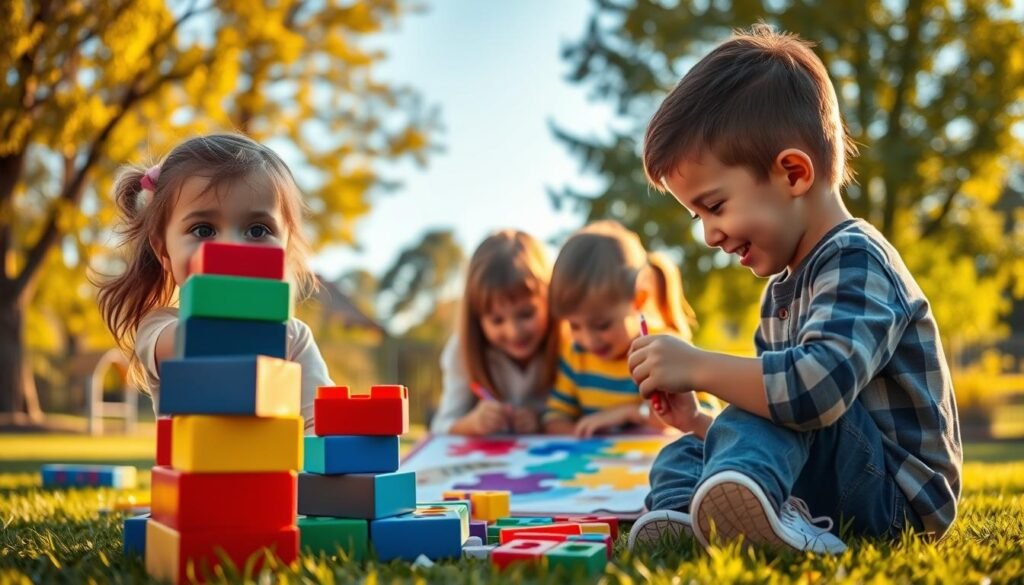
Every parent wants the best for their child. Yet one common practice undermines child development more than most realize. Measuring children against their peers creates invisible wounds that can last a lifetime.
Research shows that comparative practices cultivate negativity in young minds. Educational psychology experts found children facing constant evaluation begin internalizing a damaging belief. They start thinking they are not good enough.
This erosion of self-confidence leads to self-doubt. It creates hesitation when facing new challenges.
Mark Twain captured this truth perfectly with his observation. “Comparison is the death of joy.” His words reveal the fundamental psychological harm these practices inflict on developing minds.
The damage extends beyond momentary feelings. It affects how children view themselves and their capabilities.
Understanding why avoiding comparison matters requires examining how young people construct their identity. Each child follows a unique developmental path. Healthy childhood growth demands recognition of individual differences rather than artificial benchmarks.
These benchmarks ignore personal strengths. They overlook natural variations in learning patterns.
Key Takeaways
- Constant comparison damages children’s self-confidence and creates lasting self-doubt that inhibits their willingness to embrace new experiences and challenges
- Research in educational psychology demonstrates that comparative practices are perceived as criticism rather than motivation by young minds
- Each child develops along a unique trajectory that cannot be accurately measured against peers due to individual variations in growth patterns
- Comparison contradicts child-centered educational philosophy by fostering external validation-seeking instead of intrinsic motivation
- Healthy childhood development requires environments free from peer comparison to support authentic self-concept formation
- Children who experience frequent comparison may internalize the belief that they are inadequate, affecting their long-term psychological well-being
The Importance of Unique Development Paths
Every child has their own special way of growing and learning. Educational experts know that each child is unique. They have different strengths, weaknesses, and speeds of development.
This understanding challenges old methods that treat growth markers as strict rules. These milestones should be flexible guidelines instead. Recognizing individual paths lets children express their true abilities.
Pressure to meet standard expectations often hides the truth about childhood development. Comparison can make children feel pressured to fit a mold. This prevents them from exploring their own strengths.
Standard measures ignore important factors that affect how children grow. Biology, brain development, and environment all play key roles. These factors create big differences in how kids learn skills.
Understanding unique development paths requires a new way of thinking. We must shift from standard assessments to personal recognition of progress.
Children lose their special talents when forced to meet expectations from comparisons. This happens instead of developing their real capabilities. This problem is one of the biggest challenges in modern education and parenting.
Individual Growth Variations
Development happens in many areas at once. Each area grows at its own speed in every child. Cognitive, social, emotional, physical, and moral development are different but connected domains.
These areas rarely advance at the same time. A child may show advanced speaking skills but need more time for hand coordination. Another might excel in understanding feelings while learning math more slowly.
Brain research confirms that development follows highly individual patterns. The prefrontal cortex controls executive functions and matures at different rates. Synaptic pruning and myelination processes vary greatly based on genes and environment.
These biological facts explain why individual growth cannot be measured against uniform timelines.
Environmental factors add even more diversity to development. Children in language-rich homes may learn vocabulary faster. Those with lots of outdoor time might show better spatial reasoning.
Neither trajectory indicates superiority; both reflect natural outcomes of different experiences. Recognizing these variations helps parents and teachers avoid seeing difference as weakness.
Developmental readiness means children acquire new skills when their systems align. This includes neurological, physical, and psychological readiness. Forcing skill development before this readiness often causes frustration and resistance.
Supporting individual growth patterns by providing appropriately timed opportunities yields better results. Children show more engagement and mastery this way.
Research in educational psychology shows important findings about individual development. Children allowed to develop according to their unique abilities show greater motivation. They engage more deeply with learning and develop stronger self-concepts.
This evidence challenges educational models based on age expectations rather than developmental readiness.
Personal Achievement Benchmarks
Shifting from group comparisons to individual goal-setting represents a major change. Personal milestones acknowledge achievements relative to each child’s starting point. This approach recognizes that meaningful growth happens when children advance from their current position.
Identifying appropriate personal benchmarks requires careful observation of each child. Parents and educators must assess where a child shows readiness for new challenges. They must also respect areas needing more development time.
This assessment differs from standardized testing. It measures children against their own progress rather than external criteria.
The implementation of personal achievement benchmarks involves several key practices:
- Establishing baseline assessments that capture current skill levels across multiple domains
- Setting incremental goals that challenge without overwhelming
- Documenting progress through portfolios, journals, and observational notes
- Celebrating growth regardless of absolute achievement levels
- Adjusting expectations based on ongoing assessment of developmental readiness
Developmental milestones serve best as general guidelines rather than strict requirements. These milestones provide useful reference points when treated as averages. However, rigid application as mandatory achievements generates anxiety and obscures individual variation.
The distinction between guidelines and requirements profoundly impacts how children experience their own development.
Children who pursue personal milestones develop internal motivation systems. They don’t rely on external validation. They learn to assess their own progress and identify areas for improvement.
This internal focus on achievement fosters resilience and self-efficacy. These qualities transcend specific skill acquisition.
Diverse Learning Modalities
Children process, retain, and show knowledge through remarkably diverse ways. Some excel through visual learning by absorbing information through diagrams and charts. Others rely on auditory processing and comprehend concepts through verbal explanation.
Kinesthetic learners require physical engagement and understand through movement and hands-on activities. Most children use combinations of these approaches. Preferences vary by subject and context.
Learning style diversity challenges traditional educational models that use uniform teaching methods. Children show enhanced comprehension when teaching approaches align with individual learning preferences. They also demonstrate better retention and application of knowledge.
Misalignment between teaching method and learning style often appears as disengagement. It may also seem like learning difficulty.
Celebrating differences in learning styles requires recognition from educators and parents. Varied approaches represent legitimate alternative pathways rather than deficiencies requiring correction. A child who struggles with written expression but excels in verbal presentation possesses unique abilities.
These abilities deserve validation rather than remediation.
| Learning Modality | Characteristic Strengths | Supportive Strategies | Common Misinterpretations |
|---|---|---|---|
| Visual Learning | Pattern recognition, spatial reasoning, memory for images | Graphic organizers, color coding, illustrated materials | Difficulty with verbal instruction mistaken for inattention |
| Auditory Learning | Verbal comprehension, discussion-based understanding, sound discrimination | Lectures, audio recordings, group discussions | Need for verbal processing mistaken for excessive talking |
| Kinesthetic Learning | Physical coordination, hands-on problem solving, experiential understanding | Manipulatives, movement breaks, practical application | Physical engagement needs mistaken for hyperactivity |
| Reading/Writing Learning | Text comprehension, written expression, symbolic representation | Note-taking, essays, written instructions | Preference for independent work mistaken for social difficulty |
Multiple intelligences theory extends this concept beyond sensory modalities. Educational psychologist Howard Gardner developed this framework. Gardner identified distinct intelligence types including linguistic, logical-mathematical, spatial, and musical.
He also identified bodily-kinesthetic, interpersonal, intrapersonal, and naturalistic intelligences. This framework acknowledges that conventional academic measures capture only part of human cognitive capacity.
Children whose unique abilities align with less emphasized intelligences often feel undervalued. A child with exceptional interpersonal intelligence may receive less recognition than one with strong math abilities. Both represent legitimate cognitive strengths despite different recognition levels.
Comprehensive recognition of diverse learning modalities validates the full spectrum of human capability.
Practical application of this understanding requires flexible instructional design. This includes multiple presentation modes, varied assessment methods, and diverse demonstration opportunities. Children encounter content through their preferred modalities while gradually building capacity in others.
This approach honors individual differences while fostering comprehensive skill development.
The Psychological Impact of Comparison
Comparative practices impose profound psychological costs on developing minds. They disrupt essential processes through which children build their sense of self. The mental health implications extend beyond temporary discomfort, creating lasting effects that shape how young people perceive their value.
Research in child psychology demonstrates that repeated comparison fundamentally alters internal frameworks. Children use these frameworks to evaluate themselves and their place in the world.
These psychological consequences manifest across multiple dimensions of development. Children internalize comparative messages, transforming external evaluations into internal beliefs about their worth. The damage accumulates over time, affecting immediate emotional states and long-term patterns of thinking.
Effects on Self-Esteem and Confidence
The erosion of self-esteem represents one of the most significant psychological consequences of comparison. Young people consistently hear how they measure up against siblings, classmates, or peers. They begin constructing a self-concept built on relative performance rather than intrinsic worth.
This conditional self-regard creates a fragile foundation for identity development. Self-esteem encompasses the evaluative component of how children see themselves. It measures the degree to which they believe they possess value and capability.
Comparison directly attacks this core belief system by suggesting that worth depends on outperforming others. Children subjected to persistent comparison develop an internal voice characterized by self-doubt. This voice reinforces feelings of inadequacy.
The damage to confidence follows a predictable pattern. Confidence reflects a child’s belief in their ability to successfully navigate challenges. Children begin to hesitate before attempting new activities, fearing they will not measure up to expectations.
Research on self-esteem in children indicates that this loss of confidence creates a self-reinforcing cycle. Children who doubt their abilities avoid challenges, which prevents them from developing competence. This avoidance confirms their fears of inadequacy, deepening the psychological impact.
The psychological research reveals another critical dimension: the depletion of autonomy. Children need to develop internal standards of self-worth and personal values independent of external validation. Instead, they learn to seek acceptance and validity from others.
This externalized locus of evaluation undermines the development of healthy autonomy necessary for long-term well-being.
The Role of Social Media in Comparison
Digital platforms have transformed the landscape of social comparison. They introduce unprecedented challenges for young people’s psychological development. Social media creates constant opportunities for children to measure themselves against expanded peer networks.
The curated nature of social media presentations poses particular risks. Children encounter carefully selected images and narratives that showcase peers’ achievements, appearances, and experiences. These idealized representations create distorted benchmarks that bear little resemblance to reality.
Contemporary child psychology research documents strong correlations between social media use and increased rates of anxiety. Depression and diminished life satisfaction among youth have also risen. The mechanism operates through constant exposure to seemingly superior lives and accomplishments.
Children scroll through feeds filled with peers’ highlight reels while comparing them to their own unfiltered daily experiences. The psychological impact intensifies because social media comparison never stops. Unlike traditional comparison limited to school hours, digital platforms enable continuous evaluation accessible at any moment.
- Quantified validation: Likes, followers, and comments become measures of worth
- Appearance-based comparison: Filtered images create unrealistic beauty standards
- Achievement pressure: Constant documentation of peers’ accomplishments intensifies feelings of inadequacy
- Fear of missing out: Exposure to others’ social activities generates anxiety about exclusion
- Performance anxiety: Pressure to present an idealized version of oneself compounds stress
Recognizing Signs of Comparison Anxiety
Identifying when comparison has progressed from occasional discomfort to clinically significant psychological distress requires understanding specific indicators. Parents, educators, and caregivers need practical frameworks for recognizing these warning signs. Early recognition prevents escalation into more serious mental health concerns.
Comparison anxiety manifests through observable changes in how children talk about themselves and approach activities. Persistent self-critical statements represent a primary indicator. Children may frequently express beliefs that they are “not good enough” or make negative comparisons to specific peers.
Behavioral avoidance patterns provide another crucial signal. Children experiencing comparison anxiety often withdraw from activities they previously enjoyed. This withdrawal particularly affects activities involving evaluation or performance.
| Category | Warning Signs | Psychological Mechanism |
|---|---|---|
| Verbal Indicators | Self-critical statements, frequent references to peers’ superiority, expressions of worthlessness | Internalized negative self-concept based on comparative evaluations |
| Behavioral Changes | Avoidance of challenges, withdrawal from previously enjoyed activities, reluctance to participate | Fear-based avoidance protecting fragile self-esteem from further damage |
| Emotional Responses | Excessive distress about peers’ achievements, heightened sensitivity to evaluation, emotional withdrawal | Anxiety triggered by situations activating comparison frameworks |
| Physical Symptoms | Somatic complaints before evaluative situations, sleep disturbances, changes in appetite | Anxiety manifesting through physiological stress responses |
Excessive preoccupation with peers’ achievements signals that comparison has become a dominant cognitive pattern. Children may constantly monitor what others accomplish. They demonstrate heightened awareness of relative performance across multiple domains.
Somatic complaints coinciding with evaluative situations represent the physical manifestation of comparison anxiety. Children may experience genuine headaches, stomachaches, or fatigue before tests or performances. These symptoms reflect the body’s stress response to psychologically threatening situations.
Understanding these signs empowers adults to intervene before comparison anxiety becomes entrenched. Early recognition allows for implementation of supportive strategies. These strategies help children rebuild healthy self-concept and develop resilience against comparative pressures.
Strategies for Parents to Prevent Comparison
Families need concrete approaches that protect children from evaluative pressures. These parenting strategies transform household dynamics by creating environments where individual growth flourishes. Research shows that intentional parental practices significantly reduce comparison-related anxiety while strengthening each child’s sense of unique value.
Implementing evidence-based techniques requires parents to examine their communication patterns, support systems, and expectation frameworks. Educational experts recommend celebrating individual strengths by recognizing and appreciating each child’s unique abilities. The shift from comparative language to affirmative recognition fundamentally changes how children perceive their worth.
Effective parenting strategies for avoiding comparison with other children involve three interconnected approaches. These methods address communication quality, interest cultivation, and expectation calibration. They work together to build resilience against external evaluative pressures while fostering authentic self-concept development.
Creating Spaces for Honest Dialogue
Open communication establishes protective factors against comparison by creating safe emotional environments. Children can express feelings without judgment in these spaces. This communicative approach involves active listening—fully attending to children’s verbal and nonverbal messages without immediate problem-solving.
Parents who practice this technique demonstrate genuine interest in understanding their child’s internal experience. They avoid rushing to fix perceived problems. This approach helps children feel heard and valued.
Transparent dialogue requires parents to validate emotional experiences even when underlying concerns seem disproportionate. A child expresses feelings of inadequacy related to a sibling’s achievement. Effective responses acknowledge the emotion first: “I hear that you’re feeling frustrated when you see your brother’s soccer trophy.”
This emotional validation differs markedly from dismissive statements like “You shouldn’t feel that way.” It also differs from comparative reassurances like “But you’re good at other things.” Validation helps children process emotions in healthy ways.
Research demonstrates that children experiencing consistent emotional validation develop greater emotional intelligence. They also build resilience against external evaluative threats. Parents should establish regular check-in routines where each child receives undivided attention.
These dedicated conversations signal that each child’s perspective matters independently. Their value doesn’t depend on how they measure against others. Regular check-ins strengthen parent-child bonds.
Creating communication channels also means teaching children vocabulary for expressing complex emotions related to comparison. Parents can introduce terms like “jealousy,” “inadequacy,” and “pride” while normalizing these feelings. Instead of saying, “Why can’t you be like your sister?” parents should say, “I love how creative you are!”
This reframing emphasizes individual strengths rather than comparative deficits. It helps children develop positive self-images. Language choices profoundly impact how children view themselves.
Nurturing Unique Talents and Passions
Promoting individual interests and hobbies serves as a powerful antidote to comparison. This strategy helps children develop domain-specific competence and intrinsic motivation. It involves identifying each child’s genuine curiosities and providing resources for exploration.
Parents should avoid imposing parental preferences or societal expectations. Children pursue activities that authentically engage their passion. They build self-efficacy that buffers against comparative evaluations in other areas.
Parents should encourage effort, not just results, praising hard work and improvement rather than only achievements. This approach fosters motivation without unhealthy competition. A parent might say, “I noticed how you kept practicing that piano piece even when it was difficult.”
This response proves more effective than “Your recital was better than your cousin’s.” It focuses on personal growth rather than comparison. Children learn to value their own progress.
Supporting individual interests requires financial, temporal, and emotional investments that demonstrate genuine enthusiasm. This might mean driving one child to art classes while taking another to robotics clubs. Different passions deserve equal parental support.
The key lies in showing authentic interest through questions and attendance at performances or competitions. Celebrate progress regardless of external recognition. This support builds children’s confidence in their abilities.
Rather than pointing out failures, shortcomings, or mistakes, parents should focus on encouraging and pointing out their strengths instead. Research indicates that children receiving targeted support for personal interests develop intrinsic motivation. This internal drive to engage in activities for inherent satisfaction proves far more sustainable.
Calibrating Goals to Individual Capacity
Setting realistic expectations for children represents a sophisticated parenting strategy. It requires understanding each child’s developmental level, temperamental characteristics, learning profile, and current skill set. Realistic expectations establish goals representing appropriate challenges without overwhelming the child’s capacity.
This approach aligns with Vygotsky’s concept of the zone of proximal development. Optimal learning occurs when tasks slightly exceed current abilities but remain achievable with effort and support. Children thrive when challenges match their capabilities.
Parents calibrating expectations to individual capabilities actively resist the temptation to apply normative standards or sibling comparisons. If one child reads at an advanced level while another struggles with decoding, effective expectations reflect each child’s starting point. This individualized approach prevents the frustration and shame that emerge when children repeatedly fail to meet inappropriate benchmarks.
Establishing personalized expectations also involves recognizing that development unfolds unevenly across domains. A child might demonstrate advanced mathematical reasoning while showing age-appropriate social skills. Expectations should reflect this multidimensional reality.
Children need encouragement, unconditional love, and recognition for their strengths to develop positive self-concepts. This support helps them avoid the negativity that comparison produces. Each child deserves to be valued for who they are.
Parents practicing this strategy regularly reassess expectations as children grow and develop new capabilities. What represented an appropriate challenge six months ago might now feel too easy or too difficult. This dynamic calibration communicates that growth happens at individual paces.
It also shows that avoiding comparison with other children extends to temporal comparisons within standardized timelines. Children develop at their own rates. Respecting individual timelines supports healthy development.
| Comparison-Based Approach | Strength-Based Approach | Impact on Child | Long-Term Outcome |
|---|---|---|---|
| “Why can’t you be more like your sister?” | “I love how creative you are with building projects” | Develops unique identity and confidence | Strong self-concept independent of others |
| “Your brother got straight A’s at your age” | “You’ve improved so much in math this semester” | Focuses on personal growth trajectory | Intrinsic motivation for learning |
| “Everyone else can do this already” | “This is challenging, and I see you working hard” | Values effort over immediate success | Resilience and growth mindset |
| “You’re not as athletic as your cousin” | “I notice you really enjoy drawing and art” | Redirects attention to genuine interests | Development of authentic passions |
The table above illustrates how reframing parental language transforms children’s self-perception and developmental outcomes. Each strength-based approach eliminates comparative evaluation while highlighting individual qualities worthy of recognition. These linguistic shifts represent practical applications of the broader strategies discussed throughout this section.
Implementing these comprehensive parenting strategies requires consistent effort and self-reflection from caregivers. Parents must examine their own tendencies toward comparison. These tendencies may stem from their upbringing, societal pressures, or well-intentioned desires for their children’s success.
By fostering open communication, promoting individual interests, and setting realistic expectations, families create environments where each child flourishes. Children develop according to their unique timeline and capabilities. This approach builds confident, resilient individuals.
The Role of Educators in Reducing Comparison
The educational system plays a key role in reinforcing or reducing comparison-based thinking among children. Teachers and school administrators control classroom cultures where students spend significant developmental years. These professionals can create learning environments that celebrate individual progress rather than relative standing.
Schools are primary socialization environments where comparison practices often become institutionalized through grading systems and competitive activities. Educational psychologists emphasize that promoting teamwork creates healthier outcomes for child development. The pedagogical choices educators make daily either perpetuate hierarchical thinking or establish collaborative frameworks.
Building Spaces Where Every Student Belongs
Creating an inclusive classroom environment requires deliberate attention to the physical, emotional, and academic atmosphere. Inclusive spaces feature diverse representations in curriculum materials that reflect varied cultural backgrounds and learning profiles. These environments acknowledge different types of intelligence and talent.
Educators who successfully reduce comparison establish classroom norms that explicitly prohibit put-downs or status hierarchies. Multiple modes of participation allow students to demonstrate learning through varied formats. Research shows that inclusive classrooms reduce anxiety levels while increasing engagement across diverse student populations.
The atmospheric elements of inclusion extend beyond visible diversity to encompass how teachers respond to mistakes. Teachers who celebrate effort and improvement signal that the classroom values growth for all students. This approach supports healthy child development by removing the pressure to outperform peers.
Fair treatment in inclusive environments does not mean identical treatment. Educators recognize that every child has different needs. Treating them fairly means understanding and respecting their differences rather than applying uniform standards.
Collaborative Structures Replace Competitive Frameworks
Emphasizing teamwork over competition represents a fundamental pedagogical shift that reframes academic work. Cooperative learning approaches create interdependence among students where individual success contributes to collective achievement. Structured group projects and collaborative problem-solving activities replace competitive frameworks that inherently generate comparison.
Team-based learning games and collaborative challenges foster prosocial development alongside academic growth. Students work together rather than against each other, developing empathy and communication skills. This cooperative structure aligns with effective parenting strategies that emphasize supporting siblings.
Educational professionals who implement collaborative learning report increased student motivation and reduced anxiety about performance. Students begin viewing classmates as resources rather than obstacles to their own success. The social dynamics shift from hierarchical positioning to horizontal relationships built on shared goals.
Creating activities where children work together establishes cooperation as the default classroom mode. Teachers can structure interdependent tasks where each student contributes unique strengths to achieve collective outcomes. This approach reduces the relevance of comparative judgments because success becomes defined by group achievement.
Personalized Pathways Honor Individual Differences
Tailoring learning approaches to individual needs acknowledges that students begin from varied starting points. Differentiated instruction involves modifying content, process, product, and environment to match individual learner profiles. This personalization makes comparison meaningless because students work toward individualized goals using approaches suited to their needs.
Differentiated instruction removes the premise that all students should demonstrate identical skills at identical times. Some learners need visual supports while others benefit from auditory instruction. Recognizing these differences as natural variations transforms the learning environment.
Personalized learning frameworks allow teachers to meet students at their current developmental levels. Progress monitoring focuses on individual growth trajectories rather than comparative standing within the class. Students receive feedback about their own improvement rather than how they measure against classmates.
This individualized approach requires educators to understand learning profiles, set appropriate challenges, and provide targeted support. Students develop intrinsic motivation based on personal mastery rather than external validation through superior performance. These educational practices complement parenting strategies that emphasize individual strengths and personal milestones.
| Educational Approach | Comparison-Based Model | Individualized Model | Impact on Child Development |
|---|---|---|---|
| Assessment Method | Norm-referenced grading, class rankings, competitive scoring | Criterion-referenced feedback, personal growth tracking, mastery-based progression | Reduced anxiety, increased intrinsic motivation, healthier self-concept formation |
| Classroom Structure | Individual work, competitive games, public performance comparisons | Collaborative projects, cooperative learning, varied demonstration formats | Enhanced social skills, peer support networks, prosocial behavior development |
| Success Definition | Outperforming peers, achieving highest scores, winning competitions | Meeting personal goals, demonstrating improvement, mastering new skills | Growth mindset development, resilience building, sustainable achievement orientation |
| Teacher Feedback | Comparative comments, relative standing reports, public recognition of top performers | Specific improvement notes, effort acknowledgment, private progress celebrations | Accurate self-assessment abilities, reduced comparison anxiety, positive learning identity |
The transition from comparison-based to individualized educational models requires systemic change across institutional practices. Teachers need professional development to implement differentiated instruction effectively. School leaders must establish policies that support personalized learning rather than standardized competition.
Educators hold substantial power to shape whether children view academic settings as arenas of judgment. By creating inclusive environments, emphasizing collaboration, and personalizing learning approaches, teachers provide critical support for healthy child development. These professional practices work synergistically with parenting strategies to help children develop strong self-concepts independent of comparison.
Recognizing External Pressures on Children
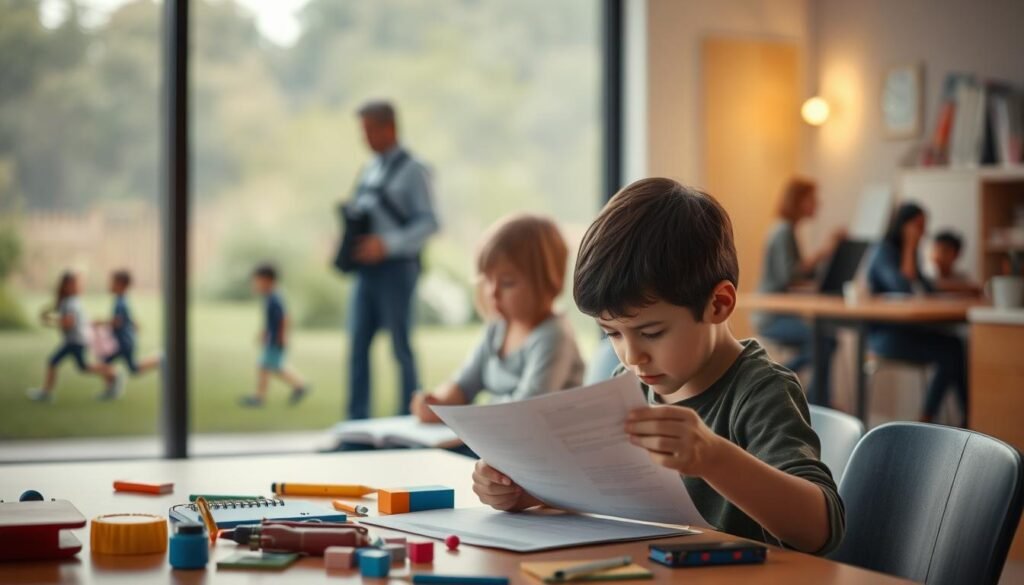
Modern childhood includes many external pressures that shape how children see themselves and their achievements. These forces work together across different areas of children’s lives. They create complex webs of influence that affect how kids develop.
Understanding these pressures helps parents and educators protect healthy childhood development. Adults can support children while recognizing the realities of today’s social world.
Research in child psychology shows that external pressures cause comparison anxiety in young people. Children face comparative frameworks through media, peer interactions, and family relationships. Each domain sets benchmarks that may not match individual development timelines or abilities.
The Pervasive Influence of Media on Development
Media platforms shape how children understand developmental norms and personal success. Television, films, advertisements, and social media show idealized versions of childhood. These representations rarely reflect actual diversity in growth patterns.
Media establishes narrow definitions of achievement and appearance. Children internalize these standards as measures for self-evaluation.
Children’s programming often features protagonists who demonstrate exceptional talents. These characters navigate complex social situations with improbable sophistication. They solve problems quickly, maintain perfect friendships, and excel academically without visible struggle.
Children compare their own experiences to these mediated portrayals. They may develop feelings of inadequacy. Normal challenges become perceived as personal failings.
Repetitive media consumption amplifies these effects over time. A child watching hours of content each week absorbs thousands of messages. These accumulated impressions shape expectations that may generate anxiety.
Social media platforms introduce additional layers of comparison. Children observe classmates posting achievements, vacation photos, and social gatherings. This selective sharing presents an incomplete picture of reality.
Curated highlights create the impression that others experience constant success and happiness. This intensifies feelings of falling short in one’s own life.
Understanding Peer Dynamics and Social Influence
Peer pressure represents a significant force in childhood development. This is especially true during middle childhood and adolescence. This social-psychological phenomenon operates through multiple mechanisms that encourage conformity to group norms.
Children experience both explicit requests from peers and implicit pressure. They observe peer behavior patterns and feel compelled to conform.
The mechanisms of peer influence include several distinct pathways:
- Direct communication where peers explicitly request specific behaviors or express expectations
- Observational learning through which children identify patterns in peer behavior and adopt similar actions
- Social rewards such as acceptance, popularity, and inclusion that reinforce conformity
- Social consequences including exclusion, ridicule, or rejection following deviation from group norms
During developmental periods, peer relationships become increasingly important in identity formation. These pressures become particularly potent. Children may feel compelled to engage in social comparison.
This creates anxiety about relative status in academic performance, athletic ability, and physical appearance. Social skills comparisons also generate stress.
The implications of peer pressure extend beyond temporary discomfort. Sustained exposure to comparative peer environments can affect self-esteem. It may reduce willingness to pursue individual interests.
Children may suppress authentic preferences or talents if these diverge from peer group values. This limits their exploration of personal strengths and passions.
Family Systems and Internal Dynamics
Family dynamics create powerful internal pressures that either promote or prevent harmful comparison. The feeling of competition is at the root of sibling rivalry. Competition can become toxic when taken too far or inadvertently fostered by parents.
Family structure, parental expectations, and household communication patterns profoundly influence self-concept development. These factors shape how children view themselves.
Firstborn children particularly feel they need to compete for parental attention. This happens when siblings are introduced into the family system. They perceive even slight differences in parental interactions as potential threats.
This sensitivity to comparative treatment creates a foundation for ongoing comparison dynamics. These patterns may persist throughout childhood.
Family systems theory suggests that families develop characteristic patterns of interaction. These patterns shape individual members’ psychological development. They include communication styles, conflict resolution approaches, and methods of distributing attention.
Families that establish comparative frameworks create problematic environments. Frequently discussing one child’s achievements while overlooking another’s efforts is harmful. Children feel pressure to measure their worth against siblings.
Parental expectations also contribute to internal family pressures. Parents who articulate specific achievement goals create comparison anxiety. Expressing disappointment in performance that falls short of standards has similar effects.
Children internalize these expectations as measures of their value. The challenge intensifies when parents apply uniform expectations across children with different temperaments.
Extended family involvement introduces additional comparative dimensions. Grandparents, aunts, uncles, and cousins may make observations about children’s progress. These comments create implicit rankings.
Holiday gatherings and family events can become stages for performance anxiety. Children anticipate questions about grades, activities, or accomplishments. These questions invite comparison with relatives.
Household stress levels also impact how family dynamics affect children’s experience of comparison. Families experiencing financial strain or relationship conflicts may inadvertently increase comparative pressure. Parents dealing with their own anxieties may project these concerns onto children.
The intersection of these external pressures creates complex environments that shape childhood development. Media influences, peer dynamics, and family systems all play roles. Principles from child psychology emphasize that recognizing these forces represents the first step.
Understanding the multiple sources of comparative pressure allows adults to implement targeted interventions. These strategies protect children’s psychological well-being while acknowledging contemporary social realities.
Understanding the Value of Collaboration
Children discover that individual growth flourishes through collective effort rather than isolated achievement. Collaborative environments transform potential rivals into partners who contribute complementary skills and perspectives. Success depends on leveraging diverse strengths to accomplish tasks no individual could complete alone.
Research shows that promoting teamwork creates healthier developmental outcomes than competition. Encouraging children to support and celebrate each other’s successes reduces rivalry and builds connection. These experiences teach children that their value lies in their distinctive contributions to collective endeavors.
Shifting from competitive to collaborative frameworks requires deliberate structuring of activities and intentional cultivation of supportive norms. Adults design collaborative experiences with positive interdependence, where each child’s success contributes to group success. Individual accountability ensures each participant’s contribution remains visible and valued.
Benefits of Group Projects
Properly structured group projects generate multiple developmental advantages that extend far beyond academic content mastery. These collaborative learning experiences foster cognitive development through peer explanation and perspective-taking. Children must articulate their understanding to others and integrate different viewpoints into coherent solutions.
Explaining concepts to peers strengthens the explainer’s mastery while providing alternative explanations for others. Social development accelerates as children navigate negotiation and conflict resolution in authentic contexts. They learn to manage disagreements, allocate responsibilities fairly, and coordinate efforts toward shared deadlines.
These skills transfer directly to family relationships, particularly sibling dynamics. Emotional development occurs as children experience shared success and collective resilience following setbacks. Individual members learn that their unique abilities contributed to outcomes greater than any could achieve alone.
Groups develop strategies for mutual encouragement and collective problem-solving rather than blame allocation. This emotional interdependence builds empathy and reduces anxiety associated with individual performance evaluation. Moral development emerges through considerations of fairness and equity in contribution and recognition.
Children grapple with questions about how to distribute work fairly and credit different types of contributions. These authentic ethical dilemmas provide richer moral learning than abstract discussions of fairness principles.
Encouraging Sharing of Individual Strengths
Adults can facilitate children’s recognition and appreciation of the diverse capabilities each person brings to collaborative endeavors. This involves explicitly naming and valuing different types of contributions. Moving beyond narrow definitions of ability focused primarily on academic performance is essential.
Recognize analytical thinking, creative ideation, organizational skills, interpersonal sensitivity, technical expertise, and aesthetic judgment as equally valuable capabilities. Varied talents serve complementary rather than hierarchical functions. Children develop positive domain-specific self-concepts without needing to devalue others’ different strengths.
This approach fosters recognition of “intelligence profiles”—understanding that individuals possess varied configurations of capabilities. A child with exceptional spatial reasoning can appreciate a peer’s verbal eloquence without feeling inferior. Both capabilities contribute essential value to different aspects of group work.
A child whose interpersonal sensitivity helps navigate group dynamics learns that this emotional intelligence holds equal importance. Practical strategies include assigning rotating roles within groups that highlight different strengths. Explicitly discuss how various capabilities contributed to group success.
Create reflection opportunities where children identify both their own contributions and those of teammates. Children experience their particular strengths as essential to collective success. They develop authentic self-worth based on their actual unique abilities rather than on comparative ranking.
| Collaborative Approach | Developmental Outcome | Long-Term Impact | Skill Application |
|---|---|---|---|
| Positive interdependence structure | Understanding mutual reliance and shared responsibility | Ability to function effectively in team environments | Workplace collaboration and family cooperation |
| Recognition of diverse contributions | Appreciation for varied capabilities and perspectives | Reduced comparison anxiety and increased self-acceptance | Valuing differences in professional and personal relationships |
| Collective problem-solving | Integration of multiple viewpoints into solutions | Enhanced critical thinking and flexibility | Complex decision-making and conflict resolution |
| Shared celebration of achievements | Joy in others’ success rather than envy | Supportive relationships and community engagement | Building networks of mutual support and encouragement |
Building a Supportive Community
Families, classrooms, and broader social contexts can cultivate cultures characterized by mutual encouragement and collective celebration. Supportive communities are distinguished by four key elements: norms of empathy, practices of recognition, structures of assistance, and values of inclusion.
Norms of empathy develop when adults model perspective-taking and validate children’s emotional experiences. This involves responding to children’s struggles with understanding rather than judgment. Adults encourage children to consider how peers might feel in various situations.
Sibling relationships can build resilience, empathy, and bonds that last a lifetime. These first peer relationships provide daily opportunities to practice empathy in contexts where adults can provide immediate guidance.
Practices of recognition extend beyond praising achievement to acknowledging effort, improvement, creative approaches, and supportive behaviors toward others. A supportive community notices when a child helps a struggling peer or demonstrates persistence despite difficulty. This broad recognition communicates that community membership depends on contribution and character rather than competitive success.
Structures of assistance normalize seeking and providing help by building collaborative support into routine activities. Study groups, peer tutoring arrangements, and cooperative learning structures signal that requesting help demonstrates wisdom rather than weakness. Assistance flows multidirectionally—with all children sometimes helping and sometimes being helped.
Values of inclusion communicate that every member belongs and contributes regardless of ability levels or developmental timelines. Inclusive communities adapt activities to ensure meaningful participation rather than expecting all children to meet identical standards. This might involve differentiated roles within group projects, modified participation options, or flexible timelines for task completion.
The consistent message is that communities benefit from diverse members. Belonging precedes performance rather than being conditional upon it.
Teaching Resilience and Self-Acceptance
Building psychological resilience and fostering genuine self-acceptance are two fundamental developmental competencies. These qualities protect children from the harmful effects of constant comparison. They serve as protective factors in child development.
These qualities enable young people to navigate challenges without tying their worth to external validation. Educational psychologists emphasize that children need encouragement, unconditional love, and recognition for their strengths. This helps them develop healthy self-concepts.
Children may emotionally withdraw when they feel constantly measured against siblings or peers. This withdrawal stems from the perception that love is conditional. Long-term psychological research shows that autonomy develops when children experience consistent support and validation.
Parents and educators who focus on encouraging and pointing out strengths help children develop resilience. This approach builds the confidence necessary for success and happiness throughout life. The systematic cultivation of these qualities requires intentional adult interventions and thoughtful environmental modifications.
Reframing Failure as Learning Opportunity
Helping children embrace failures represents one of the most challenging yet essential tasks. The pedagogical challenge involves reframing failure from a threatening indicator of inadequacy to a valuable source of learning and growth. This transformation requires deliberate effort and consistent messaging from adults.
Adults must model healthy responses to their own mistakes as the first step. Parents and teachers should demonstrate how they handle setbacks with grace and learning orientation. Children then observe practical examples of resilience in action.
Explicitly discussing failures as normative aspects of learning helps normalize the experience. This reduces shame. Providing emotional support when children experience setbacks creates a safe foundation for taking risks.
This support includes validating feelings of disappointment while guiding constructive analysis. Celebrating the courage to attempt challenging tasks regardless of outcome shifts focus from results to process. Research in developmental psychology demonstrates that children who learn from failure develop greater persistence and creativity.
These children ultimately achieve more than those who avoid challenging tasks to protect their self-esteem. The capacity to embrace failure becomes a competitive advantage in lifelong learning.
Cultivating Growth-Oriented Thinking Patterns
Instilling a growth mindset addresses an influential theoretical framework in child development. Dr. Carol Dweck’s research identifies fixed mindset as the belief that abilities are static traits. Growth mindset represents the belief that abilities can be developed through effort and learning.
Children with growth mindsets interpret challenges as opportunities for development rather than threats. They view effort as a path to mastery rather than evidence of inadequacy. These children learn from criticism rather than feeling defensive.
Parents and educators can foster growth mindsets through specific language choices and practices. Praising effort and strategies rather than innate ability reinforces the value of work over talent. Using “yet” language to frame current limitations as temporary opens possibilities for future development.
The following strategies effectively cultivate growth-oriented thinking:
- Model growth-oriented self-talk in daily interactions and problem-solving situations
- Provide explicit instruction about neuroplasticity and how learning changes brain structure
- Emphasize the relationship between practice and skill development across domains
- Share stories of successful individuals who overcame initial failures through persistence
- Create classroom and home environments where mistakes are viewed as learning data
Understanding the science behind brain development empowers children to see themselves as active agents. Young people recognize that neural pathways strengthen with practice. This knowledge transforms their relationship with difficulty and struggle.
Strategic Use of Affirming Language
The role of positive affirmations in supporting self-esteem in children requires careful consideration. Affirmations represent carefully constructed self-statements that can support healthy self-concept. However, their effectiveness depends heavily on how they are designed and applied.
Effective affirmations are realistic rather than grandiose, grounded in achievable truths rather than wishful thinking. They focus on effort and values rather than outcomes and comparisons. Affirmations connected to genuine experiences carry more psychological weight than abstract positive statements.
Research suggests that affirmations work best when they reinforce existing positive self-concepts. This finding indicates that affirmations function most effectively as preventive rather than remedial interventions. For children already struggling with negative self-perception, affirmations alone prove insufficient without additional therapeutic support.
The construction of developmentally appropriate affirmations requires attention to specificity and authenticity. General statements like “I’m the best” lack the concrete grounding that makes affirmations psychologically effective. Instead, affirmations such as “I work hard on challenging problems” connect to observable behaviors and values.
| Ineffective Affirmation Type | Why It Fails | Effective Alternative | Psychological Benefit |
|---|---|---|---|
| Grandiose claims | Creates cognitive dissonance with lived experience | Effort-focused statements | Reinforces growth mindset and agency |
| Comparative statements | Reinforces external validation dependence | Personal progress recognition | Builds internal locus of evaluation |
| Outcome-based praise | Creates performance anxiety and fear of failure | Process-oriented acknowledgment | Encourages risk-taking and persistence |
| Abstract generalizations | Lacks connection to concrete experience | Specific behavior recognition | Strengthens self-awareness and authenticity |
Parents and educators should introduce affirmations as part of broader emotional literacy development. Teaching children to recognize their strengths, acknowledge their efforts, and articulate their values creates a foundation. This approach integrates affirmation practice with genuine self-reflection rather than treating it as superficial positive thinking.
The timing of affirmations matters significantly in their effectiveness. Affirmations delivered immediately following effort or demonstration of values carry more impact. This strategic timing helps children connect the affirmation to specific behaviors.
Positive affirmations contribute to a comprehensive approach to building resilience. These three elements work synergistically to create psychological foundations. The result is young people equipped with internal resources for navigating challenges and maintaining healthy self-esteem.
Emphasizing Effort Over Outcomes
Modern parenting strategies recognize that praising effort builds resilience better than rewarding outcomes alone. Educational experts emphasize encouraging effort rather than just results. This shift addresses how comparison damages children by suggesting relative standing matters more than growth.
Traditional achievement focus creates environments where children constantly measure themselves against peers. Adults who recognize the process of learning foster intrinsic motivation without unhealthy competition. Research shows effort-based praise promotes persistence, risk-taking, and genuine engagement with challenging tasks.
Outcome-based praise can create performance anxiety and avoidance of difficult challenges. Children who receive recognition only for results often develop fear of failure. They may choose easier tasks where success seems guaranteed rather than embracing meaningful growth.
Redefining Achievement Beyond Academic Metrics
The dominant cultural narrative suggests academic performance represents the most meaningful indicator of childhood success. This narrow definition creates artificial hierarchies among children. It fails to recognize multiple dimensions of human development that matter throughout life.
Alternative frameworks for conceptualizing success include several important dimensions. Character virtues such as curiosity, persistence, integrity, and compassion represent foundational qualities. Practical life skills including communication, collaboration, self-regulation, and adaptability prove essential across diverse contexts.
Meaningful relationships encompass friendship, family connection, and community engagement. Exploration of personal interests allows children to discover their unique strengths. Contribution to others’ well-being represents another vital dimension often overlooked in grade-focused assessments.
Adults who communicate that these developmental milestones matter help children develop multidimensional self-concepts. These broader identities prove less vulnerable to damage from comparative academic performance. Children understand that grades represent one data point rather than a comprehensive measure of worth.
Recognizing Dedication and Progress
Celebrating hard work addresses the psychological benefits of recognizing effort, strategies, persistence, and improvement. This approach communicates several important messages to children. Challenge becomes valuable, and struggle indicates learning rather than inadequacy.
Effort-based recognition shows that adults value the development process rather than just end results. Improvement relative to one’s own baseline matters more than comparison with others. Dedication itself emerges as a virtue worthy of recognition, independent of outcomes achieved.
Research in motivation psychology demonstrates that effort praise promotes mastery goals focused on learning. This contrasts with performance goals centered on demonstrating ability relative to others. Children receiving effort-based recognition show greater persistence when facing difficulties.
They engage in deeper learning and experience more positive emotions during challenging tasks. The following table illustrates key differences between outcome-focused and effort-focused recognition approaches:
| Recognition Approach | Primary Focus | Motivational Impact | Response to Challenge | Self-Concept Development |
|---|---|---|---|---|
| Outcome-Focused | Final results, grades, competitive standing | Performance anxiety, extrinsic motivation | Avoidance of difficult tasks, fear of failure | Fixed mindset, comparison-based identity |
| Effort-Focused | Strategies used, persistence, improvement | Intrinsic motivation, learning orientation | Embraces challenges, views struggle as growth | Growth mindset, process-oriented identity |
| Balanced Approach | Both process and progress toward goals | Sustainable motivation with realistic expectations | Strategic challenge selection, adaptive persistence | Flexible self-concept, multiple competencies |
Collaborative Goal Development
Setting personal goals together explores collaborative processes wherein adults and children jointly identify meaningful objectives. These parenting strategies ensure goals align with the child’s current developmental milestones and aspirations. Collaborative goal-setting creates shared investment in the pursuit process.
This approach balances adult knowledge of developmental trajectories with child preferences and interests. Goals should be neither so easy they provide no challenge nor so difficult they generate hopelessness. The collaborative framework teaches children essential skills for self-directed learning and personal development.
Children learn to assess their current capabilities honestly. They practice identifying areas for growth that genuinely interest them. They develop planning skills by breaking larger objectives into manageable steps.
Regular check-ins allow adjustment of goals as circumstances change or new information emerges. This flexibility teaches that goals serve development rather than creating rigid expectations. Children experience ownership over their growth trajectories rather than feeling externally evaluated against arbitrary standards.
Strategies for Kids to Focus on Themselves
Children can learn practical techniques to maintain attention on their unique development path. Research shows young people can acquire self-regulatory skills that protect against harmful comparison effects. These strategies empower children as active participants in their own psychological well-being.
Teaching children internal focusing techniques creates lasting foundation for healthy self-concept development. They carry these protective skills throughout adolescence and adulthood. The following methods provide concrete tools that children can implement independently.
Building Awareness Through Mindfulness
Mindfulness practices offer children powerful techniques for developing present-moment awareness and emotional regulation. These approaches help young people recognize comparative thoughts as temporary mental events. Simple mindfulness exercises create psychological distance from anxious comparisons while building self-compassion.
Age-appropriate mindfulness activities include several accessible techniques. Breathing exercises anchor attention to physical sensation, providing refuge from comparative thinking. Children learn to notice breath entering and leaving their body.
Body scan practices develop awareness by directing attention through different body regions. This technique helps children recognize how comparison anxiety manifests physically. It creates opportunities for early intervention before stress escalates.
Additional mindfulness approaches support self-esteem in children through varied entry points:
- Mindful observation activities: Practicing noticing without evaluating builds capacity to observe peers without immediate comparison
- Loving-kindness meditations: Cultivating compassion for self alongside compassion for others reduces competitive orientation
- Mindful movement practices: Yoga and similar activities adapted for children connect awareness with physical experience
- Sensory awareness exercises: Focusing on sounds, textures, or tastes grounds attention in immediate experience
Regular mindfulness practice correlates with reduced anxiety and improved attention regulation. It also enhances emotional awareness. These qualities directly protect against comparison-driven stress by strengthening internal focus.
Documenting Growth Through Journaling
Structured writing practices help children develop awareness of their thoughts, feelings, and growth patterns. Journaling creates private space for self-exploration free from external judgment. It provides longitudinal records that make progress visible.
Gratitude journals shift attention toward positive aspects of one’s own life. Children record three things they appreciate each day. This trains attention toward personal blessings rather than perceived deficits.
Achievement logs document personal progress and learning milestones. Recording small victories makes growth tangible even when changes seem imperceptible. This practice reinforces that development occurs at individual pace.
Additional journaling formats support different aspects of self-reflection:
- Emotion journals: Developing emotional literacy by naming feelings and identifying triggers for comparison anxiety
- Goal-tracking journals: Maintaining focus on personal objectives and documenting progress toward self-defined targets
- Free-writing journals: Exploring thoughts and feelings without evaluation or structure, allowing authentic self-expression
- Learning journals: Reflecting on new skills acquired and challenges overcome, emphasizing personal growth trajectory
Journaling strengthens connection between current experience and broader development patterns. Children gain perspective on how far they have progressed. This counters the illusion that peers advance while they remain static.
Expanding Horizons Through Novel Activities
Pursuing new experiences shifts children’s focus from comparative evaluation to curiosity and discovery. Novel activities place all participants in beginner status, temporarily neutralizing expertise-based hierarchies. This equal footing creates opportunities for growth-oriented engagement.
Exploring unfamiliar domains orients attention toward learning rather than comparison. Trying a new sport or learning a musical instrument demands concentration on skill acquisition. This intrinsic focus displaces comparative thinking by occupying cognitive resources.
New experiences also provide fresh contexts where previous social hierarchies do not apply. A child who struggles academically might discover talent in art. An athletic child might find unexpected joy in cooking.
Parents and educators can facilitate growth through new experiences by:
- Offering diverse activity options without pressure to excel immediately
- Emphasizing exploration and experimentation over mastery and achievement
- Celebrating courage to try unfamiliar activities regardless of outcome
- Providing low-stakes environments where mistakes become learning opportunities
Novel experiences build self-esteem by demonstrating that abilities expand through effort and practice. This understanding transforms how children interpret their current capabilities relative to peers. They see present differences as temporary rather than fixed characteristics.
Building a Support Network for Families
Families reduce harmful comparison when they access strong support systems beyond individual household efforts. Parents benefit from networks that provide validation, practical guidance, and shared experiences. Raising children free from comparison anxiety requires collective wisdom and community engagement.
Parent Connection Opportunities
Building relationships with other families creates emotional validation that normalizes developmental challenges. These connections form through school groups, neighborhood associations, faith communities, or activity networks. Parents gain perspective that children develop successfully through multiple pathways.
Research shows that socially connected parents report lower stress levels. They also feel greater confidence in their parenting strategies.
Professional Guidance Resources
School counselors like Ria Sharma note that parents often seek professional guidance for family conflicts. Psychologist Susan Albers emphasizes that families can transform rivalry into connection with appropriate support. Professional consultation becomes valuable when comparison generates significant distress or family conflicts resist parent-initiated interventions.
Therapists, educational consultants, and family counselors help identify effective strategies. They also help establish healthy boundaries.
Structured Community Engagement
Participating in community programs creates natural contexts for children to experience belonging rather than competition. Recreational leagues, arts programs, service projects, and educational enrichment activities provide alternatives to comparison-based evaluation. Well-designed programs help children develop competence through meaningful participation.
These experiences build relationships with diverse peers and adult mentors. They reinforce individual worth beyond performance metrics.
FAQ
Why is avoiding comparison with other children so important for healthy development?
How do developmental milestones differ from prescriptive benchmarks in child development?
What are the signs that my child is experiencing comparison anxiety?
How does social media amplify comparison among children and adolescents?
What parenting strategies most effectively prevent harmful comparison?
How can educators create classroom environments that minimize comparison?
What role do different learning styles play in why comparison is harmful?
How does sibling rivalry relate to comparison, and how can parents address it?
What is a growth mindset, and how does it protect against comparison?
How should parents respond when children compare themselves to peers?
What are the benefits of collaborative learning over competitive approaches?
At what point should parents seek professional help for comparison-related issues?
How can mindfulness practices help children resist comparison?
What does “celebrating effort over outcomes” mean in practical terms?
How do media influences shape children’s developmental expectations?
What types of journaling practices help children focus on personal growth?
How can community programs reduce comparison among children?
Why is understanding different types of intelligence important for avoiding comparison?
How do realistic expectations support healthy child development?
What role does emotional validation play in protecting children from comparison’s harm?

