


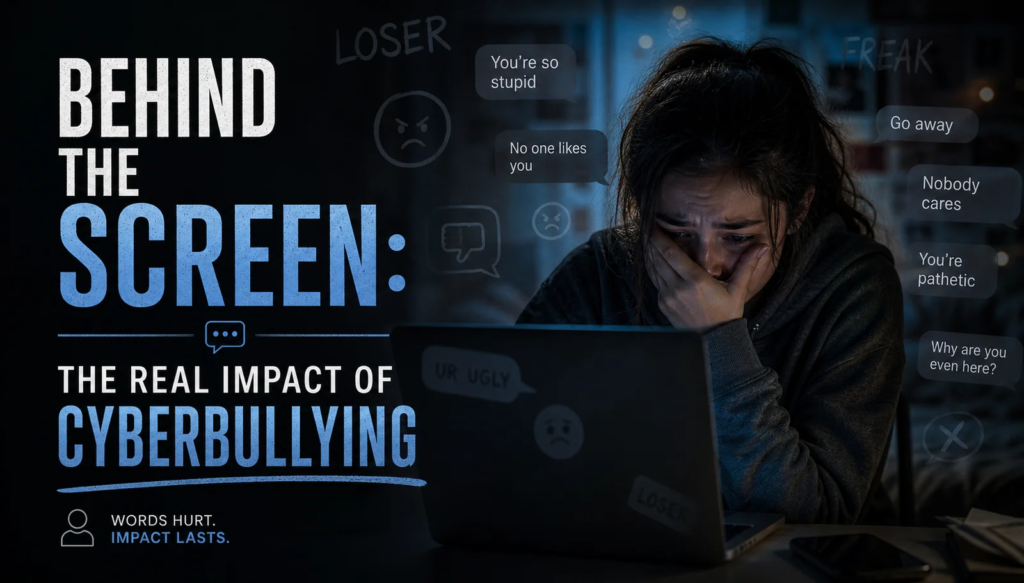
Behind the Screen: The Real Impact of Cyberbullying — Essential Insights for a Safer Digital World
A cruel comment can disappear from a screen in seconds, but its emotional echo can last for years.
That is the uncomfortable truth at the heart of Behind the Screen: The Real Impact of Cyberbullying. Online harm is often dismissed as “just words,” “internet drama,” or something a person should simply ignore. But anyone who has been targeted by repeated digital humiliation, harassment, threats, impersonation, exclusion, or public shaming knows the pain is not virtual. It is real. It follows people into classrooms, bedrooms, workplaces, friendships, sleep patterns, self-esteem, and sometimes even their sense of safety.
Cyberbullying is not only a youth issue. It affects children, teenagers, college students, professionals, creators, parents, teachers, activists, and public figures. It shows up in group chats, gaming platforms, comment sections, school forums, workplace communication tools, dating apps, and social media feeds. It can be loud and public, or quiet and hidden. It can come from strangers, classmates, coworkers, former friends, or anonymous accounts.
This article explores Behind the Screen: The Real Impact of Cyberbullying in depth: what it looks like, why it hurts so much, how it affects mental and physical health, what families and schools can do, how workplaces should respond, and how digital communities can become safer without losing freedom of expression.
Because behind every screen is a person. And behind every “joke” that wounds, every pile-on that spirals, and every cruel message sent at midnight, there may be someone struggling to hold themselves together.
Understanding Behind the Screen: The Real Impact of Cyberbullying
At its simplest, cyberbullying is repeated or severe digital behavior intended to harm, intimidate, shame, exclude, threaten, or control another person. It can happen through text, images, videos, voice notes, edited screenshots, fake accounts, livestreams, private groups, or public posts.
But Behind the Screen: The Real Impact of Cyberbullying is about more than defining bad online behavior. It is about recognizing the human cost.
Traditional bullying often ends when a child leaves school, an employee leaves the office, or a person exits a physical space. Cyberbullying can follow someone everywhere. A phone vibrates at dinner. A cruel post appears before bed. A humiliating screenshot gets shared while the target is trying to study, work, or sleep. The abuse becomes portable, searchable, and sometimes permanent.
Common Forms of Cyberbullying
| Type of Cyberbullying | What It Looks Like | Why It Hurts |
|---|---|---|
| Harassing messages | Repeated insults, threats, or degrading comments | Creates fear, anxiety, and emotional exhaustion |
| Public humiliation | Posting embarrassing photos, videos, rumors, or private details | Damages reputation and trust |
| Exclusion | Deliberately leaving someone out of group chats, games, or online communities | Reinforces isolation and social rejection |
| Impersonation | Creating fake accounts or pretending to be the target | Can harm relationships, credibility, and safety |
| Doxxing | Sharing private information such as address, phone number, or workplace | Creates real-world danger |
| Cyberstalking | Monitoring, messaging, or threatening someone repeatedly online | Produces fear and a loss of control |
| Image-based abuse | Sharing or threatening to share intimate or manipulated images | Causes deep shame, fear, and trauma |
| Dogpiling | A large group attacking one person online | Overwhelms the target and magnifies harm |
When we talk about Behind the Screen: The Real Impact of Cyberbullying, we have to remember that harm is not measured only by what the bully intended. It is also measured by what the target experiences.
A person might say, “I was only joking.” But if the result is humiliation, fear, isolation, or distress, the impact matters.
Why Cyberbullying Feels Different from Offline Bullying
Cyberbullying has unique features that make it especially damaging. The internet changes the speed, scale, permanence, and emotional intensity of harassment.
1. It Can Happen Anytime
Victims often describe cyberbullying as inescapable. The abuse can arrive at breakfast, during class, at work, in the middle of the night, or during family time. The target may feel constantly alert, waiting for the next notification.
This is a major part of Behind the Screen: The Real Impact of Cyberbullying: the sense that there is no safe place.
2. The Audience Can Be Huge
A rumor whispered in a hallway may reach a few people. A rumor posted online can reach hundreds or thousands. Even if the post is deleted, screenshots may continue circulating.
Public embarrassment becomes amplified. The target may not know who has seen the content, who believes it, or where it will appear next.
3. Anonymity Can Intensify Cruelty
People sometimes behave more aggressively online because they feel hidden. Anonymous accounts, fake profiles, and temporary usernames can reduce accountability.
This does not mean anonymity is always bad. It can protect vulnerable people, whistleblowers, and those seeking support. But in cyberbullying, anonymity often allows cruelty to grow.
4. Digital Content Can Feel Permanent
Even when platforms remove harmful content, the fear remains: Who saved it? Who shared it? Will it return?
For many victims, Behind the Screen: The Real Impact of Cyberbullying includes a lingering sense of digital vulnerability. They feel as if their reputation or privacy can be attacked at any moment.
5. Bystanders Become Part of the Harm
Likes, shares, laughing emojis, reposts, and silence can all deepen the wound. A person may feel not only targeted by the bully but abandoned by everyone who watched.
The Emotional Toll: What Happens Inside the Target
The emotional impact of cyberbullying can be severe. It can change how a person sees themselves, others, and the world.
Victims may experience:
- Anxiety
- Depression
- Panic attacks
- Shame
- Anger
- Sleep problems
- Loss of appetite
- Difficulty concentrating
- Social withdrawal
- Fear of school, work, or public spaces
- Reduced self-worth
- Emotional numbness
- Thoughts of self-harm or suicide in serious cases
If you or someone you know is in immediate danger or thinking about self-harm, contact emergency services or a crisis hotline in your country right away. Online abuse is serious, but help is available.
The emotional damage is often made worse because victims may feel embarrassed to ask for help. They may worry adults will overreact, take away their devices, or say, “Just log off.” Adults may also feel ashamed, especially if the harassment involves work, relationships, or private images.
That shame is one of the most damaging parts of Behind the Screen: The Real Impact of Cyberbullying. Victims often carry responsibility that belongs to the person causing harm.
Let’s be clear: being targeted is not the victim’s fault.
The Physical Impact of Cyberbullying
Cyberbullying may happen online, but the body responds as if the threat is real — because emotionally, it is.
When a person is repeatedly attacked, the nervous system can stay on high alert. Stress hormones rise. Sleep suffers. Muscles tighten. Digestion changes. Headaches become common. The person may feel tired but unable to rest.
How Cyberbullying Can Affect the Body
| Emotional Experience | Possible Physical Response |
|---|---|
| Constant fear | Racing heart, sweating, shaking |
| Shame and humiliation | Nausea, fatigue, stomach pain |
| Anxiety before checking phone | Chest tightness, headaches |
| Sleep disruption | Poor concentration, irritability |
| Social withdrawal | Low energy, appetite changes |
| Long-term stress | Weakened immunity, chronic tension |
This is why Behind the Screen: The Real Impact of Cyberbullying must be understood as a health issue, not just a behavior issue. Cyberbullying can affect mental health, physical health, learning, work performance, and relationships.
Cyberbullying and Young People: A Developmental Crisis
Children and teenagers are especially vulnerable because their identities are still developing. Peer approval matters. Belonging matters. Reputation matters. When social rejection or humiliation happens online, it can feel catastrophic.
For young people, Behind the Screen: The Real Impact of Cyberbullying often appears in school avoidance, falling grades, mood changes, secrecy around devices, sudden friendship shifts, or emotional outbursts after going online.
Parents and educators should watch for signs such as:
- Avoiding school or social events
- Becoming upset after checking messages
- Suddenly deleting accounts
- Hiding screens when adults enter
- Losing interest in hobbies
- Sleeping too much or too little
- Saying things like “Everyone hates me”
- Changes in eating habits
- Unexplained headaches or stomachaches
- Increased irritability or sadness
One challenge is that young people may not tell adults. They may fear losing access to their phone or being blamed for what happened.
A helpful first response is not, “Why didn’t you tell me?” or “Give me your phone.” It is:
“I’m glad you told me. You’re not in trouble. We’ll handle this together.”
That sentence can become a lifeline.
Cyberbullying Among Adults: The Hidden Problem
Many people associate cyberbullying with teenagers, but adults experience it too. In fact, adult cyberbullying can be especially complex because it may involve careers, public reputations, finances, parenting communities, dating relationships, professional networks, or political views.
Adult cyberbullying may include:
- Harassment from former partners
- Workplace gossip in digital channels
- Public shaming on social media
- Threats in comment sections
- Review bombing of a business
- Coordinated attacks against creators or journalists
- Doxxing
- Harassment in online parenting, gaming, or hobby groups
- Impersonation on dating apps or professional platforms
The adult version of Behind the Screen: The Real Impact of Cyberbullying can involve fear of job loss, damaged credibility, legal concerns, and intense isolation. Adults may be reluctant to report harassment because they think they should be able to “handle it.”
But maturity does not make someone immune to harm. Digital abuse can injure anyone.
Case Study 1: The Group Chat That Changed a Student’s Life
Scenario:
Maya, a 14-year-old student, noticed her friends becoming distant. She later discovered a private group chat where classmates mocked her appearance, edited her photos, and spread false rumors. Some students never posted insults but reacted with laughing emojis. Screenshots eventually reached other students, and Maya stopped wanting to attend school.
Impact:
Maya’s grades dropped. She complained of stomachaches each morning. She deleted her social media accounts but still feared what people were saying. Her parents initially thought she was being dramatic until a teacher noticed she had become withdrawn.
Response:
The school documented the screenshots, met with the students involved, contacted parents, and created a safety plan. Maya began seeing a counselor. A teacher helped her reconnect with two supportive classmates. The school also held digital citizenship workshops focused on group chat behavior and bystander responsibility.
Analysis:
This case shows Behind the Screen: The Real Impact of Cyberbullying in a common setting: private digital spaces. Group chats can create an illusion of privacy, but the harm spills into real life. The laughing reactions mattered. The silent bystanders mattered. The solution required more than punishing one student; it required rebuilding safety and social support.
Case Study 2: The Workplace Slack Channel
Scenario:
Daniel, a project manager, discovered that coworkers had created a separate messaging channel where they mocked his speech, questioned his competence, and shared edited screenshots of his messages. The behavior started as “venting” but became increasingly personal. Eventually, one coworker accidentally referenced the private jokes during a meeting.
Impact:
Daniel became anxious before work, stopped contributing ideas, and considered resigning. He worried that reporting the issue would make him look oversensitive.
Response:
After documenting incidents, Daniel spoke with HR. The company investigated, confirmed the misconduct, and required training on digital workplace conduct. Managers also revised communication policies to clarify that harassment in unofficial digital spaces could still violate workplace rules.
Analysis:
This example expands Behind the Screen: The Real Impact of Cyberbullying beyond schools. Digital harassment in workplaces can damage performance, trust, and psychological safety. It also shows why organizations need clear standards for online conduct, including informal channels.
Case Study 3: A Creator Facing a Coordinated Attack
Scenario:
Lena, a small online creator, posted a video sharing her opinion about a social issue. A larger account mocked her, and followers flooded her comments with insults, threats, and false accusations. Some users found her personal information and posted hints about where she lived.
Impact:
Lena stopped posting, changed her phone number, and became afraid to leave home. She lost income from her online work and felt betrayed by platforms that responded slowly.
Response:
Lena saved evidence, reported threats, tightened privacy settings, contacted local authorities about doxxing concerns, and asked trusted friends to help moderate comments. She also posted a clear boundary statement and took a short mental health break before returning with stronger safety measures.
Analysis:
This case illustrates Behind the Screen: The Real Impact of Cyberbullying when harassment becomes public and coordinated. It also highlights a major issue: platforms often place too much burden on victims to manage abuse. Community moderation, platform accountability, and legal protections all matter.
The Role of Bystanders: Silence Is Not Neutral
Bystanders are powerful. In many cyberbullying situations, the bully is not the only source of pain. The audience can either fuel the abuse or interrupt it.
A bystander may think, “I didn’t post anything mean, so I didn’t do anything wrong.” But online, engagement is behavior. A like can validate cruelty. A share can expand harm. Silence in a close friendship group can feel like betrayal.
What Bystanders Can Do
| Harmful Bystander Behavior | Helpful Alternative |
|---|---|
| Liking or reacting to cruel posts | Do not engage with harmful content |
| Sharing screenshots | Save evidence only if helping the victim report |
| Watching without acting | Privately check on the target |
| Joining jokes to fit in | Refuse to participate |
| Saying “It’s not my business” | Report abuse when safety is at risk |
| Defending the bully publicly in a pile-on | Encourage de-escalation and facts |
A simple private message can matter:
“I saw what happened. That wasn’t okay. Are you safe? Do you want help reporting it?”
This is one of the most practical lessons from Behind the Screen: The Real Impact of Cyberbullying: people recover better when they know they are not alone.
Why People Cyberbully: Not an Excuse, But an Explanation
Understanding why people cyberbully does not excuse it. But it can help prevent it.
Common reasons include:
- Desire for power or status
- Peer pressure
- Revenge
- Jealousy
- Boredom
- Lack of empathy
- Poor emotional regulation
- Learned behavior from home or media
- Belief that online actions are not serious
- Anonymity and reduced accountability
Some people who cyberbully have been bullied themselves. Others use cruelty to gain approval. In group settings, people may go along with harmful behavior because they fear becoming the next target.
A key part of Behind the Screen: The Real Impact of Cyberbullying is understanding that digital environments can reward outrage, mockery, and humiliation. Algorithms may amplify conflict because it drives engagement. Social rewards — likes, laughs, reposts — can train people to be crueler than they would be face-to-face.
Prevention must address both individual behavior and platform design.
The Mental Health Connection
Cyberbullying is strongly connected to mental health. Victims are more likely to experience anxiety, depression, loneliness, low self-esteem, and emotional distress. Those who bully may also have unmet emotional needs, conduct issues, trauma histories, or social difficulties.
The most dangerous myth is that cyberbullying is harmless because it is “only online.” In reality, digital humiliation can attack core human needs: belonging, dignity, safety, and identity.
Cyberbullying Risk and Protective Factors
| Risk Factors | Protective Factors |
|---|---|
| Social isolation | Strong friendships |
| Lack of adult support | Trusted adults who listen calmly |
| Previous trauma | Access to counseling |
| Public humiliation | Quick content removal and support |
| Anonymous threats | Documentation and reporting systems |
| Low self-esteem | Positive identity-building activities |
| School/work culture that ignores bullying | Clear policies and consistent consequences |
The protective factors matter. Behind the Screen: The Real Impact of Cyberbullying is not only a story of harm. It is also a story of recovery, prevention, and resilience.
People can heal. Communities can change. Harmful digital cultures can be challenged.
What Parents Can Do Without Making Things Worse
Parents often feel panic when they discover their child is being cyberbullied. That panic is understandable. But the first response matters.
Avoid immediately saying:
- “Give me your phone.”
- “Why did you respond?”
- “Just ignore it.”
- “Delete everything.”
- “You should have known better.”
Instead, try:
- “Thank you for telling me.”
- “This is not your fault.”
- “We are going to make a plan.”
- “I won’t punish you for being honest.”
- “Let’s save evidence before we block or delete.”
Parent Action Plan
- Stay calm. Your child is watching your reaction.
- Listen fully. Let them explain without interruption.
- Save evidence. Take screenshots with dates, usernames, and URLs.
- Assess safety. Are there threats, doxxing, self-harm concerns, or stalking?
- Do not retaliate. Contacting the bully aggressively can escalate the situation.
- Use platform tools. Report, block, mute, restrict, or filter comments.
- Contact the school if peers are involved. Provide documentation.
- Seek mental health support when needed.
- Create a digital safety plan. Adjust privacy settings and review friend lists.
- Follow up. Ask regularly, “How are you feeling about what happened?”
Parents are central to Behind the Screen: The Real Impact of Cyberbullying because they can either become a safe landing place or another source of fear. The goal is not to control every online interaction. The goal is to build trust before a crisis happens.
What Schools Should Do
Schools cannot treat cyberbullying as separate from school life when the harm affects students’ learning, attendance, safety, and peer relationships.
A strong school response includes:
- Clear anti-bullying policies that include digital behavior
- Anonymous reporting options
- Staff training
- Student education on empathy and digital citizenship
- Parent communication
- Restorative practices when appropriate
- Mental health support
- Consistent consequences
- Protection from retaliation
- Follow-up after incidents
Schools should avoid one-time assemblies that simply tell students to “be kind online.” Students need practical scenarios: group chats, fake accounts, screenshot sharing, rumor spreading, gaming harassment, and pressure to participate.
In the context of Behind the Screen: The Real Impact of Cyberbullying, schools must also recognize that bystanders are part of the solution. Teaching students how to safely intervene can reduce harm.
What Workplaces Should Do
Workplace cyberbullying can hide behind humor, private chats, performance criticism, or “culture fit.” But digital harassment damages morale, retention, productivity, and trust.
Employers should:
- Define digital harassment clearly
- Include messaging apps, emails, social platforms, and remote work tools in policies
- Provide confidential reporting channels
- Train managers to recognize online harassment
- Investigate complaints promptly
- Protect employees from retaliation
- Address power dynamics
- Encourage respectful communication norms
- Document patterns, not just isolated incidents
A workplace that understands Behind the Screen: The Real Impact of Cyberbullying knows that psychological safety is not a luxury. It is part of a healthy organization.
Platform Responsibility: Design Can Reduce Harm
Social media platforms, gaming companies, messaging apps, and forum hosts play a major role. They cannot prevent every harmful interaction, but they can design systems that reduce abuse.
Useful platform features include:
- Easy reporting tools
- Fast response to threats and doxxing
- Comment filters
- Anti-pile-on protections
- Limits on mass messaging from strangers
- Stronger identity verification options for repeat offenders
- Clear appeals processes
- Better support for victims
- Friction before posting harmful comments
- Detection of coordinated harassment
For example, a platform might prompt users: “This comment may violate our guidelines. Do you want to revise it?” Small design changes can interrupt impulsive cruelty.
The future of Behind the Screen: The Real Impact of Cyberbullying depends partly on whether technology companies treat safety as a core feature, not a public relations issue.
Legal and Reporting Considerations
Cyberbullying laws vary by country, state, and region. Some behavior may violate school policies or platform rules but not criminal law. Other behavior — such as threats, stalking, doxxing, extortion, hate harassment, or sharing intimate images without consent — may have legal consequences.
If cyberbullying involves credible threats, sexual exploitation, stalking, hate-based harassment, or private information exposure, consider contacting local authorities or a legal professional.
Evidence to Save
| Evidence Type | Why It Matters |
|---|---|
| Screenshots | Captures content before deletion |
| Usernames and profile links | Helps identify accounts |
| Dates and times | Shows pattern and escalation |
| URLs | Helps platforms locate content |
| Messages and call logs | Documents repeated contact |
| Witness names | Supports reports |
| Impact notes | Records emotional, academic, or work effects |
Do not edit screenshots except to protect privacy when sharing with support people. Keep original files when possible.
A practical lesson from Behind the Screen: The Real Impact of Cyberbullying is this: document first, then block or report. Deleting too quickly can make it harder to prove what happened.
Healing After Cyberbullying
Recovery is not as simple as closing an app. Victims may need time to rebuild confidence, trust, and a sense of safety.
Healing strategies include:
- Talking with a trusted person
- Seeking therapy or counseling
- Taking temporary breaks from harmful platforms
- Rebuilding positive online spaces
- Practicing grounding techniques
- Reconnecting with offline routines
- Joining supportive communities
- Setting boundaries
- Avoiding obsessive checking
- Remembering that the abuse does not define you
For young people, recovery may involve school support, friendship repair, counseling, and family reassurance. For adults, it may involve HR intervention, legal advice, digital security steps, or professional reputation management.
One overlooked part of Behind the Screen: The Real Impact of Cyberbullying is grief. People may grieve lost friendships, lost privacy, lost confidence, or the version of the internet that once felt fun. Naming that grief can be part of healing.
Building Digital Resilience Without Blaming Victims
Digital resilience means having the skills, support, and confidence to navigate online harm. But it should never become a way to blame victims.
We should not say, “If you were stronger, it wouldn’t hurt.” A better message is:
“You deserve safety and respect. Let’s build tools that help you protect your peace while holding harmful people accountable.”
Digital resilience includes:
- Knowing how to report and block
- Understanding privacy settings
- Recognizing manipulation
- Not sharing passwords
- Thinking before posting
- Building supportive friendships
- Taking breaks without shame
- Asking for help early
- Knowing when behavior crosses legal or safety lines
In Behind the Screen: The Real Impact of Cyberbullying, resilience is not about tolerating abuse. It is about refusing to let abuse become your identity.
Prevention: Creating Kinder Digital Cultures
Cyberbullying prevention works best when it begins before harm occurs. Families, schools, workplaces, and platforms all shape digital culture.
Prevention Strategies by Setting
| Setting | Prevention Strategy |
|---|---|
| Home | Talk regularly about online behavior, not just screen time |
| School | Teach digital citizenship through real scenarios |
| Workplace | Set respectful communication standards |
| Platforms | Build safety tools and enforce rules consistently |
| Peer groups | Make cruelty socially unacceptable |
| Communities | Support victims instead of rewarding public shaming |
Prevention should focus on values and habits:
- Pause before posting
- Criticize ideas without dehumanizing people
- Do not forward humiliation
- Ask consent before sharing images
- Avoid anonymous cruelty
- Challenge pile-ons
- Treat private chats as real spaces with real consequences
- Remember there is a person behind the profile
That final point is the heart of Behind the Screen: The Real Impact of Cyberbullying.
The Positive Side: Online Spaces Can Also Heal
It is important not to portray the internet as only dangerous. Online spaces can be deeply supportive. Many people find friendship, identity, education, creativity, activism, and emotional support online.
The same tools that spread cruelty can also spread kindness.
A supportive comment can interrupt shame. A report can stop harassment. A private message can remind someone they matter. A community guideline can protect vulnerable people. A moderator can prevent a pile-on from becoming a crisis.
So the goal is not to scare people away from technology. The goal of Behind the Screen: The Real Impact of Cyberbullying is to help people use technology with more empathy, accountability, and courage.
Practical Checklist: What to Do If You Are Being Cyberbullied
If you are experiencing cyberbullying, here is a simple action plan.
| Step | Action |
|---|---|
| 1 | Do not respond immediately if you feel emotional or unsafe |
| 2 | Take screenshots and save links |
| 3 | Tell someone you trust |
| 4 | Block, mute, or restrict the person when safe |
| 5 | Report the content to the platform |
| 6 | Change privacy settings |
| 7 | If threats or doxxing are involved, contact authorities |
| 8 | Seek emotional support |
| 9 | Avoid blaming yourself |
| 10 | Create a follow-up plan so you are not handling it alone |
Remember: Behind the Screen: The Real Impact of Cyberbullying is real, but so is support. You do not have to manage digital abuse by yourself.
Long-Tail Keyword Variations for Contextual SEO
Here are natural long-tail variations related to Behind the Screen: The Real Impact of Cyberbullying that fit the topic:
- the real impact of cyberbullying on mental health
- how cyberbullying affects teenagers behind the screen
- emotional effects of online bullying
- cyberbullying prevention strategies for parents
- signs a child is being cyberbullied
- digital harassment in schools and workplaces
- how to recover from cyberbullying
- online bullying and social media safety
- cyberbullying case studies and solutions
- how bystanders can stop cyberbullying
- the hidden effects of cyberbullying behind the screen
- psychological impact of cyberbullying on victims
These variations help broaden the discussion while keeping the focus on Behind the Screen: The Real Impact of Cyberbullying.
Conclusion: Turning Awareness Into Action
Behind the Screen: The Real Impact of Cyberbullying is not just a topic for parents, teachers, or tech companies. It is a shared human issue. Every message, comment, reaction, and share contributes to the culture we create online.
Cyberbullying hurts because people are not avatars. They are students trying to belong, workers trying to contribute, creators trying to express themselves, and ordinary people trying to live with dignity. The screen may create distance, but it does not erase responsibility.
The most important lessons are clear:
- Cyberbullying is real harm, not harmless drama.
- Its effects can be emotional, physical, social, academic, and professional.
- Victims need support, not blame.
- Bystanders can reduce harm by refusing to amplify cruelty.
- Parents, schools, workplaces, and platforms all have responsibilities.
- Healing is possible with support, boundaries, documentation, and care.
- Safer digital spaces begin with everyday choices.
The next time you see someone being mocked, threatened, excluded, or humiliated online, pause. Do not feed the fire. Do not become part of the audience that makes the wound deeper. Reach out. Report. Support. Speak with courage.
Because Behind the Screen: The Real Impact of Cyberbullying reminds us of one essential truth: the internet becomes more humane when we remember the humanity of the person on the other side.
FAQs About Behind the Screen: The Real Impact of Cyberbullying
1. What is cyberbullying?
Cyberbullying is the use of digital tools to harass, threaten, shame, exclude, impersonate, or harm someone. It can happen through social media, texts, gaming platforms, group chats, emails, forums, or workplace messaging apps.
2. Why is cyberbullying so harmful?
Cyberbullying is harmful because it can happen anytime, spread quickly, involve large audiences, and feel impossible to escape. Behind the Screen: The Real Impact of Cyberbullying includes anxiety, depression, shame, sleep problems, social withdrawal, and damage to school or work performance.
3. What should I do if my child is being cyberbullied?
Stay calm, listen, reassure your child they are not in trouble, save evidence, report the abuse, adjust privacy settings, and contact the school if classmates are involved. If there are threats, stalking, or self-harm concerns, seek professional or emergency help immediately.
4. Can adults experience cyberbullying too?
Yes. Adults can experience cyberbullying through workplace channels, social media, dating apps, community groups, or public comment sections. Adult cyberbullying may involve reputation damage, harassment, doxxing, threats, or professional consequences.
5. Should I respond to a cyberbully?
In many cases, it is best not to respond emotionally. Save evidence first, then block, mute, restrict, or report. If the situation involves threats, doxxing, stalking, or extortion, consider contacting authorities or getting legal advice.
6. How can bystanders help stop cyberbullying?
Bystanders can refuse to like or share harmful content, privately support the target, report abusive posts, discourage pile-ons, and speak up when safe. A simple supportive message can make a major difference.
7. How can schools prevent cyberbullying?
Schools can prevent cyberbullying by teaching digital citizenship, creating clear reporting systems, involving parents, training staff, supporting victims, addressing bystander behavior, and applying consistent consequences.
8. Is cyberbullying illegal?
Some forms of cyberbullying may be illegal, depending on location and behavior. Threats, stalking, doxxing, extortion, hate harassment, and non-consensual sharing of intimate images may have legal consequences. Laws vary, so consult local authorities or legal professionals when needed.
9. How can someone recover after being cyberbullied?
Recovery may involve emotional support, counseling, digital boundaries, privacy changes, positive communities, and time away from harmful platforms. Healing also requires remembering that the abuse does not define the victim.
10. What is the biggest takeaway from Behind the Screen: The Real Impact of Cyberbullying?
The biggest takeaway is that online actions have offline consequences. Behind the Screen: The Real Impact of Cyberbullying teaches us that empathy, accountability, documentation, support, and prevention can protect people and create healthier digital spaces.

