


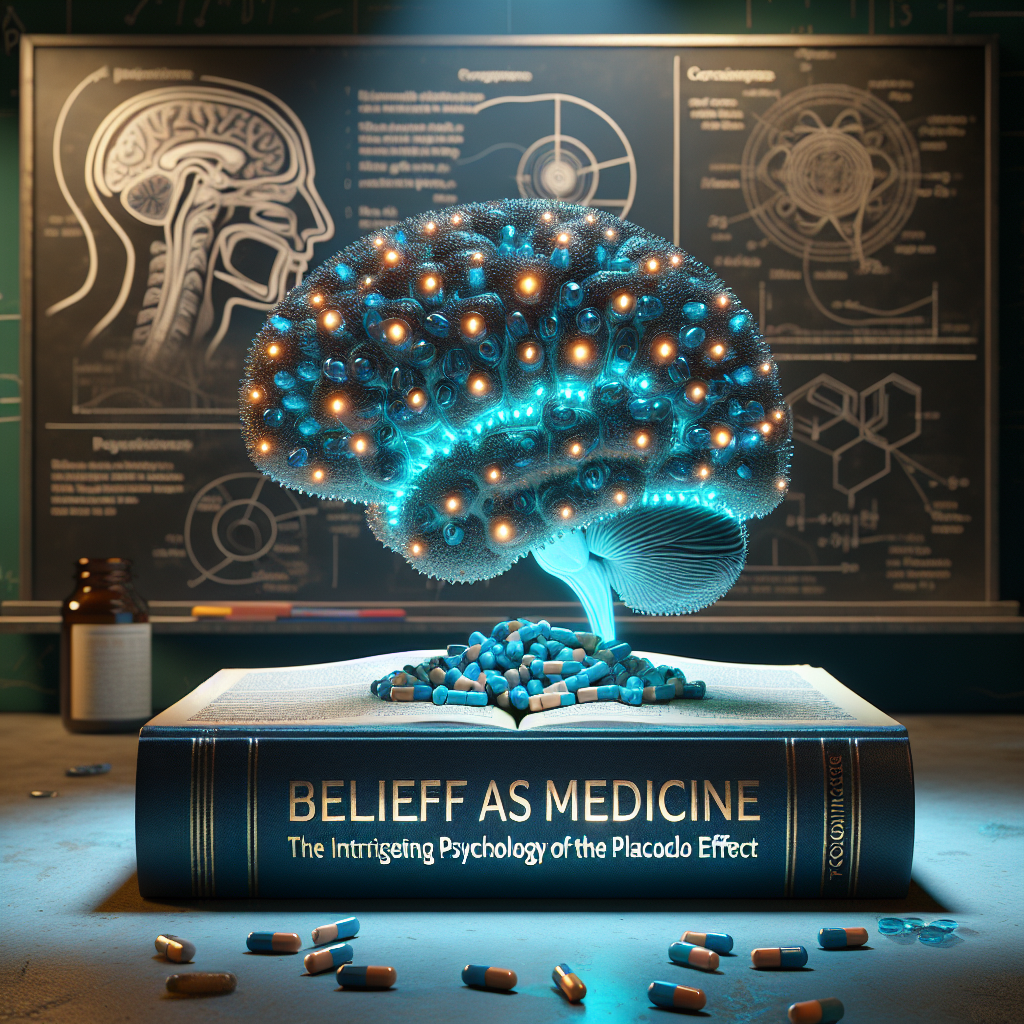
Belief as Medicine: The Intriguing Psychology of the Placebo Effect
Introduction
Imagine a world where the power of your mind could heal your body. This may sound like something out of science fiction, yet it’s a reality that has been scientifically backed by the remarkable phenomenon known as the placebo effect. Belief as Medicine: The Intriguing Psychology of the Placebo Effect reveals how our thoughts and beliefs can significantly influence our health outcomes. This article delves into the psychological mechanisms that underlie this mysterious effect and highlights its practical implications. By understanding the placebo effect, we unlock a deeper understanding of our health, healing, and the connection between mind and body.
The Placebo Effect: A Brief Overview
The placebo effect refers to the beneficial outcomes that arise when a patient experiences improvements in their condition after receiving a treatment that has no therapeutic effect, typically a sugar pill or saline injection. This phenomenon has been a topic of fascination for researchers, clinicians, and patients alike.
Research estimates that the placebo effect can account for 30% to 50% of treatment outcomes across various conditions, demonstrating its potency. In this section, we will explore how belief systems and psychological factors contribute to the placebo effect, creating an essential link between mind and body.
The Mechanics of Placebo
At its core, the placebo effect is not just about the absence of active ingredients. It involves a complex interplay of psychological and physiological responses triggered by the individual’s beliefs and expectations. When a patient believes they are receiving an effective treatment, several processes occur:
- Expectation: The belief that a treatment will work can significantly influence the brain’s response.
- Conditioning: Past experiences can shape expectations, heightening the effectiveness of placebos.
- Biochemical Responses: Beliefs can lead to the release of endorphins and other neurochemicals, mimicking the effects of actual medications.
Table 1: Factors Influencing the Placebo Effect
| Factor | Description |
|---|---|
| Expectations | The belief in treatment efficacy type |
| Physician-Patient Interaction | The quality of communication and rapport created |
| Conditioning | Previous associations that enhance belief |
| Cultural Context | Societal beliefs about medicine and health |
Case Study: Placebo in Pain Management
An Intriguing Example
One of the most cited studies demonstrating the power of belief is a randomized control trial published in the journal Pain. In this study, patients with chronic pain were divided into two groups. One group received a powerful analgesic, while the other was given a placebo pill. Remarkably, those who received the placebo reported significant pain relief, comparable to that of those who received the actual medication.
Analysis
This case study illustrates how the brain can activate its pain-relief systems when patients believe they are receiving treatment. It provides tangible evidence that patient belief can lead to real-world healing outcomes. The implication here aligns with our exploration of Belief as Medicine: The Intriguing Psychology of the Placebo Effect, challenging the notion that medication is the sole pathway to healing.
The Brain in the Placebo Effect
Neurobiological Insights
Modern neuroscience offers a glimpse into how belief operates in the brain. Neuroimaging studies reveal that when a person experiences the placebo effect, there are observable changes in brain activity. Specific regions responsible for pain perception, emotion regulation, and reward responses become activated.
For example, research in the journal NeuroImage has shown that when participants were given a placebo labeled as a pain reliever, their brain’s pain-processing regions exhibited less activity than when they were exposed to no treatment. These findings underscore the profound connect between mindset and brain function.
Belief Systems and Cultural Influence
Societal Beliefs
The cultural context plays a crucial role in shaping expectations and beliefs surrounding treatment. In cultures that emphasize traditional medicine, individuals may be more inclined to experience the placebo effect when given “natural” treatments. Conversely, in cultures that prioritize pharmaceutical interventions, the expectation may differ.
A cross-cultural study in the American Journal of Psychiatry examined the placebo response across various cultural groups, revealing that those with higher trust in doctors exhibited more substantial placebo effects. This leads us to ponder how societal attitudes towards medicine influence health outcomes.
Table 2: Comparison of Placebo Response Across Cultures
| Culture | Placebo Response Rate | Description |
|---|---|---|
| Western | 30%-50% | Emphasizes pharmaceutical solutions |
| Eastern | 50%-70% | Strong reliance on traditional medicine |
| Indigenous | High | Holistic perspectives on health and spirituality |
Practical Applications of the Placebo Effect
Enhancing Treatment Outcomes
Healthcare professionals can leverage the placebo effect to enhance treatment outcomes. By fostering a supportive environment and cultivating strong doctor-patient relationships, clinicians can create a fertile ground for belief-driven healing.
Case Study: The Clinical Trial Misconception
In some clinical trials, doctors unwittingly contribute to the placebo effect by discussing the benefits of a medication while downplaying side effects. Research published in JAMA showed that patients who were informed about the perceived efficacy of treatment options showed a significant improvement in outcomes, even in trials with placebos as controls.
Analysis
This instance demonstrates how healthcare communication specifically cultivates belief, reinforcing the idea that belief is indeed medicine. Being informed in a positive light can trigger emotional and biochemical responses that facilitate healing, encapsulating the essence of Belief as Medicine: The Intriguing Psychology of the Placebo Effect.
The Ethical Dilemma
Placebo Use in Clinical Practice
While the placebo effect holds enormous promise, ethical concerns arise when discussing its application in clinical settings. Physicians often grapple with whether it is ethical to administer a placebo without a patient’s knowledge, offering a complex dilemma.
A recent survey in the Journal of Medical Ethics revealed that a significant number of physicians support placebo use under specific circumstances but feel conflicted about patient disclosure. Open dialogue about expectations may serve as a more ethical approach, ensuring patients feel empowered in their treatment decisions.
Conclusion
Belief as Medicine: The Intriguing Psychology of the Placebo Effect opens a window to the profound interplay between belief, expectation, and physical health. As research evolves, it becomes increasingly clear that harnessing this power can lead to better health outcomes and a more holistic understanding of what it means to be healed.
By cultivating a mindset that encourages belief in the healing process, individuals can pave the way for transformative health journeys. Remember, your mind is a powerful ally in your quest for wellness.
FAQs
1. What is the placebo effect?
The placebo effect is a phenomenon where a patient experiences improvements in their condition after receiving a treatment that has no active therapeutic ingredient, often due to their beliefs and expectations.
2. How does belief influence pain management?
Belief can lead to real pain relief by activating the brain’s natural pain-relief systems, fortifying the body’s ability to manage pain through psychological mechanisms.
3. Are there risks in using placebos in clinical practice?
Yes, ethical concerns arise when using placebos without patient consent, as transparency fosters trust and empowerment in healthcare decisions.
4. Can the placebo effect work across cultures?
Absolutely! The efficacy and strength of the placebo effect can vary significantly based on cultural beliefs and perceptions about medicine, showcasing its broad applicability.
5. How can healthcare providers enhance the placebo effect?
Healthcare providers can enhance the placebo effect by creating a positive, supportive relationship with patients, ensuring clear communication, and fostering an environment where beliefs are aligned with treatment efficacy.
The insights gained from Belief as Medicine: The Intriguing Psychology of the Placebo Effect not only enlighten us about human health but also inspire personal empowerment in our health journeys.

