


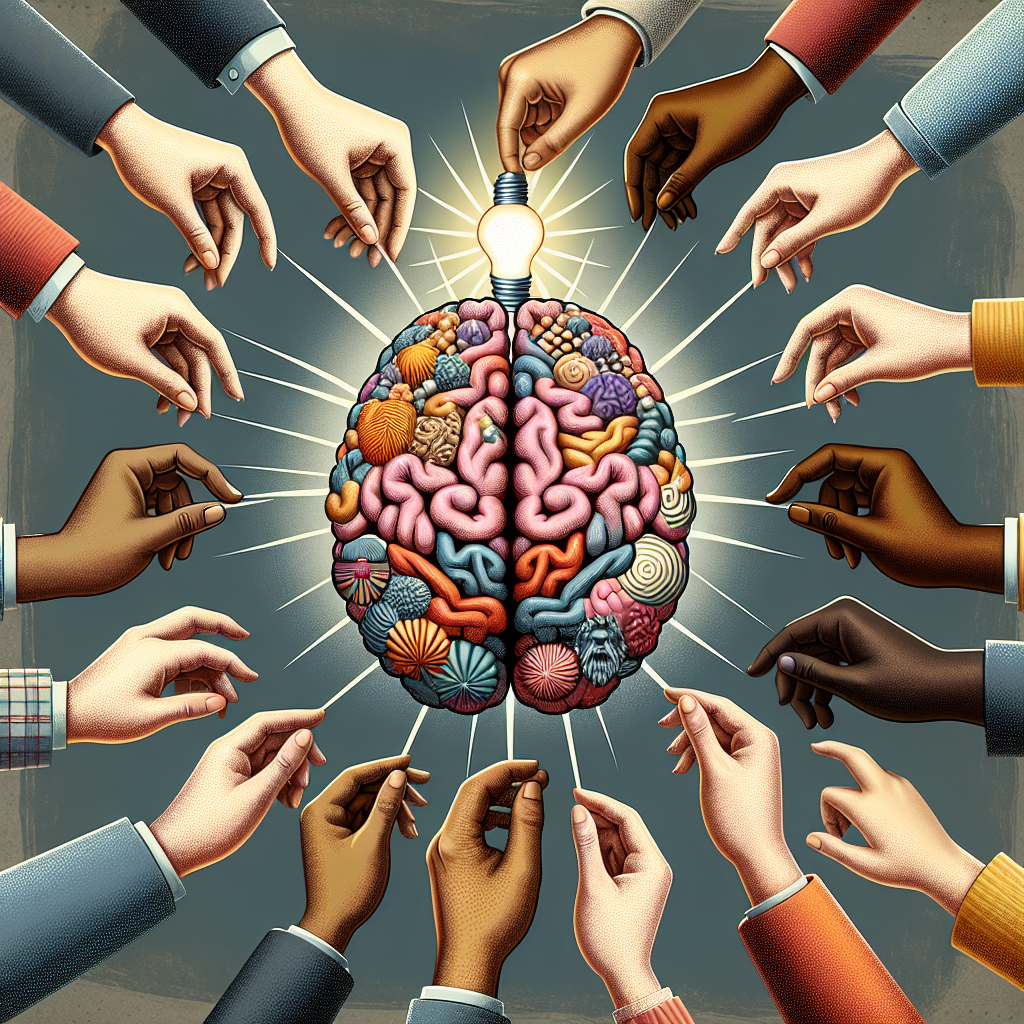
Beyond Conditioning: Exploring the Nuances of Social Learning in Behavioral Psychology
Introduction
In an age where human behavior is governed by a complex interplay of influences, understanding how we learn from each other becomes crucial. While classical and operant conditioning have long dominated behavioral psychology, it is vital to delve deeper and embrace a broader perspective. Beyond Conditioning: Exploring the Nuances of Social Learning in Behavioral Psychology offers a rich, multifaceted understanding that adds nuance to how we interpret behavior and learning. From the fundamentals of why we mimic others to practical implications for modern life, this exploration offers revolutionary insights that can transform how we perceive human behavior.
The Foundations of Behavioral Psychology
Before we dive deeper into social learning, let’s establish the core principles of behavioral psychology that set the stage for this discussion.
Classical Conditioning
Classical conditioning, famously demonstrated by Pavlov’s dogs, outlines how a neutral stimulus can become associated with a meaningful stimulus. This theory explains how we can become conditioned to responses, but it largely overlooks how social environments influence learning.
Operant Conditioning
Operant conditioning, introduced by B.F. Skinner, focuses on how behaviors are modified through reinforcement or punishment. While immensely influential, this form of learning fails to account for how social contexts shape behaviors.
Transition to Social Learning Theory
With these foundational theories in mind, it is essential to transition into social learning theory, prominently pioneered by Albert Bandura. Bandura asserted that people learn not only through direct reinforcement but also through observing others. This insight marks a significant shift beyond conditioning, acknowledging that our environmental context plays a pivotal role in shaping behavior.
Observational Learning
Observational learning posits that individuals can acquire new behaviors merely by watching others. Bandura’s experiments with Bobo dolls illustrated how children could imitate aggressive behaviors modeled by adults, emphasizing that our learning is not isolated from social influences.
The Dynamics of Social Learning
Key Factors Influencing Social Learning
-
Attention: For observational learning to occur, an individual must first pay attention to the behavior being modeled. Factors such as the model’s attractiveness and the complexity of the behavior can significantly affect attentiveness.
-
Retention: After observing, the learner must retain the information. This involves cognitive processes, such as rehearsal and mental imagery.
-
Reproduction: The ability to reproduce the behavior is critical. Even if a person has learned a behavior, practical application depends on one’s physical and psychological capabilities.
- Motivation: Finally, the desire to perform the observed behavior plays a crucial role. Incentives, personal beliefs, and social norms can heavily influence motivation.
In this framework, we see a complex interaction occurring beyond conditioning, where social dynamics take center stage.
Real-World Applications of Social Learning Theory
To better understand the implications of social learning, let’s look at specific case studies that illustrate its real-world applications.
Case Study 1: Bullying and Aggression in Schools
In many educational settings, bullying incidents have been shown to spread like contagion, primarily through social learning processes. For instance, if a student witnesses peers engaging in bullying behavior, they may be more likely to imitate that behavior, believing it is acceptable or desirable. This observation underscores the need for implementing programs that promote positive role models to counteract negative influences.
Analysis:
This case highlights the importance of environmental context and the behaviors modeled within that context. Schools that foster a culture of empathy and respect can significantly reduce instances of bullying, showing the transformative power of social learning.
Case Study 2: Health Behavior Changes during the COVID-19 Pandemic
The COVID-19 pandemic demonstrated how social learning can shape health behaviors. Public figures, influencers, and peers modeled health-compliant behaviors—such as mask-wearing and social distancing—leading to widespread adoption of these practices. Through observational learning, communities adapted their behaviors in response to the modeling present in their surroundings.
Analysis:
This instance presents a compelling argument for the importance of modeling positive health behaviors. Effective communication strategies can significantly influence public health outcomes, emphasizing the need for role models in promoting community compliance.
Case Study 3: Workplace Learning and Development
Organizations harness social learning by implementing mentorship programs and collaborative workspaces. New employees often learn by observing their more experienced colleagues, leading to improved performance and employee retention. Through social learning, companies can create an environment where knowledge and skills are shared.
Analysis:
This scenario illustrates how organizations can strategically design their environments to facilitate learning. By fostering a culture of shared learning, organizations can enhance overall productivity and employee satisfaction.
The Intersection of Social Learning and Technology
The role of technology in social learning has exploded in recent years, presenting new avenues for exploring these dynamics beyond conditioning.
Social Media as a Learning Platform
Platforms like Instagram, TikTok, and Twitter have redefined how social learning occurs. Through peer interactions and the influencers’ power, users are engaging in observational learning on an unprecedented scale. Social media dissemination of information can lead to rapid behavioral changes—be it trends in fashion, health tips, or social activism.
Online Learning Environments
The rise of online learning has further revolutionized education. Students partake in virtual classrooms, where collaborative tools and forums enable social learning. Engaging with peers in these settings fosters a dynamic exchange of ideas and knowledge.
The Double-Edged Sword of Social Learning in Online Communities
While social learning through technology can enhance knowledge-sharing, it can also foster misinformation. Understanding the complexities of social learning becomes crucial, particularly in an age where anyone can influence public opinion.
Beyond Conditioning: Integrating Social Learning into Practice
Educational Systems
- Curriculum Design: Schools should incorporate collaborative learning activities that emphasize observational learning techniques.
- Role Models: Promote positive role models in the curriculum to set a constructive social learning environment.
Workplace Strategy
- Mentorship Programs: Establish mentorship initiatives for knowledge transfer between generations.
- Collaborative Workspaces: Invest in environments that promote teamwork and engagement.
Community Engagement
- Public Health Campaigns: Use local influencers to model desired health behaviors.
- Social Initiatives: Create programs rooted in community involvement, emphasizing learning through observation.
Conclusion
Beyond Conditioning: Exploring the Nuances of Social Learning in Behavioral Psychology reveals transformative insights into human behavior. Understanding social learning allows us to appreciate the intricate ways people influence each other. By acknowledging these dynamics, we can create more effective educational, workplace, and community environments. As we embrace this knowledge, we empower ourselves and others, creating a more interconnected and informed society.
FAQs
-
What is social learning theory?
Social learning theory posits that individuals learn behaviors through observing and imitating others. It emphasizes the role of social context in shaping behaviors. -
How do social learning influences differ from classical or operant conditioning?
Unlike conditioning, which focuses on direct reinforcement, social learning recognizes the importance of observation, modeling, and social context. -
Can social learning occur in virtual environments?
Absolutely! Social media and online platforms facilitate social learning by allowing users to observe and model behaviors in real-time. -
How can educators implement social learning in the classroom?
Educators can use collaborative projects, role-playing, and peer feedback to promote observational learning among students. - What role do role models play in social learning?
Role models significantly impact learners’ behaviors, providing examples for students to emulate in various social contexts.
By understanding and implementing social learning concepts, we all can contribute to more enriched and informed experiences—creating a ripple effect that transcends traditional learning boundaries.

