


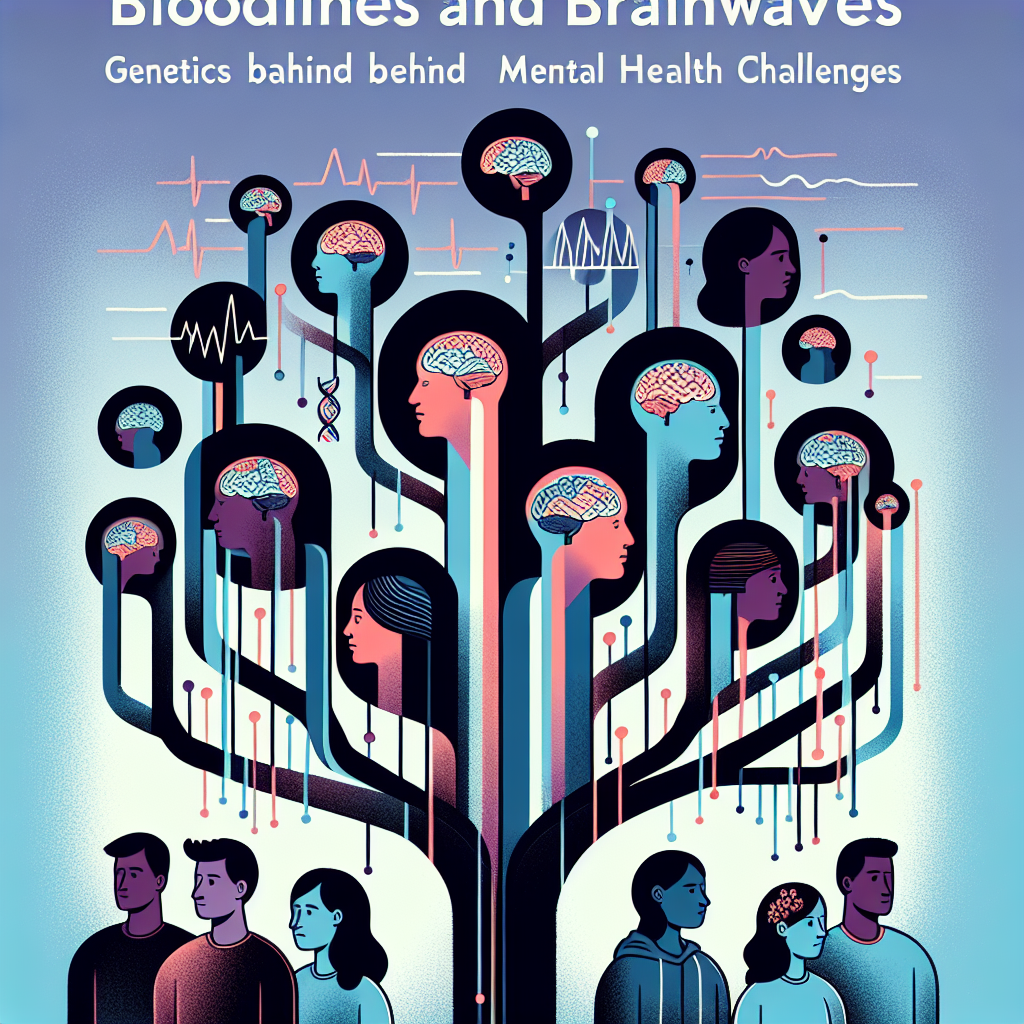
Bloodlines and Brainwaves: Genetics Behind Mental Health Challenges
Introduction
In a world where mental health is increasingly acknowledged as a crucial aspect of overall well-being, the intricate relationship between genetics and mental health challenges is both compelling and critical. What if I told you that understanding our bloodlines and brainwaves could unlock the keys to our mental well-being? The exploration of "Bloodlines and Brainwaves: Genetics Behind Mental Health Challenges" offers powerful insights into how our genetic make-up affects everything from anxiety to schizophrenia. This encompassing examination not only sheds light on the biological underpinnings of mental health issues but also paves the way for potential pathways of hope, treatment, and understanding.
Understanding the Genetic Puzzle
The Basics of Genetics and Mental Health
Genetics is the study of heredity and the variation of inherited characteristics. To comprehend how genes influence mental health, one must understand how traits are passed down from parents to their children. When we delve into "Bloodlines and Brainwaves: Genetics Behind Mental Health Challenges," we’re essentially looking at a complex tapestry woven by DNA, where each thread represents a different aspect of our biological and psychological inheritance.
Gene Environment Interaction
Mental health doesn’t depend solely on genetics; environmental factors play a vital role too. Gene-environment interactions occur when an individual’s environment influences the expression of their genes. For instance, stressful life events can trigger mental health conditions in individuals who have a genetic predisposition to these disorders. Research suggests that, while someone might inherit genes that increase their risk for a particular mental health challenge, it is often their environment that can either mitigate or magnify that risk.
The Role of Specific Genes
Researchers have identified several genes believed to be implicated in mental health conditions. For instance:
- COMT Gene: Associated with mood disorders; variations can impact dopamine levels in the brain.
- MAOA Gene: Linked to aggressive behaviors; the "warrior gene" is hypothesized to influence predisposition to certain types of aggression and antisocial behavior.
- BDNF Gene: Connected to neuroplasticity and depression; variations might indicate susceptibility to stress-related psychiatric disorders.
These genetic markers are not deterministic. Rather, the study of "Bloodlines and Brainwaves: Genetics Behind Mental Health Challenges" reveals that they may serve as potential indicators of increased risk rather than absolute predictors.
Case Studies: Real-World Implications
Case Study 1: The Schizophrenia Spectrum
A study published in Nature Genetics identified 108 loci associated with schizophrenia, helping illuminate the genetic underpinnings of this complex disorder. For families with a history of schizophrenia, understanding "Bloodlines and Brainwaves: Genetics Behind Mental Health Challenges" can provide critical information for early interventions.
Analysis
This case study illustrates the importance of genetic awareness in families. Knowing that certain gene variations exist can encourage at-risk individuals to seek preventive mental health care.
Case Study 2: Anxiety Disorders and Family History
In a longitudinal study published in JAMA Psychiatry, researchers found that individuals with first-degree relatives suffering from anxiety disorders are significantly more likely to exhibit similar symptoms. This reinforces the theme of "Bloodlines and Brainwaves: Genetics Behind Mental Health Challenges," as it emphasizes the heritability of anxiety.
Analysis
Understanding the familial pattern of anxiety can empower individuals to address their mental health proactively, potentially through therapy or lifestyle changes.
Understanding Brainwaves
What Are Brainwaves?
Brainwaves are patterns of electrical activity in the brain, categorized by their frequency: delta, theta, alpha, beta, and gamma waves. Each of these waves corresponds to different states of consciousness, cognitive function, and emotional regulation.
How Genetics Influence Brainwaves
Research shows that genetic factors can influence brainwave patterns, potentially affecting mood and mental health (as discussed in "Bloodlines and Brainwaves: Genetics Behind Mental Health Challenges"). For example, variations in the GABRA2 gene have been linked to altered brainwave activity in response to emotional stimuli, which may underlie susceptibility to emotional disorders.
Brainwave Pattern and Mental Health
Monitoring brainwave patterns through EEG can provide valuable insights into mental states. For instance, individuals with anxiety disorders often exhibit increased beta wave activity, which is associated with heightened alertness and anxiety.
Gene Therapy and Future Directions
As we delve deeper into understanding "Bloodlines and Brainwaves: Genetics Behind Mental Health Challenges," the emergence of gene therapy represents a promising frontier in mental health treatment.
What is Gene Therapy?
Gene therapy involves modifying or manipulating genes to treat or prevent disease. While still in its infancy in the realm of mental health, preliminary studies show potential for using this technique in disorders such as depression and bipolar disorder.
Potential Benefits and Ethical Considerations
While engaging in gene therapy, ethical considerations must be front and center. The implications of altering one’s genetic structure can be profound, leading to discussions about identity, consent, and societal impacts.
Conclusion
Understanding "Bloodlines and Brainwaves: Genetics Behind Mental Health Challenges" offers a multifaceted view of mental health, combining genetic predisposition with environmental factors. With this knowledge, families can equip themselves with the tools necessary to address mental health challenges head-on. By prioritizing genetic awareness, seeking early interventions, and advocating for advancements in mental health treatments like gene therapy, we pave the path toward a healthier future.
Actionable Insights
- Educate Yourself: Learn about your family history related to mental health conditions.
- Advocate for Research: Engage with organizations that fund mental health genetic research.
- Seek Professional Help: If you suspect a mental health challenge, consult a mental health professional who understands genetic factors.
FAQs
1. Can I inherit mental health conditions from my parents?
Yes, hereditary factors significantly influence mental health, but environmental factors also play a critical role.
2. What is gene therapy, and how can it help with mental health?
Gene therapy involves modifying genetic expression to treat illnesses, including potential mental health disorders.
3. How can I determine my risk for mental health challenges?
Family history and genetic testing can help assess your risk.
4. Are all mental health conditions genetic in nature?
No, while genetics play a significant role, they interact with environmental factors, making mental health a complex interplay of influences.
5. What resources are available for understanding genetic mental health challenges?
Numerous organizations and academic institutions provide resources on mental health genetics. Consider consulting a genetic counselor for personalized insights.
Through exploring "Bloodlines and Brainwaves: Genetics Behind Mental Health Challenges," we gain not only the knowledge of our genetic inheritance but also the power to transform our understanding and approach to mental health. Together, we can bridge the gap between bloodlines and brainwaves, fostering dialogue, awareness, and ultimately, better mental health for future generations.

