


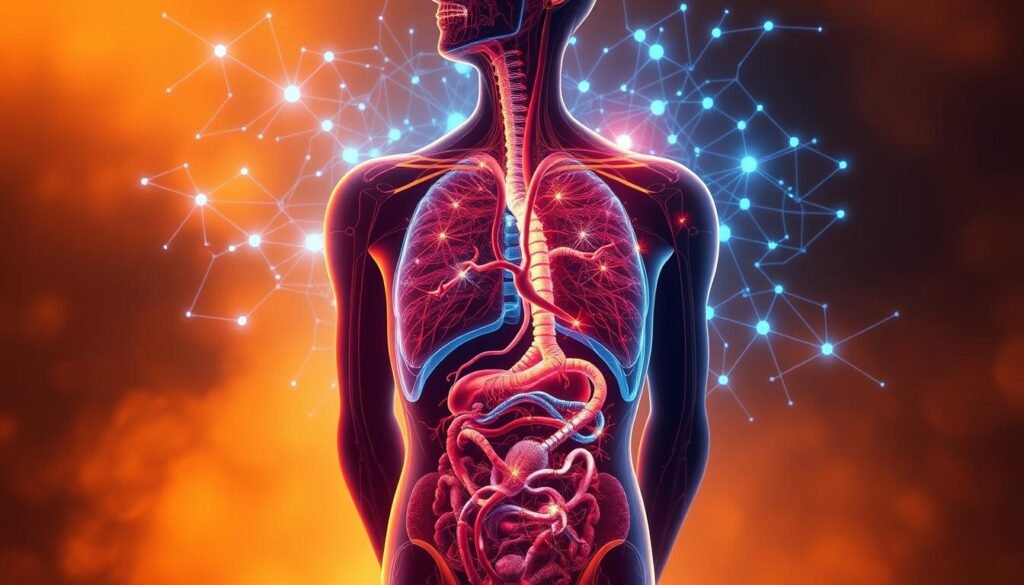
Ever felt your heart racing before a big event? Or days when everything feels too much, and others when you’re on top of the world? 🤔
Your body has an amazing system inside. It’s like a control center that controls your heart rate and keeps you calm.
When life gets tough, your stress response kicks in. It’s a complex process involving your nervous system and hormones.
But here’s the cool thing—physiological self-regulation is real and you can learn it. By understanding stress, you can manage your reactions and perform better when it counts. 💪
The mind-body connection through your vagus nerve links your thoughts to physical responses. Learning to work with this system can change everything!
Ready to improve how your body responds? Let’s dive into science-backed ways to make it happen! ✨
Key Takeaways
- Your nervous system controls your stress response through changes like heart rate and hormone release
- The vagus nerve connects your brain to your body, helping regulate major systems
- Too much stress can harm your heart, lungs, digestion, and immune system
- Knowing how your nervous system works helps you manage stress better
- Techniques like breathwork and movement can improve how you respond to stress
- Learning to regulate your body can help you in tough situations like exams
Understanding Your Body’s Stress Engine
Inside you right now, two powerful systems are working together to manage every stressful moment. These systems don’t operate randomly—they follow precise patterns that you can learn to recognize and influence. When you understand how your body’s stress engine actually works, you gain the power to optimize your performance when it matters most!
Your body relies on the autonomic nervous system to handle stress automatically, without you having to think about it. This incredible system operates through two main pathways that activate at different speeds and serve different purposes. Think of them as your body’s quick-response team and your endurance squad working in perfect coordination! 💪
The first pathway is called the sympathetic-adreno-medullar (SAM) system—your body’s turbo boost! ⚡ When you face a sudden challenge, this system kicks in within seconds. The SAM system floods your bloodstream with powerful chemicals called norepinephrine and epinephrine (you probably know epinephrine as adrenaline). These stress hormones create immediate changes throughout your entire body!
Here’s what happens when your sympathetic nervous system activates: your heart starts pumping faster, your blood pressure rises, glucose floods into your bloodstream for instant energy, and your mental alertness sharpens dramatically. Your pupils even dilate to help you see better! This is physiological arousal in action—your body preparing you to perform at peak levels.
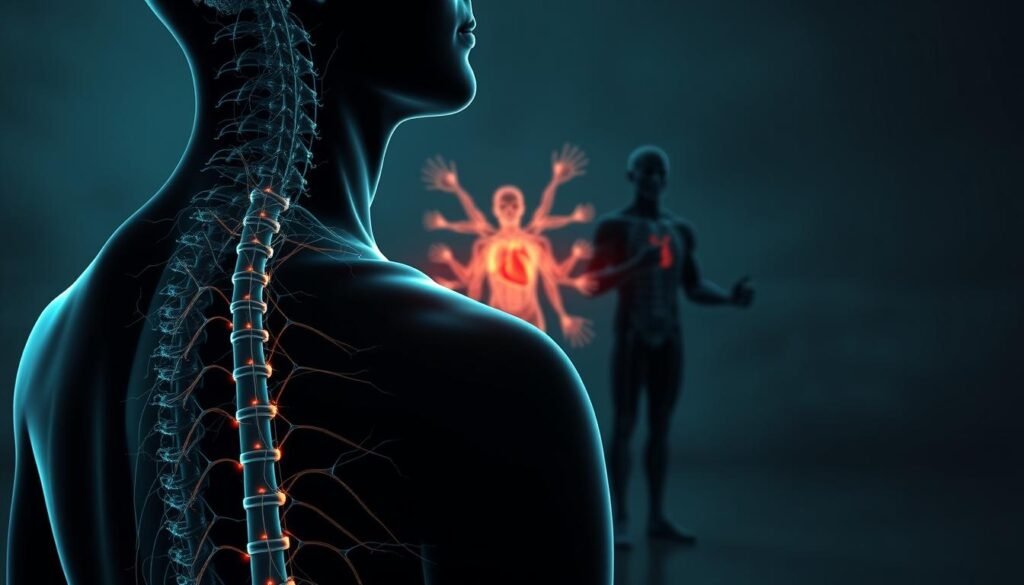
But your body has another system working behind the scenes—the hypothalamic-pituitary-adrenal (HPA) axis. While the SAM system gives you that instant energy surge, the HPA axis provides sustained support for longer challenges. This system moves slower, taking minutes to fully activate, but its effects last much longer! 🎯
The HPA axis starts in your brain, where the hypothalamus releases corticotropin-releasing hormone (CRH) when it detects stress. This triggers your pituitary gland to release ACTH (adrenocorticotropic hormone), which then signals your adrenal glands to produce cortisol. Cortisol is your body’s sustained-release stress hormone—it keeps your energy levels up and maintains your alertness during extended periods of challenge.
Understanding these two systems transforms your approach to stress response management! Athletes use this knowledge to optimize training and recovery cycles. Students preparing for certification exams can learn to work with their stress response instead of fighting against it. When you recognize what’s happening physiologically, you can apply specific techniques to either activate or calm these systems intentionally.
| System Component | Activation Speed | Primary Hormones | Duration of Effect | Main Purpose |
|---|---|---|---|---|
| SAM System | Seconds | Norepinephrine & Epinephrine | Minutes | Immediate response and quick energy |
| HPA Axis | Minutes | Cortisol | Hours | Sustained arousal and endurance |
| Parasympathetic Nervous System | Minutes to Hours | Acetylcholine | Extended periods | Recovery and restoration |
The parasympathetic nervous system serves as your body’s recovery mechanism, working to bring you back to baseline after stress activation. This system doesn’t get as much attention as its counterpart, but it’s absolutely essential for long-term health and performance! When your parasympathetic system engages, your heart rate slows, digestion improves, and your body shifts into repair and recovery mode. 🌟
Here’s the game-changer: most people experience stress without understanding what’s happening inside their bodies. They feel their heart racing and think something’s wrong, when actually their SAM system is doing exactly what it’s designed to do! When you recognize physiological arousal as your body preparing you for peak performance, you can channel that energy productively.
This knowledge becomes incredibly practical when you’re preparing for your teaching certification exam. You’ll walk into that testing center with confidence, knowing that your racing heart and heightened alertness aren’t signs of panic—they’re your stress response management systems giving you the cognitive boost you need to recall information and think clearly under pressure! 🚀
The key to mastering your body’s stress engine isn’t eliminating stress—it’s learning to recognize which system is active and applying the right techniques to optimize your response. Throughout this article, you’ll discover specific, research-backed methods to activate your SAM system when you need energy and focus, engage your HPA axis for sustained performance, and trigger your parasympathetic response when it’s time to recover and recharge!
The Autonomic Nervous System: Your Body’s Control Panel
Your body makes thousands of automatic adjustments every second. Your heart beats, lungs breathe, and digestion works without you thinking. Your blood pressure also adjusts automatically. 💪
This is thanks to your autonomic nervous system. It’s your body’s control panel, working behind the scenes to keep you alive and thriving. 🎛️
The autonomic nervous system has two main branches. They work together like a balanced team. One is like your body’s gas pedal, and the other is like the brake. Both are key for your body’s performance and well-being! 🚗
Learning how these systems work gives you real power over stress. You can choose when to activate each system. This lets you control your energy, focus, and recovery. ✨
Your Performance Accelerator
Your sympathetic nervous system is like your body’s gas pedal! 🏎️ It kicks in when you need to perform or face a challenge.
Sympathetic mobilization makes you more capable. Your heart beats faster, and your pupils get bigger. This helps you see better and stay alert. 🌟
Blood flow goes to your muscles, and your liver gives you energy. Your breathing gets better, and your body releases hormones to keep you alert. 🔥
Your sweat glands also help keep you cool during hard work. This system is vital for doing your best! 💯
But remember, it’s meant for short, intense efforts. Knowing this helps you use it wisely. 🎯
Your Recovery and Restoration System
Your parasympathetic nervous system is like your body’s brake pedal! 🛑 It’s your rest-and-digest mode, helping you recover and recharge.
The parasympathetic response helps your body heal and grow. Your heart rate slows, and blood flow goes to your digestive system. This helps you digest food and get rid of waste. 🌱
This system boosts your immune system and helps you recover from injuries. It also promotes muscle growth and cell repair. 🌱
Your breathing gets deeper, and your body starts digesting food before you even eat. Your pupils get smaller, and you think more clearly. 🌟
This system is key for healing and getting stronger. You can’t recover or build resilience without it! 💪
Mastering stress means using both systems well. Too much of one without the other can lead to burnout or feeling sluggish. ⚖️
Understanding these systems lets you use them intentionally. You’ll learn how to boost your performance and recover. This gives you full control over your nervous system! 🌈
This balance is the key to stress resilience and well-being. When you master your nervous system, you can handle life’s challenges better. 🎉
Polyvagal Theory and the Three-State System
Learning about polyvagal theory can change how you handle exam stress and get ready for your certification! 🎯 Dr. Stephen Porges created this framework. It shows your autonomic nervous system has three distinct hierarchical states. These states decide how you react to safety and danger.
This knowledge is not just theory. It’s a guide for success in your exams! Knowing which state you’re in lets you use special techniques to get into your best performance zone. Let’s dive into these three states and learn how to move through them on purpose! 🚀
The three-state system is like a smart security system in your body. Each state has its own survival role and brings different physical, emotional, and mental experiences. The key to mastering stress is knowing which state you’re in and how to switch between them wisely.
Safe and Social: Ventral Vagal State
The ventral vagal state is perfect for learning and doing well on exams! 🌟 When you’re in this state, you feel safe enough to connect with others and think clearly. This is the newest part of polyvagal theory, and it’s where you should spend most of your study time.
In this state, your face is relaxed, your voice sounds natural, and your heart rate is healthy. You can use your brain better for solving problems, remembering things, and thinking creatively. This is your best zone for your certification exam!
Here’s what ventral vagal activation looks like in real life:
- Calm yet alert awareness that keeps you focused without tension
- Social connection feels natural and you can engage easily with study groups
- Clear thinking and memory access flow without effort
- Emotional regulation happens smoothly without overwhelming reactions
- Curiosity and openness to learning new material
Your body’s ability to detect safety or danger determines if you can enter this state. When you feel safe, your ventral vagal complex turns on automatically. This is why making a calm, organized study space is so important for getting ready for your exam! 💡
Fight or Flight: Sympathetic Mobilization
When you sense danger, you move into sympathetic mobilization—the fight-or-flight response! 💪 This isn’t always bad. Sometimes, a little bit of sympathetic activation can help you perform better when you need energy and quick thinking.
During sympathetic activation, your body changes a lot. Your heart beats faster, blood goes to your big muscles, and stress hormones like cortisol and adrenaline increase. Your pupils get bigger, your breathing gets quicker, and you’re ready to act.
The challenge is that too much sympathetic activation can drain your energy and hurt your learning. When you’re stuck in fight-or-flight mode, you can’t think deeply or remember things well.
Signs you’ve entered sympathetic mobilization:
- Racing heart and rapid breathing even without physical exertion
- Muscle tension in your jaw, shoulders, and back
- Hypervigilance and scanning for threats in your environment
- Difficulty concentrating on detailed study material
- Irritability or anxiety that seems out of proportion
The good news? You can use sympathetic activation to your advantage! Short bursts can help you get through tough study sessions. The key is to learn how to return to your ventral vagal state afterward. This ability to move between states builds true resilience! 🎯
Shutdown: Dorsal Vagal Freeze
The dorsal vagal state is your oldest survival response—immobilization and shutdown. 🛑 When fight-or-flight seems too much, your nervous system can freeze. This is the state you most want to avoid during exam prep.
Dorsal vagal shutdown happens when you feel a threat is too big to escape. Your metabolism slows, your heart rate drops, and you might feel disconnected from your body or feelings. Some people describe this as feeling numb, foggy, or “checked out.”
During exam stress, dorsal vagal activation might show up as:
- Brain fog and difficulty processing even simple information
- Emotional numbness or flatness that makes studying seem pointless
- Extreme fatigue that doesn’t get better with sleep
- Dissociation or feeling disconnected from your body and surroundings
- Hopelessness about your exam success despite past abilities
Recognizing dorsal vagal shutdown is absolutely critical because the techniques for sympathetic activation don’t work here! You can’t just relax or calm down when you’re in shutdown. Instead, you need gentle ways to bring energy back into your system.
The hierarchy of polyvagal theory means you usually need to go through sympathetic activation before reaching ventral vagal safety. Think of it like rebooting your nervous system—you can’t go straight from shutdown to being fully functional. You need to wake up your system slowly and safely! 💫
Understanding these three states gives you a powerful tool for self-awareness during your certification journey. Throughout this guide, you’ll learn specific techniques to move between these states on purpose. This will help you stay in your best learning zone and build the nervous system resilience you need for exam success! 🌟
Neuroception: Your Body’s Safety Detection System
Did you know your body makes quick safety decisions for you all the time? It affects your feelings, energy, and actions in ways you might not even notice. This is called neuroception! 🤯
Your nervous system is always checking if you’re safe. It looks at faces, voices, body language, and surroundings fast. It decides if you’re safe or not before you even think about it!
Neuroception is different from perception. Perception is when you consciously see, hear, and think. But neuroception works in the background. It asks if you’re safe or if someone is trustworthy every moment! ⚡
Imagine walking into your exam room. Your body’s safety system is already at work! It checks if the room is comfy, if the lights are too bright, and if the people look friendly. You might not even notice these details, but your body does! 😮
Learning about interoception can help you control your stress! If your heart is racing, you can ask yourself what’s causing it. This turns anxiety into useful information! 🌟
Knowing about neuroception changes how you handle stress. Instead of feeling bad for being anxious, you see it as your body’s way of protecting you. The goal is to learn to recognize these patterns and manage them when needed!
Building neuroception awareness lets you influence your body’s automatic responses. By using calming techniques or comfort objects, you tell your body it’s safe. This helps shift your nervous system from alert to calm! 💪
This idea of embodied cognition shows that our thoughts and feelings are connected to our bodies. Our thoughts affect our body, and our body’s systems affect our thoughts. It’s a constant conversation we’re not always aware of!
For your exam prep, this is huge! By understanding how your body detects safety, you can control your responses better. You’re learning to talk to your own nervous system! How amazing is that?! 🎯✨
Vagal Tone: Measuring Your Stress Resilience
Imagine checking your stress resilience like a bank account balance. That’s what vagal tone lets you do! 📊💪 It shows how well your nervous system handles stress and recovers.
Vagal tone is like a shock absorber for your body. High vagal tone means you can handle stress better and bounce back fast.
Low vagal tone makes challenges harder and recovery slower. But, the good news is you can measure and improve it! ✨
Vagal tone shows how active your vagus nerve is. This nerve connects your brain to your body. A higher vagal tone means you’re more calm and focused, which helps you do well on exams! 🎯
The Science Behind Variability
Heart rate variability is the key to measuring vagal tone. But here’s a twist: a steady heartbeat means you’re not as resilient! 🫀
A healthy heart has natural ups and downs in its rhythm. This shows how well your nervous system is working.
High HRV means your body can relax and focus well. This flexibility is key for doing your best under pressure! 💪
Low HRV means your body might be too stressed or not stressed enough. Knowing your heart rate variability helps you improve! 📈
Studies show people with high HRV do better in many ways:
- Better emotional control during stress
- Quicker recovery from hard tasks
- Improved focus during tough tasks
- Better sleep and recovery
- Greater stress resilience and adaptability
Practical Assessment Methods
You can start tracking your vagal tone regulation today with easy tools! 📱 No fancy lab equipment needed!
Apps and affordable chest straps give you HRV readings. Elite HRV, HRV4Training, and Welltory are popular choices. Many fitness trackers also track HRV! 🎉
For the best biofeedback, measure every morning. This shows how well your nervous system recovered overnight.
Here’s how to assess your vagal tone:
- Measure at the same time daily—ideally within 30 minutes of waking
- Remain calm during the 2-5 minute measurement
- Track your baseline over 7-14 days to establish your range
- Note patterns connected to sleep, stress, exercise, and recovery
- Adjust your practices based on the data feedback you receive
Your baseline HRV is unique to YOU—comparing yourself to others isn’t helpful! What matters is your personal trend over time. 📊
Look for these signs of vagal tone improvement:
- Upward trending baseline over weeks and months
- Faster recovery after stressful events or intense workouts
- Higher morning readings indicating better overnight restoration
- More consistent values showing improved regulation capacity
Lower readings don’t mean failure—they provide valuable feedback! A dip in HRV might signal you need extra recovery, better sleep, or stress management that day. This is actionable intelligence for your nervous system! 🧠💡
In this guide, you’ll learn specific techniques and strategies to boost your vagal tone. You’ll see your HRV data improve as your stress resilience grows! 🌟
This isn’t just theory—it’s data-driven self-optimization. You’ll learn to control your stress response. Your nervous system fitness is about to level up! 🚀
Body as Engine: Stress Physiology You Can Use Somatic Regulation
Your body is a key to quick stress relief. Somatic regulation techniques work faster than any mental strategy. You can use your body to regulate your nervous system directly! 💪✨
Remember everything about your nervous system states, neuroception, and vagal tone? This is where it all comes together into practical application! 🎯
Somatic regulation uses body-based techniques to influence your autonomic nervous system. It works bottom-up through your body to affect your mental and emotional states.
Here’s a key insight: your body’s state is actually creating your thoughts and feelings, not just responding to them! 🧠💭
Changing your physiology through specific somatic experiencing techniques shifts your mental and emotional experience. This is the essence of embodied stress relief in action!
Think about being stressed before your certification exam. Telling yourself “just calm down” rarely works, right? 😅 But using somatic regulation strategies—like changing your breathing or adjusting your posture—your nervous system responds immediately!
The difference between traditional stress management and somatic approaches becomes clear when we compare them side by side:
| Approach Type | Method | Speed of Effect | Accessibility During Stress |
|---|---|---|---|
| Top-Down (Cognitive) | Thinking, analyzing, reframing thoughts | Slower (minutes to hours) | Difficult when highly stressed |
| Bottom-Up (Somatic) | Breathing, movement, physical techniques | Rapid (seconds to minutes) | Accessible even during acute stress |
| Integrated Approach | Combining body and mind strategies | Most effective overall | Flexible and complementary |
The power of embodiment practices lies in their direct access to your autonomic nervous system. Your body holds stress patterns—like tension in your shoulders or shallow breathing. Physical interventions can create powerful shifts in autonomic regulation. 🌟
The body keeps the score. Somatic experiencing allows us to complete the stress response cycle that trauma and chronic stress often interrupt, restoring natural regulation to the nervous system.
Somatic experiencing therapy has shown that engaging your body’s innate capacity for self-regulation accesses healing pathways that cognitive approaches alone cannot reach. This isn’t alternative medicine—it’s evidence-based physiology! 🔬✨
The upcoming sections will equip you with a complete toolkit of embodiment practices:
- Breathwork techniques that shift your nervous system state in minutes
- Temperature exposure protocols that build stress resilience over time
- Movement practices that release stored tension from your body
- Recovery rituals that maintain long-term nervous system health
- Biofeedback training that gives you real-time data on your regulation
These aren’t random wellness tips you might find on social media. Each technique represents an evidence-based physiological intervention that works with your body’s natural systems! 🚀
The beauty of somatic regulation is that you can practice these techniques anywhere—even during your certification exam. When you feel anxiety rising, you’ll have immediate tools to shift your state without anyone noticing! 😌
What makes this approach so powerful for exam preparation is its dual benefit. First, you’re managing stress in the moment. Second, you’re actually training your nervous system to become more resilient over time through embodied stress relief practices.
Consider this: every time you successfully regulate your nervous system through somatic techniques, you’re strengthening your vagal tone. You’re teaching your body that it can return to safety and calm. You’re building the very resilience that will serve you on exam day and throughout your teaching career! 💪🌈
The connection between body and brain isn’t one-way. Yes, your thoughts affect your physiology—but your physiology powerfully affects your thoughts, emotions, and cognitive performance. This bidirectional relationship is what makes embodiment practices so effective.
Get ready to become a somatic regulation expert! The following sections will guide you through specific protocols, optimal timing, and progressive training methods. You’ll learn exactly how to implement these techniques into your daily routine and exam preparation strategy. 🎯✨
Your body isn’t just a vehicle carrying your brain around—it’s an intelligent system with its own wisdom. When you learn to listen to and work with your body’s signals, you unlock a level of stress mastery that cognitive strategies alone cannot provide!
Breathwork Techniques for Nervous System Regulation
Imagine having a remote control for your nervous system that you carry everywhere, costs nothing, and works in seconds—that’s your breath! 🌬️✨ Your breath is special because it’s the only autonomic function that operates both automatically AND under your conscious control. This makes breathwork a perfect bridge between your conscious intentions and your unconscious stress responses.
Your breathing pattern talks to your autonomic nervous system through the vagus nerve. When you breathe slowly with extended exhales, you send “safety signals” to your brain! 🧠💙 This isn’t just feel-good theory—it’s measurable physiology that affects your heart rate variability in real-time.
The beauty of breathwork for stress relief is that it requires zero equipment, zero training, and delivers results within minutes. Whether you’re facing exam anxiety, deadline pressure, or just everyday stress, you now have four powerful techniques at your disposal! Let’s explore each one so you can build your complete nervous system regulation toolkit! 🛠️💪
Box Breathing for Immediate Calm
Box breathing earned its reputation among Navy SEALs, emergency responders, and high-performers because it delivers immediate nervous system balance. The equal timing of inhalation, retention, exhalation, and pause creates a rhythmic pattern that your autonomic nervous system recognizes as a safety signal. 📦✨
This technique works through what researchers call “respiratory sinus arrhythmia”—your heart rate naturally increases slightly during inhalation and decreases during exhalation. By equalizing these phases, you create cardiovascular coherence that promotes vagus nerve regulation and emotional stability.
Box breathing is perfect for pre-exam jitters, anxiety before important meetings, or any moment when you need to downshift from activation to calm focus. Many students report feeling noticeably calmer within just 2-3 minutes of practice! 🎯
Ready to experience immediate calm? Here’s your complete protocol for mastering box breathing:
- Find your starting position: Sit comfortably with your spine straight but not rigid. Rest your hands on your thighs or in your lap. Close your eyes or soften your gaze downward.
- Exhale completely: Begin by releasing all the air from your lungs through your nose to create a clean starting point.
- Inhale for 4 counts: Breathe in slowly through your nose while mentally counting to four. Fill your lungs completely but without strain.
- Hold for 4 counts: Retain the breath comfortably for four counts. Keep your shoulders relaxed—don’t create tension!
- Exhale for 4 counts: Release the breath slowly through your nose for four counts, emptying your lungs completely.
- Hold empty for 4 counts: Pause with empty lungs for four counts before beginning the next cycle.
- Repeat for 3-5 minutes: Continue this pattern for at least five complete rounds, gradually extending to 10-15 rounds as you build comfort.
Pro tip: If four counts feels too long initially, start with three counts and gradually increase as your capacity builds! The rhythm matters more than the duration. 🎵
Physiological Sigh for Rapid Stress Relief
Here’s a game-changer discovered by researchers at Stanford University: the physiological sigh is the fastest method for reducing stress that neuroscience has identified! 😮💨💪 This technique works because it addresses the physiological mechanism that creates stress sensations in your body.
When you’re stressed, your alveoli (tiny air sacs in your lungs) can partially collapse, reducing oxygen exchange and increasing carbon dioxide levels. This creates that “air hunger” feeling that intensifies anxiety. The physiological sigh reinflates these air sacs and offloads excess CO2 in just seconds! 🌊
What makes this technique special is its efficiency—just 1-3 repetitions can produce measurable stress reduction. It’s perfect for those moments when you don’t have time for extended breathwork for stress relief practices but need immediate relief!
How to Perform the Physiological Sigh
This technique is beautifully simple but incredibly effective. Here’s exactly how to execute it:
- Take a deep inhale through your nose: Breathe in fully, filling about 80-90% of your lung capacity.
- Without exhaling, take a second quick inhale: This is the key step! Take a sharp, short second breath through your nose to completely top off your lungs.
- Exhale slowly and completely through your mouth: Release all the air in a long, slow exhale. Let your shoulders drop and your body soften.
- Return to normal breathing: After 1-3 repetitions, resume your regular breathing pattern and notice the shift in your nervous system state.
The double-inhale is what makes this work—it mechanically reinflates collapsed alveoli and maximizes the CO2 offload during the extended exhale. This triggers immediate parasympathetic activation and stress relief! 🎯✨
Extended Exhale for Parasympathetic Activation
When you need to consciously activate your body’s “rest and digest” mode, extended exhale breathing is your most reliable tool. The principle is elegantly simple: making your exhale longer than your inhale is like pressing your nervous system’s “calm down” button! 🛑🌊
This works through direct vagus nerve activation. Your vagus nerve—the primary nerve of the parasympathetic nervous system—is more active during exhalation than inhalation. By extending the exhale phase, you increase vagal tone and promote relaxation responses throughout your body.
Research shows that a 1:2 ratio (inhale to exhale) produces measurable increases in heart rate variability, indicating enhanced parasympathetic activation and stress resilience. This technique is perfect for evening wind-down, pre-sleep routines, or any time you need to transition from activation to rest! 🌙
Progressive Exhale Extension Practice
Build your extended exhale capacity gradually with this progressive protocol:
- Week 1 – Foundation (4:6 ratio): Inhale for 4 counts, exhale for 6 counts. Practice for 5 minutes daily to establish the pattern.
- Week 2 – Development (4:7 ratio): Maintain 4-count inhales while extending exhales to 7 counts. This deepens the relaxation response.
- Week 3 – Enhancement (4:8 ratio): Progress to 8-count exhales if comfortable. This maximizes vagal stimulation and nervous system regulation.
- Advanced Practice (5:10 ratio): Once established, you can experiment with 5-count inhales and 10-count exhales for even deeper relaxation.
Remember: never force or strain your breathing! If you feel air hunger or discomfort, return to a shorter exhale. The practice should feel calming, not stressful. Your capacity will naturally increase with consistent practice! 💪✨
Breath of Fire for Energy and Focus
Now let’s shift gears completely! While the previous techniques promote calm, Breath of Fire is your activation and energizing practice! ☀️🔥 This rapid, rhythmic breathing technique comes from yogic traditions and creates immediate alertness, mental clarity, and physical energy.
Breath of Fire works by increasing oxygen delivery to your brain and tissues while engaging your sympathetic nervous system in a controlled, beneficial way. Unlike stress-induced sympathetic activation, this is intentional activation that you direct and release at will—building your capacity to consciously shift nervous system states! 🎯
This technique is perfect for morning study sessions when you need to shake off grogginess, midday energy slumps, or pre-presentation moments when you need focused alertness. Many practitioners report feeling “switched on” after just 1-2 minutes of practice!
Practicing Breath of Fire Safely
Breath of Fire is powerful, so proper technique and safety guidelines are essential:
- Start seated with good posture: Sit cross-legged on the floor or upright in a chair. Keep your spine elongated and shoulders relaxed.
- Place one hand on your belly: This helps you feel the pumping action that powers this technique.
- Begin with passive inhales and active exhales: Forcefully exhale through your nose while pulling your navel toward your spine. The inhale happens automatically as your belly relaxes.
- Establish a steady rhythm: Start with 1-2 exhales per second. This creates a rapid, pulsing breath pattern.
- Practice for 30-60 seconds initially: Build duration gradually as your capacity increases. Advanced practitioners may practice for 3-5 minutes.
- End with a complete exhale and slow inhale: After your final rapid breath, exhale completely, then take a slow, deep breath and hold for 5-10 seconds before releasing.
Important safety notes: Avoid Breath of Fire if you’re pregnant, have high blood pressure, respiratory conditions, or active inflammation. Stop immediately if you feel dizzy, lightheaded, or uncomfortable. Always practice on an empty stomach! ⚠️
| Breathing Technique | Primary Effect | Best Used For | Duration | Nervous System Impact |
|---|---|---|---|---|
| Box Breathing | Immediate balance and calm | Pre-exam anxiety, acute stress, emotional regulation | 3-5 minutes | Balances sympathetic and parasympathetic branches |
| Physiological Sigh | Rapid stress reduction | Quick relief, panic moments, overwhelm | 1-3 repetitions (30 seconds) | Strong parasympathetic activation through CO2 offload |
| Extended Exhale | Deep relaxation and vagal tone | Evening wind-down, sleep preparation, recovery | 5-10 minutes | Sustained parasympathetic dominance and vagal stimulation |
| Breath of Fire | Energy and mental clarity | Morning activation, focus enhancement, energy boost | 1-3 minutes | Controlled sympathetic activation and alertness |
You now have a complete breathwork toolkit that addresses every nervous system state you might encounter! 🎉 The key to mastery is consistent practice and experimentation—try each technique multiple times to discover which ones resonate most powerfully with your unique physiology.
Start by choosing one technique that matches your current need. Practice it daily for a week before adding another. This builds genuine competency, not just surface-level familiarity. Remember: these aren’t just vagus nerve techniques to memorize—they’re skills to embody! 💪✨
Your breath is always with you, always available, and always powerful. Master these four techniques and you’ll have real-time control over your stress responses—a superpower that serves you in exams, career challenges, and every aspect of life! 🚀💙
Heat and Cold Exposure for Stress Resilience
What if making yourself uncomfortable could help you handle exam stress better? 🌡️ It sounds weird, but controlled temperature exposure is a powerful stress tool. It trains your body to handle stress and bounce back fast. This is key for doing well on exams! 💪
Think of temperature exposure as a workout for your stress system. It teaches your body to stay calm and recover well. These skills help you do better on exams. Ready to learn how? 🚀
Cold Exposure Protocol and Benefits
Cold exposure is a simple yet powerful stress tool. 🧊 Even a cold shower can help. It makes your body active while keeping your mind calm. This is exactly what you need for exams! ✨
It boosts focus, mood, and alertness by up to 530%! 🧠 It also boosts your immune system and reduces inflammation. When you can handle cold water, exams seem easy! 🧠
Start with “cold finishing” in your shower. It’s safe and effective for building resilience. Listen to your body and breathe calmly. You’re training to handle stress better with each session! 💙
Beginner Cold Exposure Progression
Start slow to build up cold tolerance. Here’s a step-by-step guide for the first 8 weeks:
| Week | Duration | Temperature | Frequency | Focus |
|---|---|---|---|---|
| 1-2 | 30 seconds | Cool (not shocking) | 3-4 times/week | Calm breathing practice |
| 3-4 | 60 seconds | Cold (uncomfortable) | 4-5 times/week | Mental presence maintenance |
| 5-6 | 90 seconds | Cold (challenging) | 5-6 times/week | Relaxation during stress |
| 7-8 | 2-3 minutes | Cold (fully adapted) | Daily | Confidence building |
Pro tip: Never push yourself too hard! If you feel dizzy or uncomfortable, warm up right away. Cold exposure should challenge you, not scare you! 🛡️
Heat Therapy and Sauna Practice
Heat therapy is another great tool! 🔥 Saunas or hot baths improve your heart and help you recover. It’s like a workout for your heart that also calms your nerves! 🧘♀️
It boosts your heart rate and improves endurance. It also makes you more sensitive to happiness. This means you’ll feel better and recover faster! The deep relaxation after a sauna is perfect for relaxing before exams. ✨
Regular heat therapy also improves your insulin sensitivity and detoxifies your body. These benefits help your brain and improve your exam performance! 🧠💪
- Temperature: 170-180°F (77-82°C) for traditional sauna; 120-140°F for infrared sauna
- Duration: 15-20 minutes per session (start with 10 minutes if you’re new!)
- Frequency: 2-4 times per week for optimal benefits
- Hydration: Drink 16-20 ounces of water before and after each session
- Timing: Evening sessions work best for promoting recovery and sleep quality
- Cool-down: Allow 10-15 minutes for gradual body temperature normalization
Safety first: If you have heart problems, are pregnant, or take certain meds, talk to your doctor first! Listen to your body and stop if you feel dizzy or sick. 🛡️
Contrast Therapy for Recovery
Ready for a top nervous system training method? Contrast therapy uses both heat and cold to train your body. It teaches you to switch between calm and active states quickly. This is key for exams! 💫
It trains your body to adapt fast to stress. This means better emotional control, faster recovery, and improved resilience. Athletes use it for recovery; you’re using it for nervous system optimization! 🏆
Contrast therapy combines the benefits of heat and cold. You get a boost in focus, improved heart health, and enhanced recovery. It’s like getting three stress tools in one! ✨
Hot-Cold Contrast Protocol
Here’s your complete contrast therapy protocol for maximum nervous system benefit:
| Phase | Temperature | Duration | Physiological Effect |
|---|---|---|---|
| Hot (Sauna/Bath) | 170-180°F | 3-5 minutes | Vasodilation, relaxation, heat stress |
| Cold (Shower/Plunge) | 50-60°F | 30-60 seconds | Vasoconstriction, alertness, activation |
| Cycles | Alternate | 3-5 rounds | Enhanced circulation, nervous system training |
| Final Phase | Cold | 1-2 minutes | Sympathetic activation, mental clarity |
Implementation tips: Always end on cold for an energizing effect, or end on heat if you’re doing this before bed! Start with 2-3 cycles and build up gradually. Practice this 1-2 times per week for optimal nervous system adaptation without overdoing it. 💙
Remember: these temperature-based stress resilience techniques work because they’re challenging! Each session builds your ability to stay calm under pressure, recover quickly from stress, and maintain mental clarity when it matters most. That’s exactly what you need to crush your certification exam with confidence! 🎯🚀
Sunlight Dosing and Circadian Rhythm Optimization
Let’s talk about a simple way to boost your performance without spending money. ☀️✨ Sunlight and adjusting your body’s internal clock are key. They help your nervous system and improve how you do on exams!
Your body has a 24-hour clock that controls hormones, alertness, and recovery. When it matches the day-night cycle, you feel better! 🕐💪
Light is the main signal for your body’s clock. Morning sun gives you energy and boosts your mood. It also helps you sleep better later! 🧠🌈
Morning Light Exposure Protocol
Starting your day with light has many benefits. It strengthens your nervous system and helps you handle stress. You’re working with your body, not against it! 🌅
Optimal Morning Light Routine
Here’s what you need to do in the morning:
- Timing: Go outside 30-60 minutes after waking up
- Duration: Stay in the sun for 10-30 minutes
- Method: No sunglasses or windows—just direct sunlight!
- Cloudy days: Get outside for 20-30 minutes
This simple step has three big benefits:
- It wakes you up with energy for studying! ⚡
- It helps you sleep well tonight! 😴
- It makes you feel good and focused! 🌈
Even on cloudy days, sunlight is good for you. It might be softer, but it’s just as helpful. Don’t skip this step because of clouds! ☁️
Evening Light Management
What you do with light in the evening is also important. Evening light, like from screens, messes with your body’s rhythm. This is where your body and mind work together to manage stress! 🌙
Devices like phones and TVs fight against your body’s calm-down process. Blue light after sunset messes with your clock and makes it hard to sleep. This hurts your performance the next day! 📱❌
Creating Evening Light Hygiene
Start these evening habits 2-3 hours before bedtime:
- Dim all overhead lights and use warm, soft lighting
- Use blue-light blocking glasses when using screens at night
- Enable night mode on devices to cut down blue light
- Create screen-free zones in your bedroom and during quiet time
- Use red or amber lighting for evening activities
These changes tell your body it’s time to relax. This helps you sleep better and recover. 💤✨
| Time Period | Light Strategy | Primary Benefit | Impact on Performance |
|---|---|---|---|
| Morning (0-2 hours after waking) | Bright natural sunlight exposure | Cortisol activation & circadian anchoring | Enhanced alertness and focus |
| Daytime (2-12 hours awake) | Bright indoor/outdoor light | Sustained energy and mood regulation | Optimal cognitive function |
| Evening (2-3 hours before bed) | Dim, warm lighting only | Melatonin production support | Quality sleep and recovery |
| Night (sleep period) | Complete darkness | Deep sleep and restoration | Memory consolidation & stress resilience |
When you get your body’s rhythm right, you sleep better, feel more alert, and think clearer. You also handle stress better! 🏗️✨
This basic practice supports all your exam prep. Your nervous system gets stronger, stress management works better, and your body’s rhythms help you. Make light exposure a daily priority—your success depends on it! 💪🌟
Posture, Pacing, and Embodied Movement
Movement and posture are key to managing stress. They affect your nervous system directly. Your body’s position and how you move can change how you feel. This connection helps you control stress while studying! 💪✨
Understanding how you sit and move helps keep your nervous system balanced. These embodiment techniques send signals to your autonomic nervous system. This helps you stay focused during study sessions.
Let’s explore how to use your body to support your stress resilience and exam performance! 🎯
Power Postures and Nervous System States
Your body position affects your stress response right now! Research shows that how you sit or stand influences hormone levels and your nervous system. It’s not just about standing tall—it’s about how your body responds to your position. 🦸♀️
When you adopt certain postures, your body interprets them as signals about your environment. Open, expansive positions signal safety and readiness. Closed, contracted positions signal threat or vulnerability.
Studies by social psychologist Amy Cuddy and others have shown that power poses can increase testosterone by 20% and decrease cortisol by 25%! Changing how you sit or stand can significantly affect your physiology! 😲
Expansive vs Contractive Postures
Let’s look at the two main posture categories and their effects on your nervous system:
| Posture Type | Physical Characteristics | Nervous System Effect | Practical Application |
|---|---|---|---|
| Expansive Postures | Open chest, shoulders back, lifted head, arms uncrossed, feet planted firmly | Activates ventral vagal state, increases confidence hormones, reduces cortisol, promotes approach behaviors | Use before exams, during study breaks, when answering difficult questions, during presentations |
| Contractive Postures | Rounded shoulders, collapsed chest, head down, arms crossed, hunched position | Signals defensive state, increases stress hormones, reduces confidence, promotes avoidance behaviors | Recognize when studying—this position increases stress! Shift to neutral or expansive instead |
| Neutral Postures | Balanced alignment, relaxed shoulders, spine supported, head level, body symmetrical | Supports parasympathetic tone, allows natural breathing, maintains calm alertness | Optimal for sustained focus during study sessions, reading, note-taking |
Try this experiment right now: Spend 30 seconds in a contracted posture—slump forward, round your shoulders, drop your head. Notice how you feel. Now shift to an expansive posture—sit or stand tall, open your chest, pull shoulders back, lift your chin. Feel the difference? 🤔
That shift you just experienced is your embodied stress relief in action! Your nervous system responded to the postural change within seconds.
- Before study sessions: Spend 2 minutes in an expansive “power pose” (hands on hips, chest open, or arms raised in victory position) to prime your nervous system for confident learning! 💪
- During study breaks: Stand up, stretch into expansive positions, and reset your posture before returning to work!
- When feeling stuck: Physical expansion can unlock mental expansion—change your body position to shift your thinking! 🧠
- Pre-exam ritual: Use expansive postures in the bathroom or hallway before entering the testing room to reduce cortisol and boost confidence!
Pacing for Energy Conservation
Many exam candidates fall into the boom-bust cycle—pushing hard until exhaustion, crashing completely, recovering slowly, then repeating the pattern. This approach dysregulates your nervous system and makes stress management nearly impossible! 😰
Effective posture and pacing requires understanding your body as an energy system with natural rhythms and limits. Activity pacing means distributing your effort strategically across time, avoiding depletion. 🌊
Think of it like managing a battery: You can drain it completely and wait hours for a full recharge, or you can maintain a 60-80% charge through regular small recharges. The second approach keeps you consistently functional! 🔋
Activity Pacing Strategy
Here’s your practical framework for sustainable energy management during exam preparation:
- Work in 50-90 minute blocks: This aligns with your ultradian rhythms (we’ll dive deeper into this in Section 12!). Your nervous system naturally cycles through high and low arousal states approximately every 90 minutes! ⏰
- Take 10-20 minute breaks: These aren’t “wasted time”—they’re essential nervous system recovery periods that maintain your capacity for focus and prevent sympathetic overload!
- Alternate task intensity: Follow a demanding study block with a lighter review session or practice questions. Vary your cognitive demands throughout the day! 📚
- Track your energy patterns: Notice when you naturally feel most alert and focused. Schedule your most challenging study tasks during these peak windows!
- Respect your limits: Pushing past your capacity doesn’t build resilience—it creates nervous system dysregulation and extends recovery time!
Activity pacing prevents the sympathetic overdrive that leads to burnout. By working with your nervous system’s natural rhythms, you maintain higher quality focus for longer periods! ✨
Sustainable performance isn’t about working harder—it’s about working in harmony with your body’s energy systems.
Here’s what a well-paced study day might look like:
- 8:00-9:30 AM: High-intensity study (new material, complex concepts) – 90 minutes
- 9:30-9:45 AM: Break with movement and embodied stress relief – 15 minutes
- 9:45-11:00 AM: Medium-intensity work (practice questions, review) – 75 minutes
- 11:00-11:20 AM: Longer break with meal/movement – 20 minutes
- 11:20 AM-12:30 PM: Lower-intensity activity (flashcards, light reading) – 70 minutes
Notice the variation in intensity and the consistent break pattern? This rhythm supports nervous system regulation throughout your day! 🌊
Trauma-Informed Movement Practices
Movement isn’t just exercise—it’s a powerful form of nervous system regulation and somatic experiencing! But not all movement supports regulation. The key is approaching movement in a trauma-informed way that prioritizes safety, choice, and interoceptive awareness over performance or pushing through discomfort. 🧘♀️
Traditional exercise often emphasizes “no pain, no gain” mentality. Trauma-informed movement, by contrast, honors your body’s signals and works within your window of tolerance. This approach actually builds nervous system capacity more effectively!
When you move with attention to internal sensations—noticing how your body feels, what emerges, where you sense tension or ease—you’re practicing embodiment techniques that strengthen the connection between your conscious awareness and your autonomic nervous system. 💫
Why does this matter for exam preparation? Because stress and trauma get stored in your body, not just your mind! When you sit for hours studying, stress energy accumulates in your tissues. Trauma-informed movement helps discharge this accumulated activation and restore regulation.
Safe Movement Exploration Guidelines
Follow these principles to make movement a nervous system regulation tool instead of another stressor:
- Start with small, gentle movements: You don’t need intense workouts to regulate your nervous system. Simple movements like shoulder rolls, gentle stretches, or slow walking are highly effective! 🚶♀️
- Maintain interoceptive awareness: Pay attention to sensations inside your body as you move. Notice your breath, temperature changes, muscle sensations, and energy shifts!
- Stay within your window of tolerance: If movement creates overwhelm, anxiety, or disconnection, scale back. Effective regulation happens when you feel challenged but safe!
- Give yourself choices: Having autonomy in your movement practice (choosing pace, duration, type) helps restore a sense of agency that stress often diminishes! ✨
- Practice pendulation: This somatic experiencing technique involves moving between areas of tension and ease, helping your nervous system learn flexibility!
Here are specific embodiment practices to incorporate during study breaks:
- Gentle yoga or stretching: Focus on releasing tension in areas that hold stress (shoulders, neck, hips, jaw) with slow, mindful movements! 🧘
- Walking with awareness: Take a 10-minute walk where you notice the sensation of your feet touching the ground, your breath, and your surroundings!
- Dance or free movement: Put on music and move whatever your body wants to move—this spontaneous expression helps discharge stress energy! 💃
- Progressive muscle relaxation: Systematically tense and release different muscle groups to build body awareness and release holding patterns!
- Shaking or tremoring: Animals naturally shake after stress to complete the stress response cycle. Gentle shaking movements can do the same for you!
The goal isn’t to become an athlete—it’s to build a compassionate, regulated relationship with your body through movement. This embodied approach supports your nervous system throughout your exam journey! 🌟
Remember: Your body isn’t just a vehicle for your brain during exam prep. It’s an intelligent system that processes stress, stores information, and signals what you need. When you honor this through mindful posture, strategic pacing, and trauma-informed movement, you create the physiological foundation for sustainable success! 🎯💪
Ultradian Rhythms and Strategic Break Timing
Most students fight against their natural energy cycles instead of working with them, and that’s why they burn out! 🔄✨ Your body doesn’t run on constant high performance—it operates in ultradian rhythms, which are biological cycles that repeat every 90-120 minutes throughout your day. These natural patterns regulate your focus, alertness, and mental capacity. When you align your study sessions with these rhythms instead of pushing through fatigue, you unlock sustainable high performance without the exhaustion! Understanding ultradian breaks is one of the most powerful stress management techniques you can use during certification exam preparation. This approach transforms how you work and helps your nervous system stay balanced! 💪🌊
The 90-Minute Ultradian Cycle
Here’s what’s happening inside your body during each cycle: Your brain and nervous system move through predictable waves of high and low physiological arousal approximately every 90 minutes. During the first 60-90 minutes of each cycle, you’re in a peak performance window. Your prefrontal cortex is fully engaged, your focus is sharp, and your learning capacity is optimal! 📚🌟
This is your golden study time when information retention is highest. Your energy metabolism is running efficiently, and your sympathetic nervous system provides just enough activation to keep you alert without tipping into stress.
But then something important happens. After this peak period, your body naturally enters a recovery phase—a 10-20 minute trough where you might feel fidgety, less focused, or mentally tired. This isn’t laziness or lack of discipline! This is your parasympathetic system signaling that it’s time for restoration. 🧬
Research on ultradian rhythms shows that ignoring these natural troughs leads to accumulated stress and decreased performance over time. Your body needs these recovery windows to restore cognitive resources and maintain healthy physiological arousal levels throughout the day.
| Cycle Phase | Duration | Characteristics | Best Activities |
|---|---|---|---|
| Peak Performance | 60-90 minutes | High focus, optimal learning, sharp mental clarity | Deep study, complex problem-solving, exam practice |
| Recovery Trough | 10-20 minutes | Decreased focus, fidgeting, mental fatigue signals | Rest, movement, hydration, light physical activity |
| Transition Period | 5-10 minutes | Gradual return to alertness, renewed energy building | Task planning, organization, light review |
Implementing Recovery Breaks
Now that you understand ultradian rhythms, let’s talk about how to actually use this knowledge! The key is working in focused blocks followed by TRUE recovery breaks. This isn’t just about stepping away from your desk—it’s about giving your nervous system what it needs to reset. 🎯⏰
Here’s the critical mistake most people make: they take “breaks” that don’t actually reduce physiological arousal. Scrolling social media, checking emails, or watching videos doesn’t count as recovery! These activities keep your sympathetic nervous system activated and your energy metabolism in high gear.
Instead, effective ultradian breaks should include activities that genuinely activate your parasympathetic response. This is one of the most practical stress management techniques you can implement immediately!
Research shows that people who honor their natural cycles with strategic breaks maintain higher performance, better information retention, and significantly lower stress levels throughout the day. You accomplish MORE in less time with LESS burnout when you stop fighting your biology! 🚀🧠
- Physical movement: Take a 10-minute walk outside or do gentle stretching to shift your nervous system state
- Breathwork practice: Use any of the techniques from earlier sections to quickly downregulate arousal
- Nature exposure: Get sunlight and fresh air to support circadian rhythm alignment and mood regulation
- Hydration and nutrition: Drink water and have a light snack to support ongoing energy metabolism
- Power napping: A 10-15 minute rest can dramatically restore cognitive function and reduce accumulated fatigue
Designing Effective Ultradian Breaks
Let’s get specific about creating breaks that actually work! Your recovery periods should match the intensity of your study session. After a challenging 90-minute block of exam practice, your nervous system needs different support than after lighter review work. 💡✨
The best ultradian breaks combine multiple nervous system regulation techniques. For example, you might step outside for fresh air (visual and environmental change), practice extended exhale breathing (parasympathetic activation), and do light stretching (somatic release). This multi-layered approach gives your body complete recovery!
Set timers or use apps that remind you when 90 minutes have passed. Many students report that once they start honoring these natural cycles, they actually feel the shift in their energy and focus. Your body will start signaling when it needs recovery—you just need to listen! 🌟
- Plan your blocks: Schedule 90-minute focused study sessions with 15-minute breaks between them
- Prepare break activities: Have a list ready so you don’t waste recovery time deciding what to do
- Track your patterns: Notice when your natural energy peaks and troughs occur throughout the day
- Adjust intensity: Use harder material during peak windows and lighter review during lower-energy periods
- Protect your breaks: Treat recovery time as non-negotiable—it’s essential for sustained performance!
When you implement this approach consistently, you’ll notice something amazing: you maintain high-quality focus throughout the entire day instead of gradually declining. This is the difference between cramming with diminishing returns and studying smart with your body’s natural performance architecture! 🎓💪
HRV Training and Biofeedback
HRV training and biofeedback turn stress management into a science. You get real-time feedback on how well your stress techniques work! 📊💪 This is where science meets practical nervous system regulation in an exciting way. No more guessing if your breathing exercises are effective. You’ll see exactly how your body responds to different stress techniques!
Biofeedback acts like a personal nervous system coach. It shows you what’s happening inside your body in real-time. This helps you fine-tune your stress regulation practices for better results. This technology turns invisible body processes into visible data you can use to improve your stress response! 🚀
Using HRV Monitors Effectively
The foundation of effective HRV training is choosing the right monitor and understanding its data. 📱✨ Your HRV monitor is like a window into your autonomic nervous system. It gives you insights that were once only in research labs. The key is to be consistent and know how to interpret the data!
There are many devices for tracking heart rate variability. Chest strap monitors like the Polar H10 are the most accurate. They detect electrical signals from your heart. Wrist-based devices, like Apple Watch or Garmin, offer easy continuous monitoring but are less precise. Finger sensors paired with apps like Elite HRV are another good option for daily tracking.
The best device for you depends on your goals and lifestyle. For top accuracy, choose a chest strap. For general wellness tracking, wrist-based devices are great! 💪
Choosing and Interpreting HRV Metrics
Understanding HRV metrics turns raw data into useful nervous system insights! The numbers matter less than the trends over time. Here are the key metrics to track:
- RMSSD (Root Mean Square of Successive Differences): This shows your parasympathetic activity. Higher values mean better recovery and vagal tone improvement. 📈
- SDNN (Standard Deviation of NN Intervals): This measures overall heart rate variability. It shows your body’s flexibility and adaptability to stress.
- Personal Baseline Trends: Your individual patterns are more important than comparing to others! Track your morning readings over weeks to find your normal range. 🎯
- Recovery Scores: Many devices translate HRV data into simple recovery readiness scores. This helps you know when to push hard and when to rest.
For the most consistent data, take your HRV reading first thing each morning before getting out of bed! This captures your resting state without interference. Track these readings in a journal or app to see your progress over time. 📊
Resonance Frequency Breathing
Biofeedback makes resonance frequency breathing truly transformative! 🌊💨 This technique maximizes heart rate variability by syncing your breathing with your heart’s natural rhythms!
Everyone has a unique breathing rate that creates the best heart rate variability. When you breathe at YOUR resonance frequency, your heart, breathing, and blood pressure waves align. This state boosts vagal tone improvement and supports stress recovery! ✨
The beauty of resonance frequency breathing is how it enhances your interoception—your ability to sense internal body states. As you practice with biofeedback, you become more aware of subtle body changes. This strengthens the mind-body connection, supporting lasting resilience! 🧠💚
Finding Your Resonance Frequency
Finding your personal resonance frequency is like finding your nervous system’s sweet spot! Here’s how to identify YOUR optimal breathing rate:
- Set up your HRV biofeedback system: Use an app that provides real-time heart rate variability feedback with visual displays. Popular options include Elite HRV, HeartMath, or eSense.
- Start with a baseline rate: Begin breathing at 6 breaths per minute (5-second inhale, 5-second exhale). Watch your HRV amplitude on the screen as you maintain this rhythm for 2-3 minutes.
- Experiment systematically: Try different breathing rates between 4 and 7 breaths per minute. Spend 2-3 minutes at each rate: 7 bpm (4-second cycles), 6 bpm (5-second cycles), 5 bpm (6-second cycles), and 4.5 bpm (6.5-second cycles).
- Identify peak amplitude: Your resonance frequency is the breathing rate that produces the HIGHEST HRV amplitude on your biofeedback display! 🎯 You’ll see bigger oscillations in your heart rate graph at this magical rate.
- Fine-tune precision: Once you identify your approximate range, experiment with small adjustments (like 5.5 breaths per minute) to dial in your exact resonance frequency.
Once you’ve found it, practice resonance frequency breathing for 10-20 minutes daily! This becomes your foundation practice for building stress resilience techniques that create lasting nervous system changes. Most people notice improved emotional regulation and better recovery within just 2-3 weeks! 🌟
Progressive HRV Training Protocol
Building genuine heart rate variability improvement requires a strategic, progressive approach! You can’t rush nervous system adaptation, but you CAN guide it systematically toward greater resilience. This protocol layers multiple interventions over time, allowing your body to integrate each component before adding the next! 💪📈
The key principle behind progressive HRV training is consistency over intensity. Small, regular practices compound into significant physiological coherence improvements over weeks and months. You’re literally retraining your autonomic nervous system’s default settings! 🔧✨
8-Week HRV Improvement Plan
Ready for a structured roadmap to measurable vagal tone improvement? This 8-week protocol has helped countless people increase their HRV by 10-30%! Here’s your week-by-week game plan:
| Week | Primary Focus | Daily Practices | What to Expect |
|---|---|---|---|
| 1-2 | Baseline Establishment | Morning HRV readings, 10 minutes resonance frequency breathing, consistent sleep schedule | Establish your personal baseline patterns, learn your body’s signals, may see initial variability |
| 3-4 | Cold Exposure Integration | Continue breathing practice, add cold showers 2-3x/week (30-90 seconds), maintain HRV tracking | Temporary HRV dips after cold exposure followed by adaptation, increased alertness and energy |
| 5-6 | Circadian Optimization | All previous practices plus morning sunlight exposure (10 minutes), evening light reduction, sleep consistency | HRV baseline begins trending upward, improved sleep quality, more stable morning readings |
| 7-8 | Integration and Measurement | Full protocol implementation, compare HRV trends to baseline, adjust practices based on data | Clear improvements in RMSSD and recovery scores, greater stress resilience in daily life, enhanced interoception |
Throughout this protocol, track three key indicators: your morning RMSSD values, your subjective stress levels (rate 1-10 daily), and your recovery quality. The combination of objective biofeedback data and subjective experience gives you complete insight into your nervous system transformation! 📊💚
Remember that HRV naturally fluctuates day-to-day based on sleep, stress, exercise, and recovery needs. Don’t get discouraged by individual low readings! Focus on the trend line over weeks, not daily fluctuations. You’re looking for your average HRV to gradually increase and your low readings to become less frequent. 📈
Many people see their most dramatic improvements between weeks 4-6 as multiple interventions compound their effects. This is where biofeedback becomes incredibly motivating—you can literally SEE your nervous system becoming more resilient! That visual proof creates powerful momentum for maintaining your stress resilience techniques long-term. 🚀✨
By the end of 8 weeks, most people experience not just higher HRV numbers, but tangible life improvements: better emotional regulation, faster recovery from stress, improved sleep quality, and greater overall energy. You’ve basically upgraded your body’s stress operating system! 💪🌟
Caffeine Timing and Nervous System Management
Caffeine timing is a key stress management tool that you control daily! ☕ Most people drink coffee at the wrong time, hurting their natural rhythm. Let’s explore how to use caffeine wisely to boost energy and protect your nervous system and sleep! 💪✨
Caffeine isn’t just for staying awake—it’s a tool for managing stress when used right. The right timing can make all the difference between feeling energized and crashing. Ready to improve your caffeine use? Let’s dive into how! 🧬⚡
Optimal Caffeine Window
Drinking coffee right after waking is a big mistake! 🚫 It can reduce caffeine’s effect and mess with your cortisol levels. Let your body wake up naturally before adding caffeine! 🌅✨
Your best time for caffeine is 90 to 120 minutes after waking. This lets your body’s natural wake-up process finish before you add caffeine. You’ll get more energy from less caffeine when you time it right! 🌅✨
Caffeine blocks adenosine receptors in your brain. Adenosine makes you feel tired. When caffeine blocks these receptors, you don’t feel that tiredness, even though adenosine keeps building! 🧠
Your body has a natural energy boost called the cortisol awakening response that peaks 30 to 45 minutes after waking. This is your natural energy boost. Drinking coffee during this time can reduce its effect and mess with your cortisol levels. 📊
Cortisol is important for energy and stress resilience when it follows its natural pattern. Waiting until your cortisol starts to drop (around 90-120 minutes post-waking) makes caffeine work better with your body. This gives you sustained energy without the crash! 💯
Avoiding Afternoon Crashes
Ever wonder why some days you feel amazing and others you’re exhausted by 2pm? It’s often because of your caffeine strategy! Understanding adenosine helps explain those energy dips and how to avoid them. 😴
Remember, adenosine keeps building even when caffeine blocks its receptors. When caffeine wears off, all that adenosine suddenly hits you, making you feel even more tired. This is bad when it happens with your natural afternoon dip in alertness (2-4pm). 📉
The solution? Strategic dosing and timing! Instead of relying on afternoon caffeine, take breaks and do stress-reducing activities. These boost your energy naturally without messing with your sleep! 🚶♀️💧
Strategic Caffeine Cut-Off Times
Drinking coffee too late is a big sleep saboteur! ⏰ Caffeine stays in your system for 5 to 6 hours. Drinking coffee at 3pm means half of it is active at 9pm. This can disrupt your sleep and recovery! 😫
Set your last caffeine time to no caffeine after 2pm, or 8 to 10 hours before bedtime. It might be hard at first, but it improves your sleep and reduces caffeine need. It’s a great cycle! 🌙✨
If you need an afternoon boost, try caffeine-free options like napping or breathing exercises. These support your nervous system without disrupting it. Your evening self will thank you for better sleep and energy! 😊
| Time Window | Caffeine Strategy | Physiological Rationale | Expected Benefit |
|---|---|---|---|
| 0-90 minutes after waking | Avoid caffeine completely | Cortisol awakening response peaks naturally | Preserves natural hormone rhythm, reduces tolerance |
| 90-120 minutes after waking | Optimal first caffeine window | Cortisol declining, adenosine building | Maximum energy boost with minimal disruption |
| Late morning (10am-12pm) | Second dose if needed | Maintains alertness during productivity peak | Sustained focus without afternoon interference |
| After 2pm | Complete caffeine cut-off | Protects evening sleep architecture | Enhanced sleep quality, better next-day performance |
Changing your caffeine timing might take some getting used to, but it’s worth it! 🎯 Start by moving your first cup 15-30 minutes later each day. Then, gradually move your last caffeine earlier until you hit 2pm. You’ll notice better energy and sleep in just a week! 📈
Remember, caffeine is a tool, not a crutch! Use it wisely to boost your performance and focus. But used carelessly, it can harm your systems. Choose wisely and time it perfectly for better energy! ☕🚀
Building Recovery Rituals for Nervous System Tone
The most powerful tool for nervous system regulation isn’t a supplement or technique—it’s consistent recovery rituals! 🌟 When you build structured practices into your daily routine, you transform stress management from a constant battle into an automatic process. Your nervous system thrives on predictability and consistency!
Think of recovery rituals as the operating system for your body’s stress engine. Just like your computer runs better with regular maintenance, your autonomic nervous system functions optimally when you give it consistent patterns to follow. These rituals create neural pathways that make physiological self-regulation effortless over time! 💪
The key is building three layers of recovery rituals: morning activation sequences, evening downregulation practices, and weekly reset protocols. Each layer serves a specific purpose in maintaining optimal nervous system tone throughout your life!
Morning Activation Rituals
Your morning routine sets the tone for your entire day! The first 90 minutes after waking represent a critical window for establishing healthy circadian rhythms and priming your sympathetic nervous system for productive action. This isn’t about adding stress—it’s about appropriate activation that supports focus and energy! ☀️
Morning activation works because it aligns with your body’s natural cortisol awakening response. When you support this biological process with intentional practices, you create momentum that carries through your entire day. You’re working with your physiology, not against it!
The science behind morning rituals shows that consistent wake times stabilize your circadian clock. This regularity improves sleep quality, hormone production, and metabolic function. Every morning ritual you complete strengthens this beneficial cycle! 🔄
5-Minute Morning Nervous System Activation
This quick protocol delivers maximum impact in minimal time! You can complete this sequence before your coffee, and it will transform how you feel throughout the day. Consistency matters more than perfection here! ✨
- Wake at the same time daily (yes, even weekends!). Set your alarm and get up immediately—no snoozing!
- Get outside within 30 minutes for 10-20 minutes of sunlight exposure. This anchors your circadian rhythm and boosts alertness naturally.
- Practice activation breathwork for 2-3 minutes. Try Box Breathing or Breath of Fire to energize your system appropriately.
- Perform expansive postures for 2 minutes. Stand tall, stretch your arms overhead, and open your chest to signal safety and confidence to your nervous system.
- Hydrate with 16-20 ounces of water. Your body is dehydrated after sleep, and proper hydration supports all nervous system functions!
Wait 90-120 minutes before consuming caffeine! This allows your natural cortisol peak to work without interference. When you follow this timing, you avoid the afternoon crash and maintain steady energy levels! 🚀
Evening Downregulation Practices
Your evening routine is equally critical for nervous system health! While morning rituals activate, evening practices facilitate parasympathetic activation and prepare your body for restorative sleep. This is where you shift from “doing” mode to “being” mode. 🌙
Evening downregulation matters because quality sleep is the foundation of stress resilience. When you create consistent wind-down rituals, you signal to your nervous system that it’s safe to rest. This reduces the time it takes to fall asleep and improves sleep quality dramatically!
The transition from sympathetic to parasympathetic dominance doesn’t happen instantly. You need to give your nervous system time to shift gears. That’s why starting your evening routine 2-3 hours before bed is essential! ✨
20-Minute Evening Wind-Down Protocol
This protocol activates your body’s natural sleep mechanisms! Begin this sequence 60-90 minutes before your target bedtime. The practices work synergistically to promote deep, restorative sleep. 😴
- Dim all lights and minimize blue light exposure. Use amber-tinted glasses or screen filters if you must use devices.
- Take a warm shower or bath (10 minutes). The subsequent cooling of your body temperature triggers natural sleep onset mechanisms!
- Practice extended exhale breathing (5 minutes). Inhale for 4 counts, exhale for 6-8 counts. This directly stimulates your vagus nerve and parasympathetic response.
- Perform gentle stretching or restorative yoga poses (5 minutes). Focus on hip openers and forward folds that promote relaxation.
- Journal or read something calming. Avoid work-related content or stimulating material. This helps quiet mental activity naturally! 📖
Keep your bedroom cool (65-68°F) and completely dark. These environmental factors support melatonin production and deeper sleep cycles. Your nervous system will thank you! 💤
Weekly Reset Protocols
Daily rituals maintain your baseline, but weekly practices allow for deeper nervous system recalibration! Think of your weekly reset as preventive maintenance for your stress engine. This dedicated time helps you process accumulated stress and start each week from a regulated state! 🗓️
Weekly resets work because they give you space to address the cumulative effects of stress that daily practices might not fully resolve. This longer time investment pays dividends in sustained nervous system tone and stress resilience throughout the week ahead! 📈
Research on stress management techniques shows that periodic longer recovery sessions improve HRV, reduce chronic inflammation, and enhance emotional regulation. You’re not just recovering—you’re building capacity! 🌈
Sunday Reset Routine
Sunday evening is the perfect time for your weekly reset! This 60-90 minute practice prepares you mentally and physically for the week ahead. It’s an investment that multiplies your effectiveness! ✨
- Extended breathwork practice (20 minutes). Try resonance frequency breathing or a longer session of your preferred technique.
- Contrast therapy or sauna session. The temperature variation provides deep nervous system benefits and metabolic reset.
- Nature walk or outdoor time (30 minutes). Being in nature reduces cortisol and promotes embodiment practices naturally.
- Meal preparation for the week ahead. Having healthy food ready removes decision fatigue and supports consistent energy.
- Planning and intention-setting. Review your calendar and set clear priorities for the coming week. This reduces anticipatory anxiety! 📝
- Extra sleep opportunity. Aim for 7-9 hours to pay down any sleep debt from the previous week.
When you honor this weekly rhythm, you prevent the accumulation of stress that leads to burnout! You’re creating sustainable high performance, not sprinting toward exhaustion. 🎯
| Ritual Type | Primary Purpose | Optimal Timing | Key Mechanisms | Expected Outcomes |
|---|---|---|---|---|
| Morning Activation | Set circadian rhythm and appropriate arousal | Within 30 min of waking | Light exposure, activation breathing, movement | Sustained energy, focus, stable mood |
| Evening Downregulation | Facilitate parasympathetic shift and sleep preparation | 60-90 min before bed | Light management, temperature regulation, exhale breathing | Faster sleep onset, deeper rest, recovery |
| Weekly Reset | Deep nervous system recalibration and stress processing | Sunday evening (60-90 min) | Extended practices, nature exposure, planning | Enhanced resilience, reduced burnout, improved HRV |
The magic of recovery rituals lies in their consistency, not their complexity! Start with the 5-minute morning activation and build from there. As these practices become automatic, your nervous system regulation will shift from something you have to “do” to something that simply “is.” That’s when transformation truly happens! 🌟💪
Trauma-Informed Approaches to Physiological Self-Regulation
Let’s talk about something very important: how trauma-informed practices can help you regulate stress safely and effectively. 💚 These practices are not just for people with trauma. They make stress regulation better for everyone! ✨
A trauma-informed approach knows that stress techniques need to be adjusted for those with trauma. Trauma can mess with how your nervous system handles stress. This isn’t a problem—it’s just something to keep in mind for safe and effective practice! ✨
Understanding these principles helps you work with your nervous system, not against it! Let’s explore how to spot trauma responses, use safe somatic techniques, and know when to get professional help. You’ve got this! 💪
Recognizing Trauma Responses in the Body
The first step in trauma-informed care is learning to spot trauma in your body’s stress responses. Your nervous system is just doing what it learned to protect you! 🛡️ But, these patterns can sometimes get in the way of self-regulation.
Knowing the difference between healthy stress and trauma-related dysregulation helps you choose the right practices. This awareness is key for safe and effective nervous system regulation! 🎯
How do you tell if it’s healthy stress or trauma-related dysregulation? This is important for picking the right regulation strategies! Let’s look at the key differences you need to recognize. 🔍
Healthy stress response makes you feel challenged but capable. Your nervous system activates and then returns to baseline quickly. You feel in control and recover with rest and standard practices. You feel engaged, not overwhelmed! ✨
Trauma-related dysregulation is different. You might feel overwhelmed and stuck. Your nervous system has “on/off” switches with no middle ground. You may experience flashbacks, dissociation, or freeze responses. Standard techniques might make things worse. 😟
Here’s a comparison to help you recognize these patterns in your own experience:
| Response Indicator | Healthy Stress Response | Trauma-Related Dysregulation |
|---|---|---|
| Activation Level | Proportionate to situation, manageable intensity, can be modulated | Disproportionate to trigger, extreme intensity, all-or-nothing activation |
| Recovery Time | Returns to baseline within minutes to hours with regulation practices | Prolonged activation lasting hours to days, difficulty returning to calm |
| Sense of Control | Maintains agency and choice, can engage rational thinking | Feels hijacked or frozen, loss of executive function and choice |
| Body Sensations | Noticeable but tolerable, can describe and locate sensations | Overwhelming or numbing, difficulty sensing body or extreme hypersensitivity |
| Response to Techniques | Regulation practices provide relief and restoration | Standard techniques may increase distress or cause dissociation |
If you recognize trauma-related dysregulation patterns, know you’re not broken! Your nervous system is showing you that trauma-informed practices are better than standard approaches. This is valuable information! 💚
Safe Somatic Experiencing Techniques
Now let’s discuss safe practices that honor your nervous system’s unique needs! Trauma-informed somatic practices use specific principles that make regulation techniques safer and more effective for people with trauma histories. These principles create the foundation for genuine healing! 🌊
The beauty of trauma-informed regulation is that these adaptations don’t just help people with trauma—they make practices safer and more effective for everyone! You’re learning sophisticated nervous system care. ✨
Titration and Pendulation Methods
Two fundamental techniques in somatic experiencing therapy are titration and pendulation. These methods teach your nervous system that it can experience activation safely and return to calm. They’re game-changers! 🎯
Titration means approaching activation gradually in small, manageable doses. Think of it like dipping your toe in the water before swimming! For example, instead of 3 minutes of cold exposure, start with just 10 seconds and build slowly over weeks. Instead of holding a challenging yoga pose for a minute, hold it for 10 seconds initially. 🌡️
This gradual approach allows your nervous system to build capacity without becoming overwhelmed. You’re teaching your body that activation is safe and temporary!
Pendulation involves intentionally moving between mild activation and calm states. This teaches your system it can shift states safely and isn’t stuck in either extreme. Here’s a simple practice: Notice an area of activation in your body (maybe tension in your shoulders). Then shift attention to an area that feels neutral or calm (perhaps your hands). Move back and forth between these sensations several times. 🔄
This builds nervous system flexibility and resilience! You’re literally retraining your stress response physiology to be more adaptable.
Grounding Techniques for Overwhelm
When you feel flooded, dissociated, or overwhelmed, grounding techniques can bring you back to the present moment safely! These are essential tools for managing intense activation. 🌍
Here are powerful grounding techniques you can use anytime:
- 5-4-3-2-1 Sensory Technique: Name 5 things you can see, 4 things you can touch, 3 things you can hear, 2 things you can smell, and 1 thing you can taste. This engages your thinking brain and brings you present! 👀
- Physical Grounding: Press your feet firmly into the floor and notice the solid support beneath you. Feel the chair supporting your body. This reconnects you with safety. 🪑
- Cold Water Reset: Splash cold water on your face or hold an ice cube in your hand. This activates the dive reflex and can rapidly reduce activation! ❄️
- Bilateral Stimulation: Alternate tapping your knees or shoulders in a rhythmic pattern. This engages both brain hemispheres and promotes regulation. 🥁
- Orienting Practice: Slowly look around the room, naming objects you see. This simple practice brings you into the present moment and out of threat response. 🏠
These trauma release exercises work because they engage your body’s natural regulation systems in gentle, accessible ways! Practice them regularly so they’re available when you need them most. 💪
When to Seek Professional Support
Let’s be completely real about when professional support is needed! There’s absolutely NO shame in seeking help—it’s actually the most empowered choice you can make. Trauma-informed healing often requires professional guidance, and that’s perfectly okay! 🤝
Consider reaching out to a qualified professional if you notice these signs:
- Regulation techniques consistently increase your distress instead of providing relief
- You experience flashbacks, dissociation, or intrusive memories regularly
- Your stress responses significantly interfere with daily functioning, relationships, or work
- You have thoughts of self-harm or feel unsafe in your body
- You feel stuck in dysregulation despite trying multiple trauma-informed practices
- Physical symptoms persist without clear medical cause
A trauma-informed therapist, trained in Somatic Experiencing Therapy, EMDR, or Sensorimotor Psychotherapy, can provide specialized support. These professionals understand nervous system healing at a deep level! 🧠✨
Professional support isn’t a sign of weakness—it’s a recognition that some healing work requires guidance and safety that only trained professionals can provide. You deserve this support, and healing is absolutely possible! Your journey toward nervous system regulation and resilience is valid, important, and worthy of whatever resources you need. 🌈💚
Remember: incorporating trauma-informed approaches into your stress regulation practice ensures you’re working safely and effectively with your unique nervous system. Whether you’re practicing independently or with professional support, these principles create the foundation for genuine, sustainable healing! 🎯
Conclusion
You now know how to handle stress in a way that changes your life! 🎯 Your body is like an engine, and you can use it to manage stress. This isn’t just for exams; it’s for living well in tough times!
Start using these techniques today. Try one new breathwork, get some morning sunlight, or track your stress. Every little bit helps build your strength and improves your vagus nerve! 💪
Preparing for your exam just got easier with these skills. When you feel anxious, you’ll know how to calm down. And when things get too much, you’ll have ways to relax! ✨
But here’s the amazing part: these skills last long after the exam. Every challenge in class, every parent meeting, and every deadline is a chance to practice. Your students will learn from you, seeing how to handle stress in a healthy way! 🌟
Start with one technique this week. Stick with it. Trust your body’s wisdom. You’re not just studying for a test; you’re building skills for life and teaching. Your nervous system is ready to help. Let’s get started! 🚀💚
FAQ
What exactly is Body as Engine: Stress Physiology You Can Use and how can it help me during my certification exam?
How quickly can I see results from practicing somatic regulation techniques?
What is the autonomic nervous system and why should I care about it?
Can you explain polyvagal theory in simple terms?
What is neuroception and how does it affect my stress response?
What is vagal tone and why is it important for stress management?
How does breathwork actually change my nervous system state?
Why would I want to do cold exposure? Isn’t being uncomfortable bad for stress?
What’s the deal with morning sunlight? How does light affect my stress response?
How does my posture actually affect my stress levels?
What is ultradian rhythms and how should I use them for studying?
What is HRV training and how do I get started?
When is the best time to drink coffee for optimal performance without disrupting sleep?
What should my daily recovery rituals look like?
How do I know if I need trauma-informed approaches to stress regulation?

