


Introduction: A Therapist in Your Pocket—or Something Else Entirely?
At 2:13 a.m., when anxiety is loudest and the world feels asleep, many people do not want to wait three weeks for an appointment. They want someone—or something—to answer now.
That “something” is increasingly artificial intelligence.
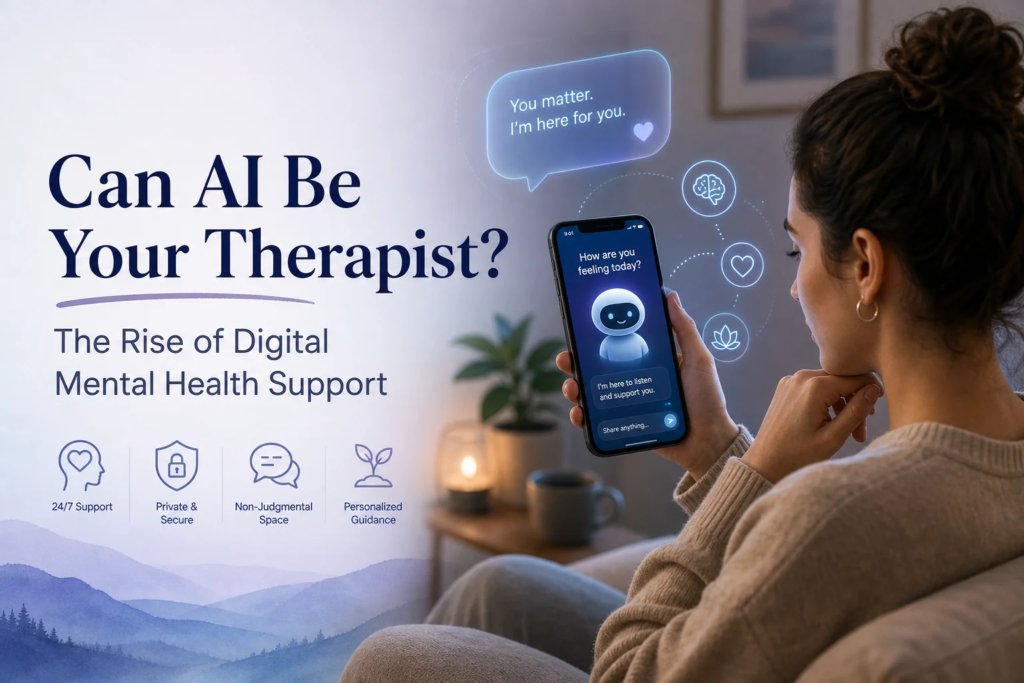
From chatbot companions that guide users through breathing exercises to AI-powered platforms that screen for depression, triage therapy referrals, and help clinicians write notes, digital tools are reshaping mental health care. This shift raises one of the most important health questions of our time: Can AI Be Your Therapist? The Rise of Digital Mental Health Support is not just a technology trend—it is a social, clinical, and ethical turning point.
Mental health systems around the world are under pressure. Demand for therapy is rising, but access remains uneven. Costs are high. Waitlists are long. Stigma still keeps many people silent. In that gap, AI mental health support has found a powerful role: always available, often affordable, and increasingly personalized.
But can AI truly replace a human therapist? Should it?
The honest answer is nuanced. AI can support mental wellness, deliver structured coping tools, help people reflect, and improve access to care. But it also has limits—especially when emotional complexity, trauma, crisis, diagnosis, and human connection are involved.
This article explores Can AI Be Your Therapist? The Rise of Digital Mental Health Support in depth: what AI can do, where it falls short, how real-world platforms are being used, what the risks are, and how individuals can make smart choices in this rapidly evolving space.
What Does “AI as a Therapist” Actually Mean?
When people ask, “Can AI be your therapist?”, they often imagine a chatbot replacing a licensed psychologist. In reality, digital mental health support exists on a spectrum.
Some tools are simple mood trackers. Others use conversational AI to respond to distress. Some platforms guide users through cognitive behavioral therapy exercises. More advanced systems help clinicians detect risk, summarize sessions, or match patients to the right level of care.
AI is not one single product. It is a collection of technologies used in mental health contexts.
Common Types of AI Mental Health Support
| Type of Tool | What It Does | Example Use | Human Involvement |
|---|---|---|---|
| AI therapy chatbots | Conversational support, CBT-style prompts, coping exercises | Managing stress or mild anxiety | Usually low |
| Mood tracking apps | Track emotions, sleep, triggers, habits | Identifying patterns over time | Low to moderate |
| Digital CBT platforms | Structured therapy modules | Depression, anxiety, insomnia | Sometimes guided by coaches |
| AI triage tools | Screen symptoms and recommend care pathways | Matching users to therapy services | Moderate to high |
| Clinician support AI | Documentation, risk alerts, treatment planning support | Helping therapists work efficiently | High |
| Crisis detection tools | Identify signs of self-harm or acute distress | Escalating to emergency support | Must involve humans |
So when we discuss Can AI Be Your Therapist? The Rise of Digital Mental Health Support, we are really asking several questions at once:
- Can AI provide emotional support?
- Can AI deliver evidence-based techniques?
- Can AI improve access to care?
- Can AI recognize serious risk?
- Can AI replace the human therapeutic relationship?
The answer varies depending on the tool, the user, the condition, and the situation.
Why Digital Mental Health Support Is Rising So Quickly
The rise of AI therapy apps and digital mental health support did not happen in a vacuum. It is a response to real problems in modern mental health care.
1. Therapy Access Is Still Unequal
Many people struggle to find a therapist who is affordable, available, culturally competent, and geographically accessible. Rural communities often have fewer mental health professionals. In cities, demand can overwhelm clinics. Insurance coverage may be limited.
For someone facing panic attacks, burnout, grief, or loneliness, waiting months for support can feel impossible. AI mental health tools promise immediate help—even if that help is not equivalent to full therapy.
2. Cost Is a Major Barrier
Traditional therapy can be life-changing, but it can also be expensive. AI-based mental health support is often cheaper, with some apps offering free basic features or low monthly subscriptions.
This affordability is one reason the question “Can AI be your therapist?” has become so urgent. For some users, AI is not competing with a therapist. It is competing with having no support at all.
3. Stigma Still Keeps People Quiet
Many people are more willing to type their fears into an app than say them out loud to another person. AI can feel private, nonjudgmental, and low-pressure.
For users who feel embarrassed or uncertain, digital mental health support can be a first step toward self-awareness—and sometimes toward professional help.
4. Younger Generations Are Comfortable With Digital Care
Gen Z and Millennials already use apps for banking, dating, learning, fitness, and medical care. Mental health support becoming digital feels natural to many.
This does not mean younger users do not value human connection. But they may be more open to blended care: therapy plus app-based tools, coaching plus AI reflection, or self-guided support between sessions.
5. Clinicians Are Overloaded Too
AI is not only for patients. Therapists, psychiatrists, and clinics are using AI to reduce administrative burden, organize notes, analyze questionnaires, and streamline referrals.
The rise of digital mental health support is partly about giving clinicians more time to do what humans do best: listen, empathize, interpret, and build trust.
Can AI Be Your Therapist? The Short Answer
The short answer is: AI can be a mental health support tool, but it should not be considered a complete replacement for a licensed therapist.
AI can help with:
- Journaling and reflection
- Stress management
- Psychoeducation
- Habit tracking
- CBT-inspired exercises
- Mindfulness prompts
- Emotional check-ins
- Motivation and accountability
- Preparing for therapy sessions
- Support between appointments
AI is weaker when it comes to:
- Diagnosing complex mental health conditions
- Managing trauma safely
- Handling suicidal crisis without human escalation
- Understanding cultural nuance deeply
- Reading body language and tone accurately
- Building authentic human attachment
- Responding to ambiguity with clinical judgment
- Maintaining ethical accountability like a licensed professional
This is the central tension behind Can AI Be Your Therapist? The Rise of Digital Mental Health Support: AI can be helpful, scalable, and comforting, but therapy is not just information exchange. Therapy is also relationship, context, ethics, accountability, and human presence.
How AI Mental Health Tools Work Behind the Scenes
To understand the promise and risk of AI therapy, it helps to know what is happening under the hood.
Most AI mental health platforms use one or more of the following technologies:
Natural Language Processing
Natural language processing allows software to interpret what users type or say. It can identify themes, emotional tone, repeated concerns, and potential risk signals.
For example, if a user writes, “I can’t sleep, I feel worthless, and I don’t want to wake up,” the system may detect depressive language and possible self-harm risk.
Machine Learning
Machine learning systems improve by identifying patterns in data. In mental health, this might mean recognizing that poor sleep, social withdrawal, and negative self-talk often cluster together.
However, machine learning is only as good as the data behind it. If training data is biased or incomplete, recommendations may be flawed.
Large Language Models
Modern AI chatbots may use large language models to generate natural, humanlike responses. These models can be fluent, warm, and highly engaging.
But fluency is not the same as clinical competence. A chatbot can sound confident while being wrong. That is one of the biggest concerns in Can AI Be Your Therapist? The Rise of Digital Mental Health Support.
Rule-Based Clinical Pathways
Some digital mental health support tools rely less on open-ended AI and more on structured pathways based on CBT, dialectical behavior therapy skills, acceptance and commitment therapy, or mindfulness protocols.
These tools may be safer for certain uses because their responses are more controlled and evidence-based.
What AI Can Do Well in Mental Health Support
AI is not magic, but it does have strengths. When used responsibly, AI mental health support can offer meaningful value.
1. Immediate Availability
AI does not sleep, take vacations, or have a full appointment calendar. For someone spiraling at midnight, immediate support matters.
A chatbot might guide a user through grounding:
- Name five things you see
- Take three slow breaths
- Describe what triggered the feeling
- Choose one small next step
That will not solve every problem, but it can help someone get through a hard moment.
2. Consistency
Human therapists are skilled, but they are also human. AI tools can deliver consistent reminders, structured exercises, and repeated practice.
For skills-based work—like challenging cognitive distortions or building routines—consistency can be powerful.
3. Low Barrier to Entry
Some people are not ready for therapy. Others are unsure whether their struggles “count.” AI support can help users start exploring their mental health without pressure.
This is one of the strongest arguments in favor of digital mental health support: it can become a bridge, not a replacement.
4. Personal Pattern Recognition
Over time, mood tracking and AI analysis can help users notice patterns:
- Anxiety spikes after poor sleep
- Depression worsens after social isolation
- Work stress peaks on Sunday evenings
- Conflict triggers emotional eating
- Exercise improves mood within 24 hours
These insights can be useful in therapy or self-care planning.
5. Support Between Therapy Sessions
For people already seeing a therapist, AI can reinforce progress. A therapist might suggest journaling, thought records, breathing exercises, or exposure practice. An AI app can remind users, organize reflections, and make skills easier to practice.
In this version of Can AI be your therapist, AI is not the therapist—it is the assistant that helps therapy stick.
Where AI Falls Short: The Human Side of Healing
If mental health care were only about giving advice, AI might be enough more often. But therapy is much more than advice.
Therapy Requires Trust
A good therapist does not simply respond. They remember your story, notice contradictions, challenge avoidance, sit with silence, and build trust over time.
AI can simulate warmth, but it does not truly care. For some people, that distinction matters deeply.
Therapy Requires Clinical Judgment
A person may say, “I’m fine,” while their tone, posture, and history suggest otherwise. A therapist can pick up on subtle cues that text-based AI may miss.
Clinical judgment also involves knowing when not to push, when to refer, when symptoms suggest bipolar disorder instead of depression, or when trauma work may destabilize a client.
Therapy Requires Accountability
Licensed therapists are bound by ethics, law, supervision, documentation standards, and professional consequences. AI tools may not be held accountable in the same way, especially when offered as wellness products rather than medical devices.
Therapy Often Requires Repair
In human therapy, misunderstandings can become healing moments. If a therapist says something that hurts, the client and therapist can discuss it, repair trust, and explore old relational wounds.
AI can apologize, but it cannot participate in relationship repair in the same human sense.
This is why Can AI Be Your Therapist? The Rise of Digital Mental Health Support should not be framed as “robots versus therapists.” The better question is: where does AI belong in the broader mental health ecosystem?
Case Study 1: Woebot and CBT-Style Chatbot Support
One of the most frequently discussed examples in AI mental health support is Woebot, a chatbot designed to deliver cognitive behavioral therapy-inspired conversations.
In a well-known 2017 study published in JMIR Mental Health, researchers evaluated Woebot among college students experiencing symptoms of anxiety and depression. Participants who used the chatbot over a short period reported reductions in depressive symptoms compared with an informational control group.
Woebot was not designed to replace a therapist. Instead, it offered structured, friendly, conversational support based on CBT principles.
Why This Case Matters
Woebot illustrates a realistic answer to “Can AI be your therapist?” AI can help deliver specific therapeutic techniques in a scalable way. It can teach users to identify distorted thoughts, reframe negative beliefs, and practice emotional awareness.
But the case also shows the boundary: improvement in symptoms does not mean a chatbot can handle every clinical situation. Woebot’s relevance lies in expanding access to basic mental health tools, not replacing comprehensive care.
Case Study 2: Limbic Access and AI-Assisted Therapy Referrals
Limbic Access is an AI-supported mental health assessment and referral tool used in parts of the UK’s NHS Talking Therapies services. The platform helps people self-refer, answer symptom questions, and enter care pathways more efficiently.
Evaluations of AI-assisted referral tools like Limbic have suggested potential benefits, including improved access, reduced administrative burden, and better matching between user needs and services. Some reports have also indicated that digital referral systems may help reach people who might otherwise hesitate to seek help.
Why This Case Matters
This case expands the meaning of Can AI Be Your Therapist? The Rise of Digital Mental Health Support. AI does not have to sit in the therapist’s chair to transform therapy. Sometimes its biggest impact is helping people get to the right human support faster.
AI-assisted triage may reduce bottlenecks, standardize intake, and free clinicians from repetitive administrative tasks. But it also raises questions: How accurate are the assessments? Are marginalized groups treated fairly? What happens when a user’s risk is underestimated?
The promise is real, but so is the need for oversight.
Case Study 3: Wysa and Workplace Mental Health Support
Wysa is an AI mental health platform that offers chatbot-based emotional support, self-help exercises, and optional human coaching in some versions. It is often used by individuals and organizations looking for scalable mental wellness resources.
In workplace settings, tools like Wysa can provide employees with private, immediate support for stress, burnout, sleep problems, and anxiety. Employees may use the app before reaching a crisis point or before deciding whether they need formal counseling.
Why This Case Matters
Workplace mental health is one of the fastest-growing areas of digital mental health support. Employees often need help early, before stress becomes severe. AI tools can normalize mental health conversations and give people a confidential first step.
However, employers must be careful. Workers need transparency about data privacy. They should know what information is collected, whether employers can see usage patterns, and how crisis situations are handled.
This case shows that AI mental health support can be valuable in prevention and early intervention—but trust depends on privacy, clarity, and choice.
Case Study 4: Koko and the Ethics of AI-Generated Emotional Support
Koko, a peer-support mental health platform, became widely discussed after experimenting with AI-generated responses in supportive messages. Some users reportedly rated AI-assisted responses positively before they knew AI was involved, but the experiment sparked strong criticism around transparency and consent.
The controversy was not simply about whether the messages were helpful. It was about whether people seeking emotional support deserve to know when AI is involved.
Why This Case Matters
This case is essential to Can AI Be Your Therapist? The Rise of Digital Mental Health Support because it highlights a central ethical issue: people in distress are vulnerable. They should not be unknowingly placed in AI experiments or led to believe they are receiving purely human care when they are not.
Transparency is not optional. If AI is part of the support process, users should know.
Comparing AI Support, Human Therapy, and Blended Care
The future of mental health may not be AI-only or human-only. It may be blended.
| Feature | AI Mental Health Support | Human Therapy | Blended Care |
|---|---|---|---|
| Availability | 24/7 | Scheduled sessions | 24/7 tools plus scheduled care |
| Cost | Often lower | Often higher | Moderate to high |
| Emotional depth | Limited | High | High with added support |
| Crisis handling | Variable, risky if standalone | Stronger when trained | Stronger with escalation plans |
| Personalization | Data-driven but imperfect | Deep contextual understanding | Best of both when integrated |
| Accountability | Depends on product regulation | Professional/licensed standards | Shared oversight |
| Best for | Mild stress, skills practice, reflection | Complex issues, trauma, diagnosis, crisis | Ongoing care and maintenance |
This table captures the practical answer to Can AI be your therapist? For many people, the safest and most effective model is not replacement. It is collaboration.
The Benefits and Risks of AI Therapy Tools
AI therapy tools can be genuinely useful, but they must be approached with care.
| Benefit | Why It Matters | Possible Risk | Smart Safeguard |
|---|---|---|---|
| 24/7 access | Helps during lonely or high-stress moments | May create overreliance | Use as support, not sole care |
| Affordability | Expands access | Quality varies widely | Choose evidence-informed tools |
| Privacy feeling | Reduces stigma | Data may not be fully private | Read privacy policies |
| Personalized tracking | Reveals patterns | Data could be misused | Limit sensitive sharing |
| Consistent exercises | Builds coping skills | Generic advice may miss nuance | Pair with human support when needed |
| Scalable care | Helps overloaded systems | Bias in algorithms | Demand transparency and audits |
| Early intervention | Supports users before crisis | May fail to detect severity | Know crisis resources |
The rise of digital mental health support is promising precisely because it can reach people earlier and more often. But mental health is too important for blind trust.
Privacy: The Question Every User Should Ask First
Before using an AI therapist app, ask: Where does my emotional data go?
Mental health data is deeply personal. It may include trauma history, relationship conflict, substance use, sexual identity, self-harm thoughts, medication details, or workplace stress.
Not every wellness app is covered by the same privacy protections as a hospital or licensed therapist. Some apps may collect user data for analytics, product improvement, or marketing. Others may share de-identified data with third parties.
Before Using AI Mental Health Support, Check:
- Does the app clearly explain how your data is used?
- Can you delete your data?
- Is your information encrypted?
- Is the tool regulated as a medical device or simply marketed as wellness?
- Does it sell or share data with advertisers?
- What happens if you mention suicide or self-harm?
- Is a human clinician involved anywhere?
The privacy question is central to Can AI Be Your Therapist? The Rise of Digital Mental Health Support because trust is the foundation of care. Without trust, even the best technology fails.
Safety and Crisis Support: Where AI Must Not Stand Alone
AI should never be the only support for someone in immediate danger.
If someone is at risk of harming themselves or others, they need urgent human help. In the United States, calling or texting 988 connects people with the Suicide & Crisis Lifeline. In other countries, local crisis lines, emergency services, or trusted medical professionals should be contacted.
AI may be able to detect crisis language and provide resources, but detection is not perfect. A user may be indirect. The AI may misunderstand. The system may fail to escalate appropriately.
This is one of the clearest limits in the debate over Can AI be your therapist. In crisis care, AI can assist, but humans must lead.
Bias and Cultural Competence in AI Mental Health Support
Mental health is shaped by culture, identity, language, family systems, religion, discrimination, poverty, disability, gender, and social context.
If AI systems are trained primarily on narrow datasets, they may misunderstand users from different backgrounds. They may offer advice that sounds reasonable but is culturally inappropriate or even harmful.
For example:
- A user from a collectivist culture may prioritize family harmony over individual expression.
- A person experiencing racism may not need “thought reframing” as much as validation and systemic understanding.
- LGBTQ+ users may require affirming support, not neutral-sounding responses that ignore identity-based stress.
- Neurodivergent users may communicate distress differently from neurotypical users.
This matters because digital mental health support must not become a one-size-fits-all machine. AI tools should be tested across diverse populations and designed with input from clinicians, patients, and communities.
Can AI Build a Therapeutic Alliance?
The therapeutic alliance—the bond between therapist and client—is one of the strongest predictors of therapy success.
Surprisingly, some users do report feeling understood by AI chatbots. This may happen because AI is always available, does not interrupt, and responds without visible judgment.
But there is a difference between feeling heard and being known.
A human therapist can remember your grief anniversary, notice when you smile while describing pain, understand family dynamics across years, and challenge you with compassion. AI can simulate some of that, but it does not have lived empathy.
So, Can AI be your therapist? It can sometimes feel therapeutic. It can support therapeutic work. It can even help people open up. But whether it can form a true therapeutic alliance remains deeply debated.
Best Uses for AI Mental Health Support
AI mental health support is best used for lower-risk, skills-based, or maintenance-focused needs.
Good Uses Include:
- Daily mood check-ins
- Guided journaling
- Stress relief exercises
- Sleep routine support
- CBT thought records
- Mindfulness practice
- Motivation for healthy habits
- Preparing questions for a therapist
- Tracking triggers and symptoms
- Practicing communication scripts
- Managing mild anxiety or everyday stress
Use Extra Caution If You Are Experiencing:
- Suicidal thoughts
- Self-harm urges
- Psychosis or hallucinations
- Mania or severe mood swings
- Severe trauma symptoms
- Eating disorder behaviors
- Substance withdrawal
- Domestic violence or coercive control
- Complex medication questions
- Risk of harm to yourself or someone else
In these situations, digital mental health support may still be useful as a supplement, but it should not be the main source of care.
How to Choose a Safe and Useful AI Mental Health Tool
Not every app deserves your trust. Use this checklist before relying on an AI therapy platform.
| Question | Why It Matters |
|---|---|
| Is the tool transparent that it uses AI? | Users deserve informed consent |
| Is it created with licensed mental health professionals? | Clinical input improves safety |
| Does it explain what it can and cannot do? | Prevents unrealistic expectations |
| Is there crisis escalation guidance? | Essential for user safety |
| Is the privacy policy understandable? | Mental health data is sensitive |
| Can you delete your data? | Supports user control |
| Does it cite evidence-based methods? | CBT, DBT, ACT, mindfulness, etc. |
| Are there independent studies or evaluations? | Marketing claims are not enough |
| Does it avoid diagnosing beyond its scope? | Diagnosis requires professional judgment |
| Can it connect you to human support? | Important when symptoms worsen |
A high-quality platform should never pretend that AI can be your therapist in every sense. Responsible tools are clear about their limits.
The Role of AI in Supporting Therapists
One of the most exciting parts of Can AI Be Your Therapist? The Rise of Digital Mental Health Support is not AI replacing clinicians—it is AI helping clinicians serve people better.
Therapists spend significant time on documentation, scheduling, outcome tracking, insurance paperwork, and intake forms. AI can reduce some of that burden.
AI Can Help Clinicians With:
- Session note drafts
- Symptom questionnaire scoring
- Treatment progress tracking
- Risk flagging
- Appointment reminders
- Resource recommendations
- Intake summaries
- Matching clients to appropriate services
If used ethically, these tools can give therapists more time for direct care. However, clinicians must protect confidentiality, verify AI-generated notes, and avoid outsourcing clinical judgment.
The best future may be one where AI handles repetitive tasks while humans handle healing.
The Business of AI Mental Health: Promise and Pressure
The digital mental health market is booming. Investors, employers, insurers, healthcare systems, and consumers are all paying attention.
That brings innovation—but also pressure.
Companies may be tempted to overpromise. “Your AI therapist is always here” sounds appealing, but it can blur important boundaries. If a product is marketed as therapy, users may expect clinical safety. If it is marketed as wellness, companies may avoid stricter regulation.
This is why the phrase Can AI Be Your Therapist? The Rise of Digital Mental Health Support is more than a catchy headline. It forces a deeper question: Who is responsible when vulnerable people rely on software for emotional care?
Regulators, clinicians, developers, and users all need clearer standards.
What the Future of Digital Mental Health Support May Look Like
The next generation of AI mental health tools will likely be more personalized, multimodal, and integrated into healthcare.
Possible Future Developments
1. Blended Therapy Becomes Normal
Therapists may assign app-based exercises between sessions and review AI-generated mood summaries with clients.
2. More Voice-Based Emotional Support
AI may analyze vocal tone, speech speed, and pauses to detect distress—though this raises serious privacy concerns.
3. Wearable Integration
Sleep, heart rate, activity, and stress signals from wearables may help identify relapse risk or burnout patterns.
4. More Culturally Adapted Tools
Better AI systems may be trained and evaluated across diverse languages, identities, and communities.
5. Stronger Regulation
As AI mental health support becomes more common, governments may require clearer safety standards, clinical validation, and privacy protections.
6. AI as a “Mental Health Navigator”
Instead of acting as a therapist, AI may help users understand options, find care, prepare for appointments, and stay engaged in treatment.
The future of Can AI Be Your Therapist? The Rise of Digital Mental Health Support will likely depend on whether society chooses responsible integration over reckless replacement.
A Practical Framework: When to Use AI, When to Call a Human
Here is a simple way to think about AI mental health support.
| Situation | AI Support May Be Enough | Human Support Recommended | Urgent Help Needed |
|---|---|---|---|
| Mild stress after work | Yes | Optional | No |
| Trouble sleeping occasionally | Yes | If persistent | No |
| Mild anxiety before a presentation | Yes | Optional | No |
| Ongoing depression for weeks | Helpful supplement | Yes | If self-harm thoughts occur |
| Trauma flashbacks | Supplement only | Yes | If unsafe |
| Panic attacks | Helpful for grounding | Yes if recurring | If chest pain or danger |
| Suicidal thoughts | No, not alone | Yes | Yes, immediately |
| Hallucinations or paranoia | No | Yes | If risk escalates |
| Relationship conflict | Helpful reflection | Yes if abusive or severe | If violence is present |
This framework reflects the balanced truth: Can AI be your therapist? Sometimes it can act like a coach, journal, guide, or skills trainer. But for serious, complex, or dangerous situations, human care is essential.
The Emotional Paradox: Why People Open Up to Machines
One of the most fascinating parts of digital mental health support is that some people disclose more to AI than to humans.
Why?
Because AI can feel safer. It does not raise an eyebrow. It does not sigh. It does not look disappointed. It gives people time to type, delete, rewrite, and try again.
For someone who has been judged, dismissed, or misunderstood, that can be powerful.
But there is a paradox: the very thing that makes AI feel safe—its lack of human judgment—is also what limits it. It cannot truly witness your pain. It cannot be moved by your courage. It cannot offer the healing experience of being accepted by another human being.
This is why Can AI Be Your Therapist? The Rise of Digital Mental Health Support is so emotionally complicated. AI can lower the door to support. But for many people, healing still requires another person on the other side.
Actionable Tips for Using AI Mental Health Support Wisely
If you decide to use an AI therapy app or digital mental health tool, use it intentionally.
1. Treat It as a Tool, Not a Savior
AI can support your mental health routine, but it should not carry your entire emotional life.
2. Use It for Specific Goals
Try goals like:
- “I want to track my anxiety triggers.”
- “I want help practicing gratitude.”
- “I want to challenge negative thoughts.”
- “I want reminders to breathe during work stress.”
Specific use is safer than vague emotional dependence.
3. Keep a Human in the Loop
If symptoms are persistent, worsening, or interfering with daily life, consider a therapist, doctor, psychiatrist, support group, or trusted person.
4. Protect Your Privacy
Do not share more than necessary. Avoid entering sensitive details unless you understand how the data is stored and used.
5. Watch for Red Flags
Stop using a tool if it:
- Gives dangerous advice
- Discourages professional help
- Claims to diagnose you definitively
- Makes you feel dependent
- Has unclear privacy practices
- Responds poorly to crisis language
- Feels manipulative or overly humanlike
6. Bring Insights to Therapy
If you see a therapist, AI-generated mood logs or journal summaries can help you discuss patterns more clearly.
Used wisely, AI mental health support can strengthen self-awareness and make therapy more productive.
Conclusion: AI May Not Be Your Therapist—but It Can Be Part of Your Healing Toolkit
So, Can AI Be Your Therapist? The Rise of Digital Mental Health Support leads us to a careful but hopeful answer.
AI can be a companion in difficult moments. It can teach coping skills, guide reflection, track patterns, reduce barriers, and help people take the first step toward care. It can support therapists and make mental health systems more efficient. For many users, digital mental health support is not a gimmick—it is the first accessible resource they have ever had.
But AI is not a full substitute for human therapy.
It cannot truly empathize. It cannot take ethical responsibility in the way a licensed clinician can. It may misunderstand risk, miss nuance, or mishandle sensitive data. It should not stand alone in crisis, trauma, severe illness, or complex clinical care.
The best future is not one where AI replaces therapists. It is one where technology expands access while protecting the irreplaceable value of human connection.
If you are curious about AI therapy tools, explore them thoughtfully. Use them for support, structure, and self-reflection. Ask hard questions about privacy and safety. And when your pain feels too heavy to manage alone, reach for human help.
The rise of digital mental health support is not the end of therapy. If we build and use it wisely, it may become a powerful doorway into healing.
1. Can AI be your therapist instead of a human?
AI can provide mental health support, coping exercises, journaling prompts, and emotional check-ins, but it should not fully replace a licensed therapist. Human therapists offer clinical judgment, ethical accountability, deep empathy, and crisis management that AI cannot reliably provide.
2. Is AI therapy safe?
AI therapy tools can be safe for mild stress, reflection, and skills practice when they are well-designed and transparent. However, they may be unsafe if used during crisis situations, severe depression, trauma, psychosis, or suicidal thoughts without human support.
3. Can AI diagnose depression or anxiety?
Some AI tools can screen for symptoms, but screening is not the same as diagnosis. A formal diagnosis should come from a qualified mental health professional who can consider your history, context, symptoms, and overall functioning.
4. Is my information private when I use AI mental health apps?
It depends on the app. Some platforms have strong privacy protections, while others may collect or share data. Always read the privacy policy, check whether data can be deleted, and be cautious about sharing highly sensitive information.
5. What is the best use of digital mental health support?
Digital mental health support is best for mood tracking, stress management, mindfulness, CBT-style exercises, journaling, habit building, and support between therapy sessions. It works best as part of a broader wellness plan.
6. Can AI help during a panic attack?
AI may help guide breathing, grounding, or calming exercises during a panic attack. However, if symptoms feel medically dangerous, unusual, or unmanageable, seek medical help. If panic attacks happen repeatedly, a therapist or doctor can help create a treatment plan.
7. What should I do if an AI chatbot gives harmful advice?
Stop using the tool and seek guidance from a trusted professional or crisis resource if needed. You may also report the issue to the company or app store. AI-generated advice should never override your safety, medical care, or professional recommendations.
8. Will AI replace therapists in the future?
AI will likely change therapy, but it is unlikely to fully replace therapists. The most promising future is blended care, where AI supports access, tracking, and skill practice while human clinicians provide deeper treatment, relationship, and clinical oversight.

