
Picture yourself standing in a coffee shop, staring at a menu with 37 drink variations. Ten minutes later, you walk out with plain water. Sound familiar?
Here’s a stunning fact: when shoppers faced 24 jam varieties, only 3% made a purchase, but when presented with just 6 jams, 30% bought one. This tenfold difference reveals a troubling truth about modern life.
We make over 200 food-related decisions daily. Our brains can only process about seven items effectively in working memory. This mismatch creates cognitive overload—a state where too many alternatives actually paralyze us rather than empower us.
The paradox runs deep. While freedom matters deeply to our well-being, excessive selections diminish both our satisfaction and sense of control.
This phenomenon, known as choice paralysis, affects everything from career paths to relationship decisions.
Throughout this exploration, we’ll uncover how abundance creates anxiety. We’ll discover practical wisdom for navigating our option-saturated world. Together, we’ll transform overwhelming complexity into intentional clarity.
Key Takeaways
- Excessive alternatives create decision paralysis, reducing purchase rates by up to 90% compared to limited selections
- Human working memory processes approximately seven items effectively, making larger sets mentally taxing
- We face over 200 daily food-related decisions alone, contributing to decision fatigue
- The freedom paradox shows that unlimited alternatives decrease satisfaction rather than increase it
- Understanding cognitive limits helps us make more intentional decisions across all life domains
Understanding Choice Overload: Definition and Impact
Every day, we navigate through an ocean of decisions. Our mental capacity for processing these choices remains surprisingly limited. Choice overload occurs when available options exceed our cognitive ability to evaluate them effectively.
The impact extends beyond mere inconvenience. Too many options cause measurable psychological stress and delayed decisions. We also feel less satisfied with our eventual choices.
Consumer psychology research shows that excessive choice doesn’t empower us. It paralyzes us instead.
Understanding this dynamic requires examining biological and psychological frameworks. These frameworks govern how we process information and arrive at conclusions. Our brains operate within specific constraints that haven’t evolved to match modern commerce.
The Psychology Behind Decision-Making
Nobel Prize-winning economist Herbert Simon revolutionized our understanding of human choice. He introduced the concept of bounded rationality in 1957. Simon observed that decision-makers don’t have unlimited cognitive resources to analyze every piece of information.
We work within natural cognitive limitations that shape how we approach choices. This insight challenged the prevailing assumption that humans are perfectly rational economic actors. Simon recognized that our minds operate like efficient managers, not comprehensive computers.
Psychologist George Miller published groundbreaking research in 1956 that measured our working memory capacity. His famous finding established that we can effectively hold about seven items in conscious awareness simultaneously. This number represents a hard cognitive ceiling for active comparison and evaluation.
Think about what this means practically. Your brain literally cannot hold all relevant details when comparing more than seven options. Information begins dropping out, distinctions blur, and the decision-making process becomes increasingly inefficient.
Simon coined the term “satisficing”—a blend of “satisfy” and “suffice.” This describes how successful decision-makers actually operate. Satisficers establish internal criteria representing acceptable standards, then select the first option meeting those requirements.
In contrast, maximizers attempt to evaluate every available option before making a choice. They seek the absolute best selection rather than a good-enough solution. Research consistently shows that maximizers experience significantly more regret, anxiety, and dissatisfaction than satisficers.
Have you researched a product exhaustively, only to second-guess your decision immediately after purchasing? This pattern typically indicates maximizer tendencies clashing with the reality of bounded rationality.
| Characteristic | Maximizers | Satisficers |
|---|---|---|
| Decision Approach | Evaluate all possible options seeking the absolute best choice | Establish criteria and select first adequate option meeting standards |
| Emotional Experience | Higher anxiety, stress, and post-decision regret | Greater satisfaction and confidence with decisions made |
| Time Investment | Extensive research and comparison across all alternatives | Efficient evaluation focused on meeting predetermined needs |
| Outcome Satisfaction | Frequently wonder if better option existed | Content with choices that fulfill requirements |
| Relationship to Bounded Rationality | Attempts to overcome cognitive limitations through exhaustive analysis | Accepts and works productively within natural cognitive constraints |
Cognitive Dissonance and Its Role
The psychological tension we experience when making difficult choices has a name: cognitive dissonance. This concept, developed by psychologist Leon Festinger, describes the uncomfortable feeling that arises. It happens when our beliefs, expectations, or desires conflict with reality or with each other.
In decision-making contexts, cognitive dissonance emerges from the gap between our expectation of finding a perfect choice. The reality is that every option involves trade-offs. No single selection perfectly satisfies all our desires simultaneously.
We naturally expect that somewhere in that vast array exists the ideal solution. This expectation creates pressure to find it. The more options available, the higher our expectations rise, and consequently, the greater our potential disappointment.
Consider purchasing a laptop. With hundreds of models available, each optimizing different features, you expect to find one that perfectly balances everything. The reality? Every choice involves compromise.
High performance typically means reduced battery life. Lightweight construction often sacrifices durability. Lower prices come with feature limitations.
This inherent tension between expectation and reality generates psychological discomfort. Consumer psychology research demonstrates that this dissonance intensifies with the number of options considered. This creates a paradoxical outcome where more choice leads to less satisfaction.
After making a decision, we often experience post-decision dissonance—questioning whether we chose correctly. With limited options, we more easily accept our choice as reasonable. With extensive options, we endlessly wonder about the roads not taken.
Examples of Choice Overload in Daily Life
Choice overload isn’t an abstract academic concept—it manifests constantly in everyday situations. Recognizing these moments helps us understand how cognitive limitations shape our experiences.
Restaurant menus provide a perfect illustration. Studies show that diners experience greater satisfaction when choosing from limited menus featuring 6-8 carefully curated options. The overwhelming menu leads to longer ordering times, increased anxiety, and more frequent post-meal regret.
Have you ever spent thirty minutes browsing streaming services, unable to settle on something to watch? This phenomenon, sometimes called “Netflix paralysis,” represents decision-making breakdown caused by excessive options. With thousands of titles available, our working memory cannot effectively compare possibilities.
Shopping for basic household items has become unexpectedly complex. Need toothpaste? You’ll face choices involving whitening formulas, sensitivity protection, natural ingredients, and fluoride levels. What should be a simple replenishment decision becomes a cognitive burden.
The job market presents another domain where choice abundance creates challenges. Career options have exploded in recent decades, with new industries and specializations emerging constantly. While this diversity offers opportunities, it also generates decision paralysis for students and career-changers.
Online shopping amplifies these challenges exponentially. E-commerce platforms can display hundreds or thousands of variations for single product categories. Searching for “running shoes” might yield 5,000+ results with overlapping features and specifications.
Even social activities involve choice overload. Planning a simple evening with friends now requires navigating dozens of entertainment venues, restaurant options, and activity possibilities. The abundance that should enhance enjoyment often creates decision fatigue before the event even begins.
These everyday examples reveal how our cognitive limitations clash with modern abundance. Recognizing this pattern represents the first step toward developing strategies. These strategies help us navigate choices more effectively and with greater peace of mind.
The Paradox of Choice: A Historical Perspective
Today’s abundance contrasts sharply with the scarcity that defined most of human history. For thousands of years, people lived with limited options. The shift to overwhelming choice happened fast, transforming how we make decisions.
This transformation emerged from economic prosperity and technological advancement. It also came from a fundamental shift in how we think about freedom.
Looking back helps us understand the paradox of choice. It became one of the defining challenges of modern life.
The Revolutionary Insights of a Psychologist
Barry Schwartz changed how we think about options with his 2004 book. “The Paradox of Choice: Why More Is Less” challenged a common belief. More choice doesn’t always equal more freedom and happiness.
His research revealed something unexpected. Beyond a certain point, additional options decrease our well-being. They create anxiety and leave us second-guessing our decisions.
Schwartz’s work drew on years of psychological research and real-world observations. He noticed that American stores filled with more products. Yet people seemed less satisfied with their purchases.
His famous TED talk brought these ideas to millions of viewers worldwide. He explained how the modern marketplace created unrealistic expectations. It also amplified our fear of making the wrong choice.
The avalanche of electronic information we now face is such that in order to solve the problem of choosing from 200 brands of cereal or 5,000 mutual funds, we must first solve the problem of choosing from 10,000 websites offering to make us more informed consumers.
This observation captures the recursive nature of our predicament. We need help choosing, but first we must choose how to get help choosing. The paradox of choice compounds itself at every level.
Barry Schwartz identified key mechanisms behind this phenomenon. Excessive choice raises expectations so high that even good outcomes feel disappointing. It increases the opportunity cost of every decision. It also amplifies anticipated regret, leading to decision paralysis.
How Markets Created the Problem
The explosion of choice didn’t happen by accident. It emerged from deliberate shifts in consumer culture, particularly after World War II. Post-war prosperity created both the capacity to produce more and purchasing power.
Marketing evolved to meet this new reality. Companies began emphasizing customization and personal preference. Choice itself became a commodity—a symbol of freedom and sophistication.
The message was clear: discerning consumers deserve tailored options. Having choices meant you possessed wealth and status. It showed you could be selective.
This cultural shift transformed expectations fundamentally. Previous generations viewed abundant choice as a luxury. We now see it as a basic right in every aspect of life.
Consumer culture promoted the idea that the perfect product exists for everyone. You just need to find it among thousands of options. This belief creates pressure to keep searching and never settle.
The marketplace responded enthusiastically to these cultural changes. Product proliferation accelerated dramatically across every category. What started as a few variations became an arms race of options.
The Numbers Behind the Abundance
The scale of modern choice becomes clear with specific examples. Research by Botti and Iyengar in 2006 documented staggering variety in Western grocery stores.
- 285 different types of cookies line the shelves
- 120 distinct pasta sauces compete for attention
- 175 varieties of salad dressing fill entire aisles
- 275 types of cereal create walls of colorful boxes
These numbers represent just one category each. Multiply this across every product type, and the total becomes almost incomprehensible.
The proliferation extends beyond grocery stores. Starbucks famously advertises 80,000 possible drink combinations. The paradox of choice transforms a simple coffee purchase into a complex decision.
Most of these variations differ only in minor ways. Three pasta sauces might contain nearly identical ingredients with slightly different herb ratios. Five cereals from the same company might vary only in sugar content.
Companies create these variations not because consumers genuinely need them. They exist because the perception of choice has become a competitive necessity. Brands fear offering fewer options will send customers to competitors.
This product proliferation creates a feedback loop. More options train us to expect more options. We become accustomed to finding exactly what we want, making us less willing to compromise.
The historical trajectory is clear. We moved from scarcity to sufficiency to overwhelming abundance in just a few generations. What our grandparents considered unimaginable luxury now feels like the minimum acceptable standard.
Understanding this history doesn’t solve the problem of choice overload. But it does provide perspective. The anxiety we feel isn’t a personal failing—it’s a predictable response to unprecedented conditions.
The Effects of Choice Overload on Consumer Behavior
Choice overload doesn’t just slow us down—it fundamentally alters how we feel, think, and act. The psychological burden manifests in tangible ways that reshape our relationship with decision-making itself. Our brains enter a state of heightened alert, triggering responses beyond the simple act of choosing.
These effects ripple through our daily experiences as consumers. From the grocery store to online shopping platforms, excessive choice influences our satisfaction and confidence. It also impacts our overall well-being.
Increased Anxiety and Stress
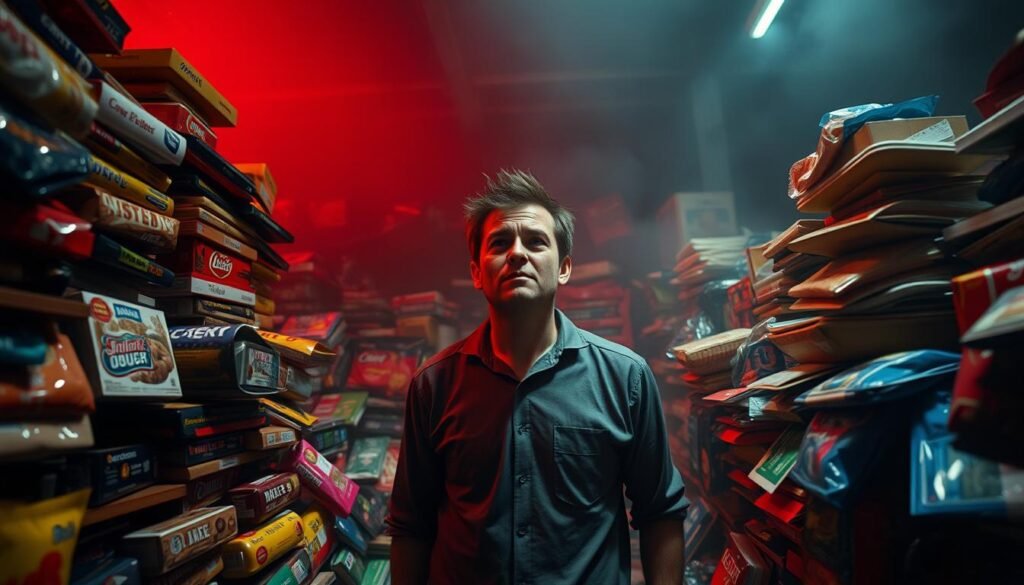
The moment we face overwhelming options, our bodies respond with measurable stress reactions. Your heart rate may quicken as you scan endless restaurant menus. Your muscles tense while browsing hundreds of product reviews.
This physical response isn’t simply in your head. Consumer anxiety emerges from the cognitive load of processing multiple alternatives simultaneously. Our brains must evaluate features, compare prices, read reviews, and anticipate outcomes.
The mental exhaustion that follows complex decisions represents genuine decision fatigue. Like a muscle that weakens with overuse, our capacity for thoughtful decision-making depletes throughout the day. Each choice we make draws from a limited reservoir of mental energy.
The stress intensifies when this reservoir runs low. We become irritable, impatient, and prone to shortcuts that may not serve our best interests. The grocery store aisle that once seemed full of possibility now feels like a maze.
Have you noticed how drained you feel after a day of shopping or planning? That exhaustion reflects the cumulative burden of navigating choice-saturated environments. The constant evaluation creates a cycle of stress that can persist long after the decision.
Decision Paralysis: The Inability to Choose
Sometimes the weight of too many options becomes so overwhelming that we simply freeze. Decision paralysis represents the most dramatic manifestation of choice overload. It’s the complete inability to move forward with any selection.
Psychologists Sheena Iyengar and Mark Lepper demonstrated this phenomenon brilliantly in their famous jam study. Shoppers encountered a display of 24 different jams, and only 3% made a purchase. But when the selection was reduced to just 6 jams, the purchase rate jumped to 30%.
The findings weren’t limited to grocery shopping. College students choosing essay topics faced similar challenges. Fewer students completed the assignment when selecting from 30 options versus 6—60% compared to 74%.
A chocolate study revealed similar results. Participants choosing from 6 options reported higher satisfaction than those selecting from 30 varieties. The relationship between choice abundance and consumer behavior becomes clear: more options often lead to less action.
- Decision deferral: Postponing choices indefinitely rather than committing to an option
- Default selections: Accepting pre-selected options to avoid the burden of choosing
- Random selection: Making arbitrary choices just to escape the decision process
- Abandonment: Walking away from purchases entirely due to overwhelming complexity
Paralysis isn’t about being indecisive or lazy. We’re experiencing a genuine cognitive overload that prevents effective decision-making. The brain, overwhelmed by possibilities, opts for the safest route: doing nothing at all.
Regret and Anticipatory Regret
Even after we finally choose, choice regret often follows us home. With more options comes an increased likelihood of imagining superior alternatives we didn’t select. Each unpurchased product becomes a phantom reminder of what might have been better.
This retrospective regret poisons our satisfaction with the choices we actually made. The cereal you bought tastes fine, but what about the organic brand two shelves over? The psychological burden of “what if” thinking undermines confidence in our decisions.
Perhaps even more debilitating is anticipatory regret—the fear of future disappointment that haunts us before we decide. We imagine the remorse we’ll feel if we choose wrong. This projection of future pain makes the present decision even harder.
Research distinguishes between two types of decision-makers regarding regret. Maximizers seek the absolute best option available, exhaustively comparing alternatives to ensure optimal selection. Satisficers, by contrast, look for options that meet their criteria and feel comfortable choosing “good enough.”
Maximizers experience significantly more choice regret than satisficers. Their relentless pursuit of perfection means they’re constantly second-guessing whether they truly found the best option. The expanded choice sets that modern markets offer become a source of ongoing torment rather than freedom.
The combination of these effects—stress, paralysis, and regret—creates a cascade of negative experiences. We become more anxious, less confident, and ultimately less satisfied with our lives as consumers. The promise of unlimited choice transforms into a burden we carry through every decision we face.
Real-World Examples of Choice Overload
Modern life turns simple tasks into exhausting mental marathons. The weight of endless options becomes visible in our daily choices. These spaces show how abundance shifts from blessing to burden.
Understanding choice overload becomes clear through three common American experiences. Each area shows unique challenges while sharing one truth: more options don’t always serve us better.
The Cereal Aisle Challenge
Walk into any Western grocery store and face a sensory assault. The average American supermarket stocks about 275 types of cereal. It also has 285 cookie varieties, 175 salad dressings, and 120 pasta sauces.
This shopping overwhelm isn’t just talk. Researchers studied how assortment size affects buying behavior in a California supermarket. They set up two jam-tasting displays with different options.
One display featured 24 varieties. The other showed just 6 options. The results surprised many retail experts.
The larger display attracted more attention—60% of shoppers stopped to browse. Only 40% stopped at the smaller display. Yet actual purchases told a different story.
Only 3% of customers viewing the extensive selection made a purchase. Meanwhile, 30% of those who saw fewer options bought jam.
This pattern extends beyond jam. Shoppers face countless micro-decisions during what was once straightforward. The mental energy required for these choices accumulates and leaves many feeling drained.
Our brains evolved to make quick decisions with limited information. Modern retail environments demand processing capacity beyond our natural comfort zone. Many shoppers either grab familiar brands or leave stores empty-handed.
Navigating Digital Marketplaces
Online shopping introduces a different dimension to choice overload. Digital retailers can display hundreds or thousands of products simultaneously. This creates what we might call the pixelated dilemma.
Consider shopping for electronics on a major e-commerce platform. A search for “wireless headphones” might return 10,000 results. Each product has dozens of specifications to compare.
Hundreds of customer reviews accompany each product. This creates layers upon layers of information to process. The analysis becomes almost paralyzing.
Hotel booking sites present similar challenges. Travelers face hundreds of accommodation options in any city. Each comes with numerous photos, amenities lists, and review scores.
Research into 401(k) retirement plans shows this pattern extends beyond products. As fund options increased from 2 to 59, participation rates actually decreased significantly. Plans offering fewer than 10 options achieved the highest enrollment rates.
Digital environments lack the natural stopping points of physical stores. There’s always one more page to scroll. Another review to read or potentially better deal awaits just a click away.
Career Paths in the Modern Economy
Choice overload manifests most profoundly in contemporary career decisions. Today’s job market offers unprecedented variety compared to previous generations. Traditional employment, gig economy opportunities, and entrepreneurship create infinite professional paths.
Young adults entering the workforce face particularly acute challenges. They confront thousands of potential directions instead of prescribed career trajectories. New job categories emerge yearly while traditional roles fragment into specialized niches.
Previous generations typically chose a career path in their twenties. Today’s workers face continuous reevaluation. Should you stay in your field or pivot entirely?
Pursue promotion or seek work-life balance? Specialize deeper or broaden your skill set? These career decisions recur throughout professional life with significant stakes.
Social media amplifies the phenomenon by showcasing countless alternative paths. Scroll through LinkedIn and see former classmates in wildly different careers. Each success story can trigger doubt about your own direction.
This creates what researchers call “maximizing behavior.” It’s the exhausting pursuit of the absolute best option. In career contexts, maximizers constantly wonder if they’ve made the right choice.
| Domain | Number of Typical Options | Decision Impact | Primary Challenge |
|---|---|---|---|
| Grocery Shopping | 275 cereals, 175 dressings, 285 cookies | 3% purchase rate (large selection) vs 30% (limited) | Immediate sensory and cognitive overload in physical space |
| Online Shopping | Thousands of products per category | Decreased 401(k) participation with 59 vs 10 options | Unlimited virtual inventory without tactile comparison |
| Career Selection | Hundreds of emerging job categories yearly | Continuous reevaluation throughout professional life | High-stakes decisions with long-term life implications |
These three domains share a common thread despite their differences. We encounter the same fundamental challenge in each. Our decision-making capacity hasn’t evolved to match the explosion of modern options.
The examples show that choice overload isn’t merely theoretical. It shapes daily experiences and influences major life decisions. Recognizing these patterns in our lives represents the first step toward managing them.
Strategies for Reducing Choice Overload
Reducing choice overload starts with a simple shift. Focus on what truly serves your needs instead of every possibility. Better decisions don’t require superhuman willpower or perfect information.
They call for practical decision-making strategies. These honor both our cognitive limits and our inner wisdom. We can transform overwhelming abundance into manageable clarity.
By using proven simplification techniques, we reclaim our freedom. Excessive choice threatens to steal this freedom from us.
Simplifying the Decision-Making Process
Time becomes our ally with clear boundaries for decisions. Research shows that setting specific timeframes helps prevent endless deliberation. Whether one day or a full week, the key is committing to the timeline before searching.
Consider the satisficing approach. This means establishing acceptable thresholds rather than chasing theoretical perfection. Satisficers identify what makes a “good enough” choice and stop searching once they find it.
This choice management technique produces greater satisfaction. It works better than the maximizer’s exhaustive quest for the absolute best option.
The “good enough” principle frees us from perfectionism’s trap. Most decisions aren’t permanent. Recognizing this flexibility reduces the pressure we place on ourselves.
Trust your intuition as part of your decision framework. Allowing choices to “marinate” in your subconscious often yields clearer insights. Our gut feelings integrate information our conscious mind might overlook.
| Approach | Method | Typical Outcome | Best For |
|---|---|---|---|
| Satisficing | Set clear thresholds, choose first acceptable option | Higher satisfaction, less regret | Everyday decisions with multiple good options |
| Maximizing | Exhaustively research all alternatives | Lower satisfaction despite “better” choices | Rare, high-stakes decisions only |
| Time-Bounded | Establish decision deadline, respect it | Prevents analysis paralysis | Medium-importance choices requiring research |
| Intuitive | Allow unconscious processing, trust gut feelings | Faster decisions with good outcomes | Situations with experiential knowledge |
Utilizing Decision-Making Tools and Aids
Strategic tools transform complex choices into manageable comparisons. A simple comparison matrix brings clarity to overwhelming decisions. List your top options against your key criteria.
This visual approach works well for simplification techniques. It reduces cognitive load effectively.
Seeking expert curation proves more valuable than confronting unlimited options. Trusted recommendations pre-filter based on quality and relevance. This approach acknowledges a fundamental truth: comprehensive research often delivers diminishing returns.
Finding credible sources becomes a meta-decision. It improves all subsequent choices. Identify whose judgment you trust for better navigation.
Technology serves us best when it narrows our choices. Recommendation algorithms, comparison tools, and filtering systems help when calibrated properly. E-commerce platforms with effective categorization demonstrate choice management at its finest.
Visual presentation matters more than we might expect. Research shows visual representations enhance comprehension for small assortments. They increase perceived complexity when options multiply.
Setting Personal Preferences and Criteria
Self-knowledge forms the foundation of effective preference setting. Before confronting any significant choice, pause. Identify what truly matters to you.
Understanding your values transforms decision-making from reactive to intentional. Your priorities and non-negotiables become clear guides.
Pre-commitment strategies harness this self-knowledge powerfully. Deciding in advance which criteria matter most creates a decision framework. This framework filters options automatically.
Establishing personal criteria requires honest reflection. Ask yourself: What outcomes do I value most? What tradeoffs am I willing to make?
Before your next significant decision, pause and write down your top three criteria. What truly matters to you in this choice?
Developing better decision-making strategies is a learnable skill. Each choice offers an opportunity to refine your approach. Practice builds competence, and competence restores confidence.
The wisdom lies in developing clearer methods for engaging with choices. Abundance becomes opportunity rather than burden. This shift in preference setting transforms our relationship with choice itself.
The Role of Technology in Managing Choices
About 10,000 websites compete for your attention before you compare 200 cereal brands or 5,000 mutual funds. This is the modern paradox we face. We’ve created technology solutions to escape overwhelming choices, yet we must choose among countless simplification tools.
The digital landscape presents both remedy and complication. Within this complexity lies genuine promise for those who approach these tools with discernment and awareness.
How Apps and Algorithms Help Navigate Decisions
Artificial intelligence processes information far beyond human cognitive capacity. This capability transforms how we approach complex decisions that once paralyzed us.
Recommendation systems serve as digital guides through overwhelming catalogs. They analyze patterns, compare variables, and present condensed options that match our stated preferences.
Think of comparison shopping tools that instantly highlight meaningful differences between products. Financial planning apps optimize investment choices from thousands of mutual funds.
Streaming services demonstrate this assistance clearly. Netflix examines your viewing history to suggest content you might enjoy. Spotify creates personalized playlists based on listening patterns.
Voice-activated AI assistants take this further. They filter options according to spoken criteria and answer questions about product features. The mental energy we once spent researching options can now flow toward other pursuits.
E-commerce businesses employ seven scalable approaches to reduce choice overload through intelligent design. These strategies work quietly in the background, shaping our experience without demanding conscious attention.
Personalization in E-commerce
Online retailers have discovered that customization alleviates decision paralysis. Personalization algorithms analyze browsing history, purchase patterns, and demographic data to curate individualized shopping experiences.
Amazon’s recommendation engine exemplifies this mass customization approach. Rather than presenting every available product, it offers a manageable subset of relevant options. This pre-filtering provides psychological relief—the comfort of knowing someone has already done preliminary sorting work.
Research shows that satisfaction increases significantly when recommendation systems align with our authentic preferences. We feel understood rather than overwhelmed. The right product appears at the right moment, as if the platform truly knows us.
This personalized approach transforms shopping from an exhausting expedition into a curated experience. The paradox resolves itself: more total options exist than ever before, yet each individual encounters only what matters.
However, this apparent solution introduces its own considerations. The very personalization algorithms that simplify our choices also shape what we see and what we never encounter.
The Risks of Over-Filtering Options
Excessive algorithmic curation creates what researchers call filter bubbles. We inhabit digital spaces that reflect our existing preferences back to us. This limits exposure to alternatives that might genuinely serve our growth.
Over-reliance on filtering technology carries subtle costs. Serendipitous discovery becomes rare when algorithms predict our preferences too accurately. We lose opportunities to encounter ideas, products, or experiences outside our established patterns.
These systems can reinforce preferences without allowing for natural evolution. The person you were six months ago shaped your algorithmic profile. That profile may not reflect who you’re becoming.
Echo chambers emerge from this dynamic. We receive confirmation of existing viewpoints while alternative perspectives fade from view. What appears as helpful guidance gradually becomes a limiting constraint.
Research on visual preference heuristics reveals another dimension. People prefer visual presentations of options, yet these activate less systematic decision-making. The ease of scrolling through image-based recommendations may actually diminish the quality of our choices.
The question becomes one of balance and awareness. Do the algorithms you use serve your authentic interests? Have you unconsciously adapted your preferences to match what’s algorithmically convenient?
Perhaps wisdom lies not in rejecting these tools, but in using them while maintaining connection to our deeper knowing. We can appreciate algorithmic assistance while periodically stepping beyond its boundaries. The goal isn’t to escape technology but to ensure it serves our genuine flourishing.
Reducing Choice Overload in Marketing
Businesses can transform overwhelmed shoppers into satisfied customers by reimagining their approach to choice architecture. The old idea that more options always lead to more sales has proven wrong. Smart companies now see that marketing strategies built on strategic limitation often work better than endless variety.
This shift requires courage and wisdom. Marketers must resist the urge to keep expanding product lines. Instead, they should focus on thoughtful curation.
The result benefits both business success and consumer behavior. It creates genuine satisfaction rather than decision fatigue.
Strategic Focus in Product Development
Brand simplification represents one of the most powerful tools available to modern marketers. Companies that embrace focused product lines consistently outperform competitors drowning customers in near-identical options. This approach transforms the brand itself into a trusted decision-making guide.
Consider Apple’s historically disciplined approach to product offerings. Rather than releasing dozens of smartphone models each year, the company typically offers just a few. This restraint doesn’t limit sales—it enhances them by making decisions manageable and clear.
Trader Joe’s provides another compelling example. While conventional supermarkets stock 50,000 items or more, Trader Joe’s curates approximately 3,000 products. This dramatic reduction doesn’t frustrate customers.
Instead, it positions the brand as a trusted curator. It relieves shoppers of decision burden while maintaining variety in categories that matter.
The In-N-Out Burger chain has built legendary customer loyalty on a famously simple menu. By offering a focused selection, the brand delivers consistency and reduces customer overwhelm. Paradoxically, this limitation creates freedom—freedom from analysis paralysis.
Effective branding serves as a decision shortcut that dramatically simplifies choices. Consumers choosing Nike or Patagonia aren’t just selecting product features. They’re aligning with brand identities that match their self-concept, instantly eliminating thousands of potential alternatives.
The Art of Thoughtful Selection
Product curation reduces mental strain by pre-selecting complementary items and organizing choices into meaningful categories. Fashion retailers have mastered this through seasonal collections that present cohesive selections rather than overwhelming inventories. Customers trust the curator’s expertise to identify pieces that work together.
Subscription box services exemplify modern curation at its finest. Companies like Stitch Fix or Birchbox use algorithms and human stylists to select products matching individual preferences. Subscribers gain variety without decision burden, experiencing the joy of discovery without paralysis.
The “good-better-best” pricing strategy offers another powerful curating approach. Instead of presenting fifteen nearly identical options, businesses offer three clearly differentiated tiers. Customers quickly identify their preference level based on needs and budget, dramatically accelerating decisions.
- Entry level: Basic features meeting core needs at accessible prices
- Mid-tier: Enhanced features balancing value and performance
- Premium: Comprehensive features for demanding users
This structure works because it aligns options with natural decision-making patterns. Most people instinctively categorize themselves into one of these three groups. The choice feels intuitive rather than overwhelming.
The psychology of successful curation rests on trust. Customers who believe in the curator’s judgment feel relieved rather than restricted by limited options.
Creating Urgency Through Temporal Boundaries
Limited editions and time-bound offers paradoxically enhance freedom by forcing decisions and preventing indefinite deferral. Consumers often postpone choices indefinitely when every option remains perpetually available. Temporal constraints overcome this paralysis.
Scarcity increases perceived value through fundamental psychological mechanisms. Items available for limited periods feel more precious and desirable. This isn’t manipulation—it reflects genuine constraints of production, seasonality, or special collaborations.
Deadlines transform consumer behavior by converting abstract possibilities into concrete decisions. A sale ending in 48 hours forces evaluation and commitment. This creates urgency while relieving the burden of holding multiple options open indefinitely.
Flash sales and limited releases have become cornerstones of modern marketing strategies across industries. Sneaker brands release limited-quantity designs that sell out within minutes. Software companies offer lifetime deals for brief windows.
These approaches succeed because they align with how humans actually make decisions under conditions of abundance.
The wisdom in temporal constraints extends beyond pure urgency. Time-bound choices reduce the mental burden of perpetual reconsideration. Once the window closes, customers move forward without regret about unconsidered alternatives.
Mindful marketing recognizes that serving customer well-being ultimately serves business success. Companies that design choice architectures reducing overwhelm rather than exploiting it build lasting relationships. This represents a true win-win—ethical practice aligned with commercial effectiveness.
The brands that thrive in our age of abundance will master the art of strategic limitation. They’ll understand that their role extends beyond offering products to becoming trusted guides. By thoughtfully reducing options, curating selections, and creating helpful boundaries, marketers can transform choice overload into opportunity.
Future Trends in Consumer Choice
A quiet revolution is changing how we think about options and ownership. The overwhelming abundance of modern consumer culture is giving way to something more intentional. We’re witnessing a transformation that could reshape how businesses present choices.
This shift isn’t driven by scarcity or economic necessity. It emerges from growing wisdom about what truly serves our happiness. The future of choice looks less like endless aisles and more like thoughtful curation.
Recognizing the Call for Clarity
Forward-thinking companies are reading the signals that overwhelmed customers send through their behavior. High cart abandonment rates and increased product returns point to one conclusion. Too many choices create unhappy customers.
Businesses across industries are responding by reimagining their approach to product offerings. Successful brands now compete on clarity, guidance, and curation. This represents a fundamental shift in how value is created.
Companies are investing in research to understand what decision-making experiences people prefer. This leads to innovations in choice architecture that make selecting easier. Meaningful options remain available without overwhelming customers.
Some emerging business models demonstrate this philosophy beautifully. Personal shopping services learn your preferences and eliminate decision fatigue. Simplified brand alternatives to overwhelming marketplaces respond directly to choice overload.
Technology Meets Human Wisdom
Innovation extends beyond what we sell to how we help people choose. Artificial intelligence systems understand individual preferences without exhausting questionnaires. These tools analyze behavior patterns to present genuinely relevant options.
Augmented reality applications help consumers visualize choices in their actual context. Social recommendation networks leverage trusted relationships to filter options. Sometimes the best decision support comes from people who know us well.
Decision-support systems are becoming more transparent about trade-offs. These tools make complexity manageable by showing clear comparisons. The goal isn’t to make decisions for people but to illuminate the path toward decisions that align with their values.
| Traditional Approach | Emerging Innovation | Consumer Benefit |
|---|---|---|
| Maximum product variety | Curated collections based on preferences | Reduced decision fatigue |
| One-time purchase decisions | Adaptive products that evolve with needs | Fewer replacement choices needed |
| Fixed product configurations | Modular design allowing gradual customization | Personalization without overwhelm |
| Algorithm-driven recommendations | AI combined with human expert curation | More meaningful, trusted suggestions |
Product design itself is evolving to address choice complexity. Modular approaches allow customization without overwhelming initial decisions. You start with a simple base and add features as needs become clear.
The Shift Towards Mindful Consumption
Perhaps the most significant trend reshaping consumer choice isn’t technological but cultural. A growing movement toward mindful consumption reflects deeper questions about what we truly need. This shift connects our modern challenges to ancient wisdom traditions emphasizing discernment.
The minimalism movement has moved from fringe philosophy to mainstream consideration. Younger generations question whether accumulation and endless options truly serve happiness. They’re choosing quality over quantity, meaning over novelty, and sufficiency over excess.
Conscious consumerism extends beyond environmental concerns to encompass psychological dimensions. People ask whether products are sustainably chosen, not just sustainably made. Does this purchase align with my values and serve my actual needs?
We don’t need to increase our goods nearly as much as we need to scale down our wants. Not wanting something is as good as possessing it.
The experience economy reflects this reorientation. Experiences create more lasting satisfaction than material goods. They involve fewer comparative choices and more present-moment engagement.
Sustainable consumption overlaps significantly with responses to choice overload. Both movements encourage intentional purchasing and careful consideration before buying. Both recognize that constant acquisition and constant choosing can become obstacles to contentment.
These trends suggest we’re moving toward a new equilibrium. Not the forced simplicity of scarcity, but the chosen simplicity of wisdom. Better choices that we navigate with clarity and intention.
The future we’re building isn’t about restriction. It’s about liberation from the tyranny of too much. It’s about creating space for what matters most.
Conclusion: Finding Balance in Choice
The path forward requires neither restriction nor unlimited expansion. Research by Sheena Iyengar reveals that choice overload affects us deeply. The solution isn’t eliminating options—it’s discovering the balance point where we thrive.
The Importance of Mindfulness in Decision-Making
Mindful decisions emerge when we pause before choosing. This conscious choice practice connects ancient wisdom with modern challenges. Awareness replaces confusion in our selections rather than operating on autopilot.
Our bodies often know what serves us before our minds finish analyzing.
Embracing Simplicity Over Abundance
Simplicity differs from deprivation. Balanced living means curating what matters and releasing what doesn’t. A capsule wardrobe eliminates decision fatigue.
Standard routines free mental energy for meaningful choices. This isn’t about having less—it’s about making space for enough.
Final Thoughts on Consumer Empowerment
True decision empowerment comes from understanding our relationship with options. The Langer and Rodin nursing home study showed powerful results. Residents given choice and control experienced 50% lower mortality over eighteen months.
Choice matters profoundly for well-being. The sweet spot exists between too little and too much.
Most decisions aren’t permanent. We observe, adjust, and learn. Approach your choices with curiosity rather than anxiety.
Trust that good-enough decisions serve your authentic needs. What would shift in your life if you released perfectionism? Embrace self-compassion in every choice you face.
FAQ
What is choice overload and why does it affect us?
Who is Barry Schwartz and what is the paradox of choice?
What was Sheena Iyengar’s jam study and what did it reveal?
What’s the difference between maximizers and satisficers?
How does choice overload create decision paralysis?
What is decision fatigue and how does it relate to choice overload?
How can I reduce choice overload in my daily life?
Why do some brands succeed with fewer product options?
How do algorithms and AI help manage choice overload?
What is cognitive dissonance and how does it relate to choice overload?
How has consumer culture contributed to choice overload?
What is option paralysis and how does it differ from decision paralysis?
How does choice overload affect online shopping differently than in-store shopping?
What role does mindfulness play in managing choice overload?
What is the minimalism movement and how does it address choice overload?
How can businesses reduce choice overload for their customers?
What is bounded rationality and why does it matter for decision-making?
How does anticipatory regret influence our decision-making?
What are some practical decision-making tools to combat choice overload?
How does consumer psychology explain why we struggle with too many choices?