


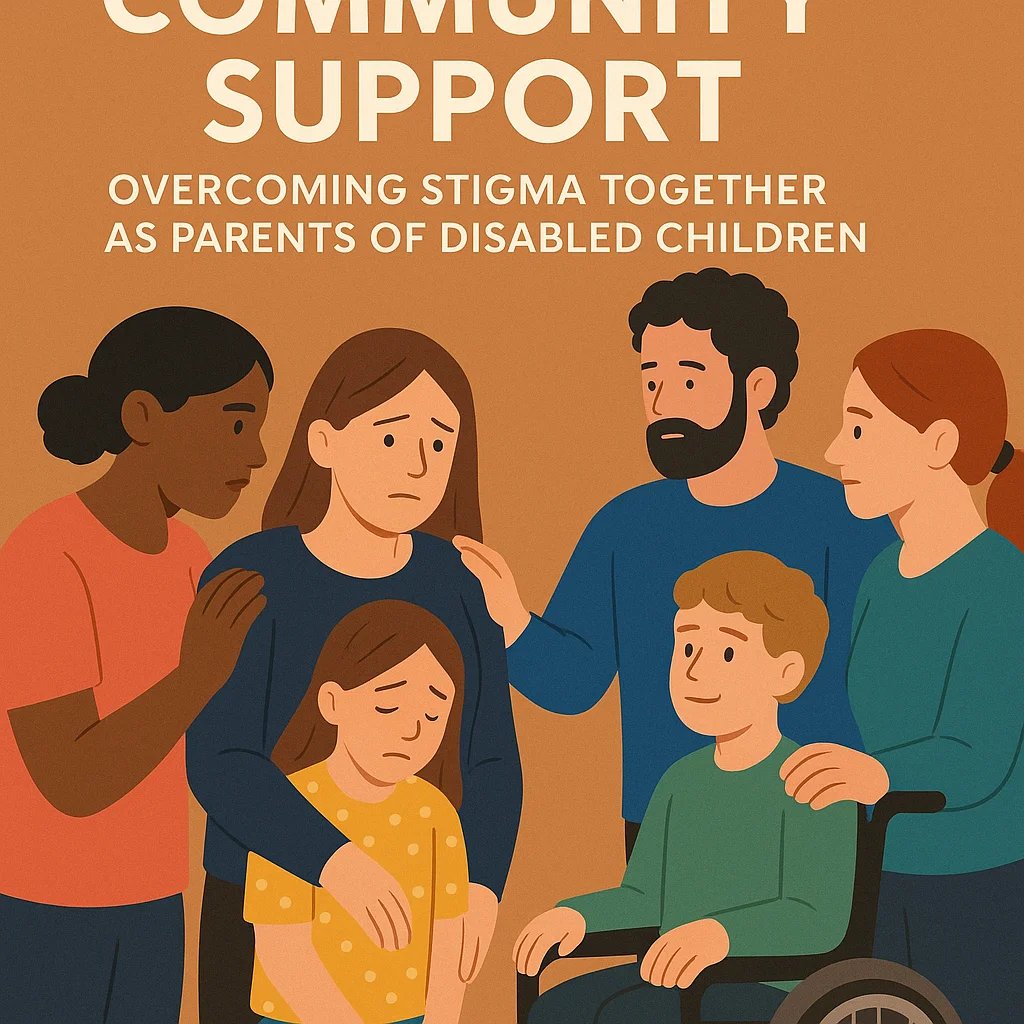
Essential Guide to Community Support: Overcoming Stigma Together as Parents of Disabled Children
Introduction: No Parent Should Have to Fight Stigma Alone
There is a particular kind of silence many parents of disabled children recognize.
It happens in the playground when other families move away instead of saying hello. It happens at school meetings when a parent is made to feel “difficult” for asking for accommodations. It happens at family gatherings when relatives offer pity instead of understanding. And sometimes, most painfully, it happens inside the parent’s own heart—when exhaustion, isolation, and repeated judgment begin to feel normal.
That is why Community Support: Overcoming Stigma Together as Parents of Disabled Children is not just a helpful idea. It is a lifeline.
Parents of disabled children often carry more than daily caregiving responsibilities. They carry invisible emotional labor: explaining diagnoses, defending their child’s needs, correcting assumptions, navigating systems, and pushing back against stigma that can come from schools, healthcare settings, faith communities, extended family, and even strangers.
But stigma loses power when people stop facing it alone.
When parents connect with others who understand, something shifts. Shame turns into shared language. Isolation becomes solidarity. Advocacy becomes less intimidating. Children see their families surrounded by acceptance instead of apology. Communities begin to learn that disability is not a tragedy to hide, but a natural part of human diversity.
This article explores Community Support: Overcoming Stigma Together as Parents of Disabled Children in depth—why it matters, how it works, what real families can learn from it, and how parents, schools, neighbors, professionals, and local groups can build more inclusive environments together.
Understanding the Stigma Parents of Disabled Children Face
Before we can talk about solutions, we need to name the problem clearly.
Stigma is not always loud or obvious. It can be subtle, polite, and hidden behind “concern.” Parents may hear things like:
- “Are you sure you’re not overreacting?”
- “He doesn’t look disabled.”
- “Maybe she just needs more discipline.”
- “It must be so hard for you.”
- “Why bring him here if he can’t handle it?”
- “Have you tried fixing it with diet, prayer, or therapy?”
These comments may seem small to outsiders, but repeated over time, they become emotionally draining. Stigma teaches families that they are being watched, judged, or blamed.
For parents of disabled children, stigma can appear in several forms.
| Type of Stigma | What It Looks Like | Impact on Parents and Children |
|---|---|---|
| Social stigma | Exclusion, staring, gossip, pity, avoidance | Isolation, embarrassment, reduced participation |
| Institutional stigma | Schools or services failing to accommodate needs | Burnout, legal battles, delayed support |
| Family stigma | Relatives denying disability or blaming parenting | Conflict, guilt, emotional distress |
| Self-stigma | Parents internalizing shame or feeling “not enough” | Anxiety, depression, reluctance to seek help |
| Cultural stigma | Disability viewed as shameful, cursed, or hidden | Secrecy, delayed diagnosis, lack of support |
This is where Community Support: Overcoming Stigma Together as Parents of Disabled Children becomes essential. Community support interrupts stigma by replacing judgment with understanding, misinformation with education, and isolation with belonging.
Why Community Support Matters So Deeply
Parenting a disabled child can be joyful, meaningful, demanding, confusing, beautiful, and exhausting—often all in the same day. What makes the journey harder is not disability itself, but lack of support.
A strong community can change the entire experience.
Community support for parents of disabled children provides:
- Emotional encouragement
- Practical advice
- Shared resources
- Advocacy strategies
- Social belonging
- Crisis support
- Reduced shame
- More inclusive opportunities for children
At its heart, Community Support: Overcoming Stigma Together as Parents of Disabled Children means parents do not have to constantly explain themselves. They can sit with people who already “get it.”
That kind of understanding is powerful.
A parent who feels supported is more likely to ask for services, attend school meetings with confidence, challenge discrimination, and create positive experiences for their child. A child who grows up surrounded by supportive adults is more likely to develop pride, self-worth, and a sense of belonging.
Community support is not a luxury. It is protective.
The Emotional Weight Parents Carry
Many parents of disabled children become experts in things they never expected to learn: medical terminology, therapy schedules, education plans, insurance systems, accessibility laws, sensory regulation, mobility equipment, communication tools, and behavior support strategies.
But the emotional weight is often harder to explain.
Parents may feel:
- Grief over lost expectations
- Fear about the future
- Anger at unfair systems
- Loneliness when friends drift away
- Guilt for feeling tired
- Shame caused by public judgment
- Pressure to appear strong all the time
One of the most healing parts of Community Support: Overcoming Stigma Together as Parents of Disabled Children is being able to speak honestly without being judged.
A parent can say, “I love my child deeply, and I am exhausted,” and another parent will understand that both things can be true.
That honesty matters. It prevents emotional isolation. It reminds parents that needing support does not mean failing. It means being human.
Moving from Isolation to Connection
Stigma thrives in isolation. When parents feel alone, they may start believing that their family is the problem. But when they meet other families with similar experiences, the story changes.
They realize:
- Other parents have been stared at in public too.
- Other children have been excluded from birthday parties.
- Other families have fought for school accommodations.
- Other parents have cried in the car after appointments.
- Other caregivers have felt overwhelmed by paperwork.
- Other children have been underestimated and later flourished.
This shared recognition is the beginning of healing.
Community Support: Overcoming Stigma Together as Parents of Disabled Children helps families move from “Why is this happening to us?” to “How can we support one another and change what happens next?”
That shift is more than emotional. It is practical. Connected parents exchange names of therapists, recommend inclusive activities, explain school rights, organize respite care, and show up for each other during difficult seasons.
Building a Supportive Community: What It Really Looks Like
A supportive community is not just a Facebook group or a monthly meeting, though those can help. True support is built through consistent care, trust, shared responsibility, and respect.
Here are the key elements of a strong community for parents of disabled children.
| Community Element | Why It Matters | Practical Example |
|---|---|---|
| Emotional safety | Parents need space to speak honestly | Judgment-free parent circles |
| Accessibility | Families must be able to participate | Wheelchair-accessible venues, sensory-friendly events |
| Shared knowledge | Parents learn from lived experience | Resource libraries, workshops |
| Advocacy | Collective voices create change | School board campaigns, policy meetings |
| Inclusion for children | Children need belonging too | Adaptive sports, inclusive playgroups |
| Cultural sensitivity | Support must respect family backgrounds | Multilingual resources, faith-based partnerships |
| Sustainable leadership | Prevents burnout among organizers | Rotating roles, volunteer teams |
When these pieces come together, Community Support: Overcoming Stigma Together as Parents of Disabled Children becomes more than a phrase. It becomes a living network.
Case Study 1: The Playground That Became a Parent Network
Background
In one suburban neighborhood, several parents of disabled children regularly visited the same public playground. Their children had different needs: one used a wheelchair, one was autistic, one had a rare genetic condition, and another had speech delays.
At first, each parent kept to themselves. They were used to being watched or misunderstood. One mother, Lina, noticed that her daughter could not access much of the equipment. Another parent, Marcus, often left early because his son became overwhelmed by noise.
One afternoon, after a difficult interaction with another family, Lina started a conversation with Marcus. That conversation led to a small group chat among four parents. Within months, the group grew to twelve families.
Together, they petitioned the local council for inclusive playground improvements, organized sensory-friendly play mornings, and invited local families to learn about disability inclusion.
Outcome
The council installed accessible swings, communication boards, and shaded quiet areas. More importantly, parents who once felt invisible began forming friendships. Children who had been excluded started playing alongside peers.
Analysis
This case shows how Community Support: Overcoming Stigma Together as Parents of Disabled Children can begin with one simple act: conversation. The parents did not wait for a formal organization to rescue them. They used shared experience to identify a problem, build trust, and create public change.
The playground became more than a physical space. It became a symbol of collective advocacy.
The Role of Parent Support Groups
Parent support groups are often the first formal step toward connection.
These groups may meet in person, online, through hospitals, schools, nonprofits, religious organizations, or community centers. Some focus on specific disabilities, such as autism, cerebral palsy, Down syndrome, ADHD, intellectual disability, sensory processing differences, or rare diseases. Others welcome all families of disabled children.
The best support groups offer both emotional and practical value.
They may include:
- Open discussion circles
- Guest speakers
- Legal rights workshops
- Mental health check-ins
- Sibling support sessions
- Resource sharing
- Family social events
- Advocacy planning
A strong support group does not tell parents how to feel. It gives them room to feel everything.
This is central to Community Support: Overcoming Stigma Together as Parents of Disabled Children. Support groups create a space where parents can stop performing strength and start receiving it.
Online Communities: Powerful, But Not Perfect
Online spaces have transformed community support for parents of disabled children. For parents who live in rural areas, lack transportation, have medically fragile children, or cannot attend meetings due to caregiving schedules, online communities can be a lifeline.
Benefits of online support include:
- 24/7 access
- Disability-specific advice
- Global perspectives
- Emotional validation
- Resource sharing
- Reduced geographic isolation
However, online spaces also have risks:
- Misinformation
- Judgmental comments
- Overwhelming negativity
- Privacy concerns
- Comparison stress
- Unqualified medical advice
To make online spaces healthier, parents can choose groups that are moderated, respectful, evidence-informed, and inclusive of different family experiences.
Community Support: Overcoming Stigma Together as Parents of Disabled Children can happen online, but it works best when compassion, boundaries, and accurate information guide the conversation.
Schools as Community Partners
Schools play a major role in either reducing or reinforcing stigma.
When schools treat accommodations as burdens, parents feel blamed. When teachers misunderstand disability-related behavior, children may be punished instead of supported. When classmates are not taught inclusion, disabled children can become isolated.
But when schools partner with families, everything changes.
An inclusive school community may provide:
- Individualized support plans
- Disability awareness education
- Accessible classrooms
- Peer buddy programs
- Anti-bullying policies
- Parent advisory committees
- Regular communication
- Staff training
- Inclusive extracurricular activities
Parents should not have to fight alone for basic respect. Schools have a responsibility to create environments where all students belong.
A school committed to Community Support: Overcoming Stigma Together as Parents of Disabled Children recognizes parents as experts on their children. It listens, collaborates, and adapts.
Case Study 2: A School Parent Circle That Reduced Bullying
Background
At an elementary school, several disabled students were experiencing social exclusion. One child with cerebral palsy was often left out during recess. An autistic student was teased for wearing noise-canceling headphones. A child with a speech device was mocked during group activities.
Parents raised concerns individually but felt dismissed. Eventually, three parents requested a meeting with the principal and proposed a disability inclusion parent circle.
The school agreed to host monthly meetings. Parents, teachers, aides, and administrators attended. The group discussed barriers, created inclusive classroom lessons, and organized a “Different Ways We Communicate and Move” awareness week.
Students learned about mobility aids, sensory needs, communication devices, and respectful language.
Outcome
Reports of bullying decreased. Teachers became more proactive. Students began inviting disabled classmates into games and group projects. Parents felt heard instead of dismissed.
Analysis
This example highlights how community support for parents of disabled children can transform school culture. Instead of framing disability as an individual family issue, the school addressed stigma as a community issue.
This is a core principle of Community Support: Overcoming Stigma Together as Parents of Disabled Children: stigma is not solved privately. It must be challenged collectively.
Faith Communities, Cultural Groups, and Local Organizations
For many families, support does not begin in a clinic or school. It begins in a church, mosque, temple, cultural association, neighborhood group, sports club, or community center.
These spaces can be deeply supportive—or deeply stigmatizing.
Some parents find comfort in faith and cultural communities that provide meals, prayer, transportation, companionship, and respite. Others experience painful judgment, such as being told their child’s disability is a punishment, test, or family shame.
Community leaders have an important role to play. They can reduce stigma by:
- Speaking respectfully about disability
- Making events accessible
- Training volunteers
- Offering inclusive children’s programs
- Listening to disabled people and their families
- Avoiding pity-based narratives
- Celebrating disabled children as full community members
Community Support: Overcoming Stigma Together as Parents of Disabled Children becomes stronger when trusted local institutions actively choose inclusion.
Practical Ways Parents Can Build Community Support
Not every parent has access to an established support network. Sometimes, community must be built from the ground up.
Here are practical starting points.
1. Start Small
You do not need a large organization. Begin with one other parent. A coffee chat, text thread, or shared walk can become the beginning of a meaningful network.
2. Ask Specific Questions
Instead of saying, “Let me know if you need anything,” supportive communities ask:
- “Can I bring dinner on Tuesday?”
- “Would you like me to attend the school meeting with you?”
- “Can I watch your other child during therapy?”
- “Do you want help researching local services?”
Specific help is easier to accept.
3. Create a Resource List
Parents can collaborate on a shared document with:
- Therapists
- Inclusive recreation programs
- Disability-friendly doctors
- Transportation options
- Legal advocacy services
- Financial assistance programs
- Support groups
- Emergency respite contacts
4. Host Inclusive Gatherings
Community does not always need to be serious. Families need joy too.
Ideas include:
- Sensory-friendly playdates
- Accessible picnics
- Adaptive movie nights
- Parent coffee mornings
- Inclusive holiday events
- Quiet-room birthday parties
- Sibling meetups
5. Share Leadership
One person should not carry the whole group. Rotate responsibilities so community support remains sustainable.
These small steps make Community Support: Overcoming Stigma Together as Parents of Disabled Children realistic, not overwhelming.
What Supportive Friends and Family Members Can Do
Parents of disabled children often hear, “I don’t know what to say.” That honesty is fine—but silence or distance can hurt.
Supportive friends and family members can make a real difference by learning, listening, and showing up.
| Instead of Saying | Try Saying |
|---|---|
| “I don’t know how you do it.” | “You’re doing a lot. How can I support you this week?” |
| “He looks normal to me.” | “Thank you for helping me understand his needs.” |
| “Maybe she’ll grow out of it.” | “What helps her feel comfortable and included?” |
| “That behavior wouldn’t happen in my house.” | “I want to understand what’s going on before judging.” |
| “Everything happens for a reason.” | “I’m here with you. You don’t have to explain.” |
| “Let me know if you need anything.” | “I can bring dinner Thursday or help with errands Saturday.” |
Friends and relatives do not need to be experts. They need to be humble, consistent, and willing to learn.
Family support is an important part of Community Support: Overcoming Stigma Together as Parents of Disabled Children because parents need acceptance not only in public spaces, but also at home.
The Importance of Language
Language shapes how communities think about disability.
Some families prefer identity-first language, such as “disabled child” or “autistic child.” Others prefer person-first language, such as “child with a disability” or “child with autism.” The best approach is to respect each person’s preference.
Avoid language that suggests pity, burden, or tragedy.
| Avoid | Consider |
|---|---|
| Suffers from disability | Has a disability / is disabled |
| Wheelchair-bound | Wheelchair user |
| Special needs child | Disabled child / child with support needs |
| Normal children | Non-disabled children |
| High-functioning/low-functioning | Describe specific support needs |
| Inspirational just for existing | Recognize real achievements respectfully |
Respectful language is not about being politically perfect. It is about seeing children clearly.
In the work of Community Support: Overcoming Stigma Together as Parents of Disabled Children, language can either deepen stigma or dismantle it.
Advocacy: Turning Shared Pain into Collective Power
Many parents begin as reluctant advocates. They simply want their child to receive fair treatment. But systems often require persistence.
When parents advocate together, they are harder to ignore.
Collective advocacy may include:
- Requesting accessible playgrounds
- Improving school accommodations
- Challenging discriminatory policies
- Campaigning for better respite care
- Asking healthcare providers for family-centered practices
- Creating inclusive recreation programs
- Speaking at local council meetings
- Building parent advisory boards
Advocacy does not always mean protest. Sometimes it means writing a letter, attending a meeting, sharing a story, or asking a better question.
The power of Community Support: Overcoming Stigma Together as Parents of Disabled Children is that it turns individual frustration into organized change.
Case Study 3: Rural Families Creating a Respite Network
Background
In a rural county, parents of disabled children had limited access to therapy, childcare, and respite services. Families often drove hours for appointments. Many parents felt forgotten by regional service providers.
A group of five parents began meeting at a library once a month. They shared similar concerns: burnout, lack of trained babysitters, social isolation, and limited inclusive activities.
The group contacted a local nursing college, a church, and a disability nonprofit. Together, they created a volunteer respite training program. Volunteers learned about disability awareness, communication, safety, sensory needs, and respectful support.
Outcome
Within a year, twenty volunteers were trained. Families received occasional respite care, and children attended inclusive weekend activity sessions. Parents reported feeling less isolated and more hopeful.
Analysis
This case demonstrates that Community Support: Overcoming Stigma Together as Parents of Disabled Children can thrive even in areas with few formal services. The parents identified a gap, built partnerships, and created a practical solution rooted in trust.
Their success came from collaboration—not from waiting for a perfect system.
Supporting the Mental Health of Parents
Parent mental health is often overlooked.
Many parents of disabled children experience chronic stress, anxiety, depression, sleep deprivation, or trauma from repeated battles with systems. Some also experience medical trauma after hospitalizations, diagnoses, or emergency situations.
Community support can reduce mental health strain, but it is not a substitute for professional care when needed.
Helpful supports include:
- Therapy or counseling
- Parent peer groups
- Respite care
- Trauma-informed healthcare
- Mindfulness or stress reduction
- Exercise when possible
- Sleep support
- Practical help from friends
- Crisis planning
Parents should not feel guilty for needing support. A burned-out parent is not weak. They are often someone who has been strong without enough help for too long.
Community Support: Overcoming Stigma Together as Parents of Disabled Children must include caring for caregivers. Supporting parents directly benefits children.
Siblings Need Community Too
Siblings of disabled children may feel love, protectiveness, pride, confusion, jealousy, embarrassment, or pressure. Their experiences deserve attention.
They may wonder:
- Why does my sibling get more attention?
- Will I have to be a caregiver someday?
- Why do people stare at our family?
- Is it okay to feel frustrated?
- Who can I talk to?
Community support should include siblings through:
- Sibling support groups
- Age-appropriate disability education
- One-on-one time with parents
- Honest family conversations
- Peer connections
- Inclusive family events
- Counseling when needed
A whole-family approach strengthens Community Support: Overcoming Stigma Together as Parents of Disabled Children because stigma affects everyone in the family system.
Disability Pride and Reframing the Story
One of the most powerful ways to overcome stigma is to change the story.
Disabled children are not problems to solve. They are children with personalities, preferences, humor, talents, frustrations, dreams, and rights.
Community support helps parents move from shame-based narratives to pride-based narratives.
This does not mean pretending everything is easy. It means holding complexity.
A parent can say:
- “My child needs support, and my child is whole.”
- “Our family has challenges, and we also have joy.”
- “Disability is part of our life, not the end of our life.”
- “We need accommodations, not pity.”
- “My child belongs here.”
This mindset is central to Community Support: Overcoming Stigma Together as Parents of Disabled Children. When parents begin to reject shame, children learn to reject it too.
How Communities Can Become More Inclusive
Parents should not carry the full responsibility of educating everyone. Communities must do their part.
Here are practical ways communities can reduce stigma.
| Community Space | Inclusion Actions |
|---|---|
| Schools | Train staff, teach inclusion, prevent bullying, support accommodations |
| Parks | Build accessible playgrounds, provide quiet zones, add communication boards |
| Libraries | Offer sensory-friendly programs, visual schedules, accessible seating |
| Sports clubs | Create adaptive teams, train coaches, welcome different abilities |
| Healthcare clinics | Use respectful language, coordinate care, listen to parents |
| Faith groups | Make services accessible, train volunteers, include disabled children |
| Local businesses | Improve physical access, train staff, offer flexible support |
| Parent groups | Welcome disabled children and avoid exclusionary event planning |
Inclusive communities do not happen by accident. They are designed.
When towns, schools, and organizations embrace Community Support: Overcoming Stigma Together as Parents of Disabled Children, they create environments where families no longer have to choose between participation and dignity.
Barriers That Make Community Support Difficult
Even when parents want support, barriers can get in the way.
Common barriers include:
- Lack of transportation
- Financial strain
- Time constraints
- Caregiving demands
- Language barriers
- Cultural stigma
- Fear of judgment
- Past negative experiences
- Inaccessible meeting spaces
- Lack of childcare
- Medical complexity
- Digital divide
Support networks must recognize these realities. A parent who does not attend meetings may not be uninterested—they may be overwhelmed.
To make Community Support: Overcoming Stigma Together as Parents of Disabled Children truly inclusive, communities should offer multiple ways to participate: online options, flexible meeting times, translation, accessible locations, childcare, and low-cost or free events.
The Role of Professionals
Doctors, therapists, teachers, social workers, and counselors can either reinforce stigma or help dismantle it.
Professionals should:
- Listen to parents without dismissing concerns
- Respect lived experience
- Avoid blaming families
- Use strengths-based language
- Connect parents with peer support
- Explain systems clearly
- Provide culturally sensitive care
- Include disabled children in conversations when appropriate
- Recognize caregiver burnout
- Collaborate across services
Professionals are not the center of Community Support: Overcoming Stigma Together as Parents of Disabled Children, but they can be valuable allies.
The most effective professionals understand that parents are not passive recipients of advice. They are partners.
Creating Safe Spaces for Honest Conversations
Parents need spaces where they can talk about the hard things:
- Public meltdowns
- Medical fear
- School conflict
- Financial stress
- Marital strain
- Loneliness
- Anger
- Grief
- Joy
- Hope
Safe spaces require trust and boundaries.
A good parent support space should have:
- Confidentiality expectations
- Respect for different diagnoses and experiences
- No shaming of parenting choices
- No pressure to be positive all the time
- Clear moderation
- Inclusion of diverse families
- Space for both challenges and celebrations
The emotional heart of Community Support: Overcoming Stigma Together as Parents of Disabled Children is this: parents deserve to be fully honest and still fully accepted.
A Simple Community Support Action Plan
If you are a parent wondering where to begin, start with manageable steps.
| Step | Action | Goal |
|---|---|---|
| 1 | Identify one need | Clarify what support would help most |
| 2 | Find one connection | Reduce isolation |
| 3 | Join or create a group | Build shared support |
| 4 | Share resources | Make life easier for families |
| 5 | Invite allies | Expand beyond parents |
| 6 | Address one stigma issue | Create visible change |
| 7 | Celebrate progress | Sustain hope and motivation |
You do not have to transform your entire community overnight. Community Support: Overcoming Stigma Together as Parents of Disabled Children often begins with one need, one conversation, one ally, and one small act of courage.
Signs Your Community Support Network Is Working
How do you know support is making a difference?
Look for these signs:
- Parents feel less alone.
- Families exchange practical help.
- Children are included more often.
- Stigma is challenged openly.
- Schools and organizations listen better.
- Parents feel more confident advocating.
- New families are welcomed quickly.
- Community members use respectful language.
- Events become more accessible.
- Joy becomes part of the story again.
The goal of Community Support: Overcoming Stigma Together as Parents of Disabled Children is not to create a perfect world. It is to create a more responsive, compassionate, and inclusive one.
Long-Tail Keyword Variations for Contextual Use
For SEO and content planning, related long-tail variations include:
- Community support for parents of disabled children
- Overcoming stigma as parents of disabled children
- Parent support groups for disabled children
- Disability inclusion and family support
- How parents of disabled children can build community
- Fighting disability stigma through community support
- Support networks for families of disabled children
- Inclusive communities for disabled children and families
- Reducing stigma around childhood disability
- Community advocacy for parents of children with disabilities
These variations naturally support the focus keyword Community Support: Overcoming Stigma Together as Parents of Disabled Children while making the topic easier for families to find online.
FAQs About Community Support and Stigma
1. Why is community support so important for parents of disabled children?
Community support helps reduce isolation, emotional stress, and stigma. It gives parents a place to share experiences, exchange resources, and advocate more effectively. Community Support: Overcoming Stigma Together as Parents of Disabled Children helps families feel seen, respected, and less alone.
2. How can I find a support group for parents of disabled children?
Start by asking your child’s doctor, therapist, school, local disability nonprofit, hospital, library, or community center. You can also search online for diagnosis-specific groups or local parent networks. If no group exists, consider starting small with one or two families.
3. What should I do if my family members do not understand my child’s disability?
Begin with clear, simple education. Explain your child’s needs and what support looks like. Set boundaries when comments are harmful. If relatives are willing, invite them to appointments, school meetings, or support events. If they remain dismissive, seek emotional support elsewhere. Community can include chosen family too.
4. How can schools help overcome stigma?
Schools can train staff, teach students about disability inclusion, prevent bullying, provide accommodations, and involve parents in decision-making. A school that supports Community Support: Overcoming Stigma Together as Parents of Disabled Children treats inclusion as everyone’s responsibility.
5. What if I feel too overwhelmed to join a community?
Start very small. Follow a supportive online page, message one parent, attend one meeting, or ask a professional for a referral. You do not have to participate heavily. Even a small connection can reduce isolation.
6. How can friends support parents of disabled children without saying the wrong thing?
Listen more than you advise. Avoid pity, blame, or unsolicited solutions. Offer specific help, such as meals, transportation, childcare, or companionship. Ask respectful questions and believe parents when they describe their child’s needs.
7. Can community support really reduce stigma?
Yes. Stigma decreases when people build relationships, learn accurate information, and see disabled children included in everyday life. Community Support: Overcoming Stigma Together as Parents of Disabled Children works because it changes both personal attitudes and community practices.
Conclusion: Together, Parents Can Turn Stigma into Strength
Raising a disabled child in a stigmatizing world can feel lonely, but it should never have to be a lonely journey.
The heart of Community Support: Overcoming Stigma Together as Parents of Disabled Children is simple and powerful: when families stand together, shame loses its grip. Parents become stronger advocates. Children experience more belonging. Schools, neighborhoods, and organizations begin to change.
Community support does not erase every challenge. It does not make paperwork disappear, fix inaccessible buildings overnight, or stop every hurtful comment. But it gives families something stigma tries to take away: connection, dignity, confidence, and hope.
Start where you are.
Send one message. Invite one parent for coffee. Ask one school leader for change. Share one resource. Correct one harmful assumption. Create one inclusive space. Accept one offer of help.
Small acts become networks. Networks become movements. Movements change communities.
And every disabled child deserves to grow up in a community that does not merely tolerate them, but welcomes them fully.

