

Do we think that just because two things happen together, one must cause the other? This mistake is common in psychological research. It’s key to tell apart correlation and causation.
A correlation coefficient shows how strong and in which direction two variables are related. But it doesn’t mean one causes the other. A strong link between two things doesn’t always mean one is the cause.
It’s important to know the difference between correlation and causation in psychology statistics and research methods. We must be careful not to confuse the relationship between variables. This can lead to wrong conclusions.
Key Takeaways
- Correlation does not imply causation.
- A correlation coefficient indicates the strength and direction of the relationship between variables.
- Misinterpreting correlation and causation can lead to incorrect conclusions in psychological research.
- Understanding the difference is vital in psychology statistics and research methods.
- Careful analysis is needed to tell apart correlation and causation.
Understanding the Basics of Correlation and Causation
Correlation and causation are key ideas in psychology. They are often linked but have different meanings. Knowing how to define and measure correlation is key to understanding psychological studies.
Defining Correlation in Psychological Research
Correlation in psychology means a statistical link between two or more things. This link is shown by a correlation coefficient. It shows how strong and in which direction the link is.
Measurement and Statistical Relationships
The correlation coefficient is a key number in correlation studies. It shows how closely variables are related. This number is important in statistical analysis for accurate data interpretation.
Strength and Direction of Correlations
Correlations can be positive, negative, or neutral. A positive correlation means both variables go up together. A negative correlation means one goes up while the other goes down. Knowing the strength and direction of these links is essential for understanding study results.


The Science Behind Correlation vs Causation Psychology
Understanding correlation is key in psychology. It helps us see how different things might be connected. This is done through correlation analysis, a tool that shows us patterns or links between variables.
Statistical Foundations of Correlation
Correlation is based on measuring how two things relate to each other. This is done using a correlation coefficient. It shows how strong or weak the connection is, from -1 to 1.
Correlation Coefficients Explained
A correlation coefficient shows how two things are related. A number close to 1 means they go up together. A number near -1 means they go down together. Zero means they don’t relate at all.
Statistical Significance in Correlational Studies
In studies, knowing if a correlation is real is important. We use statistical significance to check this. It’s like a test to see if the connection is just by chance or if it’s real.
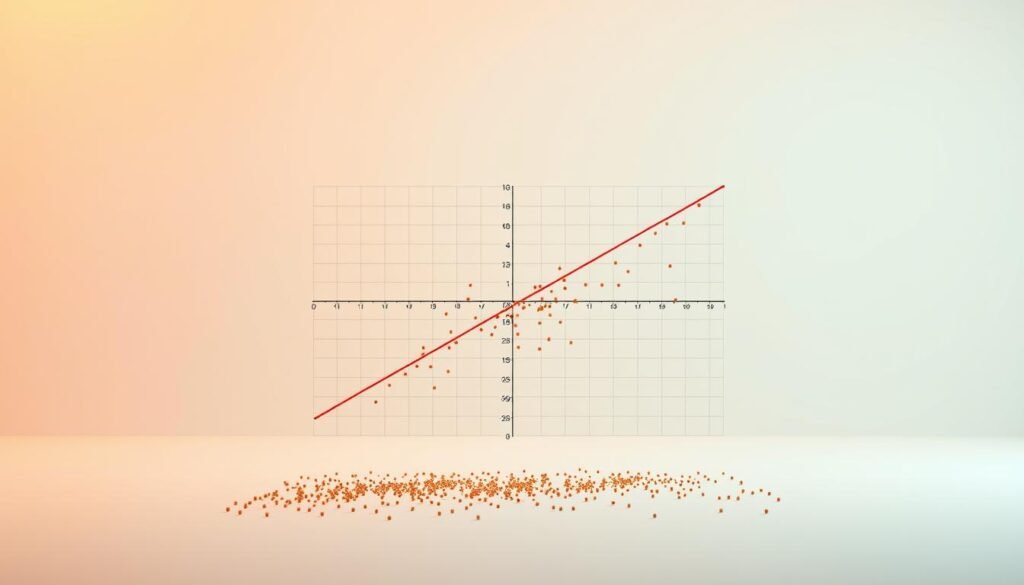
Understanding these stats helps researchers. It keeps them from thinking a correlation means something it doesn’t. This is important for growing our knowledge in psychology.
Types of Correlations in Psychological Studies
Understanding the types of correlations is key in psychological research. It helps us accurately interpret data. Correlations can be positive or negative, each showing unique insights into variable relationships.
Positive Correlations
Positive correlations happen when both variables move in the same direction. This is important for understanding how two factors can grow or decrease together.
Real-World Examples in Psychology
For example, a study might show that more exercise leads to better mental health. This means as exercise goes up, so does mental well-being.
Negative Correlations
Negative correlations occur when one variable goes up as the other goes down. This is vital for spotting inverse relationships between variables.
Case Studies from Clinical Psychology
In clinical psychology, a study might find that more stress means less ability to handle anxiety. This shows that higher stress levels are linked to weaker coping skills.
| Correlation Type | Description | Example |
|---|---|---|
| Positive Correlation | Both variables increase or decrease together | Exercise and mental well-being |
| Negative Correlation | One variable increases as the other decreases | Stress levels and anxiety coping mechanisms |

In conclusion, knowing the different types of correlations is vital for understanding psychological studies. By identifying whether correlations are positive or negative, researchers can grasp the complex links between various psychological factors.
Establishing Causation in Psychology
Understanding causation is key in psychology. It helps researchers figure out how different things are connected. To make these connections, they follow strict rules and plan their studies well.
Necessary Conditions for Causal Claims
For a claim to be causal, some things must be true. There needs to be a clear order in time between cause and effect. There should also be a good reason why the cause leads to the effect. And, there can’t be other reasons for what happened.
Researchers must make sure their study can show the cause alone. This means they have to design their study carefully.
Experimental Design Requirements
Experimental research is very important for finding causation in psychology. It involves changing something, called the independent variable, and seeing how it affects something else, called the dependent variable. To be sure their findings are right, researchers do manipulation checks. This checks if they really changed the independent variable as planned.
Independent and Dependent Variables
In experiments, the independent variable is what the researcher changes. The dependent variable is what they measure to see the effect. It’s very important to know what these are clearly.
Manipulation Checks
Manipulation checks help make sure the change worked as planned. This is key to knowing that any changes in the dependent variable are because of the independent variable.
By designing experiments well and looking at the results, researchers can make smart guesses about causation. This helps us understand more about psychology.
The “Correlation Does Not Imply Causation” Principle
Understanding the difference between correlation and causation is key to making sense of psychological data. This principle warns us not to jump to conclusions based on just correlational data. Doing so can lead to wrong conclusions.
Origins and Importance of the Principle
This principle comes from the world of statistics and science. It highlights the need for careful experimental design to prove cause and effect. By grasping this, researchers can steer clear of the causality fallacy, a common mistake in data analysis.
This principle is vital for the credibility of research in psychology. It teaches us to be careful when looking at data. It helps us understand the complex links between different factors.
Common Misapplications in Psychology
Despite its significance, this principle is sometimes misused or ignored in psychology. People often assume causation based on correlation without considering other factors. They also overlook the impact of third variables on the relationship they observe.
For example, a study might show a link between two things. But without proper control, it’s hard to say which one causes the other. Randomized controlled trials and detailed statistical analysis are key to avoiding these problems.
Famous Examples of Correlation vs Causation Confusion in Psychology
Many times, people confuse correlation with causation in psychology. This mistake makes it hard to understand how different things are related. When we see two things seem to go together, we must think if one really causes the other.
The Vaccination and Autism Correlation Fallacy
One big mistake was thinking vaccines cause autism. But, many studies have shown this isn’t true.
Origins of the Misconception
The idea that vaccines cause autism started with a now-retracted study. This study linked the MMR vaccine to autism. It caused a lot of worry and problems in public health.
Research Debunking the Correlation
Many studies have looked into this claim and found no link. For example, a big study of over 1.2 million kids showed no connection between MMR vaccines and autism. Epidemiological evidence shows the link was just a coincidence. It was caused by how doctors diagnose and the media’s influence.
This example shows how important it is to do good science and understand data. Knowing the difference between correlation and causation helps us make better choices about health and other important topics.
In short, the idea that vaccines cause autism is a clear example of confusing correlation with causation. Thanks to careful research, we now know the truth. This shows how important it is to tell the difference between correlation and causation in psychology.
Research Methods for Determining Causality
Researchers use many methods to figure out causality in psychology. Experimental designs are key. They help us understand how to fix problems and why things happen in our minds.
Experimental Research Designs
Experimental designs are vital for proving cause and effect in psychology. They change one thing and see how it affects another. This way, researchers can be sure about cause and effect.
Laboratory vs. Field Experiments
Experiments can happen in labs or in real-life settings. Labs offer more control, making results more reliable. But, field experiments are more like real life, making results more generalizable.
Randomized Controlled Trials
Randomized controlled trials (RCTs) are the top choice for proving causality. They split people into groups randomly. This makes sure groups are similar, helping to avoid bias and prove the effect of something.
The Gold Standard in Psychological Research
What makes RCTs so strong is their ability to show clear cause and effect. They control for other factors, making them a solid test of ideas. This is why they’re seen as the best way to check if something works in psychology.
Statistical Techniques for Analyzing Correlational Data
In psychology, analyzing correlational data is key to finding patterns and connections. This data shows how variables relate to each other. Researchers use many statistical methods to work with this data.
Regression Analysis
Regression analysis is a strong tool for studying how variables are linked. It shows how a dependent variable changes with different independent variables.
Multiple Regression and Control Variables
Multiple regression uses more than one independent variable. It’s great for controlling other variables in research. This is very important in psychology.
For example, a study might look at how stress and sleep affect thinking. It uses multiple regression to keep sleep quality constant.
| Variable | Coefficient | Standard Error |
|---|---|---|
| Stress Levels | 0.5 | 0.1 |
| Sleep Quality | 0.2 | 0.05 |
Structural Equation Modeling
Structural Equation Modeling (SEM) is a detailed method for studying variable relationships. It’s perfect for complex theories.
Latent Variables and Measurement Models
SEM uses latent variables, which are not seen but inferred. This gives a deeper look into psychological ideas.
For instance, a study might use SEM to link “intelligence” and “academic achievement.” It uses test scores and grades as observed variables.
Using these methods, psychologists can better understand complex variable relationships. This helps move the field forward.
Third Variables and Spurious Correlations
Third variables are key in psychological research. They can cause wrong conclusions if ignored. A third variable, or confounding variable, is something outside the study that affects the relationship between the main variables.
Identifying Confounding Variables
To find confounding variables, researchers use both theory and statistics. They must think about possible confounds in their study’s setting.
Common Confounds in Psychological Research
- Demographic factors such as age, gender, and socioeconomic status
- Pre-existing conditions or traits that could influence the outcome
- Environmental factors that may affect the study’s variables
Strategies to Control for Third Variables
After spotting confounds, researchers use several methods to manage them. These methods fall into two main groups: statistical control and experimental control.
Statistical Control vs. Experimental Control
Statistical control uses stats to adjust for confounds. Methods include regression analysis and ANCOVA.
- Statistical Control Methods:Regression analysis to partial out the effect of confounds
- ANCOVA to adjust group means based on the covariate
- Experimental Control Methods:Randomization to evenly distribute confounds across groups
- Matching participants across conditions on relevant variables
By tackling third variables, researchers can make their findings more reliable. This leads to better understanding of psychological topics.
Ethical Considerations in Correlation and Causation Research
Research on correlation and causation raises many ethical questions. It involves careful data analysis and avoiding mistakes in causality. Researchers must ensure their findings are trustworthy and accurate.
Responsible Reporting of Correlational Findings
Researchers must clearly state the limits of their studies. They should not say causation when they only found correlation.
Language Choices and Implications
The words used in research reports matter a lot. Careful wording helps avoid wrong interpretations. For example, saying “is associated with” instead of “causes” keeps things accurate.
Avoiding Causal Claims Without Sufficient Evidence
Making claims of causation without solid evidence is wrong. It’s not just bad science, but also unethical. Researchers should rigorously test their hypotheses and be careful with their conclusions.
By paying attention to these ethics, researchers help build a more reliable field of psychology.
Advanced Methods for Causal Inference in Psychology
The search for causal understanding in psychology has led to new methods. These methods make research findings more reliable. As we dive deeper into human behavior and mental processes, we need stronger causal inference methods.
Propensity Score Matching
Propensity score matching is a statistical method. It makes groups similar on observed factors, reducing bias in studies. By matching participants, researchers can better understand the effects of interventions or treatments.
Applications in Observational Studies
In observational studies, this method is key. It helps when random assignment isn’t possible. For example, it can match students who got a new educational program with those who didn’t, based on factors like past achievement and demographics.
Instrumental Variable Analysis
Instrumental variable analysis is another advanced method. It helps find causality, even with unmeasured confounding variables. It uses an instrumental variable that affects the treatment but not the outcome, except through the treatment.
Examples from Developmental Psychology
In developmental psychology, this method has been used to study the impact of parental education on child development. For instance, a study might use a policy change to affect parental education. This helps understand the causal link between these variables.
The Role of Theory in Establishing Causal Relationships
Causal research in psychology gets a big boost from strong theoretical frameworks. These frameworks guide the research from start to finish. They help us understand complex psychological issues and keep research based on solid knowledge.
How Theoretical Frameworks Guide Causal Research
Theoretical frameworks are key in guiding causal research. They give a clear path for investigation. They help spot possible causal links and design studies to test them. This way, researchers can grasp the underlying reasons behind psychological processes.
Theory-Driven vs. Data-Driven Approaches
Psychology research can be either theory-driven or data-driven. Theory-driven research follows established theories, while data-driven research uses data to shape theories. A mix of both is usually the best way to go.
Balancing Induction and Deduction
It’s important to mix inductive and deductive reasoning. Deductive reasoning tests hypotheses based on theory. Inductive reasoning creates theory from data. A balanced approach ensures research is both theoretical and data-based.
| Theoretical Approach | Research Characteristics | Advantages |
|---|---|---|
| Theory-Driven | Guided by established theories, hypothesis testing | Provides clear direction, grounded in existing knowledge |
| Data-Driven | Empirical data informs theory development | Flexible, allows for new insights and theory generation |
| Balanced Approach | Integrates theory and data | Combines the strengths of both approaches, robust and responsive to evidence |
Common Fallacies in Interpreting Psychological Research
When we look at psychological research, it’s key to know about common mistakes. Psychology is complex, and understanding research needs careful thought. We must consider many factors when we interpret findings.
Post Hoc Ergo Propter Hoc Fallacy
This fallacy, “after this, then because of this,” is when we think one event causes another just because it comes after. It’s a big issue in psychology because proving cause and effect is hard.
Examples from Clinical Psychology
In clinical psychology, this fallacy shows up when we look at how treatments work. For example, if a patient feels better after a treatment, we might think the treatment worked. But, other things could have helped too.
Confirmation Bias in Causal Reasoning
Confirmation bias is when we look for and remember info that backs up what we already believe. In trying to figure out causes, this bias can make us ignore evidence that doesn’t fit our ideas.
How Researchers and Clinicians Can Avoid It
To dodge confirmation bias, we should look for different views and evidence that goes against our ideas. Using randomized controlled trials helps. Also, planning our study and analysis before we start can help us report accurate results.
Knowing about these fallacies and how to avoid them helps us make our research more reliable. This way, we can better understand psychology.
Practical Guidelines for Evaluating Causation Claims
Causation claims in psychology need a deep understanding of research and data. To check these claims well, we must have the right tools and knowledge.
Critical Questions to Ask About Research Findings
When looking at causation claims, ask these key questions:
- What is the research design used in the study?
- Are the methods enough to show causality?
- How were confounding variables controlled?
- What is the sample size, and is it representative of the population?
A Checklist for Practitioners
Here’s a checklist for a detailed review:
- Study design: Is it experimental or observational?
- Data analysis: Are the statistical methods right?
- Confounding variables: Are they well-controlled?
- Sample characteristics: Are they clearly described and relevant?
Red Flags in Media Reporting of Psychological Studies
Media often makes research findings seem more exciting than they are. We should watch out for:
- Sensational headlines that make complex research seem simple
- Lack of detail about the study’s limitations
- Failure to report conflicting evidence
Sensationalism and Oversimplification
Sensationalism and oversimplification in media can change the real meaning of research. It’s key to look beyond the headlines and really understand the original study.
Conclusion: The Importance of Distinguishing Correlation and Causation in Psychology
Distinguishing between correlation and causation is key in psychology. It helps us understand research findings accurately. This distinction affects how we design studies, analyze data, and apply research to real life.
In psychology, knowing the difference between correlation and causation is vital. It helps us find cause-and-effect links. This knowledge is critical for creating effective treatments and interventions. By using strong research methods and psychology statistics, we can uncover what drives human behavior.
Not understanding the difference can lead to wrong conclusions and treatments. So, it’s important for researchers, practitioners, and policymakers to be careful. By critically evaluating evidence, we can better understand psychological issues. This helps us find effective solutions to problems.
FAQ
What is the difference between correlation and causation in psychology?
Correlation shows a statistical link between two things. Causation means one thing causes a change in another. Knowing the difference is key in psychology to avoid mistakes.
How is correlation measured in psychological research?
Researchers use the correlation coefficient to measure it. This number ranges from -1 to 1. It shows how strong and in which direction two variables are related.
What are the necessary conditions for making causal claims in psychology?
To prove causation, there must be a clear order in time between cause and effect. There also needs to be a strong link between them. Plus, other explanations must be ruled out through experiments and stats.
What is the role of experimental design in establishing causation?
Experimental designs, like randomized trials, let researchers change one variable and see its effect. This is a strong way to show cause and effect.
How can third variables affect the interpretation of correlational data?
Third variables can make correlations seem real when they’re not. Or they can hide real connections. It’s important to find and control these variables with stats or experiments.
What are some common fallacies encountered in interpreting psychological research?
Fallacies include thinking causation just because things happen in order. Another is choosing data that fits what you think, ignoring the rest.
How can researchers avoid unwarranted causal claims?
Researchers should be careful with correlation data. They should avoid making things sound more certain than they are. And they should clearly state what their study can and can’t show.
What is the importance of theory in establishing causal relationships?
Theories help guide research by showing how variables are connected. They help in designing studies and understanding results.
What are some advanced statistical methods used for causal inference in psychology?
Methods like propensity score matching and instrumental variable analysis help find cause in studies without experiments.
How can readers critically evaluate causation claims in research findings?
Readers should question the study’s design, stats, and how the results are explained. They should watch out for biases and limits.


Dr. Leah Howard, Positive Psychology
Dr. Howard is a researcher and advocate for positive psychology, focusing on human strengths, happiness, and well-being. Her writings explore how people can cultivate a positive mindset, improve resilience, and develop emotional intelligence to live fulfilling lives.