


Introduction: Your Body Is Not “Overreacting”—It Is Communicating
You wake up tired even after eight hours of sleep. Your mind races at night, but your energy crashes at 3 p.m. You feel wired, irritable, hungry for sugar, and strangely unable to relax—even when nothing “big” is happening.
Sound familiar?
This is where Cortisol and Stress: What Your Body Is Trying to Tell You becomes more than a wellness phrase. It becomes a roadmap.
Cortisol is often called the “stress hormone,” but that label is incomplete. Cortisol is not your enemy. In fact, you need it to wake up, think clearly, regulate blood pressure, manage inflammation, respond to danger, and maintain energy throughout the day.
The problem begins when your body keeps sending cortisol signals long after the stressful moment has passed.
Understanding cortisol and stress—what your body is trying to tell you—can help you stop blaming yourself for fatigue, cravings, anxiety, weight changes, poor sleep, or mood swings. These symptoms may not be random. They may be messages from your nervous system, metabolism, sleep cycle, and immune system asking for support.
This in-depth article explores Cortisol and Stress: What Your Body Is Trying to Tell You from a practical, science-informed, human perspective. You will learn what cortisol does, how chronic stress changes your body, what symptoms may mean, and how to respond with realistic strategies that support recovery.
Important note: This article is educational and not a substitute for medical care. Symptoms related to cortisol and stress can overlap with thyroid issues, anemia, depression, sleep apnea, diabetes, medication effects, and other conditions. If symptoms are persistent or severe, consult a qualified healthcare professional.
Understanding Cortisol: The Hormone That Helps You Survive
To understand Cortisol and Stress: What Your Body Is Trying to Tell You, start with the basics.
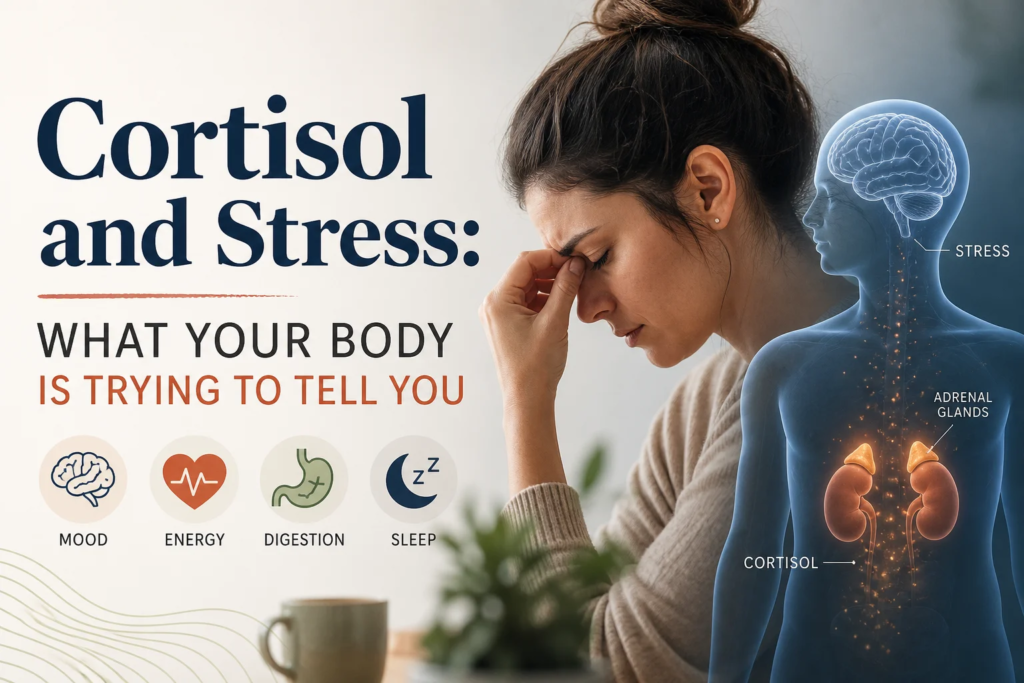
Cortisol is produced by your adrenal glands, which sit on top of your kidneys. Its release is controlled by the hypothalamic-pituitary-adrenal axis, often called the HPA axis. Think of the HPA axis as your internal stress communication network.
When your brain senses a challenge—an argument, deadline, financial worry, illness, injury, or even intense exercise—it signals the adrenal glands to release cortisol.
Cortisol helps you:
- Mobilize glucose for quick energy
- Increase alertness and focus
- Regulate inflammation
- Maintain blood pressure
- Support immune function
- Help the body adapt to physical and emotional demands
In short, cortisol is part of your built-in survival system.
The issue is not cortisol itself. The issue is cortisol dysregulation—when cortisol is too high for too long, too low at the wrong time, or released in a disrupted daily rhythm.
That is why the conversation around Cortisol and Stress: What Your Body Is Trying to Tell You should not be about “destroying cortisol” or “lowering cortisol at all costs.” It should be about restoring rhythm, resilience, and recovery.
The Natural Cortisol Rhythm: Why Timing Matters
Healthy cortisol follows a daily pattern.
For most people, cortisol rises in the early morning, peaks shortly after waking, gradually declines throughout the day, and reaches its lowest point at night. This rhythm helps you feel alert in the morning and sleepy at night.
Typical Cortisol Rhythm
| Time of Day | Cortisol Pattern | What You May Feel When Balanced | What You May Feel When Disrupted |
|---|---|---|---|
| Early morning | Rising | Wakefulness, motivation | Groggy, anxious, heavy fatigue |
| Midday | Moderate | Focus, steady energy | Irritability, cravings, brain fog |
| Afternoon | Declining | Calm productivity | 3 p.m. crash, caffeine dependence |
| Evening | Low | Relaxation, sleepiness | Wired-but-tired, racing thoughts |
| Overnight | Lowest | Deep sleep, repair | Night waking, restless sleep |
This rhythm is a key part of Cortisol and Stress: What Your Body Is Trying to Tell You. If cortisol is high at night, you may feel exhausted but unable to sleep. If it is too low or poorly timed in the morning, you may wake up feeling like you never rested.
The body loves rhythm. Chronic stress disrupts rhythm.
Cortisol and Stress: What Your Body Is Trying to Tell You Through Symptoms
Your body often whispers before it shouts. Subtle symptoms may appear long before burnout, illness, or emotional collapse.
Here are common ways cortisol and stress may show up in the body.
Physical Signs
| Symptom | Possible Stress-Cortisol Connection |
|---|---|
| Afternoon energy crash | Cortisol rhythm disruption, poor sleep, blood sugar swings |
| Sugar or caffeine cravings | Body seeking quick energy during stress |
| Weight gain around midsection | Chronic stress may influence appetite, insulin, and fat storage |
| Muscle tension | Nervous system staying in “guarded” mode |
| Frequent headaches | Stress tension, sleep disruption, inflammation |
| Digestive changes | Stress can alter gut motility and sensitivity |
| Poor sleep | Elevated evening cortisol or hyperarousal |
| Getting sick often | Chronic stress may affect immune regulation |
Emotional and Cognitive Signs
| Symptom | Possible Message |
|---|---|
| Irritability | Nervous system overload |
| Anxiety | Body perceiving threat or uncertainty |
| Brain fog | Poor sleep, inflammation, glucose swings, stress load |
| Low motivation | Burnout, depletion, lack of recovery |
| Feeling numb | Protective shutdown response |
| Overwhelm | Stress demands exceeding coping capacity |
These signs do not automatically prove a cortisol problem, but they are useful clues. The deeper question behind Cortisol and Stress: What Your Body Is Trying to Tell You is this:
What demand has my body been carrying for too long without enough recovery?
Acute Stress vs. Chronic Stress: The Difference Is Recovery
Not all stress is harmful.
Acute stress can be helpful. It sharpens attention before a presentation, helps you react quickly in traffic, and gives you energy during a workout.
Chronic stress is different. It happens when stress continues without adequate recovery.
Examples include:
- Long-term caregiving
- Financial insecurity
- Toxic work environments
- Poor sleep for months
- Relationship conflict
- Ongoing pain or illness
- Trauma or unresolved grief
- Perfectionism and constant self-pressure
A useful way to understand Cortisol and Stress: What Your Body Is Trying to Tell You is through the idea of the “stress bucket.”
The Stress Bucket Model
| Stress Input | Examples |
|---|---|
| Emotional stress | Conflict, grief, fear, pressure |
| Physical stress | Illness, pain, overtraining, poor sleep |
| Metabolic stress | Skipped meals, blood sugar swings, excessive alcohol |
| Environmental stress | Noise, screens late at night, overcrowding |
| Psychological stress | Perfectionism, uncertainty, lack of control |
Your bucket can handle some stress. But if more keeps pouring in than draining out, symptoms appear.
Recovery drains the bucket.
Recovery includes sleep, connection, movement, sunlight, nourishment, boundaries, play, therapy, and moments of genuine safety.
Why Cortisol Gets Blamed for Everything—and Why That Is Too Simple
The phrase Cortisol and Stress: What Your Body Is Trying to Tell You is valuable because it invites curiosity. But cortisol is only one part of a larger system.
Stress also affects:
- Adrenaline and noradrenaline
- Insulin and blood sugar
- Thyroid hormone activity
- Sex hormones
- Immune signaling
- Gut bacteria and digestion
- Neurotransmitters like serotonin, dopamine, and GABA
- Sleep hormones such as melatonin
This means symptoms are rarely caused by cortisol alone.
For example, a person with stress-related insomnia may have elevated evening cortisol, but they may also have too much caffeine, late-night screen exposure, irregular meals, unresolved anxiety, or sleep apnea.
A person with belly weight gain may have stress-related appetite changes, but also genetics, insulin resistance, menopause, medications, or reduced activity.
So the goal is not to obsess over cortisol. The goal is to understand the message.
That is the heart of Cortisol and Stress: What Your Body Is Trying to Tell You: your body is not failing; it is adapting. The question is whether that adaptation is still serving you.
Case Study 1: The High-Achieving Professional Who Couldn’t Sleep
Profile:
Maya, 38, was a senior project manager. She exercised, ate “pretty well,” and had a successful career. But for six months, she woke at 3 a.m. with racing thoughts. She felt wired at night and exhausted in the morning.
She relied on coffee until noon, skipped breakfast most days, worked through lunch, and answered emails in bed. Her evenings were technically “free,” but her brain never left work.
What Her Body Was Saying
Maya’s symptoms reflected a classic pattern in Cortisol and Stress: What Your Body Is Trying to Tell You: her body had lost the signal that nighttime was safe.
Potential contributors included:
- High cognitive load late into the evening
- Skipped meals and blood sugar fluctuations
- Caffeine dependence
- Lack of transition between work and rest
- Screen exposure before bed
- Psychological pressure to perform
What Helped
Maya made small changes:
- Protein-rich breakfast within 60–90 minutes of waking
- Caffeine cutoff at 10:30 a.m.
- A 15-minute walk after work as a “transition ritual”
- Phone out of the bedroom
- A written “worry list” before dinner
- Consistent bedtime and wake time
- Therapy to address perfectionism and work identity
Within eight weeks, she was not “stress-free,” but she slept through the night more often and no longer woke in panic mode.
Brief Analysis
This case shows that cortisol and stress symptoms are often lifestyle-pattern symptoms, not character flaws. Maya did not need to quit her job immediately. She needed repeated signals of safety, nourishment, and separation from work.
The Cortisol-Sleep Connection: Why You Feel Wired but Tired
One of the most frustrating patterns in Cortisol and Stress: What Your Body Is Trying to Tell You is feeling exhausted all day and alert at night.
This happens when the nervous system remains activated into the evening.
Common triggers include:
- Late caffeine
- Intense evening workouts
- Work emails at night
- Doomscrolling
- Alcohol before bed
- Emotional conflict
- Irregular sleep schedule
- Eating too little during the day
- Blue light exposure
- Anxiety about sleep itself
Sleep is not simply about being tired. Sleep requires a biological permission slip: the body must believe it is safe enough to power down.
If cortisol remains elevated at night, melatonin may be disrupted, heart rate may stay higher, and deep sleep may suffer.
Practical Sleep Reset
| Strategy | Why It Helps |
|---|---|
| Morning sunlight | Anchors circadian rhythm |
| Consistent wake time | Stabilizes cortisol timing |
| Protein at breakfast | Supports blood sugar stability |
| Caffeine cutoff | Reduces stimulation later |
| Evening dim lights | Supports melatonin release |
| Wind-down ritual | Signals safety and predictability |
| Cool bedroom | Helps body temperature drop |
| Worry journaling | Moves mental loops onto paper |
The lesson in Cortisol and Stress: What Your Body Is Trying to Tell You is simple but powerful: better sleep often begins in the morning, not at bedtime.
Cortisol, Blood Sugar, and Cravings: Why Willpower Is Not the Whole Story
Have you ever had a stressful day and suddenly craved cookies, chips, or a giant bowl of pasta?
That is not weakness. It is biology.
Cortisol helps mobilize glucose. Under stress, the body wants quick fuel. At the same time, stress can increase appetite, reduce impulse control, and make highly palatable foods more rewarding.
When stress combines with skipped meals, poor sleep, and caffeine overload, cravings can become intense.
Stress-Craving Cycle
| Trigger | Body Response | Common Outcome |
|---|---|---|
| Skipped breakfast | Blood sugar instability | Midday hunger, irritability |
| High stress meeting | Cortisol/adrenaline surge | Energy demand increases |
| Too much caffeine | Appetite suppression then crash | Late-day cravings |
| Poor sleep | Hunger hormones shift | More cravings, less satiety |
| Restrictive dieting | Body perceives scarcity | Binge-prone evenings |
When discussing Cortisol and Stress: What Your Body Is Trying to Tell You, cravings should be treated as information. Your body may be asking for fuel, rest, emotional support, or a break from restriction.
Stabilizing Strategies
- Eat protein and fiber at breakfast
- Avoid going more than 4–5 waking hours without food if prone to crashes
- Pair carbohydrates with protein or fat
- Keep easy options available: Greek yogurt, eggs, lentil soup, tuna, tofu, nuts, berries
- Hydrate before reaching for more caffeine
- Notice whether cravings are physical, emotional, or both
Food is not just calories. It is communication with your stress system.
Case Study 2: The Caregiver Running on Empty
Profile:
David, 52, cared for his mother with dementia while working full-time. He described himself as “fine,” but he had gained weight, developed high blood pressure, and felt emotionally numb.
He slept lightly, woke often, and had stopped seeing friends. He felt guilty whenever he rested.
What His Body Was Saying
David’s body was communicating chronic overload. In the language of Cortisol and Stress: What Your Body Is Trying to Tell You, his stress system was stuck in duty mode.
Key stressors included:
- Constant vigilance
- Emotional grief
- Lack of respite
- Social isolation
- Sleep interruption
- Suppressed feelings
- No clear recovery time
What Helped
David’s biggest shift was not a supplement or a strict diet. It was support.
He:
- Joined a caregiver support group
- Arranged respite care twice per week
- Started walking with a neighbor
- Practiced five minutes of slow breathing before bed
- Worked with his physician on blood pressure management
- Allowed himself one guilt-free block of personal time every Sunday
Brief Analysis
David’s case highlights an essential point about Cortisol and Stress: What Your Body Is Trying to Tell You: sometimes the answer is not self-discipline. Sometimes the answer is community, practical help, and permission to be human.
Cortisol and the Immune System: The Inflammation Paradox
Cortisol has anti-inflammatory effects. That is why synthetic corticosteroids are used medically to reduce inflammation.
But chronic stress can create a more complicated picture. Over time, the immune system may become less responsive to cortisol’s regulatory effects, contributing to inflammatory imbalance in some people.
This may partly explain why prolonged stress is associated with:
- More frequent colds
- Slower wound healing
- Flare-ups of inflammatory conditions
- Increased pain sensitivity
- Fatigue after illness
Again, this does not mean cortisol is bad. It means chronic stress can distort normal regulation.
In the broader story of Cortisol and Stress: What Your Body Is Trying to Tell You, immune changes may be your body’s way of saying: “I cannot keep defending, repairing, and performing without replenishment.”
Cortisol, Exercise, and Recovery: When Healthy Habits Become Stressors
Exercise is one of the best tools for stress resilience. It improves mood, insulin sensitivity, cardiovascular health, sleep quality, and brain function.
But exercise is also a stressor.
Usually, that is good. The workout challenges the body, then recovery makes you stronger. Problems arise when exercise intensity exceeds recovery capacity.
Signs your workout routine may be adding too much stress:
- Persistent soreness
- Declining performance
- Poor sleep after hard workouts
- Irritability
- Loss of menstrual cycle
- Elevated resting heart rate
- Increased cravings
- Frequent injuries
- Feeling guilty if you rest
A healthy approach to cortisol and exercise stress includes matching training to your current life load.
Exercise Choices by Stress State
| If You Feel… | Try… | Avoid Overdoing… |
|---|---|---|
| Wired and anxious | Walking, yoga, cycling, strength training at moderate intensity | Daily HIIT |
| Exhausted and depleted | Gentle mobility, short walks, restorative movement | Long intense sessions |
| Stuck and low mood | Brisk walking, dancing, strength training | Total inactivity if movement helps |
| Strong and recovered | Progressive strength, intervals, endurance work | Ignoring rest days |
One of the most practical lessons in Cortisol and Stress: What Your Body Is Trying to Tell You is this: the same habit can heal or harm depending on context.
Testing Cortisol: Should You Measure It?
Some people wonder whether they should test cortisol.
Cortisol can be measured through blood, saliva, or urine, depending on the clinical question. Doctors may test cortisol when they suspect conditions such as Cushing’s syndrome, adrenal insufficiency, pituitary disorders, or other endocrine problems.
However, routine cortisol testing for everyday stress is not always necessary or useful. Cortisol fluctuates throughout the day and can be influenced by sleep, illness, medications, timing, food, and acute stress.
When to Seek Medical Evaluation
Consider speaking with a healthcare professional if you have:
- Unexplained rapid weight gain or loss
- Severe fatigue that does not improve
- Fainting, dizziness, or low blood pressure
- Purple stretch marks, easy bruising, or muscle weakness
- New high blood pressure or blood sugar issues
- Severe depression or anxiety
- Irregular or absent menstrual cycles
- Persistent insomnia
- Symptoms after steroid medication use
The purpose of Cortisol and Stress: What Your Body Is Trying to Tell You is not to self-diagnose. It is to become a better listener and know when expert help is needed.
Case Study 3: The Athlete Who Mistook Burnout for Laziness
Profile:
Lena, 29, trained for endurance races while working a demanding job. She noticed slower run times, poor sleep, irritability, and frequent colds. She thought she was losing motivation and pushed harder.
Eventually, she developed an overuse injury.
What Her Body Was Saying
Lena’s symptoms reflected insufficient recovery. Her total stress load included:
- High training volume
- Work pressure
- Inadequate calories
- Poor sleep
- Minimal rest days
- Identity tied to performance
In the framework of Cortisol and Stress: What Your Body Is Trying to Tell You, her body was not saying, “You are weak.” It was saying, “Adaptation requires recovery.”
What Helped
Lena worked with a coach and dietitian. She reduced training volume temporarily, increased calories, prioritized sleep, added strength work, and scheduled true rest days.
After three months, her performance improved—not because she became tougher, but because she recovered better.
Brief Analysis
This case proves that stress is cumulative. The body does not separate work stress, training stress, emotional stress, and under-fueling into neat categories. It adds them up.
The Nervous System Piece: Safety Before Optimization
Many people try to fix stress by optimizing everything: supplements, routines, tracking devices, cold plunges, strict diets, productivity systems.
But the body often needs something more basic first: safety.
Your nervous system constantly scans for danger through a process called neuroception. It asks, “Am I safe?” before you consciously think about it.
If your body perceives threat, cortisol and adrenaline may rise even if your logical mind says everything is fine.
Signals of safety include:
- Warm social connection
- Predictable routines
- Slow breathing
- Gentle touch
- Nature exposure
- Stable meals
- Safe physical spaces
- Calm music
- Laughter
- Boundaries
- Feeling heard
This is central to Cortisol and Stress: What Your Body Is Trying to Tell You. You cannot shame your nervous system into calm. You have to teach it, repeatedly, that recovery is allowed.
Practical Tools to Support Healthy Cortisol and Stress Balance
Here are evidence-informed habits that support the message behind Cortisol and Stress: What Your Body Is Trying to Tell You.
1. Get Morning Light
Morning light helps regulate circadian rhythm, mood, sleep, and cortisol timing.
Aim for 5–20 minutes outside in the morning, depending on weather and light conditions. Even cloudy light is useful.
2. Build a Protein-Forward Breakfast
A balanced breakfast can reduce blood sugar swings and support steady energy.
Examples:
- Eggs with avocado and fruit
- Greek yogurt with berries and nuts
- Tofu scramble with vegetables
- Oatmeal with protein powder or nut butter
- Lentils or beans with eggs or vegetables
3. Use the Physiological Sigh
A quick nervous system reset:
- Take a deep inhale through the nose
- Before exhaling, take a second small inhale
- Slowly exhale through the mouth
- Repeat 3–5 times
This can reduce acute stress arousal quickly.
4. Create a Work-to-Home Transition
Your body needs cues that the threat cycle has ended.
Try:
- Walking around the block
- Changing clothes
- Showering
- Playing calming music
- Writing tomorrow’s top priorities
- Taking three minutes of slow breathing
5. Protect Sleep Like a Medical Appointment
Sleep is not laziness. It is hormone regulation, memory processing, immune repair, emotional resilience, and metabolic maintenance.
6. Practice Strategic Rest
Rest is not only sleep.
Rest includes:
- Quiet time
- Play
- Nature
- Prayer or meditation
- Social connection
- Creative hobbies
- Unstructured time
- Saying no
7. Reduce Hidden Stressors
Sometimes stress reduction is not about adding more wellness tasks. It is about removing drains.
Examples:
- Too many notifications
- Overcommitting
- Skipping meals
- Excessive alcohol
- Constant news exposure
- Toxic relationships
- Cluttered sleep environment
- Unrealistic self-expectations
The practical heart of Cortisol and Stress: What Your Body Is Trying to Tell You is not perfection. It is pattern recognition.
Foods and Nutrients That Support Stress Resilience
No food magically “fixes cortisol,” but nutrition can support the systems involved in stress regulation.
Helpful Nutritional Foundations
| Nutrient/Food Group | Why It Matters | Examples |
|---|---|---|
| Protein | Supports satiety, neurotransmitters, blood sugar | Eggs, fish, tofu, beans, poultry, yogurt |
| Magnesium | Supports relaxation and muscle function | Pumpkin seeds, spinach, dark chocolate, legumes |
| Omega-3 fats | Support brain and inflammatory balance | Salmon, sardines, chia, flax, walnuts |
| Fiber | Supports gut health and blood sugar | Lentils, oats, vegetables, berries |
| Complex carbs | Support energy and serotonin pathways | Sweet potatoes, quinoa, oats, brown rice |
| Vitamin C | Used by adrenal glands, immune support | Citrus, kiwi, peppers, strawberries |
| Hydration | Supports blood pressure and energy | Water, herbal tea, mineral-rich foods |
Avoid turning nutrition into another stress project. A rigid diet can increase stress if it creates fear, guilt, or social isolation.
In the context of Cortisol and Stress: What Your Body Is Trying to Tell You, food should become a supportive signal: “You are nourished. You are not in danger. You can stabilize.”
What About Supplements for Cortisol?
Supplements are popular in the stress space: ashwagandha, magnesium, L-theanine, phosphatidylserine, rhodiola, and others.
Some may help certain people, but they are not universally appropriate. Supplements can interact with medications, pregnancy, thyroid conditions, autoimmune disorders, sedatives, antidepressants, blood pressure drugs, and more.
Before taking supplements, ask:
- Do I actually know what problem I am trying to solve?
- Have I addressed sleep, food, caffeine, alcohol, and workload?
- Could this interact with medications or conditions?
- Am I using supplements to avoid changing an unsustainable life pattern?
The message of Cortisol and Stress: What Your Body Is Trying to Tell You is not “buy more products.” It is “listen more honestly.”
Emotional Stress: The Stories Your Body Carries
Stress is not only what happens to you. It is also what your body learned to expect.
If you grew up in chaos, criticism, neglect, or unpredictability, calm may not feel natural at first. Your body may interpret rest as unsafe because vigilance once protected you.
This can show up as:
- Difficulty relaxing
- Over-explaining
- People-pleasing
- Constant productivity
- Fear of disappointing others
- Startle responses
- Emotional shutdown
- Anxiety when things are quiet
This deeper layer matters in Cortisol and Stress: What Your Body Is Trying to Tell You. Sometimes cortisol patterns are tied not just to today’s schedule, but to yesterday’s survival strategies.
Support may include therapy, trauma-informed care, somatic practices, support groups, mindfulness, journaling, and safe relationships.
Healing is not about blaming the past. It is about giving the body new evidence.
A Simple 7-Day Cortisol and Stress Reset
This is not a cure-all. It is a gentle reset to help you notice patterns.
Day 1: Track Without Judgment
Write down sleep, caffeine, meals, stress levels, movement, and mood. Notice patterns.
Day 2: Morning Light
Get outside within an hour of waking. No sunglasses if comfortable and safe, but never stare at the sun.
Day 3: Stabilize Breakfast
Eat protein, fiber, and healthy fat in the morning.
Day 4: Caffeine Boundary
Set a caffeine cutoff before noon.
Day 5: Add a Transition Ritual
Create a clear end to the workday.
Day 6: Nervous System Reset
Practice slow breathing for five minutes.
Day 7: Plan One Real Recovery Block
Schedule something restorative: a walk, nap, friend call, hobby, prayer, stretching, or quiet time.
This 7-day practice supports the core idea of Cortisol and Stress: What Your Body Is Trying to Tell You: small repeated signals can change how safe your body feels.
Common Myths About Cortisol and Stress
Myth 1: Cortisol is bad.
Truth: Cortisol is essential. Problems come from dysregulation, not cortisol itself.
Myth 2: You can “detox” cortisol overnight.
Truth: Cortisol is a hormone, not a toxin. Your goal is rhythm and resilience.
Myth 3: Only emotional stress affects cortisol.
Truth: Poor sleep, illness, under-eating, overtraining, alcohol, pain, and blood sugar swings can all affect stress physiology.
Myth 4: If you are tired, you need more discipline.
Truth: Fatigue may be a biological signal, not a motivation problem.
Myth 5: Stress management means eliminating stress.
Truth: The goal is not a stress-free life. It is better recovery, capacity, and support.
These myths matter because Cortisol and Stress: What Your Body Is Trying to Tell You is not about fear. It is about informed self-respect.
Long-Tail Keyword Variations for Contextual Use
Here are natural variations related to the focus keyword:
- What your cortisol levels say about stress
- Signs your body is stressed from high cortisol
- How cortisol affects sleep and anxiety
- Cortisol and chronic stress symptoms
- How to balance cortisol naturally
- Stress hormones and body signals
- Cortisol rhythm and fatigue
- Why stress causes cravings and poor sleep
- Cortisol and burnout recovery
- How the body responds to long-term stress
- Cortisol and stress warning signs
- Understanding cortisol and stress in daily life
These variations support the broader theme of Cortisol and Stress: What Your Body Is Trying to Tell You without forcing unnatural repetition.
Conclusion: Your Symptoms Are Signals, Not Failures
The most important lesson from Cortisol and Stress: What Your Body Is Trying to Tell You is this: your body is always trying to protect you.
Fatigue, cravings, anxiety, insomnia, irritability, brain fog, and burnout are not moral failures. They are signals. They may be telling you that your stress load is too high, your recovery is too low, your rhythm is disrupted, or your nervous system does not feel safe.
Cortisol is not the villain. It is a messenger.
When you listen carefully, you can respond wisely.
Start small. Get morning light. Eat regularly. Move in ways that match your capacity. Protect sleep. Breathe slowly. Ask for help. Create boundaries. Stop treating rest as something you must earn.
The goal is not to become perfectly calm all the time. The goal is to build a life where your body no longer has to shout to be heard.
That is the real promise of Cortisol and Stress: What Your Body Is Trying to Tell You: when you understand the message, you can begin to heal the pattern.
1. What is cortisol, and why is it called the stress hormone?
Cortisol is a hormone produced by the adrenal glands. It helps regulate energy, blood pressure, inflammation, immune function, and the sleep-wake cycle. It is called the stress hormone because it rises during physical or emotional stress, but it is also essential for normal daily function.
2. How do I know if stress is affecting my cortisol?
Possible signs include poor sleep, afternoon crashes, cravings, anxiety, irritability, brain fog, frequent illness, and feeling wired but tired. However, these symptoms can have many causes. If they are persistent, severe, or worsening, consult a healthcare professional.
3. Can I lower cortisol naturally?
You can support healthy cortisol rhythm through consistent sleep, morning sunlight, balanced meals, regular movement, caffeine moderation, relaxation practices, social connection, and stress boundaries. The aim is not to eliminate cortisol but to help it follow a healthier pattern.
4. Does high cortisol cause belly fat?
Chronic stress may contribute to appetite changes, insulin resistance, sleep disruption, and fat storage patterns, including abdominal weight gain in some people. But belly fat has many causes, including genetics, hormones, diet, activity, age, medications, and medical conditions.
5. Is adrenal fatigue real?
“Adrenal fatigue” is not widely recognized as a formal medical diagnosis. However, stress-related fatigue is very real. If you feel exhausted, it is important to explore sleep, nutrition, mental health, thyroid function, anemia, medications, chronic illness, and clinically recognized adrenal disorders.
6. Should I take supplements for cortisol and stress?
Some supplements may help certain people, but they are not a replacement for sleep, nutrition, recovery, therapy, or medical care. Supplements can interact with medications and health conditions, so it is best to speak with a qualified professional before using them.
7. Why do I feel tired all day but awake at night?
This “wired but tired” pattern may be linked to stress arousal, disrupted circadian rhythm, late caffeine, screen exposure, anxiety, irregular meals, or poor sleep habits. Supporting morning light exposure, regular meals, caffeine boundaries, and an evening wind-down routine may help.
8. What is the fastest way to calm stress in the moment?
Try slow breathing, especially the physiological sigh: inhale deeply, take a second small inhale, then exhale slowly. Repeat a few times. A short walk, grounding exercise, calming music, or talking to a safe person can also help signal safety to the nervous system.

