

The justice system depends on legal experts understanding courtroom psychology. Juror biases, memory mistakes, and expert opinions greatly affect trial results.
It’s key to grasp these elements for a fair trial. Studies reveal that jurors’ pre-existing views and biases sway their verdicts. Memory lapses can also cause false testimony.
Looking into expert testimony helps us better the legal system. It shows how to make trials more just.
Key Takeaways
- Juror biases can significantly impact trial outcomes.
- Memory errors can lead to inaccurate testimony.
- Expert testimony plays a critical role in addressing these issues.
- Understanding courtroom psychology is vital for fair trials.
- Legal professionals must be aware of these factors to ensure justice is served.
The Psychological Dynamics of Legal Proceedings
Legal settings are filled with complex psychological dynamics. These affect the pursuit of justice. Judges, jurors, lawyers, and witnesses all play roles. It’s key to understand these dynamics to ensure justice is served.
Where Psychology and Law Intersect
Psychology and law meet in a vital area of study. This field looks at how psychology shapes legal processes. Studies show jurors can be swayed by biases, leading to wrong decisions.
Some key areas where psychology and law meet include:
- Juror decision-making processes
- The impact of evidence presentation on juror perceptions
- The role of cognitive biases in legal judgments
The Stakes: Justice Through the Lens of Human Perception
The outcomes of legal cases can change lives. Ensuring justice means grasping human perception and its factors. By studying legal psychology, we can make legal processes fairer and more accurate.
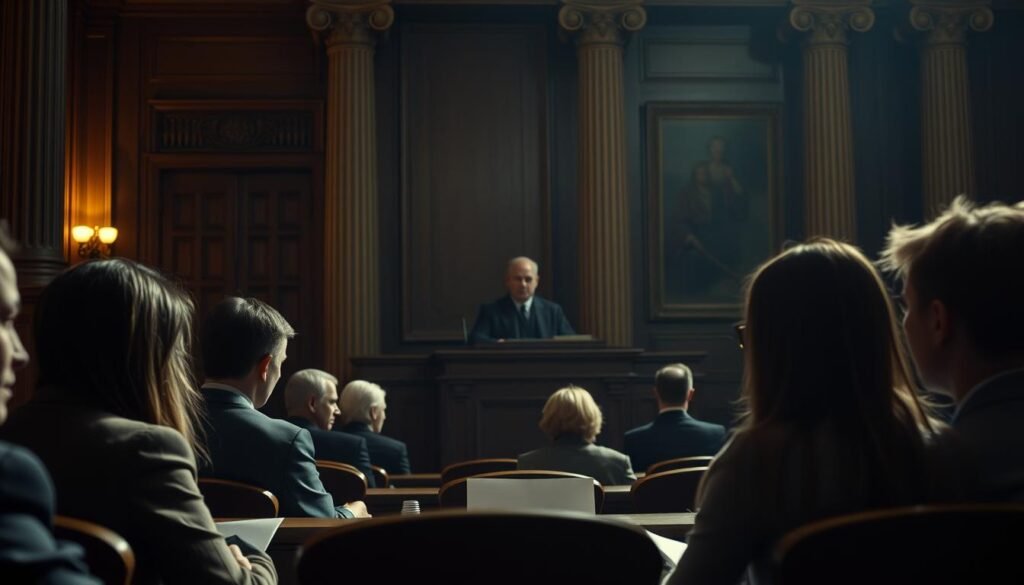

Courtroom Psychology: Core Principles and Applications
Understanding the psychological side of legal processes is key to fair justice. Courtroom psychology, where psychology meets law, is essential in legal outcomes.
Fundamental Psychological Concepts in Legal Settings
Many psychological ideas are important in legal settings. These include cognitive biases, memory, and social influence. They all affect jurors’ and judges’ decisions.
Cognitive biases like confirmation bias and anchoring effects can sway jurors. Memory processes are also vital, as eyewitness testimony is often key in trials. Yet, memory can be wrong due to errors or distortions from questioning or new information.

Historical Evolution of Psychology in American Jurisprudence
Psychology’s role in American law has grown over time. Important cases have shown how psychology matters in legal decisions.
Landmark Cases Shaping Psychological Considerations
Cases like Daubert v. Merrell Dow Pharmaceuticals set rules for expert testimony, including psychological research. These cases show how psychological principles guide legal practices for fair justice.
Knowing courtroom psychology helps legal experts deal with legal system complexities. This leads to more fair outcomes.
The Science Behind Juror Selection
Choosing jurors is not random. It’s based on understanding human psychology. The process, called voir dire, is key in court trials. It can change the trial’s outcome.
The Voir Dire Process: Psychological Strategies
The voir dire process asks questions to see if a juror is right for the case. It uses psychology to find out if a juror has biases. Lawyers ask questions and watch for signs to pick the best jurors for their side.
Demographic and Personality Factors Influencing Juror Decisions
Studies show that age, gender, and money status can affect jurors’ choices. Personality traits like being strict or empathetic also matter. Knowing these helps lawyers pick the right jurors.
Scientific Jury Selection Techniques
Scientific jury selection uses social science to pick the best jurors. It includes surveys and focus groups to learn about jurors’ traits. This helps lawyers choose the right people for the jury.
Case Studies of Effective Juror Profiling
Many famous cases show how well juror profiling works. For example, a study used data to guess juror votes in a big trial. These examples show why knowing jurors is so important in court.
By using what we know about jurors, lawyers can make better choices. This can change the trial’s result. As we learn more about jurors, understanding them will keep being a big part of winning cases.
Cognitive Biases in the Jury Box
Cognitive biases greatly affect how jurors see cases and make decisions. These biases are part of how we think and can change the results of trials.
Confirmation Bias: Seeking Evidence That Confirms Preexisting Beliefs
Confirmation bias happens when jurors focus more on evidence that agrees with what they already think. This can warp their view of the case.
Example: A juror who thinks the defendant is guilty might pay more attention to the prosecution’s evidence. They might ignore the defense’s points.
Anchoring Effects in Damage Awards and Sentencing
The anchoring effect is when jurors rely too much on the first information they hear. This can lead to unfair judgments in damage awards and sentences.
- The first damage amount suggested by lawyers can set the standard for jurors.
- Prosecutors’ initial sentencing suggestions can sway jurors’ views on punishment.
Hindsight Bias: The “I Knew It All Along” Effect
Hindsight bias makes jurors think they could have predicted an event after it happens. This can influence how they judge the defendant’s actions.
Techniques for Reducing Bias Impact
There are ways to lessen the effect of cognitive biases on jurors:
- Clear instructions to jurors about possible biases.
- Methods to help jurors see different sides of the case.
- Lawyers being aware of their own biases and how they might affect the case.
By tackling cognitive biases, we can strive for fairer and more just legal outcomes.
Media Influence and Pre-Trial Publicity
Media influence on jurors is a big worry in famous cases. A lot of pre-trial news can change how jurors see things. The link between media and juror bias is tricky. It involves many psychological factors that can change trial results.
How News Coverage Shapes Juror Perceptions
News can greatly affect jurors’ views before a trial. Pre-trial publicity can make a biased setting. Here, jurors might see things that won’t be allowed in court. This can make them think the defendant is guilty or sway their feelings about the defendant.
- Too much media can make people think the defendant is guilty.
- Seeing bad news over and over can make jurors dislike the defendant.
- How the media shows the accused can shape jurors’ first thoughts.
Strategies for Mitigating Publicity Bias
To fight against pre-trial publicity, lawyers have a few plans. They might ask for a change of venue to a place with less news. Or, they use voir dire to pick jurors who haven’t been too influenced by the media.
Change of Venue Considerations
Switching the trial location can help lessen the impact of pre-trial news. Courts look at many things when deciding on a new location. They think about how much news there is and if jurors might be biased in different places.
The Fallibility of Memory in Courtroom Testimony
Memory is key in court cases, but it’s not always reliable. Remembering and recalling events is complex. Many factors can change how accurate eyewitnesses are.
Studies show eyewitnesses are often key in criminal trials. But, false eyewitness accounts can lead to wrong convictions.
Memory Formation, Storage, and Retrieval Errors
Memory has three main stages: formation, storage, and retrieval. Mistakes can happen at any stage, making eyewitnesses less reliable. Encoding is when we first make a memory, influenced by what we pay attention to. Storage is keeping that memory over time. Retrieval is when we recall it.
Factors Affecting Eyewitness Reliability
Several things can make eyewitnesses less reliable. Stress, weapons, and race can all play a part.
Stress and Weapon Focus Effects
Stress can mess up how well we remember things. Seeing a weapon can also make witnesses less accurate. This is called the weapon focus effect.
Cross-Racial Identification Issues
People are better at recognizing faces of their own race. This cross-racial identification bias can cause mistakes in court.
“The own-race bias is a well-documented phenomenon in facial recognition, where individuals are more accurate at recognizing faces of their own race compared to faces of other races.”
| Factor | Effect on Eyewitness Reliability | Potential Outcome |
|---|---|---|
| Stress | Impaired perception and recall | Inaccurate testimony |
| Weapon Focus | Distraction from other details | Reduced accuracy in testimony |
| Cross-Racial Identification | Increased likelihood of misidentification | Wrongful convictions |
Post-Event Information and Memory Contamination
Information after an event can change what witnesses remember. Media, talking to others, or police questions can all affect their memory. This can lead to false or misleading testimony.
Psychological Mechanisms Behind False Confessions
It’s key to know why people falsely confess to crimes. This happens when someone admits to something they didn’t do. It’s often because of outside pressures and their own weaknesses.
Interrogation Techniques and Their Psychological Impact
How police question people can lead to false confessions. Long questioning, forceful tactics, and fake evidence can push someone to lie. These methods can make a person feel so stressed and confused that they’ll say anything to get out of it.
Vulnerability Factors: Who Is Most Susceptible?
Some people are more likely to falsely confess. This includes the young, those with mental health issues, low intelligence, and a history of trauma. Knowing who is at risk helps prevent false confessions.
Case Studies of Proven False Confessions
Looking at real cases of false confessions can teach us a lot. For example, the Central Park Five case in 1989 shows how bad questioning can lead to false confessions. The table below shows details of this case and another notable one.
| Case | Interrogation Techniques Used | Vulnerability Factors | Outcome |
|---|---|---|---|
| Central Park Five | Coercive questioning, false evidence | Youth, intimidation | False confessions, later exonerated |
| Norfolk Four | Prolonged interrogation, psychological pressure | Mental health issues, suggestibility | False confessions, pardoned after serving time |
These examples highlight the need to understand why false confessions happen. We must also change how police question people to avoid these wrongs.
The Psychology of Expert Testimony
The psychology of expert witness testimony is complex and important. It greatly affects the outcome of legal cases. Experts bring specialized knowledge to the courtroom. They help jurors understand complex evidence.
Types of Expert Witnesses in Court Proceedings
Expert witnesses come in different types based on their expertise. These include:
- Medical experts, who provide insights into the nature and extent of injuries or illnesses.
- Technical experts, who explain complex technical or scientific concepts.
- Financial experts, who analyze financial data and provide testimony on economic matters.
Each type of expert witness plays a key role in helping jurors make informed decisions.
Building Credibility: What Convinces Jurors
Establishing credibility is key for expert witnesses. Jurors are more likely to be convinced by experts who show:
- Relevant qualifications and experience.
- Objectivity and impartiality.
- Clear and concise communication.
A legal expert notes, “The credibility of an expert witness can be the deciding factor in a case. Jurors are more likely to accept testimony from someone they perceive as trustworthy and knowledgeable.”
“The expert’s ability to explain complex concepts in simple terms can significantly enhance their credibility.”
Managing Contradictory Expert Opinions
When faced with contradictory expert opinions, jurors must carefully evaluate the evidence. They should consider:
| Factor | Description |
|---|---|
| Qualifications | The level of expertise and relevant experience of the expert witness. |
| Methodology | The scientific or technical methods used to arrive at the expert’s opinion. |
| Bias | Any possible biases or conflicts of interest that may influence the expert’s testimony. |
The CSI Effect on Juror Expectations
The “CSI effect” refers to how jurors’ expectations of forensic evidence are shaped by TV shows like CSI: Crime Scene Investigation. This can raise expectations for scientific evidence. It might affect how jurors see the credibility of expert testimony.
In conclusion, the psychology of expert testimony is vital in legal proceedings. Understanding what influences expert credibility and how to handle conflicting opinions helps legal professionals. This way, they can better navigate the complexities of expert testimony.
Assessing Witness Credibility: What Jurors Notice
It’s tough for jurors to figure out if a witness is telling the truth. They look at how the witness acts and what they say. Jurors pay attention to both the words and the actions of the witness.
Verbal and Non-Verbal Credibility Cues
Witness credibility is shaped by what they say and how they act. The consistency and detail in their story matter. So does their tone of voice. Also, their body language, eye contact, and facial expressions tell a lot.
Demeanor vs. Content: Which Matters More?
There’s a debate about what matters more: how a witness acts or what they say. Some say demeanor is key. Others think the content of their testimony is more important. In reality, jurors probably look at both.
| Credibility Factor | Impact on Jurors | Examples |
|---|---|---|
| Verbal Cues | Influences perceived credibility | Tone, consistency, detail level |
| Non-Verbal Cues | Affects juror trust | Body language, eye contact |
| Demeanor | Impacts overall credibility assessment | Confidence, nervousness |
Witness Preparation: Ethical Boundaries
Getting witnesses ready to testify is key, but it must be done right. Lawyers need to help witnesses without changing their story. The goal is to make sure witnesses can share their story well, without losing their integrity.
By knowing what affects witness credibility and sticking to the rules, lawyers can help jurors make better decisions. This ensures that jurors can trust the witnesses’ stories.
Group Psychology in Jury Deliberations
Jury deliberations are influenced by many factors. These include social influence and who emerges as a leader. The process of deciding a verdict involves complex interactions among jurors.
Social Influence Processes Among Jurors
Social influence is key in jury deliberations. Jurors often change their opinions based on what their peers think. Studies show that the jury’s verdict is often influenced by the initial opinions of its members.
Conformity and persuasion are important in this process. Jurors might follow the majority or be swayed by strong arguments. Knowing this helps lawyers try to sway the jury’s decision.
Leadership Emergence in the Jury Room
Leadership is also vital in jury deliberations. Some jurors become leaders, guiding the discussion and influencing the verdict. These leaders can be very persuasive.
Managing Dissent and Reaching Consensus
It’s important to manage disagreements to reach a verdict. Jurors with different opinions must find common ground. Good communication and negotiation are key in this process.
The Psychology of Hung Juries
A hung jury happens when jurors can’t agree. The psychology behind this includes strong opinions, mistrust, and communication problems. Understanding these can help lawyers and judges during deliberations.
| Factors Influencing Jury Deliberations | Description | Impact on Verdict |
|---|---|---|
| Social Influence | Conformity and persuasion among jurors | Significant impact on verdict preference |
| Leadership Emergence | Guiding the discussion and influencing decisions | Can shape the jury’s verdict |
| Managing Dissent | Negotiating differences to reach a consensus | Crucial for arriving at a verdict |
Persuasion Science in Legal Arguments
Persuasion science is key in legal arguments. It helps lawyers create stories that jurors can connect with. Jurors make decisions by building a story from the evidence. Good legal arguments weave the case facts into a compelling story.
Narrative Construction and Storytelling Techniques
Narrative building is vital in legal persuasion. Lawyers use stories to make facts clear and interesting. By turning evidence into a story, lawyers make it easier for jurors to remember. This method uses our natural love for stories to help us recall information better.
Primacy and Recency Effects in Argument Structure
The way arguments are structured matters a lot. The primacy and recency effects help lawyers make their points stronger. The primacy effect makes the first information stick in our minds. The recency effect makes the last information more memorable. Lawyers place important points at the start or end to use these effects.
Balancing Emotional Appeals with Logical Reasoning
Good legal arguments mix emotions and logic. Emotions grab jurors’ attention, while logic provides the evidence.
“The most persuasive arguments are those that successfully integrate both emotional and logical elements, presenting a compelling narrative that is supported by credible evidence.”
Framing Effects on Juror Decision-Making
Framing how information is presented can sway jurors. Lawyers can shape jurors’ views by framing their arguments positively or negatively. For example, calling a defendant’s actions “protective” instead of “aggressive” can change how jurors see the case.
Psychological Warfare: Cross-Examination Strategies
Cross-examination is a mix of psychology and law. It can change a trial’s outcome by questioning witnesses and building a strong defense.
Cognitive Techniques for Breaking Down Testimony
Cross-examination uses cognitive techniques to question witnesses. It challenges their views, memories, and trustworthiness. By knowing how witnesses remember things, lawyers can ask questions that show flaws and doubts.
Managing Hostile or Resistant Witnesses
Handling hostile witnesses is tricky. Lawyers need to be firm but gentle. They must control the witness’s feelings to avoid more anger. Using calm questions and staying composed can help keep the questioning focused.
Creating Reasonable Doubt Through Strategic Questioning
The main aim of cross-examination is to raise reasonable doubt. By carefully asking questions, lawyers can point out contradictions and unlikely parts of the story. This might make jurors doubt the evidence and help the defense win.
In summary, good cross-examination strategies are key in court. Using the right techniques, handling tough witnesses, and raising doubt can greatly affect the trial’s result.
Courtroom Technology and Juror Information Processing
Courtrooms are now using advanced technologies, changing how jurors process information. The use of visual and digital evidence is making a big impact. It’s changing how jurors see and understand the evidence.
Visual Evidence Presentation Effects
Visual evidence in courtrooms greatly affects jurors’ decisions. Visual aids like videos, animations, and graphics make complex evidence easier to understand. Studies show jurors remember visual information better than written or spoken words.
But, presenting visual evidence must be done carefully. It’s important to avoid bias and not overwhelm the jury. Attorneys need to use visual aids wisely to help jurors without misleading them.
Virtual Courtrooms and Remote Testimony Challenges
Virtual courtrooms and remote testimony offer both benefits and challenges. They can make legal proceedings more efficient and save money on witness travel. Yet, they also raise concerns about how jurors perceive the evidence and the risk of technical problems.
Digital Evidence and Juror Comprehension
Digital evidence, like emails and social media, is becoming more common in court. It can be hard for jurors to understand. Courts are looking into ways to help, such as giving jurors digital tools or having experts explain it.
| Evidence Type | Juror Comprehension Challenge | Potential Solution |
|---|---|---|
| Digital Evidence | Complexity of digital data | Expert testimony on digital concepts |
| Visual Evidence | Potential for bias or undue influence | Careful management of visual aid presentation |
| Remote Testimony | Technical issues and juror perception | Robust technical support and clear guidelines |
Using courtroom technology wisely is key. It helps make legal proceedings fair and efficient. Legal professionals can improve the process by using technology thoughtfully.
Applying Psychological Principles in Legal Practice
Psychological research greatly impacts legal practice, mainly in jury selection and trial prep. By grasping how psychological principles affect jurors, lawyers can craft better trial plans.
Strategies for Attorneys to Leverage Psychological Insights
Lawyers can use psychological insights in many ways. During voir dire, they can spot jurors’ biases and attitudes. Scientific jury selection techniques aid in picking the right jurors.
Knowing about cognitive biases like confirmation bias and anchoring effects is key. It helps lawyers craft stronger arguments and counterarguments. For example, understanding the anchoring effect can guide how to present damage awards or sentencing.
Training Programs for Legal Professionals
Legal pros can benefit from training on psychological principles. These programs cover:
- Jury psychology and decision-making
- Effective communication strategies
- Understanding and mitigating cognitive biases
Practical Tools for Case Preparation
Tools for case prep include:
| Tool | Description | Benefit |
|---|---|---|
| Jury profiling | Analyzing demographic and personality factors | Helps in selecting favorable jurors |
| Psychological assessments | Evaluating jurors’ attitudes and biases | Informs jury selection decisions |
| Trial strategy workshops | Developing effective trial narratives | Enhances persuasion and argumentation |
Experts say, “Knowing the psychological reasons behind jurors’ decisions can greatly improve a lawyer’s case presentation.”
“The art of jury selection is not just about picking favorable jurors, but also about understanding the psychological dynamics at play.”
Ethical Boundaries in Courtroom Psychology
Ethical considerations are key in courtroom psychology. The stakes are high, involving justice and individual rights. Using psychology in legal settings can greatly affect case outcomes. It’s vital to navigate these ethics carefully.
Distinguishing Manipulation from Effective Advocacy
One big ethical challenge is telling manipulation from effective advocacy. Effective advocacy means presenting a case well, using psychology to sway jurors. But, it must not cross into manipulation, which is forcing or deceiving jurors.
To stay ethical, psychologists and lawyers must know the difference between persuasion and manipulation. Emotional appeals can be okay if done openly and legally. The goal is to avoid using jurors’ weaknesses or biases.
Professional Responsibilities of Psychologists in Legal Settings
Psychologists in legal settings must follow strict ethics. They should know their biases and work to reduce them. They also need to be clear about their methods and results.
- Maintaining confidentiality and privacy
- Avoiding conflicts of interest
- Being honest about the limits of their knowledge
By following these rules, psychologists help ensure a fair legal process.
Balancing Zealous Representation with Ethical Practice
Legal professionals often struggle to balance representing their clients well with ethical practice. This is even more critical in courtroom psychology, where psychology can greatly influence case results.
To find this balance, legal professionals should:
- Know the ethical sides of using psychology in court.
- Be mindful of the risk of manipulation and avoid it.
- Make sure their use of psychology is clear and follows legal and ethical rules.
This way, they can represent their clients well while keeping the legal process fair.
Conclusion: The Evolving Intersection of Psychology and Law
The mix of psychology and law is always changing. New studies help shape legal practices. We’ve seen how courtroom psychology helps us grasp juror biases, memory mistakes, and the power of expert opinions.
Using psychology in law matters a lot for justice. Legal experts can pick better juries, prepare witnesses, and make stronger arguments. This is because they understand the psychological side of legal cases.
As research in courtroom psychology grows, so will new ways to improve law. The blend of psychology and law promises to make justice fairer and more effective. By linking psychology and law, we aim for a more just and fair society.
FAQ
What is courtroom psychology, and why is it important in legal proceedings?
How do juror biases affect the outcome of a trial?
What role does memory play in courtroom testimony, and how can it be unreliable?
How can expert testimony impact a trial, and what makes an expert credible?
What is the CSI effect, and how does it influence juror expectations?
How do attorneys use psychological insights to develop effective trial strategies?
What are some ethical considerations in the application of courtroom psychology?
How can courtroom technology impact juror information processing?
What is the significance of jury deliberations, and how do social influence processes affect juror decisions?
How can attorneys prepare witnesses to testify effectively while maintaining ethical boundaries?


The PsyForU Editorial Collective is the research and editorial team of PsyForU Research International. The collective prepares educational, psychological, mental-health-awareness, inclusion, neurodiversity, and research-methodology content for students, parents, educators, researchers, and general readers. PsyForU content is intended for awareness, education, and capacity-building and should not be treated as clinical diagnosis, therapy, medical advice, legal advice, or emergency mental-health support.