



What if the invisible barriers in your workplace are costing you millions in lost revenue and untapped talent? 🤔
Here’s the reality: breaking glass ceiling isn’t just a nice idea—it’s a business imperative! When workplace diversity gets ignored, organizations crumble under the weight of inequality. Talent goes to waste, productivity tanks, and innovation stalls. 📉
But there’s incredible news! Companies with diverse management teams see 19% higher revenues thanks to innovation. Even better? For every 1% rise in diversity, sales revenues jump by 3-9%! 💰
This guide gives you practical strategies to build an inclusive workplace culture where everyone thrives! You’ll discover how dei initiatives transform your organizational culture, eliminate barriers, and create measurable results. 🚀
From the Civil Rights Movement to today’s workplaces, demanding equity and fairness drives progress. Ready to unlock your team’s full diversity equity inclusion? Let’s get started! ✨
Key Takeaways
- Glass ceilings waste talent and reduce productivity when left unaddressed in organizations
- Diverse management teams generate 19% higher revenues through increased innovation
- Every 1% increase in diversity correlates with 3-9% sales revenue growth
- Equity-driven movements throughout history prove that demanding fairness advances society
- Building inclusive workplaces requires measurable strategies across three pillars: inclusion, belonging, and fairness
- Organizational success depends on eliminating invisible barriers that limit employee talent
Understanding the Foundations of Limitless Workplace Culture
Your organization’s greatest untapped resource is the full talent of every employee. 🌟 Yet, most workplaces have invisible ceilings that stop people from reaching their true abilities. These barriers don’t show themselves with official policies or rules!
They hide in everyday decisions, unspoken assumptions, and systems not designed for everyone. Building an equitable organizational culture means spotting these hidden obstacles and removing them.
To transform your workplace, you need to understand what you’re building. A diverse organizational culture doesn’t happen by accident. It requires focus on three interconnected foundations that create real opportunities for everyone! 🎯
This isn’t just about checking boxes or publishing diversity statements. It’s about changing how your organization works. Talent, effort, and contribution should determine success, not background or identity. When you get these foundations right, everything else becomes possible!
What “Culture Without a Ceiling” Really Means for Your Organization
Let’s talk about what we mean by Culture Without a Ceiling! It’s an inclusive workplace where advancement isn’t limited by outside factors. It means everyone has the same chance to lead, regardless of background. ✨
It means your age, gender, or socioeconomic background doesn’t block your path. What matters is your talent, work, and impact on the organization!
This concept challenges what happens when organizations ignore equity and inclusion. Without focus on these, workplaces naturally become exclusive. Glass ceilings thicken over time if not addressed! 🚧
Talented people get stuck in roles below their abilities. Organizations waste human talent on a huge scale. The narrative shifts to “us versus them,” creating division instead of unity.
Cultural diversity in organizations becomes just window dressing. Here’s what a limitless culture offers instead:
- Equal access to stretch assignments that build skills and visibility regardless of who you know
- Recognition systems that identify and reward contributions from all team members, not just the loudest voices
- Transparent promotion pathways where everyone understands what it takes to advance and has fair opportunity to get there
- Decision-making processes that include diverse perspectives and challenge groupthink
- Employee empowerment that extends to every level and every identity group within your organization
Creating a Culture Without a Ceiling unlocks innovation, engagement, and performance. It can’t exist when significant parts of your workforce feel limited by invisible barriers. 💪

The Three Interconnected Pillars: Inclusion, Belonging, and Fairness
Now let’s break down the three forces that make limitless culture possible! These aren’t separate initiatives. They’re interconnected elements that reinforce each other when done right. Think of them as three legs of a stool—remove one, and the whole thing collapses! 🔗
Inclusion means taking practical steps to ensure everyone has genuine access and opportunity. This goes beyond just hiring diverse talent. It means examining your organizational inclusion practices to identify where certain groups face barriers others don’t experience.
Are your meeting times accessible for working parents? Does your promotion process favor people who work in headquarters over remote employees? Are job descriptions written in ways that discourage certain candidates from applying?
Inclusion addresses differences across race, ethnicity, gender, gender identity, sexual orientation, age, socioeconomic background, and neurodiversity. It ensures your processes don’t systematically advantage one group while disadvantaging others.
Belonging creates that deep emotional experience of “I matter here.” It’s the sense of belonging that makes people feel psychologically safe to contribute their authentic selves. You can include someone in a meeting without making them feel they truly belong there! 💙
Building belonging at work means people can express concerns without fear of retaliation. It means diverse perspectives are genuinely valued, not just tolerated. Fostering belonging requires creating connection points where people from different backgrounds build relationships based on shared purpose and mutual respect.
When belonging exists, people show up fully. They share their best ideas. They challenge problematic assumptions. They invest their energy and creativity because they feel invested in!
Fairness establishes impartial processes and policies that deliver equitable outcomes for every employee. This doesn’t mean treating everyone identically—it means ensuring your systems produce just results regardless of who’s going through them. Fair performance evaluations use clear, measurable standards. 📊
Fair compensation reviews analyze pay data to identify and correct inequities. Fair recognition systems ensure contributions are acknowledged regardless of whose team you’re on or who your manager happens to be.
Here’s the key connection: these three pillars only work together! You can’t have true belonging without inclusion—people won’t feel they matter if they’re systematically excluded from opportunities. You can’t have fairness without both inclusion and belonging—equitable outcomes require both access and psychological safety to participate fully. And inclusion without belonging or fairness is just optics without substance!
Recognizing Invisible Barriers That Limit Employee Poteential
Let’s talk about those sneaky obstacles that keep your organization from reaching its full potencial! These barriers are called “invisible” because they don’t show up in your official policies or organizational charts. They live in unwritten rules, unconscious assumptions, and patterns that have simply always existed. 🔍
Systemic bias operates through everyday decisions that compound over time. Who gets assigned to high-visibility projects? Whose ideas get credited in meetings? Who’s invited to informal networking events where real relationships and opportunities develop?
When you examine these patterns closely, you’ll often find certain groups consistently advantaged while others are overlooked. This isn’t usually intentional or malicious—which actually makes it harder to address!
The “us versus them” mentality creates one of the most damaging invisible barriers. This happens when dominant groups (often unconsciously) see themselves as the default or norm, while viewing others as outsiders or exceptions. It shows up in language like “cultural fit” that really means “similar to people already here.” 🚨
It appears in networking patterns where people naturally gravitate toward others who share their background or experiences. Breaking barriers in corporate culture requires acknowledging these patterns exist even in organizations with good intentions!
Eliminating workplace bias starts with recognition. Here are common invisible barriers to watch for in your organization:
- Affinity bias where leaders mentor and sponsor people who remind them of themselves, limiting opportunities for those from different backgrounds
- Attribution bias where success is explained differently based on identity (he succeeded due to talent; she succeeded due to luck or help)
- Proximity bias where people working near leadership get more opportunities and recognition than remote workers
- The “broken rung” problem where certain groups can’t access that first management position, creating a bottleneck that affects every level above
- Unequal access to information where important knowledge gets shared through informal channels that exclude some groups
Understanding that systemic bias exists in these everyday moments is your first step toward employee empowerment across all groups. When you recognize how glass ceilings thicken through thousands of small decisions, you can start making different choices! 💡
You can implement systems that counteract bias instead of reinforcing it. You can create transparency around processes that used to operate in the shadows. You can measure outcomes to identify where certain groups consistently face obstacles others don’t encounter.
This foundation—understanding what limitless culture means, recognizing the three interconnected pillars, and identifying invisible barriers—sets you up for everything that follows. You can’t fix problems you don’t see! Now that you recognize what you’re working with, you’re ready to assess where your organization currently stands and begin the transformation process. 🌈✨
How to Assess Your Organization’s Current Cultural Landscape
You can’t build a culture without first identifying the barriers holding your people back! 🚀 That’s why assessment is key to any successful transformation in organizational equity practices. Before making changes, you need a clear picture of where you stand today—the good, the bad, and the uncomfortable truths in your data!
This section guides you through a proven three-step process. It combines hard numbers with human stories. You’ll learn how to conduct workplace fairness initiatives that reveal what’s happening beneath the surface of your dei corporate culture. Ready to get real about your organization’s strengths and weaknesses? Let’s dive in! 💪
Step 1: Conduct a Cultural Equity Audit
Your cultural equity audit is like a health check-up for your organization. It needs both lab results and patient interviews to get the full picture! This dual approach ensures you capture both the measurable realities and the lived experiences of your employees.
Think of this audit as your baseline assessment for equity in organizations. Without it, you’re flying blind, making assumptions about what’s working and what’s broken. The most effective audits combine quantitative data with qualitative insights, giving you a 360-degree view of your workplace diversity and inclusion landscape! 🔍
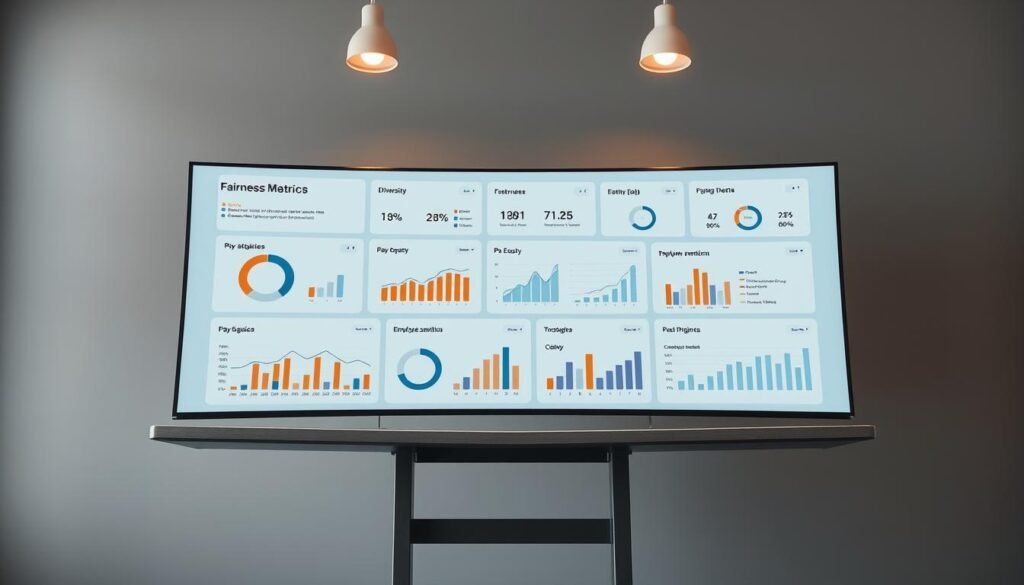
Collecting Quantitative Data on Representation and Advancement
Numbers don’t lie, and that’s why quantitative data is the backbone of your audit! Start by gathering detailed statistics across every level of your organization. Who’s getting hired? Who’s advancing? Who seems to hit invisible walls at certain career stages?
Your data collection should include:
- Representation metrics showing demographic breakdown at each organizational level
- Pay band analysis comparing compensation across roles, levels, and locations by demographic groups
- Promotion timelines tracking average time-to-advancement for different employee populations
- Retention rates revealing which groups stay and which groups leave
- Performance ratings distribution identifying possible bias patterns in evaluations
Look closely at pay equity by comparing raises and compensation across similar roles. Are certain groups consistently paid less for equivalent work? Do some demographics wait longer for promotions despite similar performance? These patterns reveal where organizational fairness breaks down! 📊
The goal isn’t perfection in your data—it’s honesty. Organizations that face their numbers directly are the ones that create meaningful change.
Gathering Qualitative Insights Through Listening Sessions
Data tells you what is happening, but listening sessions tell you why it’s happening—and that’s where the real transformation begins! These structured conversations give employees safe space to share their experiences, identify barriers you might not see in spreadsheets, and suggest solutions grounded in daily reality.
Design your listening sessions to answer three critical questions: What’s working well in our culture? What could be improved? What’s completely missing that employees need? Create psychological safety by ensuring confidentiality, having skilled facilitators, and demonstrating genuine openness to feedback! 🎤
Consider organizing sessions by:
- Employee resource group affiliations
- Department or team structures
- Tenure levels (new hires vs. long-term employees)
- Role types (individual contributors vs. managers)
The key is taking action on what you hear and communicating those actions back to employees. Listening without follow-through destroys trust faster than not listening at all! Share what you learned, outline specific changes you’ll make, and provide realistic timelines for implementation.
Step 2: Identify Systemic Barriers and Glass Ceilings
Now comes the detective work—examining your policies, processes, and cultural norms to find the hidden biases that have been baked in over time! 🔎 These systemic barriers often operate invisibly, creating disadvantages that feel “just the way things are” until you shine a spotlight on them.
Start by scrutinizing your fair workplace policies through an equity lens. Does your promotion process favor people who “look like leaders” (translation: people who match existing leadership demographics)? Do hybrid work arrangements inadvertently disadvantage remote employees? Are advancement opportunities shared through informal networks that exclude certain groups?
Common systemic barriers include:
- Subjective evaluation criteria that allow unconscious bias to influence decisions
- Informal sponsorship networks that replicate existing power structures
- Meeting schedules or work expectations that create barriers for caregivers
- Visibility requirements that favor certain work styles or locations
- Credential requirements that screen out qualified candidates from non-traditional backgrounds
The goal of eliminating systemic bias isn’t about lowering standards—it’s about ensuring your standards actually measure what matters! When you remove barriers that have nothing to do with job performance, you expand your talent pool and strengthen your organization. That’s what creating fair promotion pathways looks like in practice! ✨
Pay special attention to where advancement slows or stops for underrepresented groups. These “glass ceilings” often exist at the transition from individual contributor to manager, or from middle management to executive leadership. Understanding why these barriers exist is essential for eliminating systemic bias effectively.
Step 3: Establish Your Baseline Metrics for Improvement
You’ve gathered your data and identified your barriers—now it’s time to establish the workplace fairness metrics that will track your progress over time! Without clear baseline measurements, you can’t prove improvement or hold yourself accountable. This step transforms assessment into action! 📈
Your baseline metrics should be specific, measurable, and tied directly to the equity strategies you’ll implement. Generic goals like “improve diversity” mean nothing without concrete numbers attached. Instead, establish exact starting points for each metric you’ll track.
Essential baseline metrics include:
| Metric Category | Specific Measurements | Why It Matters |
|---|---|---|
| Representation | Current demographic percentages at each organizational level | Reveals pipeline and advancement gaps |
| Advancement Speed | Average time-to-promotion by demographic group and role | Identifies where career progression stalls |
| Compensation Equity | Pay gaps by role, level, and demographic factors | Measures financial fairness |
| Employee Experience | Engagement scores and inclusion index by group | Captures sense of belonging and psychological safety |
| Retention | Turnover rates by demographic group and tenure | Shows who stays and who leaves |
Document everything! Create a detailed baseline report that captures your current state across all organizational diversity strategies. This becomes your accountability document—the proof point you’ll reference when measuring progress in six months, one year, and beyond.
Here’s the trust-building part that separates leaders from followers: share your findings AND your improvement plans with clear timelines! 🎯 Transparency demonstrates commitment and builds employee confidence that change is really coming. Yes, it feels vulnerable to admit where you’re falling short. That vulnerability is exactly what creates credibility!
Your communication should include:
- Key findings from your audit (both strengths and gaps)
- Specific barriers you’ve identified
- Concrete actions you’re committing to take
- Realistic timelines for implementation
- How you’ll measure and report progress
Remember, this assessment phase might feel uncomfortable—and that’s actually a good sign! Discomfort means you’re looking at real issues instead of staying in your comfort zone. The organizations that transform their cultures are the ones willing to face hard truths and commit to meaningful change.
You’ve now completed the foundation work that makes everything else possible. With clear data, identified barriers, and established baselines, you’re ready to move from assessment to action! The next steps will show you exactly how to build leadership commitment and eliminate the systemic barriers you’ve uncovered. Let’s keep this momentum going! 🚀💯
Building Culture Without a Ceiling: Inclusion, Belonging, and Fairness Through Leadership Commitment
Want to know the secret ingredient that makes cultural transformation stick? It’s unwavering leadership commitment! 🚀
Here’s the reality: you can design the most brilliant DEI strategy, create policies, and launch initiatives. But without genuine commitment from your leadership team, these efforts will fizzle out faster than a sparkler on the Fourth of July!
Cultural transformation leadership isn’t about lip service or checking boxes. It requires active sponsorship, visible engagement, and authentic investment from executives and managers at every level of your organization. When leaders walk the talk on inclusive leadership, everything changes!
This section gives you the proven roadmap to secure that essential buy-in and transform your leaders into powerful champions of change. Let’s dive in! 💪
Securing Executive Buy-In and Active Sponsorship
Getting executives on board isn’t just important—it’s absolutely critical for success! Without their sponsorship, your DEI initiatives won’t have the authority, resources, or organizational muscle needed to create lasting change.
The good news? You can win executive support by presenting a compelling case that addresses both their strategic priorities and their values. Let’s explore exactly how to do that! ✨
Presenting the Business Case for Cultural Transformation
While the moral argument for equity in leadership is compelling, executives need to understand how this transformation impacts business outcomes. Start by sharing data that speaks directly to the bottom line!
Research from Boston Consulting Group reveals that companies with diverse management teams generate 19% higher revenues through increased innovation and better decision-making. That’s not a small advantage—that’s a significant competitive edge! 💰
The American Sociological Association found even more granular impacts: every 1% increase in gender diversity corresponds to a 3% revenue rise, while ethnic diversity improvements bring 9% revenue increases. These aren’t theoretical benefits—they’re measurable financial outcomes!
But don’t stop at the commercial benefits. Present the moral dimension too, because great leaders care about both performance and people!
Organizations have a fundamental duty of care to ensure every employee feels valued and can work free from prejudice. When you connect corporate culture transformation to both business objectives and core values, you create an irresistible case for change.
- Lead with data: Share revenue statistics, innovation metrics, and retention numbers that demonstrate ROI
- Connect to strategic priorities: Show how dei best practices support existing business goals like market expansion or talent acquisition
- Highlight competitive positioning: Illustrate how competitors are gaining advantages through diversity initiatives
- Address the moral imperative: Emphasize organizational responsibility and alignment with stated company values
- Present risk mitigation: Discuss how proactive cultural transformation reduces legal risks and reputation damage
Defining Leadership Roles and Responsibilities
Once you’ve secured initial buy-in, the next critical step is defining clear leadership roles and responsibilities. Vague commitments lead to vague results!
Everyone needs to know exactly who’s accountable for what. Clarity prevents the “not my job” syndrome that kills so many well-intentioned initiatives. 🎯
Start at the top! The CEO should serve as the visible champion of your DEI efforts. This means regularly communicating about diversity initiatives, participating in ERG events, and making cultural transformation a consistent talking point in company-wide meetings.
Executive team members should each sponsor specific aspects of your dei strategy implementation. One executive might champion recruitment diversity, another might focus on advancement equity, and another might oversee inclusive workplace practices.
Middle managers need resources, training, and support to implement inclusive leadership practices daily. They’re the frontline of cultural change, translating executive vision into team-level reality!
Create a responsibility matrix that clearly outlines:
- Strategic oversight: Who sets the vision and approves major initiatives (typically C-suite)
- Implementation authority: Who manages day-to-day execution of DEI programs (often Chief Diversity Officer or HR leadership)
- Operational execution: Who ensures inclusive practices in daily work (managers at all levels)
- Monitoring and reporting: Who tracks progress and communicates results (designated DEI team with executive sponsorship)
Creating Accountability Mechanisms at All Leadership Levels
Here’s where many organizations stumble: they get excited about DEI, launch initiatives with fanfare, then let accountability slide. Don’t make this mistake! 🚫
Creating robust accountability mechanisms ensures your cultural transformation doesn’t fade after the kickoff meeting. It keeps momentum going and demonstrates that this isn’t a “nice to have” initiative—it’s a business imperative!
The most effective approach? Tie DEI goals directly to performance reviews, compensation, and promotion decisions for all leadership levels. When executives know their bonuses depend partly on achieving diversity targets, you’ll see dramatically increased focus!
Implement these accountability structures:
- Quarterly progress reviews: Schedule regular check-ins where leaders present their DEI progress to the executive team
- Public reporting: Share dashboards and metrics company-wide so everyone can see who’s moving the needle
- Performance integration: Include specific dei leadership competencies in annual reviews for all people managers
- Compensation linkage: Allocate a percentage of variable compensation to achieving diversity and inclusion targets
- Promotion criteria: Make demonstrated inclusive leadership a requirement for advancement to senior roles
Transparency is your friend here! When you publish progress reports quarterly, you create healthy peer accountability. Leaders naturally want to show positive results when their colleagues are watching.
But accountability isn’t just about consequences—it’s also about support! Provide coaching, resources, and training to help leaders succeed in their dei strategy implementation responsibilities.
Setting Clear, Measurable DEI Goals Aligned with Business Objectives
Vague aspirations don’t drive results. “Be more inclusive” sounds nice, but it doesn’t give anyone a concrete target to work toward! 📈
Instead, set clear, measurable DEI goals that connect directly to your business objectives. Specificity transforms good intentions into actionable strategies.
Your goals should follow the SMART framework: Specific, Measurable, Achievable, Relevant, and Time-bound. For example:
- “Achieve 40% representation of underrepresented groups in leadership positions by December 2026”
- “Close identified pay equity gaps across gender and ethnicity within 18 months”
- “Increase employee belonging scores from 6.2 to 8.0 (on a 10-point scale) by Q4 2025″
- “Reduce turnover among diverse talent by 25% year-over-year”
Notice how each goal includes specific numbers and deadlines? That’s what makes them actionable!
When setting your DEI goals, ensure they align with broader organizational priorities. If your company is focused on innovation, emphasize how diverse teams drive creativity. If growth is the priority, connect DEI to market expansion and customer understanding.
Research shows that DEI programs work best when they relate to an organization’s core values, receive visible sponsorship from senior leadership, and align with strategic objectives. This triple alignment creates sustainable momentum! 🎯
Break your long-term goals into quarterly milestones so you can track progress and make adjustments. Celebrate wins along the way—every positive step deserves recognition!
Remember: when DEI connects to core values and strategic objectives, and when leaders visibly sponsor it with accountability, transformation becomes not just possible but inevitable. You’ve got this! ✨
How to Eliminate Proximity Bias in Hybrid Work Environments
Proximity bias is a big problem in hybrid workplaces. If you don’t fight it, your fairness efforts fail! 🚨 It favors those we see more, giving in-office workers an edge. Remote workers get left behind, leading to a two-tier system that hurts trust and inclusion! Let’s learn how to fight this bias and make work fair for everyone! 💪
Understanding How Proximity Bias Undermines Fairness and Inclusion
Proximity bias happens even when you think you’re being fair. Leaders give better jobs and more recognition to those they see more. It’s not on purpose, but it’s very harmful! 😤
This bias affects your company in many ways. In-office workers get invited to brainstorming sessions and get feedback easily. They build strong relationships with leaders through casual talks.
Remote workers miss these chances. They’re just as talented and hardworking but face a big disadvantage. When who you see decides your opportunities, you’re judged by where you work, not what you can do! 🚫
When employees feel invisible, they lose interest. When they lose interest, your company misses out on their full talent. That’s a cost no business can afford today.
Proximity bias hurts fairness by limiting access to important networks. It makes remote workers feel like second-class citizens. It also damages belonging because people feel judged by their location, not their achievements! 🌟
Implementing Structured Hybrid Work Norms and Guidelines
The solution isn’t to bring everyone back to the office. It’s to create structured hybrid norms that make everyone equal! When you design systems with fairness in mind, where you work doesn’t matter! 🎯
Start by making clear rules for hybrid work. Set core hours when everyone can work together. Make sure work flows smoothly across locations and time zones. And make sure everyone has a fair share of responsibilities! 📋
These fair practices bring predictability and clarity. No one has to guess what’s expected or worry about missing out because they weren’t in the office. Everyone plays by the same rules! 📋
For global teams, rotate meeting times. This way, no one always has to deal with early or late calls. Respect local holidays and caregiving times. Show that you value people’s whole lives, not just their work! ✨
Establishing Standard Practices for Team Meetings
Here’s a new rule: if one person is remote, everyone joins virtually. This stops in-office workers from dominating conversations. It makes sure everyone has a chance to speak! 🙌
Make camera use optional to reduce Zoom fatigue. This way, no one feels left out because they don’t want to be on camera. Use hand-raise queues to let everyone speak, not just the loudest! 🙋♀️
Use live captions for accessibility and to help people who like to read along. Share meeting agendas and materials early. This way, everyone can prepare and contribute thoughtfully! 📝
These practices make meetings fair and inclusive. When you standardize participation, location doesn’t matter! 💯
Creating Equal Access to Leadership Interactions
Leadership shouldn’t favor those near the executive suite! Create intentional systems for equal opportunities to connect with leaders, no matter where you work! This is where bias-free leadership shines! 🌟
Rotate one-on-one meetings between in-person and virtual. This prevents favoring those you see more often. It’s about who’s the best fit, not who’s closest! 🎯
Have regular “office hours” that remote workers can join. Make these sessions for asking questions or pitching ideas. It’s like the spontaneous talks in the office! 📞
Most importantly, give high-visibility projects based on skills and needs, not where you work. Ask yourself if you’re choosing based on who you see or who’s best for the job! That pause can stop bias from deciding careers! 🎯
Building Systems for Equal Visibility Across Work Locations
Visibility leads to recognition, and recognition leads to growth. If remote workers are invisible, they’re stuck, no matter their performance! That’s why you need systematic ways to see and celebrate everyone’s contributions! 🎉
Keep all important work in shared digital spaces. Use tools to track progress and highlight achievements. This way, where you work doesn’t matter! 📊
Recognize achievements in team-wide channels. This way, everyone sees the recognition, not just those nearby. Create rituals to highlight contributions from all locations! 🎉
Use objective metrics for performance, not just who you see. Clear KPIs and peer feedback systems are fair. This way, performance, not location, determines growth! 📊
Make sure everyone has a chance to apply for new projects. Don’t just choose people you see often. This stops bias in its tracks! 🚀
Regularly check your own bias. Review who gets opportunities and why. If remote workers are missing out, it’s time to change! 🔍
When you make fairness a part of your hybrid model, you overcome location-based bias. You create a place where talent and effort matter, not where you work! And that’s when your whole team can succeed, no matter where they are! Let’s make where you work irrelevant to your opportunities! 🚀
Developing and Implementing Fair Performance Rubrics
Fair performance rubrics turn subjective opinions into clear paths for success! 🎯 By using clear standards, everyone can advance based on their skills. This approach is good for both employees and the company.
Performance evaluations are key to avoiding bias and ensuring a fair workplace environment. Traditional reviews often rely on personal opinions, not facts. This can lead to talented people being overlooked, while others advance unfairly.
Companies that value diversity are 36% more likely to be profitable! 💰 By using equitable business practices in reviews, you unlock your team’s full talent. Let’s explore how to create fair performance systems for everyone!
Transitioning from Subjective to Objective Performance Evaluation
The path to workplace equity and fairness starts with recognizing subjective evaluations’ flaws. Phrases like “not leadership material” often hide bias. It’s time to change this! 🔄
Start by looking at your evaluation language. Are you using vague terms that mean different things to different people? Replace these with clear, measurable behaviors. This effort will pay off big time!
Role-based competencies are key to fair assessments. Instead of judging abstract qualities, focus on specific skills needed for the job. Evidence should guide your evaluations, showing what someone has actually done.
Unconscious bias thrives in unclear situations. So, aim to remove as much subjectivity as you can! 🎯 Train reviewers to base their assessments on concrete examples. This way, everyone knows exactly what they’re being judged on.
Creating Clear, Measurable Performance Standards for Every Role
Every job deserves clear success standards, not just leadership roles! Transparent expectations help everyone know how to advance. This clarity is vital for real equity strategies.
Start by asking what excellence looks like in each role. The answer should include technical skills and behaviors. Don’t forget the teamwork and interpersonal skills that are just as important!
Defining Success Criteria Collaboratively
The best performance rubrics come from working together! 🤝 Involve the person doing the job, their manager, team members, and customers. This approach reduces bias by considering many viewpoints.
Host sessions where everyone contributes to defining what “good” means. You’ll find that different people value different things. By combining these views, you create standards that reflect the role’s full impact!
Document why certain skills matter. This helps future reviewers understand the reasoning behind your standards. This way, your standards stay consistent even when things change!
Documenting Competencies and Behavioral Indicators
Generic terms like “strong communicator” aren’t specific enough for fair reviews! Break down each skill into clear behaviors that anyone can see. This detail is key for achieving equity at work.
Here’s how specificity makes a difference:
| Vague Descriptor | Specific Behavioral Indicators | How to Measure |
|---|---|---|
| Strong communicator | Facilitates inclusive team meetings where all voices are heard | Team member survey responses, meeting observation notes |
| Good team player | Documents decisions in writing within 24 hours of meetings | Review of shared documentation, timeliness tracking |
| Leadership potential | Adapts communication style to audience needs (technical vs. non-technical) | Feedback from diverse stakeholders, presentation evaluations |
| Culture fit | Demonstrates respect for diverse perspectives during disagreements | 360-degree feedback, conflict resolution outcomes |
Use 3-5 levels for each skill: developing, proficient, advanced, and expert. Include examples for each level. This makes evaluations consistent across managers!
Train evaluators to spot style bias. Research shows women and people of color often get vague praise. Make sure your feedback process is detailed for everyone, regardless of background!
Conducting Regular Fairness Checks on Evaluation Processes
Creating great performance rubrics is just the start. You need to keep checking if they’re fair! Fairness checks help catch bias early. This is what makes your organization truly fair! ✨
Calibration sessions help ensure standards are applied the same way everywhere. Get managers together to review evaluations and discuss ratings. Look for patterns that show bias.
Regularly analyze your evaluation data for bias. If one group consistently gets lower ratings, investigate. This isn’t about lowering standards—it’s about fairness.
Do quarterly equity audits to check:
- Rating distribution across different groups—are there disparities?
- Feedback specificity—is everyone getting detailed feedback?
- Promotion rates compared to performance—are high ratings leading to advancement?
- Manager consistency—are certain managers rating groups differently?
If you find unfairness, act fast! 💪 This might mean training managers, clarifying rubrics, or adjusting ratings. Showing you care about fairness sends a strong message to your team!
Make sure employees can share concerns about fairness without fear. Use anonymous surveys and regular talks to understand if your systems are fair. Employees often spot issues that leaders miss!
Remember, making your workplace fair through objective evaluations is a continuous effort! As roles change and your organization grows, update your rubrics. Fair evaluations lead to advancement for all! 🎯✨
Transforming Recognition and Visibility Systems for Equity
To build a culture without limits, you must change how you give out recognition and visibility. These systems act as hidden barriers to career growth! 🚪 Many organizations keep rewarding the same people, leaving others unseen. This unfairness blocks workplace belonging and stops diverse talent from shining! 😤
But, you can change these systems to be fair. This way, everyone gets recognized for their real impact and gets chances to grow! 💪
Think about your last team meeting. Who spoke the most? Who got credit for the project’s success? Now, think about who worked hard behind the scenes. The gap between these groups hurts employee engagement and tells talented people they’re not important! 😔
Auditing Current Recognition Practices to Identify Bias Patterns
You can’t fix what you don’t measure! Start by checking your current recognition systems for bias. This means looking at the data with honesty! 🔍
Look at who gets praised, stretch assignments, awards, and time with executives over the last year or two. Break down this data by gender, race, ethnicity, department, and location.
Research shows women’s work is often seen as part of a team effort, while men’s work is highlighted as individual achievements. People of color often have their ideas taken without credit—a common problem! 😤
- Public praise distribution: Who gets recognized in meetings, emails, and company communications?
- High-profile project assignments: Who gets the big opportunities?
- Executive presentation slots: Who meets with leaders?
- Award recipients: Who gets formal recognition and bonuses?
- Promotion rates: Who moves up and how fast compared to peers with similar performance?
When you look at this data, you’ll see patterns that make you uncomfortable. That’s okay! Seeing these patterns is the first step to creating a fair workplace! ✨
Creating Equitable Visibility Opportunities Across All Teams
After spotting the patterns, it’s time to make systems that give everyone a chance to be seen! No more picking people based on who comes to mind first—that’s just bias in disguise! 👔
Creating fair visibility means setting up systems that make sure everyone’s contributions are recognized. This turns diverse team building into a real advantage! 💪
Rotating High-Profile Project Assignments
Big projects are key to career growth, but they often go to the same people. Change this by setting up a rotation system based on development needs and clear criteria! 🎯
Here’s your plan:
- Post upcoming projects publicly with clear descriptions, required skills, and learning opportunities
- Invite interest from all qualified team members instead of just the usual suspects
- Select based on objective factors: skills match, development opportunity, and fair distribution over time
- Track assignments by demographic group to ensure fair distribution
- Provide support and resources so stretch assignments lead to success, not failure
Remember, if the same people always get the best opportunities, you’re not growing talent—you’re holding onto it! 😤
Ensuring Diverse Representation in Leadership Presentations
Who presents to executives sends a strong message about who looks like leadership in your company. If the same people always present, you’re reinforcing invisible ceilings! 🚫
Make sure to invite diverse voices to present—not as tokens, but as the real experts and contributors they are! Create opportunities for diverse workplace leadership at every level.
Practical steps include:
- Requiring diverse presenter lineups for quarterly business reviews
- Creating “expert spotlight” sessions that rotate across departments and demographics
- Coaching emerging leaders on executive communication skills before big presentations
- Recognizing team contributions by having multiple team members present different sections
Implementing Transparent Promotion Pathways and Career Development
Nothing destroys workplace belonging faster than unclear promotion processes where people advance for unclear reasons! Transparent promotion pathways are essential for building trust and fairness. 📈
Make your advancement criteria public. Show clear steps to move up with specific skills and experiences needed. No secret handshakes or vague “you’ll know when you’re ready” answers!
Here’s what transparency looks like in action:
| Opaque System (Old Way) | Transparent System (New Way) | Impact on Belonging |
|---|---|---|
| Promotions decided behind closed doors | Published criteria with clear competency levels | Employees know exactly what’s required |
| Inconsistent feedback about readiness | Structured development conversations with timelines | Everyone gets equal information and support |
| Mentorship available to “high potentials” only | Equitable access to mentorship, training, and stretch assignments | All talent receives development investment |
| Advancement based on “executive visibility” | Advancement based on demonstrated competencies and impact | Performance matters more than proximity |
Provide development resources like mentorship, training, and stretch assignments fairly across all groups. Track who gets these resources and adjust when needed! 💯
Most importantly: recognize people based on actual outcomes, not just visibility or who speaks the most in meetings! Celebrate teamwork, customer impact, and innovation—not just being busy. When credit matches contribution, you build real workplace belonging! 🌟
Changing recognition and visibility systems is an ongoing effort for fairness. It powers diverse talent engagement and unlocks innovation! Every employee deserves to be seen, valued, and advanced based on their contributions. Let’s make it happen! ✨🚀
Designing Inclusive Onboarding Rituals That Build Belonging
Onboarding rituals are more than just teaching systems and policies. They show your commitment to inclusivity! 🌱 The first days and weeks set the tone for new hires. They decide if they feel welcome or isolated, and if they’ll stay long-term. Traditional onboarding focuses on paperwork and technology, missing the most important part: building belonging from day one!
Your onboarding shows if you value inclusion or just say you do. By focusing on connection and cultural understanding, you lay the groundwork for a welcoming workplace! Let’s turn onboarding into a way to build belonging! 💪
Creating a Belonging-Focused Onboarding Framework
A belonging-focused framework changes onboarding from information delivery to relationship building. Instead of just teaching systems, create chances for connection and support. This approach helps people feel valued and confident in their new role! 🤝
One effective strategy is a cross-functional buddy system. It pairs new hires with someone outside their team for 90 days. This buddy helps them understand the company culture and introduces them to important people and networks!
Choosing cross-functional buddies is key. It helps new hires see how different departments work together. They learn about the bigger picture and build diverse relationships that help their careers grow! This approach boosts belonging, lowers early leaving, and improves teamwork! ✨
Your buddy system should have regular check-ins, not just “ask me if you need anything.” Start with weekly 30-minute meetings for a month, then bi-weekly for two months. Give buddies guides to help them have meaningful conversations about culture and values!
Also, create cohort-based onboarding experiences. New hires in the same month form groups through shared learning and projects. These groups support each other’s growth, making the workplace more inclusive! 🌟
Incorporating Cultural Competence Into New Hire Orientation
Don’t wait to introduce cultural competence—do it from the start! Including it in initial training shows that inclusive culture development is key. This approach stops bias early and sets inclusive norms! 🎯
Cultural competence training should be seen as essential, not just a must-do. Frame it as skills that help everyone contribute and work well together. Make it practical by linking it to daily work and real challenges!
Teaching Inclusive Communication Practices
Inclusive communication is vital for respectful work relationships. Teach new hires to use correct names and pronouns, and how to introduce themselves. Provide language for asking about pronouns and correcting mistakes! 💬
Explain why certain terms are important and how language changes to show respect. Teach how to speak up against bias and microaggressions. Offer sentence starters to start conversations without causing defensiveness! 💬
Teach new hires to create a safe space in daily talks. Practice active listening, acknowledge different views, and make room for quieter voices. These skills are critical for innovation and teamwork! 🤝
Introducing Organizational Values Through Diverse Perspectives
Most organizations introduce values through senior leaders. But, change this by having leaders from various backgrounds share their views. This shows that everyone’s voice matters! 🌈
When new hires see diverse leaders in orientation, they know the company values all voices. This is key for creating a welcoming place where everyone sees themselves succeeding! 🌈
Ask leaders to share stories about living the company values. Show how values lead to success and personal fulfillment. These stories make values real and show that inclusion is essential for business! 🌈
Establishing Meaningful Connection Points Across Diverse Teams
Belonging grows through positive interactions with diverse colleagues. Create structured opportunities for connection to bridge differences. This builds understanding across teams! 🔗
Implement team introductions where new hires meet leaders from different departments. Use interview templates to discuss career paths and advice. This humanizes leadership and shows diverse ways to succeed! 🌈
Showcase employee resource groups during orientation. Have ERG leaders talk about their purpose and how to join. Make it clear that ERGs welcome allies and advocates, not just identity group members. This shows your commitment to inclusivity and helps new hires find community! 🌈
Launch new hires with cross-functional project assignments. These projects help them learn about the organization and build relationships. This approach supports long-term success! 🌈
Make accessibility default in all onboarding materials and activities. Provide closed captions on videos, ensure documents are screen-reader friendly, and offer materials in multiple formats. Design activities that don’t disadvantage anyone! Create quiet spaces for prayer or meditation, offer flexible scheduling, and ask about accommodation needs! ♿
| Onboarding Component | Traditional Approach | Belonging-Focused Approach | Inclusion Impact |
|---|---|---|---|
| First Week Focus | Paperwork, systems training, compliance modules | Relationship building, buddy introductions, team connections, cultural orientation | Accelerates belonging, reduces early attrition, establishes inclusive norms immediately |
| Support Structure | Manager as primary contact, self-directed learning | Cross-functional buddy for 90 days, peer cohort network, structured check-ins | Expands networks beyond immediate team, provides safe space for questions, builds diverse relationships |
| Cultural Training | Delayed diversity training at 6+ months | Cultural competence integrated from day one, inclusive communication as core skill | Prevents bias from taking root, establishes respect as baseline, signals inclusion as priority |
| Values Introduction | Senior leader presentation, static content | Diverse leaders sharing personal stories, multiple perspectives, authentic narratives | Demonstrates inclusive leadership, makes values tangible, shows diverse success pathways |
| Accessibility | Reactive accommodations upon request | Universal design by default, proactive accommodation offers, multiple format options | Removes barriers before they impact people, signals genuine commitment to inclusion, benefits everyone |
When you design onboarding that builds belonging, new hires feel part of a community! This approach keeps top talent, boosts productivity, and builds inclusive culture! Your onboarding rituals become the foundation for long-term success! 🚀
Remember, people decide if they belong in the first few weeks. Make those weeks count by creating welcoming experiences that teach inclusive practices and build connections! That’s how you turn recruitment wins into retention success! Let’s design onboarding that makes everyone feel “I belong here!” 💖✨
Leveraging Employee Resource Groups for Cultural Transformation
Your Employee Resource Groups hold a wealth of perspectives that can revolutionize your inclusion efforts. Yet, many organizations view them as optional social clubs instead of strategic assets. It’s time to change this approach completely! 🚀
Employee resource groups unite employees around shared social identities. They offer insights that leadership teams often miss. When you leverage ERGs correctly, they become engines for genuine cultural transformation that benefits your entire organization! 💡
Empowering ERGs as Strategic Partners in Organizational Change
Stop treating employee resource groups as afterthoughts in your diversity and inclusion strategies! These groups should be recognized as strategic partners who shape your organizational culture. This shift requires intentional action from leadership at every level.
Start by setting collaborative goals with your ERG leaders. Don’t dictate what ERGs should accomplish—work with them to identify priorities that align with both member needs and business objectives. This partnership approach creates mutual accountability and genuine investment in outcomes! ✨
Schedule regular meetings (quarterly minimum!) between ERG leadership and senior executives. These aren’t ceremonial check-ins—they’re working sessions to identify barriers, unblock issues, and problem-solve together. When ERG members raise concerns about policies or practices, listen carefully! They’re providing intelligence that prevents bigger problems later and strengthens your dei initiatives across the board! 🎯
Create clear pathways for ERGs to influence organizational decisions. Establish formal processes where ERG recommendations receive documented responses and action plans. This accountability mechanism ensures ERG insights don’t disappear into a void but actually drive measurable change in your diversity and inclusion strategies!
Integrating ERG Insights Into Business Strategy and Decision-Making
Here’s where the magic really happens—when you integrate ERG perspectives directly into how your organization plans, decides, and operates! This integration transforms ERGs from peripheral groups into central strategic contributors.
Don’t wait until after decisions are made to ask for ERG input (that’s performative and frustrating for everyone!). Instead, build structured feedback channels that capture ERG perspectives during planning phases when their insights can actually shape outcomes.
Establish a formal review process where ERG representatives examine new policies, product designs, marketing campaigns, and workplace initiatives before launch. Create standardized templates that guide this review, asking specific questions about barriers, unintended consequences, and opportunities to serve diverse stakeholders better! 🔍
Here’s what effective feedback channels include:
- Advance notice: Share plans with ERGs at least two weeks before final decisions
- Clear questions: Ask specific questions about impact, accessibility, and inclusivity
- Response timelines: Commit to addressing feedback within defined timeframes
- Transparent documentation: Show how ERG input influenced final decisions
- Continuous improvement: Refine the process based on ERG and stakeholder feedback
This systematic approach ensures diversity and inclusion initiatives aren’t just checkbox exercises but genuine collaborative efforts that improve outcomes for everyone! 💪
Including ERG Representatives in Policy Development
Take integration further by including ERG representatives directly in policy development committees and working groups. This inclusion provides real-time input that catches issues before they become embedded in organizational systems.
For example, a working parents ERG might identify childcare challenges with proposed return-to-office policies before implementation. A disability ERG could catch accessibility problems in new software during vendor selection. These early interventions save time, money, and organizational trust while strengthening your workplace inclusion framework! 💰
Rotate ERG representatives through different committees to spread learning and build relationships across the organization. Provide training for ERG representatives on policy development processes so they can contribute most effectively. This investment pays dividends in better decisions and stronger corporate inclusion strategies!
Providing Adequate Resources and Executive Sponsorship for ERGs
Let’s get real about resources—you can’t expect ergs to drive transformation without proper support! Adequate resourcing demonstrates your organization’s genuine commitment to diversity equity inclusion strategies, not just lip service.
Here’s what meaningful ERG support looks like in practice:
| Resource Type | What It Includes | Why It Matters |
|---|---|---|
| Financial Budget | Funding for programming, events, professional development, guest speakers, and community outreach | Enables ERGs to create meaningful experiences and drive engagement without personal expense |
| Paid Time | Compensated hours for ERG leadership roles and participation in meetings during work hours | Prevents burnout and signals that ERG work is valued, not just volunteer burden |
| Executive Sponsorship | Senior leader actively engaged in removing barriers, advocating for resources, and amplifying ERG voices | Provides organizational credibility, access to decision-makers, and strategic guidance |
| Professional Development | Leadership training, conference attendance, and skill-building opportunities for ERG leaders | Builds capabilities that benefit both ERG effectiveness and individual career growth |
Executive sponsors play a critical role in ERG success. These aren’t figureheads who show up for photo opportunities—they’re active champions who meet regularly with ERG leadership, advocate in executive meetings, help secure resources, and remove organizational barriers! 🏆
Match sponsors thoughtfully based on genuine interest and commitment. Provide sponsors with clear expectations and accountability measures. Track sponsor engagement and impact as part of their leadership performance evaluation!
When you properly resource and empower employee resource groups as strategic partners in your corporate diversity initiatives, they become powerful engines for cultural transformation. They improve employee experience, enhance business outcomes, drive innovation, and create the belonging-focused culture where everyone can thrive! This is the workplace inclusion framework that actually works! Let’s elevate ERGs to their rightful strategic role and watch your culture transform! 🌟
Implementing Manager Training on Inclusive Leadership
Inclusion thrives or dies at the manager level. That’s why manager training on inclusive leadership is essential! 🎯 Managers are the bridge between your diversity commitments and employee experiences. They make decisions daily that open doors or reinforce ceilings.
Without proper training, managers can perpetuate bias and inequality. Manager training is your most powerful tool for building inclusive culture. This section gives you a blueprint for developing managers who lead inclusively and create environments where everyone can contribute their best! 💪
The stakes are high. Employees leave companies because of managers, not the company itself. When managers lack skills for equitable team development and fostering psychological safety, talented people leave. Equip your management team to become culture-builders, not culture-blockers! ✨
Training Managers on Core Inclusive Leadership Practices
Core inclusive leadership practices are the foundation of effective management in diverse workplaces. These are specific behaviors you can teach and reinforce through ongoing development. Move beyond one-time diversity workshops to sustained, skills-based learning.
Effective inclusive leaders consistently demonstrate five essential practices. First, they seek diverse perspectives before making decisions. Second, they distribute opportunities fairly across team members. Third, they provide specific, actionable feedback to everyone.
Fourth, inclusive managers model vulnerability and continuous learning. They admit mistakes and ask “what am I missing?” in discussions. Fifth, they create space for authentic expression by welcoming different communication styles. These practices build cultural intelligence that transforms team dynamics! 🌟
One critical capability for managers is getting comfortable with difficult conversations. These conversations are hard, but avoiding them keeps the status quo. Your training program must prepare managers to lean into discomfort.
Effective training includes specific frameworks and practice scenarios. Teach managers the “impact over intent” principle. This simple shift transforms defensive interactions into learning opportunities!
Role-playing exercises help managers practice listening without defensiveness. They learn to acknowledge different lived experiences and take responsibility for creating change. Provide conversation starters, de-escalation techniques, and scripts for addressing microaggressions in real-time. The goal is to build confidence to engage authentically when identity-related tensions arise! 💬
Building Skills for Equitable Team Development
Equitable team development means identifying talent across all demographic groups. It requires intentional practices that counteract affinity bias. Train managers to use structured approaches for talent identification.
Have them list team members and assess who receives stretch assignments and developmental feedback. When patterns show certain groups excluded from growth opportunities, those patterns reveal bias!
Teach managers to match developmental assignments to individual growth needs. This means sometimes giving challenging projects to those who haven’t done them before. Growth requires stretch, and equitable team development ensures everyone gets opportunities to stretch in meaningful ways! 📈
| Traditional Management Approach | Inclusive Leadership Practice | Impact on Team Culture |
|---|---|---|
| Assigns high-profile projects to proven performers | Distributes visibility opportunities across diverse team members based on development needs | Expands talent pool, prevents burnout of high performers, builds bench strength |
| Provides detailed feedback to employees who actively seek it | Proactively offers specific, actionable feedback to all team members regardless of communication style | Ensures everyone has information needed for growth, reduces advantage for assertive communicators |
| Recognizes contributions in ways comfortable for manager | Uses multiple recognition channels to honor diverse working styles and cultural preferences | Makes everyone feel valued, accommodates introverts and different cultural norms |
| Builds relationships with team members through shared interests | Creates multiple connection points and learns about diverse backgrounds and perspectives | Prevents affinity bias, ensures mentoring distributed equitably |
Developing Manager Capabilities for Unconscious Bias Recognition
We all have unconscious biases—yes, even you, and yes, even managers from underrepresented groups! These mental shortcuts developed as survival mechanisms. The problem? They lead to unfair decisions in hiring, performance evaluation, and daily interactions.
Traditional unconscious bias training often stops at awareness—”now you know you have biases!”—which research shows has limited impact on behavior change. Effective training goes further by developing recognition and interruption skills through scenario-based practice. Present realistic workplace situations where bias commonly operates and have managers practice spotting the bias, naming it, and implementing interruption techniques!
For example, create scenarios around performance evaluation where identical behaviors receive different interpretations based on demographic characteristics. A assertive communication style might be described as “confident leadership” for one employee and “aggressive” or “angry” for another. Train managers to catch these discrepancies in their own thinking before they translate into unfair ratings or feedback! 🎭
Unconscious bias recognition extends to meeting facilitation, idea attribution, and everyday interactions. Teach managers to notice whose ideas get immediately adopted versus dismissed and then reconsidered when repeated by someone else. Have them track who speaks, who gets interrupted, and whose contributions receive follow-up questions versus quick dismissal. These observational skills build awareness that can then translate into intervention! The goal is making the unconscious conscious so managers can make different choices! 🔍
Teaching Managers to Foster Psychological Safety in Their Teams
Fostering psychological safety is perhaps the most transformative capability you can develop in managers! Psychological safety—the belief that you can speak up, ask questions, admit mistakes, and challenge ideas without fear—directly predicts team performance, innovation, and employee retention. Without it, building inclusive company culture remains aspirational!
Creating psychological safety starts with manager behavior modeling. Teach managers to openly acknowledge their own mistakes and what they learned from them. When leaders model vulnerability, it gives permission for everyone else to be human too! Train them to ask “what am I missing?” and “who hasn’t weighed in yet?” in meetings—these simple questions signal that diverse perspectives are genuinely wanted, not just tolerated.
Response patterns matter tremendously for building psychological safety at work. When team members raise concerns, point out problems, or admit mistakes, how managers respond in those moments either reinforces or destroys psychological safety! Train managers to thank people for speaking up before moving to problem-solving. Teach them to respond to mistakes with curiosity about what can be learned, not blame about who screwed up.
Provide managers with specific language for responding constructively. When someone challenges an idea or decision, managers can say: “I appreciate you bringing a different perspective—help me understand your thinking.” When mistakes happen: “What can we learn from this? What would we do differently next time?” These response patterns gradually shift team culture from self-protection to authentic contribution! 🌱
The connection between fostering psychological safety and other inclusive leadership principles is powerful. When managers facilitate difficult conversations skillfully, recognize their own biases, and develop team members equitably, they create the conditions where psychological safety naturally flourishes. And when people feel psychologically safe, they bring more of their authentic selves, creative ideas, and honest feedback—the exact ingredients needed for innovation and performance!
Leadership is not about being in charge. It is about taking care of those in your charge. When we create environments where people feel safe to be themselves and contribute their unique perspectives, we unlock untapped talent.
Remember that building diverse corporate culture through manager development isn’t a one-time training event—it requires ongoing practice, feedback, skill-building, and accountability! Create learning communities where managers can share challenges, practice new approaches, and support each other’s growth. Provide coaching for managers who struggle with specific aspects of inclusive leadership. Measure manager effectiveness through employee experience surveys and 360-degree feedback focused on inclusive behaviors!
Your investment in manager training pays dividends across every dimension of organizational performance. Managers equipped with inclusive leadership principles, bias recognition skills, and the ability to create psychological safety become culture-multipliers who transform team dynamics and unlock talent! They’re your frontline change agents in the journey toward culture without a ceiling—equip them well! 🚀✨
Creating Systematic Fairness Checks and Ongoing Bias Audits
Equity gaps hide in data, not in plain sight. They show up in pay, promotions, and career paths. That’s why keeping an eye on these areas is key to a fair workplace. It’s like having a maintenance system for your culture, catching problems early!
Just setting up inclusion efforts once isn’t enough. Without ongoing checks, even good intentions can lead to inequality. It’s like a drift back to old ways.
This part will show you how to set up ongoing checks. These fairness checks turn equity into a real, working part of your company! Let’s build these essential systems together! 💪
Establishing Regular Equity Reviews Across All HR Processes
Building a fair culture starts with regular equity reviews. Make these reviews a part of your yearly plan, not just special projects. This means doing them at least every quarter across all HR areas.
What to review? Every place where decisions about people are made.
- Hiring practices – Who gets interviewed? Who gets offers? At what salary?
- Promotion decisions – Who advances? How fast? Through what paths?
- Compensation adjustments – Who gets raises? What about bonuses?
- Performance ratings – Are ratings fair across groups?
- Exit interviews – Who leaves? Why? Are patterns showing up?
- Employee engagement scores – Do different groups feel included differently?
Create a team for equity reviews with the power and resources to do the job. Don’t just add this to someone’s already full plate! 📅 By making these reviews standard, you’re setting up organizational equity practices that prevent problems, not just fix them.
The key is regularity. Quarterly reviews catch issues early, before they grow big!
Analyzing Organizational Data for Patterns of Inequity
Once you have a review schedule, it’s time to analyze your data. This is where bias audits become real action! 💻
The secret? Look at everything separately. Aggregated data hides problems. But when you break it down by group, you see the truth.
Your analysis should compare experiences by race, gender, age, and more. Look for patterns like “women take 30% longer to reach senior roles” or “people of color are underrepresented in leadership.”
This data-driven approach turns vague fairness concerns into clear, actionable steps! Let’s dive into building these essential fairness checks that make equity real! 💪
Examining Compensation Data for Pay Equity Gaps
Compensation analysis shows if you’re walking your equity talk or just talking about it! Start by examining compensation data to find pay equity gaps that undermine fairness.
What to analyze? Compare pay for similar roles, experience, education, and performance. Are they paid equally, regardless of gender, race, or other protected characteristics?
Research shows women and people of color earn less for the same work. Unfortunately, this isn’t just history—it’s today’s reality! 😤 Your audit will show if this is true in your company.
Dig deeper by examining:
- Starting salaries – Do different groups negotiate different offers for the same role?
- Salary increases – Are annual raises distributed fairly across groups?
- Bonus distributions – Who receives performance bonuses and at what levels?
- Pay band positioning – Where do different groups fall within salary ranges?
If you find women start 8% lower in the same role, or people of color get smaller raises, you’ve found systemic problems needing immediate action!
Reviewing Advancement Rates Across Demographic Groups
Compensation isn’t the only place inequity hides—promotion patterns tell important stories too! Review advancement rates to see who’s moving up, who’s stuck, and how long it takes. 📊
Ask these critical questions: How long does it take different groups to advance? Are certain groups underrepresented in leadership? Do some groups face invisible barriers to senior roles?
Calculate time-to-promotion by demographic group for each level transition. If you find women take 30% longer to reach senior roles, or people of color are underrepresented in leadership, you’ve found barriers to dismantle!
Your analysis should also look at who gets development opportunities that lead to advancement. Are high-potential programs, stretch assignments, and executive sponsorship given fairly? Often, access to career advancement differs greatly across groups.
Here’s a framework for conducting thorough equity data analysis:
| HR Process Area | Key Metrics to Track | Review Frequency | Red Flag Indicators |
|---|---|---|---|
| Compensation | Pay gaps by role/level, raise percentages, bonus distributions, starting salary offers | Quarterly | Gaps >5% for equivalent positions, consistent disparities in increases across groups |
| Advancement | Promotion rates, time-to-promotion, representation at each level, pipeline demographics | Quarterly | 30%+ longer advancement times, declining representation at higher levels, pipeline gaps |
| Performance Reviews | Rating distributions, calibration outcomes, feedback quality, goal achievement rates | Semi-annually | Skewed rating distributions, pattern differences in subjective vs. objective measures |
| Retention & Exits | Turnover rates by group, exit reasons, tenure patterns, regrettable loss analysis | Quarterly | Higher turnover among specific groups, exit interview themes about fairness/belonging |
Implementing Corrective Actions Based on Audit Findings
Your audit is only valuable if you do something with what you find! This is where dismantling corporate bias becomes real action. 💪
When your analysis shows inequities, take corrective actions right away. Don’t wait for next year’s budget or the next planning retreat. Speed is key because every day you wait, the problem gets worse for real people!
What do effective corrective actions look like? They’re specific, measurable, and well-funded:
- Address pay gaps immediately – Create adjustment budgets to fix compensation inequities found in your audit. If someone is underpaid, fix it this quarter!
- Revise biased processes – If promotion processes show bias, redesign them with clear criteria and diverse decision-makers before the next cycle.
- Provide targeted development – When underrepresented groups face barriers, create sponsorship programs, leadership development, and stretch assignments to close gaps.
- Remove systemic barriers – If your analysis reveals biased policies or practices, change them!
But what makes a good organization great is transparency! Share your findings and fixes with timelines publicly to build trust. 🎯
Employees need to see you’re serious about equity and taking real steps, not just doing audits that nobody reads. Tell them what you found, what you’re doing about it, when changes will happen, and how you’ll measure success!
Make accountability by linking corrective action completion to manager evaluations. When fixing inequities affects manager evaluations and pay, equity becomes a priority! ✨
These systematic fairness checks and ongoing monitoring are dei best practices that make equity real. When you keep monitoring, analyzing, and correcting, you build systemic inclusion frameworks that sustain fairness over time!
This is organizational transformation that lasts because it’s part of how you operate, not just an initiative. Let’s build those accountability systems that make equity automatic! 🚀
Fostering Psychological Safety as the Foundation for Belonging
Building a strong culture starts with psychological safety. It’s where true belonging begins! 🏗️ Without it, all your efforts to include everyone will fail. People won’t feel safe to share their ideas or be themselves at work.
Think of psychological safety as the soil for your inclusion garden. You can plant all the diversity programs you want. But without healthy soil, nothing will grow! 🌱
Understanding Psychological Safety and Its Impact on Performance
Psychological safety at work means people can speak up without fear. It’s about being able to ask questions, admit mistakes, and be yourself. It’s simple yet powerful! 💪
Researcher Amy Edmondson found that teams with high psychological safety in teams do better. They innovate, make better decisions, and catch errors early because they share information freely.
When employees feel safe, they contribute their best ideas and effort. That’s where real innovation happens! 🚀
The impact goes beyond individual performance. Organizations with strong psychological safety see:
- Higher employee engagement: People invest more when they feel safe
- Better problem-solving: Diverse perspectives get heard
- Increased retention: Employees stay where they feel valued
- Faster learning: Mistakes become learning opportunities
- Stronger collaboration: Trust grows across teams
Low psychological safety leads to self-censorship. People hide mistakes that can become big problems. They disengage emotionally and creatively, killing the sense of belonging that drives performance.
This isn’t just about feelings—it’s about business results! Research shows that creating diverse teams only works when psychological safety allows diverse perspectives to be shared. 📊
Creating Organizational Norms That Encourage Authentic Expression
Building psychological safety requires clear norms. These norms must be visible, consistent, and reinforced. Let’s explore how to create them! ✨
The key to fostering belonging in organizations starts with leadership behavior. What leaders do is more important than what they say. When executives show vulnerability, they give everyone permission to be human.
Authentic belonging strategies depend on creating psychological safety through actions, not just words. Employees watch leadership behavior closely, looking for signals about what’s valued and safe.
Modeling Vulnerability and Openness at the Leadership Level
Leaders set the tone for psychological safety. When executives admit mistakes publicly, they show that imperfection is okay! 🎯
Try these specific leadership behaviors that build safety:
- Admit when you’re wrong: “I got that wrong” or “That decision didn’t work out as planned”
- Ask for help openly: “I don’t have all the answers—who can contribute expertise here?”
- Acknowledge knowledge gaps: “That’s outside my area—let’s hear from others with more experience”
- Share learning moments: “Here’s what I learned from my mistake”
- Express appreciation for dissent: “Thank you for pushing back—that helps us avoid blind spots”
This approach is simple yet transformative! When leaders show vulnerability, they create permission for everyone to learn and contribute without pretending to be perfect. That’s where employee identity respect truly lives. 💡
Remember, vulnerability isn’t weakness—it’s strategic strength that builds trust and opens communication channels throughout your organization!
Establishing Ground Rules for Respectful Dialogue
Clear ground rules for respectful dialogue balance candor with respect. They create shared expectations that make challenging conversations possible without damaging relationships. 📢
Implement these foundational dialogue principles across your organization:
- “Challenge ideas, not people”: Separate the person from their position
- “Listen to understand, not respond”: Seek comprehension before reaction
- “Assume positive intent”: Start from belief in good faith participation
- “Step up, step back”: If you talk frequently, make space; if you’re quiet, push yourself to contribute
- “Make space for all voices”: Actively invite perspectives from quieter team members
Post these ground rules visibly in meeting spaces and virtual collaboration tools. Reference them when conversations get tense or unproductive.
The goal isn’t to eliminate disagreement—it’s to make disagreement productive and safe! An inclusive workplace environment thrives on diverse perspectives, which naturally creates some friction. Your ground rules transform that friction from destructive to constructive. ⚡
Responding Constructively to Concerns, Conflicts, and Mistakes
This is where psychological safety at work is either built or broken! Your response to concerns, conflicts, and mistakes signals whether speaking up is safe or just theoretically encouraged.
When someone raises a concern, thank them genuinely—even if it’s uncomfortable to hear! Your response in that moment determines whether others will speak up in the future. 🙏
Follow this framework for responding to concerns:
- Acknowledge immediately: “Thank you for bringing this forward”
- Investigate thoroughly: Take concerns seriously with proper follow-up
- Communicate findings: Share what you learned transparently
- Take visible action: Make changes when warranted and explain your decisions
- Close the loop: Follow up with the person who raised the concern
When conflicts arise, facilitate constructive conflict resolution that respects all perspectives. Conflict handled well strengthens teams; conflict avoided or mishandled destroys trust!
Apply this approach to workplace conflicts:
| Conflict Situation | Constructive Response | What It Signals |
|---|---|---|
| Team disagreement on approach | Facilitate discussion of all perspectives, seek data, make transparent decision | All voices matter; decisions are evidence-based |
| Employee reports unfair treatment | Listen fully, investigate promptly, take corrective action, communicate outcome | Fairness is enforced; speaking up is safe |
| Mistake causes project setback | Focus on learning and prevention, not blame; analyze root causes | Mistakes are learning opportunities; honesty is valued |
| Interpersonal tension affects collaboration | Address directly with structured dialogue, establish working agreements | Relationships matter; conflicts get resolved |
When mistakes happen—and they will!—focus on learning and improvement, not blame and punishment. Ask “What can we learn?” instead of “Who’s responsible?” 🔍
This approach to mistakes is essential for fostering inclusive workplace environments where people take smart risks, innovate, and grow. Fear of punishment drives mistakes underground where they grow larger; psychological safety brings them to light where they can be addressed!
Creating psychological safety isn’t soft—it’s strategic! It’s the foundation for fostering belonging in organizations, enabling authentic contribution, and building environments where diverse teams can actually leverage their diversity for breakthrough results.
When people feel psychologically safe, they contribute more ideas, catch more errors, innovate more boldly, and stay longer. That’s culture without a ceiling in action! Let’s build that foundation strong so everything else can thrive! 🌟✨
Measuring and Sustaining Your Cultural Transformation Efforts
Measuring and sustaining cultural transformation efforts is key to real change. Your journey to a culture without limits doesn’t stop with new policies. It thrives through ongoing measurement, honest evaluation, and open communication at every step!
This section guides you on tracking progress, keeping momentum, and ensuring lasting impact. You’ll learn about the metrics that matter, feedback mechanisms, and celebration practices that reinforce positive change! 💪
Tracking Key Inclusion and Belonging Metrics Over Time
Your cultural transformation strategy needs consistent data to show if you’re improving inclusion and fairness. Without tracking, you’re just guessing if your efforts are working! 📊
Start by setting up a framework that captures both numbers and stories. You need data that shows trends and experiences that explain those numbers for real people in your organization!
Monitoring Employee Engagement and Satisfaction Scores
Employee engagement surveys are vital for understanding your workplace culture. But, you need specific questions that measure inclusion and belonging directly! ✨
Include targeted survey items like these in your quarterly checks:
- “I feel valued for my unique contributions to the team”
- “I can be my authentic self at work without fear of judgment”
- “My voice matters in important decisions that affect my work”
- “I see people who share my identity in leadership positions”
- “Opportunities for advancement are distributed fairly across all groups”
Here’s the critical part: track employee satisfaction scores both overall and by demographic groups! If your organization scores 4.2 out of 5 overall but women of color score 2.8, you have serious equity problems needing immediate attention. 🚨
Disaggregated data reveals hidden disparities that aggregate scores hide. Break down results by race, gender, age, disability status, tenure, department, and level to identify specific barriers!
Retention rates show who stays and who leaves your organization—and persistent patterns reveal systemic problems. Track turnover by demographic groups over time to spot concerning trends before they become crises! 📉
Ask these essential questions about your data:
- Which groups have higher turnover rates than the organizational average?
- Are women leaving at higher rates after having children?
- Do employees of color exit at specific career stages?
- What reasons do exit interviews reveal for different groups?
Equally important: track advancement rates by demographics. Who gets promoted? Who remains stuck despite qualifications and tenure? Compare promotion rates, time-to-advancement, and representation at each level! 📈
If people of color take 30% longer to advance than white employees, or if women make up 50% of your workforce but only 20% of senior leadership, you’ve found concrete barriers needing targeted action!
| Metric Category | What to Track | Frequency | Action Threshold |
|---|---|---|---|
| Inclusion Metrics | Survey scores on belonging, voice, authenticity by demographic groups | Quarterly | Score gaps >0.5 points between groups |
| Belonging Metrics | Connection to team, psychological safety, value recognition by demographics | Quarterly | Any group scoring |
| Retention Analysis | Turnover rates, exit reasons, tenure patterns by demographic segments | Monthly | Turnover >15% higher for any group |
| Advancement Tracking | Promotion rates, time-to-promotion, representation at levels by demographics | Quarterly | Promotion rates differ >20% between groups |
| Pay Equity | Compensation analysis by role, level, demographics controlling for legitimate factors | Biannually | Unexplained pay gaps >3% between groups |
Using Employee Surveys and Focus Groups to Monitor Progress
Numbers tell you what is happening, but feedback tells you why! Employee surveys with open-text responses and focus groups provide the context and nuance that numbers alone can’t capture. 💬
Implement regular listening sessions where employees can share experiences, suggest improvements, and identify emerging barriers. Create safe spaces where people speak honestly without fear of retaliation!
Structure your qualitative feedback collection this way:
- Quarterly pulse surveys with 2-3 open-ended questions about inclusion experiences
- Biannual focus groups organized by demographic affinity and cross-functional teams
- Monthly listening sessions hosted by senior leaders to hear directly from employees
- Anonymous feedback channels available 24/7 for concerns requiring immediate attention
Here’s what makes qualitative feedback valuable: you must analyze themes, share findings transparently, assign owners to issues, and track progress publicly! This closes the feedback loop and shows that listening leads to action. 🔄
When employees see their input leading to real changes—policies revised, processes improved, barriers removed—they trust the process and keep participating. When feedback disappears with no visible response, engagement drops and cynicism grows!
Create a public dashboard showing themes from employee feedback, who owns addressing each issue, target completion dates, and current status. This transparency builds credibility and accountability throughout your sustaining cultural transformation journey! ✨
Celebrating Successes and Addressing Setbacks Transparently
Your approach to both victories and challenges shows your true commitment to culture without a ceiling. Celebrating successes reinforces positive change and recognizes those who drive transformation forward! 🎉
When you hit meaningful milestones, make celebration public and specific:
- Representation goals met or exceeded in leadership positions
- Pay equity gaps closed through systematic compensation adjustments
- Belonging metrics improved significantly for previously marginalized groups
- Promotion rates equalized across demographic segments
- Employee feedback showing measurable increases in psychological safety
Recognize teams and individuals who contributed to these wins. Share the strategies that worked so other parts of your organization can replicate success! 💪
But here’s the equally important part: address setbacks with the same transparency you bring to successes. When goals aren’t met, unexpected biases surface, or initiatives fail to create intended impact, acknowledge these challenges honestly!
Transparent communication about setbacks builds more credibility than hiding problems ever could. Share what you learned, how you’ll adjust your approach, and what specific actions you’re taking based on new understanding! 📢
People trust leaders who admit when something didn’t work and pivot. They lose faith in leaders who pretend everything is perfect while their lived experiences tell a different story!
Remember: corporate cultural transformation requires long-term dedication, humility, and a willingness to continuously learn and evolve. This journey isn’t about achieving perfection—it’s about making consistent progress, maintaining two-way communication between leaders and employees, and valuing ALL input as you build culture without barriers! 🌟
When you measure systematically, sustain focus over time, and communicate with radical transparency, transformation becomes embedded in your daily operations. That’s how you create lasting change that survives leadership transitions, economic challenges, and organizational evolution!
Keep measuring what matters, keep listening to lived experiences, keep learning from both successes and setbacks, and keep moving forward with genuine commitment. Your culture without a ceiling depends on this unwavering dedication! 🚀
Conclusion
You’ve learned how to build an inclusive company culture. This isn’t just talk—it’s about fairness and humanity in your workplace! 🚀
By using these strategies, you honor those who fought for fairness. You’re making a promise to future generations! 💪
Studies show that inclusive companies do better. They get better employees, keep them longer, and make more money! 📈
Creating an inclusive culture takes hard work and learning. There’s no end goal, just ongoing effort! 🎯
Start with one strategy this week. It could be your first audit or training on inclusive leadership! ✨
Without fairness, companies lose their strength. They lose diverse views and competitive edge! With inclusivity, everyone can reach their best! 🌟
FAQ
What exactly does “culture without a ceiling” mean, and why should organizations care about it?
What’s the difference between inclusion, belonging, and fairness—aren’t they basically the same thing?
How can I convince leadership to invest in DEI initiatives when they’re focused on immediate business results?
What is proximity bias, and how does it show up in hybrid work environments?
How do I create performance evaluation systems that are actually fair and not biased?
What are Employee Resource Groups, and how can they actually drive cultural change instead of just being social clubs?
Why is psychological safety so important, and how do I actually create it in my team?
How do I know if my DEI efforts are actually working, or if they’re just performative?
What are the most common invisible barriers that prevent diverse talent from advancing, and how do I spot them?
How can I eliminate proximity bias when some roles genuinely require in-office presence while others can be remote?
What should I do if I conduct a cultural audit and discover significant pay gaps or advancement inequities?
How do I get managers on board with inclusive leadership practices when they’re already overwhelmed with competing priorities?
What’s the difference between equity and equality, and why does it matter for creating fair workplace practices?
How can I design onboarding programs that build belonging from day one for employees from diverse backgrounds?
What specific metrics should I track to measure whether belonging and psychological safety are actually improving?
How long does it typically take to see meaningful results from DEI initiatives, and how do I maintain momentum?
What should I do when well-intentioned DEI efforts face resistance or backlash from employees?
How can smaller organizations with limited budgets implement these strategies effectively?

