



Nearly 15-20% of the global workforce has neurodivergent traits. Yet, most workplaces don’t support them well. This shows a big gap in how we design work.
Work design is about arranging tasks and processes to improve both employee and company success. Seen through neurodiversity in workplace design, it becomes a way to make work more accessible for everyone.
The old way of doing things doesn’t value cognitive diversity enough. It sees it as a weakness, not a strength. But, designing for different thinking styles can give companies a big edge.
Companies that welcome neurodivergent-friendly job architecture see more innovation and better problem-solving. They also tap into a wider range of talents. This means focusing on how work is set up, where it happens, and what tools are used.
Creating inclusive work environments for cognitive differences helps everyone. It makes work fit better with how people naturally think. This leads to less barriers and more productivity for all.
Key Takeaways
- Work design for cognitive diversity transforms traditional job structures into flexible frameworks that accommodate varied thinking styles and processing patterns.
- Neurodiversity in workplace design represents a strategic business advantage, unlocking innovation and problem-solving capabilities through cognitive accessibility.
- Effective implementation requires integrated attention to three core elements: role architecture, environmental conditions, and enabling tools.
- Adaptive workplace structures benefit entire organizations by removing arbitrary barriers that limit productivity across all cognitive profiles.
- Universal design for cognitive inclusion creates competitive advantages including reduced turnover, enhanced engagement, and access to broader talent pools.
- Organizations embracing neurodivergent-friendly job architecture report measurable improvements in innovation metrics and operational effectiveness.
1. Why Workplace Design for Cognitive Diversity Matters
Workplace justice and business success go hand in hand. This is why we need to rethink how we design workplaces. We should focus on cognitive diversity. Traditional designs often leave out people with different thinking styles.
This narrow approach limits what a company can do. It also means neurodivergent people face unfair job chances. This is not fair to them or the company.
When we ignore neurodiversity in the workplace, we miss out on new ideas. Studies show that different thinking styles lead to creativity and innovation. But, most workplaces don’t allow these differences to shine.

There’s a strong business reason for designing workplaces for all thinking styles. This approach brings many benefits:
- Enhanced recruitment and retention of neurodivergent talent in competitive markets
- Reduced accommodation costs through proactive universal design principles
- Increased innovation through diverse cognitive approaches to problem-solving
- Improved employee wellbeing and reduced burnout across all staff
- Stronger organizational reputation as an inclusive, forward-thinking employer
Cognitive accessibility is not just for neurodivergent employees. It’s a design principle that makes work better for everyone. It reduces stress and makes work more flexible.
Seeing cognitive diversity as a strength, not a weakness, is key. This mindset helps create workplaces that truly transform. Such environments boost productivity, creativity, and success. They also ensure fairness and equal chances for everyone.
2. Understanding Diverse Cognitive Profiles in Your Organization
Recognizing the cognitive diversity in your team is key to creating inclusive workplaces. People process information and solve problems in unique ways. By understanding these differences, leaders can design work that fits different thinking styles.
Traditionally, workplaces assumed everyone thought the same way. But, brains work differently, affecting how we pay attention and remember things. Modern workplaces benefit from embracing these differences.

What Are Cognitive Profiles and Why They Matter
Cognitive profiles show how each person’s brain works best. They cover how we handle information, from attention to memory. These profiles are not fixed, but vary for each individual.
Every employee has a unique cognitive profile that affects how they work best. Some do well with visual information, while others prefer structured environments. Some need to move to stay focused, unlike the traditional desk-bound jobs.
Recognizing cognitive profiles helps organizations. They can match tasks with each person’s strengths. This approach boosts productivity and makes work more inclusive.
Common Neurodivergent Thinking Styles: ADHD, Autism, Dyslexia, and More
Neurodivergent thinking styles are different from typical ways of thinking. By understanding these differences, organizations can make accommodations that help. These differences are seen as natural, not something to be fixed.
ADHD affects how people manage tasks and focus. People with ADHD are often creative and can focus deeply on interesting tasks. But, they might struggle with tasks that require constant attention or traditional time management.
Autism spectrum conditions involve unique social and sensory processing differences. Autistic individuals are often systematic thinkers with great attention to detail. They might find it hard to deal with unclear social expectations or too much sensory input.
Dyslexia and specific learning differences affect how people read and process numbers. These differences often come with strengths in spatial thinking and creativity. Challenges arise with text-heavy tasks or needing to read quickly.
| Cognitive Profile | Common Strengths | Typical Workplace Barriers | Effective Accommodations |
|---|---|---|---|
| ADHD | Creative thinking, hyperfocus capacity, innovative approaches, energy during crisis situations | Open offices, lengthy meetings, rigid schedules, monotonous tasks without variation | Flexible scheduling, task variety, movement breaks, quiet focus spaces |
| Autism Spectrum | Pattern recognition, systematic analysis, detail orientation, consistency in execution | Ambiguous expectations, sensory-overwhelming environments, unstructured social requirements | Clear protocols, sensory modifications, written communication options, predictable schedules |
| Dyslexia | Spatial reasoning, holistic problem-solving, verbal communication, strategic thinking | Text-heavy formats, time-pressured reading, written-only instructions, spell-check dependence | Text-to-speech tools, verbal briefings, extended processing time, visual information formats |
| Dyspraxia | Strategic thinking, verbal skills, empathy, problem-solving from unconventional angles | Fine motor task requirements, navigation in complex spaces, time pressure on physical coordination | Voice-to-text technology, simplified navigation, ergonomic tools, alternative input methods |
Other neurodivergent profiles include dyscalculia and sensory processing differences. The key is to see these differences as opportunities, not obstacles.
The Business Case for Cognitive Accessibility in Organizational Design
Organizations that value cognitive diversity gain big advantages. Research shows that diversity leads to more innovation and better problem-solving. This benefits everyone, not just those with neurodivergent traits.
Companies that recruit neurodiverse talent tap into a huge pool of untapped talent. About 15-20% of the population is neurodivergent. By being inclusive, organizations attract more diverse talent and improve for all employees.
Diverse thinking leads to more creative solutions. Teams with different perspectives come up with more ideas. Neurodivergent employees often spot things that others miss, giving organizations a competitive edge.
Inclusive workplaces also do better financially. Studies show that neurodivergent employees are 30% more productive when supported. They also stay longer, saving on turnover costs. Customers value companies that truly support diversity, giving them a market advantage.
3. Step 1: Assess Your Current Workplace for Cognitive Accessibility
A cognitive accessibility audit is key to understanding how your workplace supports or hinders different thinking styles. It looks at everything from physical spaces to digital systems that affect how employees work and feel. Skipping this step can lead to solutions that don’t really solve the problems.
This audit shows where your workplace might be making things hard for neurodivergent employees. Asking employees what they like and dislike through surveys or focus groups is very helpful. It makes sure that workplace accessibility for different thinking styles is based on real experiences, not just guesses.
How to Conduct a Comprehensive Audit
Good audits look at many parts of an organization in a detailed way. They focus on five main areas that affect daily work.
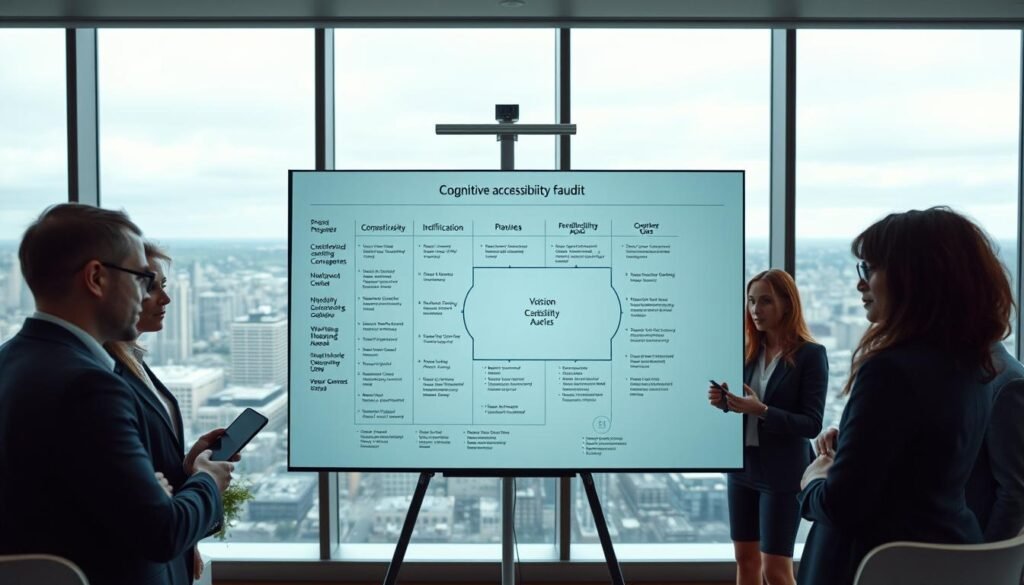
Physical spaces are checked for things like noise levels, layout, and privacy. Roles are looked at for how complex tasks are, how much multitasking is needed, and how flexible they are. Communication systems are evaluated for how people prefer to talk, how documents are handled, and what kinds of meetings are held.
Workflows are examined for things like deadlines, approval processes, and how tasks are coordinated. Cultural norms are checked for what’s expected about work hours, social interactions, and what it means to be professional.
The audit uses both numbers and stories. It uses checklists to look at specific things, and also talks to people and observes what’s happening.
Uncovering Obstacles Beyond the Obvious
Identifying barriers means looking for more than just obvious things. There are often hidden challenges that affect neurodivergent employees a lot.
Expectations for how people communicate can be a big problem. Workflows that assume everyone works the same way can be a challenge. Places with too much noise or other distractions can make it hard to focus.
Rules about when to work that don’t fit with how people naturally think can be a problem. Systems that judge people based on how they think can hold back employees. Looking closely at what people do and how they do it helps make things better.
Centering Neurodivergent Voices in Assessment
Listening to neurodivergent employees is very important. It helps make audits real and useful. This way of working makes sure that solutions really help.
Surveys that keep things private help people share honestly. Focus groups and one-on-one talks let people solve problems together and share their personal experiences. This keeps making things better over time.
By listening to neurodivergent voices, organizations find out what’s really needed. This leads to neuroinclusive job design that really makes a difference for employees and the whole organization.
4. Step 2: Establish Universal Design Principles for Cognitive Inclusion
Creating inclusive workplaces is more than just making exceptions. It’s about setting universal design principles for cognitive differences to support all kinds of thinking. This shift changes how we think about making workplaces accessible. It moves from just fixing things after they’re broken to making them right from the start.
Universal design started in architecture to make spaces for everyone. It’s about making workspaces that work for different kinds of thinkers. This way, everyone can do their best, not just those who are different.
4.1 Flexibility as Your Foundation
Flexibility in work design is key for including everyone. It means work can be done in many ways, not just one. This flexibility helps everyone, not just those who are different.
Offering different schedules helps people work when they’re at their best. Some might focus better at odd hours, while others need a regular schedule. The goal is to find a way that works for everyone.
Being able to choose how to do tasks is also important. Some people like written instructions, while others prefer to be told verbally. Letting people choose how they work helps them do their best.
Having different workspaces is another way to make work easier. Quiet areas, places to work together, and spaces for moving help everyone. It’s about making the environment work for each person’s needs.
4.2 Reducing Unnecessary Working Memory Load
The idea of cognitive load reduction is about making work easier on the brain. For people with ADHD or other brain differences, this is really important. It helps everyone, but it’s a big help for those who struggle more.
Writing things down helps take the load off of memory. It lets people look things up instead of trying to remember. This makes it easier for everyone to understand and remember information.
Breaking down big projects into smaller parts makes them easier to manage. It helps people keep track of what needs to be done. This is a big help for those who have trouble with organization.
Looking at how work is done can help find things that are too hard. If remembering passwords or using confusing systems is hard, it’s taking up brain space. Universal design principles for varied cognitive abilities help make things simpler.
4.3 Providing Multiple Pathways to Success
The idea of multiple pathways is about letting people succeed in their own way. It’s about focusing on the outcome, not just how it’s done. This way, everyone can show what they can do without being forced into one way of doing things.
Letting people choose how to do tasks is important. Some might plan everything out, while others like to try things and adjust as they go. Both ways can lead to great results if the system allows for it.
Looking at results instead of how things are done is a big change. It means setting clear goals but not caring how they’re reached. This is important for universal design for neurodivergent employees because it doesn’t lower standards but makes them more achievable.
Letting people choose how they organize their work is empowering. Some might like a schedule, while others prefer to work in their own way. It’s about recognizing that different ways of working can be just as good.
| Design Aspect | Traditional Approach | Universal Design for Cognitive Inclusion | Primary Benefit |
|---|---|---|---|
| Work Schedules | Standardized hours with limited exceptions | Flexible scheduling options aligned with individual peak performance patterns | Optimizes cognitive functioning across diverse energy profiles |
| Task Instructions | Primarily verbal communication with minimal documentation | Multi-format instructions with written documentation, visual supports, and reference materials | Reduces working memory demands and supports varied processing styles |
| Work Methods | Prescribed processes with emphasis on compliance | Multiple pathways to outcomes with focus on results instead of methods | Accommodates diverse cognitive approaches while maintaining standards |
| Performance Evaluation | Process adherence weighted heavily alongside outcomes | Outcome-focused assessment with flexibility in approach | Distinguishes competence from conformity to particular cognitive style |
These universal design principles don’t lower standards or make things easier for the sake of being easy. They remove unnecessary barriers that make it hard for different thinkers to show what they can do. By being flexible, reducing brain load, and allowing different ways to succeed, organizations can be fair and keep high standards. It’s about making a place where everyone can shine without unnecessary obstacles.
5. Designing Roles and Environments That Fit Diverse Cognitive Profiles
Creating a workplace that supports neurodiversity goes beyond just making small changes. It means changing the whole way an organization works. This includes how tasks are done, where they are done, and the systems that help complete them. This approach makes the workplace better for everyone, but it really helps those who are neurodivergent.
Changing how work is structured is a big step. Instead of making jobs fit one way and then adding special help, we start with flexibility and accessibility. This way, everyone can succeed, not just those who fit into traditional molds.
5.1 The Three-Pillar Framework: Roles, Environments, and Tools
Creating a workplace that supports different thinking styles involves three main areas. The roles pillar looks at how jobs are set up and what needs to be done. It’s about organizing tasks and who does them.
The environments pillar covers the physical and digital spaces where work happens. This includes things like lighting, sound, and how people move around. It also includes digital tools like communication platforms and virtual meeting spaces.
The tools pillar is about the systems and technologies that help people do their jobs well. This includes things like task management tools, scheduling systems, and assistive technologies.
These three areas work together. Changing one area might mean changing others too. For example, changing how a job is done might need new digital tools and quiet spaces for work. Making a workplace accessible for everyone means paying attention to all three areas.
5.2 Starting with Essential Job Functions Instead of Traditional Requirements
Creating a workplace that supports different thinking styles starts with identifying what’s really important in a job. It’s about finding out what needs to be done and what skills are needed. Many job requirements are based on old ways of doing things or what’s thought to be “proper.”
Organizations can figure this out by looking at what needs to be done first. Then, they can see which skills are needed for those tasks. It’s important to question rules that are based on how things are done, not what needs to be done.
For example, a job might need to make accurate financial reports on time. But, the way it’s done, like during certain hours or using specific software, might not be necessary. By separating what’s important from how it’s done, we can make room for different ways of thinking.
5.3 Building Cognitive Flexibility into Organizational Structures
Creating a workplace that supports different thinking styles means making big changes, not just small ones. It’s about making flexibility a part of how the organization works, not just an exception.
This includes creating role portfolios that let teams use different skills. Instead of everyone doing the same thing, teams can work together using their unique strengths. This way, everyone can contribute in their own way.
Organizations also need to offer different paths for career growth. This means recognizing that leadership and expertise come in many forms. By building teams with diverse thinking styles, everyone can work together effectively.
Most importantly, organizations need to create a culture that values flexibility. When adapting to different needs is seen as normal, everyone benefits. This approach helps everyone, not just those who are neurodivergent.
6. Designing Roles: How to Implement Strengths Mapping and Task Alignment
Strengths-based role design changes how we plan workforces. It puts cognitive alignment at the heart of planning and using talent. This method keeps everyone focused on results while giving many ways for people to help out.
It changes how we see work, moving from strict lists to flexible goals. This way, different thinking styles can fit in better.
Good role design matches job roles with the company’s goals. It lets people grow and learn new skills. Roles need to change with the company, feedback, and market needs.
Step-by-Step Guide to Conducting Strengths Mapping Exercises
The strengths mapping starts with checking how people think and work best. Companies use interviews to find out when people are most engaged. This shows how they solve problems and handle work.
Tools check if what people say matches how they really work. Feedback from others adds more insight. This gives a full picture of what people can do.
Then, we match these profiles with job needs. This shows where people fit well and where they might struggle. It helps make jobs that play to people’s strengths.
Separating Essential Job Functions from Preferred Methods
It’s important to know what’s really needed for a job and what’s just how things are done. This lets people work in their own way without losing focus. Often, what seems essential is really just a way of doing things.
Looking closely at each task helps figure out what’s really needed. Things like how we talk and work schedules are often just preferences. The focus is on what needs to be done, not how to do it.
This helps create jobs that are clear about what needs to be done but flexible on how. It recognizes that different people work in different ways.
Creating Modular, Adaptable Job Descriptions
Old job descriptions are replaced with flexible ones. These modular job descriptions focus on what needs to be done, not how. This makes jobs more like projects than fixed tasks.
These descriptions let people work in their own way while keeping things organized. Success is measured by what’s done, not how it’s done. This way, everyone can contribute in their own way.
This approach makes it easy to change jobs as they evolve. Regular checks make sure jobs are working well for everyone.
Allowing Task Customization Based on Cognitive Strengths
For this to work, there need to be regular talks between employees and managers. These talks help match tasks with people’s skills. There are rules to make sure these changes are fair and thought out.
Teams can swap tasks based on who’s best at them. This helps everyone do their best work. It makes teams work better and makes jobs more enjoyable.
There are ways for people to suggest new ways of doing things. Job accommodation strategies become part of how the company works. Success stories help make future jobs even better.
7. Designing Physical Environments: Sensory Profiles and Workspace Adaptations
Sensory profiles show how people process their surroundings. This knowledge changes how workplaces adapt to different needs. Workplaces, from lighting to sounds, greatly affect how neurodivergent employees work.
Many neurodivergent people are more sensitive to their environment. This makes them feel things that others might not notice. Understanding this helps make workspaces better for everyone.
Designing spaces for sensory diversity helps all employees. It reduces stress and makes work easier. Ergonomic furniture and adjustable desks help keep everyone healthy and comfortable.
How to Assess Individual Sensory Profiles
Figuring out sensory profiles needs a careful method. It’s important to respect privacy while getting useful information. This helps make work better for everyone.
There are several ways to do this:
- Structured questionnaires help find out what each person can handle.
- Observational assessment looks at how the environment affects each person.
- Collaborative conversations help find patterns in how people react to their surroundings.
- Trial periods let people try out different settings to see what works best.
Focus on what each person does well, not just their challenges. This way, we find the best conditions for everyone to do their best work.
Creating Sensory-Friendly Workplace Environments with Choice
Good workspaces offer choices, not just one perfect spot. Different tasks need different settings. This lets everyone find what works best for them.
- Quiet zones are great for deep focus work.
- Moderate sensory environments are good for teamwork and everyday tasks.
- Higher-stimulus spaces are perfect for brainstorming and socializing.
Using space wisely means having both open areas and quiet spots. This lets everyone find the right spot for their needs and tasks.
Implementing Quiet Zones, Collaboration Spaces, and Movement Areas
Having different areas for different needs helps everyone work better. Each area should have its own purpose and rules.
Quiet zones have special materials and rules to help people focus. They are away from busy areas and have sound-absorbing materials.
Collaboration spaces need the right sound to help teams work together. They should be open but not too loud. This helps teams communicate well.
Movement areas let people move around without disturbing others. This helps people with sensory needs stay focused.
Addressing Lighting, Acoustics, and Visual Clutter
Lighting, sound, and visual clutter greatly affect how we work. It’s important to make these things right for everyone.
Lighting solutions should let people adjust the light. Natural light is good, but some people need to adjust it. This includes using dimmers and window treatments.
Acoustic interventions help with sound. Materials that absorb sound and white noise systems can help. Arranging spaces to block sound helps too.
Visual organization makes spaces less overwhelming. Using colors and storage wisely helps. Adding plants and views of nature also helps reduce stress.
By making these changes, workplaces can support diverse needs. This helps everyone, including those with neurodivergent conditions, to reach their full ability.
8. Designing Digital Environments: Communication Structures and Protocols
Most work today happens online, where how we communicate matters a lot for neurodivergent workers. Digital spaces can be made to fit different ways of thinking and learning. This is different from physical offices, where changes are harder to make.
Making digital spaces accessible needs careful thought, not just using new tech. Fast messages, many alerts, and needing to talk right away can be hard for some. But, with the right design, digital spaces can be calm and help everyone understand information better.
Implementing Asynchronous Communication Options
Using asynchronous communication makes digital work places more inclusive. It lets people think and answer at their own speed. It’s important for companies to support this way of working without making it seem slow.
Tools like email or project management systems are great for sharing info without needing to talk right away. Recording meetings helps those who learn better by seeing things more than once. Encouraging thoughtful answers over quick ones makes the workplace better for everyone.
Creating Clear Written Instructions and Documentation Standards
Clear, simple language in documents makes work easier for everyone. It’s key for those who think differently. Using clear language helps all workers, but it’s very important for neurodivergent people.
It’s good practice to write down what’s said and decided. Using the same templates helps focus on the content, not how it’s formatted. Documents should be easy to scan and understand, helping different reading styles.
Reducing Cognitive Load in Digital Platforms and Meetings
Choosing the right digital tools and how we use them affects how easy they are to use. Tools should be easy to navigate and not need too many decisions. Using fewer platforms helps avoid the mental strain of switching between them.
Workspaces should have clear names and be organized well. Meetings should have clear agendas and rules for who can speak. This makes everyone feel more at ease and able to focus on the work, not just getting along.
Establishing Predictable Communication Protocols
Clear rules for communication make work easier by removing the guesswork. It’s important to know which way to share or find information. Knowing how long to wait for answers helps avoid feeling overwhelmed.
Communication rules should cover how meetings are run, who can speak, and how decisions are made. This helps everyone understand what’s expected, making digital spaces a place of clear and effective teamwork.
9. Designing Tools: Executive Function Supports and Workflow Systems
Today’s workplaces need tools and systems that help everyone be productive. Executive function supports are like professional tools that help with planning and organizing. They help with starting tasks, staying focused, and finishing work.
These workflow systems help people with different ways of thinking. They make it easier to manage time and tasks.
Using these tools can really help a business. Companies that use them well see better task completion, less stress, and projects done on time.
9.1 Implementing Task Management Systems That Support Different Thinking Styles
Everyone thinks differently, and that’s okay. Task management systems should be flexible. They should work for different ways of thinking.
Visual-spatial systems use boards to show how tasks relate. They help people who think in pictures and patterns.
Linear-sequential systems list tasks in order. They help those who like things in a logical order.
| System Type | Cognitive Strength Supported | Implementation Format | Best Applications |
|---|---|---|---|
| Visual-Spatial | Pattern recognition and spatial processing | Kanban boards, mind maps, visual dashboards | Complex projects with multiple dependencies |
| Linear-Sequential | Logical progression and categorical thinking | Prioritized lists, numbered steps, hierarchical outlines | Procedures requiring specific order |
| Time-Based | Temporal awareness and schedule adherence | Calendar blocking, timeline views, deadline trackers | Time-sensitive deliverables with fixed schedules |
| Priority-Based | Impact assessment and urgency evaluation | Eisenhower matrices, weighted scoring systems | Multiple competing demands requiring triage |
Time-based systems organize tasks by when they happen. Priority-based systems focus on importance and urgency.
It’s important to offer many task management systems at once. This lets employees choose what works best for them and switch as needed.
9.2 Creating Flexible Schedules and Alternative Deadline Structures
Being too rigid can hold people back. Flexible schedules help everyone work their best. They match different attention patterns and energy levels.
Flexible start times let employees work when they’re most focused. Some do best in the morning, others in the afternoon or evening.
Compressed schedules let people work longer hours on fewer days. This helps those who need time to get into a deep work state.
Deadline flexibility helps with different work paces. Rolling deadlines with milestones replace single due dates. This structure works for everyone.
Buffer time in schedules is realistic. It reduces stress and makes timelines more reliable.
9.3 Using Visual Workflow Tools, Templates, and Checklists
Structured supports help employees focus on real work. Visual workflow tools make projects clear. They reduce memory load.
Tools like Kanban boards show project stages and next steps. They help individuals and teams stay on track.
Standardized templates save mental energy. They let employees focus on content, not format. This helps those with different thinking styles.
Checklists break down big tasks into smaller steps. They make projects feel doable. They also give feedback to keep motivation up.
Project planning tools show how tasks fit together. They make it clear how individual tasks contribute to the bigger picture. These executive function tools reduce mental load.
9.4 Building Time Management Accommodations
Time perception varies among people. Time management accommodations help with this. They provide external support, not expecting people to change how they see time.
Multiple reminders help with different time processing patterns. This reduces missed deadlines.
Visual tools make time concrete. They help those who think better in pictures than in time.
Break times prevent burnout. They help maintain focus. This is important for different cognitive profiles.
Autonomy in time structuring is key. It lets employees work in a way that suits them while meeting goals. This respects individual differences and keeps the organization running smoothly.
These tools are like any other workplace equipment. They help everyone work better. They make the workplace more accessible for all.
10. Designing Tools: Assistive Technology and Accommodation Resources
Technology helps everyone, not just those with disabilities. It’s like ramps for people who can’t walk well. Assistive technology helps people get around cognitive barriers. It makes work better for everyone, not just those with disabilities.
Today, we have many tools to help with reading, writing, and staying focused. These tools fit into our work easily if used right.
Essential Assistive Technology for Cognitive Accessibility
Good cognitive accessibility needs many kinds of technology. It’s important to know what tools are out there before setting up systems.
There are tools for reading, writing, staying focused, and organizing. They help with different parts of thinking. Often, they help in more than one way at once.
The best assistive technology blends into our work. It feels like a natural part of thinking, not something extra.
Text-to-Speech, Speech-to-Text, and Reading Tools
Text-to-speech tools turn written words into spoken ones. This helps those with dyslexia or trouble seeing words. Tools like NaturalReader and Read&Write make it easy to listen to emails and documents.
Speech-to-text software lets people write with their voice. It’s great for those who think better out loud. Dragon NaturallySpeaking and Google Docs Voice Typing are top choices.
Reading assistance tools make text easier to understand. They highlight important words and adjust font sizes. Tools like Grammarly and Hemingway Editor help with writing quality.
Focus Enhancement and Distraction Management Software
Focus enhancement software helps stay on task. It uses timed work sessions and breaks. Tools like Focus@Will and Brain.fm use music to keep you focused. They’re great for people with ADHD.
Distraction management tools block websites and manage notifications. Freedom and Cold Turkey stop you from getting distracted. They help keep your focus on important tasks.
Ambient noise tools create a calm background sound. They can be white noise, brown noise, or nature sounds. They help control what you hear and feel.
Building a Cognitive Accessibility Toolkit
Having a library of cognitive accessibility technology is key. It makes getting help faster and more normal. It helps everyone, not just those with disabilities.
| Technology Category | Primary Function | Example Solutions | Benefits Beyond Disability |
|---|---|---|---|
| Reading Support | Text-to-speech conversion | NaturalReader, Immersive Reader | Multitasking efficiency, content consumption while mobile |
| Writing Assistance | Composition and grammar support | Grammarly, Dragon NaturallySpeaking | Professional communication quality, faster drafting |
| Focus Management | Attention regulation and blocking | Freedom, Focus@Will, Brain.fm | Productivity enhancement, meeting deadline pressure |
| Organization Systems | Task and time management | Notion, Trello, Todoist | Project clarity, team coordination improvement |
Good toolkits have easy ways to get technology, explain how it works, and teach how to use it. IT teams should make sure these tools work with other systems.
Investing in assistive technology pays off in many ways. It makes work better, keeps people happy, and brings in more talent. It also helps everyone, not just those with disabilities.
11. Step 3: Implement Your Neurodivergent-Friendly Workplace Design Strategy
Turning workplace design ideas into real practices needs a careful plan. This plan must balance big dreams with what’s possible. Moving from ideas to action is the most important step in making a workplace friendly for neurodivergent people.
Organizations must handle complex changes well. They need to stay flexible to adjust based on new evidence and feedback from employees.
Getting things done right needs teamwork. Leaders must get the resources and show they’re committed. Managers need to make policies work every day. And employees’ feedback is key to making things better.
11.1 Starting with Pilot Programs and Test Groups
Pilot programs are smart for starting new ideas in the workplace. They let you try things out without using too many resources too soon. Starting with test groups helps show that the ideas work and gets more people on board.
Good pilot programs need careful planning. Pick a mix of people from different roles and backgrounds. This way, what works in one place might work in others too. Set clear goals before you start so you can tell if it’s working.
Pilot programs do more than just test ideas. They find problems you might not see coming. They show success stories that get more people excited. And they prove you’re really changing, not just pretending.
11.2 Training Managers on Cognitive Diversity Management
Training managers is key to making new ideas work. They decide if policies really help people every day. Good manager training covers what they need to know and do.
Training should include:
- Learning about neurodiversity and different thinking styles
- How to talk about what help each person needs without making assumptions
- Flexible management skills that work for everyone
- How to overcome biases and stereotypes
- Ways to make sure policies are followed consistently
Training should focus on practical skills like solving problems on the spot. Managers need to adapt to each person’s needs, not just follow a set plan.
11.3 Creating Feedback Mechanisms and Adjustment Processes
Success comes from seeing implementation as ongoing. Good feedback systems help make things better based on real experiences. They must keep things private to get honest feedback.
Feedback should come in many ways to fit different people. Regular checks with neurodivergent employees help make sure things are working. There should be ways to report problems without fear of being judged.
Creating a culture where feedback is valued is important. Being open to change shows that feedback is really listened to. Small changes build trust and encourage more feedback.
11.4 Scaling Successful Accommodations Across the Organization
Expanding what works to the whole company needs a plan. Scaling accommodations means adapting to different areas and needs while keeping the core ideas. It’s not just about copying what worked before.
Good scaling plans include clear guides and resources. It’s important to show how successes in one area can help others. This builds support and shows the benefits of change.
The plan should stay flexible as you grow. What works in one place might need changes for another. Keeping an eye on how things are working helps make sure everyone benefits.
12. Step 4: Measure Success and Continuously Improve
The journey to make workplaces more accessible doesn’t stop after setting things up. It’s a never-ending cycle of checking and improving. Companies that think they’ve done enough miss out on making things better. They also risk losing the good things they’ve already done.
Checking how well things work and keeping up with the latest ideas is key. This helps manage risks. Making sure designs are always up to date is more than just a one-time thing. It’s about keeping things working well over time.
12.1 Key Performance Indicators for Cognitive Inclusion Initiatives
Having strong key performance indicators helps keep things on track. These indicators show how well a company is doing in making workplaces better for everyone. They look at more than just how many people are involved.
Measuring success needs both numbers and stories. Look at how many people with different brains are hired and kept. Also, see how well they do their jobs. Check how well requests for help are handled and how happy people are with the changes.
It’s also important to see how well things work, how good the quality is, and how new ideas come from different brains. Look at how safe and welcome people feel. And compare how much it costs to make things better to how much it saves in the long run.
| Metric Category | Specific Indicators | Measurement Method | Target Benchmark |
|---|---|---|---|
| Workforce Representation | Neurodivergent hiring rate, retention rate, advancement rate | HR data analysis, demographic tracking | Retention parity with neurotypical employees |
| Accommodation Effectiveness | Request approval rate, implementation time, user satisfaction | Accommodation database, satisfaction surveys | 95% approval rate, 2-week implementation |
| Performance Outcomes | Productivity metrics, quality scores, innovation contributions | Performance reviews, project assessments | Performance parity or improvement |
| Workplace Climate | Inclusion scores, psychological safety ratings, belonging measures | Anonymous climate surveys, focus groups | Climate scores above organizational average |
12.2 Gathering Ongoing Employee Feedback on Workplace Adaptations
Getting regular employee feedback is key. It helps keep a company up to date on how things are going for people with different brains. Surveys should ask about how well the workplace is set up for everyone.
Focus groups give deeper insights that numbers can’t. They let people with different brains share their real experiences. It’s important to have a way for people to share concerns without fear.
Exit interviews are very important. They help understand why people with different brains might leave. Having a group of people with different brains to give advice helps make things better. It’s important to keep checking and changing things to make sure they work well.
“What gets measured gets managed, but only what gets listened to gets improved. The most sophisticated metrics mean nothing without genuine responsiveness to employee voices.”
12.3 Iterating Your Design Based on Real-World Results
Turning what you learn into continuous improvement needs a clear plan. Look at data every few months and decide what to change based on what you find. This makes sure you’re always getting better.
Being able to quickly fix problems that come up is important. Keep track of what you learn from both successes and failures. This helps avoid making the same mistakes twice and spreads good ideas faster.
Seeing improvement as normal shows a company is serious about getting better. It’s not about being perfect, but about always trying to do better. The goal is to keep making things better for everyone, no matter their brain.
13. Common Mistakes to Avoid When Accommodating Cognitive Differences in Organizational Roles
Many companies know how important neurodiversity is. But, implementation errors often ruin their good plans. When they try to make things more accessible, they sometimes get it wrong.
They might not listen to the people who really know what they need. This can lead to solutions that don’t really help. It’s important to avoid these mistakes to truly support neurodivergent employees.
To avoid these mistakes, companies need to work closely with neurodivergent people. They should talk to everyone involved and understand that real knowledge comes from experience, not just theory.
Applying One-Size-Fits-All Solutions to Diverse Needs
One big mistake is treating everyone the same. Companies often give the same help to everyone, not realizing that everyone is different. This doesn’t work because people with different conditions have different needs.
They might think all people with ADHD need the same things. Or they might make special rooms that don’t really meet anyone’s needs. One-size-fits-all solutions don’t get it because they don’t take the time to understand each person.
Real help comes from being flexible, not the same for everyone. Everyone has their own strengths and challenges that need to be seen and respected.
Treating Neurodiversity as a Deficit Instead of a Strength
Companies often see helping neurodivergent people as a favor, not as something they should do. This way of thinking is wrong because it doesn’t see the good things neurodivergent people bring. It only looks at the challenges.
This thinking can make people feel bad about themselves and not want to ask for help. It misses out on the talents and skills that neurodivergent people can bring to work.
Changing how we think about neurodiversity can make a big difference. It can help companies create better work environments and roles for everyone.
Implementing Changes Without Neurodivergent Input
Often, people who don’t have neurodiversity try to make things better without asking neurodivergent people. This can lead to solutions that don’t really help. It’s like trying to fix a problem without knowing what the problem is.
Not listening to neurodivergent people can make them feel like they’re not being heard. It misses out on the creative ideas that come from living with neurodiversity.
To really include everyone, neurodivergent people need to be part of the planning and checking. Their input ensures that solutions really solve the problems they face.
Overlooking Intersectionality in Cognitive Accessibility
People have many different identities that affect their experiences and needs. Intersectionality shows how solutions made for one group might not work for others. It’s like trying to fit a square peg into a round hole.
Cultural differences also play a big role in how we see and deal with cognitive differences. People from different backgrounds face different challenges. Solutions that don’t take this into account can make things worse.
Real inclusion means looking at how different identities affect cognitive accessibility. Companies need to make sure their solutions work for everyone, not just some people.
14. Conclusion
The three-pillar framework of roles, environments, and tools offers a clear path for making workplaces more accessible. This approach understands that true diversity in the workplace needs attention in all areas. It’s not just about one thing.
Creating spaces that welcome neurodivergent individuals is more than just following rules. It’s about changing how we think about work. We need to see diversity as a natural part of who we are.
Inclusive workplaces are good for everyone. They make sure neurodivergent people can fully participate without obstacles. This also brings in more talent, diverse ideas, and stronger teams.
It’s important to think about what resources are needed. While making workplaces more inclusive takes effort and money, many changes are small. The benefits, like keeping employees longer and working better together, make it worth it.
Organizations that adapt to different thinking styles become places of learning. The field of cognitive accessibility is always growing. Every step toward being more inclusive is a step forward.
Designing work for different minds makes workplaces better for everyone. These places are more adaptable, focused on people, and reflect the true diversity of human thinking. The path to success starts with letting everyone shine.
FAQ
What exactly is cognitive accessibility in the workplace, and how does it differ from traditional disability accommodations?
How can I identify whether my organization has cognitive accessibility barriers if neurodivergent employees haven’t explicitly complained?
What are the most impactful, low-cost changes organizations can make to improve cognitive accessibility?
How do I conduct strengths mapping for neurodivergent employees without making them feel singled out or labeled?
What if separating essential job functions from traditional requirements reveals that many of our standard practices aren’t actually necessary?
How can we create sensory-friendly environments in open-plan offices where we can’t make major architectural changes?
What assistive technology should we make available, and how do we determine what’s reasonable to provide?
How do we implement flexible schedules and alternative deadline structures without creating coordination chaos or perceived unfairness?
What should managers know about supporting neurodivergent employees, and how do we train them effectively?
How can we gather honest feedback from neurodivergent employees about what’s working and what needs improvement?
What metrics should we track to evaluate whether our cognitive accessibility initiatives are actually working?
What if an employee requests an accommodation that seems unreasonable or that we believe wouldn’t actually help them?
How do we balance individual accommodation needs when different employees have conflicting requirements?
What about performance management—how do we maintain standards while accommodating cognitive differences?
How do we encourage disclosure of cognitive differences without making employees feel pressured to reveal private information?
What role should employee resource groups or affinity groups play in cognitive accessibility initiatives?
How do cognitive accessibility considerations intersect with remote and hybrid work arrangements?
What legal obligations do organizations have regarding cognitive accessibility and neurodivergent accommodations?
How should we approach cognitive accessibility in hiring and recruitment processes?
What if we discover that a current accommodation isn’t working effectively for an employee?

