


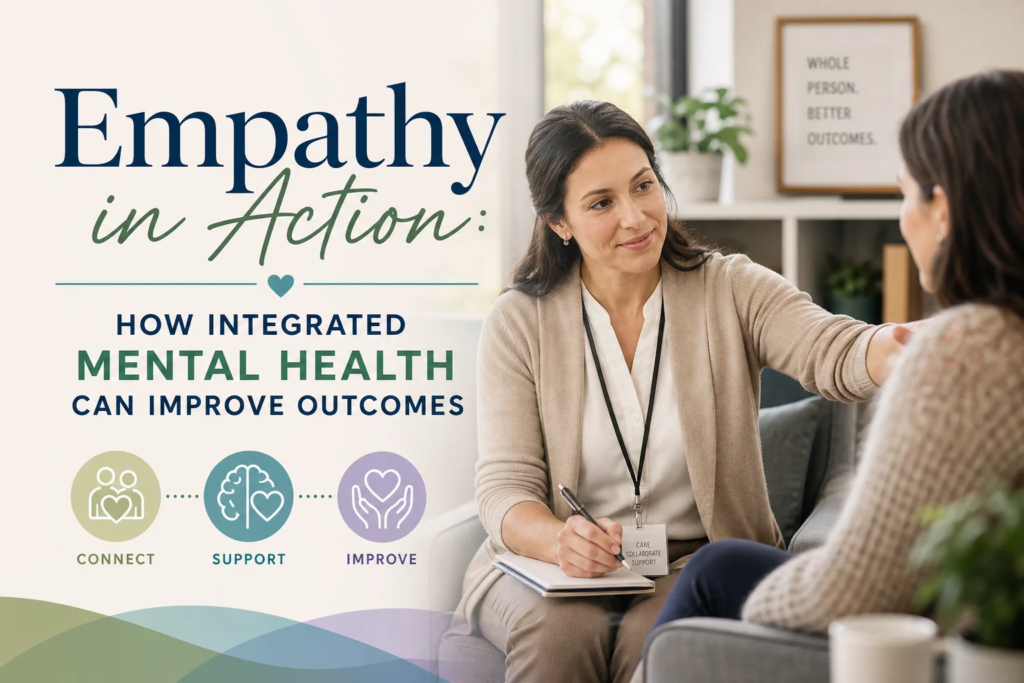
Introduction: When Care Finally Sees the Whole Person
A patient walks into a primary care clinic with chest tightness, stomach pain, fatigue, and headaches. The tests come back normal. Blood pressure is high, sleep is poor, and the patient quietly admits, “I’m just overwhelmed.” In a traditional system, that person might leave with a referral, a long waitlist, and a sense of being passed from one doorway to another. In an integrated mental health model, the story changes immediately.
A behavioral health clinician may join the visit. The primary care provider, therapist, nurse, care manager, and sometimes a psychiatrist work together. The patient is not treated as a collection of disconnected symptoms, but as a whole person whose body, mind, environment, relationships, and stressors are all part of the care plan.
That is Empathy in Action: How Integrated Mental Health Can Improve Outcomes.
At its heart, integrated mental health is not simply a new workflow or clinical model. It is a compassionate redesign of care. It recognizes that anxiety can worsen diabetes, depression can complicate heart disease, trauma can affect pain, and untreated substance use can derail recovery. It also recognizes that many people never make it to a separate mental health appointment, even when they desperately need support.
Empathy in Action: How Integrated Mental Health Can Improve Outcomes means meeting people where they already are: in primary care offices, schools, community clinics, maternity practices, emergency departments, and digital health platforms. It means making mental health care easier to access, less stigmatized, and more connected to everyday medical care.
This article explores why integrated behavioral health matters, how it works, what outcomes it can improve, and what real-world examples teach us. Most importantly, it shows how empathy becomes measurable when health systems design care around human needs.
What Integrated Mental Health Really Means
Integrated mental health, often called integrated behavioral health, is the intentional coordination of mental health services with medical care. Instead of treating physical and emotional health in separate silos, providers collaborate as one team.
In practical terms, this may include:
- A therapist working inside a primary care clinic
- Depression screening during routine medical visits
- A psychiatrist consulting with primary care doctors
- Care managers following up with patients between visits
- Warm handoffs from physicians to behavioral health specialists
- Shared treatment plans and electronic health records
- Team-based management of conditions like anxiety, depression, diabetes, chronic pain, and substance use
The phrase Empathy in Action: How Integrated Mental Health Can Improve Outcomes captures the core principle: care improves when systems respond to the real complexity of people’s lives.
Mental health is not separate from physical health. It influences medication adherence, appointment attendance, sleep, immune response, nutrition, motivation, social connection, and recovery. Likewise, chronic illness, pain, disability, financial stress, and medical trauma can deeply affect emotional well-being.
Integrated care closes the gap.
Traditional Care vs. Integrated Mental Health
| Feature | Traditional Separate Care | Integrated Mental Health Care |
|---|---|---|
| Access | Referral to outside provider, often with waitlists | Same-day or faster access within medical setting |
| Communication | Limited coordination between providers | Shared care plans and team communication |
| Patient Experience | Fragmented and repetitive | Seamless and person-centered |
| Stigma | Mental health care may feel separate or “other” | Normalized as part of whole-person health |
| Follow-Up | Patient often responsible for navigating next steps | Care team proactively supports follow-through |
| Outcomes | Risk of missed needs and poor adherence | Better engagement, symptom tracking, and continuity |
This is why Empathy in Action: How Integrated Mental Health Can Improve Outcomes is not just a slogan. It is a practical approach to closing the distance between need and care.
Why Empathy Must Become a System, Not Just a Feeling
Most clinicians are empathetic people. But empathy at the individual level is not enough when the system itself creates barriers.
A doctor may care deeply about a patient with depression, but if the only option is a referral with a three-month wait, empathy has nowhere to go. A therapist may want to coordinate with a cardiologist, but if they do not share records or communication channels, the patient becomes the messenger. A patient may be motivated to seek help, but transportation, cost, stigma, and confusing insurance rules may stop them.
That is where Empathy in Action: How Integrated Mental Health Can Improve Outcomes becomes powerful. It turns compassion into design.
Empathy in integrated mental health looks like:
- Screening every patient because suffering is not always visible
- Offering help during the same visit because motivation can be time-sensitive
- Making behavioral health part of routine care to reduce shame
- Using team-based follow-up so patients do not fall through the cracks
- Asking about social needs, trauma, sleep, work, caregiving, and relationships
- Tracking symptoms over time instead of relying on guesswork
- Coordinating medication, therapy, lifestyle support, and community resources
True empathy is not only saying, “I understand.” It is building a care pathway that proves it.
The Human and Clinical Case for Integration
The need for integrated mental health has never been clearer. Rates of anxiety, depression, loneliness, burnout, substance misuse, and stress-related illness have increased across many communities. At the same time, primary care providers often manage mental health concerns because they are the first, and sometimes only, point of contact.
Many patients with mental health conditions initially present with physical symptoms: pain, fatigue, insomnia, gastrointestinal issues, palpitations, dizziness, or worsening chronic disease. If clinicians treat only the physical symptom without exploring emotional and social context, care may become expensive, repetitive, and incomplete.
Empathy in Action: How Integrated Mental Health Can Improve Outcomes helps address several major problems at once:
- Delayed access to mental health treatment
- Fragmented care between medical and behavioral providers
- Stigma that prevents people from seeking help
- Poor management of chronic illness linked to emotional distress
- High utilization of emergency or specialty services when underlying needs go unmet
- Provider burnout caused by managing complex needs without team support
Integrated care does not replace specialty mental health services. Instead, it creates a stronger front door, better coordination, and earlier intervention.
How Integrated Mental Health Improves Outcomes
The outcomes associated with integrated mental health can be clinical, financial, relational, and social. The strongest models do not rely on good intentions alone. They use structured workflows, measurement-based care, and collaborative accountability.
Key Outcomes Improved by Integrated Mental Health
| Outcome Area | How Integrated Mental Health Helps |
|---|---|
| Depression and anxiety symptoms | Earlier screening, brief interventions, medication support, therapy access |
| Chronic disease control | Better adherence, stress management, behavior change support |
| Patient engagement | Reduced stigma, easier access, trusted medical setting |
| Medication adherence | Education, motivational interviewing, follow-up calls |
| Emergency department use | Earlier intervention before crises escalate |
| Provider satisfaction | Shared responsibility and team-based problem-solving |
| Health equity | Care reaches people who may not access specialty mental health services |
| Cost of care | Reduced duplication, avoidable utilization, and unmanaged complexity |
This is the promise of Empathy in Action: How Integrated Mental Health Can Improve Outcomes: better care that is easier to use and more aligned with how people actually live.
The Core Models of Integrated Mental Health
Integrated mental health is not one single program. It includes several models, each with different levels of collaboration and intensity.
1. Co-Located Care
In this model, mental health professionals work in the same physical location as medical providers. A primary care doctor can introduce a patient to a therapist during the same visit.
This “warm handoff” can be transformative. A patient who might never call an outside therapist may accept support when it is offered immediately by a trusted care team.
2. Collaborative Care Model
The Collaborative Care Model is one of the most studied approaches. It typically includes:
- A primary care provider
- A behavioral health care manager
- A psychiatric consultant
- Measurement-based symptom tracking
- Regular case reviews
- Stepped care adjustments when patients are not improving
This model has shown strong evidence for depression and anxiety treatment in primary care settings.
3. Primary Care Behavioral Health Model
This approach embeds behavioral health consultants into primary care teams. Visits are often brief, focused, and practical. The clinician may help with sleep, panic attacks, medication adherence, parenting stress, grief, chronic pain, or lifestyle change.
4. Fully Integrated Whole-Person Care
In fully integrated systems, medical, behavioral, social, and sometimes dental or pharmacy services work together under one coordinated structure. Community health centers often use this approach to support patients with complex needs.
Each model demonstrates Empathy in Action: How Integrated Mental Health Can Improve Outcomes by reducing the burden on patients to coordinate their own care.
Case Study 1: The IMPACT Model and Late-Life Depression
One of the most influential examples of integrated mental health is the IMPACT trial, which focused on older adults with depression in primary care. The model used a depression care manager, primary care provider, and psychiatric consultant. Patients received education, problem-solving therapy, medication support when appropriate, and regular symptom monitoring.
The results were significant: patients in collaborative care experienced better depression outcomes, improved functioning, and greater satisfaction compared with usual care.
Why This Case Matters
The IMPACT model is a classic example of Empathy in Action: How Integrated Mental Health Can Improve Outcomes because it addressed a common real-world problem: older adults often receive most of their care from primary care providers, not specialty mental health clinics.
Instead of expecting older adults to navigate a separate system, the model brought mental health support into the place they already trusted. It also used measurement-based care, meaning treatment changed when patients were not improving.
Key Lesson
Empathy becomes more effective when paired with structure. Regular follow-up, team review, and symptom tracking can turn depression care from passive referral into active healing.
Integrated Mental Health and Chronic Disease
Chronic illness and mental health are deeply connected. A person with diabetes may struggle with depression, making it harder to monitor blood sugar or maintain nutrition. A patient with heart disease may experience anxiety after a cardiac event. Someone with chronic pain may develop insomnia, isolation, and hopelessness.
When mental health is integrated into chronic disease care, the focus shifts from “Why isn’t this patient following instructions?” to “What barriers, emotions, and life circumstances are affecting this patient’s ability to heal?”
That mindset is central to Empathy in Action: How Integrated Mental Health Can Improve Outcomes.
Examples of Integrated Support for Chronic Conditions
| Chronic Condition | Common Mental Health Link | Integrated Care Intervention |
|---|---|---|
| Diabetes | Depression, distress, burnout | Behavioral coaching, medication adherence support, stress management |
| Heart disease | Anxiety, fear of recurrence, lifestyle adjustment | Brief therapy, cardiac rehab coordination, relaxation skills |
| Chronic pain | Depression, sleep disruption, trauma history | Cognitive behavioral strategies, pacing plans, non-opioid coping tools |
| Asthma/COPD | Panic, breathlessness anxiety | Breathing techniques, anxiety management, care coordination |
| Cancer | Grief, uncertainty, caregiver stress | Psycho-oncology support, family counseling, symptom monitoring |
Integrated mental health helps patients move from shame to skill-building. It gives them tools, not lectures.
Case Study 2: Cherokee Health Systems and Whole-Person Community Care
Cherokee Health Systems in Tennessee is widely recognized for its integrated care model, combining primary care and behavioral health services in community-based settings. Behavioral health consultants work closely with medical providers, often seeing patients on the same day.
This model serves many patients who face barriers such as poverty, limited transportation, chronic disease, trauma, and limited access to specialty care.
Why This Case Matters
Cherokee’s approach demonstrates Empathy in Action: How Integrated Mental Health Can Improve Outcomes at a community level. It recognizes that many patients cannot manage separate appointments across different locations, especially when dealing with financial stress, caregiving responsibilities, or unstable housing.
By placing behavioral health inside the primary care workflow, the system reduces stigma and increases access.
Brief Analysis
The relevance is clear: integration works best when it is designed around the patient’s reality, not institutional convenience. Cherokee’s model shows that mental health care can be normalized, practical, and scalable in community settings.
Key Lesson
If care requires people to overcome too many obstacles, many will not receive it. Integrated mental health removes obstacles before they become failures.
The Role of Screening: Seeing What Patients May Not Say
Many people do not walk into a clinic and announce, “I am depressed,” “I am drinking too much,” or “I am having panic attacks.” They may say they are tired. They may say they cannot sleep. They may mention headaches or irritability. Some may say nothing at all.
Routine screening helps clinicians identify concerns earlier. Common tools include:
- PHQ-9 for depression
- GAD-7 for anxiety
- AUDIT-C for alcohol use
- PCL-5 for PTSD symptoms
- Edinburgh Postnatal Depression Scale for perinatal depression
- Screening questions for social drivers of health, such as housing, food, safety, and transportation
Screening is not about labeling people. It is about opening a door.
In Empathy in Action: How Integrated Mental Health Can Improve Outcomes, screening is one of the simplest and most powerful tools. It says, “We ask everyone because mental health is health.”
But screening only matters if support follows. Asking about depression without offering timely help can feel hollow. Integrated care turns screening into action.
The Power of the Warm Handoff
A warm handoff happens when a medical provider personally introduces a patient to a behavioral health clinician, often during the same visit.
It might sound like this:
“Maria, you’ve shared that your sleep has been poor and your anxiety is making it hard to manage your blood pressure. We have someone on our team who helps patients with exactly this. Would it be okay if I introduced you today?”
This small moment can change everything.
The patient does not have to make a separate call, explain their story again from scratch, or wonder whether mental health care means something is “wrong” with them. The introduction communicates trust.
A warm handoff is Empathy in Action: How Integrated Mental Health Can Improve Outcomes in its most visible form. It turns referral into relationship.
Case Study 3: Integrated Perinatal Mental Health Support
Consider a maternity clinic that screens all pregnant and postpartum patients for depression and anxiety. A patient named “Jasmine” attends a postpartum visit six weeks after delivery. She reports exhaustion, guilt, crying spells, and intrusive worries that something bad will happen to her baby. In a traditional model, she may receive a referral and be told to call a therapist.
In an integrated model, the obstetric provider introduces her to a behavioral health specialist the same day. The care team evaluates risk, provides immediate emotional support, coordinates therapy, discusses medication options if needed, and follows up within a week.
Why This Case Matters
Perinatal mental health conditions are common and treatable, yet many go undiagnosed or untreated. Integrated care is particularly valuable because new parents often face barriers like sleep deprivation, childcare needs, transportation challenges, and stigma.
This case reflects Empathy in Action: How Integrated Mental Health Can Improve Outcomes because it brings care into a sensitive, time-critical setting.
Brief Analysis
The patient’s needs are emotional, medical, relational, and practical. Integrated care allows the team to respond quickly and reduce risk for both parent and child. It also normalizes mental health support as part of maternal care.
Key Lesson
The right help at the right moment can prevent suffering from becoming crisis.
Measurement-Based Care: Compassion with a Dashboard
Some people worry that measurement makes care feel cold. But in integrated mental health, measurement can be deeply compassionate. It helps teams know whether treatment is actually working.
Measurement-based care means regularly tracking symptoms, functioning, goals, and progress. For example, a patient with depression may complete a PHQ-9 every few weeks. If the score is not improving, the team adjusts the plan.
This approach supports Empathy in Action: How Integrated Mental Health Can Improve Outcomes because it refuses to let patients disappear into vague “follow-up as needed” care.
What Measurement-Based Care Can Track
| Measure | Why It Matters |
|---|---|
| Symptom severity | Shows whether depression, anxiety, or trauma symptoms are improving |
| Functioning | Tracks sleep, work, relationships, school, and daily responsibilities |
| Medication response | Helps identify side effects or lack of benefit |
| Therapy engagement | Shows whether the patient is attending and finding care useful |
| Safety concerns | Monitors suicide risk, substance use, or crisis needs |
| Patient goals | Keeps care aligned with what matters most to the person |
Measurement does not replace empathy. It strengthens it. It helps clinicians ask, “Is this helping you?” and act when the answer is no.
Integrated Mental Health and Health Equity
Mental health access is not equal. Many communities face barriers due to cost, insurance limitations, language, cultural stigma, racism, rural provider shortages, disability, transportation, immigration concerns, or mistrust of healthcare systems.
Integrated mental health can improve equity by placing services in familiar, accessible environments. A patient who would never seek therapy at a specialty clinic may accept support in a primary care office, school clinic, community health center, or faith-based health program.
But integration alone is not enough. To truly represent Empathy in Action: How Integrated Mental Health Can Improve Outcomes, programs must be culturally responsive.
That means:
- Hiring diverse care teams
- Offering language access and interpreters
- Training clinicians in cultural humility
- Asking about identity, family, community, and spiritual supports
- Avoiding assumptions about what healing should look like
- Addressing social needs alongside symptoms
- Building trust with local community organizations
Health equity requires more than opening a clinic. It requires listening to the community and adapting care accordingly.
Case Study 4: Behavioral Health in a School-Based Health Center
A school-based health center notices rising anxiety, absenteeism, and somatic complaints among students. Instead of referring every student to outside counseling, the center integrates a behavioral health clinician into the school clinic.
Students can receive brief counseling, crisis support, coping skills, family outreach, and coordination with teachers when appropriate. Medical providers and behavioral health staff work together to identify students whose headaches, stomachaches, or frequent nurse visits may be related to stress or trauma.
Why This Case Matters
Young people often experience mental health symptoms long before they receive formal care. Schools are one of the most important access points, especially for students whose families face transportation, financial, or stigma-related barriers.
This is another practical example of Empathy in Action: How Integrated Mental Health Can Improve Outcomes because it brings support into the environment where young people spend much of their time.
Brief Analysis
The model reduces missed school time, normalizes emotional support, and creates earlier intervention. It also helps identify social stressors such as bullying, family instability, food insecurity, or community violence.
Key Lesson
For children and adolescents, integrated care can change the trajectory before problems become entrenched.
The Economic Argument: Better Care Can Also Be Smarter Spending
Mental health conditions often increase total healthcare costs, especially when untreated. Patients with unmanaged depression, anxiety, trauma, or substance use may have more emergency visits, more hospitalizations, poorer chronic disease control, and greater difficulty following treatment plans.
Integrated mental health can reduce avoidable utilization by addressing root causes earlier.
The financial logic of Empathy in Action: How Integrated Mental Health Can Improve Outcomes is simple: when people get the right care sooner, the system spends less time reacting to preventable crises.
Potential Cost-Related Benefits
| Cost Driver | How Integration May Help |
|---|---|
| Repeated visits for unexplained symptoms | Identifies anxiety, depression, trauma, or stress contributors |
| Poor chronic disease control | Improves adherence and self-management |
| Emergency department overuse | Provides earlier support and crisis prevention |
| Specialist referrals | Reduces unnecessary escalation when behavioral factors are central |
| Provider burnout | Distributes complex care across a team |
| Missed appointments | Care managers improve engagement and follow-up |
The point is not that mental health care should be valued only because it saves money. The point is that compassionate care and efficient care can align.
Integrated Mental Health and Substance Use Care
Substance use often intersects with anxiety, depression, trauma, pain, housing instability, and medical conditions. Yet many patients hesitate to disclose substance use because they fear judgment.
Integrated care creates more opportunities for honest conversation. A primary care team can screen for alcohol or drug use, provide brief interventions, prescribe medications for opioid or alcohol use disorder when appropriate, connect patients to counseling, and coordinate harm reduction resources.
Empathy in Action: How Integrated Mental Health Can Improve Outcomes is especially important here because stigma can be deadly. Patients need care that is respectful, practical, and grounded in evidence.
Integrated substance use care may include:
- SBIRT: Screening, Brief Intervention, and Referral to Treatment
- Medication-assisted treatment for opioid use disorder
- Behavioral therapy and relapse prevention
- Peer recovery support
- Naloxone education and overdose prevention
- Coordination with social services
- Trauma-informed care
When substance use support is integrated, patients are more likely to experience care as help rather than punishment.
Trauma-Informed Integrated Care
Trauma affects health in profound ways. It can influence nervous system regulation, trust, pain perception, sleep, immune function, and relationships with healthcare providers. A patient who misses appointments may not be “noncompliant.” They may be overwhelmed, fearful, ashamed, or living in survival mode.
Trauma-informed care asks, “What happened to you?” rather than “What is wrong with you?”
In integrated mental health, trauma-informed principles include:
- Emotional and physical safety
- Choice and collaboration
- Transparency
- Cultural humility
- Empowerment
- Avoiding unnecessary re-traumatization
- Recognizing trauma responses in medical settings
This is central to Empathy in Action: How Integrated Mental Health Can Improve Outcomes because trauma-informed integration helps patients feel respected rather than managed.
A trauma-informed integrated team understands that healing requires trust. Trust requires consistency. And consistency requires systems designed to support people through complexity.
Digital Tools and Hybrid Integrated Care
Integrated mental health is no longer limited to in-person clinics. Telehealth, patient portals, remote monitoring, secure messaging, and digital therapy tools can extend support between visits.
Digital integration may include:
- Virtual behavioral health visits within primary care
- Online depression or anxiety screening
- Text-based appointment reminders
- App-supported mood tracking
- Remote care manager check-ins
- Digital CBT programs combined with clinician support
- Psychiatric e-consults for primary care teams
Used well, technology can strengthen Empathy in Action: How Integrated Mental Health Can Improve Outcomes by making care more flexible and continuous.
But technology must be implemented carefully. Not everyone has reliable internet, privacy at home, digital literacy, or comfort with virtual care. Hybrid models often work best because they offer options.
Empathy means letting technology serve people, not forcing people to adapt to technology.
Common Barriers to Integrated Mental Health
Even though integrated mental health is promising, implementation can be challenging.
Major Barriers
| Barrier | Why It Matters | Possible Solution |
|---|---|---|
| Reimbursement limitations | Services may not be paid for sustainably | Value-based care, collaborative care billing, policy reform |
| Workforce shortages | Not enough behavioral health clinicians | Team-based models, teleconsultation, training programs |
| Workflow confusion | Staff may not know when or how to involve behavioral health | Clear protocols and role definitions |
| Data sharing issues | Providers may lack shared records | Integrated EHRs and consent workflows |
| Cultural resistance | Some teams are used to siloed care | Leadership support and ongoing training |
| Patient stigma | Patients may fear being judged | Normalize screening and behavioral health conversations |
| Burnout | Teams may feel overloaded | Reasonable caseloads, supervision, and team support |
The work of Empathy in Action: How Integrated Mental Health Can Improve Outcomes is not effortless. It requires leadership, funding, training, and persistence.
But the alternative—fragmented care that leaves patients to navigate alone—is far more costly in human terms.
What Patients Experience in an Integrated Mental Health Visit
For many patients, integrated care feels different almost immediately.
They may notice:
- Their doctor asks about mood, stress, sleep, and safety as routine parts of care
- A behavioral health clinician is introduced without judgment
- They do not have to tell their story repeatedly to disconnected providers
- Their care team communicates with one another
- Goals are practical and personalized
- Follow-up happens sooner
- Emotional health is treated as normal, not embarrassing
A patient might come in for migraines and leave with a plan that includes medication review, sleep support, stress management, therapy follow-up, and screening for trauma or depression. Another might come in for diabetes care and receive help addressing grief, food insecurity, and medication overwhelm.
This is Empathy in Action: How Integrated Mental Health Can Improve Outcomes at the personal level: care that feels less like a maze and more like a team.
What Providers Gain from Integrated Mental Health
Integrated mental health is not only better for patients. It can also support clinicians.
Primary care providers often carry the emotional weight of untreated mental health needs. They may have 15 minutes to address diabetes, hypertension, insomnia, panic attacks, family stress, and medication concerns. Without a team, this is nearly impossible.
Integrated care gives providers partners.
Benefits for clinicians may include:
- Faster access to behavioral health expertise
- Shared responsibility for complex cases
- Improved confidence in managing depression and anxiety
- Psychiatric consultation for medication questions
- Better follow-up data
- Reduced frustration from ineffective referrals
- Greater sense of meaningful care
In this way, Empathy in Action: How Integrated Mental Health Can Improve Outcomes includes empathy for the workforce. Sustainable care must support the people providing it.
Building an Integrated Mental Health Program: Essential Steps
For healthcare organizations, integration should be intentional. Simply hiring a therapist and placing them in a clinic is not enough.
Step 1: Define the Population
Who will the program serve? Adults with depression? Children with anxiety? Patients with diabetes and distress? Pregnant and postpartum patients? People with substance use concerns?
Step 2: Choose the Model
Will the clinic use co-location, collaborative care, primary care behavioral health, telehealth integration, or a hybrid approach?
Step 3: Create Clear Workflows
Teams need to know:
- Who screens patients
- What scores trigger intervention
- How warm handoffs occur
- When psychiatric consultation is used
- How follow-up is scheduled
- How safety concerns are handled
Step 4: Use Measurement-Based Care
Track symptoms, engagement, outcomes, and patient experience.
Step 5: Train the Team
Training should include trauma-informed care, suicide risk response, cultural humility, motivational interviewing, and collaborative workflows.
Step 6: Address Sustainability
Programs need billing strategies, leadership support, staffing plans, and data systems.
Step 7: Listen to Patients
Patient feedback should shape the program. Ask what feels helpful, confusing, respectful, or burdensome.
These steps bring Empathy in Action: How Integrated Mental Health Can Improve Outcomes from concept to practice.
Case Study 5: Primary Care and Psychiatric Consultation for Depression
A mid-sized primary care clinic notices that many patients with depression are prescribed medication but do not improve. The clinic adopts a collaborative care approach. A care manager contacts patients regularly, tracks PHQ-9 scores, supports medication adherence, and reviews cases weekly with a psychiatric consultant.
One patient, “Robert,” starts with moderate depression and uncontrolled hypertension. He misses appointments because he feels hopeless and embarrassed. The care manager calls between visits, helps him set small goals, coordinates medication questions with the primary care provider, and flags persistent symptoms for psychiatric review. His treatment plan is adjusted, and he begins brief behavioral activation strategies.
Over several months, Robert’s depression symptoms improve. He starts walking again, takes medication more consistently, and attends follow-up appointments.
Why This Case Matters
This case demonstrates Empathy in Action: How Integrated Mental Health Can Improve Outcomes because the team did not wait for Robert to fail. They tracked his progress, reached out, and adjusted care.
Brief Analysis
The key difference was proactive follow-up. In usual care, Robert might have been seen once, given a prescription, and told to return if needed. Integrated care created accountability and connection.
Key Lesson
Depression often reduces motivation. A care system that depends entirely on patient initiative may unintentionally abandon the people who need support most.
The Role of Family and Community
Health does not happen in isolation. Family, caregivers, friends, workplaces, schools, faith communities, and neighborhood resources all influence mental health.
Integrated mental health can include family and community supports when appropriate and with patient consent. For example:
- A caregiver may help an older adult follow a depression care plan
- A school counselor may coordinate with a pediatric clinic
- A community health worker may connect a patient to housing resources
- A peer specialist may support recovery from substance use
- A family session may improve communication around chronic illness
Empathy in Action: How Integrated Mental Health Can Improve Outcomes expands the circle of care. It recognizes that healing often requires more than clinical appointments.
Practical Strategies Patients Can Use to Advocate for Integrated Care
Patients and families do not have to wait passively for systems to change. They can ask for more coordinated support.
Helpful questions include:
- “Does this clinic offer behavioral health services?”
- “Can I speak with someone about stress, sleep, anxiety, or depression today?”
- “Can my therapist and doctor coordinate care?”
- “Do you use depression or anxiety screening tools?”
- “Is there a care manager who can help me follow up?”
- “Can mental health be included in my chronic disease care plan?”
- “Are telehealth behavioral health options available?”
Advocacy is part of Empathy in Action: How Integrated Mental Health Can Improve Outcomes because patients deserve care that fits their lives.
Signs of a Strong Integrated Mental Health Program
Not every program labeled “integrated” is truly integrated. Strong programs tend to share certain features.
What to Look For
| Strong Integration Sign | What It Means |
|---|---|
| Same-day behavioral health access | Patients can receive support quickly |
| Warm handoffs | Providers personally connect patients to care |
| Shared care plans | Medical and behavioral teams coordinate |
| Measurement-based care | Progress is tracked and treatment adjusted |
| Psychiatric consultation | Primary care teams have specialist support |
| Team huddles or case reviews | Providers communicate regularly |
| Patient-centered goals | Care reflects what matters to the patient |
| Cultural responsiveness | Services adapt to language, identity, and community needs |
| Social needs support | Care includes housing, food, transportation, and safety concerns |
These elements turn Empathy in Action: How Integrated Mental Health Can Improve Outcomes into something patients can feel.
The Future of Integrated Mental Health
The future of healthcare is moving toward whole-person care. Integrated mental health will likely continue expanding through:
- Value-based payment models
- Collaborative care reimbursement
- Telepsychiatry and e-consults
- Integrated pediatric and school-based care
- Perinatal mental health programs
- Behavioral health support for chronic disease management
- Community health worker and peer support roles
- AI-supported screening and risk identification, used ethically
- Stronger focus on social drivers of health
But the future should not be only more digital, more efficient, or more data-driven. It must be more humane.
The future of Empathy in Action: How Integrated Mental Health Can Improve Outcomes depends on preserving the human relationship at the center of care. Technology can support connection, but it cannot replace being seen, heard, and accompanied.
Conclusion: Turning Compassion into Better Outcomes
Integrated mental health is one of the clearest examples of what happens when healthcare stops asking patients to separate their minds from their bodies.
It improves access. It reduces stigma. It supports chronic disease management. It helps identify problems earlier. It gives providers a team. It makes follow-up more reliable. It brings mental health into the everyday places where people already seek care.
Most of all, Empathy in Action: How Integrated Mental Health Can Improve Outcomes reminds us that empathy is not passive. It is not just a kind word or a sympathetic expression. Empathy becomes action when systems are redesigned around human needs.
The takeaway is simple but powerful: people heal better when care is connected.
For healthcare leaders, the call is to build models that make mental health support accessible, measurable, and culturally responsive. For clinicians, it is to ask deeper questions and collaborate across disciplines. For patients and families, it is to expect and request care that recognizes the whole person.
When empathy moves from intention to infrastructure, outcomes improve. Lives improve. Trust improves.
That is the promise of Empathy in Action: How Integrated Mental Health Can Improve Outcomes—and it is a promise worth building into every corner of healthcare.
1. What does integrated mental health mean?
Integrated mental health means behavioral health services are coordinated with medical care. This may include therapists, care managers, psychiatrists, primary care providers, nurses, and community support professionals working together. The goal is to treat the whole person rather than separating physical and emotional health.
2. How does integrated mental health improve patient outcomes?
Integrated mental health improves outcomes by increasing access, reducing stigma, supporting earlier diagnosis, improving follow-up, and coordinating treatment. It can help with depression, anxiety, chronic disease management, substance use, trauma, and overall patient engagement.
3. Is integrated mental health only for people with severe mental illness?
No. Integrated mental health supports people across a wide range of needs, from mild stress and sleep problems to depression, anxiety, trauma, substance use, and complex chronic illness. It is especially helpful because it can intervene early before problems become more severe.
4. What is a warm handoff in integrated care?
A warm handoff is when a medical provider personally introduces a patient to a behavioral health clinician, often during the same visit. This reduces stigma, builds trust, and makes it more likely that the patient will receive support.
5. Does integrated mental health replace therapy or psychiatry?
Not necessarily. Integrated care may provide brief therapy, care management, psychiatric consultation, and medication support. Some patients still need specialty therapy or psychiatry. Integrated mental health helps determine the right level of care and coordinates referrals when needed.
6. Can integrated mental health help with chronic diseases?
Yes. Mental health affects how people manage chronic illnesses such as diabetes, heart disease, asthma, cancer, and chronic pain. Integrated care can improve motivation, medication adherence, lifestyle changes, sleep, stress management, and appointment follow-through.
7. Why is empathy important in integrated mental health?
Empathy helps clinicians understand the full context of a patient’s life. But in integrated care, empathy goes further: it becomes a system of timely access, coordinated support, respectful communication, and proactive follow-up. That is the essence of Empathy in Action: How Integrated Mental Health Can Improve Outcomes.
8. What should I ask my doctor if I want integrated mental health support?
You can ask: “Do you have behavioral health services in this clinic?” “Can I talk to someone about anxiety, depression, stress, or sleep?” “Can my doctor and therapist coordinate care?” or “Is there a care manager who can help me follow up?” These questions can open the door to more connected care.


The PsyForU Editorial Collective is the research and editorial team of PsyForU Research International. The collective prepares educational, psychological, mental-health-awareness, inclusion, neurodiversity, and research-methodology content for students, parents, educators, researchers, and general readers. PsyForU content is intended for awareness, education, and capacity-building and should not be treated as clinical diagnosis, therapy, medical advice, legal advice, or emergency mental-health support.