


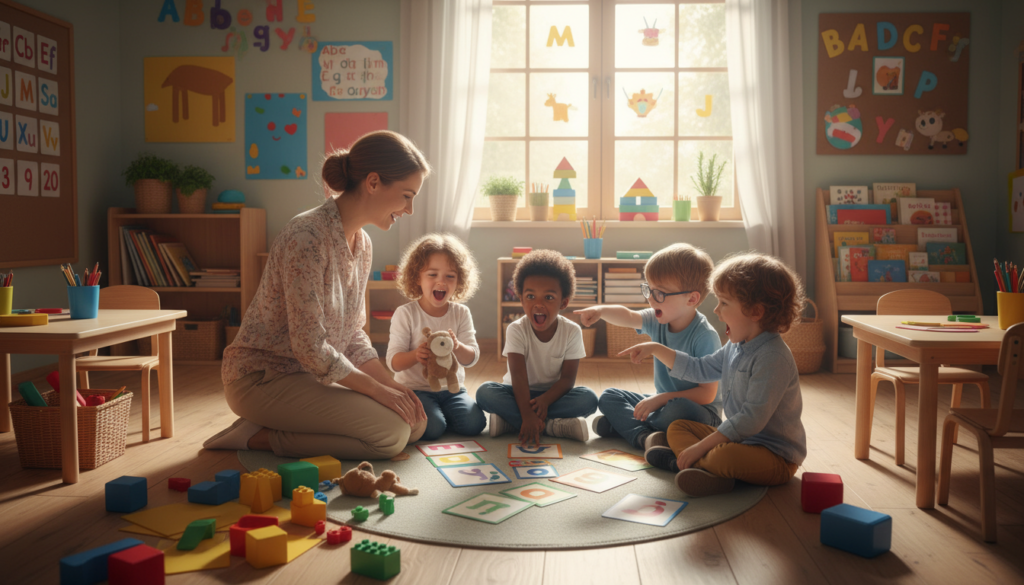
Did you know the first few years of a child’s life are key to their future? Research shows that early childhood development is vital. It’s when a child’s brain and body grow the most.
It’s important to give kids the right food, a safe place to play, and loving relationships. These things help a child grow strong and ready for the world. Let’s look at how we can help our children grow and succeed.
Key Takeaways
- Nurturing relationships are key for a child’s growth.
- A safe place helps a child’s brain and body grow fast.
- Good food is important for a child’s future success.
- Knowing about early childhood development helps us care for our kids better.
- Helping a child grow means giving them a supportive and fun place to be.
Understanding Early Childhood Development
The early years of a child’s life are key for their growth. They cover cognitive, emotional, and physical development. During this time, children hit important milestones that shape their future.
The Importance of the Early Years
The early years are vital for cognitive development. They see rapid brain growth and the making of neural connections. This period is essential for setting the stage for future learning and thinking skills.
Studies show that quality early experiences boost brain development. This helps children learn and interact better.
Early on, children start to develop their language skills. Being around lots of language and interacting with caregivers is key. This helps them talk well and understand complex things.
Key Stages of Development
Early childhood is divided into several stages. These include infancy, toddlerhood, and the preschool years. In infancy, kids start to move and understand their world through senses.
As they grow into toddlers, they want to do things on their own. They improve their motor skills and start to talk. The preschool years see big leaps in cognitive development. Kids start to play in more complex ways and learn about numbers and letters.
Factors Influencing Development
Many things can affect early childhood development. These include genetics, environment, and the care kids get. A caring environment that supports brain development and language development is very important.
Other factors like diet, health care, and family income also matter. Knowing these can help parents and caregivers support kids’ growth. By creating a supportive and engaging space, we can help kids develop well and set them up for success.
The Role of Parents in Development
A nurturing environment and positive parent-child interaction are key for a child’s growth. Parents play a big role in their child’s development. Their influence is wide-ranging.
Providing a Stable Environment
Creating a stable and loving home is vital for a child’s social-emotional development. This means setting routines, responding to their needs, and giving them a safe space to explore. When kids feel safe, they can form healthy bonds and be more confident.
Parents can make a stable home by being consistent, setting clear rules, and showing love. These actions help kids trust and know what’s expected of them.
Encouraging Open Communication
Open talk is essential for a child’s growth, letting them share their feelings and thoughts. Parents can help by listening well, accepting their emotions, and talking in ways that boost their language skills.
Reading, singing, and playing with kids are fun and important for their social-emotional development. These moments help kids improve their language, understand social signs, and strengthen their bond with parents.
The Importance of Play in Development
Play is key for young kids, helping them grow in many ways. It lets them explore, learn new things, and grow emotionally and socially.
Types of Play and Their Benefits
There are many kinds of play, each with its own benefits. For example, physical play boosts motor skills. On the other hand, imaginative play helps with creativity and solving problems.
- Physical Play: Boosts motor skills, keeps kids healthy, and improves coordination.
- Imaginative Play: Encourages creativity, problem-solving, and role-playing.
- Constructive Play: Sharpens fine motor skills, boosts spatial awareness, and sparks creativity.
| Type of Play | Benefits |
|---|---|
| Physical Play | Motor skills development, health promotion |
| Imaginative Play | Creativity, problem-solving, role-taking |
| Constructive Play | Fine motor skills, spatial awareness, creativity |
How Play Encourages Learning
Play is a powerful way for kids to learn. It lets them explore, try new things, and understand their world. Through play, kids think critically, learn to interact with others, and become emotionally strong.
When kids play, they’re really learning. They connect different ideas and get a deeper understanding of their surroundings.
Nutrition and Its Impact on Development
Good nutrition is key for kids to reach their full growth. It helps with growth, brain function, and health.

Essential Nutrients for Young Children
Young kids need a balanced diet full of important nutrients. These nutrients help them grow fast and develop well. Key nutrients include:
- Protein: Essential for building and repairing tissues.
- Iron: Crucial for healthy red blood cells.
- Calcium: Vital for bone development.
- Vitamin D: Important for bone health and immune function.
- Omega-3 fatty acids: Supports brain development.
Healthy Eating Habits to Foster
Teaching kids to eat well early on is vital for their health. Parents and caregivers can help by:
- Offering a variety of foods at meal times.
- Limiting sugary snacks and beverages.
- Encouraging the consumption of fruits and vegetables.
- Establishing regular meal times.
By teaching kids to eat healthily and ensuring they get the right nutrients, we support their growth.
Language Development in Early Childhood
Learning about language development in early childhood helps us understand how kids get better at talking. It’s not just about making sounds. It also includes listening, understanding, and knowing names of people and things.
Milestones in Language Acquisition
Learning language is a slow but exciting journey with key milestones. Babies start babbling around six months. By one year, they say their first words. And by two, they start putting words together in simple sentences.
| Age | Language Milestone |
|---|---|
| 6 months | Babbling with vowel sounds and consonant-vowel combinations |
| 12 months | Saying first words, such as “mama” or “dada” |
| 24 months | Combining words into simple sentences |
Tips for Encouraging Communication
Helping young children talk is key for their language growth. Parents and caregivers can make a big difference. They can talk to the child, read books, and answer when the child tries to talk.
- Talk to Your Child: Have conversations all day, describing what you’re doing and asking questions.
- Read Together: Reading books introduces new words and fosters a love for reading.
- Respond to Attempts to Communicate: When your child tries to say a word or make a sound, answer them to encourage more talking.
Knowing the language milestones and using tips to help kids talk can make a big difference. Parents and caregivers play a big role in helping children develop their language skills.
Social Skills and Emotional Development
Early childhood is key for growing social-emotional skills. These skills include emotional intelligence, empathy, and being able to get along with others. They help kids make friends and do well in school.
Understanding Emotional Intelligence
Emotional intelligence means knowing and controlling your feelings and understanding others’. It’s important for kids to learn this early. It helps them handle their emotions, be strong, and keep good friends.
Parents can help by doing fun activities together. For example, talking about feelings helps kids understand theirs. Reading stories about different feelings also helps kids feel for others.
Activities to Promote Social Skills
It’s important to help kids learn to get along with others. Playdates, group games, and working together are great ways to do this. They teach kids how to talk, work together, and solve problems.
- Playing pretend helps kids practice being social in a safe way.
- Doing things together, like sports or crafts, teaches teamwork.
- Talking about feelings and listening to others builds empathy.
By doing these activities every day, parents can help kids grow up to be happy and successful.
The Role of Early Childhood Education
Early childhood education is very important. It shapes a child’s future learning, social skills, and emotional growth. It’s a time when kids start to understand the world.
Benefits of Preschool Programs
Preschool programs bring many benefits to a child’s development. These include:
- Socialization: Kids learn to interact with others.
- Early Learning: They start learning basic reading and math.
- Emotional Development: They learn to handle their feelings and be empathetic.
These programs are fun and educational. They give kids a place to grow and learn. Studies show that preschoolers do better in school later on.
Choosing the Right Educational Approach
Choosing the right educational approach is key. Parents should look for programs that:
- Have a qualified and experienced staff.
- Offer a balanced curriculum with learning and play.
- Provide a safe and nurturing environment.
Parents should also think about their child’s needs and personality. This way, they can find the best education for their child.
Supporting Cognitive Development
Helping young children grow is key. Cognitive development is about thinking, solving problems, and understanding. It sets the stage for school success and lifelong learning.
Activities to Enhance Problem-Solving Skills
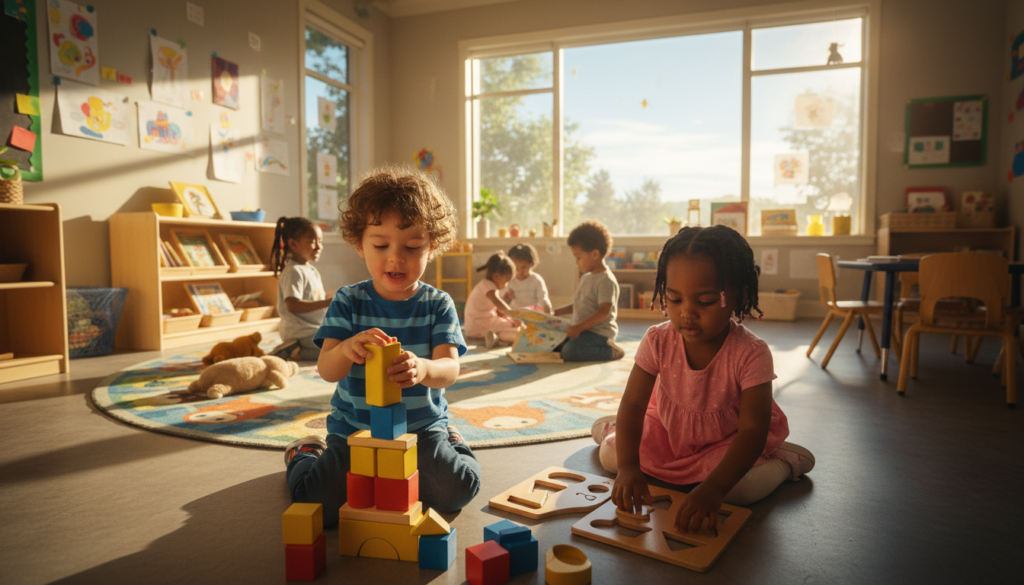
It’s important to keep kids busy with problem-solving activities. Puzzles, brain teasers, and strategy games are great for this. For example, jigsaw puzzles improve spatial awareness and thinking.
Other good activities include:
- Sorting objects by shape, color, or size
- Building with blocks to understand geometry and physics
- Playing matching games to improve memory and concentration
These activities boost problem-solving skills. They also encourage creativity and independence in kids.
Importance of a Stimulating Environment
A stimulating environment is vital for cognitive growth. A well-designed learning environment sparks curiosity and a love for learning. It’s important to have a variety of materials for different cognitive skills.
As
“Children are like sponges, absorbing information and experiences that shape their understanding of the world.”
A rich and varied environment stimulates their growth.
Some key elements of a stimulating environment include:
- Access to a wide range of books and educational materials
- Opportunities for outdoor play and exploration
- A safe and supportive space for experimentation and discovery
By mixing engaging activities with a stimulating environment, we support young children’s cognitive growth. This prepares them for future success.
Screen Time Guidelines for Young Children
Setting screen time limits is key for parents and caregivers. It helps young children find a balance between screens and other activities. The American Academy of Pediatrics (AAP) offers great advice on managing screen time for kids.
Recommendations for Media Consumption
The AAP says kids under 18 months should avoid screens except for video calls. For 18 to 24 months, some educational content is okay, but parents should watch closely. Kids aged 2 to 5 should watch 1 hour of educational shows a day, with adult help to understand.
Key considerations for media consumption include:
- Choosing content that is educational and promotes learning.
- Ensuring that the content is age-appropriate.
- Co-viewing with children to enhance their understanding.
Balancing Screen Time and Other Activities
It’s important to balance screen time with other activities for young children. Physical activity, social interaction, and cognitive stimulation are vital for a healthy childhood. Parents should encourage a variety of activities, like outdoor play, reading, and creative play.
“Children need to engage in a variety of activities to develop physically, emotionally, and cognitively. Limiting screen time and promoting other forms of play can significantly contribute to their overall well-being.”
To find a balance, families can make screen-free zones and times, like during meals or before bed. Encouraging outdoor play and providing creative toys and learning materials can also help.
Encouraging Creativity in Young Children
Helping young children be creative is key for their growth. It boosts their thinking, feelings, and social skills. By creating a space for imagination, we help them learn important skills for life.
Creative Activities That Stimulate Imagination
It’s important to get young children involved in creative activities. Here are some ways to spark their creativity:
- Provide a variety of art supplies, like paints, crayons, and markers
- Encourage storytelling and role-playing
- Try music and dance activities
- Use open-ended materials like blocks and LEGO bricks
These activities not only spark imagination but also improve problem-solving and thinking.
The Role of Arts in Development
The arts are vital for young children’s growth. Arts help them express feelings, improve hand skills, and boost creativity. As Dr. Jane Davis, an expert in child development, says:
“Arts education is not just about creating art; it’s about developing the whole child. It enhances their cognitive skills, improves their academic performance, and fosters creativity and self-expression.”
Here are ways to add arts to a child’s daily life:
| Arts Activity | Benefits |
|---|---|
| Drawing and Painting | Develops fine motor skills, enhances creativity |
| Playing a Musical Instrument | Improves cognitive skills, fosters creativity |
| Dancing | Enhances gross motor skills, promotes self-expression |
By adding arts to daily life, we give young children a strong base for success.
Importance of Routine and Structure
Routine and structure are key in early childhood development. They give kids a stable and predictable world. A good routine helps kids know what to expect and feel less anxious.
Benefits of a Consistent Daily Schedule
A daily schedule is great for young kids. It helps them keep a regular rhythm, focus better, and feel happier. Routines also help kids learn self-discipline and become more independent.
Some main benefits of a daily schedule include:
- Enhanced sense of security and stability
- Improved behavioral regulation
- Better time management skills
- Increased independence
Tips for Establishing Routines
Creating good routines takes planning and sticking to it. Here are some tips for parents and caregivers to set up a daily schedule that suits their kids:
| Tip | Description |
|---|---|
| Start Simple | Begin with basic routines like regular meal times, sleep, and play. |
| Be Consistent | Keep the routine the same, even on weekends or during vacations. |
| Involve Children | Let kids help make the routine. It makes them feel more involved. |
| Be Flexible | Be ready to change the routine if needed, for unexpected events. |
By using these tips, parents can create a supportive environment. This environment helps kids grow through a consistent daily routine.
Involving Family and Community Resources
Family and community resources are key to a child’s growth. They help parents give their kids a strong support system.
The Role of Extended Family
Extended family members, like grandparents and aunts, bring special benefits. They offer emotional support, share family values, and give a different view than parents. This involvement strengthens family ties and enriches a child’s life.
For example, grandparents can teach about family history and traditions. This helps kids understand their heritage. Such connections are precious in today’s fast world.
Community Programs and Support
Community programs and services are essential for families. They offer educational, recreational, and health resources for kids. These help in a child’s development.
Joining community programs helps kids make friends and learn social skills. It also lets parents meet other families and share experiences. This support is invaluable.
| Community Resource | Description | Benefits |
|---|---|---|
| Educational Programs | After-school tutoring, workshops, and classes | Enhanced learning, improved academic performance |
| Recreational Activities | Sports, arts, and cultural events | Physical development, creativity, social skills |
| Health Services | Access to medical care, health education | Better health outcomes, health awareness |
Using both family and community resources, parents can build a strong support network for their kids. This approach helps kids grow and thrive in many ways.
Recognizing Signs of Developmental Delays
Developmental delays are a worry for parents. Spotting the signs early is key for timely help. Kids grow at their own speed, but big delays mean they might need support.
Common Delays and Their Indicators
There are several developmental delays in early childhood, including:
- Speech and Language Delays: Signs are not babbling by 6 months, not saying words by 16 months, or not using two words by 24 months.
- Motor Skill Delays: Kids might struggle with crawling, walking, or using hands for tasks like holding utensils.
- Social and Emotional Delays: They might show little interest in social interactions or have trouble understanding emotions.
These delays can be spotted by watching a child’s growth and comparing it to milestones.
When to Seek Professional Help
If you see big delays or worries in your child’s growth, talk to a healthcare expert. Early help can really help a child keep up with their friends.
Steps to Take:
- Talk to your child’s pediatrician about your worries.
- Get a referral to a specialist, like a speech or occupational therapist, if needed.
- Do the recommended interventions and therapies.
Being proactive and getting professional help when needed helps your child grow and get the support they need to do well.
Lifelong Impact of Early Childhood Development
Early childhood development is key to a child’s future. It shapes their ability to succeed in life. The experiences and interactions in these early years deeply impact their long-term success.
Shaping Future Success
Studies show early childhood development is linked to future success. Children who get a nurturing environment and quality education do better academically and socially. This boosts their overall well-being and helps them reach their full capacity.
Fostering a Love for Lifelong Learning
Building a strong foundation for lifelong learning is vital today. By teaching young children to love learning, we prepare them for a complex world. This foundation comes from supportive relationships, engaging experiences, and a stimulating environment that encourages exploration.
The impact of early childhood development is huge. By focusing on this period, we guide children towards success and a lifelong love of learning.
FAQ
What is the significance of early childhood development?
How can parents support their child’s development?
What role does play have in early childhood development?
How does nutrition impact early childhood development?
What are the milestones in language acquisition?
How can parents encourage effective communication in their child?
What is emotional intelligence, and how can it be promoted?
What are the benefits of preschool programs?
How can parents support their child’s cognitive development?
What are the guidelines for screen time in young children?
How can parents encourage creativity in their child?
Why is routine and structure important for young children?
How can family and community resources support early childhood development?
What are the signs of developmental delays, and when should parents seek professional help?
What is the lifelong impact of early childhood development?

