

Teachers often see that some students struggle to stay focused and organized. Harvard’s Center on the Developing Child found that executive function skills are key for success in school. These skills help students plan, prioritize, and control their actions. This leads to better grades and social skills.
By adding simple routines to their teaching, educators can greatly help their students’ focus and productivity. This makes learning more effective and fun. In this article, we’ll look at specific strategies and routines teachers can use to help their students.
Key Takeaways
- Executive function skills are essential for academic success.
- Simple classroom routines can improve students’ focus and productivity.
- Teachers can play a significant role in supporting their students’ executive function development.
- Effective routines can lead to a more engaging and effective learning environment.
- Strategies to boost executive function skills can be easily integrated into daily teaching practices.
The Science of Executive Function in Students
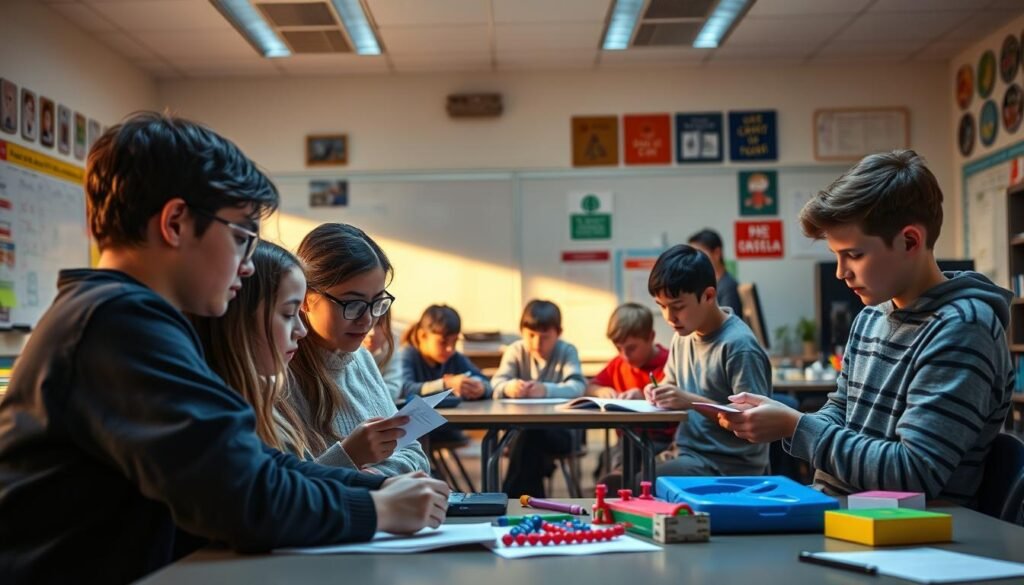
Executive function in students is key to their academic success. It includes skills like planning, decision-making, and controlling impulses. These skills are linked to the brain’s prefrontal cortex.

Brain Development and Executive Skills
Research from Harvard shows that brain growth and executive skills go hand in hand. As the brain matures, so do these skills. This helps students manage their time and tasks better.
Studies reveal that executive function skills are vital for success. Students with strong executive function tend to do better in school. This highlights the need to understand how brain development impacts these skills.
The Connection to Academic Achievement
There’s a clear link between executive function and school success. Students with executive function issues often struggle more in school. Teaching strategies can help improve these skills, boosting students’ learning abilities.
By focusing on improving executive function, educators can help students succeed. This is done through targeted interventions and special teaching methods. Such efforts enable students to excel not just in school but in life as well.
The Three Core Components of Executive Function
Students’ ability to learn and succeed in school is greatly influenced by three key areas of executive function. This complex system helps us plan, organize, and do tasks. Knowing these areas is key for teachers to help students do their best.
Working Memory: Holding and Processing Information
Working memory is the part of our brain that holds and changes information temporarily. It’s important for things like math, following directions, and understanding what we read. Students with strong working memory can hold and process information better, which helps them do well in school.
To improve working memory, teachers can break down hard tasks into easier steps. They can also use pictures and diagrams to help students learn.
Key aspects of working memory include:
- Keeping information for a short time
- Changing information to meet a goal
- Ignoring information that’s not needed
Cognitive Flexibility: Shifting Between Tasks
Cognitive flexibility is the ability to move between different tasks or ways of thinking. It’s important for learning new things, changing plans, and doing many things at once. Students who are good at this can think and act in new ways when needed.
Teachers can help by giving students different tasks and encouraging them to solve problems in different ways.
Examples of cognitive flexibility in the classroom:
- Changing between different math operations
- Adjusting to changes in a lesson
- Doing activities that need different skills
Inhibitory Control: Managing Impulses and Distractions
Inhibitory control is about controlling impulses and distractions to stay focused. It’s key for keeping attention, resisting temptations, and acting right. Students who are good at this can stay focused and avoid distractions, which helps them do better in school.
Teachers can help by setting clear rules, giving feedback often, and making the classroom a good place to learn.
Strategies to enhance inhibitory control:
- Setting clear goals and rules
- Using reminders and cues to stay focused
- Creating a good learning environment
Recognizing Executive Function Challenges in Your Classroom
Spotting the signs of executive function challenges is key to creating a supportive classroom. These challenges can show up in many ways. It’s important for teachers to know the common signs.
Common Behavioral Indicators
Students with these challenges might act out in certain ways. For example:
- They might find it hard to follow instructions or finish tasks.
- They could struggle with staying organized and managing their time.
- Impulsivity might cause them to disrupt the class or make careless errors.
- Switching between tasks or adapting to new routines can also be tough for them.
These behaviors might seem like a lack of motivation or skill. But, they often point to deeper executive function issues.
Informal Assessment Techniques for Teachers
Teachers can use simple ways to spot students with executive function problems. Here are a few:
- Watch how students handle tasks that need planning, organization, and self-control.
- Use checklists or rubrics to see how well students complete their work.
- Talk briefly with students to learn about their challenges and how they handle them.
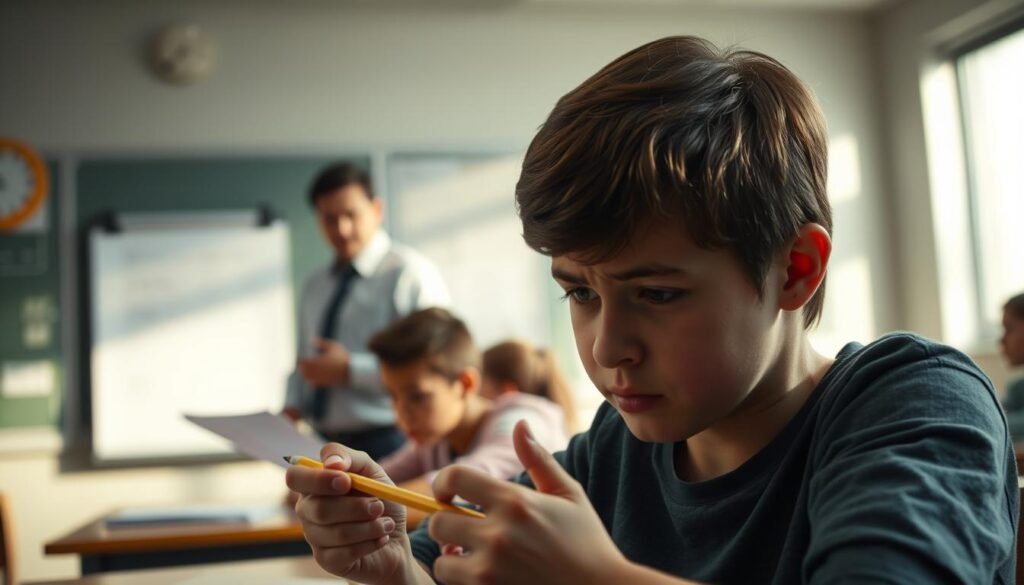
By trying these methods, teachers can better understand their students’ challenges. They can then create specific plans to help them succeed.
Setting Up a Classroom Environment That Promotes Focus
A well-designed classroom can greatly help students focus and learn better. Studies show that the classroom setup can either help or hurt students’ ability to concentrate. So, teachers need to carefully plan their classrooms to help students stay focused.
Physical Space Organization Strategies
Organizing the classroom space well is important to reduce distractions and keep students engaged. Teachers should think about how the classroom is laid out and where the furniture goes.
Seating Arrangements for Different Learning Needs
Having flexible seating helps meet different learning needs. Some students might need quiet spots, while others work better in groups. Flexible seating options include standing desks, bean bags, or group tables.
Creating Distraction-Free Zones
Setting up quiet areas in the classroom helps students who need a calm space to focus. These areas can be made by using dividers or quiet corners with few distractions.
Visual Supports and Environmental Cues
Visual aids and cues are key to guiding student behavior and improving focus. They include visual schedules, reminders, and classroom rules that are easy to see.
Visual reminders help students stay on track and move smoothly between tasks. Adding plants can also make the classroom feel calmer, helping students concentrate better.
“The way we design our classrooms can either support or hinder the learning process. By incorporating flexible seating, visual supports, and distraction-free zones, we can create an environment that fosters engagement and focus.”
Morning Routines That Prime the Brain for Learning
Starting the day right is key for learning. A good morning routine helps students get ready for school. It makes them focus better and learn more.
Structured Arrival Procedures
Having a set morning routine is important. It helps students feel in control and ready for school. This is great for those who struggle with getting organized.
Some good ways to start the day include:
- Having a special spot for students to put their things
- Having a quiet activity for students to do when they arrive
- Using pictures or lists to help students follow the routine
Brain-Activating Morning Meeting Activities
Morning meetings are great for getting students ready for the day. They help students feel connected and think clearly.
Check-in Systems That Build Awareness
Check-in systems help students understand their feelings and goals. This makes the classroom a positive place to learn.
Good check-in systems include:
- Using mood meters or emotional check-ins
- Helping students set goals
- Having class discussions to build a sense of community
Goal-Setting Practices for Daily Focus
Setting daily goals is important in the morning. It helps students stay focused and know what to do first. This makes the day more productive.
Good goals are specific, measurable, achievable, relevant, and time-bound (SMART). Teachers can help students by giving feedback and encouragement.
Transition Strategies That Preserve Focus and Momentum
Transitions between activities can be tough for students, even more so for those with executive function challenges. It’s key to use good transition strategies to keep students focused and moving in the classroom. As executive function is vital for managing transitions, teachers can use certain methods to help their students.
Predictable Signals and Cues
Using predictable signals and cues is a great way to handle transitions. These can be visual, sound, or movement cues that tell students when it’s time to switch tasks. For example, a consistent bell sound can signal the start of a new task. Visual timers also help show how much time is left before moving on.
Teachers can use words like counting down or a specific phrase to signal transitions. Being consistent with these cues helps students know when to get ready for a change. As one expert says, “Consistency is key when teaching students with executive function challenges.”
Movement Breaks That Reset Attention
Movement breaks between tasks are also a smart strategy. These breaks can refresh students’ focus and help them tackle the next task better. Simple activities like stretching or a quick walk can do the trick. This physical activity boosts blood flow to the brain, making students more ready to learn.
To make movement breaks work best, they should be short, structured, and clear. For example, a teacher might say, “Let’s take a two-minute stretch break before our next task.” Adding movement breaks to the classroom routine helps students stay focused and keep their momentum all day.
ADHD Classroom Strategies That Benefit All Students
Teachers can make classrooms better for everyone by using ADHD strategies. These methods help students with ADHD stay focused and organized. They also help all students learn better.
Structured Choice Within Activities
Structured choice lets students control their learning and stay focused. For example, letting them pick topics or methods for projects helps. This reduces anxiety and boosts engagement for students with ADHD. It also meets different learning styles for all students.
To use structured choice, teachers can:
- Give students a choice of texts for a literature review.
- Let them pick between different project formats, like presentations or reports.
- Offer choices in the order or pace of tasks.
Fidget Tools and Movement Opportunities
Fidget tools and movement help students with ADHD manage energy and focus. Tools like stress balls or weighted lap pads are great. Adding movement to lessons, like through experiments or role-playing, also helps.
These methods aren’t just for ADHD students. They help all students stay engaged and focused. Movement breaks, for example, can refresh the whole class and boost productivity.
Clear Expectations and Consistent Feedback
Having clear expectations and consistent feedback is key for all students, but ADHD students need it most. Clear expectations reduce confusion and anxiety. Consistent feedback, both positive and constructive, helps students reach their goals and develop good study habits.
Teachers can do this by:
- Clearly explaining lesson objectives and expectations at the start.
- Using rubrics for detailed feedback on assignments.
- Regularly checking in with students for support and guidance.
By using these ADHD classroom strategies, teachers can make a supportive and inclusive learning space for all students.
Memory Boosters for Content Retention
To improve content retention, educators can use various memory boosters. These strategies help students absorb, process, and recall information better. This leads to better academic results.
Retrieval Practice Techniques
Retrieval practice is a key memory booster. It involves actively recalling information from memory, not just re-reading it. Techniques like quizzes, flashcards, and practice tests help students retain information well. By adding retrieval practice to daily lessons, educators build a strong knowledge base for students.
For example, educators can make digital flashcards or quizzes online. Students can use these during class or as homework. This method boosts retention and gives immediate feedback, helping students know where they need more practice.
Visual Mapping and Graphic Organizers
Visual mapping and graphic organizers are tools that help students organize information. They make it easier to see how different pieces of information relate. This makes complex concepts easier to understand and remember.
Tools like concept maps, Venn diagrams, and flowcharts are great for comparing ideas or outlining plans. They help students visually organize information, improving retention and recall.
Multi-Sensory Learning Activities
Multi-sensory learning engages multiple senses to improve learning and retention. It’s effective because it meets different learning styles and preferences.
Kinesthetic Learning Approaches
Kinesthetic learning uses physical movement to learn new information. Activities like role-playing, science experiments, and hands-on activities engage students physically with the material.
Auditory and Visual Memory Supports
Auditory supports, such as audiobooks and podcasts, offer alternative ways to engage with learning. Visual supports, like videos and interactive graphics, also enhance understanding and retention. Combining these approaches creates a rich learning environment for diverse needs.
| Strategy | Description | Benefits |
|---|---|---|
| Retrieval Practice | Quizzes, flashcards, practice tests | Strengthens memory recall, identifies knowledge gaps |
| Visual Mapping | Concept maps, Venn diagrams, flowcharts | Organizes information, illustrates relationships |
| Multi-Sensory Learning | Kinesthetic activities, auditory and visual supports | Caters to different learning styles, enhances engagement |
Organization Systems That Students Can Maintain
Teaching students to organize is key for lasting habits. Organization helps in school and life. It boosts productivity and cuts down stress.
Color-Coding for Materials and Subjects
Color-coding is a great way to organize. It uses different colors for subjects or categories. Students can use it for folders, notebooks, and digital files.
For example, red for math, blue for science, and green for language arts. It makes finding what you need quick and easy.
Teachers can start the year by giving students labeled materials. They should show how to use them right. Mel Levine said, “Organization is not just about keeping things tidy; it’s about creating a system that allows you to access what you need, when you need it.”
Digital and Physical Organization Tools
Today, students have many tools for organizing. Digital tools like Google Drive, Trello, and Evernote help keep assignments and notes online. They have features for tagging, due dates, and working together.
Physical tools like planners, binders, and desk organizers help with daily tasks. By mixing digital and physical tools, students can find what works best for them. For instance, a digital calendar for scheduling and a planner for daily tasks.
The goal is to find a balance that works for each student. This way, they can keep their system going.
- Digital tools: Google Drive, Trello, Evernote
- Physical tools: Planners, binders, desk organizers
By teaching students to use these tools well, teachers help them build strong organization systems. This supports their success in school.
Time Management Routines for Student Productivity
Teaching students how to manage their time can really boost their productivity. Good time management helps them focus on what’s important, avoid putting things off, and keep a balance between work and life. By adding certain routines and strategies to their daily lives, students can get better at succeeding in school and beyond.
Visual Timers and Time Awareness Techniques
Visual timers are a great tool for helping students understand time better. They show students how time is passing, helping them manage their tasks. Using countdowns and time blocks with visual timers can be really helpful. For example, a teacher can use a visual timer to set time limits for tasks, keeping students on track.
Here are some ways to use visual timers:
- Use online timer tools or apps that can be shown on a screen
- Have physical timers that students can see and touch
- Make a “time awareness” area in the classroom with different timer displays
Task Analysis and Chunking Strategies
Task analysis and chunking are great for handling big assignments and projects. By splitting big tasks into smaller ones, students feel less overwhelmed and more in control.
Breaking Down Assignments into Steps
One way to analyze tasks is to break them down into steps. Here’s how:
- Find out what the assignment’s main goal is
- Split the assignment into smaller tasks or subtasks
- Make a checklist or schedule for each task
Creating Realistic Timelines
It’s also important to make realistic timelines for assignments. This means guessing how long each task will take and setting aside enough time for each step. This way, students can avoid last-minute stress and feel more relaxed.
Self-Monitoring Routines That Build Independence
To help students become more independent, teachers can use self-monitoring routines. These routines let students track their progress and see where they need to improve. They also help students feel responsible for their own learning.
Student-Friendly Checklists and Rubrics
Using student-friendly checklists and rubrics is a great way to encourage self-monitoring. These tools make it clear what students need to do for their assignments. This way, students can understand what’s expected of them and take control of their learning.
For example, a teacher might make a checklist for a research project. It would list things like a thesis statement, evidence, and how to cite sources. Students can then check off each item to make sure they’ve done everything, helping them feel more independent.
Reflection Practices That Strengthen Metacognition
Reflection practices are key in self-monitoring routines. They help students think about their learning and develop skills like planning and evaluating. Reflection can be done through journaling, self-assessment, or class discussions.
As
“The goal of education is not to cover the curriculum, but to uncover the student’s hidden talents.”
By teaching reflection, educators help students discover their full abilities. This leads to a better understanding of how they learn.
Effective self-monitoring routines, like using checklists and encouraging reflection, are vital for student independence. These strategies empower students to manage their own learning, develop important thinking skills, and succeed in school.
Executive Function Activities for Different Age Groups
Executive function grows differently at each age. It’s key for teachers to know these stages to pick the right activities.
Elementary School Implementation
Elementary students do well with structured routines and hands-on activities. These help their working memory and flexibility. Teachers can use games like Simon Says to boost control.
Visual schedules and checklists also help. They keep students organized and teach time management.
Middle School Applications
Middle school activities get more complex. They involve project-based learning that needs planning and self-checking. Students should use planners or digital calendars to stay on top of tasks.
Group work also helps. It improves teamwork and flexibility.
High School Strategies
High school students need executive function training in their schoolwork. They can learn time management with the Pomodoro Technique. Tools for organizing digital files are also helpful.
Reflecting on learning and setting goals is important. It boosts metacognitive skills, preparing them for college and more.
Partnering with Parents to Support Executive Skills Development
A strong partnership between teachers and parents is key. It helps in developing executive skills in students. Together, they create a consistent support system. This system helps students improve their skills at home and in school.
Communication Systems That Work
Good communication is the base of a strong partnership. Teachers and parents need to share updates on student progress and classroom activities. They can use digital platforms, parent-teacher conferences, and weekly newsletters to stay connected.
Home Routines That Complement Classroom Strategies
Home routines that match classroom strategies are very helpful. Parents can help by making a structured home environment. This environment encourages organization and time management.
Simple routines like a consistent daily schedule, a dedicated homework space, and visual reminders help reinforce classroom skills.
Conclusion
By using the classroom strategies from this article, teachers can really help students do better. It’s key to work on executive function skills for school success. When teachers and parents team up, they can make a big difference.
Strategies like having set routines, using pictures to help, and teaching students to check their own work are very helpful. These methods help students get better at managing their time and tasks. When teachers and parents work together, students learn these skills everywhere, not just in school.
This team effort does more than just help in school. It prepares students for their future careers and studies. By focusing on executive function, teachers help students reach their highest goals. This leads to better success for students.
FAQ
What are the core components of executive function in students?
How can teachers identify students with executive function challenges?
What classroom strategies can help students with ADHD?
How can teachers help students improve their working memory?
What are some effective time management routines for students?
How can teachers support students in developing self-monitoring skills?
How can parents and teachers collaborate to support executive skills development?
What are some executive function activities suitable for different age groups?
How can classroom organization impact student focus and productivity?
What role do morning routines play in setting students up for success?

