



The gap between strategy and results is a big challenge in professional success. Many people have great plans but struggle to start. Patrick O’Connor says starting needs discipline, regular checks, and the ability to change plans as needed.
Distance runners use special methods to overcome this challenge. They learn to keep going even when tired. This helps them stay strong, not just physically but mentally too.
These methods are based on how our brains work. By learning from runners, we can create mental routines for work. The skills runners use to keep going when tired help us stay focused and motivated at work.
Key Takeaways
- Execution failures stem from task initiation barriers, not inadequate planning or knowledge
- Distance running protocols provide proven frameworks for overcoming resistance and maintaining momentum
- Physical movement rituals serve as neurological activation mechanisms for cognitive work
- Fast-finish training techniques build mental resilience applicable to professional challenges
- Mental performance optimization requires discipline systems similar to athletic training protocols
The Science Behind Quick Starts and Steady Progress
When we work together to overcome the first hurdle, the rest of the work feels much easier. This shows a key idea in both groups and how our brains work. Studies on cognitive initiation barriers show that starting and keeping going are two different things. Each one needs different brain power and energy.
Our brains use a lot of energy just to keep going every day. This is like a big whirlwind in our minds. It’s hard to move forward towards our goals. Knowing this helps us find better ways to focus.
Why Task Initiation Is Your Biggest Barrier
Starting a task is one of the biggest challenges in being productive and improving our executive function. It’s not just about willpower. Our brains have special areas that make starting tasks hard. This makes even the most motivated people struggle to begin.
The part of our brain called the anterior cingulate cortex is key when we start a task. It checks our actions and decides what to do first. When it gets too busy, we feel like we can’t start.
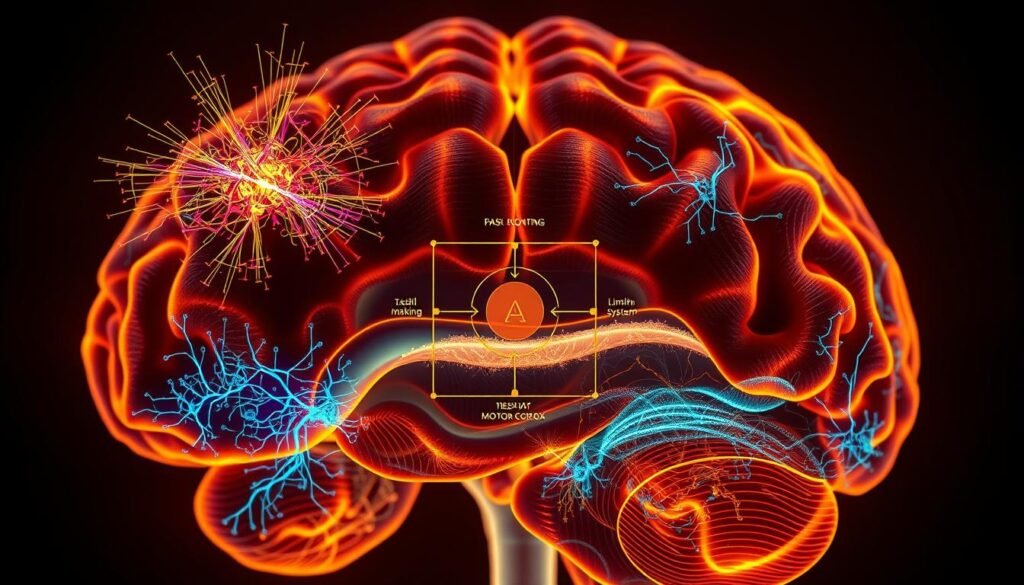
Starting a task is different from keeping it going. The brain uses a lot of energy at the start. This is why starting is so hard.
But once we start, things get easier. Our brain uses less energy and works more smoothly. This is why tasks feel simpler after we begin.
Studies show that starting a task uses a lot of brain power. It’s like a big energy boost. But once we’re going, it’s easier to keep going.
The Psychology of Momentum Building
Momentum is real in our minds and brains. Once we start, we keep going because our brain likes it. It’s like Newton’s first law, where things keep moving unless stopped.
Starting something makes us feel good because we see progress. Our brain rewards us with dopamine. This makes us want to keep going.
People who start tasks find it easier to do it again. They feel more confident. This helps them start things more easily in the future.
How Small Starts Create Compound Progress
Starting small helps a lot. Each time we start, it gets easier. Our brain gets better at starting things.
Doing things over and over makes us better at it. Our brain gets faster and more efficient. This makes starting things easier.
Starting things regularly makes it easier to start again. It’s like building a habit. This helps us overcome the first hurdle more easily.
How Running Rituals Rewire Your Brain for Focus
Running and other physical activities help our brains focus. Mental focus training for athletes shows this. Running gets our brain ready for hard work.
Running and then working helps our brain learn. It gets ready for the work before it starts. This makes starting work easier.
Doing this often makes our brain associate running with work. It’s like a shortcut to focus. This makes starting work easier.
Physical Movement as Cognitive Activation
Exercise gets our brain ready for work. It increases blood flow to the brain. This gives our brain the energy it needs.
Exercise also increases chemicals in our brain that help us focus. These chemicals make our brain work better. This helps us with executive function improvement.
Mental focus exercises for runners use a chemical in our brain called BDNF. BDNF helps our brain learn and stay focused. It stays high in our brain for hours after exercise.
Exercise gets our body ready for hard work. It improves our heart rate and brain activity. This makes starting work easier.
Running Focus Rituals That Beat Task Initiation and Sustain Momentum
Creating structured running routines can greatly improve focus and mental performance. These rituals help overcome barriers to effective work engagement. Combining running with productivity strategies leads to better results than either alone.
Studies show that regular running reduces resistance to starting tasks and boosts concentration. Running triggers physiological changes that enhance mental performance for hours. This makes running a great tool for those facing complex challenges.

What Makes Running an Effective Focus Tool
Running changes the brain’s chemistry, improving cognitive abilities. Unlike static meditation, running activates many brain systems at once. This creates a powerful synergy that boosts mental clarity and resilience.
The rhythmic nature of running synchronizes brain regions for attention and planning. This reduces mental noise and improves focus. The result is better mental clarity during and after running.
The Mental Clarity Effect of Cardiovascular Exercise
Running increases brain-derived neurotrophic factor (BDNF) by up to 300%. BDNF helps grow and improve brain connections. This leads to faster information processing and better memory.
The hippocampus, key for learning and memory, grows with regular running. Studies show a 2-3% increase in hippocampal volume. This structural change improves cognitive performance in various areas.
Running activates the prefrontal cortex, improving executive functions. These functions help with task prioritization and planning. This addresses procrastination and improves cognitive control.
Running as a Reset Button for Your Mind
Mental fatigue builds up with constant mental effort. Running clears this fatigue through various mechanisms. The glymphatic system, which removes waste from the brain, works better during and after exercise.
This waste removal process restores cognitive capacity. It allows for renewed focus on challenging tasks. Athletes often feel mentally refreshed after runs, showing improved cognitive performance.
Running helps process complex problems subconsciously. Many report breakthrough insights during or after runs. This incubation effect adds to the cognitive benefits of running.
The Connection Between Physical Movement and Mental Clarity
Sustained movement creates coherent brain states. These states reduce mental interference and enhance focus. Running leads to a flow state, characterized by effortless attention and improved performance.
Neural synchronization from running lasts long after exercise. Research shows improved concentration and reduced mind-wandering for 2-4 hours. This is the best time to tackle important cognitive tasks.
Movement during running enhances body-mind connection. This supports mindful running and improves desk-based concentration. The skills developed through mindful running transfer to other tasks.
Blood Flow and Brain Performance
Cerebral blood flow increases by 20-30% during running. This delivers more oxygen and glucose to the brain. Brain regions for executive function and attention show strong blood flow increases during exercise.
Consistent running increases capillary density in the brain. This supports efficient nutrient delivery and waste removal. Long-term runners have better blood flow regulation, leading to sustained cognitive advantages.
Blood flow dynamics remove metabolic byproducts from cognitive work. Enhanced circulation during running clears lactate and other compounds. This contributes to the mental clarity runners experience.
| Running Protocol Element | Cognitive Benefit | Optimal Timing | Duration Recommendation |
|---|---|---|---|
| Easy Pace Morning Run | Task initiation enhancement and baseline focus elevation | 6:00-8:00 AM before work sessions | 20-30 minutes |
| Midday Tempo Run | Mental fatigue reset and attention restoration | 11:00 AM-1:00 PM during energy dip | 25-40 minutes |
| Evening Recovery Run | Stress clearance and cognitive consolidation | 5:00-7:00 PM after primary work | 30-45 minutes |
| Weekend Long Run | Deep mental processing and creative insight generation | Saturday or Sunday morning | 60-90 minutes |
Building Your Personal Running Focus Protocol
Effective protocols balance exercise intensity and duration. They should not cause excessive fatigue. Consistent practice improves mental efficiency, just like physical training improves metabolism.
Duration should allow enough time for work while providing exercise benefits. Research suggests 20-45 minute sessions are best for knowledge workers. Longer sessions may offer more cardiovascular benefits but risk fatigue.
Timing is key to optimize running sessions for cognitive tasks. Morning runs prepare the mind for the day. Midday sessions reset the mind during the post-lunch dip. Choose based on chronotype, schedule, and goals.
Customizing Rituals to Your Schedule and Goals
Chronotype affects the best time for cognitive benefits from running. Morning people get the most from early runs, while evening people benefit from afternoon sessions. Experiment to find your best time.
Beginners should start with shorter, easier runs to avoid fatigue. Advanced runners can do higher-intensity intervals for stronger responses. Gradually increase intensity and duration to improve.
Design your protocol based on professional demands and task initiation challenges. Pre-work runs help with morning tasks, while midday breaks improve afternoon focus. Analyze your productivity patterns to target specific challenges.
The concept of fast finish long runs trains mental resilience. Running through discomfort improves psychological tools for tackling tough tasks. This transfer effect enhances professional performance.
Consider environmental factors like location and weather when customizing your protocol. Outdoor running offers nature benefits, while indoor running provides climate control. Choose what supports consistent practice and aligns with your goals.
Align your running protocol with specific professional goals. Creative problem-solving may benefit from longer, easier runs. Analytical focus may require structured interval sessions. Define your goals to optimize your protocol for desired outcomes.
The Five-Minute Start Method
Starting tasks often fails because they ask too much too soon. The five-minute start method succeeds by asking for almost nothing. It delivers a lot of momentum.
This method works because starting tasks becomes easier as the commitment time gets shorter. Starting for just five minutes requires less motivation than thinking about working for hours. Yet, it often leads to more work once you get started.
The micro-commitment methodology tackles the big challenge of starting. It focuses on small starts instead of big goals. This makes starting feel less risky.
Research shows that trying to do too much can actually make you do less. So, making starting easier is key to being more productive.
This method changes overcoming procrastination techniques into simple steps. It has four steps, each one building on the last. These steps keep the commitment low, making it easier to start.
Step 1: Set Up Your Five-Minute Timer
The first step is to set up a five-minute timer. This creates a clear start and end time. It also makes you feel more in control.
This step helps you switch from planning to doing. It gives you a clear structure for your work. And it makes you accountable by measuring your commitment.
Choosing the Right Timer Tool
Choosing the right timer is important. Physical timers are often better than digital ones because they are less distracting. A timer in your kitchen or on your desk helps you stay focused.

Digital timers can be useful in your workflow. But, using your phone as a timer can be distracting. Browser extensions or desktop apps are better when you can’t use a physical timer.
The best timer should have three things:
- Visual feedback: It should show you how much time is left without needing to check it
- Auditory signaling: It should have a clear sound when time is up
- Psychological framing: It should make you feel like the commitment is short
Creating Your Starting Environment
Getting your workspace ready is key. Before you start, make sure you have everything you need nearby. Remove distractions and set up cues that tell you it’s time to work.
This setup makes starting easier. Each thing you remove makes it less hard to start. Getting your space ready tells your brain it’s time to work.
Setting up your space means adding and removing things. Add tools and materials you need for your task. Remove things that distract you or make you want to do something else.
Step 2: Choose Your Starting Task
Picking the right task is important. Choose something you can do in five minutes. It should be easy to start and show progress right away.
The task you choose is just a starting point. It gets you ready to work and shows you can do it. These are important steps, not just the work itself.
Breaking Down Projects into Five-Minute Actions
Breaking down big projects into small tasks is essential. Each task should be something you can finish in five minutes. This makes it easier to start and feel a sense of accomplishment.
Here are some examples of how to break down tasks:
| Ineffective Five-Minute Task | Effective Five-Minute Action | Key Difference |
|---|---|---|
| Work on project proposal | Write three bullet points outlining proposal structure | Specific, measurable, completable unit |
| Start research paper | Locate and save five relevant academic sources | Concrete deliverable with clear completion criteria |
| Begin data analysis | Create column headers for analysis spreadsheet | Foundational step enabling subsequent work |
| Edit document | Review and revise introduction paragraph | Bounded scope with natural stopping point |
Choosing the right task is about finding something you can start with easily. It should be something you can jump into without needing to know everything first. This is important when you’re not feeling motivated or focused.
Step 3: Commit to Just Beginning
The third step is to commit to starting. But here’s the twist: you’re allowed to stop after five minutes. This makes starting feel less scary.
This approach makes starting easier by giving you permission to stop. It’s like a safety net that lets you start without worrying about finishing. This makes it easier to start because you don’t feel overwhelmed.
Once you start, it’s often easier to keep going. This is because starting a task gets your brain ready to work. It makes it feel less hard to keep going than it did to start.
The Permission to Stop After Five Minutes
Having permission to stop is more than just a rule. It’s a promise that makes you trust the method. When the timer goes off, you can stop without feeling guilty.
This permission is important for several reasons. It keeps you trusting the method. It prevents you from feeling resentful. And it makes starting feel less scary because you know you can stop anytime.
Knowing you can stop actually makes you more likely to keep going. It makes starting feel like a small experiment, not a big decision. This makes it easier to start because you don’t feel overwhelmed.
Step 4: Let Momentum Carry You Forward
The final step is to let your momentum carry you forward. Productivity momentum techniques help you keep going because starting a task is easier than stopping. It’s easier to keep working than to switch to something else.
This momentum comes from several sources. Starting a task makes your brain better at it. You get to know your task better, which makes it easier. And your environment helps you stay focused.
Starting a task and then keeping going is the key to success. This method helps you start without forcing you to keep going. It makes it easier to keep working because you’re already in the flow.
Recognizing When Flow Takes Over
Knowing when you’re in the flow is important. Several signs show you’re fully engaged:
- Temporal distortion: Time seems to pass faster than you think, and you focus more on the task
- Reduced distraction awareness: You notice distractions less as you get more into your task
- Intrinsic interest emergence: The task becomes interesting in itself, not just something to do
- Automatic skill deployment: Doing the task feels easier and more natural
- Resistance to interruption: You don’t want to stop because you’re so focused
When you see these signs, you know you’re in the flow. The five-minute start has done its job. You’re now fully engaged and can keep working without needing to force yourself.
The five-minute start method is successful because it makes starting easy. Once you start, you can keep going because you’re in the flow. This approach is based on the idea that starting is the most important part, and the rest will follow naturally.
Establishing Pre-Run Routines for Mental Preparation
Creating pre-run routines helps you smoothly move from rest to focus. This period is key to avoiding procrastination. By setting up a routine, you make it easier to start when you’re not feeling up to it.
Physical and mental preparation work together. When you have a reliable routine, you get your body and mind ready for deep work. This is important for both running and other tasks.
Elite athletes know that routines help them feel less anxious and more confident. The same is true for runners. They can use their runs to get ready for other tasks. Remember, it’s about being consistent, not perfect.
Creating Your Pre-Run Checklist
A checklist helps you make decisions when you’re not feeling motivated. It makes your preparation automatic. This way, you don’t waste energy on small decisions.
Using a checklist helps you start running and then focus on work. It’s great for people who find it hard to start tasks. Following a checklist keeps your brain active and focused.
Essential Physical Preparation Steps
Being physically ready is important for your run. Start by checking your hydration and drinking water if needed. Aim for 8-16 ounces thirty minutes before running.
Choose your clothes based on the weather. This helps you stay focused during your run. Making these decisions early saves your energy for the run.
Think about what you eat before running. Light carbs 60-90 minutes before are good. They give you energy without making you feel heavy.
Prepare your workspace after your run. Set up your documents and materials before you leave. This makes it easier to start work after your run.
Mental Readiness Indicators
Check how you’re feeling before you run. This helps you adjust your routine. Being flexible is key to avoiding frustration.
Notice your stress levels. If you’re stressed, take it easy and warm up longer. When you’re relaxed, you can push yourself harder.
Assess your fatigue. Consider how well you slept and how active you’ve been. This helps you choose the right intensity for your run.
Check your motivation. Some days you’ll feel like moving, others you’ll need a push. Knowing this helps you plan your approach.
Mental Visualization Techniques
Mindfulness and visualization are powerful tools. They help you prepare mentally before you start running. This way, you’re ready to focus on your work afterwards.
Visualization helps you prepare physically and mentally. It gets your body and mind ready for your run and your work. This connection boosts your productivity.
Visualizing Your Run and Your Work Session
Imagine your run and your work session together. Start with your run, thinking about your first steps and breathing. Then, picture yourself at work, focused and productive.
This mental preparation helps you feel connected between your run and work. It makes it easier to start your work after your run.
Setting Intention Before Movement
Setting clear goals helps you stay focused. Define your running and work goals clearly. This clarity motivates you, even when it’s hard.
Writing down your goals is more effective than just thinking about them. It engages your brain and keeps you accountable. Keep your goals simple and focused.
Physical Warm-Up as Mental Activation
Warm-ups are not just for your body. They also get your mind ready. This is why they’re so important for runners.
Starting slowly makes it easier to begin your run. It also helps you start work afterwards. This gentle start reduces resistance.
Dynamic Stretching for Focus Priming
Dynamic stretching is great for runners. It gets your muscles ready and helps you focus. Leg swings and high knees are good examples.
Dynamic stretching works your brain too. It helps you stay focused and balanced. This makes warm-ups very effective.
A good dynamic warm-up takes 5-10 minutes. It includes 6-8 movements done 10-15 times each. This prepares you without making you tired.
Pomodoro Sprints for Sustained Concentration
Pomodoro sprints help athletes and professionals stay focused. They turn big tasks into smaller, doable chunks. This method keeps your attention sharp by mixing work with short breaks.
It’s like interval training for your brain. You work hard for a bit, then rest. This keeps you fresh and productive for longer.
Research shows that tracking your progress is key. Pomodoro sprints are a way to measure your work. They help you stay on track and see how far you’ve come.
People play differently when they are keeping score.
This is true for Pomodoro sprints too. Seeing your progress motivates you to keep going. It helps you stay focused during tough times.
Step 1: Set Your 25-Minute Focus Sprint
Start by setting a 25-minute timer for focused work. This time helps you stay on track. It’s long enough to get things done but not so long it gets hard.
Using a timer helps you stay focused. It’s like a game where you keep your attention sharp. You can use a timer on your phone or a special app.
How long you work depends on you. Some people do 15-20 minutes at first. Then they get better and do longer sprints.
What you’re working on also matters. Hard tasks need shorter sprints. Easy tasks can take longer. Find what works best for you.
Before you start, check how you’re feeling. Morning is usually best. Afternoon can be tough. Listen to your body.
Step 2: Eliminate All Distractions
Getting rid of distractions is key. The world is full of things that can pull you away. Use tools to block distractions and keep your focus.
There are many ways to block distractions. You can use apps or just turn off your phone. Find what works for you.
Distractions come in many forms. There’s digital stuff, like emails and social media. There’s also physical stuff, like noise and your surroundings. And there’s mental stuff, like getting lost in thought. Deal with each one in its own way.
Digital Distraction Blocking Tools
There are tools to help you stay focused. Apps like Freedom block distracting websites. Browser extensions like StayFocusd do the same thing.
Turn off notifications to avoid distractions. Put your phone away or turn it off. This helps you stay focused.
| Distraction Category | Blocking Strategy | Implementation Tools | Effectiveness Rating |
|---|---|---|---|
| Social Media Browsing | Website blocking during focus hours | Freedom, Cold Turkey, StayFocusd | High (90-95% reduction) |
| Email Notifications | Client closure and notification disabling | Manual settings adjustment | Very High (95-100% reduction) |
| Smartphone Interruptions | Physical removal from workspace | Separate room placement | Maximum (100% reduction) |
| Background Internet Temptation | Complete network disconnection | WiFi/ethernet disabling | Maximum (100% reduction) |
Some tools block specific apps or websites. This lets you use them for work but not for fun. Browser extensions can block certain sites while letting you access others.
Physical Environment Setup
Set up your space to help you stay focused. Close your door to keep out distractions. Use signs or lights to show you’re busy.
Use headphones to block out noise. Some people find background sounds helpful. Experiment to find what works for you.
Make sure your workspace is comfortable. Good chair, monitor, and keyboard are important. They help you stay focused without getting distracted by physical discomfort.
Step 3: Take Strategic 5-Minute Breaks
Take breaks to keep your mind sharp. Five minutes is long enough to rest but not so long it makes you tired. These breaks help you stay focused.
Breaks should happen at the right time. Don’t wait too long or you’ll get tired. Breaks help you stay alert and focused.
Active breaks are better than just sitting. Move around, stretch, or change your environment. This helps you stay focused and refreshed.
Active Recovery Versus Passive Rest
Active breaks are better than just sitting. Move around, stretch, or change your environment. This helps you stay focused and refreshed.
Examples of active breaks include walking or stretching. These activities keep you moving and help you stay alert. They’re better than just sitting or looking at screens.
Passive breaks can make you tired. Sitting or looking at screens doesn’t really help you rest. Active breaks are better for keeping your mind sharp.
Movement Breaks to Maintain Energy
Movement breaks help you stay energized. Stretching or moving around keeps you alert. It’s like a mini-workout for your brain.
Even a little bit of movement helps. Walking or jumping jacks can make you feel more alert. These activities help you stay focused and refreshed.
Changing your environment helps too. Moving to a different room or outside can help you focus. It’s like a mini-vacation for your brain.
Step 4: Complete Four Cycles Before Extended Rest
Work in four focused blocks, each lasting about 25 minutes. This is like your brain’s natural rhythm. It helps you stay focused and avoid getting too tired.
Finishing four cycles feels good. It shows you’ve accomplished something. This motivates you to keep going.
Everyone is different. Some people can do four cycles, others can’t. Listen to your body and adjust as needed.
Planning Your 15-30 Minute Recovery Period
Take a longer break after four cycles. This lets you rest and recharge. It’s important for keeping your mind sharp.
Use this time to move around, eat, or relax. Nature is great for a break. Even a short walk outside can help.
Plan your breaks to match your energy levels. Mid-morning and mid-afternoon are usually best. This helps you stay focused and productive.
Timeboxing Strategies for Deep Work Sessions
Your daily schedule shapes whether you achieve your goals or not. By designing your day, you turn vague plans into real actions. This method fights Parkinson’s Law, which says work fills the time given to it, by setting clear time limits.
Timeboxing is a way to organize your work better. It makes your plans clear and easy to follow. By checking your progress regularly, you stay on track. This approach makes your work feel as important as any meeting.
Using your calendar to block time for tasks helps a lot. It stops work from getting too long and losing focus. This way, you make your work schedule as solid as any other appointment.
How to Allocate Time Blocks Effectively
Knowing when you work best is key to good time management. Understanding your energy levels helps schedule your day better. This way, you do hard tasks when you’re most alert.
Match the task with the right amount of time. Hard tasks need longer blocks, while simple ones can be done quicker. This helps you stay focused and avoid wasting time.
Morning Versus Afternoon Energy Patterns
People work best at different times. Some are morning people, while others are better in the afternoon. Knowing when you’re most alert helps you plan your day better.
Evening people work best later in the day. They should save hard tasks for when they’re most alert. This way, they can do their best work.
Find out when you work best by tracking your energy. Keep a log of how you feel and how well you work. This helps you plan your day based on how you feel.
Blocking Time in Your Calendar System
Blocking time in your calendar makes your plans real. Treat these blocks as important as any meeting. This way, you focus on your work without distractions.
Use different colors for different tasks. Deep work should be the top priority. This makes it clear what you need to focus on.
Blocking time helps you stay on track. It makes you think twice before changing your plans. This keeps your work on schedule.
Matching Task Complexity to Time Allocation
Choose the right time for each task. Hard tasks need more time, while simple ones can be done faster. This keeps you focused and efficient.
Think about how hard a task is before scheduling it. Some tasks are more complex and need more time. This helps you plan better and avoid wasting time.
Estimating Task Duration Accurately
Learning to estimate time well takes practice. People often underestimate how long tasks will take. This is because they focus on the best-case scenario.
Keep track of how long tasks really take. This helps you get better at estimating. You’ll learn which tasks take longer than you think.
Use what you’ve learned to plan better. If you find that tasks take longer than you thought, plan for that. This makes your schedule more realistic.
Adding Contingency Buffers
Adding extra time for unexpected things is important. Tasks often take longer than expected. Plan for this to avoid being overwhelmed.
The right amount of extra time depends on the task. Some tasks need more buffer time than others. This helps you avoid being too busy or too slow.
Make sure to include extra time in your schedule. This way, you can handle unexpected things without getting stressed. It also helps you stay on track with your goals.
Building Buffer Zones Between Sessions
Switching between tasks can be hard. It takes time to adjust to a new task. This can affect how well you do it.
Having breaks between tasks helps. It lets you focus better on the next task. Just a few minutes can make a big difference.
Transition Time for Context Switching
Good transitions between tasks are important. They help you switch smoothly. This keeps your work quality high.
Start by wrapping up the previous task. Then, take a break to rest your mind. This helps you come back to your work refreshed.
Before starting the next task, prepare a bit. This helps you get into the right mindset. It makes your work more efficient.
Body Doubling and Accountability Systems
Accountability systems based on body doubling use our natural social instincts to help us stay focused. Working with someone else in the same space or virtually helps us stay on track. This setup uses our brain’s natural tendency to pay attention when we’re with others.
Studies show that being with someone who is focused helps us stay focused too. Our brains mirror each other’s actions, making it easier to stay concentrated. This subtle influence helps us avoid distractions and stay on task.
Working together in a shared space can really boost our productivity. It helps us stay on schedule and avoid procrastination. This is because we’re more likely to stay on track when we’re with someone else who is also working hard.
Finding Your Body Doubling Partner
Finding the right partner for body doubling is key. You need someone who works at a similar pace and can handle distractions well. It’s important to find someone who complements your work style.
Look for people who have similar challenges with staying focused. Freelancers, remote workers, and students often make great partners. They understand the need for focus and have flexible schedules.
Selecting Compatible Work Styles
It’s important to find someone who works in a way that complements yours. Decide together how long you’ll work and how often you’ll take breaks. Some people prefer complete silence, while others like background music.
Breaks should be taken together to keep the focus going. You can either take breaks at the same time or stagger them. It’s all about what works best for you and your partner.
Make sure you agree on how to communicate during work. Some people like to keep quiet, while others prefer to ask questions or check in. Agreeing on this helps avoid distractions and keeps the focus on work.
Establishing Ground Rules for Sessions
Having clear rules for your sessions helps keep things running smoothly. Agree on a start time and give each other a little grace if you’re late. This helps build trust and keeps everyone on track.
Talk about how you’ll use technology during your sessions. Decide if it’s okay to check phones or emails and how you’ll handle notifications. This helps keep distractions away and keeps you focused.
Ending your sessions on a clear note is important. Take a few minutes to wrap up and plan for the next session. This helps you stay focused and avoid getting sidetracked.
Virtual Body Doubling Options
Virtual body doubling lets you work with someone from anywhere. It’s great for people who can’t meet in person or have different schedules. You’ll need a good internet connection and a way to see each other.
Using video calls helps you feel like you’re working together, even if you’re far apart. Make sure you can see each other clearly and that you’re in a quiet place. This helps you stay focused and avoid distractions.
Video Call Platforms for Remote Accountability
There are many video call platforms you can use for body doubling. Zoom, Google Meet, and Microsoft Teams are popular choices. Make sure you can keep your calls going for as long as you need.
Some platforms are designed just for body doubling. Focusmate and Caveday offer structured sessions and help you stay on track. They also provide a sense of community and support.
Managing audio is important when you’re working virtually. Try to keep your microphone muted to avoid background noise. Some platforms offer background sounds that can help you stay focused.
Online Communities for Body Doubling
Online communities offer a way to find body doubling partners easily. Sites like Reddit and Discord have groups dedicated to staying focused. They’re great for finding someone to work with on short notice.
Discord servers are perfect for people who need to stay focused all day. They offer quiet spaces and chat rooms, so you can choose how much interaction you want. This helps you stay focused and avoid distractions.
Online communities also offer support and motivation. They let you share your progress and celebrate your successes. This helps you stay motivated and focused, even when it’s hard.
Creating Accountability Checkpoints
Setting up regular check-ins helps keep your body doubling sessions on track. These check-ins can be daily or weekly, depending on what works best for you. They help you stay accountable and focused.
Knowing when check-ins will happen can help you stay on track. It creates a sense of responsibility and helps you avoid distractions. This is because you know you’ll be accountable for your actions.
Daily Check-Ins and Progress Sharing
Daily check-ins are a great way to start your body doubling sessions. Share your goals for the day and how you plan to achieve them. This helps you stay focused and motivated.
End your day with a check-in to review your progress. Share what you accomplished and any challenges you faced. This helps you learn and stay motivated for the next day.
When you share your progress, focus on the facts. Avoid self-criticism and focus on what you’ve accomplished. This helps you stay positive and motivated, even when things get tough.
| Body Doubling Format | Best Applications | Key Advantages | Implementation Requirements |
|---|---|---|---|
| In-Person Partnership | Writers, researchers, students with shared physical space access | Strongest presence effects, natural break coordination, immediate support availability | Geographic proximity, compatible schedules, dedicated workspace |
| Video Platform Sessions | Remote workers, distributed teams, individuals with flexible locations | Geographic flexibility, scheduled commitment, visual accountability | Reliable internet connection, webcam, quiet environment, platform subscription |
| Online Community Rooms | Irregular schedules, exploratory participants, those seeking variety | Drop-in accessibility, diverse partner exposure, low coordination overhead | Community membership, basic familiarity with platform, tolerance for rotating partners |
| Asynchronous Check-Ins | Time zone differences, incompatible schedules, supplementary accountability | Temporal flexibility, written progress records, reflective processing opportunity | Messaging platform, established reporting protocol, mutual commitment to response |
Combining body doubling with other focus techniques creates a powerful system. It uses our natural social instincts to help us stay focused. This approach recognizes that focus comes from a combination of physical, mental, and social factors.
Starter Templates for Instant Task Activation
Pre-built frameworks cut down on decision fatigue when starting tasks. They help channel mental resources to execution. This is key when facing the “all-gray week,” where intense work doesn’t yield much.
Starting from scratch can feel like a mental block. Starter templates change this by giving clear paths from idea to action. They prevent productivity from draining away.
Starting from scratch can feel like a mental block. Starter templates change this by giving clear paths from idea to action. They prevent productivity from draining away.
Templates act as decision pre-commitment, solving structural questions before motivation wanes. This is critical when willpower is low. Starter templates save mental resources for real work.
Designing Your Task Templates
Effective template design starts with analyzing recurring work patterns. Identify consistent elements and where variation is needed. The goal is to capture structure without limiting flexibility.
Good templates balance standardization with flexibility. They create productivity flow states by reducing friction. This allows for sustainable work habits that improve over time.
Designing templates requires observing work patterns. Three to five examples are enough to identify common architectural features worth standardizing.
Project templates offer standardized approaches for common tasks. They benefit areas like meeting agendas, client communications, and content creation. These templates incorporate best practices into default starting points.
A content creation template might include sections for research, outline, key arguments, and revision. Each section guides the creator through a thorough process without memory retrieval. This structured approach is a practical productivity hack.
Project templates should include placeholder text to guide content. This prevents confusion between template structure and actual content. It also provides examples that clarify expectations.
Decision Templates to Reduce Mental Load
Decision templates reduce cognitive burden by pre-resolving routine choices. They eliminate repeated deliberation for common situations. This frees up mental space for more important work.
An email management template might establish clear rules for responses. This transforms each incoming message into a pattern match against established criteria. This approach streamlines decision-making.
Decision templates create smoother productivity flow states. They eliminate micro-decisions, freeing up mental space for higher-value work. This is essential for maintaining focus and productivity.
| Template Category | Primary Function | Initiation Time Saved | Cognitive Load Reduction |
|---|---|---|---|
| Project Templates | Standardize recurring work structures | 5-15 minutes per project | Eliminates structural decisions |
| Decision Templates | Pre-resolve routine choices | 2-3 minutes per decision | Converts decisions to pattern matching |
| Environment Templates | Configure complete workspaces instantly | 3-7 minutes per session | Removes setup friction and distraction opportunities |
| Communication Templates | Streamline common interactions | 4-8 minutes per communication | Focuses attention on message content |
Pre-Loaded Environments for Quick Starts
Environment pre-configuration goes beyond document templates. It includes entire workspaces. This eliminates the need for lengthy setup, reducing distractions.
Setting up a workspace involves many small steps. These steps can add up to five to ten minutes. This increases the risk of procrastination.
Pre-loaded environments make starting work instant. They have everything set up for seamless task commencement.
Digital Workspace Setup Automation
Digital workspace automation launches work environments with single commands. This transforms setup from five minutes to five seconds. It opens applications, loads files, and configures tools.
Modern operating systems manage workspaces natively. Third-party apps add features like conditional logic and cross-platform sync. Advanced users create custom scripts for specific projects.
A writing workspace automation might open a word processor, browser, and timer. This eliminates the need for sequential opening. It reduces distractions during setup.
Physical Desk Organization Systems
Physical workspace templates organize work areas into zones. They reduce visual search time and minimize decisions about material placement.
A template for analytical work might have areas for reference, active work, notes, and completed work. Consistent placement of materials creates automatic retrieval patterns. This supports sustainable work habits.
Visual cues like color coding and labels enhance physical templates. They guide behavior without requiring explicit memory retrieval.
Digital and Physical Template Systems
Integrating digital and physical templates maximizes effectiveness. Digital templates offer flexibility and rapid modification. Physical templates provide tangible cues and spatial memory support.
Integration strategies include checklists, reminders, and hybrid systems. These connections strengthen each system, creating seamless transitions to optimal working conditions.
The goal is to create clear pathways to productivity flow states. Whether starting from scratch or resuming work, integrated template systems provide the way.
Cloud-Based Template Libraries
Cloud-based template libraries offer access across devices and locations. They maintain version control, ensuring improvements are shared across all access points. Organizational structures make templates discoverable when needed.
Effective library organization uses multiple classification dimensions. Tags, folders, and search functionality support both browsing and targeted retrieval. This flexibility accommodates different cognitive approaches to template selection.
Version control within template libraries allows for experimentation without risk. It preserves proven approaches while enabling continuous improvement. This is valuable for exploring productivity hacks.
Comprehensive template systems transform task initiation into a low-resistance transition. They redirect cognitive resources to meaningful work. This ensures that effort translates into tangible outcomes, not just diffuse activity.
Progressive Summarization for Information Processing
Information overload is a big challenge for today’s professionals. They need to stay focused and execute well. Runners and knowledge workers face the same problem with too much data.
Progressive summarization helps by turning raw info into useful knowledge. It’s a method that breaks down information into smaller, more manageable pieces.
This method focuses on the most important parts first. It’s like setting goals by choosing the most impactful actions. It makes information easier to handle without losing important details.
The method offers different levels of access to information. When you have time, you can dive deep into the details. But when you’re short on time, like before a race, you can quickly get the key points.
Step 1: Capture Everything First
The first step is to gather all the information without judging it yet. This way, you don’t miss out on valuable insights. It’s about collecting everything first, then deciding what’s important later.
Collecting all the information is the foundation for further distillation. It’s better to have more than you need at this stage. This includes notes, advice, and research findings.
Raw Information Collection Without Filtering
Effective collection means capturing complete thoughts and context. Include who said it and when to track changes. Don’t organize too early, as it limits future access.
This step is about being present and focused on quality. For runners, it means recording everything without analyzing it yet. This way, you capture details that might seem small but are important later.
Digital tools help with quick entry and transcription. Physical methods like notebooks work too. The goal is to collect everything without judgment.
Step 2: Bold the Most Important Points
The next step is to review the information after some time. This fresh look helps identify what’s truly important. It’s the start of making information more valuable.
When reviewing, look for key concepts that apply broadly. These are the ideas that connect to other knowledge and are central to understanding. This step reduces the amount of information to about 20-30% of the original.
Identifying Key Concepts During First Review
Identifying key concepts is about distinguishing between main ideas and supporting details. Ask if the information is a core concept or just an example. Bold the main ideas and leave the examples as they are.
For training, focus on the principle of progressive overload. Highlight the concept, not the specific example. This way, you keep a record of everything while making it easier to find what’s most important.
It’s about taking ownership of what’s important. Different runners will highlight different things based on their needs. This makes the information more personal and useful.
Step 3: Highlight the Critical Elements
The next step is to highlight the most critical points from the bolded information. This creates a highly concentrated version of the key insights. It reduces the information to about 10-20% of the bolded content.
This step requires making tough choices about what’s most important. Among the bolded points, decide which are most actionable and relevant. This helps create a more focused version of the information.
Second-Level Distillation Process
Highlighting should happen after a good amount of time has passed. This allows you to see what’s truly important and what’s specific to certain situations. It also helps test the practical value of the information.
Runners find that the highlighted content often includes unexpected insights. What seemed minor at first might become critical. This validation ensures that the information is truly valuable.
The highlighted passages create visual landmarks in documents. They allow for quick access to essential information. This reduces the effort needed to find important insights.
| Distillation Layer | Information Volume | Primary Function | Typical Application |
|---|---|---|---|
| Raw Capture | 100% (baseline) | Comprehensive preservation | Deep research and full context review |
| Bolded Key Points | 20-30% of capture | Core concept identification | Periodic review and knowledge refresh |
| Highlighted Critical Elements | 10-20% of bolded content | Essential insight concentration | Quick reference and immediate application |
| Executive Summaries | 1-5% of original capture | Rapid retrieval and activation | Pre-performance review and teaching others |
Step 4: Create Executive Summaries
The final step is to create brief summaries that capture the essence of the information. These summaries are quick to reference and provide enough information for many uses. They balance the need for quick access with the effort required to find it.
Executive summaries come from multiple reviews of the earlier stages. They distill complex information into concise, actionable insights. This makes the information easy to remember and apply.
Final Synthesis for Quick Reference
Effective summaries are personal, actionable, and context-specific. They use everyday language and focus on practical applications. They also include markers to show when and where the information applies.
For runners, an executive summary might cover the best long run pace and the importance of aerobic development. It distills complex training theories into simple, actionable advice.
The progressive summarization system meets different needs at different times. It offers quick access to key information before a race and deeper insights for planning. It ensures that you have everything you need without being overwhelmed.
This method supports cognitive momentum maintenance by avoiding the need to choose between detail and summary. It focuses on each step, from capture to summary, ensuring that you use your mental resources effectively. This makes information easier to manage and use.
Single-Tasking for Maximum Flow State
Today, multitasking is seen as a key skill in work. But, science shows it hurts our brain’s ability to focus deeply. Our brains are wired for sequential attention allocation, not doing many things at once. Companies that focus on one goal at a time show how single-tasking boosts productivity.
Deep work habits come from choosing to focus on one thing at a time. This lets us enter flow states that multitasking blocks. It’s about understanding the costs of switching tasks and finding ways to stay focused.
The Cost of Task Switching
Switching tasks costs more than just time. It slowly makes us less sharp over time. Knowing this helps us avoid multitasking and keep our minds sharp.
Attention Residue and Cognitive Load
Even after switching tasks, our brains keep working on the old task. This is because it takes time to fully switch. Studies show that our performance drops for 10-25 minutes after switching, adding up to mental debt.
Our brains can only handle so much information at once. Switching tasks uses up this space, leading to more mistakes and less deep thinking. The more we multitask, the less we can think deeply.
Our brains can hold about 4 to 7 pieces of information at a time. Each task switch clears out old info and loads new, wasting space for real work. This stops us from getting into a deep flow state.
Research shows that single-tasking is better for getting work done. It can make us 20-40% more productive than multitasking. For complex tasks, the difference can be even bigger, up to 50% more productive.
Single-tasking isn’t just about being faster. It also makes our work better. We make fewer mistakes and solve problems more creatively when we focus.
| Performance Metric | Single-Tasking Performance | Multitasking Performance | Performance Gap |
|---|---|---|---|
| Task Completion Speed | Baseline (100%) | 60-80% of baseline | 20-40% slower |
| Error Rate | 2-5% baseline errors | 8-15% error occurrence | 3-4x error increase |
| Creative Solutions Generated | Baseline innovation output | 40-60% reduction | 40-60% fewer insights |
| Cognitive Recovery Time | 5 minutes between tasks | 15-25 minutes per switch | 3-5x longer recovery |
Implementing Single-Task Sessions
Switching from multitasking to single-tasking needs a new structure. It’s about creating a space where you can focus without distractions. This is key for both runners and knowledge workers.
One Project, One Focus Period
The core idea is to focus on one project at a time. This stops you from getting sidetracked by other tasks. It lets you dive deep into complex work.
Setting up project boundaries means blocking time for each project. For example, mornings might be for planning, with no distractions. This helps you stay focused and engaged.
Running can also be a focus ritual. It’s about being fully present in the moment. This builds your ability to focus in all areas of life.
Batching is a way to group similar tasks together. This reduces the need to switch between tasks. It keeps your focus strong and efficient.
Handling emails in batches is a great example. Instead of checking emails all day, set aside specific times. This reduces distractions and keeps you productive.
Other tasks like phone calls and routine decisions also benefit from batching. The key is to group tasks that require similar mental effort. This way, you avoid wasting time switching between tasks.
Protecting Your Focus Time
Creating deep work routines means fighting distractions. You need to protect your time and focus. This is how you make single-tasking a habit.
Communication Boundaries During Deep Work
Setting clear communication rules helps protect your focus time. Agree with your team on when you’re available and how to reach you. This way, you can focus without interruptions.
Designate specific times as deep work hours. Let people know you’re not available during these times. Use a phone call for urgent matters instead of email.
Make these rules a part of your team’s culture. Use shared calendars to show when you’re focused. This helps everyone understand and respect your focus time.
Using Do Not Disturb Signals
Visual and digital signals help others know when you’re focused. A closed door or a “do not disturb” sign can reduce interruptions. Digital signals work for remote teams too.
These signals also help you stay focused. By setting your device to focus mode, you avoid distractions. This helps you stay in the zone.
For signals to work, everyone needs to respect them. A closed door means no interruptions. Leaders should model this behavior and reinforce it when needed.
Momentum Tracking and Reward Loops
Seeing progress is key to keeping up the effort. Without tracking, achievements fade away. Momentum tracking helps by keeping records of progress.
Reward loops add to tracking by giving rewards for good behavior. This creates a cycle where progress motivates more effort. Together, they help keep up the work and training over time.
Studies show that tracking progress helps reach goals more often. It works by giving feedback and keeping goals in sight. This helps avoid losing focus during tough times.
Nothing drives the morale and engagement of a team more than winning. People want to win. They want to make a contribution that matters.
This idea also applies to personal goals. Seeing progress motivates more than external pressure. For runners, logging miles shows commitment and progress.
Setting Up Your Momentum Dashboard
A central dashboard helps track progress in one place. It makes it easy to see how you’re doing. This dashboard is key for checking your own progress.
A good dashboard is clear and simple. It shows enough detail to be useful but not so much it’s overwhelming. The design depends on your goals and how you work.
Choosing Tracking Tools and Systems
Choosing the right tools is important for tracking. Tools that are too complicated can be hard to keep up with. On the other hand, tools that are too simple might not have enough detail.
Digital tools are good because they collect data automatically. They also make it easy to see your progress on different devices. But, there are also physical tools like journals and calendars that don’t need a device.
The best approach often mixes digital tools for numbers and manual notes for feelings. This way, you get both the facts and your personal experience.
Visual Progress Indicators
Turning numbers into pictures makes it easier to see progress. Graphs show trends and colors show how you’re doing. This makes it simple to see if you’re meeting your goals.
Progress visualization systems use our brains’ love for patterns. They help see trends and changes. This makes it easier to stay on track.
Daily Tracking Metrics That Matter
Good tracking focuses on what you can control every day. It looks at what you do, not just the results. This helps make changes sooner.
Choosing the right daily metrics is key. They should be measurable, relevant, and motivating. Focus habit development depends on these metrics.
Focus Hours Logged
Tracking focus hours shows how productive you are. It’s about the effort you put in. This is different from just looking at results.
Logging focus hours every day shows your commitment. It builds evidence of your hard work. This motivates you to keep going and helps find areas to improve.
Tasks Initiated Versus Completed
Looking at how many tasks you start and finish shows what’s holding you back. It helps find the real problem. This helps improve your productivity.
The ratio of tasks finished to started shows how efficient you are. It helps see if you’re getting better at following through. This helps set realistic goals and improve your skills.
Streak Maintenance
Keeping a streak of daily achievements builds momentum. It makes it harder to stop. This keeps you going.
Tracking streaks makes each day’s effort count. It turns daily tasks into a bigger story. This makes every day’s effort matter more.
Designing Effective Reward Systems
Creating a reward system needs to understand how people are motivated. The timing, size, and type of rewards matter. Behavioral reinforcement protocols help understand these differences.
Good reward loops make you enjoy the activities. They start with external rewards but aim for internal motivation. This is the key to lasting change.
Immediate Versus Delayed Rewards
Getting rewards right away makes a stronger connection. It shows clearly how your actions lead to rewards. Small rewards, like a favorite drink, strengthen habits.
Delayed rewards keep motivation for big goals. They create excitement for milestones. The best systems use both immediate and delayed rewards.
Celebrating Small Wins
Recognizing small achievements keeps motivation up. Focusing only on big goals can lead to losing motivation. Celebrating small wins helps stay motivated.
Momentum-building habits for runners benefit from celebrating small wins. It turns each workout into an achievement. This keeps you going during tough times.
Daily Acknowledgment Practices
Having a daily ritual to recognize achievements keeps motivation up. It can be as simple as noting your accomplishments. This makes every day’s effort count.
Consistency is more important than how elaborate the recognition is. Simple acts like checking off tasks or logging focus hours are effective. These acts make your effort visible and motivate you to keep going.
Flow State Activation Through Running
Flow state happens when runners find the right conditions for complete focus and effortless performance. This state is a special way of being where the brain works differently. It feels like time stops, actions happen automatically, and you can do things better than usual.
Running and flow states are connected in many ways. Moving your body changes your brain to focus better. The rhythm of running helps you get into a meditative state. The challenge of running keeps your attention sharp without you trying too hard.
Just like athletes learn to use new energy sources during long races, flow state activation techniques help you use your brain differently during hard work. This shows how training in one area can help in another. Your body and mind adapt in similar ways.
Recognizing Your Flow State Triggers
Figuring out what triggers your flow state takes careful observation. What works for one person might not work for another. Knowing your triggers helps you make flow happen on purpose.
To find your triggers, look back at times when you felt in the flow. Write down what happened before, how you felt, and where you were. Over time, you’ll see patterns that help you get into flow again.
Some people find their flow best in the morning or afternoon. This is because their body’s rhythms are in sync with the day. Knowing when you’re most likely to be in flow helps you get into it more easily.
Personal Flow State Indicators
Signs that you’re in flow include feeling like time is slowing down and effort feels easy. You might also notice your breathing and muscles working without you thinking about it. These are signs you’re in the flow state.
Being completely in the moment is a sign of advanced flow. You won’t be thinking about anything else, and you’ll feel like you’re fully part of the activity. This feeling is hard to describe but feels very natural.
Where you run can also affect your flow state. Flow state rituals often involve specific places that help you get into flow. Nature and varied routes are usually better than the same old place.
Flow happens when you’re challenged but not overwhelmed. Too easy and you’ll get bored, too hard and you’ll get stressed. Finding the right balance is key.
Using Running Pace to Achieve Mental Flow
Running pace is important for getting into flow. You need to find the right speed where you’re challenged but can keep going. This is different for everyone.
Most people find their flow pace when they’re running at a moderate level. You should be able to talk but not too easily. This pace helps you stay focused and in the flow.
Running helps you stay motivated to keep going. When you’re in flow, you enjoy the activity itself, not just the goal. This makes running more rewarding.
Finding Your Flow Pace Range
Finding your flow pace takes some trial and error. Start with a pace where you can talk easily and then increase it slowly. You’ll know you’re in the right range when it feels both challenging and effortless.
The upper limit is when you start to feel out of breath or your muscles get too tense. Staying within this range helps you stay focused and in the flow.
Heart rate monitoring can help you find your flow pace. Most people find their flow between 65-80% of their maximum heart rate. This is the sweet spot where you can keep going without getting tired.
Rhythm and Breathing Patterns
Keeping a steady rhythm helps you get into flow. Running concentration methods often focus on finding a consistent pace. This helps you stay focused and avoid distractions.
Matching your breathing to your footsteps adds another layer of rhythm. This can be a 3:2 or 2:2 pattern, depending on how hard you’re running. This helps you stay in the moment and focused.
This rhythm is similar to what happens in meditation. It helps you relax while staying alert. This is the paradox of flow—being both relaxed and intensely focused at the same time.
Transitioning from Physical to Mental Flow
The state you get into during running is great for your brain. Mental endurance techniques help you use this state for mental tasks. This is how running becomes a tool for improving your mind, not just your body.
Transitioning from running to mental tasks is key. You need to keep the same level of focus and alertness. This window of opportunity lasts for 30-90 minutes after running, when your brain is most ready for mental tasks.
Flow state induction protocols take advantage of this window. Instead of cooling down, you move straight to your work. This helps you keep the momentum going from running to mental tasks.
The Post-Run Focus Window
The time after running is a great time for your brain. Your norepinephrine and dopamine levels are high, helping you stay focused. Running actually makes your brain work less hard than sitting, so you’re more alert.
This is the best time to do tasks that need deep concentration. Scheduling your most challenging work for after running can help you stay focused and productive.
The state you’re in after running is similar to the flow state. It’s a time when your brain is ready to tackle mental challenges. This is why the flow state is so valuable for improving your mind.
Channeling Physical Momentum into Work Tasks
Deep work transition strategies help you move from running to mental tasks smoothly. Start your work in a place that’s ready for you, with everything you need within reach. This helps you stay focused and avoid distractions.
Start with clear goals and tasks. Avoid tasks that are too vague or open-ended. This helps you stay focused and avoid getting sidetracked.
Keeping your attention in the present is key. Just like you focus on your breath during running, focus on the task at hand. This helps you stay in the flow state and maintain your momentum.
Maintaining Flow During Work Sessions
Productivity flow state techniques help you stay in flow for longer. Flow maintenance is different from getting into flow in the first place. You need to keep your focus sharp and avoid distractions.
Keep the challenge level right for your skills. If it’s too easy, you’ll get bored. If it’s too hard, you’ll get stressed. Finding the right balance is key to staying in flow.
Regularly check if you’re staying focused. A quick check can help you catch any drift and get back on track. This helps you avoid losing your flow and stay productive.
Environmental Cues That Support Flow
The environment you work in can help or hinder your flow. Consistent settings can trigger flow states. This is because your brain gets used to these environments and associates them with being in flow.
Flow state productivity techniques use sensory consistency. Keep the noise level and visuals consistent. This helps you stay focused and avoid distractions.
A clutter-free environment helps you stay focused. Avoid distractions and keep only what you need within reach. This reduces the mental effort needed to stay focused.
Recognizing and Recovering from Flow Interruptions
Flow interruptions happen, but you can recover quickly. Catching them early is key. Signs include feeling like time is speeding up or getting distracted.
Don’t get frustrated if you lose your flow. Frustration can make it harder to get back. Instead, accept it and use your recovery protocols. This helps you get back into flow faster.
Recovery protocols can help you get back into flow. Use techniques like controlled breathing or taking a short break. Having a plan helps you avoid getting stuck in a state of low productivity.
The connection between flow state activation through running and mental performance is strong. Each time you successfully transition from running to mental tasks, you strengthen this connection. Over time, this makes running a reliable way to improve your mind and boost your productivity.
Overcoming Procrastination with Daily Workflow Optimization
Understanding your daily workflow is key to beating procrastination. It’s not just about willpower. Procrastination is a complex issue involving emotions, time perception, and self-control. By optimizing your workflow, you can tackle the root causes of procrastination.
Running and daily productivity share a common trait: they both need structured approaches. Athletes who stay consistent in their training can also overcome task avoidance at work. These overcoming procrastination techniques help turn good intentions into action through environmental design and planning.
To keep momentum in projects, start with enthusiasm and build sustainable systems. Long-term goals require consistent engagement, even when motivation wavers. Workflow structures help maintain focus and effort over time.
Identifying Your Procrastination Patterns
By observing yourself, you can find out when and why you procrastinate. This approach is more effective than generic advice. It helps you target your specific resistance points.
Tracking procrastination episodes for two weeks reveals patterns. These patterns often involve specific times or tasks that consistently trigger avoidance.
Morning Workflow Setup Routines
The morning sets the tone for the day. Establishing procrastination-busting rituals in the morning boosts productivity. These daily focus disciplines help you start the day on the right foot.
Having a morning routine eliminates decision fatigue. Prepare your environment the night before to ensure a smooth start to your day.
The First Hour Framework
The first hour of work is critical. It sets the pace for the rest of the day. Start with a five-minute transition ritual to signal the beginning of work.
Focus on your most important task for twenty-five minutes without distractions. Take a five-minute break to refresh your mind. Then, tackle another important task for the remaining time.
Capturing Tasks Before They Become Overwhelming
Using systems to capture tasks helps avoid mental clutter. This approach prevents procrastination by keeping your mind clear. Spend five minutes in the morning to organize your tasks.
By capturing tasks early, you avoid feeling overwhelmed. This helps maintain focus and productivity throughout the day.
Eliminating Decision Fatigue
Decision-making drains your mental resources. Reducing unnecessary decisions helps conserve energy for important tasks. This approach boosts productivity by avoiding decision fatigue.
As the day goes on, decision-making becomes harder. By reducing routine decisions, you maintain your energy levels. This makes it easier to stay focused and avoid procrastination.
Planning Tomorrow Today
Planning your tasks the night before saves mental energy. Review your day, plan tomorrow’s tasks, and prepare your environment. This approach helps you start the next day with clarity and purpose.
Starting with a plan eliminates morning indecision. It allows you to dive into meaningful work right away. This is similar to how runners prepare for their workouts the night before.
Standardizing Routine Decisions
Having set protocols for routine decisions saves mental energy. This approach automates decisions, freeing up your mind for more important tasks. It’s like following a consistent training schedule in running.
Examples of decisions to standardize include your morning routine, work session structure, and communication windows. This helps maintain focus and productivity.
Energy Management Throughout the Day
Managing your energy levels is key to productivity. Energy-aligned task allocation matches tasks with your mental state. This approach avoids burnout and boosts performance.
Unlike treating all hours equally, energy management recognizes the importance of peak focus periods. It structures your workflow to match your energy levels, leading to sustainable productivity.
Matching Tasks to Energy Levels
High-energy tasks like analysis and problem-solving should be done when you’re most alert. These tasks benefit from your peak mental state. Reserve your most demanding work for these times.
Mid-level energy tasks are suitable for routine work and communication. These tasks help maintain workflow without exhausting your high-energy capacity. Low-energy tasks are for physically demanding activities or simple tasks that don’t require peak focus.
Matching tasks with your energy levels prevents frustration and burnout. It transforms wasted hours into productive work.
Strategic Recovery Breaks
Proactive recovery breaks prevent burnout and procrastination. These breaks restore your energy and improve performance. They are essential for maintaining productivity over time.
Effective breaks include physical activity, breathing exercises, and social interactions. These activities refresh your mind and body without taking up too much time. They help you stay focused and avoid procrastination.
Just like runners need recovery, so do knowledge workers. Ignoring recovery needs leads to burnout and decreased productivity. Strategic breaks help maintain performance and prevent burnout.
Conclusion
Combining running habits with productivity methods creates a strong foundation. This approach goes beyond just completing tasks. It helps you stay focused by working with your body’s limits, not against them.
To succeed, you need to keep working hard over time. Start with one or two methods that fit your needs. Let these habits become second nature before adding more. This way, you avoid burnout and keep moving forward.
This guide shows how running and focus go hand in hand. Running rituals help you stay mentally sharp by setting up routines. This makes it easier to get started, even when you don’t feel like it.
Start by trying different techniques to find what works best for you. Choose methods that match your natural pace and work style. Keep track of your progress and celebrate small wins along the way.
Good execution leads to lasting success, not just quick wins. It builds your ability to tackle bigger challenges while keeping your mind sharp. These habits turn starting tasks into a reliable process, helping you reach your goals steadily.
FAQ
How does running improve focus compared to other exercises?
What is task initiation and why is it so difficult?
How long should I run to achieve optimal cognitive benefits for subsequent work?
What if I don’t have time for running before every work session?
How does the Five-Minute Start Method actually overcome procrastination?
What are attention residue effects and how do they impact productivity?
How do I determine my personal optimal Pomodoro sprint duration?
What if I don’t have time for running before every work session?
How does the Five-Minute Start Method actually overcome procrastination?
What are attention residue effects and how do they impact productivity?
How do I determine my personal optimal Pomodoro sprint duration?
What if I don’t have time for running before every work session?
How does the Five-Minute Start Method actually overcome procrastination?
What are attention residue effects and how do they impact productivity?
How do I determine my personal optimal Pomodoro sprint duration?
What if I don’t have time for running before every work session?
How does the Five-Minute Start Method actually overcome procrastination?
What are attention residue effects and how do they impact productivity?
How do I determine my personal optimal Pomodoro sprint duration?
What if I don’t have time for running before every work session?
How does the Five-Minute Start Method actually overcome procrastination?
What are attention residue effects and how do they impact productivity?
How do I determine my personal optimal Pomodoro sprint duration?
What if I don’t have time for running before every work session?
How does the Five-Minute Start Method actually overcome procrastination?
What are attention residue effects and how do they impact productivity?
How do I determine my personal optimal Pomodoro sprint duration?
What if I don’t have time for running before every work session?
How does the Five-Minute Start Method actually overcome procrastination?
What are attention residue effects and how do they impact productivity?
How do I determine my personal optimal Pomodoro sprint duration?
What if I don’t have time for running before every work session?
How does the Five-Minute Start Method actually overcome procrastination?
What are attention residue effects and how do they impact productivity?
How do I determine my personal optimal Pomodoro sprint duration?
What if I don’t have time for running before every work session?
How does the Five-Minute Start Method actually overcome procrastination?
What are attention residue effects and how do they impact productivity?
How do I determine my personal optimal Pomodoro sprint duration?
What if I don’t have time for running before every work session?
How does the Five-Minute Start Method actually overcome procrastination?
What are attention residue effects and how do they impact productivity?
How do I determine my personal optimal Pomodoro sprint duration?
What if I don’t have time for running before every work session?
How does the Five-Minute Start Method actually overcome procrastination?
What are attention residue effects and how do they impact productivity?
How do I determine my personal optimal Pomodoro sprint duration?
What if I don’t have time for running before every work session?
How does the Five-Minute Start Method actually overcome procrastination?
What are attention residue effects and how do they impact productivity?
How do I determine my personal optimal Pomodoro sprint duration?
What if I don’t have time for running before every work session?
How does the Five-Minute Start Method actually overcome procrastination?
What are attention residue effects and how do they impact productivity?
How do I determine my personal optimal Pomodoro sprint duration?
What if I don’t have time for running before every work session?
How does the Five-Minute Start Method actually overcome procrastination?
What are attention residue effects and how do they impact productivity?
How do I determine my personal optimal Pomodoro sprint duration?
What if I don’t have time for running before every work session?
How does the Five-Minute Start Method actually overcome procrastination?
What are attention residue effects and how do they impact productivity?
How do I determine my personal optimal Pomodoro sprint duration?
What if I don’t have time for running before every work session?
How does the Five-Minute Start Method actually overcome procrastination?
What are attention residue effects and how do they impact productivity?
How do I determine my personal optimal Pomodoro sprint duration?
What if I don’t have time for running before every work session?
How does the Five-Minute Start Method actually overcome procrastination?
What are attention residue effects and how do they impact productivity?
How do I determine my personal optimal Pomodoro sprint duration?


The PsyForU Editorial Collective is the research and editorial team of PsyForU Research International. The collective prepares educational, psychological, mental-health-awareness, inclusion, neurodiversity, and research-methodology content for students, parents, educators, researchers, and general readers. PsyForU content is intended for awareness, education, and capacity-building and should not be treated as clinical diagnosis, therapy, medical advice, legal advice, or emergency mental-health support.