


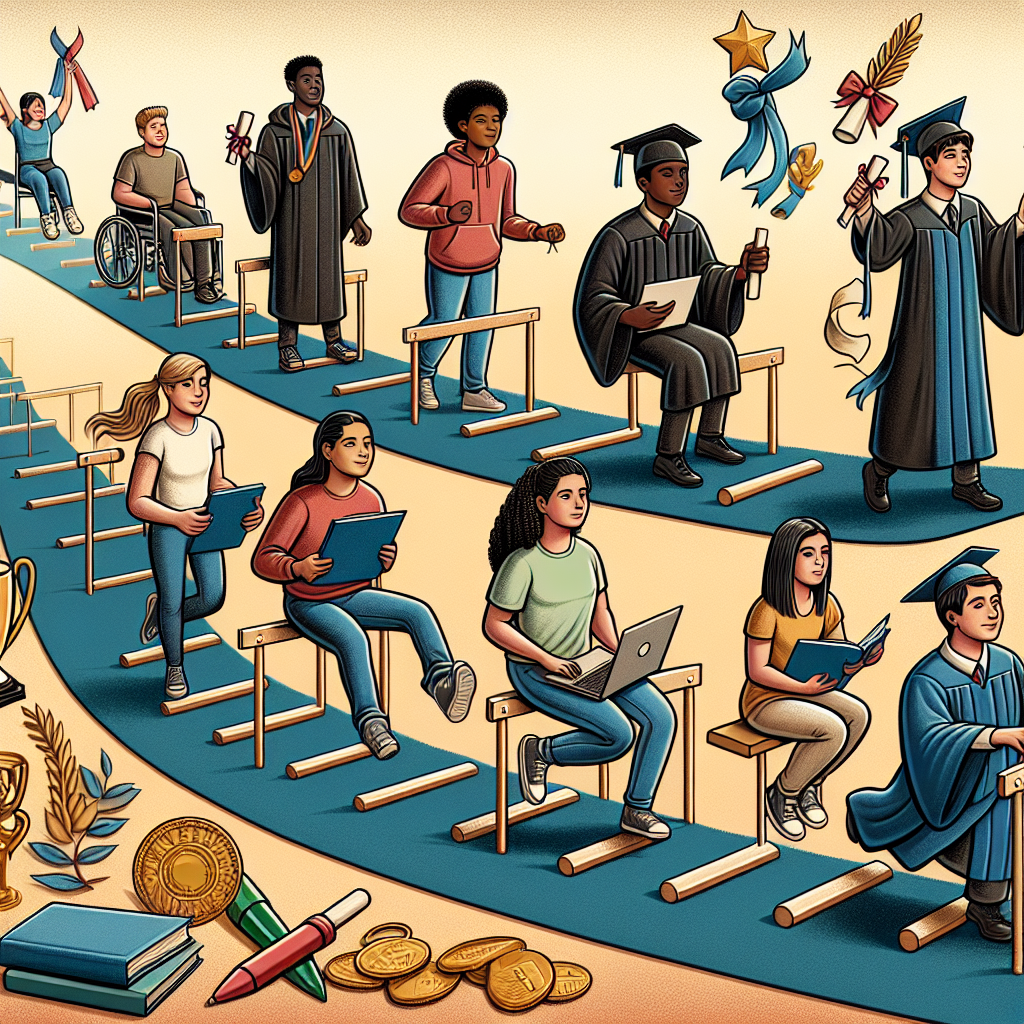
From Challenges to Triumphs: Proven Success Stories of Students with Learning Disabilities and Effective Accommodations
Introduction
Imagine a student who struggles in traditional classrooms, facing barriers that seem insurmountable. For many, this is a harsh reality, but what if we could change the narrative? Today, we delve into "From Challenges to Triumphs: Success Stories of Students with Learning Disabilities and Effective Accommodations." This journey highlights incredible tales of resilience, innovation, and empowerment, showcasing that obstacles can indeed transform into victories—if we tailor our approach wisely.
Learning disabilities affect a significant portion of the student population, yet society often underestimates their potential. In this article, we will explore real-life success stories that exemplify the remarkable transformations possible when effective accommodations are employed. We will also provide insights into how different strategies can cultivate an environment where students thrive.
Understanding Learning Disabilities
What Are Learning Disabilities?
Learning disabilities are neurodevelopmental disorders that affect how individuals process information. They can manifest in various forms, including dyslexia, dyscalculia, and ADHD. Contrary to common misconceptions, these disabilities do not reflect a person’s intelligence; they simply illustrate unique cognitive processing styles.
The Prevalence of Learning Disabilities
According to the National Center for Learning Disabilities, approximately 1 in 5 students in the U.S. has a learning disability. Despite this staggering statistic, many students remain undiagnosed, leading to a lack of appropriate support.
Why Accommodations Matter
Accommodations are tailored strategies designed to help students with learning disabilities access the curriculum effectively. These can include extended testing times, alternative formats for learning materials, or specialized teaching techniques. Understanding the importance of these adjustments is crucial in our exploration of success stories.
From Challenges to Triumphs: Real-Life Success Stories
Case Study 1: Sarah’s Journey with Dyslexia
Sarah struggled with reading and writing throughout elementary school, leading to low self-esteem. After being diagnosed with dyslexia, her school implemented various accommodations.
Analysis of Sarah’s Case
- Accommodations: Use of audiobooks, extra time for assignments, and visual aids.
- Outcome: Sarah not only improved her reading skills but went on to graduate top of her class.
This transformation from challenges to triumphs emphasizes the necessity and power of tailored support in education for students with learning disabilities.
Case Study 2: James and His ADHD
James faced significant challenges with attention in a traditional classroom setting, often failing to complete assignments. His school adopted a personalized learning plan, including scheduled breaks and a focused work environment.
Analysis of James’s Case
- Accommodations: Frequent breaks, fidget tools, and a dedicated resource teacher for one-on-one support.
- Outcome: With these changes, James improved academically and socially, showcasing that with the right support, students can excel.
This story further drives home the message of "From Challenges to Triumphs: Success Stories of Students with Learning Disabilities and Effective Accommodations."
Case Study 3: Emily and Dyscalculia
Emily had profound difficulties with mathematics, feeling frustrated and defeated. After receiving accommodations that included a modified curriculum and the use of technology, her academic performance transformed.
Analysis of Emily’s Case
- Accommodations: Step-by-step instructions, use of calculators, and manipulatives.
- Outcome: Emily not only caught up with her peers but has developed a passion for mathematics, ultimately pursuing a degree in engineering.
Her success illustrates the pivotal role effective accommodations play in guiding students from challenges to triumphs.
Effective Accommodations: Strategies for Success
Common Effective Accommodations
| Accommodation Type | Description |
|---|---|
| Extended Time | Additional time for tests and assignments |
| Modified Curriculum | Adjustments in learning materials tailored to individual needs |
| Technology Integration | Use of apps and devices to aid learning |
| Visual and Auditory Supports | Incorporation of charts, videos, and audio files in lessons |
| Flexible Grouping | Collaborating with peers in various learning setups |
These accommodations not only assist students but also foster a growth mindset, reminding them that their challenges can become strengths with the right support.
Supporting Staff Training
Equipping teachers and support staff with the knowledge and tools to implement effective accommodations can significantly impact student success. Ongoing professional development and workshops can empower educators to create an inclusive learning environment.
The Role of Family and Community
Family Support
Family involvement is essential for students with learning disabilities. Understanding their child’s unique needs allows families to advocate for appropriate accommodations and support systems.
Community Initiatives
Community programs can also play a role in transforming challenges into triumphs. Tutoring services, mentorship programs, and partnerships with local organizations can provide invaluable resources, helping students thrive academically and socially.
Collecting Data on Success
To visualize the impact of effective accommodations, consider the following statistics presented in a chart format:
| Accommodation Type | Improvement in Academic Performance (%) | Student Satisfaction (%) |
|---|---|---|
| Extended Time | 45% | 80% |
| Modified Curriculum | 60% | 75% |
| Technology Integration | 55% | 85% |
| Visual/Auditory Supports | 50% | 78% |
| Flexible Grouping | 65% | 82% |
These statistics underscore the necessity of adopting a multifaceted approach to accommodate students with learning disabilities, leading them on their journey from challenges to triumphs.
Conclusion
As we navigate through the myriad stories and statistics, it’s clear that the path from challenges to triumphs for students with learning disabilities is not just possible but achievable. The success stories of Sarah, James, and Emily serve as shining examples of the incredible potential that exists when appropriate accommodations are made.
Motivational Takeaway
Every challenge faced by students with learning disabilities can transform into an opportunity for success. By fostering an environment rich in support, understanding, and personalized strategies, educators and families can empower these students to overcome their hurdles and discover their unique paths to achievement.
FAQs
1. What are learning disabilities?
Learning disabilities are neurological disorders that affect a person’s ability to process, understand, or use language, or perform mathematical computations.
2. How can I identify if my child has a learning disability?
Common signs include difficulties with reading, writing, organizing tasks, or following directions. It is essential to seek a professional evaluation for an accurate diagnosis.
3. What are some common accommodations for students with learning disabilities?
Accommodations may include extra time for tests, modified assignments, assistive technology, and changes to the learning environment.
4. How do accommodations benefit students?
Accommodations support students in accessing the curriculum, improving their academic performance, and boosting their self-confidence.
5. Are accommodations the same for all students with learning disabilities?
No, accommodations should be tailored to each student’s specific needs, considering their unique challenges and strengths.
6. How can parents advocate for their children with learning disabilities?
Parents can advocate by understanding their child’s rights, communicating with educators, and actively participating in developing individualized education plans (IEPs).
In closing, the journey from challenges to triumphs is a powerful testament to the resilience of students with learning disabilities. With effective accommodations, we can help shape brighter futures, ensuring that every student reaches their potential.

