


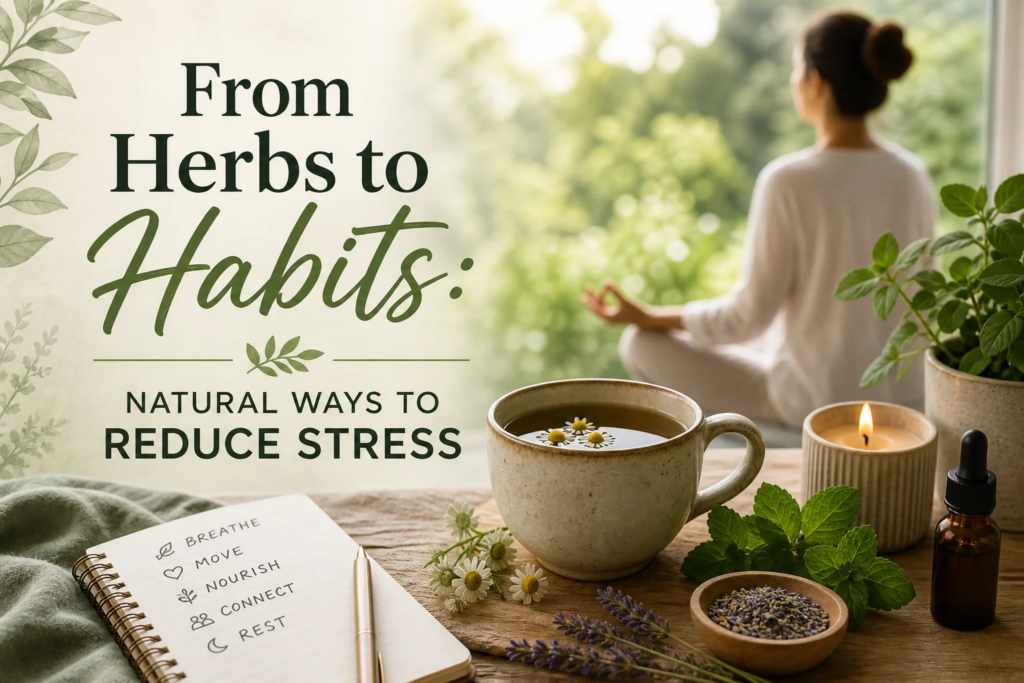
Proven Guide to From Herbs to Habits: Natural Ways to Reduce Stress for a Calmer, Healthier Life
Introduction: Stress Is Loud—But Relief Can Be Quiet
Stress rarely announces itself politely.
It slips into the body as tight shoulders, shallow breathing, restless sleep, racing thoughts, a short temper, or a sense that even small tasks feel strangely heavy. For many people, stress has become so familiar that it feels like background noise—always there, always humming.
But here’s the hopeful truth: while stress is a normal human response, living in a constant state of tension is not something you simply have to accept.
That is where From Herbs to Habits: Natural Ways to Reduce Stress becomes more than a wellness phrase. It becomes a practical approach to daily life. It reminds us that stress relief does not have to depend only on big vacations, expensive retreats, or dramatic life changes. Sometimes, meaningful calm begins with a cup of chamomile tea, five minutes of breathing, a walk after dinner, better boundaries, or the simple decision to stop checking emails in bed.
This article explores From Herbs to Habits: Natural Ways to Reduce Stress in depth—looking at herbal support, lifestyle rituals, nutrition, movement, sleep, mindfulness, nature therapy, and emotional habits that help the nervous system recover. You’ll find practical strategies, case studies, tables, and realistic advice designed for real people with real schedules.
Important note: Natural stress relief can be powerful, but it is not a replacement for professional medical or mental health care. If you experience severe anxiety, panic attacks, depression, trauma symptoms, or ongoing insomnia, consider speaking with a qualified healthcare professional. Some herbs may interact with medications or health conditions.
What Stress Really Does to the Body
Before exploring From Herbs to Habits: Natural Ways to Reduce Stress, it helps to understand what stress actually is.
Stress is your body’s response to a perceived demand or threat. When your brain senses pressure, it activates the sympathetic nervous system—often called the “fight-or-flight” response. Your body releases hormones such as adrenaline and cortisol. Your heart rate rises. Your muscles tense. Your breathing becomes faster. Your digestion slows. Your attention narrows.
This response is useful in short bursts. It helps you react quickly, meet deadlines, escape danger, or perform under pressure.
The problem begins when stress becomes chronic.
Common Signs of Chronic Stress
| Area Affected | Possible Stress Symptoms |
|---|---|
| Body | Headaches, muscle tension, fatigue, stomach discomfort, jaw clenching |
| Mind | Racing thoughts, poor concentration, worry, irritability |
| Emotions | Overwhelm, sadness, anger, emotional numbness |
| Sleep | Trouble falling asleep, waking at night, non-restorative sleep |
| Behavior | Overeating, skipping meals, procrastination, social withdrawal |
| Immune system | Frequent colds, slow recovery, inflammation flare-ups |
Chronic stress keeps the body in survival mode. Over time, this can contribute to high blood pressure, digestive issues, poor sleep, hormonal imbalance, burnout, and increased risk of anxiety or depression.
That’s why From Herbs to Habits: Natural Ways to Reduce Stress is not about “relaxing more” in a vague sense. It is about repeatedly giving your nervous system signals of safety.
The Core Idea: From Herbs to Habits
The phrase From Herbs to Habits: Natural Ways to Reduce Stress captures two essential truths.
First, nature offers support. Herbs, foods, sunlight, fresh air, movement, and rest all influence the nervous system.
Second, habits matter. A calming herb may help, but if your daily routine is built around sleep deprivation, constant notifications, skipped meals, and no recovery time, the herb can only do so much.
The most effective natural stress relief plan usually combines:
-
Immediate calming tools
Examples: breathing, herbal tea, grounding exercises, short walks.
-
Nervous system nourishment
Examples: magnesium-rich foods, quality sleep, hydration, sunlight.
-
Long-term lifestyle habits
Examples: boundaries, movement, journaling, reduced digital overload.
- Emotional resilience practices
Examples: mindfulness, gratitude, social connection, therapy when needed.
This is why From Herbs to Habits: Natural Ways to Reduce Stress works best as a layered approach rather than a single remedy.
Natural Stress Relief at a Glance
Here is a quick overview of common natural stress-reduction methods and how they may help.
| Natural Approach | How It May Help | Best Used For |
|---|---|---|
| Chamomile | Promotes relaxation and sleepiness | Evening calm, mild tension |
| Lavender | Supports relaxation through scent and tea | Stress, restlessness, bedtime routine |
| Ashwagandha | May support stress resilience | Chronic stress, fatigue |
| Lemon balm | Calming without heavy sedation | Nervous tension, focus |
| Breathwork | Activates parasympathetic nervous system | Immediate stress relief |
| Walking | Lowers tension and improves mood | Daily decompression |
| Journaling | Clears mental clutter | Overthinking, emotional processing |
| Sleep routine | Restores nervous system balance | Burnout prevention |
| Mindfulness | Reduces reactivity | Anxiety, emotional regulation |
| Digital boundaries | Reduces stimulation | Overwhelm, poor sleep |
This table shows why From Herbs to Habits: Natural Ways to Reduce Stress is so practical: you can start with one small step and build from there.
Herbal Allies for Stress Relief
Herbs have been used for centuries to support relaxation, sleep, digestion, and emotional balance. While they are natural, they are still biologically active. That means they should be used thoughtfully.
Below are some of the most common herbs associated with natural stress relief.
1. Chamomile: The Gentle Evening Companion
Chamomile is one of the best-known calming herbs. Often consumed as tea, it has a mild floral taste and is commonly used before bed.
Chamomile may help reduce mild anxiety, soothe digestion, and support sleep quality. It is not usually overpowering, which makes it a good entry point for people new to herbal stress support.
How to Use Chamomile
- Drink one cup of chamomile tea 30–60 minutes before bed.
- Combine it with lemon balm or lavender for a calming blend.
- Use it as part of a nightly “shutdown ritual.”
Chamomile fits beautifully into From Herbs to Habits: Natural Ways to Reduce Stress because it works best when paired with a consistent routine. The tea itself matters, but so does the message it sends: the day is ending, the body can soften, and rest is allowed.
2. Lavender: Calm Through the Senses
Lavender is widely used in aromatherapy, teas, bath products, and essential oil blends. Its scent is strongly associated with relaxation.
Some research suggests lavender aromatherapy may help lower perceived stress and improve sleep quality. Even if the effect is partly psychological, that still matters. The brain forms associations. If lavender becomes linked with rest, the scent may help trigger a calming response.
Ways to Use Lavender
| Method | How to Try It |
|---|---|
| Aromatherapy | Add a few drops of lavender essential oil to a diffuser |
| Pillow ritual | Use a lavender linen spray before sleep |
| Bath | Add lavender-infused bath salts |
| Tea | Drink lavender tea or blend with chamomile |
Always dilute essential oils before applying to skin, and keep them away from pets and children unless guided by a professional.
Lavender is a classic example of From Herbs to Habits: Natural Ways to Reduce Stress because it turns a simple sensory cue into a relaxation ritual.
3. Ashwagandha: Support for Stress Resilience
Ashwagandha is an adaptogenic herb used in Ayurvedic tradition. Adaptogens are herbs believed to help the body adapt to stress and maintain balance.
Some studies suggest ashwagandha may help reduce perceived stress and cortisol levels in certain people. It is often used by those dealing with chronic stress, fatigue, or burnout-like symptoms.
Important Cautions
Ashwagandha is not right for everyone. People who are pregnant, breastfeeding, taking thyroid medication, using sedatives, managing autoimmune conditions, or dealing with liver issues should speak with a healthcare professional before using it.
How It Fits
Ashwagandha belongs in From Herbs to Habits: Natural Ways to Reduce Stress as a possible long-term support tool—not a quick fix. It may be most useful when combined with sleep improvement, nourishment, movement, and reduced overcommitment.
4. Lemon Balm: Light, Bright, and Calming
Lemon balm is a member of the mint family. It has a gentle lemony flavor and is often used for nervous tension, irritability, digestive discomfort, and restlessness.
Many people like lemon balm because it feels calming without making them feel overly sleepy. It can be a good daytime tea for stressful afternoons.
Simple Lemon Balm Ritual
Try this:
- Brew lemon balm tea after lunch.
- Step away from screens while drinking it.
- Take five slow breaths between sips.
- Ask: “What is one thing I can release today?”
That small ritual captures the heart of From Herbs to Habits: Natural Ways to Reduce Stress—the herb supports the habit, and the habit deepens the effect.
5. Passionflower: For Restless Thoughts
Passionflower is traditionally used for nervousness, tension, and occasional sleeplessness. Some people find it helpful when their mind feels “wired but tired.”
It is often taken as tea, tincture, or capsule. Because it may have sedative effects, it should not be combined casually with alcohol, sedatives, or sleep medications.
Passionflower may be especially helpful in an evening plan for From Herbs to Habits: Natural Ways to Reduce Stress, particularly when paired with dim lighting, quiet reading, and reduced screen time.
6. Holy Basil: A Grounding Adaptogen
Holy basil, also known as tulsi, is another adaptogenic herb with a long history in traditional wellness systems. It is often used as a tea and is associated with emotional balance, clarity, and resilience.
Tulsi tea can be a pleasant morning or afternoon replacement for extra coffee. This matters because too much caffeine can increase stress symptoms in sensitive people.
Holy basil supports the broader philosophy of From Herbs to Habits: Natural Ways to Reduce Stress by offering a grounding pause in the middle of a demanding day.
Herbal Stress Support Comparison Chart
| Herb | Best Time | Main Benefit | Caution |
|---|---|---|---|
| Chamomile | Evening | Gentle relaxation, sleep support | Avoid if allergic to ragweed family |
| Lavender | Evening or anytime | Relaxation, sensory calming | Essential oils must be diluted |
| Ashwagandha | Morning or evening | Stress resilience | Check medication interactions |
| Lemon balm | Daytime or evening | Nervous tension, calm focus | May interact with thyroid medications |
| Passionflower | Evening | Restless thoughts, sleep support | Avoid mixing with sedatives |
| Holy basil | Morning or afternoon | Emotional balance | Use caution with blood-thinning medications |
Herbs can be valuable, but From Herbs to Habits: Natural Ways to Reduce Stress is most effective when herbs are part of a wider lifestyle pattern.
The Habit Side of Stress Relief
Herbs may open the door, but habits keep it open.
If you drink calming tea while scrolling stressful news until midnight, your nervous system receives mixed signals. If you take an adaptogen but never rest, your body still carries the burden.
That’s why the “habits” part of From Herbs to Habits: Natural Ways to Reduce Stress is essential.
Let’s look at the daily practices that create real change.
Breathwork: The Fastest Doorway to Calm
Your breathing pattern is one of the quickest ways to influence your stress response.
When you are stressed, breathing becomes shallow and fast. When you breathe slowly and deeply, you signal to the body that danger has passed.
Try the 4-6 Breathing Method
- Inhale through your nose for 4 seconds.
- Exhale slowly for 6 seconds.
- Repeat for 3–5 minutes.
Longer exhalations help activate the parasympathetic nervous system, often called the “rest-and-digest” system.
When to Use It
- Before difficult conversations
- After reading stressful messages
- During traffic
- Before sleep
- Between work tasks
- When anxiety begins rising
Breathwork is a cornerstone of From Herbs to Habits: Natural Ways to Reduce Stress because it is free, portable, and effective within minutes.
Movement: Stress Needs a Physical Exit
Stress is physical. It lives in muscles, breath, posture, and hormones. That means stress often needs a physical release.
You do not need intense workouts to reduce stress. In fact, when you are already depleted, gentle movement may be more restorative than pushing harder.
Stress-Reducing Movement Options
| Movement Type | Stress Benefit |
|---|---|
| Walking | Clears the mind, lowers tension, supports mood |
| Yoga | Combines movement, breath, and body awareness |
| Tai chi | Encourages balance, slow breathing, focus |
| Dancing | Releases emotion and increases joy |
| Stretching | Relieves muscle tension |
| Strength training | Builds confidence and physical resilience |
A 10-minute walk can shift your state. A few shoulder rolls can interrupt tension. Gentle stretching before bed can prepare the body for sleep.
In the framework of From Herbs to Habits: Natural Ways to Reduce Stress, movement is not punishment for the body. It is a conversation with the body.
Sleep: The Master Stress Regulator
Poor sleep makes stress louder. Stress makes sleep harder. This cycle is one of the most common traps people face.
A consistent sleep routine is one of the most powerful natural stress remedies available.
Build a Stress-Reducing Sleep Routine
Try this 60-minute wind-down:
| Time Before Bed | Action |
|---|---|
| 60 minutes | Dim lights and stop work-related tasks |
| 45 minutes | Make chamomile, lavender, or lemon balm tea |
| 30 minutes | Stretch, journal, or read something calming |
| 15 minutes | Practice slow breathing |
| Bedtime | Keep phone away from the bed |
This routine reflects From Herbs to Habits: Natural Ways to Reduce Stress perfectly. A calming tea helps, but the full habit loop—dim lights, no work, quiet activity, breath—creates a stronger signal of safety.
Nutrition: Feeding a Calmer Nervous System
Food affects blood sugar, hormones, inflammation, mood, and energy. When meals are skipped or sugar spikes and crashes happen all day, the body can interpret that instability as stress.
A stress-supportive diet does not need to be complicated. Start with steady nourishment.
Nutrients That Support Stress Resilience
| Nutrient | Why It Matters | Food Sources |
|---|---|---|
| Magnesium | Supports muscle relaxation and nervous system function | Pumpkin seeds, spinach, almonds, dark chocolate |
| Omega-3 fats | Support brain health and inflammation balance | Salmon, sardines, chia seeds, walnuts |
| B vitamins | Help energy and nervous system function | Eggs, legumes, leafy greens, whole grains |
| Protein | Stabilizes blood sugar and supports neurotransmitters | Fish, poultry, tofu, beans, Greek yogurt |
| Fiber | Supports gut health and steady energy | Vegetables, oats, lentils, berries |
| Vitamin C | Supports adrenal function and immunity | Citrus, kiwi, bell peppers, strawberries |
Stress-Friendly Eating Habits
- Eat breakfast with protein.
- Avoid relying on caffeine alone in the morning.
- Keep balanced snacks available.
- Hydrate throughout the day.
- Limit alcohol as a stress-management tool.
- Notice if sugar or caffeine worsens anxiety.
Nutrition is a powerful part of From Herbs to Habits: Natural Ways to Reduce Stress because a calmer body often begins with steadier energy.
The Gut-Stress Connection
Many people feel stress in the stomach. Butterflies, nausea, bloating, appetite changes, and urgent digestion are all common stress responses.
The gut and brain communicate through the gut-brain axis. Stress can alter digestion, and digestive discomfort can increase stress.
Natural Ways to Support the Gut During Stress
- Eat slowly.
- Chew thoroughly.
- Avoid eating while rushing or arguing.
- Include fermented foods if tolerated.
- Add fiber gradually.
- Drink peppermint or ginger tea for digestive comfort.
- Practice three slow breaths before meals.
This is another example of From Herbs to Habits: Natural Ways to Reduce Stress: herbs like ginger or peppermint may help, but eating calmly is also part of the medicine.
Mindfulness: Training the Mind to Come Home
Mindfulness means paying attention to the present moment without immediately judging it or trying to escape it.
It does not require sitting cross-legged for an hour. It can be as simple as noticing your breath, feeling your feet on the floor, or listening fully to the sounds around you.
A 2-Minute Mindfulness Practice
- Pause.
- Notice five things you can see.
- Notice four things you can feel.
- Notice three things you can hear.
- Notice two things you can smell.
- Notice one thing you can taste.
- Take one slow breath.
This grounding practice helps bring attention out of racing thoughts and back into the body.
Mindfulness strengthens From Herbs to Habits: Natural Ways to Reduce Stress because it changes your relationship with stress. Instead of being swept away by every thought, you learn to observe, breathe, and respond.
Journaling: Moving Stress Out of the Mind
Stress often grows in vague mental loops. Journaling turns the loop into language. Once a worry is on paper, it often becomes easier to understand and manage.
Useful Stress Journaling Prompts
- What am I carrying that is not mine to carry?
- What is one thing I can control today?
- What do I need but have not asked for?
- What would I tell a friend in this situation?
- What is one small next step?
- What can wait?
- What did my body try to tell me today?
A journal can become a private place to unload, reflect, and reset. Within From Herbs to Habits: Natural Ways to Reduce Stress, journaling is a bridge between emotional awareness and practical action.
Digital Boundaries: Protecting Your Attention
Modern stress is not only caused by workload or life events. It is also caused by constant stimulation.
Notifications, emails, news alerts, group chats, social media comparisons, and late-night scrolling keep the brain on alert.
Simple Digital Stress Reductions
| Habit | Why It Helps |
|---|---|
| Turn off nonessential notifications | Reduces constant interruptions |
| Create phone-free meals | Improves digestion and connection |
| Avoid news before bed | Protects sleep quality |
| Use grayscale mode | Makes scrolling less addictive |
| Keep phone outside bedroom | Reduces late-night stimulation |
| Check email at set times | Reduces mental fragmentation |
Digital boundaries are now a necessary part of From Herbs to Habits: Natural Ways to Reduce Stress. You cannot calm a nervous system that is being startled every few minutes.
Nature Therapy: Let the Nervous System Remember
There is something deeply regulating about nature. Trees, sunlight, water, soil, birdsong, fresh air—these things remind the body that it belongs to a larger rhythm.
You do not need a mountain retreat. A local park, backyard, balcony garden, or tree-lined street can help.
Natural Stress Practices Outdoors
- Take a 15-minute walk after work.
- Sit near a window with sunlight.
- Grow herbs like basil, mint, or lemon balm.
- Walk barefoot on grass if safe.
- Listen to birds rather than music for a few minutes.
- Watch clouds move.
- Eat lunch outside.
Nature is central to From Herbs to Habits: Natural Ways to Reduce Stress because it offers both sensory calm and perspective. Problems may not disappear under a tree, but the body often softens enough to face them differently.
Social Connection: The Natural Medicine We Forget
Humans are wired for connection. Safe relationships help regulate the nervous system.
A supportive conversation, a warm hug, shared laughter, or simply being understood can reduce stress in ways no supplement can replace.
Connection Habits That Reduce Stress
- Schedule weekly check-ins with a friend.
- Ask for help before resentment builds.
- Join a walking group, class, or community circle.
- Share meals when possible.
- Practice honest but kind communication.
- Spend time with people who leave you feeling restored.
A complete plan for From Herbs to Habits: Natural Ways to Reduce Stress must include relationships. Stress grows in isolation. Relief often grows in connection.
Boundaries: Stress Relief Through Honest Limits
Sometimes stress is not a sign that you need more lavender tea. Sometimes stress is a sign that you need a boundary.
Boundaries protect your time, energy, body, and emotional well-being.
Examples of Stress-Reducing Boundaries
- “I can help, but not today.”
- “I don’t check work messages after 7 p.m.”
- “I need time to think before I answer.”
- “I’m not available for that commitment right now.”
- “Let’s discuss this when we’re both calmer.”
Boundaries are an underrated part of From Herbs to Habits: Natural Ways to Reduce Stress. They reduce the number of stressors entering your life in the first place.
Creating a Personal Stress-Relief Plan
The best natural stress plan is the one you will actually use.
Instead of trying to overhaul your life overnight, choose a few practices that fit your current reality.
The 3-Layer Stress Plan
| Layer | Purpose | Examples |
|---|---|---|
| Emergency calm | Helps during acute stress | Breathwork, grounding, short walk |
| Daily regulation | Keeps stress from building | Herbal tea, movement, journaling |
| Long-term resilience | Changes your stress baseline | Sleep routine, boundaries, nutrition |
A practical From Herbs to Habits: Natural Ways to Reduce Stress plan might look like this:
- Morning: sunlight, protein breakfast, 3 minutes of breathing.
- Midday: lemon balm tea, short walk, no phone during lunch.
- Evening: gentle stretching, chamomile tea, phone outside bedroom.
- Weekly: meal prep, friend connection, nature time.
- Monthly: review commitments and adjust boundaries.
Small actions repeated consistently become identity. You stop being someone who “tries to relax” and become someone who actively protects peace.
Case Studies: Real-World Applications
The following case studies are fictionalized composites based on common stress patterns. They illustrate how From Herbs to Habits: Natural Ways to Reduce Stress can work in everyday life.
Case Study 1: Maya, the Overloaded Professional
Background
Maya, 36, worked in marketing and felt constantly behind. She started each morning with coffee, skipped lunch often, answered emails late into the night, and struggled to fall asleep. She described herself as “tired but wired.”
She wanted something natural but assumed stress relief required a major lifestyle change she did not have time for.
What She Tried
Maya began with a simple From Herbs to Habits: Natural Ways to Reduce Stress routine:
| Time | New Practice |
|---|---|
| Morning | Protein breakfast before coffee |
| Workday | Two scheduled email blocks instead of constant checking |
| Afternoon | Lemon balm tea and 10-minute walk |
| Evening | No work email after 8 p.m. |
| Bedtime | Chamomile tea and 4-6 breathing |
Results
After three weeks, Maya reported fewer afternoon crashes and less bedtime anxiety. Her workload did not disappear, but her body no longer felt like it was bracing all day.
Analysis
Maya’s success came from combining herbs with habit changes. Lemon balm and chamomile helped create calming rituals, but the bigger shift came from boundaries, nourishment, and breathwork. This case shows why From Herbs to Habits: Natural Ways to Reduce Stress is more effective than relying on one remedy.
Case Study 2: Daniel, the Stressed Parent
Background
Daniel, 42, was a father of two and a full-time teacher. His stress peaked in the evenings when dinner, homework, household tasks, and bedtime routines collided. He often snapped at his family and then felt guilty.
What He Tried
Daniel created a transition ritual between work and home.
| Trigger | New Habit |
|---|---|
| Leaving work | 5 minutes of slow breathing in the car |
| Arriving home | Changed clothes immediately to signal transition |
| Before dinner | Played calming music instead of news |
| After kids slept | Tulsi tea and 10 minutes of stretching |
Results
Daniel noticed that the first 20 minutes after arriving home shaped the entire evening. By creating a decompression buffer, he became less reactive and more present.
Analysis
Daniel’s case highlights a key principle of From Herbs to Habits: Natural Ways to Reduce Stress: transitions matter. Many people carry stress from one environment into another. A small ritual can prevent stress from spreading through the household.
Case Study 3: Alina, the Student With Racing Thoughts
Background
Alina, 21, was a university student dealing with exam pressure. She drank several cups of coffee daily, studied late into the night, and experienced racing thoughts when trying to sleep.
What She Tried
Alina adjusted her routine:
- Swapped late-afternoon coffee for lemon balm tea.
- Used 25-minute study blocks with 5-minute movement breaks.
- Practiced a 2-minute grounding exercise before exams.
- Took a 20-minute walk after studying.
- Used lavender aromatherapy during her evening wind-down.
Results
She still felt exam stress, but it became more manageable. Her sleep improved when caffeine stopped after noon, and grounding helped her feel more in control before tests.
Analysis
Alina’s experience shows that natural stress relief is not about eliminating pressure. It is about helping the body move through pressure without becoming overwhelmed. Her plan demonstrates From Herbs to Habits: Natural Ways to Reduce Stress in a high-performance environment.
Case Study 4: Robert, the Burned-Out Caregiver
Background
Robert, 58, cared for his aging mother while working part-time. He felt guilty taking time for himself and described his stress as “constant background heaviness.”
What He Tried
Robert’s plan focused on sustainable recovery:
| Need | Practice |
|---|---|
| Emotional release | Evening journaling |
| Physical tension | Gentle morning stretching |
| Support | Weekly call with caregiver support group |
| Rest | Passionflower tea twice weekly before bed |
| Boundaries | Asked sibling for one afternoon of help each week |
Results
Robert’s stress did not vanish, but he felt less alone. The weekly support call and family boundary created real relief. Tea and journaling helped him process emotions instead of bottling them.
Analysis
Robert’s case proves an important point: From Herbs to Habits: Natural Ways to Reduce Stress should never be reduced to herbs alone. Social support and practical help are sometimes the most natural medicine available.
Case Study 5: Priya, the Entrepreneur Who Couldn’t Switch Off
Background
Priya, 31, ran an online business. Her phone was always nearby, and she checked analytics, messages, and emails late at night. She felt anxious even during downtime.
What She Tried
Priya built a digital sunset routine:
- Business apps off after 7:30 p.m.
- Phone charged outside the bedroom.
- Lavender diffuser while reading.
- Brain-dump journal to capture next-day tasks.
- Sunday planning session to reduce mental clutter.
Results
Within a month, Priya reported better sleep and fewer compulsive phone checks. She also noticed more creative ideas in the morning.
Analysis
Priya’s case illustrates how modern stress often comes from access without boundaries. Her version of From Herbs to Habits: Natural Ways to Reduce Stress used lavender as a sensory cue, but the real transformation came from reclaiming attention.
A 7-Day Natural Stress Reset
If you want to begin immediately, try this one-week plan inspired by From Herbs to Habits: Natural Ways to Reduce Stress.
| Day | Focus | Practice |
|---|---|---|
| Day 1 | Breath | Practice 4-6 breathing for 5 minutes |
| Day 2 | Herbal support | Drink chamomile or lemon balm tea without screens |
| Day 3 | Movement | Take a 15-minute walk outdoors |
| Day 4 | Sleep | Create a 30-minute wind-down routine |
| Day 5 | Nutrition | Eat protein at breakfast and hydrate |
| Day 6 | Mind | Journal one page about what you can release |
| Day 7 | Boundaries | Say no, delay, or delegate one draining task |
By the end of the week, you will have tested several parts of From Herbs to Habits: Natural Ways to Reduce Stress and discovered which ones feel most natural for you.
Common Mistakes in Natural Stress Relief
Even well-intentioned people can make mistakes when trying to reduce stress naturally.
Mistake 1: Expecting One Herb to Fix Everything
Herbs can support calm, but they cannot compensate for chronic overwork, poor sleep, or emotional suppression.
Mistake 2: Using “Natural” as a Synonym for “Always Safe”
Natural substances can still interact with medications, pregnancy, medical conditions, and other supplements.
Mistake 3: Trying Too Many Things at Once
If you start five herbs, a new diet, intense exercise, and meditation all in the same week, you may feel overwhelmed. Begin small.
Mistake 4: Ignoring the Source of Stress
A tea ritual can help you cope, but if the true source is a toxic work environment, lack of support, or unsustainable caregiving load, practical changes matter.
Mistake 5: Treating Rest as Something to Earn
Rest is not a reward for productivity. Rest is biological maintenance.
Avoiding these mistakes helps make From Herbs to Habits: Natural Ways to Reduce Stress more realistic and sustainable.
Long-Tail Keyword Variations for Contextual SEO
Here are natural keyword variations related to From Herbs to Habits: Natural Ways to Reduce Stress that can be used in supporting content, blog clusters, or internal links:
| Keyword Variation |
|---|
| natural ways to reduce stress at home |
| best herbs for stress and anxiety relief |
| daily habits to lower stress naturally |
| herbal remedies for stress relief |
| holistic stress management techniques |
| natural stress relief routines for busy people |
| calming herbs for sleep and relaxation |
| lifestyle habits for emotional balance |
| how to reduce stress without medication |
| mindfulness and herbs for stress management |
| natural remedies for chronic stress |
| simple habits to calm the nervous system |
| stress relief teas and relaxation rituals |
| healthy routines for reducing daily stress |
| adaptogenic herbs for stress resilience |
Using these variations alongside From Herbs to Habits: Natural Ways to Reduce Stress helps create content that feels natural while supporting search visibility.
The Science of Consistency: Why Small Habits Work
One reason people give up on stress relief is that they expect dramatic results immediately.
But the nervous system learns through repetition.
A single walk may help today. A daily walk can change your baseline. One night of better sleep helps. A month of consistent sleep habits can change mood, focus, and resilience. One breathing session calms the moment. Hundreds of slow breaths over time teach the body a new pattern.
That is the deeper wisdom of From Herbs to Habits: Natural Ways to Reduce Stress: peace is not only something you find. It is something you practice.
The Stress-Relief Habit Loop
| Cue | Routine | Reward |
|---|---|---|
| Feeling tense after work | Take a 10-minute walk | Mental reset |
| Racing thoughts at bedtime | Journal and drink chamomile tea | Easier sleep |
| Afternoon irritability | Eat balanced snack and breathe | Stable energy |
| Phone craving at night | Charge phone outside bedroom | Better rest |
| Morning anxiety | Sunlight and slow breathing | Grounded start |
The goal is not perfection. The goal is repetition with kindness.
How to Choose the Right Natural Stress Tools for You
Not every method works for every person. Your body, schedule, preferences, health history, and stress triggers matter.
If Your Stress Feels Like Racing Thoughts
Try:
- Journaling
- Passionflower tea
- Mindfulness grounding
- Reduced caffeine
- Evening digital boundaries
If Your Stress Feels Like Muscle Tension
Try:
- Magnesium-rich foods
- Stretching
- Yoga
- Warm baths
- Lavender aromatherapy
If Your Stress Feels Like Exhaustion
Try:
- Sleep routine
- Balanced meals
- Gentle walks
- Ashwagandha with professional guidance
- Saying no more often
If Your Stress Feels Like Irritability
Try:
- Protein breakfast
- Movement breaks
- Lemon balm tea
- Breathwork before responding
- Social support
If Your Stress Feels Like Emotional Overload
Try:
- Therapy or support groups
- Journaling
- Nature time
- Boundaries
- Compassion practices
A personalized approach makes From Herbs to Habits: Natural Ways to Reduce Stress more effective because stress does not look the same in every body.
Building a Calming Morning Routine
How you begin the day can shape your stress response.
A calming morning routine does not need to be long. Even 15 minutes can help.
15-Minute Morning Reset
| Minute | Practice |
|---|---|
| 0–2 | Avoid phone; take slow breaths |
| 2–5 | Drink water |
| 5–8 | Step into sunlight or look outside |
| 8–12 | Gentle stretching |
| 12–15 | Set one clear intention |
You might add holy basil tea, a nourishing breakfast, or a short walk if time allows.
Morning rituals are a practical expression of From Herbs to Habits: Natural Ways to Reduce Stress because they help you enter the day instead of being dragged into it.
Building a Calming Evening Routine
Evening is when many people accidentally sabotage stress recovery. Bright screens, heavy conversations, work emails, alcohol, and late caffeine can all interfere with rest.
Evening Routine for Nervous System Recovery
- Lower the lights.
- Stop work at a defined time.
- Make herbal tea.
- Prepare tomorrow’s essentials.
- Stretch lightly.
- Write down worries and next steps.
- Read instead of scrolling.
- Practice slow breathing in bed.
This simple rhythm embodies From Herbs to Habits: Natural Ways to Reduce Stress because it combines herbal support, environmental cues, emotional release, and sleep hygiene.
When Natural Stress Relief Is Not Enough
Natural approaches are valuable, but sometimes stress requires more support.
Seek professional help if you experience:
- Panic attacks
- Persistent insomnia
- Depression symptoms
- Thoughts of self-harm
- Trauma flashbacks
- Severe anxiety
- Substance dependence
- Stress-related health issues
- Inability to function at work, school, or home
Therapy, medical care, medication, coaching, or community support can be life-changing. Choosing professional help does not mean you failed at natural stress relief. It means you are taking your well-being seriously.
The most responsible version of From Herbs to Habits: Natural Ways to Reduce Stress includes knowing when to ask for help.
FAQs About From Herbs to Habits: Natural Ways to Reduce Stress
1. What are the best natural ways to reduce stress quickly?
The fastest natural methods include slow breathing, grounding exercises, walking, stretching, drinking calming herbal tea, and stepping away from screens. For immediate relief, try breathing in for 4 seconds and exhaling for 6 seconds for five minutes.
2. Which herbs are commonly used for stress relief?
Common calming herbs include chamomile, lavender, lemon balm, passionflower, holy basil, and ashwagandha. Each works differently. Chamomile and lavender are often used for relaxation, while ashwagandha and holy basil are commonly used for stress resilience.
3. Is From Herbs to Habits: Natural Ways to Reduce Stress safe for everyone?
Not always. Many habits, such as walking, breathing, journaling, and sleep routines, are generally safe for most people. However, herbs can interact with medications, pregnancy, breastfeeding, medical conditions, or surgeries. Always check with a healthcare professional if you are unsure.
4. How long does it take natural stress relief to work?
Some practices, such as breathwork or a short walk, may help within minutes. Herbal routines may take days or weeks to show noticeable effects. Long-term habits like sleep improvement, exercise, and boundaries often become more powerful with consistent practice over several weeks.
5. Can natural stress relief replace medication?
Natural stress relief may support emotional well-being, but it should not replace prescribed medication without guidance from a healthcare professional. If you take medication for anxiety, depression, sleep, blood pressure, or another condition, speak with your provider before making changes.
6. What daily habit lowers stress the most?
Sleep consistency is one of the most powerful daily habits for stress reduction. Breathwork, movement, nourishing meals, and digital boundaries are also highly effective. The best habit is the one you can repeat consistently.
7. Can stress be reduced without supplements?
Yes. Many effective stress-reduction strategies require no supplements at all. Walking, breathing, meditation, journaling, social connection, better sleep, sunlight, and boundaries can significantly support stress resilience.
8. How do I start if I feel too overwhelmed?
Start with one tiny action. Drink water. Take three slow breaths. Step outside for two minutes. Write one sentence in a journal. Stress often makes big plans feel impossible, so begin with something small enough that you can do it today.
Conclusion: Calm Is Built One Choice at a Time
Stress may be part of life, but constant overwhelm does not have to be your normal.
The beauty of From Herbs to Habits: Natural Ways to Reduce Stress is that it gives you many doors into relief. You can begin with chamomile tea, a walk, a breathing practice, a better bedtime routine, a boundary, a journal page, or a quiet moment in the sun.
Herbs can support the body. Habits can retrain the nervous system. Food can stabilize energy. Sleep can restore resilience. Movement can release tension. Mindfulness can soften reactivity. Connection can remind you that you are not alone.
You do not need to transform your entire life overnight. Choose one practice. Repeat it. Let it become familiar. Then add another.
That is how natural stress relief becomes sustainable—not as a temporary escape, but as a way of living.
In the end, From Herbs to Habits: Natural Ways to Reduce Stress is not just about reducing tension. It is about returning to yourself, one steady breath and one intentional habit at a time.

