


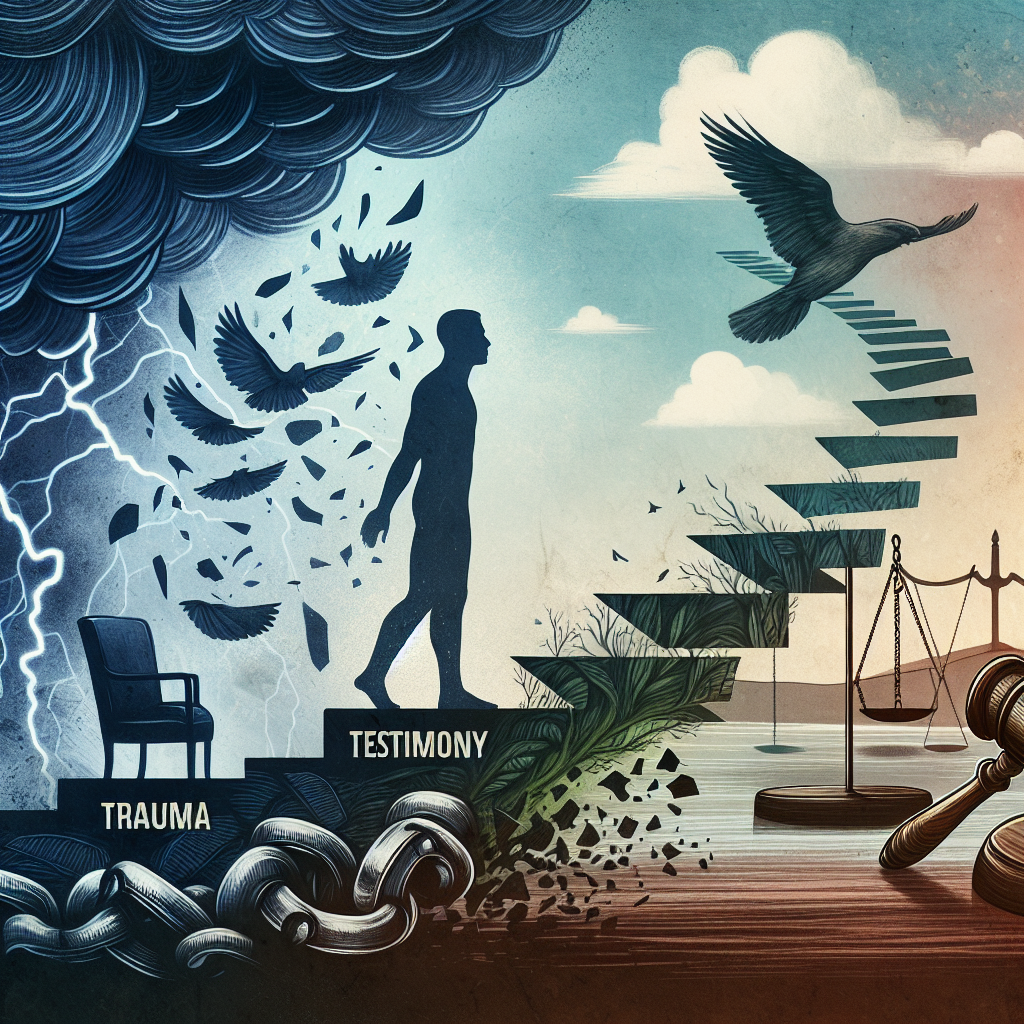
Introduction
Imagine standing in a courtroom, witnessing an intense trial where the stakes are extraordinarily high. The fate of an individual, sometimes even the public at large, hinges on the testimony of a lone witness. Now, consider this witness: they are not a seasoned expert or a professional eye-witness; rather, they are someone who has endured a traumatic experience. The courtroom buzzes with tension as jurors lean in, eager to hear their account. Yet, as the witness begins to speak, their narrative is colored by the invisible scars of post-traumatic stress disorder (PTSD). This brings us to a powerful question: How does trauma shape testimony? By exploring From Trauma to Testimony: The Impact of PTSD on Witness Credibility, this article aims to shed light on the intricate relationship between trauma and the credibility of eyewitness accounts, while offering actionable insights for those navigating these complex dynamics.
Understanding PTSD: A Brief Overview
What is PTSD?
Post-Traumatic Stress Disorder (PTSD) is a mental health condition triggered by experiencing or witnessing a traumatic event. Symptoms may include flashbacks, nightmares, severe anxiety, and uncontrollable thoughts about the event. The impact of PTSD can complicate a person’s ability to recall events accurately, thus influencing their reliability as witnesses.
The Diagnostic Criteria
According to the DSM-5, to be diagnosed with PTSD, a person must experience specific criteria:
- Exposure to a traumatic event
- Intrusive symptoms (e.g., flashbacks)
- Avoidance of reminders of the trauma
- Negative changes in cognition and mood
- Heightened arousal (e.g., insomnia, irritability)
Understanding these elements is crucial in discussing From Trauma to Testimony: The Impact of PTSD on Witness Credibility, as they reveal the varying degrees to which PTSD affects information processing.
The Correlation Between Trauma and Testimony
Emotional vs. Factual Recall
When we discuss the impact of PTSD on witness credibility, it’s important to differentiate between emotional recall and factual recall. Emotional recall may capture the essence of what the witness felt during their traumatic experience, while factual recall focuses on the nitty-gritty events and timelines. Emotional narratives can be powerful; however, they might lack specificity, which can lead to perceived inconsistency by jurors.
Case Study: The Jennifer McKinney Case
In this case, Jennifer McKinney, a witness to a shooting incident, experienced significant distress while recounting her memories. Her testimony was filled with emotional descriptions, but lacked precise details about the events. Jurors found it challenging to determine her credibility partly because of this emotional versus factual disconnect. This case perfectly illustrates From Trauma to Testimony: The Impact of PTSD on Witness Credibility on real-life situations, underscoring the necessity for balance in testimony.
Cognitive Impairments Induced by PTSD
Trauma can lead to cognitive impairments that directly impact memory formation and retrieval. Witnesses suffering from PTSD may experience:
- Memory Gaps: Difficulty recalling specific details related to the trauma.
- Confabulation: Unintentionally fabricating details to fill in memory gaps.
Charts: PTSD and Memory Reliability
| Aspect | Impact on Memory |
|---|---|
| Memory Gaps | Often leads to incomplete narratives |
| Emotional State | Can alter perception and recall accuracy |
| Cognitive Load | Increased stress can hinder memory retrieval |
This table underscores how cognitive load and emotional states play critical roles in parsing witness credibility, further clarifying From Trauma to Testimony: The Impact of PTSD on Witness Credibility.
Legal Implications
Admissibility of Testimony
Courts often grapple with how to handle testimony from witnesses suffering from PTSD. Legal standards vary by jurisdiction, but generally speaking, the admissibility of testimony may hinge on the following:
- Relevance: Is the testimony relevant to the case?
- Credibility: Does the history of trauma impair the witness’s reliability?
- Expert Opinion: Courts often call for mental health experts to assess the witness’s ability to accurately recount the event.
Case Study: The Eric Garner Case
In the Eric Garner case, a witness later diagnosed with PTSD provided critical testimony about the events leading up to Garner’s death. Although their credibility was questioned due to inconsistencies in their memories, mental health experts highlighted the impact of trauma on their recall capabilities. This case serves as a testament to From Trauma to Testimony: The Impact of PTSD on Witness Credibility, reflecting how trauma can shape not only personal narrative but also influence judicial outcomes.
Coping Strategies for Witnesses
Therapeutic Approaches
Witnesses dealing with PTSD may benefit from various therapeutic strategies, including:
- Cognitive Behavioral Therapy (CBT): Helps mitigate cognitive distortions.
- Eye Movement Desensitization and Reprocessing (EMDR): Can aid in processing traumatic memories.
Preparing for Testimony
It’s vital to prepare witnesses effectively before they take the stand. Suggestions include:
- Mock Testimonies: Help witnesses feel comfortable with the courtroom environment.
- Mindfulness Exercises: Encourage focus and calmness during testimony.
These strategies are fundamental in bridging the gap illustrated by From Trauma to Testimony: The Impact of PTSD on Witness Credibility, ensuring witnesses can provide clear and reliable accounts.
The Role of Experts in Mitigating Trauma’s Impact
Psychological Assessment
Experts in trauma-related fields are essential in assessing how PTSD influences witness reliability. Their assessments can include:
- Comprehensive interviews
- Psychological testing
- Evaluating symptom severity and its impact on cognitive function
Having this expert testimony can add depth to the discussion on From Trauma to Testimony: The Impact of PTSD on Witness Credibility.
Educational Initiatives
Legal professionals should advocate for educational programs aimed at understanding the complexities of trauma. This training would empower attorneys to better represent traumatized witnesses and navigate the intricacies of their narratives.
Future Directions in Law and Mental Health
Intersection of Law and Psychology
The field of forensic psychology is continually evolving, forging a deeper understanding of how trauma affects individual testimony. Collaborative efforts between legal practitioners and mental health professionals are essential for enhancing the reliability of witness accounts.
Legislation for Witness Support
Future legislation should aim to protect vulnerable witnesses suffering from PTSD by offering necessary support mechanisms. Such initiatives may include:
- Legal advocacy during court appearances
- Financial assistance for mental health services
- Special provisions to accommodate emotional needs
Aligning these measures with From Trauma to Testimony: The Impact of PTSD on Witness Credibility promotes a more equitable judicial system.
Conclusion
Understanding From Trauma to Testimony: The Impact of PTSD on Witness Credibility requires a nuanced approach that considers both the emotional and factual dimensions of witness accounts. By acknowledging the cognitive implications of trauma, leveraging expert insights, and investing in supportive measures for witnesses, we can foster a more credible and compassionate judicial system. Whether you’re a legal professional, a mental health advocate, or simply a concerned citizen, prioritizing understanding of these complexities is essential for justice.
FAQs
1. How does PTSD affect a witness’s memory?
PTSD can lead to memory gaps and emotional recall that may distort factual accuracy, impacting witness reliability.
2. Can a witness with PTSD still provide credible testimony?
Yes, but their testimony may require careful preparation and understanding from the legal system to ensure its reliability.
3. What legal protections exist for witnesses with PTSD?
Legal safeguards vary, but advocacy for support resources and accommodations is increasingly recognized in court settings.
4. How can lawyers prepare witnesses for court?
Lawyers can conduct mock testimonies and employ therapeutic techniques to help witnesses manage anxiety and enhance focus.
5. Are there specific therapies that help witnesses with PTSD?
Techniques like CBT and EMDR have shown effectiveness in treating PTSD, helping witnesses regain clarity for their testimony.
By addressing these critical questions, we not only foster understanding but engage in a broader discussion about the vital interplay of trauma and testimony in the pursuit of justice.


The PsyForU Editorial Collective is the research and editorial team of PsyForU Research International. The collective prepares educational, psychological, mental-health-awareness, inclusion, neurodiversity, and research-methodology content for students, parents, educators, researchers, and general readers. PsyForU content is intended for awareness, education, and capacity-building and should not be treated as clinical diagnosis, therapy, medical advice, legal advice, or emergency mental-health support.