


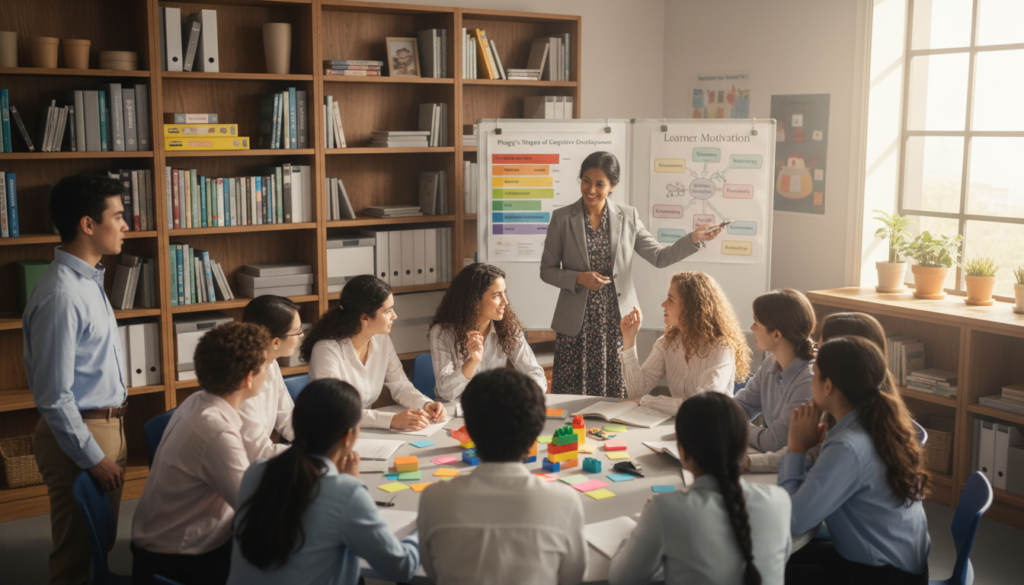
Can understanding the science behind learning really change how we teach and learn? This question is answered by educational psychology. It’s a field that connects psychology and education. It helps us understand how students learn and keep information.
By using educational psychology, teachers can create lessons that meet the needs of all students. This leads to better learning results.
Key Takeaways
- Educational psychology informs teaching practices to improve student outcomes.
- Understanding how students learn is key for effective teaching.
- Educational psychology bridges the gap between psychology and education.
- Applying educational psychology principles can enhance student learning.
- Effective teaching practices are based on the science of learning.
Understanding Educational Psychology and Its Role
Educational psychology helps us understand how we learn and how to make learning better. It’s a part of psychology that studies how we learn. It looks at learning from different angles, like how we think and how we act.
To really get into educational psychology, we need to know what it’s all about.
Definition of Educational Psychology
Educational psychology is about studying how we learn. It looks at the psychological processes of learning and what affects it. It also explores how to make learning easier or harder.
“Educational psychology is concerned with the study of human learning, the factors that influence it, and the methods that can be used to enhance it.”
This definition shows how wide-ranging educational psychology is. It’s about understanding learning and using that knowledge to improve it.
Key Theories and Concepts
There are a few main ideas in educational psychology. These are behaviorism, cognitivism, and constructivism. Behaviorism looks at what we do and how our environment affects it. Cognitivism focuses on what goes on inside our minds when we learn, like how we see, remember, and solve problems. Constructivism says we build our own knowledge through experiences and talking with others.
Knowing these ideas is key for teachers. They help teachers create better learning plans and environments. By using these theories, teachers can make learning more fun and effective for everyone.
Key Theories in Educational Psychology
It’s important to know the main theories in educational psychology. These theories help us understand how students learn. They also show us how teachers can best support students.
Constructivism
Constructivism says learners build their own knowledge. They use what they already know and have experienced. This makes learning a personal and active process.
Key Principles of Constructivism:
- Learners construct their own knowledge.
- Learning is an active process.
- Prior knowledge and experiences influence new learning.
Behaviorism
Behaviorism looks at what we can see and do. It doesn’t focus on what’s inside our minds. It says learning happens when we interact with our surroundings.
Key Principles of Behaviorism:
- Learning is a result of external stimuli.
- Behavior is shaped by reinforcement and punishment.
- Observable behavior is the focus of study.
| Theory | Key Focus | Learning Process |
|---|---|---|
| Constructivism | Active construction of knowledge | Self-directed, building on prior knowledge |
| Behaviorism | Observable behavior | Influenced by external stimuli, reinforcement, and punishment |
| Social Learning Theory | Observation and imitation | Learning through observing others, modeling behavior |
Social Learning Theory
Social Learning Theory says we learn by watching and imitating others. It highlights the importance of observing and modeling in learning.
Key Principles of Social Learning Theory:
- Learning occurs through observation.
- Behavior is learned through modeling.
- Reinforcement influences whether behavior is imitated.
Knowing these theories helps teachers create better learning plans. By using what each theory offers, teachers can improve how much students learn.
The Importance of Motivation in Learning
Motivation is key in schools, affecting how students do and how much they care. It shows how much effort students put into their studies. This effort greatly impacts their success.
Intrinsic vs. Extrinsic Motivation
Motivation comes in two types: intrinsic and extrinsic. Intrinsic motivation is when students learn for the joy of it. Extrinsic motivation comes from outside, like grades or rewards.
Carol Dweck, an educational psychologist, said, “The view you adopt for yourself profoundly affects the way you lead your life.” This shows why growing your mindset is important. It’s linked to wanting to learn for itself.
Strategies to Enhance Student Motivation
To boost student motivation, teachers can try a few things. These include:
- Creating a supportive learning environment that encourages participation and risk-taking.
- Setting achievable goals and providing constructive feedback to help students track their progress.
- Offering personalized learning experiences that cater to individual students’ interests and needs.
Using these methods, teachers can help students stay motivated. As “Motivation is what gets you started. Habit is what keeps you going.” – John Maxwell. This shows how motivation helps students start and keep going.
Learning Styles and Student Engagement
Educational psychology shows how important it is to know about different learning styles. This helps students get more involved and understand better. Students learn in many ways, like seeing, hearing, or doing things.
It’s key to teach in ways that fit each student’s learning style. This makes learning more fun and effective for everyone.
Overview of Learning Styles
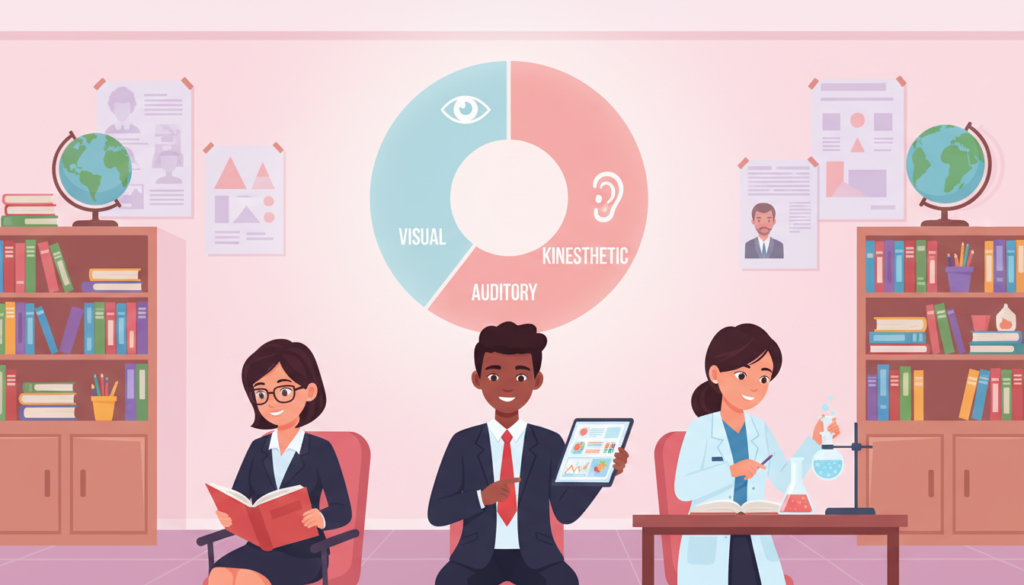
Learning styles are how students like to get and use information. There are mainly three types:
- Visual learners: They learn best with pictures, diagrams, and videos.
- Auditory learners: These students do well with sounds, like talks and audio.
- Kinesthetic learners: They love hands-on stuff, like experiments and activities.
Knowing these styles helps teachers plan better lessons. Howard Gardner’s theory of multiple intelligences also says students have different strengths. Using these can make learning more fun and effective.
Tailoring Teaching Methods to Learning Preferences
Teachers can use many ways to teach based on learning styles. For example, visual aids help visual learners. Kinesthetic learners do well with hands-on activities. Auditory learners enjoy talks and audio.
As
“The art of teaching is the art of assisting discovery.”
– Mark Van Doren. This quote shows how important it is to teach in a way that helps students discover and get involved.
Some good ways to tailor teaching include:
- Using a mix of teaching methods to reach all learners.
- Adding technology, like apps and online resources, for different learning experiences.
- Getting students to participate and share their thoughts to learn about their learning styles.
By understanding and teaching to different learning styles, teachers can make learning more fun and effective. This helps students do better in school.
The Impact of Cognitive Development on Learning
Theories like Piaget and Vygotsky’s give us insights into how students learn. They tell us how students process information and understand the world. Knowing these stages helps teachers teach better.
Piaget’s Stages of Development
Jean Piaget said students go through four stages: sensorimotor, preoperational, concrete operational, and formal operational. Each stage has its own way of thinking and seeing the world.
- Sensorimotor Stage: Students learn through senses and actions.
- Preoperational Stage: They start to use symbols and think in new ways.
- Concrete Operational Stage: They can think logically about real events.
- Formal Operational Stage: They can think abstractly and reason well.
Piaget believed in active learning. He said students learn by doing and experiencing things.
Vygotsky’s Social Development Theory
Lev Vygotsky thought social interaction is key to learning. He talked about the Zone of Proximal Development (ZPD). This is the gap between what a student can do alone and with help.
| Theory | Key Concept | Educational Implication |
|---|---|---|
| Piaget | Stages of Development | Tailor teaching to the student’s developmental stage |
| Vygotsky | Zone of Proximal Development | Use collaborative learning and scaffolding techniques |
Vygotsky’s ideas show how important social interaction and collaborative learning are. By using these theories, teachers can make learning better and more supportive.
The Role of Emotions in Learning
Learning is more than just thinking; it’s deeply connected to feelings. These feelings can either help or hurt how well students do in school. Knowing how emotions affect learning is key for teachers to make a welcoming classroom.
Emotional Intelligence and Academic Success
Emotional intelligence (EI) is about knowing and using your own and others’ feelings. Studies show that EI helps students do well in school. They can handle stress better, get along with others, and stay motivated.
Key components of emotional intelligence include:
- Self-awareness: Recognizing one’s emotions and their impact.
- Self-regulation: Managing one’s emotions to achieve goals.
- Motivation: Using emotions to drive motivation and achieve goals.
- Empathy: Understanding and sharing the feelings of others.
- Social skills: Applying emotional intelligence to interact effectively with others.
| Emotional Intelligence Component | Description | Impact on Learning |
|---|---|---|
| Self-awareness | Recognizing one’s emotions | Helps students understand their strengths and weaknesses. |
| Self-regulation | Managing emotions to achieve goals | Enhances focus and reduces stress. |
| Motivation | Using emotions to drive motivation | Boosts engagement and persistence in learning. |
Managing Student Anxiety in the Classroom
Student anxiety is a big problem in schools. It can stop students from learning and doing well. Teachers can help by making a safe and calm place to learn.
Strategies to manage student anxiety include:
- Creating a calm and predictable classroom environment.
- Encouraging open communication about anxiety and stress.
- Teaching relaxation techniques, such as deep breathing and mindfulness.
- Providing clear expectations and feedback.
- Fostering a growth mindset, seeing mistakes as chances to learn.
By understanding emotions in learning and using strategies to support emotional intelligence and reduce anxiety, teachers can help students do better. This approach not only improves grades but also makes learning a positive experience.
Effective Teaching Strategies Informed by Psychology
Understanding educational psychology helps teachers create effective teaching strategies for all students. These strategies boost student engagement, understanding, and success in school.
Active Learning Techniques
Active learning is key to good teaching. It keeps students interested and helps them grasp the material better. Some top active learning methods include:
- Group discussions that encourage collaboration and the exchange of ideas
- Problem-solving activities that help students apply theoretical knowledge to real-world scenarios
- Hands-on experiments and projects that make learning more interactive and tangible
These methods not only make learning fun but also improve critical thinking and problem-solving skills.
The Flipped Classroom Model
The flipped classroom model is a popular teaching strategy. It has students learn basics at home through videos or readings. Then, they work on activities and projects in class.
This method offers many advantages, such as:
- Personalized learning: Students can learn at their own pace at home.
- Increased interaction: Classroom time is used for interactive activities that promote deeper understanding.
- Enhanced support: Teachers can provide more individualized support during classroom activities.
Using the flipped classroom model, teachers can make learning more interactive and supportive. This leads to better educational results.
Classroom Environment and Its Influence on Learning
A well-designed classroom is key for student success. The classroom setting affects how students learn and interact with their studies.
Creating a Positive Learning Atmosphere
Creating a positive classroom goes beyond its layout. It’s about the emotional and psychological feel too. Teachers can make it welcoming by promoting respect, encouraging talk, and making students feel safe and supported.
Howard Gardner said, “The greatest enemy of knowledge is not ignorance, it is the illusion of knowledge.” This shows the value of being humble and open in learning.
To make this happen, teachers can try different things, like:
- Encouraging good behavior with rewards
- Setting clear rules and expectations
- Building a sense of community in the classroom
The Importance of Classroom Management
Good classroom management is vital for a productive learning space. It’s about the ways teachers keep the classroom organized and respectful. This helps teachers reduce distractions, use class time well, and keep students on track with their goals.
“The art of teaching is the art of assisting discovery.” –
Teachers can make a learning-friendly environment by using smart classroom management. This includes:
- Stopping problems before they start
- Using different teaching styles to keep students interested
- Handling classroom issues to keep the atmosphere positive
In summary, the classroom setting greatly impacts student learning. By making the classroom a positive place and using smart classroom management, teachers can help students learn better and succeed more.
The Significance of Feedback in Student Learning
In educational psychology, feedback is key for student learning and growth. It tells students how they’re doing and what they need to work on.
Types of Feedback: Formative vs. Summative
Feedback comes in two main types: formative and summative. Formative feedback is given while students are learning. It helps them adjust their learning and see how they’re doing. Summative feedback is given at the end. It checks how well students have learned through tests and projects.
Here’s a comparison table to show the difference:
| Characteristics | Formative Feedback | Summative Feedback |
|---|---|---|
| Purpose | To guide learning and improve understanding | To evaluate learning at the end of a period |
| Timing | Ongoing during the learning process | At the end of a learning period |
| Examples | Quizzes, class discussions, draft feedback | Final exams, term papers, project evaluations |
Strategies for Effective Feedback
Good feedback is timely, specific, and helpful. Here are ways to make feedback better:
- Give feedback quickly so it’s useful and relevant.
- Be clear about what the student did right and what needs work.
- Speak in a way that helps students learn from their mistakes.
- Help students assess themselves and reflect on their learning.
Using these strategies, teachers can make a learning environment rich in feedback. This not only improves grades but also boosts student confidence and motivation.
The Role of Assessment in Education
In education, assessment is key. It measures how much students have learned and guides teachers on how to teach better. It helps teachers see how well their students understand the material.
Different Types of Assessment Methods
There are many types of assessments, each with its own role. Formative assessments check on student progress during lessons. They give feedback to improve teaching and learning. Summative assessments look at how much students have learned at the end of a lesson or course. They often decide grades or certifications.
Other types include:
- Diagnostic assessments find out what students know at the start of a course.
- Authentic assessments make students use what they’ve learned in real-life situations.
- Norm-referenced assessments compare students to their peers.
As noted by educational psychologist
“Assessment is not just about measuring learning; it’s about promoting it.”
This shows how important assessment is for improving student learning.
Formative Assessment and Student Growth
Formative assessment is vital for student growth. It gives feedback that helps teachers see where students need help. This lets teachers adjust their teaching to better meet students’ needs.
| Assessment Type | Purpose | Examples |
|---|---|---|
| Formative | Monitor student learning, provide feedback | Quizzes, class discussions, exit tickets |
| Summative | Evaluate student learning at the end of a period | Final exams, unit tests, project evaluations |
| Diagnostic | Identify students’ strengths and weaknesses | Pre-tests, initial assessments |
Good assessment practices are key to student success. Knowing about different assessments helps teachers create a system that supports learning and boosts grades.
Addressing Learning Disabilities in the Classroom
Dealing with learning disabilities needs a full plan. This includes finding and using strategies that include everyone. Teachers are key, as they often spot learning issues first.
Identifying Learning Disabilities
Finding learning disabilities takes watching, testing, and talking with students and parents. Teachers look for signs like trouble with reading, writing, or math. They also notice issues with focus and staying organized.
Common signs of learning disabilities include:
- Difficulty with reading comprehension or fluency
- Challenges with writing, such as spelling or grammar
- Struggles with mathematical concepts or problem-solving
- Attention deficits or hyperactivity
- Organizational challenges
Strategies for Inclusive Education
After spotting learning disabilities, teachers use many ways to help. Inclusive education aims to help all students learn well.
Differentiated instruction is a big help. It means teaching in ways that fit each student’s needs. This might mean changing homework, using special tools, or giving extra help.
| Strategy | Description | Benefits |
|---|---|---|
| Differentiated Instruction | Adapting teaching methods to individual needs | Improved understanding, increased engagement |
| Assistive Technology | Using tools like text-to-speech software or audiobooks | Enhanced accessibility, improved learning outcomes |
| Extra Support | Providing additional help outside regular class time | Better grasp of material, increased confidence |
By using these methods, teachers can make learning better for everyone. Educational psychology techniques help make these strategies work well. They are based on how students learn best.
The main goal is to help all students do well. By tackling learning disabilities and using teaching strategies for student learning, teachers can really help their students.
The Influence of Technology on Learning Processes
Technology’s role in learning is complex and widely studied. It’s changing education in big ways as it keeps getting better.
Technology brings many digital tools to help students learn better. These include interactive whiteboards, educational software, and online resources. They make learning more fun and engaging.
Digital Tools and Resources
Digital tools are key in today’s classrooms. They offer many benefits like personalized learning and easier access to education.
- Interactive whiteboards that make lessons fun
- Educational software that fits each student’s needs
- Online resources with lots of learning materials
These tools not only make learning better but also help teachers see how students are doing.
| Digital Tool | Description | Benefits |
|---|---|---|
| Interactive Whiteboards | Engage students with interactive lessons | Enhanced student engagement, improved understanding |
| Educational Software | Provide personalized learning paths | Tailored education, improved student outcomes |
| Online Resources | Offer a wealth of information and materials | Increased accessibility, diverse learning materials |
E-Learning and Its Psychological Impact
E-learning platforms change how we learn, making it more flexible. But, they also bring up issues about fairness and how they affect our minds.
“E-learning has the power to make education more accessible, but it can also make existing inequalities worse if not done carefully.”
The effects of e-learning on our mental health and motivation are important to study. Research shows it can have both good and bad effects.
To make e-learning better, teachers need to create learning spaces that keep students engaged and motivated. They also need to make sure everyone has equal chances to learn.
Teacher Training and Educational Psychology
Teacher training that focuses on educational psychology greatly improves teaching skills. It helps teachers understand how students learn and what affects their learning. This way, educators can create teaching strategies for student learning that meet each student’s needs.
Educational psychology teaches teachers about how students take in information, the importance of motivation, and how the classroom environment impacts learning. This knowledge helps teachers build a supportive and inclusive classroom. It encourages students to succeed academically.
Preparing Educators for Diverse Classrooms
Today’s classrooms are more diverse than ever. Students come from different cultures, have various abilities, and learn in different ways. Teacher training programs that include educational psychology prepare educators to handle this diversity. Teachers learn to adapt their teaching strategies for student learning to meet the needs of all students.
Training includes learning about differentiated instruction, classroom management, and using technology to improve learning. These skills help teachers engage all students and create a positive learning space.
Continuous Professional Development
The field of education is always changing, with new research and methods coming out all the time. Continuous professional development is key for educators to keep up with the latest in educational psychology and teaching strategies for student learning. This ongoing training helps teachers improve their teaching and better student results.
Professional development can include workshops, conferences, and online courses on the newest in educational psychology. By participating in these, teachers can improve their skills and help advance educational practices.
Future Trends in Educational Psychology
The field of educational psychology is always changing. This is thanks to ongoing research and new ways of teaching and learning. As we look ahead, several trends will shape educational psychology.
Emerging Innovations
One big trend is using neuroscience in education. This helps us understand how students learn and process information better. Artificial intelligence is also promising for creating personalized learning experiences. These experiences are tailored to each student’s needs, improving their learning outcomes.
Advancing Research and Practices
Educational psychology research is key in guiding teaching practices and shaping educational policies. By pushing research forward, we can find better ways to enhance student learning. The future of educational psychology will focus on understanding the complex interactions between cognitive, emotional, and social factors that affect learning.
FAQ
What is educational psychology, and how does it shape effective student learning?
What are the key theories in educational psychology, and how do they impact teaching practices?
How does motivation impact student learning, and what strategies can enhance student motivation?
What is the significance of learning styles in education, and how can teachers tailor their methods to accommodate different learning preferences?
How does cognitive development impact learning, and what are the implications for teaching practices?
What is the role of emotions in learning, and how can teachers manage student anxiety in the classroom?
What are some effective teaching strategies informed by psychology, and how can they promote student engagement and understanding?
How does the classroom environment impact learning, and what strategies can create a positive learning atmosphere?
What is the significance of feedback in student learning, and how can teachers provide effective feedback?
How does technology influence learning processes, and what are the benefits and challenges of technology integration in education?
Why is teacher training in educational psychology important, and what are the implications for teaching practices?
What are the future trends in educational psychology, and how will they shape teaching and learning?


The PsyForU Editorial Collective is the research and editorial team of PsyForU Research International. The collective prepares educational, psychological, mental-health-awareness, inclusion, neurodiversity, and research-methodology content for students, parents, educators, researchers, and general readers. PsyForU content is intended for awareness, education, and capacity-building and should not be treated as clinical diagnosis, therapy, medical advice, legal advice, or emergency mental-health support.