

Can we spot people with psychopathic tendencies in our everyday lives? This is a big question. Psychopathy is a complex disorder marked by no empathy, acting on impulse, and being antisocial.
Knowing its signs is key for spotting it early. This can change how we interact with others, both personally and at work.
By spotting the signs of psychopathy traits, we can handle our interactions better. This can also lessen the harm caused by such behavior.
Key Takeaways
- Understanding psychopathy’s traits is vital for early spotting.
- Knowing psychopathy traits can make our personal and work lives better.
- Acting fast to stop psychopathic behavior is important.
- Psychopathy is a complex issue that affects people and those around them.
- A detailed guide can help us identify and grasp psychopathy traits.
Understanding Psychopathy: Definition and Context
To understand psychopathy, we must look at its history and current definitions. Psychopathy has changed a lot over time. This change is due to many psychological and social factors.
The Historical Perspective on Psychopathy
The word psychopathy started in the 19th century. It was linked to “moral insanity” back then. This early view is key to understanding psychopathy today.
At first, psychopathy was seen as a moral issue. Now, it’s viewed as a complex psychological disorder. This change shows how our understanding has grown.
Modern Psychological Definitions
Today, psychopathy is defined by certain traits. These include a lack of empathy, impulsiveness, and a knack for manipulation. People with psychopathy often seem charming but act antisocial.
The Hare Psychopathy Checklist-Revised (PCL-R) helps diagnose psychopathy. It looks at how someone interacts, feels emotions, and behaves.
Now, we see psychopathy as more complex. It’s not just about being “evil” or “mad.” We understand its deeper psychological aspects better now.
Misconceptions About Psychopathy
Many myths about psychopathy are common. One is that all psychopaths are violent or criminal. But, psychopathy is a spectrum. Many with psychopathic traits live normal lives, even achieving success.
Another myth is that psychopaths can’t form relationships. While they may struggle with empathy, it’s not impossible. Knowing this helps both experts and the public.
Key Characteristics of Psychopathy
Understanding psychopathy means looking at its key traits. These include a lack of empathy and impulsivity. These traits make psychopathic behavior complex and challenging.
Lack of Empathy
One key sign of a psychopath is a lack of empathy. They can’t understand or connect with others’ feelings. This makes it hard for them to build real relationships.
Without empathy, psychopaths can act manipulatively without feeling bad. They don’t care about others’ well-being. This trait is a big part of psychopathic behavior, seen in many areas of life.
Superficial Charm and Manipulativeness
Psychopaths use charm to control others for their own benefit. They often seem very charming and charismatic. This makes it easier for them to influence people.
They are also very manipulative. They use lies, deception, and trust issues to get what they want. Their charm and manipulative ways make it hard to see their true intentions.
Impulsivity and Irresponsibility
Impulsivity is a big trait of psychopathy. It leads to reckless decisions and actions. People with psychopathic tendencies often act without thinking, causing harm.
Irresponsibility goes hand in hand with impulsivity. Psychopaths often don’t take responsibility for their actions. They blame others or make excuses. This lack of accountability is common in psychopathic behavior.
| Characteristic | Description | Impact |
|---|---|---|
| Lack of Empathy | Inability to understand or relate to others’ feelings | Difficulty in forming genuine relationships |
| Superficial Charm | Using charm to manipulate others | Exploitation and deception |
| Impulsivity | Acting on impulse without considering consequences | Reckless decisions and harmful behavior |
Emotional Traits Associated with Psychopathy
People with psychopathic tendencies have a unique emotional landscape. These traits shape their behavior and how they interact with others.
Shallow Emotions
One key trait is shallow emotions. Those with psychopathic tendencies show emotions that seem fake or manipulative. They might not truly feel what they express, just to get what they want or to control others.
Difficulty in Forming Genuine Relationships
It’s hard for them to form real connections. Their emotional detachment and lack of empathy make it tough. They often end up with superficial relationships that lack real intimacy and trust.
Emotional Detachment and Coldness
They also show emotional detachment and coldness. They might seem aloof or unfeeling, even when others would be deeply moved. This emotional coldness is a big part of understanding psychopathic behavior.
| Emotional Trait | Description | Impact on Relationships |
|---|---|---|
| Shallow Emotions | Superficial emotional responses | Leads to insincere interactions |
| Difficulty in Forming Genuine Relationships | Lack of empathy and emotional detachment | Results in superficial relationships |
| Emotional Detachment and Coldness | Lack of emotional response | Appears aloof or unfeeling to others |
It’s important to understand these emotional traits to spot and manage psychopathy. Recognizing shallow emotions, trouble forming real connections, and emotional coldness helps us deal with people who might have psychopathic tendencies.
Behavioral Traits That Indicate Psychopathy
It’s important to know the signs of psychopathy to spot it in others. These signs can hurt those around them a lot.
Tendency Toward Risky or Reckless Behavior
People with psychopathic traits often take big risks without thinking. This can put themselves and others in danger. For example, they might drive recklessly or use drugs without caring about the risks.
This kind of behavior shows a problem with controlling impulses. Studies have found that their brains are wired differently, making it hard for them to think ahead.
Aggression and Antisocial Behavior
Aggression and breaking rules are common in those with psychopathic traits. They might argue, fight, or ignore rules to get what they want. Their actions usually hurt others but they don’t care.
Here’s a table that shows the difference between aggressive and antisocial behavior:
| Behavior Type | Characteristics | Examples |
|---|---|---|
| Aggressive Behavior | Verbal or physical hostility | Physical fights, verbal insults |
| Antisocial Behavior | Actions that disregard others’ rights | Theft, vandalism, rule-breaking |
Habitual Lying and Deception
Lying and cheating are big signs of psychopathy. People with these traits often lie to get what they want or just to manipulate. This can create big problems and make it hard to trust anyone.
Such behavior can ruin relationships and make communities less trusting. It’s important to know how to spot these signs to protect ourselves and others.
By learning about these traits, we can better spot and deal with psychopathy. Knowing about it helps us keep ourselves and our communities safe.
Psychopathy vs. Sociopathy: Key Differences
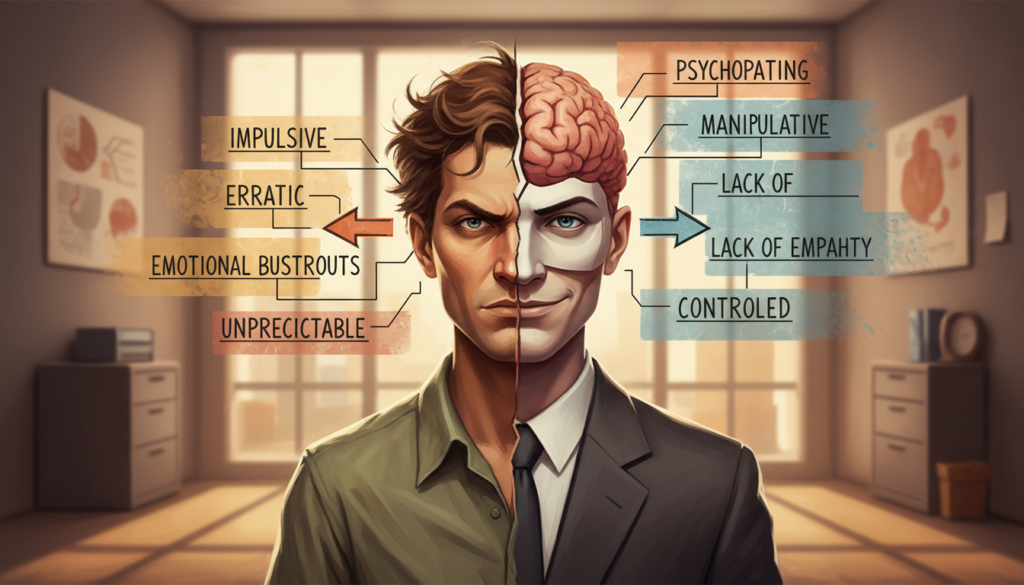
The difference between psychopathy and sociopathy is more than just words. It shows deep differences in how people think and act. Both terms describe people with antisocial personality disorder, but they act and think differently.

Behavioral Differences
Psychopathy and sociopathy show different behaviors. Psychopathy is marked by a lack of empathy, impulsivity, and a need to control. People with psychopathic traits plan their actions carefully. They use their charm and smarts to get what they want.
On the other hand, sociopathy is linked to erratic and impulsive actions. It’s often caused by the environment, like childhood trauma.
For example, a psychopath might plan a crime carefully. They use their charm to trick others and avoid getting caught. A sociopath, on the other hand, might act on impulse, without thinking much.
Underlying Psychological Factors
Psychopathy and sociopathy have different roots. Psychopathy is thought to have a strong genetic link. Some studies suggest certain genes might make someone more likely to be psychopathic.
Sociopathy, on the other hand, is often seen as a result of environment. Things like childhood trauma or how someone was raised play a big role.
This difference helps us understand why some people might become psychopathic or sociopathic. For example, someone with a family history of psychopathy might be more likely to develop it. But someone who had a tough childhood might be more likely to become sociopathic.
Social Responses and Outcomes
How society reacts to psychopathy and sociopathy can be very different. People with psychopathic traits are often good at manipulating others. They can seem normal or even charming, making it hard to see their true nature.
Sociopaths, on the other hand, might struggle more in social situations. Their impulsive and erratic behavior can make it easier for others to spot their problems.
Knowing these differences is key for accurate psychopathy diagnosis. It helps mental health professionals create better treatment plans. By understanding the unique traits of psychopathy and sociopathy, they can help people in a more effective way.
The Role of Genetics in Psychopathy
Genetics play a big role in psychopathy, but it’s not the only factor. Research shows that genes affect traits like empathy and emotional control. This is important to understand.
Hereditary Influences
Studies prove psychopathy has a genetic link. Hereditary influences can change how genes work in emotional and behavioral areas. For example, genes in the serotonin system link to aggressive and impulsive actions seen in psychopaths.
Environmental Factors
Genetics set the stage, but environmental factors really shape psychopathy. Things like childhood trauma and family dynamics play a big part. A caring environment can help, while a tough one can make things worse.
Research Findings on Psychopathic Traits
Recent studies have made big leaps in understanding psychopathy’s genetic roots. Twin and adoption studies show psychopathy is heritable, with estimates between 50% to 80%. Molecular genetic studies have found specific genes linked to psychopathy, like those in neurotransmitter systems and emotional control.
It’s key to understand how genes and environment work together for psychopathy. This knowledge helps in creating better treatments. It can help reduce bad behavior and improve lives.
Assessing Psychopathy: Tools and Methods
To spot psychopathic traits, experts use many tools and methods. Figuring out psychopathy is tough. It needs a deep look at someone’s actions, personality, and mind.
Hare Psychopathy Checklist-Revised (PCL-R)
The Hare Psychopathy Checklist-Revised (PCL-R) is a key tool for spotting psychopathy. It was made by Robert Hare. It checks many parts of a person’s behavior and traits linked to psychopathy.
It has 20 items, each rated on a 3-point scale. The higher the score, the more psychopathic traits are shown. The PCL-R is seen as a solid and true way to check for psychopathy in both real-life settings and studies.
Key features of the PCL-R include:
- Comprehensive assessment of interpersonal, affective, and behavioral characteristics
- Standardized scoring system
- High reliability and validity
Self-Report Inventories
Self-report inventories are also used to check for psychopathic traits. They ask people about their own experiences and actions. This gives clues about their personality and mind.
But, these tools have limits. People with psychopathic traits might not answer truthfully.
Examples of self-report inventories include:
- Psychopathic Personality Inventory (PPI)
- Levenson Self-Report Psychopathy Scale (LSRP)
Clinical Interviews and Behavioral Assessments
Clinical interviews and behavioral checks are key parts of checking for psychopathy. They let experts see and judge a person’s actions, how they interact with others, and their feelings in different situations. By mixing clinical talks with behavioral checks, experts can really understand someone’s psychopathic traits.
“A complete check of psychopathy needs a mix of methods, using both set tools and skilled expert judgment.” – Robert Hare
By mixing these tools and methods, mental health experts can accurately find psychopathy. Then, they can make good plans for treatment.
The Impact of Psychopathy on Relationships
It’s important to understand how psychopathy affects relationships. This includes family, romantic partners, and work colleagues. Psychopathy is marked by a lack of empathy and impulsiveness, which can strain relationships greatly.
Challenges in Family Dynamics
Family life can be tough when someone shows psychopathic traits. Manipulative behavior and a lack of empathy can cause tension and emotional pain. The person might use guilt, anger, or self-pity to control others, making the environment toxic.
Family members might feel isolated, anxious, or depressed. They deal with a lot of stress from a psychopathic relative. It’s key for families to spot these behaviors and get help to handle them well.
Effects on Romantic Partnerships
Romantic relationships with someone who has psychopathic traits can be rocky. The person might seem charming at first but then become manipulative and controlling. Emotional detachment and a lack of real emotional connection can make the other partner feel empty and unhappy.
Those in relationships with psychopathic individuals might feel anxious, depressed, or lose their self-worth. Spotting psychopathic behavior early can help lessen its negative effects.
Workplace Implications and Interactions
At work, people with psychopathic traits can make things difficult. Manipulative and deceitful behavior can cause conflicts and make teamwork hard. Colleagues might feel belittled or manipulated, creating a bad work atmosphere.
It’s vital for companies to know how psychopathy can affect the workplace. They should have plans to manage and reduce these issues. This can help keep the work environment healthy and productive.
Common Myths About Psychopathy
Understanding psychopathy means clearing up common myths. These myths come from media and popular culture. They make people think wrong about those with psychopathic traits.
Many myths shape how we see and deal with people who might have psychopathic tendencies. Let’s look at some myths and the facts that debunk them.
Myth: All Psychopaths are Violent
One big myth is that all psychopaths are violent or criminal. But studies show this isn’t true. Some psychopaths might act violently, but many don’t. They use their charm and tricks to get what they want without violence.
Myth: Psychopaths Can’t Love
Another myth is that psychopaths can’t love or form deep connections. It’s true they might find it hard to connect emotionally. But saying they can’t love at all is too simple.
Psychopaths might form bonds, but these are often shallow or for their own gain. Knowing this helps us understand their relationships better.
Myth: Psychopathy is a Mental Illness
Many think psychopathy is a mental illness like depression or anxiety. But it’s more like a personality disorder. This difference matters for how we diagnose and treat it.
It’s key to clear up these myths for a better grasp of psychopathy. By knowing the truth, we can better handle people with psychopathic traits in our lives and work.
Identifying Psychopathic Traits in Others
Spotting people with psychopathic traits needs a sharp eye for their actions and feelings. Psychopaths show no empathy, act on impulse, and try to control others. Knowing these signs is key in both personal and work life.
Signs to Watch For
Some key signs of psychopathy include:
- Superficial charm: They seem charming and friendly at first, hiding their true selves.
- Lack of empathy: They don’t care about others’ feelings, a big warning sign.
- Impulsivity: They make quick decisions without thinking of the outcomes.
- Manipulativeness: They use guilt, lies, or force to get what they want.
Robert Hare, a famous psychologist, says, “Psychopaths seem normal at first, making them hard to spot.”
“The psychopath is a chameleon-like individual who can blend into the background and mimic the emotional and behavioral responses of those around them.”
Contextual Behaviors and Situations
It’s important to see how behaviors fit into different situations. For example, being aggressive in stressful times doesn’t always mean someone is a psychopath. But, if someone acts manipulatively or antisocial often, it’s a red flag.
Also, how someone acts with others matters. If someone is very charming at work but cold in personal life, they might have psychopathic traits.
Trusting Your Instincts
Listening to your gut is key in spotting psychopathic traits. Sometimes, you might feel off or uneasy around someone without knowing why. Paying attention to these feelings and looking into them is important.
As we deal with many people, knowing the signs of psychopathy and trusting our instincts helps us make better choices. By understanding these signs and how they fit into different situations, we can better spot and handle people with psychopathic traits.
The Consequences of Failing to Recognize Psychopathy
Not spotting psychopathic traits can cause big problems in life. When we miss these signs, we and others might face manipulation, exploitation, and harm.
Personal and Professional Relationships
Ignoring psychopathy can hurt personal and work relationships. People with these traits often play games to control others. This can damage trust, cause emotional pain, and lead to financial loss.
- Deterioration of trust
- Emotional distress for those involved
- Potential financial or professional exploitation
Spotting these traits early can help avoid these issues and keep relationships strong.
Legal Implications
Actions of those with psychopathic traits can lead to legal trouble. This trouble can affect them and those around them. It might include lawsuits, criminal charges, or being held liable for ignoring these traits.
- Lawsuits resulting from manipulative or deceitful behavior
- Criminal charges in more severe cases
- Potential liability for negligence if psychopathic traits were ignored or downplayed
Knowing and spotting psychopathy can help avoid legal problems.
Mental Health Issues
People with psychopathic traits and those around them can face mental health problems. For the person with traits, this might mean acting impulsively, being aggressive, or using drugs.
- Increased impulsivity
- Aggression
- Substance abuse
Those around them might feel anxious, depressed, or develop PTSD. This stress can come from dealing with someone who is manipulative.
- Anxiety disorders
- Depression
- Post-traumatic stress disorder (PTSD)
Recognizing psychopathy early and getting help can reduce these risks. It can also improve mental health for everyone involved.
Interventions for Individuals with Psychopathic Traits
Interventions for psychopathy aim to lessen antisocial behavior. They use specific therapies and support systems. A full plan is needed to meet the complex needs of those with these traits.
Counseling and Therapeutic Approaches
Counseling and therapy are key for those with psychopathic traits. Therapeutic approaches like cognitive-behavioral therapy (CBT) help change behavior. They work by changing thought patterns and beliefs.
Individualized treatment plans are vital. They meet each person’s unique needs. This approach helps in developing better coping skills and managing behavior.
Group Therapy Options
Group therapy offers a place to learn social skills. Group therapy sessions improve communication, empathy, and teamwork. It’s a chance to learn from others facing similar issues.
Being in group therapy helps see how actions affect others. It encourages taking responsibility and positive change.
Long-term Management Strategies
Managing psychopathic traits long-term means constant monitoring and support. Continuous assessment and adaptation of treatment plans are key. They help meet changing needs.
Long-term commitment to therapy and support is essential. It’s the path to lasting change and less chance of relapse.
The Future of Psychopathy Research
Research into psychopathy is growing, bringing new insights. These could change how we see this complex condition. We’re seeing big steps forward in many areas, like brain studies and new treatments.
Advances in Neuroimaging Studies
Neuroimaging is key to understanding psychopathy. Studies using fMRI and other methods are giving us new views. They show us how the brain works in people with psychopathic traits.
For example, research shows psychopaths have different brains. Their amygdala and prefrontal cortex don’t work like they should. This helps us find better ways to diagnose and treat them.
New Therapeutic Approaches
Dealing with psychopathy is tough. It’s hard to get people with psychopathic traits to open up. But, new treatments are being tried to help.
One new area is treatments that target specific problems. For instance, there are therapies to help with empathy and controlling emotions. These could make a big difference.
“The development of effective treatments for psychopathy requires a complete understanding of its psychological and neurological roots.”
The Importance of Public Awareness
It’s vital to raise awareness about psychopathy. This helps people understand and reduces stigma. By teaching the public about psychopathy, we can help sooner and support those affected.
Public campaigns can also clear up myths about psychopathy. They help create a more informed and caring community.
| Key Area | Current Status | Future Directions |
|---|---|---|
| Neuroimaging Studies | Advances in fMRI and other techniques | Further insights into brain structure and function |
| Therapeutic Approaches | Development of targeted interventions | Improved treatment outcomes through personalized therapy |
| Public Awareness | Increasing understanding and reducing stigma | Enhanced community support and earlier intervention |
The future of psychopathy research looks bright. Ongoing studies and new trends will help us understand and manage psychopathy better.
Supporting Loved Ones Affected by Psychopathy
Helping loved ones with psychopathy needs a mix of education, resources, and expert advice. People with psychopathic traits can deeply affect their families and friends. This often leads to emotional pain and confusion.
Strategies for Family Members
Family members can use several strategies to cope with a loved one with psychopathic traits. Setting clear boundaries is key to keeping your emotional health. It’s also vital to avoid being manipulated by their charm or lies.
- Educate yourself about psychopathy to better understand it.
- Build a support network of friends, family, or support groups.
- Take care of yourself to manage stress and emotional turmoil.
Resources for Support and Guidance
There are many resources for family members and loved ones of those with psychopathic traits. Support groups offer a safe place to share and get advice. Counseling or therapy can also help with emotional coping.
Some great resources include:
- Online forums and support groups for families affected by psychopathy.
- Therapists or counselors with experience in psychopathy.
- Books and educational materials on psychopathy.
When to Seek Professional Help
Knowing when to get professional help is key when dealing with psychopathy. If you or a family member is feeling overwhelmed or concerned about the person’s behavior, it’s time to seek help.
Signs you need professional help include:
- Feeling stressed or anxious because of the person’s actions.
- Struggling to keep healthy boundaries.
- Feeling isolated or overwhelmed.
By getting professional advice, you can find ways to deal with psychopathy’s effects. This can help you and your loved ones feel better.
Conclusion: Recognizing and Responding to Psychopathy Traits
It’s important to know about psychopathic traits for our own safety. Psychopathy is a complex issue marked by a lack of empathy and manipulative actions. This guide has shown us how to spot these traits.

Importance of Awareness and Education
Knowing about psychopathy is key. Learning about its signs helps us spot them in our lives. Early recognition helps avoid harm from psychopathic people.
Learning the truth about psychopathy helps us see it clearly. This knowledge helps us handle people with psychopathic traits better.
Empowering Individuals to Take Action
Knowing about psychopathy empowers us to protect ourselves. By understanding psychopathy, we can take steps to stay safe. Setting boundaries is often needed with psychopathic individuals.
Helping others understand psychopathy is also important. This way, we can build stronger support systems for those affected.
Final Thoughts on Understanding Psychopathy
Dealing with psychopathy needs a full approach. This includes being aware, educated, and empowered. By understanding psychopathy, we can make our world safer for all.
It’s vital to keep studying psychopathy. This research helps us find better ways to diagnose and treat it. Together, we can create a society that handles psychopathy better.
Additional Resources and Further Reading
If you want to learn more about psychopathy, there are many resources available. They offer deeper insights into psychopathy traits and research.
Recommended Literature
Many books dive deep into psychopathic traits. Written by top psychologists and researchers, they share valuable knowledge. These books help us understand the complexities of psychopathy better.
Informative Websites and Organizations
There are websites and organizations focused on mental health and psychology. They have lots of info on psychopathy. They also offer support and resources for those affected by psychopathy.
Research Papers and Journals
Research papers and journals publish new findings on psychopathy. They keep us updated on the latest in psychopathy research. These resources are key for understanding psychopathy traits.
FAQ
What are the primary characteristics of psychopathy?
How does psychopathy differ from sociopathy?
Can psychopathy be diagnosed using standardized tools?
What are the consequences of failing to recognize psychopathic traits in others?
How can individuals with psychopathic traits be supported and managed?
What is the role of genetics in the development of psychopathy?
Are all individuals with psychopathic traits violent?
How can family members and loved ones cope with the challenges posed by psychopathy?
What is the importance of public awareness in addressing psychopathy?
What are some recommended resources for further learning about psychopathy?

