

Can knowing the human mind help solve crimes? This question is at the core of a field that mixes psychology and forensic science. Experts use psychological methods to study evidence and create profiles. This helps in solving crimes and catching the culprits.
Investigative psychology is key in understanding human actions, mainly in crime solving. It uses a detailed method to study evidence and make profiles. This helps detectives find suspects.
As we dive into forensic psychology, we’ll see how important it is. We’ll also learn about its role in understanding human behavior.
Key Takeaways
- The application of psychological principles to analyze evidence and develop profiles.
- The significance of investigative psychology in understanding human behavior.
- The role of forensic psychology in criminal investigations.
- The importance of systematic approaches to analyzing evidence.
- The power of criminal profiling in aiding investigations.
Understanding Investigative Psychology
Investigative psychology helps us understand the minds behind crimes. It mixes psychology and law to better solve crimes. This field is key in uncovering the reasons behind criminal actions.
Definition and Scope
Investigative psychology uses psychology to study crimes. It includes behavioral analysis, offender profiling, and crime scene analysis. It looks at all parts of criminal behavior and how to investigate them.
It helps investigators understand criminal behavior. This way, they can analyze evidence better and solve crimes. It also helps in interviewing witnesses and suspects, making investigations more effective.
Historical Background
Investigative psychology has grown a lot. It started with simple profiling and now uses many psychological theories. It has evolved with new research and forensic science.
Important milestones have shaped this field. The first profiling units were set up, and new ways to study criminal behavior were developed. These changes have deepened our understanding of criminal psychology.
| Key Developments | Description | Impact |
|---|---|---|
| Establishment of Profiling Units | Creation of specialized units focused on offender profiling | Enhanced investigative capabilities |
| Advances in Psychological Theories | Integration of new psychological theories into investigative practices | Improved understanding of criminal behavior |
| Empirical Research | Conducting studies to validate investigative techniques | Evidence-based practices in investigations |
The Role in Criminal Justice
Investigative psychology is vital in the criminal justice system. It gives law enforcement the tools to solve crimes. It helps catch offenders and prevent future crimes.
By using psychology in investigations, it helps understand criminal behavior better. This knowledge is key for crime prevention and improving the justice system.
Theoretical Frameworks in Investigative Psychology
Theoretical frameworks are key in shaping how we do things in investigative psychology. They help us understand criminal behavior. This lets us analyze data and come up with good strategies.
Behavioral Models
Behavioral models are vital in understanding criminal actions. They look at many things, like the environment and the person’s psychology. This helps us figure out why crimes happen.
Using these models, we can spot patterns in criminal behavior. This helps us create psychological profiles. These profiles help us find suspects and predict their next moves.
Cognitive Theories
Cognitive theories are also important. They deal with how criminals think and make decisions. By knowing this, we can improve how we question them.
These theories also help us analyze criminal behavior. We can see what makes people commit crimes. This helps us find suspects and understand their motives.
Social Psychology Insights
Social psychology gives us clues on how people are influenced by others. It looks at things like group dynamics and cultural norms. This helps us understand why crimes happen.
By using social psychology, we get a better picture of criminal behavior. This helps us make our investigations more effective.
The Application of Investigative Psychology
Understanding the psychological side of crime helps solve cases. Investigative psychology uses many techniques to aid in criminal investigations today.
Profiling and Behavioral Analysis
Criminal profiling is key in this field. It creates detailed profiles of offenders based on their behavior and psychology. This helps narrow down suspects and predict their actions.
Behavioral analysis looks into why and how criminals act. By studying crime scenes and data, investigators can piece together what happened and find suspects.
Risk Assessment in Offenders
Risk assessment is important in this field. It predicts if an offender might commit more crimes. It looks at the offender’s psychology, past actions, and environment.
Knowing the risk helps law enforcement focus their efforts. It also guides how to manage and help offenders.
Crime Scene Investigation
Crime scene investigation is a big part of this field. Forensic psychologists analyze evidence from crime scenes. They help understand the offender’s psychology.
This work needs a team effort. Psychology, criminology, and forensic science all play a role. Together, they get a full picture of the crime and find important clues.
| Technique | Description | Application |
|---|---|---|
| Criminal Profiling | Creating offender profiles based on behavioral patterns | Aids in suspect identification and investigation |
| Behavioral Analysis | Analyzing motivations and actions of criminals | Helps in understanding crime patterns and anticipating offender actions |
| Risk Assessment | Evaluating the likelihood of further crimes | Informs crime prevention strategies and offender management |
The Role of Investigative Psychologists
Investigative psychologists are key in solving crimes. They offer insights that go beyond what forensic analysis can do. Their work helps understand why crimes happen, making it easier to solve complex cases.
Collaboration with Law Enforcement
They team up with police to share their psychological knowledge. This helps shape how investigations are done. They do this by:
- Creating profiles of criminals based on their actions
- Checking the mental state of suspects during questioning
- Teaching police about the psychology of crime
This teamwork makes investigations better by adding psychological know-how to police work.


Expert Testimony in Court
They also give expert advice in court. This helps judges and juries grasp the psychological sides of a case. They talk about:
- How reliable eyewitness accounts are
- The mental state of the defendant at the crime
- If the offender can be helped
By explaining things clearly, they make sure the legal process is based on a deep understanding of psychology.
Research and Development
Investigative psychologists also do research. They study crime and how to investigate it better. Their work leads to:
- Better ways to guess who might have committed a crime
- Understanding why people commit crimes
- New tools and methods for investigators
Their research is vital for improving how we solve crimes. It helps keep investigative methods up to date with new challenges in justice.
Techniques Used in Investigative Psychology
Investigative psychologists use many techniques to study criminal behavior and help solve crimes. These methods help understand the complexity of crimes. They also aid in preventing and solving crimes.
Interview and Interrogation Techniques
Effective interview and interrogation methods are key in investigative psychology. These methods help get accurate information from people involved in crimes. Psychologists are trained to conduct interviews that avoid false confessions and get reliable information.
The Reid Technique is a well-known method used in interrogations. It uses a structured approach to get information. But, it’s also important to know its possible drawbacks, like the risk of false confessions.
Analyzing Deceptive Behavior
Understanding deceptive behavior is another important technique. It involves looking at verbal and non-verbal signs to spot dishonesty. Psychologists learn to recognize these signs, like inconsistencies and certain body language.
Behavioral Analysis is key in this process. It’s a detailed look at a person’s behavior to spot deception. This requires a deep understanding of human behavior and psychology.
Data Collection and Analysis
Gathering and analyzing data is essential in investigative psychology. This includes looking at crime scene evidence, witness statements, and suspect profiles.
Using advanced statistical tools helps analyze large amounts of data. This makes it easier to find patterns and connections that might be missed. It aids in solving crimes.
| Technique | Description | Application |
|---|---|---|
| Interview Techniques | Methods used to gather information from witnesses and suspects | Critical in initial stages of investigation |
| Deception Detection | Analyzing verbal and non-verbal cues to identify dishonesty | Used during interrogations and interviews |
| Data Analysis | Examining crime scene evidence and other data | Aids in identifying patterns and connections |
In conclusion, investigative psychology uses a variety of techniques. These include interview and interrogation methods, analyzing deceptive behavior, and data analysis. These methods are vital in solving crimes today.
Investigative Psychology and Serial Offenders
Investigative psychology is key in understanding serial offenders. It helps us see their behavior and why they act the way they do. This knowledge helps catch and stop them.
Characteristics of Serial Crimes
Serial crimes are when one person or group keeps committing crimes. Criminal profiling helps link these crimes. It shows how they are connected.
These crimes can look very different but share some common traits. They often have a similar way of doing things and signs that show what the offender wants.
Psychological Profiles of Serial Killers
Creating psychological profiles of serial killers is complex. It involves looking at their actions, reasons, and past. This helps predict what they might do next.
Important parts of a serial killer’s profile include their feelings, social skills, and smarts. Offender profiling helps paint a clear picture of the person.
Case Studies and Insights
Looking at serial offender cases gives us important information. Criminal behavior analysis finds patterns that guide investigations.
These studies help us understand why people become serial offenders. Things like childhood trauma, mental health, and feeling alone play big roles.
- Case studies help us understand serial offenders’ minds.
- They give us clues on why they act the way they do.
- Studying these cases helps us make better plans to catch them.
The Impact of Technology on Investigative Psychology
Technology is changing how we understand and solve crimes. It brings new ways to study criminal behavior and help in investigations.
Digital Evidence and Forensic Psychology
Digital technology has made more evidence available for crime solving. Forensic psychology is key in studying this evidence. It helps investigators piece together crimes and grasp the mind of criminals.
Digital evidence includes emails, social media, and online actions. Forensic psychologists use special methods to study this. They uncover what drives suspects and their actions.
Use of AI in Criminal Profiling
Artificial Intelligence (AI) is changing how we profile criminals. It helps predict and understand their behavior. AI looks through lots of data to find patterns humans might miss.
“The integration of AI in criminal profiling represents a significant advancement in investigative psychology, enabling more accurate and efficient profiling processes.”
AI tools give investigators detailed profiles of suspects. This helps catch criminals more effectively.
Challenges with Cybercrime
Technology has made solving crimes easier but also harder, like with cybercrime. Cybercrime is tough because it leaves digital clues and can be anonymous.
Psychologists now face the challenge of cybercrime’s psychological side. They need to understand why these crimes happen and how to stop them. It’s a mix of psychology and technology.
As tech gets better, so must forensic psychology. It needs new ways to keep up with crime and its changing nature.
Challenges Faced in Investigative Psychology
Investigative psychology is key in solving crimes and understanding why people commit them. Yet, it faces many challenges. These include ethical issues, the limits of profiling, and the misuse of techniques.
Ethical Considerations
One big challenge is the ethical side of things. Confidentiality and privacy are top priorities. Psychologists deal with sensitive info about suspects and victims. They must handle this info carefully.
Using psychological methods in questioning raises questions about coercion and manipulation. Psychologists must find a balance between getting info and respecting people’s rights.
Psychological profiles can also be a problem. They might lead to stereotypes or misattribution of characteristics. This could result in wrongful convictions. So, it’s vital for psychologists to be aware of these risks and keep improving their methods.
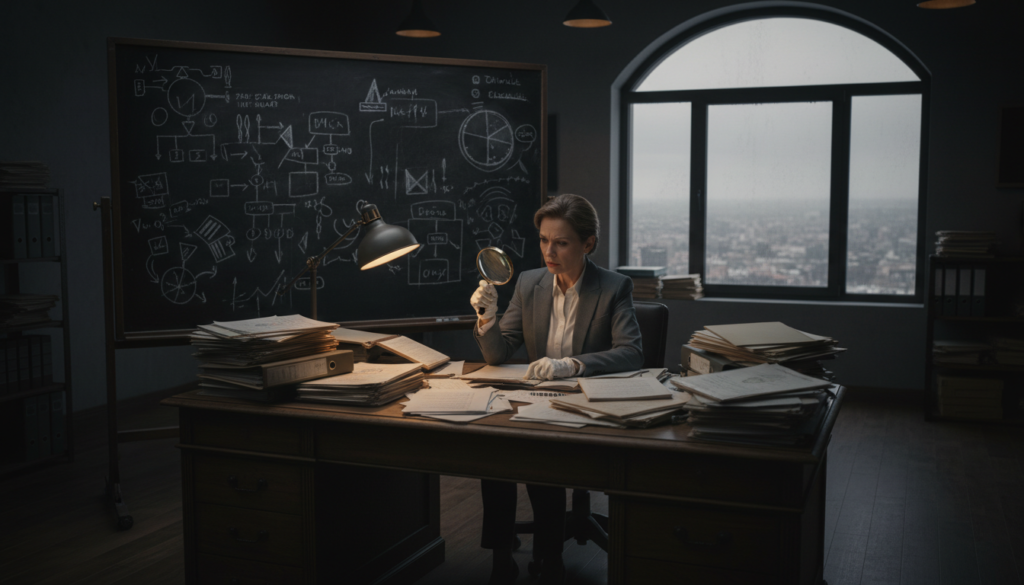
Limitations of Psychological Profiling
Psychological profiling is powerful but has its limits. A big challenge is the lack of a universal profiling method. Different psychologists use different methods, affecting the quality and reliability of profiles.
Profiles are based on stats and might not always be right. They’re not a guarantee of how someone will act. This can lead to mistakes in investigations.
Another issue is confirmation bias. Investigators might focus too much on what they already think. This can cause them to miss important clues. Psychologists need to stay objective and open-minded.
Misuse of Investigative Techniques
Another challenge is the misuse of techniques like interrogation and interviewing. These can lead to false confessions or wrong information. It’s important to use these methods wisely and understand their effects.
Technology is also changing investigations, but it brings new challenges. While tech helps gather evidence, it raises privacy concerns and can introduce errors. Psychologists must keep up with tech and use it ethically.
Case Studies in Investigative Psychology
Case studies are key in investigative psychology. They give us a close look at the complex world of criminal investigations. By studying real cases, experts can better understand the psychological sides of crime.
Landmark Cases and Their Impact
Some cases have greatly helped grow investigative psychology. The BTK Killer case, for example, showed us a lot about serial killers. It taught us how important it is to know why they do what they do.
Dr. Katherine Ramsland says, “The BTK case shows how knowing a killer’s mind can help catch them.”
“The psychological autopsy can provide critical insights into the motivations and behaviors of individuals involved in criminal activities.”
Lessons Learned from Specific Investigations
Some investigations have taught us a lot about using psychology in crime solving. The Golden State Killer case is a great example. It showed how combining old-school detective work with new DNA tech and psychology can solve crimes.
These examples highlight the need for a team effort in solving crimes.
Future Directions in Case Studies
As psychology in crime solving grows, we’ll see more use of new tech and methods. AI in criminal profiling, for example, could make solving crimes faster and more accurate. By learning from each case, we can keep improving how we solve crimes.
The Intersection of Investigative Psychology and Behavioral Science
Understanding criminal behavior needs a mix of investigative psychology and behavioral science. This blend is key to learning why crimes happen and how to stop them.
Understanding Criminal Behavior
Criminal behavior is complex, influenced by many factors. These include psychological, social, and environmental elements. Investigative psychology helps analyze these factors to understand why people commit crimes.
Behavioral analysis helps investigators spot patterns in criminal behavior. This makes it easier to predict and prevent crimes. It’s very helpful in cases of serial offenders, where knowing their patterns can lead to better investigations.
The Role of Environmental Factors
Environmental factors greatly shape criminal behavior. Investigative psychology looks at how surroundings and situations affect people’s actions. For example, certain environmental stressors can make some people more likely to commit crimes.
By studying environmental factors and using behavioral science, we can create better crime prevention plans. This might include changing the environment to make it less likely for crimes to happen.
Implications for Prevention Strategies
Combining investigative psychology and behavioral science is important for making prevention strategies. Knowing why crimes happen and what influences them helps law enforcement and policymakers make better plans.
For example, we can create programs to help people at risk of committing crimes. We can also make environmental changes, like better lighting or more surveillance, to stop crimes.
| Prevention Strategy | Description | Target Outcome |
|---|---|---|
| Psychological Interventions | Programs addressing mental health issues among at-risk populations | Reduction in criminal behavior |
| Environmental Modifications | Changes to the physical environment to deter crime | Decreased crime rates |
| Community Engagement | Initiatives to build trust and cooperation between law enforcement and the community | Improved crime reporting and prevention |
The mix of investigative psychology and behavioral science is a powerful tool for fighting crime. By using insights from both fields, we can make public safety better.
Investigative Psychology in the Media
Media shows about investigative psychology have caught the public’s eye and sparked debate. This field, once mainly for experts, now shows up in movies, documentaries, and TV shows.
Portrayal in Films and Documentaries
Movies and documentaries often make investigative methods and profiling look exciting. But, they sometimes mix up what’s real and what’s not. This can be thrilling for viewers but worries experts about how accurate these shows are.
Key aspects of investigative psychology portrayed in media include:
- Criminal profiling and behavioral analysis
- Forensic psychology and evidence interpretation
- Investigative interviewing techniques
Influence on Public Perception of Crime
The way media shows investigative psychology shapes how people see crime and investigations. Crime dramas can make the real work of detectives seem different than it really is.
This can have two sides:
- It can make people more curious about how detectives work.
- It might also spread wrong ideas about what detectives do.
Ethical Reporting in Crime Stories
When media talks about crime and psychology, it’s important to report ethically. Journalists need to share information without giving away too much. They should also avoid guessing about suspects or motives.
Best practices for ethical reporting include:
- Avoiding the release of sensitive case details
- Refraining from speculation about suspects or motives
- Providing context to help the public understand the complexities of investigative psychology
By following these guidelines, journalists can help the public understand investigative psychology better. This can lead to a more informed conversation about justice.
Future Trends in Investigative Psychology
The field of investigative psychology is on the verge of a big change. This change comes from new research and technology. It’s clear that investigative psychology will keep being key in the criminal justice system. New trends will make it even better.
Advances in Psychological Research
One big trend is the growth in psychological research. This research gives us new insights into why people commit crimes. It helps make investigative work better.
Studies are showing us how the mind works in crime. This helps investigators talk to witnesses and suspects better. It also helps them understand evidence.
“The integration of psychological research into investigative practices has the power to make criminal investigations more accurate and efficient.”
Integration with Law Enforcement Technology
Another big trend is combining investigative psychology with law enforcement tech. New tech like digital forensics, AI, and data analytics is helping. For example, AI can find patterns in big data that might show crime.
| Technology | Application in Investigative Psychology |
|---|---|
| Digital Forensics | Analysis of digital evidence to aid in criminal investigations |
| Artificial Intelligence | Pattern recognition in large datasets to identify possible criminal activity |
| Data Analytics | Statistical analysis of crime data to guide investigative strategies |
Evolving Approaches to Crime Prevention
Investigative psychology is also changing how we prevent crime. By knowing why people commit crimes, we can stop it before it starts. This helps lower crime rates.
For example, programs for at-risk youth can stop them from becoming criminals. Also, helping people who have committed crimes in the past can stop them from doing it again.
As investigative psychology grows, the future looks bright. By using new research, tech, and prevention methods, we can make criminal investigations better. This will help make our society safer.
Conclusion
Investigative psychology is key to understanding human behavior and helping solve crimes. It uses psychological principles to uncover insights into criminal actions.
Key Takeaways
The field of investigative psychology has grown a lot. It now uses many theories and methods like psychological profiling. These tools have made investigations more accurate and our understanding of crime better.
Future Research Directions
Future studies should mix investigative psychology with new tech like AI. This will improve criminal profiling and investigations. Also, more research on applying psychological theories to real cases is needed.
Understanding Psychology in Investigation
Knowing psychology is essential in investigations. It helps investigators understand evidence, assess risks, and create prevention plans. As the field grows, so will its role in criminal justice.
FAQ
What is investigative psychology, and how is it used in criminal investigations?
How does investigative psychology contribute to the understanding of criminal behavior?
What are some of the theoretical frameworks that underpin investigative psychology?
How is profiling used in investigative psychology?
What is the role of investigative psychologists in the criminal justice system?
How do investigative psychologists analyze deceptive behavior?
What are some of the challenges faced in investigative psychology?
How has technology impacted investigative psychology?
What is the significance of case studies in investigative psychology?
How does investigative psychology intersect with behavioral science?
How is investigative psychology portrayed in the media?
What are some of the future trends in investigative psychology?

