



What if the key to exceptional team performance has nothing to do with where people sit? 🤔
The workplace has changed forever! COVID-19 didn’t just change where we work—it changed how we lead. Companies like Automattic show it works, with 1,200 team members doing great in 77 countries! They focus on results, not where people are. ✨
Here’s the truth: office centricity is over! 💪 Today’s top talent wants flexibility, autonomy, and purpose. If you’re measuring success by who shows up at the office, you’re falling behind. Hybrid leadership and leadership in digital transformation are key right now!
This guide will change how you think about team success! You’ll learn frameworks that help your team do great work from anywhere. 🚀 Get ready to become the outcomes-focused leader your team needs!
Key Takeaways
- Results-based management outperforms traditional presence-based oversight in productivity and team satisfaction
- Remote workers often show higher productivity levels than those in offices
- Successful virtual leadership strategies focus on clear outcomes, trust, and accountability, not location
- Companies that manage without location gain an edge in attracting top talent
- Outcomes-focused leadership needs systems, communication, and tools for success
- Flexibility and autonomy are now non-negotiable expectations for top professionals in all fields
Understanding Outcomes-Based Management in Hybrid Environments
Managing distributed teams is a big change. It’s not just about new software or more video calls. It’s about changing how you see success and measure it across your whole team!
The shift to results-based management is key for hybrid leaders. You move from seeing productivity as visibility to focusing on real outcomes. This changes how you lead, evaluate, and support your team! 🎯
Adopting outcome-based management means changing your leadership style. It focuses on what gets done, not where or when. It’s about managing results, not just appearances!

From Counting Hours to Measuring Impact
Traditional offices are actually interruption factories that hurt performance. They distract and pressure people to look busy. This is not how you boost productivity! 😲
Remote workers who really wanted to work from home were more productive. They had control over their space and focused on results, not just being seen. This is the key to success!
Changing from watching hours to focusing on outcomes is essential. It lets your team work better and you see real progress toward goals. This is a game-changer! ✨
You need to let go of old habits. No more checking who’s working or who’s there early. Instead, focus on what’s done and how it moves your mission forward! 🚀
Results-oriented leadership asks different questions. It’s about what you accomplished, not how long you worked. This approach boosts motivation and accountability without feeling watched all the time! 🚀
The Foundation of Performance-Driven Management
Managing by outcomes is based on four key principles. Master these, and your team will perform better than ever! 💎
First principle: Clear expectations. Your team needs to know what success means for each task. Vague goals confuse and frustrate. Clear goals focus and drive progress! When everyone knows the goal, they can find their own way.
Second principle: Measurable results everyone can see. Distributed team productivity thrives when everyone can see progress. You can’t manage what you can’t measure, and your team can’t celebrate wins they can’t see!
Third principle: Regular feedback loops that inform and adjust. Outcome-based management needs ongoing talks about progress and challenges. These conversations build trust and alignment across distances! 🤝
Fourth principle: Trust-based autonomy that empowers decision-making. This means giving your team the freedom to decide how to achieve goals. Autonomy is not chaos—it’s structured freedom within clear limits!
Here’s what makes hybrid teams succeed:
| Outcome-Based Approach | Activity-Based Approach | Impact on Team |
|---|---|---|
| Measures completed deliverables and impact | Tracks hours logged and meetings attended | Autonomy vs. surveillance culture |
| Defines clear success criteria upfront | Monitors processes and activities | Clarity vs. confusion about priorities |
| Focuses coaching on results improvement | Emphasizes time management and presence | Growth vs. compliance mindset |
| Celebrates wins based on outcomes achieved | Recognizes effort and attendance | Motivation vs. resentment patterns |
There’s a big link between feeling in control and doing well at work. Research shows that giving up control leads to better performance! 📊
This changes everything about how you lead! You’re ready to learn about setting clear goals, creating accountability, and coaching your team to success. Let’s get started! 💪
Defining Clear Outcomes and Objectives for Your Team
The foundation of results-driven management starts with knowing what success means for your team! 🎯 Without clear outcomes, your team is lost without a compass. This leads to confusion, wasted effort, and doubt about progress.
Many remote leaders confuse being busy with being effective. Your team might spend hours in meetings and emails. But, none of that matters if they’re not working toward meaningful goals.
Setting goals together through real talks about what’s needed and possible is key. When team members know the “why” behind their work, they can achieve desired outcomes. This approach makes leaders stand out! 💪
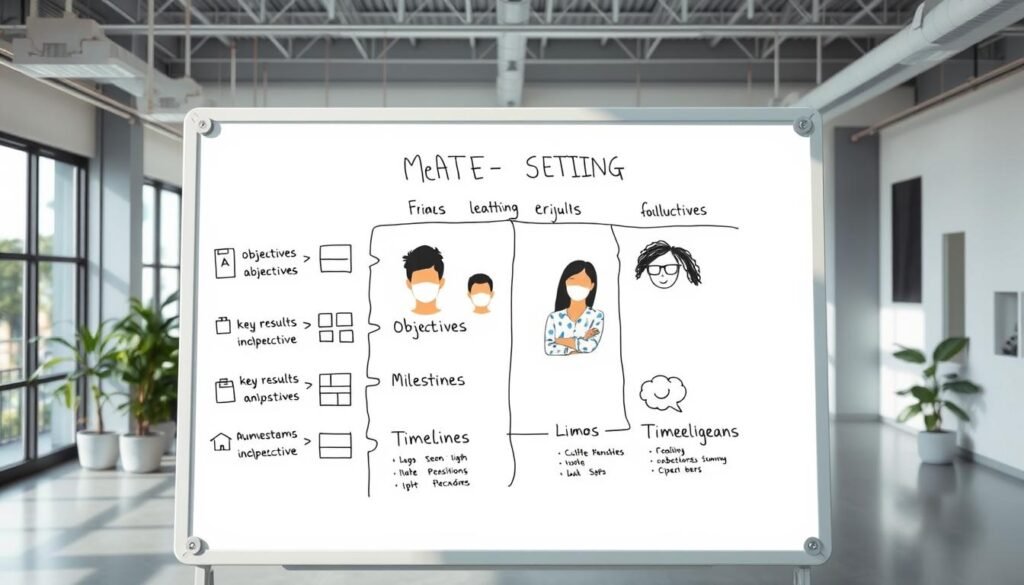
Step 1: Distinguish Between Activities, Outputs, and Outcomes
This distinction is vital for effective leadership, yet many managers get it wrong! Let’s explore what each term means and why it’s important for your team’s success! 🔍
Activities are the daily tasks your team does. They fill calendars but don’t always create value.
Outputs are the things your team produces from those activities. Think reports, presentations, or code commits. Outputs are easier to measure but aren’t the ultimate goal.
Outcomes are the real impact and results from those outputs. They show the change or value delivered to your organization. Outcomes are what truly matter! 🎪
Let’s look at examples that make this clear:
| Activities | Outputs | Outcomes |
|---|---|---|
| Attending customer feedback meetings | Creating a 40-page analysis report | Reducing customer churn by 18% |
| Coding and testing software features | Deploying 12 new feature releases | Increasing user engagement by 25% |
| Conducting training sessions | Training 50 team members | Improving team productivity by 30% |
| Holding one-on-one meetings | Documenting development plans | Increasing employee retention by 15% |
Notice the pattern? You can have lots of activities and impressive outputs without achieving meaningful outcomes. That’s why focusing on outcomes is key! 🚀
The team must have established roles and rules of engagement, and they must feel their work has significance and makes a difference.
When your team understands this, everything changes. They focus on creating real impact, not just looking busy. This is how you drive success in a distributed team! 💪
Step 2: Apply the SMART Framework to Remote Team Goals
SMART goals are important, but they need special handling for remote teams! Let’s make this practical for your team! 💡
Specific: Your outcomes must be clear and unambiguous. Vague goals like “improve customer satisfaction” don’t work. Instead, aim for “increase our Net Promoter Score from 42 to 55.”
Measurable: If you can’t measure it, you can’t manage it remotely! Define how you’ll track progress. What metrics will you use? Where will the data come from? How often will you check in? 📊
Achievable: This is where talking things over is key. You need to discuss what’s realistic given your team’s capacity and constraints. Remote teams face unique challenges, so factor that in!
Relevant: Every outcome should connect to broader organizational priorities. When team members see this connection, their motivation soars! They understand why their work matters.
Time-bound: Deadlines create urgency and focus, but be realistic about distributed team dynamics. Consider coordination time and build in buffer time for asynchronous collaboration.
Here’s what SMART goal setting looks like in action for remote teams:
- ❌ Weak Goal: “Improve our marketing performance”
- ✅ SMART Goal: “Increase qualified leads by 40% (from 250 to 350 per month) by implementing three new content campaigns, measured through our CRM system, by the end of Q2”
See how much clearer and more actionable that becomes? That’s the power of SMART goals for remote teams! 🎯
Involve your team in setting goals. Schedule one-on-one talks to discuss what outcomes matter most. This approach builds buy-in and ensures goals are realistic!
Step 3: Align Individual Outcomes with Organizational Strategy
This is where leadership truly shines! When your team sees how their work contributes to the company’s mission, their engagement and motivation soar! 🚀
Start by making your organizational strategy clear. What are your company’s top priorities this year? What outcomes would represent real success? Don’t assume everyone knows this – communicate it clearly and often!
Then, show how individual outcomes connect to these strategic priorities. Every person on your team should understand: “How does my work contribute to our organization’s success?”
Here’s a practical way to create this alignment:
- Share the big picture: Start team meetings by connecting current projects to organizational goals
- Map contributions: Show team members exactly how their outcomes feed into departmental and company objectives
- Create cascading outcomes: Break down organizational goals into team-level outcomes, then individual-level outcomes
- Celebrate strategic wins: When individuals achieve outcomes that advance organizational strategy, recognize it publicly!
This alignment brings clarity and purpose. Team members aren’t just checking boxes – they’re driving meaningful results that matter to the entire organization! That’s what separates good remote management from truly exceptional leadership! 💪
Creating Outcome Statements That Drive Results
Now, let’s get practical with crafting outcome statements that inspire action and clarity! These statements are your guide for results-driven management! ✨
An effective outcome statement has three essential parts:
- The change you want to create: What will be different when this outcome is achieved?
- The measurable indicator: How will you know you’ve succeeded? What specific metric moves?
- The timeframe: By when should this outcome be achieved?
Here’s the formula: “By [date], we will [achieve specific measurable change] in order to [strategic benefit].”
Let’s see this in action with examples across different functions:
- Sales Team: “By end of Q3, we will increase our average deal size from $15K to $22K by focusing on enterprise clients, contributing to our annual revenue growth target of 35%”
- Product Team: “By December 15, we will reduce our app’s load time from 4.2 seconds to under 2 seconds, improving user experience and supporting our goal of 90% user satisfaction”
- Customer Success: “By end of Q2, we will improve our customer onboarding completion rate from 67% to 85%, reducing early-stage churn and increasing lifetime value”
Notice how each statement is specific, measurable, and connected to broader strategic goals? That’s what drives distributed workforce success! 🎪
The most powerful outcome statements come from collaborative conversations. Discuss what’s needed and what’s realistic. Your team members aren’t just following orders – they’re pursuing outcomes they helped define and believe in!
Remember: objectives should focus on outcomes, not just how hard people work. When you master this approach to goal setting, you create a culture where results speak louder than busy work. That’s the foundation of outcome-based performance that actually delivers! 🏆
Implementing OKRs for Distributed Team Success
Managing a virtual team without constant check-ins is possible with Objectives and Key Results! 💪 This framework keeps everyone aligned and accountable, even when your team is spread across different time zones and locations. It makes it clear what matters most and how success will be measured together! 🎯
Unlike old management ways that focus on what you do, OKRs focus on what you achieve. Your distributed team needs to be accountable to shared goals. Outcome-based leadership gives your team the freedom to decide how to achieve results while keeping everyone on the same page about what needs to be done! ✨
Feeling like you’re making progress is key to motivation. With OKRs, everyone sees how everyone else is doing. This makes celebrating wins a big part of your team culture. 🌟
Setting Effective Objectives and Key Results
Your Objectives are the inspiring “what” you’re aiming for as a team. They should be qualitative, aspirational, and motivating. Think of them as the North Star guiding your decisions. 🚀
Key Results are the measurable “how” you’ll get there. Being specific is your superpower here! Each Key Result should be quantifiable, time-bound, and challenging yet achievable. Aim for three to five Key Results per Objective to capture meaningful progress without getting too complex.
Characteristics of powerful Objectives:
- Inspirational and qualitative, not just numbers
- Aligned with your strategy and team abilities
- Challenging but achievable
- Clear enough for anyone to understand
- Time-bound to a specific quarter or period
Characteristics of effective Key Results:
- Quantifiable with specific numbers or percentages
- Measurable with data and tools
- Outcome-focused, not activity-focused
- Challenging but achievable
- Directly connected to the Objective they support
For remote team management, clarity is key! Your Key Results should be clear enough for anyone to understand, even if they’re working alone at 3 AM. If yes, you’ve nailed it! 💯
Cascading OKRs Across Remote and Hybrid Teams
Cascading is where distributed team management shines! It connects leadership OKRs to team and individual goals, showing everyone how they contribute to the bigger picture. When done right, cascading creates a clear thread of alignment from top to bottom! 🔗
Start with company-wide OKRs that set strategic priorities. These form the base for departmental and team OKRs. Each level should contribute directly to the level above, not just copy it. This is where outcome-based leadership really shines.
The sweet spot for cascading in hybrid teams? Aim for 60% alignment with higher-level OKRs and 40% team-initiated objectives. This balance ensures strategic alignment while keeping innovation and autonomy alive! Your remote team members should have a say in their OKRs, not just receive them. 🎨
Cascading process for distributed teams:
- Share organizational OKRs with the whole company
- Hold virtual alignment sessions for teams to draft OKRs
- Review cross-functional dependencies and adjust for coordination
- Finalize individual contributor OKRs through one-on-one discussions
- Publish all OKRs in a centralized, accessible location
For hybrid work productivity, the cascading conversation itself is a powerful tool. Use these discussions to ensure structure and clarity. When everyone understands how their work contributes to success, accountability becomes natural. 🌈
Running Quarterly OKR Planning Cycles
Quarterly cycles are perfect for distributed team management—long enough to achieve meaningful outcomes, short enough to stay focused and adapt to change. Your planning cycle should feel like a rhythm, not a disruption! Here’s how to make it work for your remote team. 📅
Start your planning process three weeks before the quarter begins. This gives your team time for thoughtful input without dragging the process out. Week one focuses on reflection, week two on drafting, and week three on finalizing commitments. ⏰
During the quarter, have regular check-ins to review OKR progress. Weekly team stand-ups should include a quick OKR pulse check. Monthly deep dives allow for thorough analysis and course corrections. Remember, OKRs are living documents that guide decisions and priorities every day, not just at quarter-end! 📊
Creating Transparent OKR Dashboards
Transparency is everything in remote settings! When progress is visible to everyone, accountability and motivation soar. Your OKR dashboard is the team’s shared scoreboard, where everyone sees how you’re tracking toward goals. 👀
Choose a platform that fits your workflow, not another tool to check. Many teams use Asana, Monday.com, Lattice, or Google Sheets. The tool matters less than the transparency and accessibility! Your dashboard should instantly answer these questions: What are we working toward? How are we progressing? Who owns what? 🎯
Essential elements of effective OKR dashboards:
- Real-time progress indicators with percentage completion
- Color coding for quick status recognition (green/yellow/red)
- Owner identification for each Objective and Key Result
- Last updated timestamp to ensure current information
- Comments section for context and updates
- Links to supporting documentation and data sources
Update your dashboard weekly at minimum—stale data kills engagement faster than anything! Consider designating rotating “dashboard champions” who keep information current and celebrate progress updates. When someone moves a Key Result from 45% to 60% complete, that deserves recognition! 🎉
Transparent performance metrics do something magical for distributed workforce performance: they eliminate the “out of sight, out of mind” problem. Your remote team members feel connected to collective progress even when working asynchronously. Celebrating wins of every person becomes easier when progress is visible to all!
Avoiding Common OKR Mistakes in Virtual Settings
Even experienced leaders stumble with OKRs in virtual team management contexts. The good news? Most mistakes are preventable when you know what to watch for! Let’s turn those pitfalls into stepping stones for success. 🚧
Mistake #1: Setting too many Objectives. Your distributed team can realistically focus on three to five Objectives per quarter—max! More than that dilutes focus and creates the illusion of progress without meaningful outcomes. Quality always trumps quantity with OKRs.
Mistake #2: Making Key Results too vague. “Improve customer satisfaction” isn’t a Key Result—it’s a wish! “Increase NPS score from 42 to 55” is a Key Result. Specificity eliminates ambiguity, which is absolutely critical when team members work independently across locations. 🎯
Mistake #3: Failing to review regularly. OKRs without regular check-ins become shelf-ware. Your hybrid work productivity depends on keeping OKRs alive through consistent attention and course corrections. Build review rhythms into your existing meeting structures!
Mistake #4: Treating OKRs as performance evaluations. This mistake kills honest reporting faster than anything! OKRs should stretch your team toward ambitious goals. If people fear negative consequences for missing targets, they’ll sandbag and set easy goals. Decouple OKRs from compensation decisions to maintain psychological safety. 🛡️
Mistake #5: Creating OKRs in isolation. When leaders develop OKRs without team input, you miss out on insights and sacrifice buy-in. Your remote team management approach should include collaborative OKR creation—this is essential for the teams doing the actual work!
| Common OKR Mistake | Why It Hurts Distributed Teams | Quick Fix Solution |
|---|---|---|
| Too many Objectives (6+) | Creates scattered focus and coordination confusion across time zones | Limit to 3-5 Objectives; prioritize ruthlessly based on strategic impact |
| Vague Key Results | Eliminates accountability and makes async progress tracking impossible | Apply specific numbers, percentages, or measurable milestones to every Key Result |
| Infrequent reviews | OKRs become irrelevant to daily decisions and lose motivational power | Establish weekly pulse checks and monthly deep-dive reviews with full team |
| Top-down creation only | Reduces ownership and misses ground-level insights about what’s achievable | Use collaborative drafting sessions with team input before finalizing OKRs |
The beautiful truth about OKRs? They get easier and more powerful with practice! Your first quarter might feel awkward as everyone adjusts to this outcomes-focused approach. By quarter three, OKRs become the natural language your team uses to discuss priorities and progress. That’s when the real magic of distributed team management begins! ✨💪
Establishing Your Coaching Cadence and One-on-One Structure
The secret to successful remote management is not fancy tech—it’s a consistent coaching rhythm with each team member! 🌟 Your one-on-ones are where trust grows, problems are solved early, and your team feels supported. In hybrid teams, these regular meetings are key for virtual workforce success!
Creating a strong coaching cadence turns scattered individuals into a united, high-performing team. This section will show you how to structure these conversations for the best results!
Designing Regular Check-In Schedules for Remote Members
For remote management best practices, check in with each team member at least once a week! 📅 This helps catch problems early and keeps remote workers connected.
But, your check-in schedule should be flexible! Some team members like structured 30-minute calls every Monday. Others prefer shorter sessions or a mix of scheduled and spontaneous check-ins.
Personalization is key! Adapt your approach to each person’s style and needs. Ask them what schedule works best for them. This shows empowerment and respect for their autonomy.
Consider these factors when designing your schedule:
- Time zone considerations: Schedule meetings when everyone can join without early mornings or late evenings
- Work style preferences: Introverts might prefer set schedules, while extroverts enjoy more spontaneous meetings
- Project phases: Increase meeting frequency during launches or tough times, then scale back when things are steady
- Individual needs: New team members need more check-ins than veterans
Consistency is more important than how long meetings last! A reliable 15-minute weekly chat builds more trust than sporadic hour-long ones. Your team needs to know you’re there, reliably and regularly. That’s how you create safety across distances! 🛡️
Using the Coaching Conversation Framework
Turn your one-on-ones into powerful development sessions with the right framework! The secret? Listen more than you talk and ask more questions than you make statements. 💬 This approach creates empathetic presence even through a screen!
Here’s your practical framework for every coaching conversation:
Start with connection (5 minutes): Begin by checking in on the person, not just the work. Ask “How are you doing?” and really listen. Understand their feelings and frustrations, not just task updates. This builds the human connection that makes everything else possible!
Explore outcomes and progress (10 minutes): Discuss what outcomes they’re working toward and what progress they’ve made. Use questions like “What wins have you had this week?” and “What’s been challenging?” Focus on understanding their perspective before you offer your own.
Identify obstacles collaboratively (8 minutes): This is where leadership magic happens! Ask “What’s blocking your progress?” and “What support do you need from me?” When solutions come from team members themselves, their commitment skyrockets! 🚀
Plan next steps together (5 minutes): Collaborate on clear action items and outcomes for the coming week. Confirm what success looks like and how you’ll measure it.
End with appreciation (2 minutes): Always close by acknowledging specific contributions and expressing genuine appreciation!
Track your question-to-statement ratio during conversations! Adaptive leadership styles require adjusting based on what you discover. Aim for at least three questions for every statement you make. This keeps you in coaching mode, not directing mode.
The power of this framework lies in collaboration. When team members generate their own solutions, they feel empowered. Your role shifts from problem-solver to thought partner—and that’s exactly where you want to be! 💪
Balancing Synchronous and Asynchronous Coaching Sessions
You can’t always match schedules across time zones, and that’s okay! The solution is mastering both synchronous (real-time) and asynchronous (recorded or written) coaching approaches. ⚖️ This balance represents essential remote management best practices that prevent burnout while maintaining connection!
Synchronous sessions work best for complex conversations, emotional situations, brainstorming, and relationship building. Schedule these for your most important coaching moments!
Asynchronous sessions excel for status updates, sharing resources, providing feedback on work, and encouraging. These don’t require both people online at the same time but keep your coaching cadence!
| Session Type | Best Uses | Tools and Methods | Frequency |
|---|---|---|---|
| Synchronous Video | Complex problem-solving, sensitive topics, career development, relationship building | Zoom, Teams, Google Meet for live conversations | Weekly or bi-weekly scheduled |
| Synchronous Chat | Quick questions, urgent issues, rapid feedback, spontaneous check-ins | Slack, Teams chat for instant messaging | Daily as needed |
| Asynchronous Video | Detailed feedback, encouragement, explaining processes, celebrating wins | Loom, recorded messages sent via email or Slack | 2-3 times weekly |
| Asynchronous Written | Status updates, resource sharing, documentation, reflective feedback | Email, shared documents, project management comments | Daily or as needed |
Here’s a powerful approach: send a short async video message between your scheduled sync meetings! Record a 2-3 minute video acknowledging someone’s progress or specific encouragement. This maintains your presence without requiring schedule coordination. 🎥
Use written async updates for regular progress sharing. Ask team members to send brief weekly updates via email or shared documents. Then respond thoughtfully with questions and feedback. This creates accountability without constant meetings!
The magic happens when you combine both approaches strategically. Reserve your live meetings for what truly requires real-time connection. Use async methods for everything else. This flexible leadership approach respects everyone’s time while maintaining consistent support!
Remember, quality matters more than quantity! One thoughtful async video message shows more care than three rushed meetings. Your team will feel supported without feeling micromanaged—and that’s the ultimate goal of outcomes-based leadership! 🌟
Mastering Asynchronous Communication Techniques
Leading distributed teams means mastering asynchronous communication. It’s not just a buzzword. It’s key to team success across time zones, focus, and accountability. 🎯
Employees get stressed by constant interruptions, not the work itself. Asynchronous leadership techniques unlock productivity and give uninterrupted work time. ⚡
The rule is simple: Asynchronous communication should be your default, synchronous meetings should be the exception. Efficient communication is key, not constant talking! 📣
Determining When to Use Async vs. Sync Communication
Choosing between asynchronous collaboration and meetings is critical. It affects productivity, stress, and performance. 🤔
Every meeting asks people to stop their work. That’s expensive! Use meetings sparingly and with purpose.
Here’s your guide for choosing the right communication method:
| Communication Type | Best Use Cases | Response Expectation | Primary Benefit |
|---|---|---|---|
| Asynchronous | Status updates, brainstorming ideas, sharing information, decisions that can wait 24 hours | Within 24 hours | Allows deep work, accommodates time zones, creates written records |
| Synchronous | Complex problems needing immediate discussion, sensitive conversations, urgent decisions, relationship-building | Immediate | Real-time feedback, emotional connection, quick resolution |
| Hybrid Approach | Strategic planning, creative collaboration, team bonding activities | Mixed timing | Combines thoughtful preparation with dynamic interaction |
| Default Choice | When in doubt, start async and escalate to sync only if needed | 24 hours first, then adjust | Respects everyone’s time and work rhythm |
Your asynchronous team collaboration thrives with clear expectations. Set 24-hour response times as the norm. This reduces stress and allows for thoughtful responses. 📝
Remember, if you’re scheduling a meeting, ask if it could be an email instead. If yes, choose async and give your team their time back! 🕒
Creating Documentation Practices for Accountability
Documentation is freedom, not bureaucracy! It creates transparency without micromanagement. This is where digital collaboration excels! 🌟
“Working out loud” changes how teams operate. Team members share their work, decisions, and challenges in shared spaces. This keeps everyone informed without endless meetings! 📚
Here are key asynchronous communication techniques for effective documentation:
- Write clearly and concisely using simple sentences
- State deadlines explicitly without assumptions
- Include context for clear understanding
- Use structured formatting for easy reading
- Infuse positivity to avoid misinterpretation
Create shared spaces for updates. This could be project management tools or team channels. The goal is consistency—everyone knows where to find and share information! 📈
Your documentation should empower, not burden. Keep it simple, relevant, and focused on outcomes. This creates accountability while giving focused work time. 💪
Building Communication Protocols Across Time Zones
Time zones can be a challenge or an advantage with the right protocols. Clear asynchronous communication skills make distance irrelevant. 🌍
Don’t schedule meetings during your own hours, leaving others with late-night calls. That’s not leadership—it’s thoughtless! 🕰️
Here’s how to build fair virtual collaboration across time zones:
- Establish “overlap hours” for urgent matters
- Rotate meeting times to share inconvenience
- Set clear response expectations with 24-hour standards
- Create meeting records for those who can’t attend
- Use time zone-friendly tools for scheduling
Your protocols should ensure no one is left out due to location. Be intentional about sharing information and making decisions! 📊
Adopt these asynchronous communication techniques for messages that work across time zones:
- Clear subject lines that immediately communicate the message’s purpose and urgency level
- Explicit asks stating exactly what you need and by when
- Complete information in the first message so recipients don’t need to wait for your response to take action
- Positive tone markers like emojis or explicit appreciation to prevent misinterpretation
Mastering these protocols keeps your team connected and informed without meeting fatigue. Team members can work at their best, respond thoughtfully, and maintain work-life balance. 🎉
This is where hybrid leadership shines. You’re not managing by presence or availability. You’re leading by creating systems that empower everyone to do their best work, no matter where or when they’re working! 💪
Building Accountability Systems Without Micromanagement
Accountability is key for remote teams, but it must be done right! 🎯 The success of remote teams often depends on how leaders handle accountability. Your team needs clear goals, structure, and ownership, not constant supervision!
Electronic surveillance can really hurt motivation and creativity. When team members feel like they’re being watched, they stop sharing their best ideas. Instead, they focus on looking busy, not being productive!
As a leader, your job is to support your team, not spy on them. Support them in their work and remove any obstacles that get in their way. This way, accountability in remote teams can grow naturally!
Establishing Ownership Models for Remote Team Members
Clear ownership changes how your team works! 💪 When everyone knows what they’re responsible for, confusion goes down and initiative goes up. It’s not about blaming when things go wrong. It’s about empowering people to take charge of their work!
To build remote accountability, define clear ownership boundaries. Team members should be able to answer these questions quickly:
- What outcomes am I responsible for delivering?
- What decisions can I make without approval?
- Who depends on my work, and whose work do I depend on?
- How will success be measured for my outcomes?
- What resources do I have authority to use?
Research shows a big link between autonomy and performance. But, many leaders get it wrong. Autonomy doesn’t mean independence! Remote work can be both autonomous and collaborative.
Create an ownership matrix to map outcomes to team members. Include their decision-making power and support resources. This tool helps your team know who owns what!
Remember, results-oriented management focuses on outcomes, not activities. When someone owns an outcome, they decide how to achieve it. That’s where creativity and innovation thrive! 🚀
Implementing Progress Tracking That Empowers
The right progress tracking gives your team visibility into their own success, not just you! 📈 This is a big difference. Empowering tracking helps people self-correct and celebrate wins. Oppressive tracking makes them feel judged and anxious!
Here’s how to empower your team through tracking:
- Transparent dashboards: Create shared dashboards where everyone can see progress toward team goals. This makes tracking a collaboration tool, not a surveillance mechanism!
- Self-reporting systems: Let team members update their own progress. This builds ownership and reduces the “being watched” feeling that kills motivation!
- Weekly outcome summaries: Ask each person to share what outcomes they achieved this week, not what activities they performed. This keeps focus on results!
- Blockers and support requests: Build tracking that highlights where people need help, not where they’re “falling behind.” This shifts the conversation from blame to support!
The best distributed workforce strategies use tracking as a coaching tool. During one-on-ones, review the data together. Ask questions like: “What patterns do you notice?” and “What would help you move faster?” This develops critical thinking skills!
Choose tools that emphasize outcomes over activity. Project management platforms should track milestone completion and key results, not hours logged or keystrokes counted. When you measure what matters, your team focuses on what matters! ✨
Creating Psychological Safety for Transparent Reporting
Without psychological safety, even the best accountability systems fail! 💚 Psychological safety measures how free people feel to share ideas, experiences, and their whole selves with their team. It’s the foundation that makes transparent reporting possible!
When team members feel safe, they admit challenges early. They ask for help before problems explode. They share setbacks without fear of judgment. This openness is what makes remote work accountability effective!
Build psychological safety through these consistent leadership practices:
- Normalize challenges: When discussing progress, start by sharing your own obstacles. This signals that having challenges is normal and expected!
- Respond to problems with curiosity: When someone reports a setback, ask “What happened?” and “What do you need?” instead of “Why did this happen?” The first approach seeks solutions; the second assigns blame!
- Celebrate transparent reporting: Publicly thank team members who raise concerns early. This reinforces that transparency is valued, not punished!
- Separate outcomes from identity: Give feedback on results and behaviors, never on personal worth. Say “This outcome missed the target” not “You’re not performing well!”
Create regular forums where team members can voice concerns without fear. Anonymous pulse surveys can reveal issues people aren’t comfortable sharing openly yet. Use this feedback to continuously improve your systems!
Remember: people don’t hide problems because they’re lazy or incompetent. They hide problems when they fear negative consequences. Your reaction to bad news determines whether you’ll hear about problems early or late! 🎯
Accountability vs. Surveillance: Drawing the Line
This is the critical distinction that defines your entire leadership approach! 👀 Understanding the difference between accountability and surveillance protects you from the biggest mistake hybrid leaders make!
Here’s how accountability and surveillance differ fundamentally:
| Accountability Approach | Surveillance Approach | Impact on Team |
|---|---|---|
| Focuses on outcomes and results | Focuses on activities and time | Accountability drives innovation; surveillance drives compliance |
| Trusts and verifies through dialogue | Doubts and monitors through technology | Accountability builds engagement; surveillance creates resentment |
| Empowers team members with autonomy | Controls team members with restrictions | Accountability increases ownership; surveillance decreases motivation |
| Measures progress toward goals | Tracks activity and presence | Accountability improves performance; surveillance reduces creativity |
Accountability asks: “Did you achieve the outcome we agreed on?” Surveillance asks: “Were you working during the hours I expected?” See the difference? One respects your team’s professionalism. The other treats them like children who need constant supervision! 🚨
Draw clear lines in your own practice. Use check-ins to understand progress and remove obstacles, not to catch people being unproductive. Review work products and outcomes, not activity logs and screen captures. Ask about results achieved, not hours worked!
If you find yourself wanting to know what someone is doing at every moment, that’s a red flag! 🛡️ Either you haven’t clearly defined the outcomes you need, or you’ve hired the wrong person. Fix those root causes instead of adding surveillance!
The most successful remote teams operate on this principle: hire great people, give them clear outcomes to own, provide the support they need, and trust them to deliver. When you build systems around this philosophy, accountability happens naturally and micromanagement becomes unnecessary!
Capacity Planning and Resource Allocation Strategies
Without careful capacity planning, even the best teams can burn out. It’s not just about who’s doing what. It’s about understanding each team member’s real capacity across different places, times, and personal situations. As a hybrid leader, you must balance workloads so everyone can do their best without losing their well-being! 🌟
Good resource allocation in hybrid teams is more than just assigning tasks. It needs ongoing checks, clear talks, and a focus on keeping teams productive. When done right, your team works like a well-oiled machine, where everyone contributes without feeling overwhelmed! 🎯
The key is creating systems that show capacity, distribute work fairly, and prevent burnout. Let’s look at how to set up these systems for your distributed team! 💪
Assessing Team Capacity Across Multiple Locations
Assessing capacity in distributed teams is different from traditional offices. You can’t just look at someone’s desk or when they come and go. You need structured ways to see true capacity without spying! 🔍
Capacity isn’t just about hours. It includes mental load, energy, other priorities, time zones, and personal stuff that affects work. A team member might have 40 hours on their calendar but only 25 hours of real work capacity after meetings and switching tasks.
Start regular capacity talks in one-on-ones. Ask team members about their current workload. Use a simple framework like this:
- Green capacity: Ready for new challenges and can take on more
- Yellow capacity: At optimal workload with some room for urgent tasks
- Orange capacity: Near full capacity with little room for new work
- Red capacity: At or beyond limits and needs workload adjustment
This system makes capacity clear without needing complex tools. Team members can honestly say when they’re full, and you see who’s available across locations! 🌍
Consider time zones when checking capacity. Someone working across different time zones might have less time for certain tasks. Think about these when planning.
Use weekly capacity updates as part of your team’s rhythm. Ask team members to share their capacity status and any upcoming tasks that might cut into their time. This proactive approach helps avoid last-minute surprises and improves planning across your team!
Distributing Workload Equitably in Distributed Teams
Getting workload right is a big challenge for hybrid leaders. It’s not just about who’s working on what. It’s about making sure everyone has a fair share of work, no matter where they are! ⚖️
Create a matrix for workload distribution that looks at more than just task counts. Consider complexity, learning chances, time zone benefits, team needs, and personal goals. Not all tasks are equal, and giving someone too many complex tasks isn’t fair.
| Distribution Factor | Why It Matters | How to Apply |
|---|---|---|
| Task Complexity | Cognitive load changes a lot between simple and complex tasks | Balance complex projects with routine tasks for each team member |
| Development Opportunities | Challenging assignments shouldn’t all go to one person | Rotate tough projects to give learning chances to everyone |
| Time Zone Alignment | Some tasks need specific times for collaboration | Give time-sensitive work to those with the best availability |
| Collaboration Intensity | Tasks needing lots of teamwork take more energy and coordination | Balance team projects with solo work for sustainable workflows |
Have clear policies for workload talks. Team members should feel okay saying they’re full without being seen as not committed. Saying you’re at capacity shows you’re smart and professional! 🎯
Check distribution patterns often to spot unfairness before it causes problems. Are some team members always getting the best projects? Are remote workers doing too much asynchronous work? These issues can hurt trust and engagement.
Make sure everyone can see how work is assigned. Use tools that show who’s doing what, making it easier to spot imbalances. When everyone sees the distribution, they’re more accountable and can spot unfairness! 🌍
Remember, fairness doesn’t always mean equal. Someone learning a new skill might need less work, while another might thrive with more. The goal is to make these differences intentional and short-term, not permanent! 💡
Preventing Burnout Through Transparent Planning
Remote workers often work too much and burn out. Without a clear work-life boundary, they might work all the time. As a leader, it’s your job to stop this! 🔥
Burnout prevention starts with making workloads clear to everyone. When the whole team can see project plans and who’s doing what, they can help keep work sustainable. This transparency helps everyone support each other and avoid burnout.
Watch for signs of burnout, like doing tasks too fast or always working late. These can mean someone is overworked, not just efficient. Other signs include poor work quality, not participating in team talks, or being quick with answers.
Spotting burnout is key to keeping your team productive. Create a safe space for talking about workload by being open yourself. Share when you’re full, set boundaries, and celebrate those who protect their energy! 🌟
Always leave some buffer time in plans for unexpected things and recovery. Trying to fill every minute can lead to stress and failure. Aim for 70-80% planned capacity to leave room for urgent tasks and creativity.
Set up planning rituals that make work predictable, not chaotic. Weekly or bi-weekly planning helps team members know what’s coming. This predictability reduces stress and helps with planning in flexible work environments!
Make sure your team has “recharge practices” like no-meeting Fridays or mandatory vacation. These aren’t perks; they’re essential for keeping your team performing at its best! 💪
Make saying “I need to protect my capacity” normal in your team. When leaders show that managing capacity is wise, team members feel safe setting limits. This shift is a powerful way to prevent burnout! 🎯
Preventing burnout is not just about individual health; it’s about keeping your team strong. A burned-out team can’t deliver, innovate, or keep the teamwork that makes remote work work. Your planning efforts are key to leading from anywhere effectively! 🚀
Conducting Regular Risk Scans and Problem Identification
Being proactive in identifying risks can turn good leaders into great ones. In virtual teams, you can’t read body language or sense tension like you can in person. So, you need to use structured methods to find risks before they become big problems.
The best leaders in remote teams don’t wait for problems to show up. They actively look for them through systematic scans. This proactive approach helps them prevent issues before they start.
Most problems aren’t about people, but about processes. Issues like unclear instructions or missing resources cause more problems than individual performance. By focusing on process problems, you create a safe space for teams to share concerns early.
Setting Up Risk Assessment Practices for Virtual Teams
Mastering virtual team management starts with regular risk scanning rituals. This isn’t about watching over your team or doubting them. It’s about creating regular times for problems to come up naturally.
Start with weekly personal check-ins with each team member. These one-on-one talks help people share more openly than they would in group settings. In team meetings, people might hold back on sharing concerns. But in private, they open up about real challenges.
Make these check-ins a regular part of your week. Your team will learn to expect them and prepare. Use structured questions to encourage problem-sharing without feeling judged.
The best time to fix a problem is before it becomes visible to everyone else. Regular check-ins are your early warning system.
Offer multiple ways for team members to report risks. Different people communicate in different ways. Provide options like:
- Weekly one-on-one video calls for immediate concerns
- Anonymous feedback forms for sensitive issues
- Dedicated Slack channels for quick problem flags
- Monthly team retrospectives for systemic challenges
- Open-door async communication policies
The goal is to make it easy for team members to share concerns. When they can, you can catch issues early. This is key to managing virtual teams well! ✨
Identifying Early Warning Indicators Remotely
Remote performance evaluation requires detective skills. You can’t just look at numbers. You need to spot digital signs that something’s off. These early warnings let you act before problems get big.
Watch for changes in communication patterns as your first sign. If someone who usually responds fast is now slow, that’s a clue. Shorter or less enthusiastic messages can also mean stress or disengagement.
Here are some specific signs to watch for in distributed teams:
| Warning Indicator | What It Might Signal | Your Action Step |
|---|---|---|
| Decreased meeting participation | Disengagement, overwhelm, or technical issues | Schedule private check-in to understand barriers |
| Missed deadlines or last-minute requests for extensions | Capacity problems, unclear expectations, or personal challenges | Review workload and clarify priorities together |
| Increased after-hours work activity | Burnout risk, poor time management, or unclear boundaries | Discuss work-life balance and adjust expectations |
| Changes in written communication tone | Frustration, stress, or interpersonal conflicts | Open dialogue about team dynamics and support needs |
| Declining quality of work outputs | Skill gaps, resource shortages, or motivation issues | Identify root cause and provide targeted support |
Remember, these signs aren’t accusations. They’re chances to support your team! Approach them with curiosity, not judgment. Your goal is to understand the cause, not blame! 🤝
Keep track of these signs systematically. Note them down after each interaction. This way, you can spot trends over time. What seems like a one-time issue might actually be part of a bigger problem.
Creating Collaborative Risk Mitigation Plans
When you find a risk, the key is how you address it. The best approach in remote teams is collaborative problem-solving. Your team knows their challenges better than you do. Use their expertise! 💡
When you notice a concerning pattern, talk to the affected person or team openly. Use this conversation framework:
- Share your observation without judgment: “I’ve noticed you’ve been working late several evenings this week. I’m concerned about your workload balance.”
- Invite their perspective: “Help me understand what’s driving this pattern. What’s your experience been?”
- Explore root causes together: “What would need to change to make this more sustainable?”
- Co-create solutions: “What ideas do you have for addressing this? How can I support you?”
- Establish accountability: “Let’s both commit to specific actions. I’ll [your commitment], and you’ll [their commitment].”
This approach does two important things. First, you get better solutions because team members know their situation well. Second, you build real ownership of the solution. This increases follow-through! 🎯
Document your plans in shared spaces. This shows your commitment to solving problems and holds everyone accountable. Use your project management tools to track progress on risk mitigation just as you would for regular tasks.
Remember, early identification and collaborative problem-solving lead to better outcomes! Catching process problems early prevents them from becoming performance issues. This boosts team morale and confidence! 🚀
Transforming from a reactive to a proactive leader happens when risk scanning becomes part of your routine. Make it as natural as checking project status or celebrating wins. Consistency shows your team that addressing challenges early is valued and expected! 🌟
Measuring Team Health Metrics Beyond Productivity Numbers
Are you tracking the invisible factors that affect your distributed team’s success? If you only focus on productivity, you’re missing the full picture! 🏥📊
The truth is, making progress is the most powerful motivator. But progress is more than just completing tasks. It’s about building healthy teams that perform well now and in the future! 🌟
This section uncovers the team health metrics that predict long-term success. These metrics help create environments where people can contribute their best work! 🌟
Key Team Health Indicators for Distributed Workforces
Traditional performance measurement focuses on outputs. But that’s not enough! Research shows top-performing teams share five key elements: dependability, structure, meaning, impact, and psychological safety.
For distributed teams, you need to track specific indicators. These show if these elements exist in your virtual environment. Let’s look at the critical team health metrics you should monitor:
- Psychological Safety Scores: Do team members feel safe taking risks without fear of embarrassment or punishment?
- Relationship Quality Ratings: How strong are the working relationships between team members across locations?
- Workload Sustainability Indicators: Can your team maintain their current pace without burning out?
- Communication Effectiveness Measures: Is information flowing smoothly, or are messages getting lost in translation?
- Autonomy and Support Balance: Do team members have the right mix of independence and available guidance?
Measuring remote team performance is different. You can’t rely on casual observations or hallway conversations. You need intentional measurement systems that capture what’s happening across time zones and physical distances! 🎯
The secret is creating a balanced dashboard. It should track both quantitative metrics (like response times and participation rates) and qualitative indicators (like sentiment in communications and quality of collaboration). This combination gives you the full picture! 📊
Implementing Engagement Surveys and Pulse Checks
Annual engagement surveys miss too much. Weekly surveys create fatigue. So what’s the solution? Strategic pulse checks at optimal frequencies that give you actionable data without overwhelming your team! 📋
The key to effective virtual communication through surveys is asking the RIGHT questions at the RIGHT intervals. Here’s your implementation framework:
Monthly Pulse Checks (3-5 questions): These quick surveys take under two minutes and measure core engagement indicators. Focus on current workload perception, clarity of priorities, and immediate support needs.
Quarterly Deep Dives (15-20 questions): These surveys explore team dynamics, leadership effectiveness, career development satisfaction, and alignment with organizational goals. They provide strategic insights for planning cycles.
Real-Time Feedback Mechanisms: Implement always-available channels where team members can share concerns, suggestions, or celebrations without waiting for scheduled surveys. This captures time-sensitive information! 🛡️
Here’s the game-changer: response rates matter more than perfect questions. If people don’t complete your surveys, the data is useless! Keep questions clear, relevant, and action-oriented. Always share what you learned and what you’re doing about it! 💡
The most effective questions for virtual team productivity assessment include:
- On a scale of 1-10, how sustainable is your current workload?
- How clear are you about your top three priorities this week?
- Do you have the resources and support needed to succeed?
- How connected do you feel to your teammates?
- What’s one thing that would improve your work experience?
Notice how these questions reveal engagement levels, burnout risk, team cohesion, and leadership effectiveness without creating survey fatigue! That’s the power of strategic question design! 🎯
Tracking Work-Life Integration and Well-Being
This is CRITICAL for hybrid work productivity! When your team works from home, the boundaries between work and life blur dramatically. Without intentional tracking, burnout creeps in silently until it’s too late! ⚖️
Respect is the variable with the biggest impact on employee performance. And nothing shows disrespect faster than ignoring signs of work-life imbalance and declining well-being!
Start monitoring these essential indicators:
- After-Hours Work Patterns: Track when people send emails, messages, or complete tasks outside normal working hours. Consistent late-night activity signals problems!
- PTO Utilization Rates: Are team members actually taking time off? Low utilization often indicates guilt, workload pressure, or fear of falling behind.
- Self-Reported Stress Levels: Regular check-ins asking “How’s your stress level this week?” provide early warning signals before crisis hits.
- Work-Life Balance Satisfaction: Direct questions about satisfaction with balance reveal whether your flexibility actually creates better integration.
- Meeting Load Analysis: Calculate the percentage of work hours spent in meetings. More than 50% usually indicates inefficiency and exhaustion!
The beauty of tracking these metrics is you can intervene before burnout happens! When you notice concerning patterns, you can redistribute workload, adjust deadlines, or provide additional support proactively! 🛡️
Here’s a table showing key work-life integration metrics and their healthy ranges:
| Metric Category | What to Measure | Healthy Range | Warning Signs |
|---|---|---|---|
| After-Hours Activity | Emails/messages sent outside 8am-6pm local time | Less than 10% of total communication | More than 20% consistently occurring after hours |
| Time Off Usage | Percentage of allocated PTO actually taken | 70-90% utilization annually | Less than 50% taken or zero days for 90+ days |
| Meeting Load | Hours in meetings vs. total work hours | 30-40% of work week | More than 50% in meetings regularly |
| Response Time Pressure | Average time to respond to non-urgent messages | 2-4 hours during work day | Expectation of sub-30-minute responses |
| Stress Self-Assessment | Weekly 1-10 scale stress rating | Average score of 4-6 | Consistent scores of 8+ for multiple weeks |
Use this data to make informed decisions about workload distribution, deadline adjustments, and support allocation. Your team will feel valued and respected when you act on these insights! 💚
Measuring Connection and Belonging in Virtual Teams
Here’s something most leaders miss: connection and belonging are critical factors that must be measured and maintained intentionally in virtual settings. They don’t happen automatically when people work remotely! 🤗
Team members must feel they can be vulnerable and authentic with one another. Without physical proximity, you need deliberate systems to measure and nurture these qualities!
Track these specific connection indicators:
- Quality of Team Relationships: Survey questions like “Who on the team do you feel comfortable asking for help?” reveal relationship strength and identify isolated members.
- Sense of Inclusion Across Locations: Do remote workers feel as included as office-based colleagues? Regular equity assessments prevent two-tier team dynamics!
- Feeling of Being Valued: Direct questions about whether contributions are recognized and appreciated measure psychological reward beyond compensation.
- Strength of Team Identity: Do people identify with the team? Phrases like “we” versus “they” in communications reveal identity strength!
Beyond survey scores, watch for qualitative indicators in daily interactions. Participation patterns tell you who’s engaged and who’s disconnecting. Communication tone reveals team morale and psychological safety levels!
Notice when certain team members stop contributing in group discussions. Observe who initiates social conversations versus who only responds to work topics. These patterns reveal connection quality that numbers alone can’t capture! 👀
The best approach combines quantitative measures (monthly connection scores on 1-10 scales) with qualitative observation (noting participation patterns, communication warmth, and voluntary collaboration). Together, they show whether your team truly feels connected or just professionally cordial!
Remember: sustainable hybrid team success requires both high performance AND positive team health. When you measure both dimensions consistently, you create environments where people accomplish remarkable things while genuinely enjoying the journey! 🌟
These metrics transform you from a manager who tracks tasks to a leader who builds thriving, resilient teams that excel regardless of where people work! That’s the power of complete team health measurement! 🚀
Designing Performance Metrics and Outcome-Based Evaluations
Your hybrid team deserves performance metrics that celebrate results, not just office visibility! 📊 Traditional evaluation systems favor those who show up at the office, creating unfair advantages that have nothing to do with actual performance. Performance-focused leadership requires designing evaluation frameworks that measure what truly matters: outcomes, impact, and value creation regardless of location.
Building outcome-based performance metrics transforms how your distributed team operates. Team members gain clarity about expectations, understand exactly how success looks, and feel confident their contributions get recognized fairly. This approach eliminates proximity bias while increasing accountability and motivation across your entire workforce! 🎯
Results-driven management shifts focus from hours logged to value delivered. You’ll create systems that honor different working styles, accommodate various time zones, and recognize that excellence shows up in many forms. This section equips you with everything needed to build fair, comprehensive evaluation systems! 💪
Creating Fair Performance Metrics for Remote Workers
Designing fair remote performance metrics starts with identifying what success means for each role. Activity metrics like hours online or messages sent tell you nothing about actual contribution. Instead, focus on outcome-based performance that captures real value.
Break down each role into core responsibility areas. Ask yourself: What results does this position need to deliver? What impact should this person create? What quality standards must they maintain?
Create specific metrics for each responsibility area that avoid location bias. For a content creator, measure publication consistency, audience engagement, and content quality scores. For a sales professional, track deals closed, client satisfaction, and pipeline development. For a project manager, evaluate on-time delivery, stakeholder satisfaction, and risk mitigation success! 📈
Your performance metrics for remote teams should include these five categories:
- Output Metrics: Tangible deliverables completed (projects shipped, articles published, features launched)
- Quality Metrics: Standards maintained (error rates, customer satisfaction scores, peer review ratings)
- Impact Metrics: Business outcomes influenced (revenue generated, costs reduced, efficiency improved)
- Collaboration Metrics: Team contribution (knowledge shared, colleagues supported, cross-functional partnerships)
- Growth Metrics: Development progress (skills acquired, certifications earned, mentoring provided)
Document these metrics clearly for every role. Make them transparent so team members know exactly what gets measured and why. This transparency builds trust and eliminates guesswork! ✨
Involve team members in defining their own success metrics whenever possible. When people participate in creating their evaluation criteria, they feel ownership and commitment increases dramatically. This collaborative approach embodies results-driven management at its finest!
Using Leading Indicators and Lagging Indicators
Understanding the difference between leading and lagging indicators revolutionizes how you approach measuring remote team performance! Lagging indicators tell you what already happened. Leading indicators predict what’s coming next. You need both for comprehensive performance insight! 🔮
Lagging indicators measure final outcomes. They include metrics like quarterly revenue, project completion rates, customer satisfaction scores, and annual retention numbers. These indicators confirm whether goals were achieved and provide historical performance data.
Leading indicators measure activities that drive future results. They include metrics like pipeline growth, customer engagement rates, progress velocity, and skill development activities. These indicators help you predict future performance and intervene before problems develop.
Here’s a practical comparison to guide your metric selection:
| Performance Area | Lagging Indicators | Leading Indicators |
|---|---|---|
| Sales Performance | Revenue closed, deals won, quota attainment | Prospecting calls made, demos scheduled, proposals sent |
| Customer Success | Retention rate, churn percentage, NPS score | Response time, check-in frequency, issue escalations |
| Product Development | Features shipped, bugs resolved, release velocity | Code commits, test coverage, design reviews completed |
| Content Marketing | Traffic generated, leads captured, conversion rates | Content published, keyword rankings, engagement rates |
Track both indicator types for every team member. Celebrate lagging indicator success while coaching on leading indicator improvement. This balanced approach prevents surprises during performance reviews! 🎯
Review leading indicators weekly or biweekly with your team. These frequent check-ins allow course correction before lagging indicators suffer. When you spot leading indicator decline, investigate immediately and provide support.
Balancing Qualitative and Quantitative Assessments
Numbers tell part of the performance story, but qualitative assessments reveal the complete picture! Outcome-based performance metrics must integrate both measurement types for fair evaluation. This balanced approach captures contributions that numbers alone miss! ⚖️
Quantitative assessments provide objective data. They measure countable outputs: tasks completed, revenue generated, tickets resolved, or content published. These metrics offer consistency and comparability across team members.
Qualitative assessments capture nuanced contributions. They evaluate communication effectiveness, problem-solving creativity, cultural impact, leadership development, and collaboration quality. These assessments recognize how someone achieves results, not just what they achieve.
Gather qualitative data systematically through multiple channels. Collect peer feedback during project completions, request stakeholder input after major deliverables, and observe collaboration patterns in team interactions. Document specific examples throughout the evaluation period! 📝
Create a structured qualitative assessment framework covering these areas:
- Communication Excellence: How effectively does this person share information, ask questions, and facilitate understanding across the team?
- Problem-Solving Approach: How creatively and thoroughly does this person address challenges and generate solutions?
- Cultural Contribution: How positively does this person influence team dynamics, morale, and collaborative spirit?
- Growth Mindset: How actively does this person seek learning, embrace feedback, and develop new capabilities?
- Leadership Impact: How effectively does this person guide others, share knowledge, and elevate team performance?
Weight quantitative and qualitative assessments appropriately for each role. Technical individual contributors might weight 70% quantitative and 30% qualitative. Team leads might reverse that to 30% quantitative and 70% qualitative. Leadership roles might emphasize qualitative contributions even more heavily!
When measuring remote team performance, qualitative factors become essential. Remote workers miss informal recognition opportunities, so intentionally capturing their collaborative contributions ensures fairness. This approach demonstrates genuine outcome-based performance evaluation! 🌟
Conducting Performance Reviews in Hybrid Settings
Performance reviews in effective hybrid work models require thoughtful preparation and execution! These conversations shape team member development, motivation, and retention. Conducting them skillfully demonstrates your commitment to performance-focused leadership! 🗣️
Prepare thoroughly before every review conversation. Gather quantitative metrics from tracking systems, collect qualitative feedback from peers and stakeholders, and review notes from previous one-on-ones. Document specific examples of both successes and improvement opportunities with dates and context.
Schedule reviews via video call, never async or audio-only. Video creates connection, allows reading facial expressions, and communicates respect for this important conversation. Choose timing that works across time zones and allows uninterrupted discussion! 🎥
Structure your review conversation using this proven framework:
- Open with Context: Remind the team member of their goals and expectations from the review period
- Share Quantitative Results: Present performance metrics with specific numbers and comparisons to targets
- Discuss Qualitative Contributions: Share feedback themes with concrete examples illustrating each point
- Invite Self-Assessment: Ask team members to share their own perspective on performance and growth
- Identify Development Opportunities: Collaboratively discuss areas for improvement and growth
- Set Future Goals: Establish clear objectives and success metrics for the next review period
- Document Everything: Summarize the conversation in writing and share with the team member
Make reviews developmental, not judgmental. Focus conversation energy on growth, learning, and future success, not past mistakes. This forward-focused approach maintains motivation and strengthens your relationship! 💫
Encourage dialogue throughout the review. Ask open-ended questions like “What obstacles prevented achieving this goal?” or “What support would help you excel next quarter?” Listen actively to responses and take notes on commitments you make.
End every review with clarity and optimism. Ensure team members understand their performance rating, know exactly what success looks like moving forward, and feel supported in their development journey. This positive conclusion reinforces trust and commitment!
Follow up within one week with written documentation summarizing metrics discussed, development plans agreed upon, and goals established. This documentation protects both you and your team member while creating accountability for commitments made during the conversation! 📋
Empowering Teams Through Trust and Autonomy
Here’s the truth about distributed workforce leadership: your team doesn’t need more oversight—they need more trust! 🤝💼
Empowerment through trust and autonomy is key for high-performing hybrid teams. Leading from anywhere means you can’t rely on being there in person. Instead, create an environment where team members feel trusted and valued, able to make decisions on their own! 🌟
The shift to results-based trust is a big challenge for modern leaders. Trust is a two-way street. When you trust your team to deliver without constant checks, they’ll show more initiative and creativity! 💪
Studies show a strong link between autonomy and performance. But autonomy doesn’t mean doing things alone. It means being free to decide how to do your work while staying connected to the team’s goals! ✨
Delegating Authority Effectively in Distributed Environments
Delegation in hybrid teams is more than just assigning tasks. It’s about giving the power to make decisions along with the work! 🎯
Effective delegation means giving team members the freedom to decide how and what to do. This requires leadership styles that adapt to each team member’s abilities and the situation.
To delegate well, start by setting clear limits on what decisions your team can make on their own. Give them the context they need about priorities, constraints, and expectations. Then, let them do their work! 🚀
Here’s a framework for delegating in distributed teams:
- Define the outcome clearly without telling them how to do it
- Establish decision boundaries to know what needs approval
- Provide contextual information about stakeholders, timelines, and strategy
- Identify resources available like budget, tools, and support
- Set check-in milestones for updates without micromanaging
- Create escalation pathways for when to involve you
When team members feel they have real authority, they start taking the lead! This is the heart of flexible leadership that empowers, not controls! 💡
Building Trust Without Physical Proximity
Building trust over distance is tough, but it’s doable with the right approach! 🌍
Without face-to-face interactions, you must be intentional about building trust. Results-based trust grows when leaders show reliability, vulnerability, and care for their team! 🌟
“Trust is built with consistency.”
Admitting mistakes shows your team you trust them to do the same. Vulnerability creates a safe space faster than any team-building activity! 💪
Here are ways to build trust in distributed teams:
- Be consistently reliable in communication and response times
- Follow through on commitments no matter how small
- Share your own vulnerabilities and admit when you’re unsure
- Give credit generously and celebrate team contributions
- Assume positive intent when issues arise
- Practice transparent decision-making by explaining your choices
- Show genuine interest in team members’ lives beyond work
These practices build trust brick by brick, even across time zones and continents. Leadership in hybrid environments relies on this foundation of trust! 🤝
| Traditional Approach | Empowerment Approach | Impact on Team |
|---|---|---|
| Monitor activity and hours worked | Focus on outcomes and results achieved | Increases autonomy and reduces stress |
| Make all significant decisions centrally | Push decisions to those closest to the work | Speeds up execution and builds capability |
| Require approval for most actions | Define clear decision boundaries upfront | Eliminates bottlenecks and waiting time |
| Trust must be earned over time | Extend trust first and adjust as needed | Creates psychological safety immediately |
Enabling Decision-Making at Every Level
Your goal as a leader should be to push decision-making as close to the work as possible! 💡
Effective hybrid work models thrive when team members can make decisions without needing permission. This doesn’t lead to chaos—it leads to clarity on who decides what and when! 🎯
The RACI framework (Responsible, Accountable, Consulted, Informed) is a good start for clarifying decision rights. Use it to map out common decisions and establish clear ownership! 🎯
For each major decision type in your team:
- Identify who is Responsible for executing the decision
- Clarify who is Accountable for the outcome (only one person!)
- Determine who should be Consulted for input before deciding
- List who needs to be Informed after the decision is made
Set up decision-making levels to clarify autonomy boundaries. Level 1 decisions might need leadership approval. Level 2 decisions can be made independently with notification. Level 3 decisions happen without reporting unless problems arise! ✨
Here’s the mindset shift you need: your job isn’t to make all the decisions—it’s to enable good decisions throughout your team! When you embrace this, your leadership in hybrid environments will grow exponentially! 🚀
Create chances for team members to practice decision-making. Start with small choices and increase complexity as they gain confidence. Celebrate good decision-making processes, even if outcomes aren’t perfect!
When you trust your team with real autonomy, they’ll innovate and take ownership! Micromanaging, on the other hand, stifles creativity and creates dependence. The choice is yours! 💪
Remember, empowerment isn’t about abandoning your team or avoiding accountability. It’s about creating systems where people can succeed on their own while staying aligned with team goals. This balance is key to successful leadership in distributed teams! 🌟
Selecting and Using Digital Collaboration Tools
Digital collaboration tools are key to managing teams from anywhere. They help teams communicate, track progress, and achieve great results. But, with so many options, how do you pick the right ones? This section will help you choose tools that empower your team, not overwhelm them! 💻
The tools you choose affect your team’s productivity, engagement, and success. It’s not about having the most tools. It’s about finding the right mix that supports your goals! Let’s explore how to build your essential technology stack strategically! 🚀
Essential Tools for Outcomes-Based Management
Building effective virtual collaboration starts with identifying your core technology needs! 🎯 Every hybrid leader needs four key categories of digital collaboration tools. These categories are the foundation of your remote leadership approach!
Project management platforms are your first essential pillar. They track outcomes, show progress, and create transparency. You need a central hub where everyone sees what’s important and understands the current status.
Your second pillar is communication tools that support both synchronous and asynchronous collaboration. Remember, your team works asynchronously most of the time? Your communication tools should support video calls, instant messaging, and asynchronous exchanges.
Documentation systems are your third pillar, creating knowledge that lasts beyond any team member. These platforms store processes, decisions, and context, making virtual collaboration seamless. When someone asks “why did we decide this?” your documentation has the answer! 📚
Lastly, analytics and measurement tools complete your foundation. You can’t manage by outcomes without measuring what matters! These tools track team health, performance, and progress toward your goals. Data-driven leadership depends on reliable measurement!
- Progress tracking – Visual dashboards showing outcome achievement
- Real-time collaboration – Spaces for synchronous teamwork when needed
- Asynchronous communication – Documented conversations that respect time zones
- Knowledge management – Searchable repositories of team information
- Performance analytics – Metrics revealing what’s working and what needs adjustment
The magic happens when these tools work together harmoniously! Integration is more important than individual features. Your technology stack should feel like one cohesive system, not disconnected islands! ⚡
Choosing Project Management Platforms for Distributed Teams
Your project management platform is the control center for outcomes-based leadership! 📊 This choice impacts daily workflows, visibility, and execution. So, how do you choose wisely among countless options?
Start by evaluating ease of use as your primary criterion. The most powerful platform means nothing if your team won’t adopt it! Look for intuitive interfaces, minimal learning curves, and systems that feel natural from day one. If team members struggle with basic tasks, you’ve chosen wrong!
Visualization options matter a lot for distributed teams. Can you view work as lists, boards, timelines, calendars, and dashboards? Different team members prefer different views, and visual diversity supports varied thinking styles. Platforms that offer multiple perspectives win!
Evaluate integration capabilities carefully. Your project management system must connect seamlessly with communication tools, documentation platforms, and analytics systems. Standalone tools create friction; integrated ecosystems create flow! Check available integrations before committing! 🔗
Mobile functionality is critical for truly location-independent management techniques. Your team works from various places. Does the platform deliver full functionality on smartphones and tablets? Mobile-first design supports flexibility!
Lastly, assess customization flexibility. Every team has unique workflows, terminology, and processes. Can you adapt the platform to match how your team actually works? Rigid systems force uncomfortable workarounds; flexible platforms mold to your needs!
Consider these popular options based on team characteristics:
| Platform Type | Best For | Key Strength | Consideration |
|---|---|---|---|
| Visual boards | Creative teams, marketing | Intuitive drag-and-drop simplicity | May lack advanced reporting |
| Comprehensive systems | Cross-functional teams | Powerful customization options | Steeper learning curve |
| Developer-focused | Technical teams, software | Robust issue tracking | Complex for non-technical users |
| All-in-one workspaces | Small teams, startups | Combines docs and tasks | Less specialized features |
Test before committing! Most platforms offer free trials—use them to evaluate with real work, not demos. Involve your team in the decision, gathering feedback on usability and fit! 🎯
Evaluating Communication Tools for Your Team
Communication tools are essential for virtual collaboration success! 💬 Your technology choices here directly impact team connection, information flow, and cultural cohesion. The key? Matching tools to your established communication protocols!
Remember your async-first, sync-as-exception approach? Your communication stack must support this philosophy! Let’s evaluate each category strategically, considering how it serves outcomes-based management.
Video conferencing platforms enable essential face-to-face connection despite distance. Evaluate reliability first—dropped calls destroy trust and waste time! Consider features like breakout rooms for small-group work, recording capabilities for documentation, and screen sharing for collaborative problem-solving. Popular options each offer different strengths, so match features to your specific needs!
Choose video platforms that integrate with your calendar system, reducing friction in scheduling. Look for accessibility features supporting diverse team members. Background noise suppression, live captions, and virtual backgrounds all enhance digital leadership skills in practice! 🎥
Instant messaging systems facilitate quick questions and real-time collaboration when needed. Evaluate channel organization capabilities—can you structure conversations by project, topic, and team? Search functionality becomes critical as message volume grows. Can you find that important decision from three months ago?
Look for status and notification controls. Team members need to signal availability without constant interruption. Do-not-disturb modes, custom statuses, and flexible notifications support focused work! Threading keeps conversations organized and searchable! 💭
Asynchronous video tools revolutionize virtual collaboration by combining visual communication with time flexibility! Screen recording with narration lets you explain complex topics thoroughly without scheduling meetings. Team members watch when it suits them, pause for understanding, and rewatch as needed!
Evaluate ease of creation—if recording feels complicated, adoption fails. Look for simple browser-based recording, instant sharing, and viewer analytics showing who watched. Async video builds connection across time zones while respecting everyone’s schedule! 🎬
Don’t overlook email management despite newer tools! Email remains essential for external communication and formal documentation. Choose systems with robust filtering, template capabilities, and integration with your other tools. Smart inbox organization prevents overwhelm!
The golden rule? Match tools to team preferences and communication protocols. Survey your team about current tools, pain points, and wished-for features. The best tool objectively might fail if your specific team won’t adopt it! 🌟
Integrating Tools and Automating Workflows
Here’s where magic truly happens—when your digital collaboration tools talk to each other seamlessly! ⚡ Integration eliminates friction, reduces manual work, and creates effortless information flow. Automation transforms good systems into exceptional ones!
Start by connecting your project management platform to communication tools. When tasks complete, statuses change, or deadlines approach, automatic notifications keep everyone informed without manual updates. This integration creates transparency with zero extra effort!
Build automated status updates that pull information from your project system into regular team communications. Instead of asking “what’s your progress?” your automation generates reports showing real-time status. Time saved, visibility gained! 📈
Create smart notification rules that inform without overwhelming. Not everything deserves immediate attention! Set up filters delivering urgent items instantly, important updates in daily digests, and low-priority information in weekly summaries. Respect attention as your team’s most valuable resource!
Design workflow automations for repetitive processes. When new projects start, automatically create standard task structures. When team members submit work, trigger review processes. When milestones complete, generate celebration messages and update stakeholders! 🎉
Integration platforms connect tools that don’t naturally communicate. These systems let you build custom workflows without coding: “When this happens in Tool A, do that in Tool B.” The possibilities become limitless!
Consider these powerful automation opportunities:
- Onboarding sequences – New team members automatically receive welcome messages, access grants, and resource links
- Progress reporting – Weekly summaries compile automatically from project data and distribute to stakeholders
- Meeting preparation – Agenda templates populate with relevant information before scheduled one-on-ones
- Recognition triggers – Milestone achievements automatically generate celebration messages in team channels
- Documentation updates – Changes in processes trigger update requests for relevant documentation
The goal? Tools serving you, not the other way around! Technology should amplify your digital leadership strategies, not complicate them. Every automation should save time, reduce errors, or improve experience! 🚀
Start small with high-impact integrations, then expand gradually. Monitor adoption and gather feedback continuously. The perfect technology stack evolves with your team’s changing needs!
Remember: virtual collaboration tools enable outcomes-based management, but they’re means to an end, not the end itself. Choose strategically, integrate thoughtfully, and automate wisely. Your technology decisions today shape your team’s success tomorrow! 💻✨
Cultivating Strong Hybrid Workplace Culture
When your team works from different places, building culture is key. It’s about how team members treat each other every day. In hybrid settings, this culture needs to be made on purpose! 🏗️
Flexible work leadership faces a big challenge. You can’t rely on chance meetings to build connections. Instead, you need to plan ways to make everyone feel valued and connected. ✨
This section will show you how to build a strong culture for your team. You’ll learn how to set norms, celebrate wins, and connect people across distances. Let’s get started! 🚀
Creating Cultural Values That Drive Results
Your hybrid culture must support your goals. Cultural norms need to be clear and consistent. This way, everyone knows how to act! 🎯
Start by defining the behaviors you want to see. Celebrate results, not just hours worked. Recognize someone who solved a problem quickly more than someone who worked long hours. Make this clear and visible! 💪
Value teamwork over individual achievements. In remote teams, working together takes extra effort. When someone helps a colleague, celebrate it! This strengthens the team’s bond and encourages others to help too.
Encourage growth and experimentation, not perfection. Remote work can make people hesitant to take risks. Share your own learning moments and treat mistakes as valuable. This approach fosters innovation! 🌱
Effective communication in hybrid teams requires clear cultural values. Create a “team charter” that outlines your expectations. Update this document regularly as your team grows.
Recognition Strategies for Distributed Teams
Recognition is key for motivation and connection in hybrid teams. Make sure to celebrate wins in a way that everyone can see. The key is to make recognition frequent, specific, and visible. 🎉
Create different ways to recognize team members. Use your team chat for shout-outs and schedule virtual celebration calls. These actions show that success is valued and noticed! 🎉
Make recognition tangible when you can. Send gifts or packages for big achievements. These gestures show that recognition goes beyond digital messages.
Public recognition during team meetings amplifies the impact. Start meetings with “wins and shout-outs” to recognize each other’s contributions. This practice creates positive momentum and ensures everyone hears about great work. When one person wins, everyone celebrates! 🏆
Use peer-to-peer recognition systems. Tools like Bonusly or Kudos let team members recognize each other. This spreads appreciation throughout the team, not just from leaders. 🌟
The timing of recognition is important. Celebrate wins right away, not just during reviews. Fresh recognition boosts motivation and reinforces desired behaviors.
Building Connections Across Physical Boundaries
Building team cohesion in distributed teams requires effort. Creating genuine relationships across distances strengthens collaboration and trust. This is where flexible work leadership shines! 🌍
Schedule regular virtual coffee chats or “donut meetings” for informal conversations. These casual interactions help build personal connections. Use tools to automate pairings and ensure everyone participates.
Adapt team-building activities for online settings. Try virtual escape rooms, trivia, or gaming sessions. These activities create shared experiences that bond your team. Make them appealing but optional. 🎮
Create spaces for non-work conversations. Set up channels for hobbies, pets, or food. These spaces allow personalities to shine and help team members see each other as whole people.
Establish meaningful team rituals that create identity and belonging. Team rituals create a sense of group identity. Consider implementing these practices:
- Wins Wednesday: Everyone shares one success from the week
- Learning Friday: A team member teaches something new
- Monthly Theme Days: Virtual costume days or background contests
- Quarterly Virtual Meals: Everyone eats lunch together on video
- Annual Virtual Retreats: Full-day events with activities and social time
These rituals become touchstones that define your team’s culture. They create anticipation and shared memories. Choose rituals that fit your team’s personality and schedule them regularly! 📅
Facilitate skill-sharing and mentorship across the team. Pair experienced members with newcomers for regular knowledge exchange. These relationships build professional connections and distribute expertise. 📚
Use hybrid workplace communication tools to stay connected. Encourage video-on for meetings to strengthen connections. But respect video fatigue and set norms for when video is expected or optional. 📱
| Cultural Element | Traditional Office Approach | Hybrid Culture Strategy | Implementation Frequency | Impact on Team Cohesion |
|---|---|---|---|---|
| Recognition | In-person praise, award ceremonies | Digital shout-outs, virtual celebrations, shipped gifts | Weekly recognition, monthly celebrations | High – maintains motivation |
| Social Connection | Spontaneous hallway chats, lunch groups | Scheduled virtual coffees, interest-based channels | Bi-weekly pairings, ongoing channels | High – builds relationships |
| Team Identity | Office environment, shared physical space | Team rituals, shared virtual experiences | Weekly small rituals, quarterly big events | Very High – creates belonging |
| Knowledge Sharing | Impromptu desk visits, meetings | Structured learning sessions, mentorship pairings | Monthly learning events, ongoing pairs | Medium – develops skills |
| Cultural Norms | Observable through office behavior | Explicitly documented, regularly reinforced | Quarterly reviews, continuous modeling | Very High – sets expectations |
Cultural cohesion needs ongoing effort, not just one-time efforts. Schedule culture-building activities on your calendar like any other important meeting. When culture is a priority, your team will follow suit! 💼
Regularly ask for feedback on your culture-building efforts. Send surveys to check on connection, belonging, and cultural alignment. Use this data to improve your approach and address any issues early. 📊
Your hybrid workplace culture determines whether your team thrives or just gets by. By setting clear norms, celebrating wins, and creating connections, you build a culture where everyone loves coming to work. Even when “work” is wherever they are! 🎯✨
Overcoming Common Challenges in Hybrid Leadership
Leading a hybrid team is complex. It requires proven solutions to common problems! 💪 Managing a distributed workforce comes with its own set of challenges. But, the right strategies can turn these challenges into opportunities to grow your leadership. 🚧
Effective virtual management means tackling specific challenges head-on. You’ll face issues like time zone differences, equity concerns, performance problems, and communication breakdowns. But, each challenge has a clear solution you can implement right away! 🎯
Addressing Time Zone Complexity
When your team spans multiple time zones, meeting times can be a problem. The key is to share the inconvenience fairly! 🌍 Expecting the same team members to always join calls at inconvenient times can harm morale. Your goal is to create systems that distribute the burden fairly.
Start by implementing rotating meeting schedules that cycle through different time zones. If you hold weekly team meetings, rotate the time each month. This way, different regions get convenient and inconvenient slots. It shows you value everyone equally, no matter their location!
Here are some strategies for managing time zone complexity:
- Create overlap hours: Find 2-3 hours when most team members are available for synchronous collaboration
- Record all important meetings: Make recordings and transcripts available within 24 hours for those who couldn’t attend
- Use asynchronous communication first: Default to documentation and async updates, saving real-time meetings for true collaboration needs
- Implement “follow-the-sun” workflows: Design work handoffs that leverage time zones for continuous progress
- Establish “no meeting” blocks: Protect certain hours for focused work when no one is expected to attend meetings
The goal isn’t to eliminate time zone challenges—it’s to ensure everyone feels equally important. When you rotate inconvenience fairly, you build trust and show commitment to equity. 💪
Managing Equity Between Remote and In-Office Team Members
Managing equity is key to hybrid team success—and it’s harder than most leaders think! ⚖️ Studies show “proximity bias” is real: in-office workers often get more recognition and opportunities. This isn’t intentional—it’s unconscious favoritism that hurts trust and engagement!
You must actively fight proximity bias with intentional systems and practices. Start by conducting an honest audit: Are remote team members getting equal access to high-visibility projects? Do they get the same face time with senior leaders? Are advancement opportunities transparent?
- Standardize evaluation criteria: Create clear, measurable performance metrics that apply equally to all, regardless of work location
- Distribute high-impact projects fairly: Track who gets stretch assignments and ensure equal distribution between remote and in-office team members
- Provide equal leadership exposure: Give remote workers the same chances to present to executives and participate in strategic discussions
- Make advancement processes transparent: Publish clear criteria for promotions and ensure remote workers understand how to position themselves
- Recognize contributions publicly: Celebrate wins in team-wide channels where everyone sees recognition, not just hallway conversations
“The remote workers who are out of sight shouldn’t be out of mind. Equity isn’t about treating everyone the same—it’s about ensuring everyone has the same opportunity to succeed.”
Consider this comparison of approaches to managing equity:
| Equity Challenge | Ineffective Approach | Effective Approach |
|---|---|---|
| Project Assignments | Giving visible projects to in-office team members because they’re “easier to collaborate with” | Tracking project distribution and intentionally rotating high-impact assignments across all locations |
| Performance Reviews | Relying on observations and “how things feel” for in-office workers while demanding hard metrics from remote staff | Using identical evaluation criteria and structured assessment processes for all team members |
| Recognition | Praising in-office contributions in person while remote wins get brief Slack messages | Celebrating all achievements in public team channels with equal visibility and enthusiasm |
| Career Development | Informal mentorship happens naturally with in-office workers through hallway conversations | Structured mentorship programs and scheduled development conversations for everyone |
The bottom line? Everyone should have equal opportunity to succeed, no matter where they work! When you create true equity, you build trust and unleash everyone’s full capacity. 🌟
Handling Underperformance in Remote Settings
Underperformance is a challenge in remote teams, and it’s harder to address without face-to-face conversations! 📉 Many leaders avoid tough performance talks with remote team members, hoping issues will fix themselves. Spoiler alert: they won’t!
The key is to address underperformance quickly with clear, specific feedback. Here’s a framework that works:
Step 1: Identify specific concerns. Don’t rely on vague feelings—document specific behaviors, missed deadlines, or outcome gaps. What exactly isn’t meeting expectations?
Step 2: Schedule a video conversation immediately. Never address performance issues via email or chat! The lack of tone and facial expressions creates misunderstandings and defensive reactions.
Step 3: Focus on facts, not judgments. Say “You’ve missed three project deadlines in the past month” instead of “You’re not taking ownership.” Stick to observable behaviors!
Step 4: Seek to understand before prescribing solutions. Ask questions: “What obstacles are you facing?” or “What support do you need to succeed?” Often, performance issues stem from unclear expectations or missing resources.
Step 5: Collaborate on solutions and action steps. Don’t dictate—work together to create a performance improvement plan with specific, measurable goals and timelines.
Step 6: Follow up consistently. Schedule regular check-ins (weekly or bi-weekly) to review progress, provide support, and adjust the plan as needed.
Remember: addressing underperformance quickly is actually more compassionate than letting someone struggle! When you provide clear feedback and support, you give people the chance to improve and succeed. 💪
Resolving Communication Breakdowns Quickly
Communication breakdowns are more common in virtual teams because we lose tone, body language, and contextual cues! 🗣️ A message that’s clear in person can become confusing or offensive in text. Unresolved communication issues erode trust and derail projects quickly!
When you sense a communication breakdown, act immediately with these strategies for resolving communication breakdowns:
- Jump on video immediately: The moment you detect misunderstanding or tension, suggest a quick video call. Don’t try to resolve complex issues through more text!
- Assume positive intent: Start conversations believing the other person meant well. Say “I want to make sure I understand your perspective” instead of “You misunderstood me”
- Seek first to understand: Ask clarifying questions and genuinely listen before defending your position or explaining what you meant
- Acknowledge your contribution: Take responsibility for any ambiguity in your communication. Model the vulnerability you want to see!
- Clarify expectations going forward: End the conversation with clear agreements about next steps and communication preferences
Create a team norm around addressing communication issues: if it takes more than three messages to resolve something, jump on a call! This simple rule prevents hours of frustrating back-and-forth that damages relationships. When you resolve communication issues quickly and directly, you build stronger global team collaboration and psychological safety! 🎯
These challenges—time zones, equity, underperformance, and communication—are part of every hybrid leader’s journey. The difference between good and great leadership across distances is having proven solutions ready when these issues arise! With these strategies in your toolkit, common obstacles become opportunities to demonstrate your commitment to your team’s success! 🚀
Leading from Anywhere: Managing by Outcomes: Hybrid Leadership Implementation Roadmap
Starting outcomes-based management takes time, but a clear plan can guide your team. This roadmap breaks down the process into four phases. Each phase has goals, activities, and ways to measure success.
This roadmap is like a GPS for your hybrid work journey. You wouldn’t start a trip without knowing where you’re going. The same goes for this transformation! 🗺️
Phase 1: Assess Current State and Set Goals
Your journey starts with a honest look at where you are. This phase takes 2-4 weeks and sets the foundation. 🎯
First, evaluate your current management style. How do you measure success? Are you tracking activities or outcomes? Talk to your team to understand their views on communication, accountability, and satisfaction.
Use tools to measure key metrics. These might include team engagement, project completion rates, and work-life balance. Document both numbers and feedback from conversations.
| Assessment Area | Current State Questions | Data Collection Method | Success Indicators |
|---|---|---|---|
| Outcomes Clarity | Do team members know what success looks like for their role? | Anonymous surveys, one-on-one interviews | 80%+ report clear understanding of expected outcomes |
| Communication Effectiveness | How quickly do critical messages reach the entire team? | Response time tracking, feedback sessions | 24-hour response time for priority communications |
| Accountability Systems | Can everyone track progress toward goals transparently? | Tool audits, process documentation review | Real-time visibility into project status for all stakeholders |
| Team Health | What’s the current level of burnout and engagement? | Pulse surveys, health metrics analysis | Engagement score above 70%, burnout indicators decreasing |
Next, set clear goals for your transformation. What do you want to achieve in three months? Six months? One year? Make these goals SMART and tied to business outcomes.
Document your gaps clearly. This becomes your roadmap for change. Share it with stakeholders and get their support. Transparency builds trust! ✨
Phase 2: Develop Systems and Processes
This phase is all about building the infrastructure for outcomes-based management. It takes 4-8 weeks and requires focused effort. 🏗️
Start by defining clear outcomes and OKRs for your team. Work with each team member to establish their key results that align with organizational objectives. Use frameworks to ensure these are outcome-focused, not just activity lists!
Next, establish your coaching cadence and one-on-one structure. Decide on meeting frequency, duration, and format. Will you use a coaching conversation framework? How will you balance synchronous video calls with asynchronous updates? Document your approach so everyone knows what to expect!
Create communication protocols that work across time zones. Define which tools serve which purposes. Specify expected response times for different communication types. Build documentation practices that make information accessible to everyone, anytime!
Design your accountability systems carefully. How will progress be tracked? What tools will you use? How often will updates occur? Build these systems to empower, not micromanage. Remember, the goal is ownership, not surveillance! 📊
Select and implement your digital collaboration tools during this phase. Choose platforms that integrate well together. Avoid tool overload—pick the essential platforms that serve your specific needs!
Remote leadership strategies require clear documentation. Create playbooks for common scenarios: how to run effective virtual meetings, how to escalate issues, how to request resources, how to celebrate wins. These documents become your team’s operating manual!
Phase 3: Onboard and Train Your Team
You’ve built the systems—now it’s time to bring your team along on the journey! This phase focuses on change management and typically takes 3-6 weeks. Remember, this represents a significant shift for most people! 🎓
Start with the “why” before the “how.” Explain why you’re shifting to outcomes-based management. What problems does it solve? How does it benefit individual team members? People support what they understand, so invest time in building understanding and buy-in!
Conduct training sessions on new systems and tools. Don’t assume people will figure it out on their own! Provide hands-on practice opportunities. Create video tutorials for asynchronous learning. Offer office hours where people can ask questions without judgment!
Clarify roles and expectations explicitly. What changes for each person? What stays the same? How will success be measured differently? Address the elephant in the room—many people initially fear that outcomes-based management means more scrutiny. Reassure them it actually means more autonomy! 💼
Address concerns and resistance proactively. Some team members will embrace the change immediately. Others will need more time and support. Create safe spaces for people to voice concerns. Listen actively and adjust your approach based on feedback!
Celebrate early wins loudly! When someone successfully completes their first outcome-based goal, recognize it publicly. When a team uses the new communication protocols effectively, acknowledge it. These celebrations reinforce the new behaviors you want to see! 🎉
Virtual leadership skills develop over time, so be patient with yourself and your team. Provide ongoing support through the transition. Check in frequently during the first month to troubleshoot issues before they become major problems!
Phase 4: Iterate and Improve Continuously
The final phase isn’t really final—it’s ongoing! Digital leadership transformation is a continuous improvement journey, not a destination. This phase begins after the initial implementation and continues indefinitely! 🔄
Establish regular feedback loops at multiple levels. Collect input through pulse surveys, retrospectives, one-on-ones, and team discussions. Ask specific questions: What’s working well? What’s causing friction? What would make this approach even better?
Review your metrics monthly. Are you seeing the improvements you expected? Are there unintended consequences? For example, if outcome completion is up but engagement is down, something needs adjustment! Look at the full picture, not just isolated metrics!
Adjust your approach based on results and feedback. Organizational agility means being willing to pivot when something isn’t working. Maybe your check-in frequency needs tweaking. Perhaps certain tools aren’t adding value. Stay flexible and responsive! 🎯
Continue investing in leadership implementation through ongoing learning. Attend workshops on hybrid work implementation. Read current research on distributed workforce strategies. Share best practices with peer leaders. The field evolves constantly—stay current!
Celebrate progress regularly, not just perfection. Did your team engagement score increase by five points? That’s worth celebrating! Did someone master asynchronous communication? Acknowledge it! These celebrations maintain momentum and motivation!
Keep evolving your systems as your team and organization change. What works for a 10-person team might need adjustment at 25 people. What works during steady-state operations might need tweaking during periods of rapid growth. Stay adaptive! ✨
This implementation roadmap transforms overwhelming theory into manageable, sequential actions that build on each other. You’ve got the knowledge, the framework, and now the roadmap. The only thing left is to take that first step! Your hybrid leadership journey starts now! 💪
Conclusion
Leadership is now about being felt, not just seen. The best leaders make their teams feel safe, supported, and inspired. You’ve learned how to do this through leading from anywhere: managing by outcomes: hybrid leadership. 🌟
Mastering hybrid and remote leadership is key today. It keeps you relevant, connected, and effective. Leaders who can lead from anywhere through outcomes are the future! 🌟
You know now that success in distributed teams comes from clarity, trust, and accountability. Not from watching them all the time. Your journey to remote leadership starts with clear goals, regular coaching, open communication, and meaningful metrics. 💪
This change isn’t about being perfect. Start small, try one strategy at a time, and grow your skills slowly. Your team wants flexibility, freedom, and a sense of purpose. You can give them all that! 💪
Hybrid leadership is about connection, not control. What matters most is the results, not where you are. Trust is always better than watching over them. 🚀
The world needs more leaders who get this. Your focus on outcomes will motivate your team to do great things from anywhere. Start today and see your leadership grow! ✨
FAQ
What’s the main difference between traditional management and outcomes-based management for hybrid teams?
How do I distinguish between activities, outputs, and outcomes when setting goals?
What are OKRs and how do they help with managing distributed teams?
How often should I have one-on-ones with my remote team members?
When should I use asynchronous communication versus synchronous communication?
How can I hold my team accountable without micromanaging them?
What are the most important team health metrics I should track beyond productivity?
How do I prevent proximity bias and ensure fairness between remote and in-office team members?
What’s the best way to handle time zone differences across my distributed team?
What tools do I absolutely need for effective outcomes-based hybrid leadership?
How do I build trust with team members I rarely or never see in person?
How do I address underperformance when managing remotely?
What’s the difference between leading indicators and lagging indicators for performance?
How do I balance giving autonomy with ensuring accountability in remote settings?
What should I do if some team members resist the shift to outcomes-based management?
How do capacity planning and workload distribution work differently in hybrid teams?
What are the early warning signs that my remote team member might be struggling or heading toward burnout?

