


Introduction
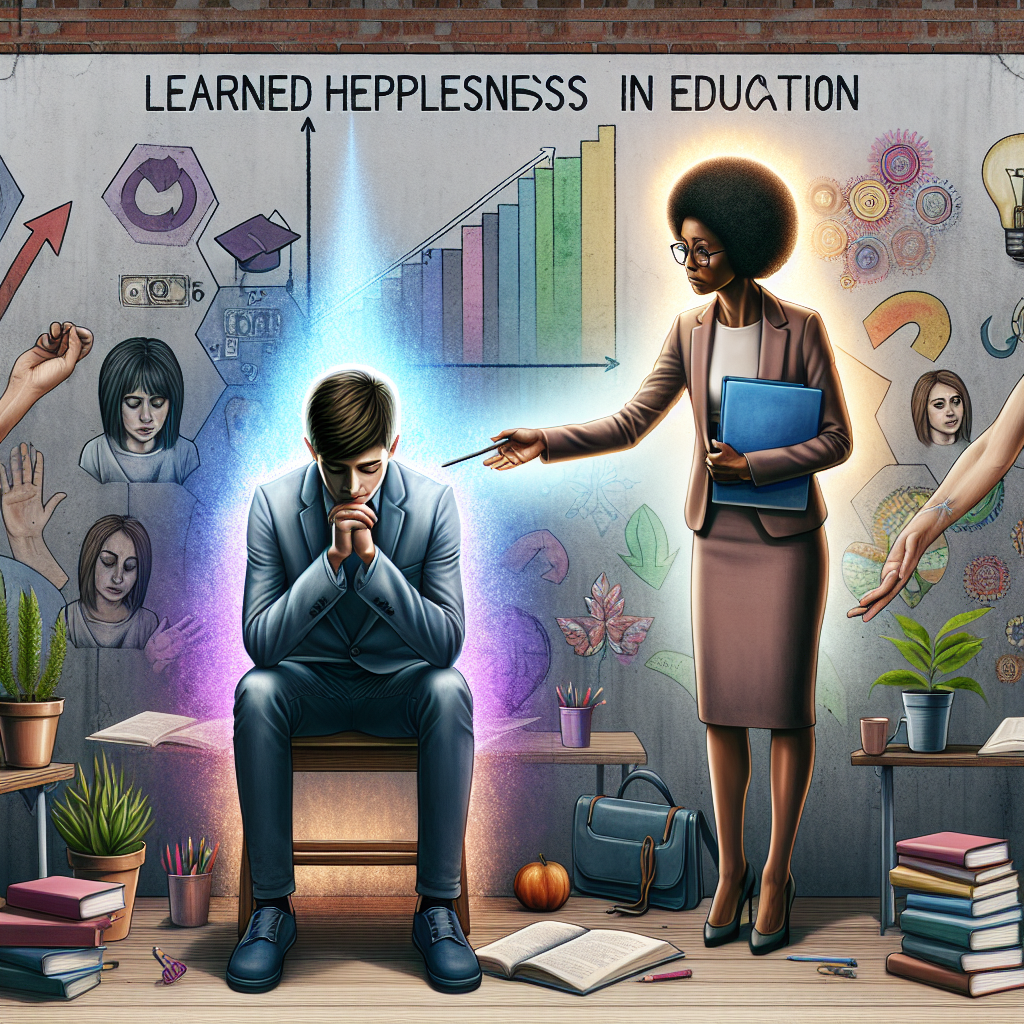
Imagine a classroom where students are eager to tackle challenges, believing in their abilities to succeed. Now contrast that with another classroom setting where students feel paralyzed by failure, convinced that no matter how hard they try, nothing will change. This disparity doesn’t just affect academic performance; it can shape students’ futures. The concept of Learned Helplessness in Education has become a critical topic, affecting students’ motivation and engagement. Understanding this psychological phenomenon and implementing effective strategies can empower educators to foster resilience and agency, ultimately transforming lives.
In today’s educational landscape, promoting student agency—encouraging students to take charge of their learning—is vital. This article delves deep into Learned Helplessness in Education: Strategies for Encouraging Student Agency. Here, we’ll explore the phenomenon of learned helplessness, its implications for students and teachers, and evidence-based strategies to cultivate an empowered, resilient classroom environment.
Understanding Learned Helplessness
What is Learned Helplessness?
Learned helplessness is a psychological condition where individuals feel incapable of controlling their circumstances, often after repeated exposure to stressful situations where they perceive a lack of control. In an educational context, this can manifest as a student believing that no matter how hard they study, they will always fail.
Historical Context
The term was coined by psychologists Martin Seligman and Steven Maier in the late 1960s. Their experiments demonstrated that animals subjected to uncontrollable and adverse situations eventually stopped attempting to escape their negative conditions. This concept was later applied to human behavior, particularly in education, where students may stop trying due to repeated failures.
Impacts on Learning Behavior
Research shows that students experiencing learned helplessness often disengage from learning activities, leading to lower academic achievement and higher dropout rates. This cycle underscores the need for effective educational strategies aimed at fostering resilience, self-efficacy, and agency among students.
The Ripple Effects of Learned Helplessness in Education
Case Study: The Impact on Student Performance
Consider a high school student, Maya, who struggles with mathematics. After several failed exams, she internalizes the belief that she is "just not a math person," leading to a lack of effort. As a result, Maya’s grades plummet, and she withdraws from the class, further entrenching her sense of helplessness.
Analysis
Maya’s situation illustrates how learned helplessness can be a self-fulfilling prophecy. The initial failures led to a decline in self-efficacy, directly impacting her academic performance and motivation to engage in future learning experiences.
Strategies for Overcoming Learned Helplessness
1. Foster a Growth Mindset
A growth mindset, a term popularized by psychologist Carol Dweck, emphasizes that abilities and intelligence can be developed through dedication and hard work. Encouraging students to view challenges as opportunities for growth can counteract feelings of helplessness.
Implementation Tips
- Use language that reinforces growth mindset principles (e.g., "You’re improving!" instead of "You’re right!").
- Share stories of perseverance and success from both famous figures and peers.
2. Provide Choice and Ownership
Allowing students to have a say in their learning promotes agency. Choices could range from selecting topics for projects to determining how they wish to demonstrate their understanding.
Case Study: Student Choice in Classroom Projects
A middle school implemented a project-based learning approach where students chose their topics. Students reported feeling more engaged and responsible for their learning outcomes, significantly reducing feelings of helplessness.
Analysis
This case demonstrates how offering choices can lead to higher engagement and ownership, helping combat learned helplessness among students.
3. Use Collaborative Learning
Encouraging students to work in groups fosters a support system where they can learn from each other. This reduces isolation, as students feel they are part of a community working toward common goals.
Implementation Tips
- Assign group projects that require collaborative problem-solving.
- Promote peer feedback sessions to encourage constructive conversations about learning.
4. Provide Constructive Feedback
Feedback should be timely, constructive, and specific. This helps students understand their progress and areas for improvement, instead of feeling overwhelmed by failure.
Example of Feedback Strategy
Instead of saying, "You didn’t do well," consider saying, "Let’s look at how you approached this problem and find ways to improve next time."
Analysis
Incorporating specific feedback can transform a student’s perception of their abilities, providing clarity and actionable steps for improvement, thus minimizing feelings of helplessness.
5. Build a Supportive Classroom Environment
A safe and supportive classroom reduces anxiety and encourages risk-taking in learning. When students feel emotionally secure, they’re more likely to engage and advocate for themselves.
Implementation Tips
- Create a classroom charter together, outlining how students will support one another.
- Incorporate social-emotional learning activities that build relationships and foster trust.
The Role of Educators in Mitigating Learned Helplessness
Teacher Mindset Matters
Educators play a pivotal role in shaping student perceptions of their abilities. Teachers with a positive mindset can influence students’ attitudes toward learning, thus minimizing the risk of learned helplessness.
Professional Development
Investing in teacher training on social-emotional strategies, growth mindset facilitation, and differentiation in instruction can significantly impact classroom dynamics.
Measuring Student Agency
Key Indicators of Student Agency
To effectively implement strategies for overcoming learned helplessness, educators should consider specific metrics for evaluating student agency, such as:
| Indicator | Description |
|---|---|
| Student Engagement | Levels of participation in class discussions and activities |
| Self-Assessment Skills | Ability to reflect on their learning and set improvement goals |
| Persistence | Willingness to tackle challenging tasks |
| Feedback Usage | How effectively students incorporate peer and teacher feedback into their work |
Conclusion
Understanding Learned Helplessness in Education: Strategies for Encouraging Student Agency is crucial for fostering a positive learning environment. By implementing strategies like fostering a growth mindset, offering choices, and facilitating a supportive community, educators can transform the educational experience for students everywhere.
By equipping students with a sense of agency, we empower them not only to navigate academic challenges but to approach life with resilience and confidence. The road to empowerment may be complex, but the rewards—engaged, self-motivated, and confident learners—are worth the journey.
FAQs
1. What are the signs of learned helplessness in students?
Signs may include a lack of effort, withdrawal from participation, frequent excuses for not completing tasks, and low self-esteem regarding academic abilities.
2. How can I cultivate a growth mindset in my classroom?
Encourage students to embrace challenges, celebrate effort over outcome, and model your own learning journey, including failures and successes.
3. Can learned helplessness be reversed?
Yes, with intentional strategies focused on empowerment, support, and skill-building, students can overcome learned helplessness and develop a stronger sense of agency.
4. What role does parental involvement play in overcoming learned helplessness?
Parents can reinforce messages of resilience and support their children’s learning efforts, ensuring consistency between home and school environments.
5. How can teachers measure student agency effectively?
Through observational assessments, self-assessments, peer feedback, and tracking engagement metrics, educators can gauge levels of student agency and adjust their strategies accordingly.
By understanding and addressing learned helplessness in education, we can usher in a new era of empowered learners ready to take on any challenge life presents. Let’s embark on this transformative journey together!


Dr. Leah Howard, Positive Psychology
Dr. Howard is a researcher and advocate for positive psychology, focusing on human strengths, happiness, and well-being. Her writings explore how people can cultivate a positive mindset, improve resilience, and develop emotional intelligence to live fulfilling lives.