


Western academia has split knowledge into separate fields, each with its own rules. Indian Knowledge Systems offer a different view. They blend philosophy, science, ethics, and spirituality together. This comes from Sanātana Dharma, which says we must look at all parts of reality at once.
Indigenous Knowledge Systems research covers four key areas: dharma (right living), artha (wealth), kāma (pleasure), and moksha (freedom). These areas are not separate but connected. Vedānta’s deep questions, Nyāya’s logic, and Ayurveda’s healing show how they fit together.
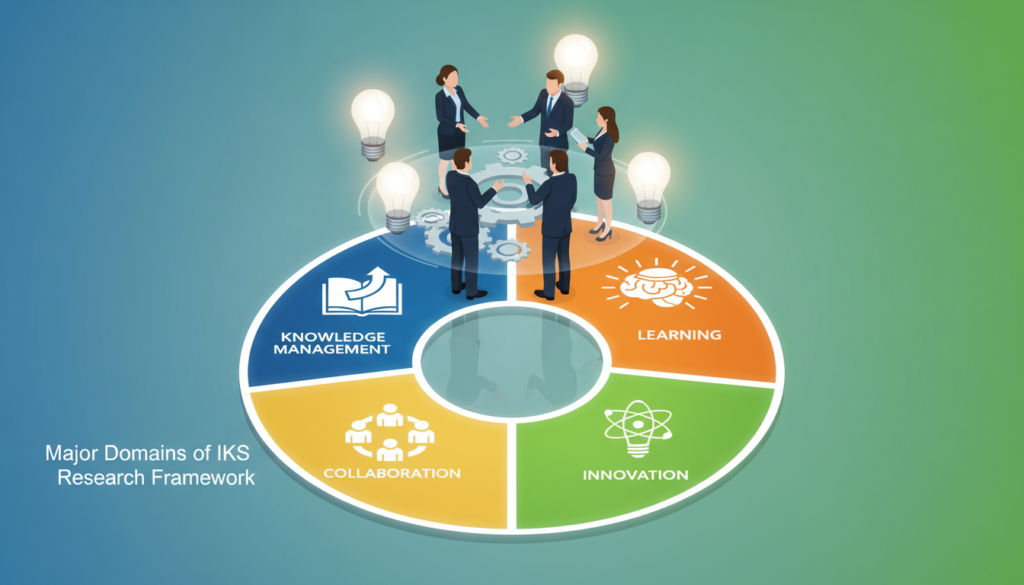
The Major Domains of IKS Research tackle today’s big problems with old wisdom. They offer real answers for issues like caring for the earth and fixing schools. To understand these areas, we need both careful study and real-world experience.
Key Takeaways
- Indian Knowledge Systems present an integrated approach where disciplines interconnect, not separate.
- The four pillars—dharma, artha, kāma, and moksha—form the foundation of holistic human development.
- Research in this field combines ancient philosophical systems with practical applications in medicine, governance, and ecology.
- IKS traditions remain living knowledge systems with direct relevance to modern global challenges.
- Effective research demands both academic rigor and experiential engagement with these wisdom traditions.
- Knowledge in Sanātana Dharma serves as a pathway to understanding reality, self, and cosmos simultaneously.
Introduction to IKS Research
IKS research fields combine ancient wisdom with modern inquiry. They cover a wide range of topics, from understanding reality to the natural world. This blend of knowledge offers a unique way to see the world.
Today, scholars see the value of traditional knowledge in solving modern problems. It helps in sustainable farming and holistic health, among other areas. This introduction sets the stage for understanding IKS research in our world today.
Definition of IKS
Indigenous Knowledge Systems are ancient wisdom traditions from the Indian subcontinent. They differ from Western knowledge by taking a holistic approach. This means they mix spirituality, ethics, science, and philosophy together.
The Vedas, Upanishads, Bhagavad Gita, Darshanas, and Itihāsas are key texts in IKS. They offer insights into metaphysics, ethics, logic, and practical knowledge.
IKS is unique because it sees knowledge as a path to self-realization. It aims to help people understand their place in the world. This approach encourages personal growth and harmony with nature.
Importance of Indigenous Knowledge Systems
Indigenous Knowledge Systems are vital today. They help preserve cultural identity in a global world. Communities that hold onto their traditions are stronger and more resilient.
IKS also plays a big role in sustainable development models. It offers solutions for managing the environment. Indigenous communities have lived in harmony with nature for centuries, teaching us valuable lessons.
IKS also fills gaps in modern science. It combines subjective and objective knowledge, giving a more complete view of reality. This is important for understanding complex issues.
The wisdom of the ancients is not just old history. It’s living knowledge that helps us today, connecting material progress with spiritual growth.
Preserving IKS also has economic benefits. It includes knowledge in medicine, agriculture, and craftsmanship, creating economic value. Protecting indigenous knowledge ensures fair benefits from its use.
Overview of Research Domains
IKS research covers a wide range of topics. It spans many disciplines, each with its own wisdom and knowledge. This shows the depth and breadth of IKS research.
Primary research areas in IKS include:
- Vedic Sciences: Mathematics, astronomy, linguistics, and ritual knowledge preserved in ancient texts
- Classical Philosophy: The six Darshanas (Nyaya, Vaisheshika, Samkhya, Yoga, Mimamsa, Vedanta) offer different views on knowledge and reality
- Medical Systems: Ayurveda, Siddha, and Unani traditions provide holistic health approaches
- Agricultural Knowledge: Traditional farming techniques, crop management, and sustainable land use practices
- Architectural Principles: Vastu Shastra and temple architecture reflect a deep understanding of the universe
These areas are interconnected, enriching each other. IKS research requires scholars to use textual analysis, ethnography, and other methods together.
| Knowledge Domain | Primary Focus Areas | Contemporary Applications | Research Methodologies |
|---|---|---|---|
| Vedic Sciences | Mathematics, astronomy, phonetics, etymology | Computational linguistics, ancient mathematics education | Textual analysis, historical reconstruction |
| Medical Traditions | Ayurveda, Siddha, herbal medicine, wellness practices | Integrative healthcare, pharmaceutical research, preventive medicine | Clinical trials, ethnobotanical studies, pharmacological testing |
| Ecological Knowledge | Resource management, biodiversity conservation, climate adaptation | Sustainable agriculture, conservation biology, climate resilience | Ethnographic fieldwork, ecological monitoring, participatory research |
| Philosophical Systems | Logic, epistemology, consciousness studies, ethics | Cognitive science, consciousness research, ethical frameworks | Comparative philosophy, conceptual analysis, contemplative methods |
Understanding IKS requires a broad approach. Scholars need to know about humanities, sciences, and social sciences. This is different from traditional academic specializations that focus on one area.
Knowing about IKS sets the stage for deeper exploration. Each area builds on the foundation, showing the value of India’s traditional knowledge for today’s world.
Historical Context of IKS Research
The roots of Indigenous Knowledge Systems research in India go back to ancient civilizations. These civilizations made groundbreaking discoveries in math, astronomy, and philosophy. Their work did not happen in a vacuum but was shaped by centuries of observation, experimentation, and debate.
This history is key to understanding today’s Indigenous science research topics. It shows how knowledge has evolved over time, keeping its core principles intact.
Evolution of IKS in India
The Vedic period started the journey of documenting knowledge in India. It laid the groundwork for future intellectual growth. Knowledge was passed down through oral traditions in the gurukula system, where students lived with teachers.
This system focused on hands-on learning and the all-around development of students.
The classical period saw the rise of famous learning centers. Nālanda and Takshashila became international universities, attracting scholars from all over Asia. These centers were hubs for knowledge exchange in various fields, from philosophy to medicine.
Students at these centers studied a wide range of subjects. They learned about logic, epistemology, astronomy, and metallurgy. This broad approach helped India become a leader in many knowledge areas.
Colonial rule disrupted indigenous education in the medieval and early modern periods. Traditional knowledge systems were pushed aside by Western education. Many indigenous practices and theories were ignored or taken without credit.
After independence, there were efforts to revive traditional knowledge. Academic institutions started to see the value of indigenous methods. This recognition has grown in recent years through research and policy changes.
Key Milestones in IKS Research
There have been key moments in IKS research in India’s history. These moments show both the growth within knowledge traditions and the impact of external factors.
The systematization of darshanas (philosophical schools) was a major milestone. Six schools—Nyaya, Vaisheshika, Samkhya, Yoga, Mimamsa, and Vedanta—developed deep frameworks for understanding reality. Each school brought its own views on knowledge and methodology.
- Classical Period Advances: Mathematical innovations like the decimal system and trigonometry changed the world
- Medical Systematization: Treatises like Charaka Samhita set standards for diagnosis and treatment
- Linguistic Analysis: Sophisticated grammatical frameworks influenced modern linguistics
- Astronomical Calculations: Accurate measurements of planets and eclipses showed advanced skills
- Metallurgical Excellence: High-quality steel and iron pillars showcased advanced materials science
The medieval synthesis movements tried to unite different intellectual traditions. Scholars worked to reconcile various philosophical views while keeping unique methods. This showed the flexibility of indigenous knowledge systems.
Today, the IKS Division of the Ministry of Education recognizes traditional knowledge. It has organized workshops and programs to advance research in Indigenous science research topics. These efforts mark a shift toward valuing and integrating traditional knowledge.
Influential Figures in IKS
Many scholars and practitioners have shaped Indigenous Knowledge Systems throughout history. Their work spans various fields and continues to influence research today.
| Scholar | Domain | Major Contributions | Historical Impact |
|---|---|---|---|
| Aryabhata | Mathematics & Astronomy | Developed trigonometric functions, calculated pi accurately, explained eclipses scientifically | Influenced astronomical calculations globally, foundational work for later mathematicians |
| Brahmagupta | Mathematics | Established rules for arithmetic with zero, solved quadratic equations, advanced algebra | Enabled complex mathematical operations, transmitted to Islamic and European scholars |
| Bhaskara II | Mathematics & Astronomy | Developed differential calculus concepts, created astronomical models, advanced number theory | Preceded European calculus by centuries, refined astronomical prediction methods |
| Charaka | Medicine | Compiled a medical encyclopedia, systematized diagnosis, emphasized prevention | Founded Ayurvedic theory, influenced medical education for centuries |
| Sushruta | Surgery & Medicine | Described surgical procedures, developed plastic surgery, cataloged instruments | Pioneer of surgical science, techniques adopted worldwide |
Panini changed linguistic analysis with his Ashtadhyayi. His work introduced generative grammar, later rediscovered in modern linguistics. His detailed grammar of Sanskrit is unmatched.
Today, scholars are working to decolonize knowledge and establish Indigenous epistemologies. They are creating spaces for traditional knowledge holders to engage with research institutions fairly. This ongoing work ensures IKS research stays connected to its roots while addressing modern challenges.
Indigenous Knowledge Systems are not static but living traditions. From ancient breakthroughs to today’s recognition, IKS has evolved while keeping its core principles. This dynamic nature makes IKS research relevant for today’s challenges while honoring centuries of wisdom.
Cultural Dimensions in IKS
Indigenous Knowledge Systems are deeply rooted in their cultural contexts. They emerge from and shape the communities that sustain them. The cultural aspects of IKS research are vital, examining how traditional knowledge is embedded in specific cultural frameworks.
In India, IKS takes many forms, reflecting regional conditions and historical experiences. Cultural heritage preservation studies must recognize this diversity. Knowledge varies greatly among coastal fishing communities, Himalayan herders, and forest-dwelling tribes. Yet, all share common principles of holistic understanding and sustainable practice.
Interconnection with Local Cultures
The relationship between IKS and local cultures is reciprocal. Knowledge shapes culture, and culture shapes knowledge. Traditional agricultural practices, for example, are part of seasonal festivals and religious observances.
Regional languages play a key role in indigenous knowledge. Many indigenous concepts lack direct translations in modern languages. A single word in a tribal language might describe a plant’s medicinal properties, its ecological relationships, the proper season for harvesting, and the ritual protocols for its use.
Cultural heritage preservation studies show that indigenous knowledge is transmitted through various channels. Children learn by observing elders, participating in community rituals, and listening to stories. This immersive learning process keeps knowledge contextual and relevant.
The connection between IKS and social structures is strong. Certain knowledge domains may be gender-specific or age-restricted. Medicinal knowledge might be held by women healers, while astronomical knowledge could be reserved for ritual specialists. These patterns reflect practical divisions of labor and cultural beliefs.
Role of Oral Traditions
Oral traditions are key to preserving IKS in India. The paramparā system—the teacher-student lineage tradition—exemplifies this approach. Unlike text-based learning, oral transmission conveys tacit knowledge and experiential wisdom.
The paramparā tradition involves direct personal interaction. Students absorb not only explicit information but also the subtle nuances of practice. This includes ethical principles, practical judgment, and interpersonal skills that written texts cannot fully convey.
Oral transmission methods use sophisticated mnemonic devices to ensure accuracy. Rhythmic patterns, poetic structures, and narrative frameworks help preserve complex information. Vedic recitation traditions demonstrate how oral methods can maintain textual integrity over millennia.
Yet, cultural heritage preservation studies face challenges. Knowledge systems become vulnerable to cultural disruption and language loss. Modern educational systems may devalue oral competencies, creating generational gaps in knowledge transmission.
| Transmission Method | Strengths | Challenges | Cultural Context |
|---|---|---|---|
| Oral Paramparā | Preserves tacit knowledge, maintains cultural context, enables adaptive interpretation | Vulnerable to disruption, limited scalability, validation difficulties | Traditional guru-shishya relationships, community-embedded learning |
| Written Documentation | Permanent record, wide dissemination, academic validation | Loses contextual nuances, may misrepresent holistic knowledge, cultural appropriation risks | Modern academic frameworks, institutional archives |
| Multimedia Archives | Captures multiple dimensions, accessible formats, community control possible | Technology dependence, requires resources, digital divide concerns | Contemporary preservation initiatives, collaborative documentation projects |
The undocumented nature of much indigenous knowledge poses challenges for modern education. Academic institutions require written curricula and standardized assessments that may not align with oral epistemologies. This raises questions about whose knowledge validation standards should prevail.
Preservation of Cultural Heritage
Preserving cultural heritage in IKS research requires respect for oral epistemologies and appropriate documentation strategies. Cultural heritage preservation studies recognize that preservation means supporting living transmission processes. This allows knowledge to evolve while maintaining core principles.
Community-controlled knowledge bases are one approach to preservation. These initiatives allow communities to determine what knowledge to share publicly and what to keep restricted. Digital platforms can facilitate this control while making selected knowledge accessible.
Recognizing traditional knowledge holders as legitimate authorities is a shift in preservation approaches. This validation of expertise gained through lifetime practice and community recognition is important. Universities and research institutions increasingly invite indigenous knowledge holders as visiting experts and collaborative researchers.
Preservation efforts must address intellectual property concerns. Traditional knowledge about medicinal plants, agricultural techniques, or craft methods holds economic value that should benefit source communities. Legal frameworks for protecting traditional knowledge rights remain underdeveloped in many contexts.
Effective preservation strategies integrate multiple approaches. Video documentation, audio recordings, and written descriptions create multidimensional archives. Together, they approach the richness of living transmission.
The cultural dimensions of IKS show that knowledge is deeply connected to cultural matrices. Research approaches must engage deeply with cultural contexts. This requires ongoing dialogue between indigenous communities, researchers, policymakers, and educators to develop preservation methods that honor tradition and contemporary needs.
Ecological and Environmental Studies
Studies on ecological and environmental topics show how traditional communities balance human needs with nature. They face big challenges today, but their old ways of managing resources are key. Their wisdom helps us understand ecosystems better.
Indigenous groups know their ecosystems well because they live with nature. They use resources wisely and live in harmony with the environment. This mix of old wisdom and new science helps us build a better future.
Traditional Ecological Knowledge
Traditional ecological knowledge is deep and comes from centuries of watching and learning. In India, communities know plants and animals in ways science doesn’t. They understand how everything in nature works together.
They can predict weather and climate changes by watching animals and plants. This knowledge helps them plan farming, manage water, and get ready for environmental changes.
This knowledge is more detailed than science in some areas. It shows how plants and animals work together and how to keep ecosystems healthy. It’s been tested for generations.
Sustainable Practices in Indigenous Communities
Indigenous communities in India live sustainably. They conserve resources and take care of ecosystems. Their ways have kept nature balanced for centuries.
They protect forests and water because of their beliefs and traditions. This helps keep biodiversity and ecosystems healthy. It’s a way to care for nature that doesn’t need laws.
They farm in ways that keep soil healthy. They rotate crops and use plants that fix nitrogen. This way of farming doesn’t harm the soil and doesn’t need chemicals.
They also collect rainwater in special ways. This helps keep groundwater full and prevents erosion. It’s a smart way to use water during dry times.
They manage forests carefully. They harvest what they need and let forests grow back. They also control fires to keep forests healthy.
| Environmental Domain | Traditional Practice | Ecological Benefit | Modern Application |
|---|---|---|---|
| Forest Conservation | Sacred grove protection | Biodiversity preservation and microclimate regulation | Community-based conservation areas |
| Agriculture | Rotational cropping systems | Soil fertility maintenance and pest control | Organic farming methodologies |
| Water Management | Traditional harvesting structures | Groundwater recharge and drought resilience | Integrated watershed management |
| Biodiversity | Multi-crop cultivation | Genetic diversity and crop resilience | Agroforestry and permaculture systems |
Impact of Climate Change on IKS
Climate change is a big problem for traditional knowledge. It changes the environment in ways that affect how communities live. This makes it hard for them to keep their knowledge and ways of life.
Changes in weather and seasons make it hard to plan farming. Bird migrations and plant cycles are different now. This makes it hard to predict and plan for the future.
Climate change also means communities have to move. This breaks their connection to the land and their knowledge. It’s hard for younger generations to learn from their elders when they’re not in their traditional places.
But, climate change also shows how valuable traditional knowledge is. Communities have learned to adapt to changes over time. Their ways can help us deal with climate change too.
We need to document and learn from traditional knowledge quickly. This must be done in a way that respects the communities and their rights. We also need to test these practices to see if they work in today’s world.
By combining traditional knowledge with modern science, we can manage the environment better. Traditional practices are good for nature and can help us face climate change. Together, we can protect nature and keep our cultural heritage alive.
Agricultural Innovations and Practices
Indigenous communities in India have developed unique farming methods. These methods tackle today’s food security and environmental issues. They show the power of traditional knowledge domains in IKS research, providing better ways than industrial farming.
These farming systems are based on deep understanding of soil, water, and crops. They have kept people fed for thousands of years. This knowledge is key to sustainable living.
Indigenous farmers have a special bond with their environment. They’ve created farming systems for different areas in India. These systems help solve big problems like environmental damage and social inequality.
Time-Tested Farming Methods
Indigenous farming techniques are some of the most advanced traditional knowledge domains. They show a deep understanding of nature that modern farming is starting to learn. Mixed cropping is a great example, where farmers grow many crops together.
This approach makes land more productive and reduces pests and soil loss. Traditional soil management is another innovation. Farmers know which soil is best for which crops.
They use green manures and compost to keep soil healthy. This way, they avoid using harmful chemicals. Natural pest control methods are also key. Farmers use plants, crop rotation, and companion planting to keep pests away.
Agricultural calendars are based on the stars and weather. They help farmers know when to plant and harvest. These calendars are filled with weather knowledge gathered over centuries.
Here are some traditional practices that show the wisdom of indigenous farming:
- Seed selection and preservation: Finding and saving the best seeds for future crops
- Intercropping systems: Growing different crops together to improve yields
- Organic pest deterrents: Using plants like neem to keep pests away
- Soil restoration techniques: Methods to keep soil healthy and fertile
- Water management: Using ancient structures to manage water for farming
Maintaining Biodiversity Through Traditional Agriculture
Traditional farming is all about keeping crops diverse. This approach is very different from modern farming, which focuses on a few crops. This diversity is key to farming’s success.
Indigenous farmers grew many rice varieties, each suited to different conditions. This way, they could always have food, even when the weather was bad. This is much better than growing just one type of crop.
| Traditional Approach | Modern Industrial Agriculture | Resilience Outcome |
|---|---|---|
| Multiple crop varieties (50-100+ per region) | Single high-yield variety | Traditional systems buffer against crop failure through diversity |
| Local seed selection and preservation | Purchased hybrid seeds requiring annual replacement | Indigenous methods maintain farmer autonomy and genetic adaptation |
| Integrated pest management through biodiversity | Chemical pesticides creating resistance cycles | Traditional practices sustain long-term ecological balance |
| Soil fertility through organic matter cycling | Synthetic fertilizers depleting soil microbiome | Indigenous techniques build soil health |
Indigenous farmers chose seeds based on more than just how much they yield. They looked at nutritional value, how long the seeds lasted, and how they cooked. This way, they kept a wide range of genetic traits that are now important for fighting climate change.
Today, scientists are learning from these old varieties. They contain genes that help crops survive in changing weather. These varieties are a treasure trove of genetic information.
Ensuring Community Food Access
Indigenous Knowledge Systems (IKS) play a big role in making sure everyone has enough to eat. They cover not just how to grow food, but also how to preserve and share it. This knowledge is deeply connected to the community’s way of life.
Indigenous communities have developed ways to keep food fresh for a long time. They use sun-drying, fermentation, and smoking. This way, they can eat well even when food is scarce.
Traditional diets are full of nutrients because they include many different foods. These diets are based on what’s available locally and when. This ensures that people get the nutrients they need.
Food sharing is also a big part of IKS. Communities have ways to store and share food. This helps everyone, even those who don’t have much. It’s a way to make sure no one goes hungry.
Today, we’re asking important questions about traditional farming. Can it feed more people? How can it help with climate change? How can we make it work for farmers today? These questions are key to solving big problems in farming and helping rural communities.
Traditional farming methods are a treasure trove of knowledge for sustainable food production. As modern farming faces big challenges, these methods offer a way forward. They show how to farm in a way that’s good for the planet and feeds people.
Medicinal Knowledge
Ethnobotany and traditional medicine research show the deep wisdom of indigenous healing. These systems mix plant knowledge with health principles. They include Ayurveda, Siddha, and Unani, which focus on body, mind, and spirit health.
Ayurveda teaches us to heal by treating the root of the problem. It uses yoga, meditation, and natural remedies. These methods are now recognized worldwide for their health benefits.
Indigenous Plants in Traditional Healing Systems
Indigenous plants are key in traditional medicine. Healers know a lot about these plants, like where they grow and when they’re most useful. They also know how to prepare them for healing.
Scientists study these plants to understand their healing powers. They find compounds that back up traditional uses and might help in new ways. This work connects old wisdom with new science.
Different cultures use many plants for medicine. They use roots, leaves, and seeds for their healing properties. How these plants are prepared can make them even more effective.
| Traditional System | Key Medicinal Plants | Primary Therapeutic Applications | Preparation Methods |
|---|---|---|---|
| Ayurveda | Ashwagandha, Tulsi, Turmeric, Neem | Stress management, immunity, inflammation, skin conditions | Churna (powder), Kashaya (decoction), Tailam (oil) |
| Siddha | Centella asiatica, Terminalia chebula, Piper longum | Cognitive enhancement, digestive disorders, respiratory conditions | Kudineer (extract), Choornam (powder), Legiyam (semi-solid) |
| Unani | Saffron, Ajwain, Amla, Black seeds | Cardiovascular health, metabolic disorders, rejuvenation | Arq (distillate), Safoof (powder), Qurs (tablet) |
| Tribal Medicine | Tinospora cordifolia, Andrographis, Phyllanthus | Fever management, liver protection, immune modulation | Fresh juice, paste application, water extracts |
Validation of Local Remedies Through Research
Local remedies need to be tested through research. This ensures they are safe and effective. Studies look at how these remedies are used and their cultural context.
Lab tests check if these remedies work by studying their active compounds. This helps understand how they heal. It also shows how traditional knowledge can lead to new medicines.
Clinical trials are the best way to prove if a remedy works in people. They test safety, efficacy, and dosage of traditional medicines. This helps show how traditional and modern medicine can work together.
More research supports the healing power of traditional remedies. Studies confirm the benefits of turmeric, ashwagandha, and neem. This makes traditional medicine more accepted in modern healthcare.
Bridging Traditional and Modern Healthcare
Merging traditional and modern medicine is both exciting and challenging. It requires respecting traditional wisdom while meeting modern standards. This means understanding the differences between traditional and modern medicine.
Questions guide this integration. How can traditional and modern diagnosis work together? What rules should govern traditional medicines? These questions need open dialogue between traditional practitioners and modern healthcare professionals.
Protecting traditional medical knowledge is critical. Indigenous communities have rights to their knowledge. Finding a balance between protecting this knowledge and allowing new medicines to be developed is essential.
Quality control is a big challenge in integrating traditional medicine. Herbal medicines can vary a lot. Research aims to standardize these medicines and ensure they are made safely.
Research on medicinal knowledge in IKS can help global health and sustainable healthcare. Traditional medicine is affordable and accessible. It also offers new medicines and economic benefits to communities.
Preserving medicinal plants is important for both health and the environment. Many plants are threatened by habitat loss and climate change. Saving these plants helps protect biodiversity and ensures they remain available for medicine.
Education and IKS
Education is a key area in IKS research, questioning how we learn and who teaches us. It looks at keeping traditional knowledge alive and fitting it into today’s schools. This field explores how old wisdom can guide modern teaching while keeping cultural values strong.
It asks big questions like what counts as real knowledge in different cultures. How do we prove learning goes beyond tests? Scholars look at old teaching methods that focused on growth over grades.
Education and Indigenous Knowledge Systems are growing fast in IKS research. They tackle real issues in schools, like teaching traditional wisdom and getting ready for today’s world. This field covers making new curricula, teaching methods, teacher training, and policy changes.

Curriculum Development Focused on IKS
Creating curricula that include IKS is a big challenge. It needs to show traditional knowledge in a way that meets today’s teaching standards. Old teaching methods, like the gurukula system, taught differently, focusing on both mind and character.
The idea of Vidyā in traditional Indian education was more than just learning facts. It included ethics, spirituality, and practical skills. The Śravaṇa, Manana, Nididhyāsana steps helped students understand deeply, not just memorize.
There are ways to make curricula better. Working with IKS experts makes learning more real and respectful. Digital tools make traditional knowledge easy to find for teachers and students everywhere. Training teachers to teach IKS helps them learn new things.
The National Education Policy (NEP) 2020 helps a lot. It wants to add traditional crafts and cultural practices to vocational training. This policy makes IKS a part of school education and gives resources to make it happen.
Researchers say we need flexible curricula that can change for different places. A single national curriculum can’t cover all of India’s diverse knowledge traditions. Letting schools adapt helps keep learning relevant and high quality.
Community-Based Learning Approaches
Learning in community settings puts knowledge in its cultural home, not just in classrooms. This way, traditional knowledge stays connected to its roots. Research looks at how learning happens through real cultural practices.
In these models, traditional knowledge holders teach, bringing real knowledge and authority. Elders, artisans, healers, and farmers teach through doing, telling stories, and guiding. This changes the usual teacher-student relationship.
These approaches value practical skills and ethics over just knowing facts. A student mastering traditional farming shows their skills through real work, not tests. This matches how traditional knowledge is passed down.
These methods have big benefits. Students feel more connected to their culture and community. Learning is more meaningful and fun. But, there are challenges like fitting into school schedules, getting recognition, and scaling up.
Role of NGOs in IKS Education
NGOs have led the way in IKS education, trying new things before schools do. They can be more flexible and respond quickly to community needs. This helps them innovate without the slow pace of schools.
NGOs create key learning tools that link old and new knowledge. They document traditions, make teaching materials, and share knowledge online. Many educational resources started in NGOs before schools adopted them.
NGOs also train teachers to teach IKS. This is important because only 25% of schools have IKS-trained teachers. This training helps teachers learn and teach IKS well.
NGOs also push for policy changes. They help make school curricula better, get more resources, and support for IKS education. Their work on the ground gives them insights that policymakers might miss.
But, there are challenges. Some NGOs may not know as much about education as they should. Funding can be a problem, and working together can be hard.
| Educational Challenge | Percentage of Institutions Affected | Primary Solutions | Implementation Timeline |
|---|---|---|---|
| Lack of IKS-trained faculty | 75% | Teacher training programs, faculty workshops, partnerships with knowledge holders | 2-3 years |
| Curriculum overload | 45% | Flexible frameworks, integration across subjects, elective courses | 1-2 years |
| Limited educational resources | 60% | Digital repositories, NGO-developed materials, community documentation | 1-3 years |
| Assessment methodology gaps | 55% | Performance-based evaluation, portfolio assessment, community validation | 2-4 years |
The table shows the main problems in IKS education research. Solving these needs a team effort from government, schools, teachers, and communities. The time it takes to make changes is based on successful small projects.
Research has big ideas for changing education. Teachers need to learn about IKS and new teaching methods. Schools need new ways to check if students have learned. Policies should really support IKS in schools.
Education in IKS research is about passing knowledge from one generation to the next. It’s about connecting schools and traditional knowledge groups. This shapes what students learn and how they see the world, their culture, and their community.
Technological Integration in IKS
Traditional knowledge and modern technology are coming together in new ways. This mix opens doors for documenting and protecting indigenous wisdom. Digital tools help keep knowledge alive even when the people who hold it pass away.
This blend is changing how we save traditional practices. It’s a big step forward for researchers, communities, and institutions.
Today, indigenous science research topics focus on using digital tools to preserve knowledge. These tools help keep cultural integrity intact. They go beyond just recording information to create interactive archives.
It’s important to balance innovation with respect for traditional knowledge systems. This ensures that technology enhances understanding without changing the essence of the knowledge.
Archiving Knowledge Through Digital Repositories
Digital repositories are key for saving Indigenous Knowledge Systems. The CSIR-Traditional Knowledge Digital Library (CSIR-TKDL) in India is a leading example. It works with the IKS Division to build detailed databases of traditional knowledge.
This library makes traditional practices available online. It serves many important functions. It helps protect against biopiracy by showing that traditional knowledge was used first.
The TKDL has thousands of traditional medicine formulas. Patent offices around the world use it to check if new patents are okay.
Digital archives use multimedia to capture knowledge in its true form. Audio recordings keep oral traditions alive. Videos show rituals and craft techniques.
Transcripts and interactive materials add depth to the archives. They honor the complexity of passing down traditional knowledge.
The IKS Division runs workshops, like the IKS-TKDL Workshop on Traditional Knowledge – Intellectual Property & People’s Rights. These workshops help communities and researchers understand technology. They also talk about who owns and controls digitized knowledge.
Technology Applications in Research Methodologies
Researchers now use advanced technology to study traditional knowledge systems. Computational analysis helps find patterns in large texts. This makes research faster and opens up new ways to understand knowledge.
GIS mapping changes how we document traditional ecological knowledge. It shows how communities and resources are connected. GIS reveals how indigenous people manage ecosystems.
Network analysis tools track how knowledge moves through generations and communities. Digital models bring historical sites to life. Online platforms help researchers and knowledge holders work together, no matter where they are.
Indigenous science research topics look at how technology can help understand traditional knowledge. Researchers use technology to study oral traditions, land management, and current knowledge practices. They must use technology carefully to respect traditional knowledge.
Navigating Challenges While Embracing Opportunities
Using technology to preserve traditional knowledge is not without challenges. There’s a risk of losing the cultural context of the knowledge. Digital formats may not fully capture the meaning and use of traditional knowledge.
There are also concerns about who controls digitized knowledge. Communities may not have the power to decide how their knowledge is used online. Digital platforms may share knowledge in ways that conflict with community rights.
Technology is not neutral. It favors certain types of knowledge over others. It may overlook embodied and experiential knowledge. Digital divides can leave traditional knowledge holders behind, creating new inequalities.
Research on indigenous science research topics must address big questions. How should we govern digitized traditional knowledge? How can technology enhance traditional systems without distorting them? What approaches best meet community needs?
Technology offers big opportunities for traditional knowledge. It can share knowledge widely while keeping it culturally authentic. Digital platforms help pass down knowledge across generations, even when traditional ways are disrupted.
New ways to learn emerge with technology. Interactive environments, virtual exchanges, and multimedia curricula are just a few examples. These innovations can strengthen traditional knowledge systems by creating new ways to share it.
The key is to focus on community-centered approaches. Traditional knowledge holders should be active participants in using technology, not just subjects of it.
| Technological Approach | Primary Application | Key Benefits | Major Challenges |
|---|---|---|---|
| Digital Repositories (TKDL) | Documentation and preservation of traditional knowledge | Biopiracy protection, accessibility, permanent archiving | Access control, intellectual property concerns, maintenance costs |
| Multimedia Documentation | Capturing oral traditions and practical knowledge | Preserves context, authenticity, multiple knowledge forms | Storage requirements, technological obsolescence, community consent |
| GIS Mapping | Spatial analysis of traditional ecological knowledge | Visualizes patterns, supports land rights, environmental planning | Data sovereignty, technical expertise required, privacy concerns |
| Online Collaboration Platforms | Research networking and knowledge exchange | Global reach, real-time collaboration, resource sharing | Digital divide, cultural appropriation risks, language barriers |
To fully use technology, we need strong governance that respects community rights. Researchers must get consent before digitizing traditional knowledge. Communities should have control over how their knowledge is used online.
The future of indigenous science research topics will focus on involving communities in technology development. This approach ensures that technology serves cultural preservation, not just extraction.
Gender Perspectives in IKS
Looking at Indigenous Knowledge Systems through a gender lens shows us how women’s knowledge has been ignored. For years, men’s knowledge was the focus, leaving women’s expertise unseen. This has skewed our understanding of traditional knowledge in indigenous communities.
Adding gender perspectives to IKS research shows how men’s views have dominated. This has favored written texts over oral traditions and formal institutions over home practices. As a result, much traditional knowledge was overlooked, giving us an incomplete view of indigenous knowledge.
Reforming education based on IKS must be inclusive and fair. It’s important to give a voice to women, Dalits, Adivasis, and linguistic minorities. Ensuring their active participation in preserving and sharing IKS is key for true knowledge representation.
Women as Primary Knowledge Authorities
Women hold key knowledge in many areas within indigenous traditions. They are experts in traditional medicine, including reproductive health and nutrition. Their knowledge has kept communities healthy for generations.
In agriculture, women know a lot about seed selection and food processing. Their choices have helped keep crops diverse and resilient. They understand plant genetics, soil, and seasonal patterns, ensuring food security.
Women’s knowledge in textiles is also vital. They use natural materials for dyeing and weaving, showing deep understanding of chemistry and aesthetics. These traditions carry cultural values and community identity.
Ritual knowledge and oral traditions are also maintained by women. They pass on historical and practical wisdom through songs and stories. Community-based Indigenous research methodologies must value these methods as much as written texts.
| Knowledge Domain | Women’s Contributions | Transmission Methods | Contemporary Relevance |
|---|---|---|---|
| Traditional Medicine | Reproductive health, pediatrics, herbal remedies, nutritional practices | Oral instruction, practical demonstration, mother-daughter teaching | Integrating with modern healthcare, pharmaceutical research |
| Agricultural Knowledge | Seed selection, preservation, food processing, crop diversity management | Hands-on training, seasonal practice, knowledge sharing networks | Food security, climate resilience, biodiversity conservation |
| Textile Traditions | Natural dyeing, weaving techniques, design patterns, material selection | Apprenticeship, visual learning, community workshops | Sustainable fashion, cultural preservation, economic empowerment |
| Ritual and Oral Traditions | Songs, stories, ceremonial knowledge, moral teachings | Performance, memorization, community gatherings | Cultural identity, values transmission, social cohesion |
Structural Barriers in Knowledge Documentation
Androcentrism in documentation has hidden women’s knowledge. Historically, men’s knowledge was prioritized, leaving women’s expertise unseen. This bias made women’s knowledge seem less important.
Women were often excluded from institutions that passed on knowledge. This exclusion was not about knowledge quality but about power. It showed who controlled access to knowledge.
Language barriers also hindered women’s knowledge recognition. Community-based Indigenous research methodologies need to respect these differences. Researchers must be able to understand knowledge shared through songs, stories, and visual arts.
Women face extra barriers because of their gender, caste, class, and region. Dalit women, Adivasi women, and women from linguistic minorities are often overlooked. Research must actively seek out these voices.
Transformative Approaches to Knowledge Validation
Using gender-responsive research methods requires careful planning. Women researchers are key in gaining access to women’s knowledge. This is important, as women share sensitive topics more freely with women.
Valuing knowledge traditionally held by women challenges old hierarchies. Household management, childcare, and textile production all require sophisticated knowledge. These areas deserve scholarly attention.
Creating accessible documentation formats helps share knowledge widely. Visual and audio formats allow for knowledge sharing beyond written texts. This also lets knowledge holders control how their knowledge is shared.
Community-based Indigenous research methodologies that include gender perspectives empower women. This approach changes how researchers interact with women knowledge holders, showing respect for their expertise.
Pathways to Empowerment Through Knowledge Recognition
Recognizing women’s traditional knowledge can economically empower them. Knowledge about herbal medicines and crafts can generate income. Fair trade and intellectual property protections ensure women benefit financially.
Social empowerment comes when communities value women’s knowledge. This recognition challenges patriarchal norms and improves women’s status. Projects that highlight women’s voices contribute to this change.
Political empowerment through knowledge governance gives women a say in preserving and sharing traditional knowledge. Representation in councils and advisory boards ensures women’s perspectives are heard. This is key for fair and sustainable knowledge systems.
Educational empowerment allows girls and women to learn from both traditional and modern knowledge. Curriculum that includes women’s traditional knowledge validates their expertise. This prepares young women for both traditional and modern contexts.
For social justice in IKS scholarship, we must actively seek out marginalized voices. Research and revival efforts should not perpetuate old inequities. They must work towards inclusive and equitable knowledge systems. This approach honors all knowledge holders, including those often overlooked.
Policy and Governance
The way Indigenous Knowledge Systems research is handled in India has changed a lot. This change shows both the good and bad sides of making knowledge more open. Policies help decide how traditional knowledge gets recognized, funded, and used in schools and universities.
These policies shape which areas of Indigenous Knowledge Systems research get more focus. They also decide how communities get involved in making decisions about their knowledge.
Government actions help make traditional knowledge a part of formal systems. The way policies are made and carried out is complex. Researchers face many challenges when studying IKS.
Institutional Support Mechanisms for Traditional Knowledge
The IKS Division of the Ministry of Education, Government of India is a big step forward. It helps bring traditional knowledge back into use. This division works on many projects that help with Indigenous Knowledge Systems research all over the country.
Government support comes in many ways. Institutional internship programs help students and researchers meet with traditional knowledge holders. This creates a link between learning in schools and the wisdom of communities.
The IKS-TKDL Workshop on Traditional Knowledge tackles big issues like Intellectual Property and People’s Rights. It shows that traditional knowledge is part of complex legal and ethical issues. Researchers learn how to protect community rights while doing their research.
Money is also important. Special funds help set up research centers, digital libraries, and community networks. These resources help share knowledge across generations and between different fields of study.
Creating special places for IKS research shows a long-term commitment. Centers focused on IKS can focus on important questions that might not get attention elsewhere. Digital tools help save knowledge that is mostly passed down through stories.
Regulatory Frameworks Shaping Research Directions
Policies work at different levels, affecting how Indigenous Knowledge Systems research grows. National Education Policy (NEP) 2020 makes IKS a key part of education. This means schools and universities have to include traditional knowledge in their programs.
The NEP 2020 makes IKS a core part of education. This change brings up new questions about teaching methods, curriculum design, and how to assess traditional knowledge.
Rules about intellectual property deal with the special challenges of protecting traditional knowledge. Traditional knowledge is often shared by many people and is always changing. Policies must find a balance between protecting knowledge and sharing it in ways that help communities.
| Policy Level | Key Instruments | Impact on Research | Implementation Challenges |
|---|---|---|---|
| National Education | NEP 2020, IKS Division mandates | Curriculum integration, funding allocation, institutional requirements | Standardization vs. diversity tensions, resource distribution |
| Intellectual Property | Traditional Knowledge Digital Library, biopiracy protections | Knowledge documentation, rights protection, access protocols | Collective vs. individual ownership, evolving knowledge forms |
| Research Funding | Grant schemes, institutional support programs | Priority setting, interdisciplinary collaboration, community partnerships | Application processes, evaluation criteria, fund distribution |
| Regulatory Standards | Traditional medicine guidelines, agricultural practice regulations | Legitimacy of traditional practices, safety protocols, integration pathways | Scientific validation requirements, traditional authority recognition |
How research gets funded is very important. The criteria for grants reflect policy priorities. This can mean that research focuses on what the government wants, not what communities need. This raises questions about who decides what research to do.
Rules for traditional practices in medicine and agriculture offer both chances and challenges. Validation can make traditional knowledge seem more official but might also change how it’s understood. The need for standardization for policy reasons clashes with the diversity of living traditions.
Current policies have both good and bad sides. More government attention has brought resources and made IKS research more accepted in schools. But, there are worries about using traditional knowledge for national goals and top-down decisions that don’t listen to communities.
Participatory Approaches in Knowledge Governance
Getting communities involved in making policies is key in Indigenous Knowledge Systems research. Meaningful participation means that traditional knowledge holders should help decide how knowledge is used, researched, and shared. This is important for respecting their knowledge.
Models for involving communities in policy-making aim to balance power between communities and the government. They recognize that traditional knowledge holders have the right to control their knowledge. Research looks into how to make sure communities really have a say.
Traditional ways of making decisions offer lessons for today’s knowledge governance. Many indigenous communities value consensus, respect for elders, and thinking about the good of all. Policies that respect these values can lead to better governance.
But, making policies that include everyone is hard. Different ways of understanding knowledge, authority, and use create challenges. Finding common ground and learning from each other takes a lot of effort.
Research has many implications. It’s important to create ways to check if policies work well for communities, not just for research goals. These checks should look at whether policies really help communities or just help outsiders.
Creating policies that respect traditional authority and include everyone is a big challenge. Communities have their own power dynamics, and not everyone’s voice is heard equally. Policies need to find a way to include everyone without forcing them to change their ways.
International issues add more complexity to IKS policy. Protecting knowledge from being used without permission requires working with other countries. Being part of global networks lets Indian communities learn from others and share their own knowledge. IKS research is now done in these global contexts.
The policy landscape is always changing as researchers, communities, and governments learn more about good knowledge governance. Making policies that respect traditional wisdom and support research is a big job that needs everyone’s effort.
Global Perspectives on IKS
Understanding IKS research requires looking at it from a global viewpoint. It shows how Indian knowledge traditions fit into the world of indigenous epistemologies. This global view enriches the Major Domains of IKS Research by showing both universal patterns and local innovations.
IKS intersects with modern science in interesting ways. Quantum physics shares ideas with ancient Indian views on interconnectedness. Studies on consciousness support traditional views on awareness, preserved by indigenous communities for centuries. Indigenous ecological wisdom offers solutions to today’s environmental problems, which science is just starting to understand.
Decolonizing knowledge is a big change, challenging Western views that have dominated for too long. It involves bringing back indigenous ways of learning, governing, and spirituality. IKS is a powerful catalyst for understanding between cultures and for new ways of knowing.
Comparative Analysis Across Indigenous Traditions
Looking at indigenous knowledge systems around the world shows commonalities despite differences. Aboriginal Australian, Native American, African, and Māori wisdom share key traits with Indian IKS. These similarities show universal principles that are shared but also have unique regional expressions.
Indigenous knowledge systems are holistic, combining material and spiritual views. Unlike Western science, they don’t separate the physical from the metaphysical. This allows for a deep understanding of ecological relationships, health practices, and social structures as interconnected.
Indigenous epistemologies worldwide focus on relationships and connections. This contrasts with Western science’s focus on isolated objects. Indigenous knowledge is validated through long-term observation and experience passed down through generations. It guides knowledge use with ethical frameworks that ensure balance with nature.
But, we must avoid homogenizing diverse traditions. Each indigenous knowledge system is shaped by its own history, culture, and environment. The following table shows both commonalities and unique features across major indigenous knowledge traditions:
| Knowledge System | Epistemological Approach | Validation Methods | Ecological Integration | Spiritual Dimension |
|---|---|---|---|---|
| Indian IKS | Holistic integration of empirical observation with metaphysical understanding through Vedic and Buddhist frameworks | Multi-generational testing, scriptural confirmation, guru-disciple transmission | Panchamahabhuta theory connecting five elements with environmental stewardship | Dharma-based ethics linking spiritual practice with material sustainability |
| Aboriginal Australian | Dreamtime narratives encoding ecological and social knowledge in mythological frameworks | Songlines preserving geographical and biological information across millennia | Fire management practices maintaining biodiversity through controlled burning | Country-centered spirituality where land possesses consciousness and agency |
| Native American | Seven generations thinking ensuring decisions consider long-term consequences | Oral traditions tested through seasonal observations and ceremonial practices | Three Sisters agriculture demonstrating companion planting principles | Great Spirit cosmology emphasis on interconnectedness of all living beings |
| African Indigenous | Ubuntu philosophy recognizing individual identity through community relationships | Elder councils maintaining knowledge through oral transmission and ritual practices | Sacred groves protecting biodiversity hotspots through spiritual prohibitions | Ancestor veneration connecting past, present, and future generations |
Comparative studies show the value of looking at IKS from different cultures. They highlight universal principles while respecting each tradition’s uniqueness. The challenge is to compare without losing the special qualities of each tradition.
Cross-Border Partnerships and Knowledge Exchange
International collaborations in IKS research offer chances for learning and innovation. Partnerships between countries help share knowledge but raise questions about power. Success comes when these collaborations truly benefit communities, not just researchers.
Many models of collaboration have emerged. Joint projects document preservation methods and digital archiving. Conferences provide spaces for sharing insights. Policy networks advocate for indigenous knowledge rights globally.
But, there are challenges in representing indigenous communities internationally. Questions arise about who speaks for them and how knowledge is translated. Successful partnerships must respect indigenous rights and involve them as equals.
Technology has opened new ways for global collaboration but also risks. Digital platforms connect communities worldwide, making knowledge sharing easier. But, they also risk unauthorized use of traditional knowledge. Collaborations must balance access with protection, respecting cultural protocols.
UNESCO’s Institutional Framework and Impact
UNESCO plays a key role in addressing indigenous knowledge globally. It recognizes intangible cultural heritage, including living traditions, oral expressions, and social practices as part of the Major Domains of IKS Research.
UNESCO also supports indigenous education, promoting linguistic diversity. It helps develop educational frameworks that value indigenous knowledge. This counters centuries of policies that suppressed indigenous languages and knowledge.
UNESCO works on protecting traditional knowledge and intellectual property. It helps develop protocols to prevent unauthorized use. This recognizes that conventional intellectual property regimes often fail to protect collective knowledge.
Yet, UNESCO’s role is complex. It enables by legitimizing indigenous knowledge and funding preservation. But, it also constrains with bureaucratic standardization and limited participation. UNESCO’s success depends on listening to indigenous communities and adapting.
IKS research intersects with broader movements for justice and sustainability. Challenging Western views opens space for indigenous knowledge to help solve global problems. Advocating for indigenous rights through international law protects knowledge and territories. Developing alternative development paradigms that value cultural diversity offers sustainable futures based on ancient wisdom.
Challenges in IKS Research
Exploring traditional knowledge domains is complex. Scholars face barriers in ethics, methods, and institutions. Unlike regular research, IKS scholarship blends cultural traditions with academic inquiry. This mix creates unique challenges needing new approaches.
In India, schools struggle to include IKS in their studies. Only 25% of schools have teachers trained in IKS. Also, 45% of schools find it hard to fit IKS into their curricula. These issues show the deep challenges in integrating IKS into education.
Many educators and school leaders don’t understand the value of IKS. They lack knowledge on how to teach it. This lack of understanding makes it hard to change curricula and get the resources needed for IKS research.
Ethical Considerations
Research ethics in IKS go beyond usual consent forms. The question of who can share knowledge challenges common beliefs about individual rights. In IKS, knowledge belongs to communities, not individuals. This means involving communities in decision-making.
It’s important to give back to communities for their knowledge. This is often missing in regular research. It raises questions about who benefits from IKS research and if it serves community interests.
How knowledge is presented is also a big issue. Researchers should see knowledge holders as co-researchers, not just subjects. This means working together and letting communities control how their knowledge is shared.
Using research findings also raises ethical questions. Who should benefit from IKS research? Ethical guidelines should include:
- Community ownership of knowledge and research
- Prior informed consent through cultural consultation
- Benefit-sharing that gives back to communities
- Ongoing accountability to communities
These principles need changes in institutions, not just individual researchers. Universities must create policies and support systems for ethical IKS research.
Data Validity and Reliability Issues
Traditional knowledge faces challenges when using Western research methods. Indigenous knowledge is validated through experience, not just experiments. Researchers must find ways to validate traditional knowledge on its own terms.
Traditional knowledge has its own ways of being rigorous and reliable. It’s validated through spiritual authority and community consensus. Researchers need to develop methods that respect these validation systems while also using modern methods when needed.
This requires accepting different ways of knowing. Research designs should allow for multiple perspectives without favoring one over another. The goal is to keep academic rigor while respecting indigenous knowledge systems.
Language barriers make validation harder. Indian languages often have nuances that get lost in translation. Teams need to be multilingual and culturally aware to accurately document and assess traditional knowledge.
Knowledge passed down orally is another challenge. Much indigenous knowledge is not written down. Researchers must find ways to document and verify this knowledge that exists mainly in practice and memory.
Preserving Intellectual Property Rights
Traditional knowledge doesn’t fit well into intellectual property laws. It’s communal, passed down through generations, and not owned by individuals. This makes it hard to protect using current laws.
There are special ways to protect traditional knowledge. Databases can establish prior art and prevent patents on indigenous innovations. These databases help document knowledge while keeping community control over access and use.
Sui generis systems are legal frameworks made just for traditional knowledge. They recognize communal ownership and cultural values. India is working on these systems, but they’re not fully implemented yet.
Community protocols also protect traditional knowledge. These protocols decide who can access knowledge and under what conditions. They work alongside formal laws to protect knowledge at a grassroots level.
But, there are practical challenges too. Limited resources and funding make it hard to document and protect traditional knowledge. Without support, much of this knowledge is at risk of being lost or stolen.
There’s also a concern about careers in IKS. Only 15% of students think IKS careers are feasible. This discourages talented people from studying IKS, limiting the research and protection efforts.
Teaching IKS also faces challenges. The way traditional knowledge is learned doesn’t fit with formal education systems. Finding ways to teach IKS that honors its pedagogy while meeting school requirements is a big challenge.
To overcome these challenges, we need to address awareness, training, resources, and institutional changes. Individual research efforts are important but can’t solve these deep-seated problems without broader changes. Universities, governments, and funding bodies must work together to support IKS research.
The challenges in IKS research are not just technical. They are about the clash between different knowledge systems. We need to transform institutions and accept epistemological diversity in academic spaces.
Case Studies of Successful IKS Integration
In India, grassroots projects show how to mix ancient wisdom with today’s needs. These examples give actionable evidence for those wanting to follow their lead. They show that blending traditional knowledge with modern ways can bring real benefits in education, farming, health, and business.
Looking at real examples helps us see more than just theories. It shows the challenges faced by communities and the creative ways they solve them. These stories come from all over India, from tribal areas to farming groups.
Stories from Indigenous Communities
In Odisha, schools have mixed traditional knowledge into their lessons without losing academic standards. They teach about local plants and medicine, making learning more interesting. Student engagement went up by 40% when they learned about their culture and everyday life.
In Kerala, traditional medicine makers worked with research groups to create safe herbal products. They kept the true Ayurvedic way while meeting modern safety rules. This partnership helped them reach more people while keeping their old ways alive.
In Uttarakhand, farmers brought back old farming methods for the mountains. They used crop rotation, special seeds, and saved water, passed down through generations. Farmers saw 30% better crop survival during dry times than with new farming ways.
In Gujarat, craft makers kept their old textile skills while reaching new markets. They worked with designers but kept their control over their work. Fair trade helped them earn money without losing their cultural values.
In Jharkhand, universities and tribes worked together in a real partnership. The universities helped document and validate the knowledge, while the tribes were in charge. Both sides shared the rights and credit for their work.
Looking at these successes, we see common things that helped. Strong leaders and community ownership were key. Support from institutions was important, but only if it respected the community’s knowledge.
Insights from Effective Models
Studying successful projects shows us useful lessons for many places. Getting the community involved early is key. Communities that helped plan from the start were more committed and adaptable.
Good preparation is vital for lasting success. Projects that took time to build awareness and skills did better. Rushing in without preparation often led to failure or resistance.
Starting small helped test ideas and refine them. Small projects allowed communities to try things, learn from mistakes, and improve. These small steps built confidence and showed the way for more support.
Being patient was a big part of success. Changing cultures takes time, not a quick fix. Projects that let things evolve naturally did better than those with tight schedules.
Sharing knowledge and documenting successes helped everyone learn. Communities that shared their experiences and failures helped others avoid mistakes. This openness allowed for the sharing of successful strategies.
Working together as equals was key. Successful projects saw traditional knowledge holders as partners, not just sources of information. This approach led to deeper understanding and respect.
Implementation Guidelines and Standards
Starting with a deep understanding of community needs is essential. External groups should listen and help communities set their own goals. This approach ensures projects meet local values and needs.
Traditional knowledge holders should be fairly compensated and recognized. Successful projects gave them proper payment, credentials, and public recognition. This respect and reward helped them share their knowledge.
Creating educational materials needs community input. Materials should reflect local languages and cultures. Working with communities ensures cultural accuracy and relevance.
Supporting educators and researchers is important. Training should cover cultural sensitivity and how to integrate traditional knowledge. Ongoing support helps them face challenges and improve their work.
Flexible curricula allow for local adaptation while keeping quality high. Rigid standards can’t fit the context-specific nature of traditional knowledge. Successful models balanced core learning with community-driven content.
| Implementation Element | Traditional Approach | Integrated Approach | Measured Outcomes |
|---|---|---|---|
| Curriculum Design | Centralized, standardized content | Community-collaborative development with local adaptation | Enhanced student engagement and cultural relevance |
| Knowledge Authority | Academic credentials only | Recognition of traditional knowledge holders as experts | Improved community participation and knowledge preservation |
| Assessment Methods | Written examinations exclusively | Multiple evaluation formats including practical demonstrations | Better measurement of applied skills and cultural competency |
| Resource Allocation | Short-term project funding | Sustainable mechanisms with community ownership | Long-term viability beyond external support |
Clear rules respect community control over their knowledge. Successful projects had advisory boards with mostly community members. This ensured that outside partners followed community rules and values.
Monitoring should look at cultural fit and community impact, not just grades. The usual ways of measuring success often miss the biggest benefits of mixing traditional and modern knowledge. It’s important to include measures of cultural identity, knowledge sharing, and community well-being.
Creating lasting plans helps avoid relying on outside help. Successful projects built local skills, found different funding sources, and made systems that lasted even when people changed.
These stories show real benefits beyond just good grades. Students felt more connected to their culture and heritage. Learning became more meaningful when it tied to their everyday lives.
Learning values and ethics was part of the mix. Traditional knowledge teaches about community, environment, and future generations. This added depth to education that modern schools often miss.
Students learned practical skills for their local needs. This made education more valuable to communities that were skeptical of school. It showed that learning could help solve real problems.
Innovation came from mixing old wisdom with new methods. This blend created creative solutions to today’s problems, using time-tested ideas. It shows that keeping traditions alive and moving forward can go hand in hand.
Future Directions of IKS Research
IKS research is moving towards more practical, collaborative, and sustainable scholarship. It will continue to explore new areas while addressing today’s challenges. This shift makes indigenous knowledge systems key in changing education, protecting the environment, and promoting global understanding.
IKS research is key to solving big problems like ecological damage, social inequality, and ethical issues. It offers new ways to tackle these issues that traditional methods can’t solve. This opens up new chances for combining knowledge from different cultures and fields.
Emerging Trends and Focus Areas
IKS research is now more focused on solving real-world problems. This change shows that indigenous knowledge can offer real solutions, not just historical interest.
Fields like quantum physics and consciousness studies are now working with IKS. They explore deep connections between ancient wisdom and modern science. This is more than just comparing ideas; it’s a real dialogue between different knowledge systems.
New methods are changing how we do IKS research:
- Participatory action research lets communities help guide the research.
- Digital humanities approaches use computers to study traditional texts.
- Network analysis looks at how knowledge is shared and evolves.
- Mixed-methods frameworks mix traditional and modern research methods.
These new methods help respect indigenous knowledge while keeping research rigorous. They let knowledge holders help shape the research and how it’s validated.
Potential for Interdisciplinary Collaboration
Working together across different fields is a big chance for IKS research. These partnerships break down old barriers and open up new areas of study. They need new ways of working together and funding.
The table below shows some of the exciting partnerships in IKS research:
| Collaborative Partnership | Research Focus | Potential Outcomes |
|---|---|---|
| Philosophers and Cognitive Scientists | Epistemology and consciousness studies | Integrated theories of knowledge and awareness |
| Ecologists and Traditional Knowledge Holders | Environmental management practices | Climate adaptation and biodiversity conservation models |
| Medical Researchers and Traditional Practitioners | Integrative healthcare systems | Holistic wellness approaches beyond disease treatment |
| Educators and Community Knowledge Holders | Culturally responsive pedagogy | Educational frameworks honoring diverse knowledge systems |
| Computer Scientists and Traditional Scholars | Digital preservation platforms | Accessible knowledge repositories with cultural protocols |
These partnerships need methods that truly combine different knowledge systems. Success depends on respect, fair resources, and recognizing diverse ways of knowing. Scholars need both traditional knowledge and modern research skills to have meaningful conversations.
New ways of working together are needed. Universities could have centers for indigenous knowledge that follow community rules. Funding agencies should support long-term partnerships between schools and communities.
Forecasting the Role of IKS in Sustainable Development
IKS research has a big role in making our world sustainable. It offers proven ways to adapt to climate change and protect biodiversity. These methods have helped communities for generations.
Indigenous governance offers a different way to develop that values long-term health over quick profits. Traditional economics suggest ways to live without always buying more. Spiritual and philosophical traditions offer meaning and purpose beyond just material wealth.
Research shows that to reach sustainable development goals, we need to include indigenous knowledge. But we must do this in a way that respects their priorities and sovereignty. Just using their knowledge for our goals is not enough.
IKS health systems focus on overall wellness, not just treating symptoms. This approach is becoming more important as modern lifestyles lead to more chronic diseases. It shows how health is connected to the environment and society.
The future of IKS research depends on several key things:
- Continued support and resources from institutions.
- Developing scholars who know both traditional and modern research.
- Creating ways to publish and validate research that respects indigenous knowledge.
- Protecting traditional knowledge from being taken without permission.
- Building real partnerships between schools and communities.
We expect IKS research to become more important as we face big challenges that Western ways haven’t solved. Issues like ecological damage, social problems, and a lack of meaning make us look for new ways. This is a chance for scholars, communities, and institutions to make a difference.
The path ahead needs wisdom, humility, and fairness in how we work with knowledge. Success will be shown not just by papers, but by real improvements in people’s lives and the planet. The future of IKS research is full of promise for change if we approach it with respect and teamwork.
Conclusion
Major Domains of IKS Research show us a way to solve today’s problems with old wisdom. It covers taking care of the environment, healing, new farming methods, and teaching. These areas of Indigenous Knowledge Systems help us grow sustainably and keep our culture alive.
Summary of Key Findings
IKS is deep knowledge passed down through generations. It includes thinking deeply, knowing the environment, healing, and learning together. Studies show it helps us deal with climate change, food, health, and keeping our culture alive.
In India, there are examples of how to use IKS in today’s world. These examples respect the community’s way of life while meeting our needs.
Importance of Continued Research
Traditional knowledge is in danger because of lost languages, harmed environments, and older knowledge keepers. We need to keep studying to save this wisdom and prove its value. We must work with communities and protect their rights to their knowledge.
Call to Action for Stakeholders
Schools and universities need to support studying IKS. Governments should make policies and give resources for it. Schools need to teach in a way that values deep thinking and new ways of teaching.
Traditional communities should be recognized and respected. They should be involved in decisions and get fair compensation for their knowledge. By valuing ancient wisdom, India can become more diverse and fair. This requires everyone working together for a better future.

