


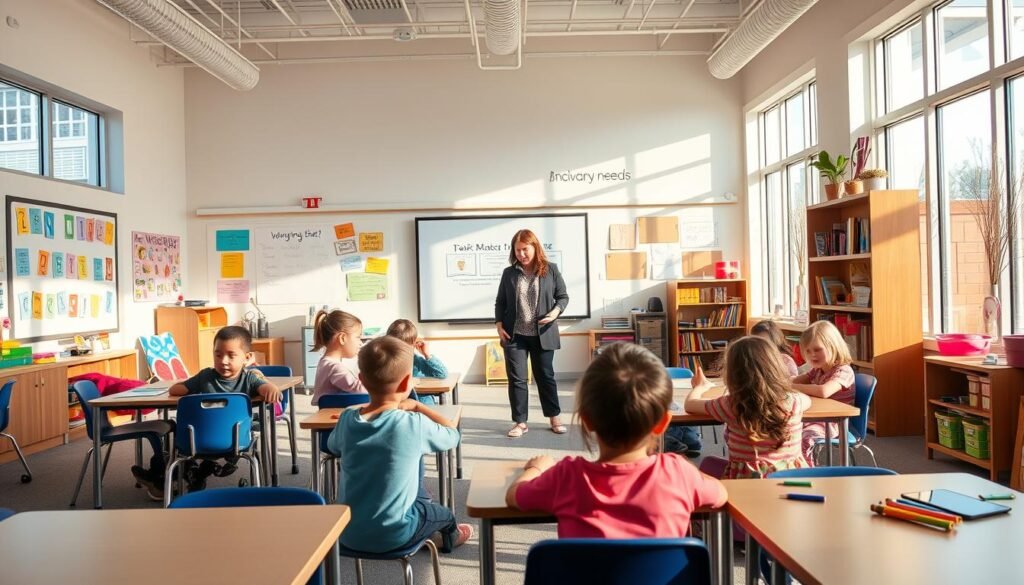
“Education is a shared commitment between dedicated teachers, motivated students and enthusiastic parents with high expectations,” said Bob Beauprez, former congressman and education advocate. This powerful truth is even more critical in today’s complex special needs education landscape.
Parents and educators face unique challenges in supporting children with diverse learning needs. Navigating special education laws in the US & Europe requires careful navigation and deep understanding. Each child deserves access to the right educational accommodations to unlock their full abilities.
The journey starts with understanding your rights under federal and state laws. School districts must provide thorough evaluations and create an individualized education plan for each student. This involves a team effort from all stakeholders working towards common goals.
Success in special needs education relies on strong partnerships between families and school professionals. Teachers, administrators, and parents all play key roles in creating supportive learning environments. Parents who understand the system can effectively advocate for their children’s educational needs.
Key Takeaways
- Federal laws guarantee free appropriate public education for all students with disabilities
- Parents have the right to participate in all educational decisions affecting their child
- School districts must conduct thorough evaluations at no cost to families
- Individualized education plans create legally binding roadmaps for student success
- Building positive relationships with school staff improves educational outcomes
- Understanding assessment processes helps parents prepare for team meetings
Understanding Special Needs Education Rights and Federal Laws
Federal laws protect students with disabilities, making sure they get equal education in the U.S. These laws guide special education teachers and administrators. They help families understand and fight for the right support for their kids.
The Individuals with Disabilities Education Act (IDEA) Explained
IDEA is a key federal law that ensures kids with disabilities get a free, proper education. It covers 13 types of disabilities, like learning issues and autism. Schools must do detailed checks, create special plans, and teach in the best setting possible.
Key Federal Protections for Students with Disabilities
Section 504 of the Rehabilitation Act also protects students. Knowing about IEP/504 basics helps parents see which law is best for their child. Section 504 helps students who can do well in regular classes with some help. Both laws make sure schools are welcoming for all students.
State-Specific Regulations and Implementation
States have their own rules based on federal laws, leading to different services and rules. State education offices give detailed guides for teachers. These guides cover when to do evaluations, how to solve disputes, and what documents are needed.
Accessing Legal Resources and Parent Guides
State education departments give free guides on disability rights in education. Groups like Wrightslaw and the Council of Parent Attorneys and Advocates offer legal help and tips. Many states also publish notices that explain parents’ rights in education.
Building Strong Relationships with School Decision-Makers
Creating strong partnerships with school leaders is key for special education success. Parents and guardians must work through complex school systems. They need to build good relationships with important decision-makers. A special education teacher is often the main point of contact, but knowing others in the system is also vital.
School decision-makers have different roles. Principals make policies for inclusive classroom settings. District superintendents manage funds for behavioral interventions and special programs. Board members set policies that affect individualized support plans in schools.

- Meet regularly with your child’s special education teacher to talk about their progress and any issues
- Bring research and documents that show why certain behavioral interventions are needed for your child
- Share how strategies at home can help your child in the inclusive classroom
- Ask for updates on how individualized support plans are being used every day
Building trust takes ongoing, respectful interaction. Parents should come to talks with clear goals and concerns. Keeping records and following up on promises helps keep relationships strong and supports the student’s education.
Individualized Education Plans and the IEP Team Process
Special education services start with individualized education plans. These plans guide each student’s learning path. They outline specific goals, services, and support tailored to their needs.
The IEP team works together to create these plans. Teachers, specialists, and families join forces. Their goal is to help students grow and succeed.
Essential IEP Team Members and Their Roles
A good IEP team has many experts. General education teachers know what students should learn. Special education teachers create learning plans for students with disabilities.
Speech-language pathologists help with communication. Occupational therapists work on fine motor skills and daily tasks. School psychologists check on cognitive and behavioral health.
Parents are key team members. They share their child’s strengths, challenges, and home life. School administrators make sure resources match district rules. Case managers keep everyone informed all year.
Creating Effective Goals and Objectives
Good IEP goals are specific, measurable, achievable, relevant, and timely. They focus on areas where students need help while using their strengths. Objectives make big goals smaller and easier to reach.
Teachers use these objectives to help students improve. Goals cover many areas like academics, social skills, and getting ready for the future.
Regular Review and Modification Procedures
IEP teams meet every year to check progress and update plans. They also meet if there are concerns. Teachers use data to make decisions.
Early intervention services might need more checks to make sure plans are working. Parents can ask for updates anytime if they see changes in their child. This keeps plans effective and up-to-date for each student.
Understanding Educational Assessments and Evaluations
Educational assessments are key for spotting learning disabilities and delays in students. They help teachers create plans that fit each child’s needs. Schools use different tests to see how well students think, learn, and need extra help.
Psychoeducational Assessment Components
Psychoeducational assessments look at many parts of a student’s learning. They check things like thinking skills, memory, and how well students do in school. Tests might include:
- Intelligence quotient (IQ) testing
- Academic achievement assessments
- Processing speed evaluations
- Working memory analysis
- Executive function screening
Speech-Language and Occupational Therapy Evaluations
Speech-language pathologists check how well students talk and understand language. Occupational therapists look at how students handle their senses and do everyday tasks. These tests help find out what extra help students might need.
| Assessment Type | Areas Evaluated | Professional |
|---|---|---|
| Speech-Language | Articulation, language comprehension, social communication | Speech-Language Pathologist |
| Occupational Therapy | Fine motor skills, sensory integration, visual perception | Occupational Therapist |
| Physical Therapy | Gross motor skills, balance, coordination | Physical Therapist |
Navigating Public vs Private Assessment Options
Public school tests can take a long time. Private tests are quicker but cost a lot. Parents must decide what’s more important: getting results fast or saving money.
Advocating Effectively for Your Child’s Educational Needs
Being an active part of school meetings is key to successful advocacy. Parents who bring up assistive technology and research-based teaching methods spark important talks. Educational materials like books and videos help school staff grasp your child’s learning needs.
Learning to advocate takes preparation and support. Many groups offer training for parents. These courses cover vital topics like:
- Understanding rights in inclusive classrooms
- Tracking student progress and concerns
- Talking effectively with teachers and principals
- Getting the right services and accommodations
Parent advocacy groups are great for sharing experiences and strategies. Together, families can tackle big issues in education. They push for better behavior management and more early intervention programs.
Writing for school newsletters and local papers boosts advocacy. Parents can talk about topics like Universal Design for Learning and social-emotional development. By sharing their stories and research, families help make schools better for all students with special needs.
Inclusive Classroom Strategies and Best Practices
Creating inclusive classrooms needs careful planning and proven methods. Today’s classrooms must meet the needs of all students, following special education laws in the US and Europe. Teachers and school leaders work together to help every student, no matter their abilities or learning styles.
Universal Design for Learning Principles
Universal Design for Learning (UDL) offers a way to make education flexible from the start. It lets students learn in different ways, like through visuals, hands-on activities, and audio. This way, students can show what they’ve learned in various ways, like writing, speaking, or creating.
Differentiated Instruction Techniques
Differentiated instruction tailors teaching to fit each student’s needs. Teachers adjust what they teach, how they teach it, and how students show what they’ve learned. For example, a math teacher might use hands-on tools for some and digital tools for others. This makes sure all students can learn at their own level.
Creating Supportive Learning Environments
The physical and emotional feel of a classroom is key to student success. Good classrooms have:
- Quiet areas for focused work
- Flexible seating
- Clear schedules and routines
- Sensory-friendly lighting and sound
- Accessible materials and paths
These features make a classroom where all students feel safe to learn and grow. With responsive teaching, inclusive classrooms help all students succeed academically and socially.
Assistive Technology and Adaptive Learning Tools
Modern educational technology makes classrooms more inclusive. It helps every student succeed. Schools in the United States are using assistive technology to bridge the gap between students’ abilities and their school success. These tools include simple text-to-speech programs and advanced communication devices.
Technology Solutions for Different Learning Disabilities
Students with dyslexia get help from reading software like Learning Ally and Bookshare. These programs offer audio versions of textbooks. They match the individualized education plan for each student.
For those who struggle with writing, speech recognition programs like Dragon NaturallySpeaking help. They let students express their ideas without the hassle of handwriting or typing.
Mathematical learning disabilities are helped by visual tools like ModMath and EquatIO. These tools turn complex math into something students can see. For communication challenges, there are AAC devices. They range from simple picture boards to advanced tablet apps like Proloquo2Go.
Implementing Adaptive Technology in Daily Learning
Using adaptive learning strategies well needs careful planning and ongoing support. Teachers start by checking what each student needs. They also train teachers, students, and support staff on how to use the technology.
Every day, these tools are used in class in a natural way. Students might wear noise-canceling headphones, use graphic organizers on tablets, or get special assignments. Teachers keep an eye on how well the technology works and make changes as needed.
Early Intervention Services and Programs
Early intervention services are key in spotting and helping with developmental delays in young kids. These programs work with families to support children from birth to when they start school. This helps lay a strong base for their future learning.
Studies show that kids who get early help do better in talking, social skills, and getting ready for school.
Developmental delays can show up in different ways in the first five years. Kids might struggle with speaking, moving, or feeling and acting socially. Early intervention services offer special help through:
- Speech and language therapy
- Physical and occupational therapy
- Developmental instruction
- Family training and counseling
- Service coordination
These services link to IEP/504 basics (US) needs when kids start school. The early intervention data and progress reports help make educational plans. The early start of behavioral interventions often continues in elementary school with changes.
Parents looking for early intervention should reach out to their state’s Child Find program or talk to their pediatrician. Most states offer free checks for kids under three through Part C of IDEA. Kids three to five get help through Part B preschool programs in local schools. Early help greatly improves the chances for kids with developmental delays.
Behavioral Interventions and Support Strategies
Effective behavioral interventions are key to successful special needs education. When students face behavioral challenges, support strategies help create positive learning environments. These strategies combine proactive planning with solutions tailored to each student’s needs.
Positive Behavior Support Systems
Positive behavior support systems focus on prevention, not just reacting. Schools use these systems by changing classroom environments and teaching new skills. Teachers identify triggers early and set up routines that help students succeed.
Key components include:
- Clear expectations posted visually throughout classrooms
- Consistent reinforcement schedules for desired behaviors
- Environmental adjustments reducing sensory overload
- Social skills instruction integrated into daily activities
Sensory Integration Approaches
Many students in special needs education face sensory processing differences. These differences can affect their behavior and learning. Sensory integration techniques help these students manage their responses to their environment. Occupational therapists often work with teachers to use these strategies.
“When we understand how sensory needs drive behavior, we can create environments where all students thrive.”
Tools like weighted lap pads, fidget tools, and movement breaks are used. These simple additions can greatly improve student focus and participation.
Behavior Management Plans and Implementation
Successful behavior management needs detailed plans and consistent use. Plans outline triggers, intervention strategies, and goals. Special education teams regularly review and adjust these plans based on student progress.
Collaboration between teachers, specialists, and families is key. It ensures everyone uses the same approach throughout the school day.
Educational Accommodations and Modifications
To make a classroom inclusive, we need to plan well. Educational accommodations help students learn the same things as everyone else. They make sure students can show what they know in ways that work for them.
Common Classroom Accommodations
Good accommodation strategies meet each student’s needs in different ways. Students get more time to finish tasks and sit closer to the teacher. They also get visual schedules and breaks every 30 minutes to stay focused.
Teachers give out notes, use colors to organize, and offer quiet spots for work. These things help students learn better.
Testing and Assignment Modifications
Modifying tests and assignments helps show what students really know. These changes include:
- Alternative test formats (oral responses, multiple choice instead of essays)
- Reduced distractions through separate testing locations
- Technology assistance like text-to-speech software
- Breaking large projects into smaller, manageable parts
- Providing study guides with key concepts highlighted
Environmental and Instructional Adjustments
Differentiated instruction goes beyond teaching to how the classroom looks. Making the environment right helps students learn better.
| Environmental Factor | Adjustment Options | Student Benefits |
|---|---|---|
| Lighting | Natural light, dimmer switches, lamp options | Reduced eye strain, improved focus |
| Noise Level | Noise-canceling headphones, quiet corners | Better concentration, less anxiety |
| Workspace | Standing desks, fidget tools, cushioned seats | Increased comfort, sustained attention |
| Visual Organization | Color-coded materials, labeled bins | Easier navigation, reduced confusion |
Teachers also adjust how they teach. They give clear directions in words and pictures. Graphic organizers and presentations for different learning styles help students succeed.
Navigating Special Education Teacher Collaboration
Working well with a special education teacher is key to helping students succeed. These teachers are experts in making plans just for each student. They use proven methods and work with many people in schools.
Starting a good partnership with special education teachers means talking openly. Teams meet often to share how students are doing and what works best. This helps make sure plans fit with what’s happening in class and what students need.
Working together in inclusive classrooms means everyone is involved. Special education teachers work with regular teachers, therapists, and bosses to help students. This team effort makes sure strategies are used everywhere students learn.
| Collaboration Type | Frequency | Key Focus Areas |
|---|---|---|
| Formal Team Meetings | Monthly | Progress review, goal adjustment, strategy planning |
| Informal Check-ins | Weekly | Daily challenges, quick strategy adjustments |
| Co-teaching Sessions | 2-3 times weekly | Direct instruction, skill reinforcement |
| Parent Conferences | Quarterly | Home-school coordination, progress updates |
Parents can help by asking for team meetings at school. These meetings include teachers, support staff, and bosses to make plans just for a student. When special education teachers help plan and carry out these plans, students get better support that meets their needs.
Understanding Developmental Delays and Learning Disabilities
Spotting developmental delays and learning disabilities early is key to a child’s success in school. Parents and teachers who notice signs can get kids the help they need quickly. Knowing about these issues helps families find the right support and resources for their children.
Recognizing Signs and Symptoms
Children with developmental delays may show signs at different ages. They might have trouble speaking or understanding words. They could also struggle with physical skills like writing or catching a ball.
Social skills can be a problem too. They might find it hard to make friends or understand facial expressions. Learning disabilities often become clear when schoolwork gets harder. Reading problems might include mixing up letters or not understanding what they read.
Math can be tough, with issues like not knowing numbers or having trouble with word problems. Writing difficulties might show up as messy handwriting or trouble organizing thoughts.
Impact on Academic Performance
Each condition affects schoolwork differently. Dyslexia makes reading and spelling hard. Dyscalculia makes math a struggle. ADHD can make it hard to focus and finish tasks.
Executive function disorders can mess with organization and time management. These issues can make it hard to keep up with schoolwork. Without the right help, students may fall behind and lose confidence.
Support Strategies for Different Conditions
Every child needs a unique approach to support. Early intervention programs offer special lessons based on their needs. Speech therapy helps with language. Occupational therapy works on fine motor skills and sensory issues.
Education therapy teaches new ways to learn. This can include multisensory instruction for dyslexia or using visual aids for math. Assistive technology can help with writing. Structured routines help with attention problems. Assignments are adjusted to match what a child can do.
- Multisensory instruction for dyslexia
- Visual aids and manipulatives for math concepts
- Assistive technology for writing support
- Structured routines for attention challenges
- Modified assignments matching ability levels
Special schools offer a lot of support. Orton-Gillingham programs focus on phonics. Lindamood-Bell centers work on language processing. Churchill School and Landmark School have programs for kids with learning disabilities.
Building Community Support Networks
Creating strong community connections makes the journey through special needs education better. Parents find support by connecting with others who face similar challenges. These networks offer emotional support, practical help, and shared knowledge that boost advocacy efforts.
Parent Advocacy Groups and Organizations
Parent advocacy groups are key for families in special needs education. The Council of Parent Attorneys and Advocates (COPAA) trains parents on their kids’ educational rights. Family Voices has chapters in all 50 states, helping families with individualized education plans and healthcare.
Local chapters of The Arc and Parent Information Centers offer free workshops. They cover topics like IEP development and transition planning. These groups provide:
- Monthly support group meetings for emotional connection
- Educational seminars on disability rights in education
- One-on-one mentorship programs pairing experienced and new families
- Resource libraries with current research and practical guides
Online Resources and Support Communities
Digital platforms offer support beyond local areas. Understood.org has articles and tools for navigating inclusive learning environments. Facebook groups like Special Needs Parenting Support connect families worldwide. Wrightslaw has legal information and advocacy strategies, while state forums offer local advice.
Disability Rights in Education and Legal Protections
Federal laws protect students with disabilities in the United States. The Americans with Disabilities Act (ADA) and Section 504 of the Rehabilitation Act work with IDEA. They make sure schools treat all students fairly.
Special education laws in the US and Europe have some similarities but also differences. American laws focus on services for each student. European laws push for schools to include all students. Both require schools to offer the right tools and technology.
Schools must give free appropriate public education (FAPE) to all students who need it. This means:
- Special lessons that fit each student’s needs
- Services like speech therapy or counseling
- Access to technology that helps students
- Changes in the classroom to help everyone learn
Parents can get help from many places. State Departments of Education have special education teams. University Centers for Excellence offer research-based advice. Parent Advocacy Centers help families understand their rights.
“Every child deserves an education that recognizes their unique abilities and provides the tools they need to succeed.”
Legal protections aren’t just for classroom learning. Schools must also let students join in extracurricular activities and field trips. Technology helps students in all parts of school life, from computers to sports.
Preparing for Educational Transitions
Educational transitions are key moments in a student’s learning path. They need careful planning and support. These changes bring new challenges and chances for growth. Students with special needs need detailed plans for their academic, social, and emotional needs.
These plans help students grow more independent and ready for new learning settings. They build on current strategies and prepare for new environments.
Elementary to Middle School Transitions
The move to middle school is a big change. Students face new teachers, classrooms, and schedules. They need to learn to organize and speak up for themselves.
Parents and teachers should start getting ready in the last year of elementary school. They should update the student’s plan to meet the new challenges.
Important areas to focus on include:
- Learning to manage a locker and its combination
- Improving time and schedule management
- Talking to different teachers
- Getting used to bigger school buildings
- Developing social skills for making friends
High School Planning and Post-Secondary Preparation
Planning for high school focuses on meeting graduation needs and setting future goals. Students need help choosing the right classes and keeping support. Early plans from before help shape high school accommodations.
Planning should also look at college prep, vocational training, and learning to live independently.
Transition Services and Career Planning
IDEA requires transition services to start at 16, but early planning helps more. These services help students get ready for life after school through career tests, job training, and community links. Good planning ties school goals with adult services.
| Transition Area | Planning Activities | Timeline |
|---|---|---|
| Career Exploration | Interest inventories, job shadowing | Ages 14-16 |
| Work Experience | Internships, part-time employment | Ages 16-18 |
| Independent Living | Money management, transportation training | Ages 16-21 |
| Post-Secondary Education | College visits, application support | Ages 16-18 |
Conclusion
Understanding special needs education is complex. Parents and teachers need to know about laws, assessments, and support services. This knowledge starts with knowing your rights under laws like IDEA. It also involves working with school teams to help students succeed.
Creating inclusive classrooms is a mix of knowing and doing. Schools do well when they use special strategies, technology, and behavior plans. Each student’s needs help choose the right tools and methods. The IEP process is like a map, guiding the way with assessments, goals, and services.
Success in special education comes from working together. Parents, teachers, and others need to support each other. When everyone works as a team, students get the chance to reach their full ability. Legal rights, new learning methods, and support help every child learn and grow.
The world of special education is always changing. New research and technology open up new ways to learn. By keeping up with the latest in inclusive classrooms and talking with teachers, families can help their kids succeed. Every step forward brings us closer to a future where all students get the education they need.
FAQ
What is an Individualized Education Plan (IEP) and who qualifies for one?
How do educational accommodations differ from modifications?
What role does a special education teacher play in an inclusive classroom?
When should parents seek early intervention services?
What behavioral interventions work best for students with special needs?
How can parents effectively advocate for their child’s educational needs?
What assistive technology options help students with learning disabilities?
How do parents navigate the psychoeducational assessment process?
What are the key components of Universal Design for Learning?
How should families prepare for educational transitions?
What disability rights protect students in educational settings?
How can parents access support through accommodation strategies?


The PsyForU Editorial Collective is the research and editorial team of PsyForU Research International. The collective prepares educational, psychological, mental-health-awareness, inclusion, neurodiversity, and research-methodology content for students, parents, educators, researchers, and general readers. PsyForU content is intended for awareness, education, and capacity-building and should not be treated as clinical diagnosis, therapy, medical advice, legal advice, or emergency mental-health support.