



Did you know that 1 in 54 children in the United States has Autism Spectrum Disorder (ASD)? This shows how vital autism awareness for families and good autism parenting tips are. Supporting a child with autism can be tough, but it’s also very rewarding! 🌟
Being calm and positive, and showing good behavior, are key ways to help your child. By knowing about autism and using the right methods, your child can do well. This article will cover important strategies for raising a child with autism. We’ll talk about understanding autism and making a supportive home. 🌈
Key Takeaways
- Understand the importance of being calm and positive when supporting a child with autism.
- Learn effective strategies for creating a supportive home environment.
- Discover how modeling appropriate behavior can help your child with autism.
- Explore the benefits of early diagnosis and intervention.
- Gain insights into building a strong support network for your family.
📚 The Complete Parent Survival Bundle: Raising a Child with Autism
Understanding Autism Spectrum Disorder
Learning about Autism Spectrum Disorder (ASD) is key to helping your child grow and meet their needs. ASD is a condition that makes social interactions and communication hard. It also leads to limited interests and repetitive behaviors 🤝.
What is Autism Spectrum Disorder?
ASD has three levels of severity, as the Diagnostic and Statistical Manual of Mental Disorders shows. This helps in giving the right support and help based on the child’s needs.
Common Characteristics and Behaviors
Children with ASD might have delayed speech, pull away from social situations, and repeat actions. Knowing these traits helps in giving the right support.

Myths vs. Facts About Autism
There’s a lot of wrong information about ASD. Let’s clear things up: ASD isn’t caused by bad parenting or the environment. It’s a brain condition that needs understanding and support.
The Autism Society says, “Autism is a complex developmental disability that usually shows up in early childhood.”
“The term ‘spectrum’ in autism spectrum disorder refers to the wide range of symptoms and severity.”
Knowing the truth helps you fight for your child and give them the support they need to do well.
Early Signs and Diagnosis
Knowing the early signs of autism helps parents support their child early on 🚀. Signs can appear as early as 12-18 months. The Centers for Disease Control and Prevention say early help can greatly improve a child’s development 📈.
Recognizing Early Warning Signs
Look out for signs like delayed speech, avoiding eye contact, and repeating actions 🤔. If you see these, talk to your pediatrician or a specialist right away.
The Diagnostic Process
A team of experts, like psychologists and speech therapists, will evaluate your child 👥. They’ll watch your child’s behavior, talk to you about their growth, and use special tools 📊.
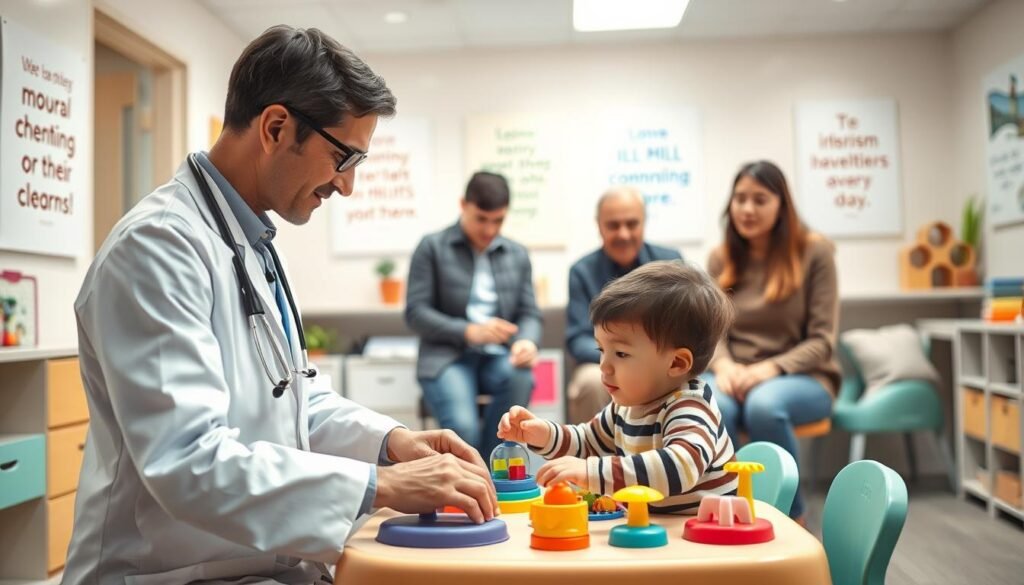
Coping with a New Diagnosis
Getting a diagnosis can feel overwhelming, but it’s a big step towards helping your child 🤝. You might feel shocked or relieved, and that’s okay.
Sharing the Diagnosis with Family and Friends
Be open and honest when you share the news, and offer resources to help them understand 📚. This can create a supportive circle for your child.
Creating a Supportive Home Environment
A supportive home can greatly improve a child with autism’s life. The Autism Speaks School Community Tool Kit suggests making the home sensory-friendly. It also advises setting up predictable routines and using visual aids.
Sensory-Friendly Modifications
To make your home sensory-friendly, you need to reduce overwhelming stimuli. This means:
- Reducing clutter and noise levels
- Using soft lighting or natural light
- Creating a quiet space or “sensory room”
Establishing Predictable Routines
Predictable routines make children with autism feel secure. You can do this by:
- Creating a daily schedule
- Sticking to regular meal times and bedtimes
- Preparing your child for transitions
Visual Supports and Schedules
Visual aids help children with autism understand routines. They can include:
- Visual timetables
- Picture communication symbols
- Activity schedules
Safety Considerations for Children with Autism
Keeping your home safe for a child with autism is important. This means identifying and avoiding hazards. Here are some steps:
| Safety Measure | Description |
|---|---|
| Securing Furniture and Appliances | Anchor heavy objects to walls to prevent tip-overs |
| Locking Cabinets and Drawers | Use safety locks to prevent access to hazardous materials |
| Installing Safety Gates | Block off stairs and rooms that are off-limits |
By following these steps, you can make your home a supportive place for your child’s growth and happiness.
Effective Communication Strategies
Effective communication is key for supporting a child with autism. It helps them share their needs and wants clearly 🤗. As a parent, using the right communication strategies can greatly improve how your child interacts with the world.
Understanding Verbal and Nonverbal Communication
Children with autism may communicate differently 📢. It’s important to understand these differences. Some may not speak at all or have limited words. Others might speak a lot but struggle with tone and context.
Alternative Communication Methods
For some kids, using alternative methods can be very empowering 💪. Tools like AAC devices, picture symbols, or sign language can help. They allow your child to express needs when speaking is hard.
Visual Communication Tools
Visual supports work well for kids with autism 🎨. Things like visual schedules, picture cards, or reminders can help. They reduce anxiety and make things clearer by showing what’s happening or expected.
Working with Speech and Language Therapists
Speech and Language Therapists (SLTs) are very important for kids with autism 💬. They help improve communication skills. Working with an SLT can give you great ideas to help your child at home.
Using these communication strategies can really help your child express themselves and connect with others 🌟. Remember, every child with autism is different. So, it’s important to make your approach fit your child’s needs and likes.
Behavioral Management Techniques
Effective behavioral management techniques are key for kids with autism to live their best lives 🎉. These strategies help create a supportive and structured environment. This way, your child can thrive 🌟.
Understanding the Function of Behaviors
Behaviors in kids with autism often have a purpose, like communicating or coping with stress 🤔. Knowing why your child behaves a certain way helps you find the right solutions.
Applied Behavior Analysis (ABA)
Applied Behavior Analysis (ABA) is a well-studied method for managing autism behaviors 📚. It breaks down big behaviors into smaller parts and rewards good actions.
Positive Reinforcement Strategies
Positive reinforcement is a great tool for managing behaviors, using rewards and praise to encourage good actions 🏆. This approach helps your child learn better behaviors and avoid bad ones.
| Technique | Description | Benefits |
|---|---|---|
| ABA Therapy | Breaks down complex behaviors into smaller components | Improves behavioral skills, enhances learning |
| Positive Reinforcement | Encourages desired behaviors through rewards and praise | Promotes positive behaviors, reduces challenging ones |
| Sensory Integration | Helps children integrate sensory information more effectively | Reduces sensory overload, improves self-regulation |
Managing Meltdowns and Sensory Overload
Meltdowns and sensory overload can be tough for kids with autism and their parents 😟. Spotting early signs and using calming methods can help your child handle these situations better.
Developing Self-Regulation Skills
Teaching self-regulation skills is critical for kids with autism, helping them control their emotions and actions 💪. Using deep breathing, visual schedules, and emotional labeling can help your child master these important skills.
Therapy Options and Interventions
Supporting a child with autism can be challenging, but there are many therapy options and interventions to help. As a parent, you’re not alone. There are many resources to help your child thrive.
Occupational Therapy Benefits
Occupational therapy (OT) is very helpful for children with autism. It helps them learn important life skills. OT improves fine motor skills, sensory integration, and daily living activities.
This makes your child more independent and confident.
Speech and Language Therapy
Speech and language therapy is key for your child’s communication. It helps with verbal and non-verbal skills. This includes speech articulation, comprehension, and social communication.
Social Skills Training
Social skills training helps children with autism in social situations. It includes role-playing, group activities, and strategies for better friendships and relationships.
Play Therapy and Floortime
Play therapy and Floortime are child-led approaches. They focus on building emotional connections and developing social and communication skills through play.
Complementary and Alternative Approaches
Some families try complementary and alternative approaches. These include dietary interventions, mindfulness, and animal-assisted therapy. Always talk to healthcare professionals before starting new therapies.
Exploring these therapy options and interventions can help you find the right fit for your child. This way, you can support their unique needs and help them reach their full potentials.
Raising a Child with Autism: Daily Life and Routines
Living with a child who has autism can be tough, but the right strategies help a lot. Creating a structured and supportive home is key. Daily routines and activities help your child feel safe and learn important skills.
Establishing Consistent Schedules
Consistency is vital for kids with autism. A regular schedule helps them know what to expect and feel less anxious. Autism Speaks says visual schedules are great for daily routines.
Managing Transitions Between Activities
Transitions can be hard for kids with autism. Use visual timers, give clear instructions, and prepare them for changes. This helps avoid meltdowns and makes life easier.
Teaching Essential Life Skills
Teaching kids with autism to dress, feed, and take care of themselves is important. Break tasks into small steps and use visual aids. This makes learning more effective.
Sleep and Mealtime Strategies
Sleep and mealtime can be tough for families with autism. A bedtime routine and a sleep-friendly room can help with sleep. For meals, offer different foods, keep routines consistent, and reduce distractions.
Handling Public Outings and Social Events
Public outings and social events can be overwhelming for kids with autism. Prepare them ahead of time, use social stories, and have a plan B. This makes these events less stressful for everyone.
| Strategy | Description | Benefit |
|---|---|---|
| Visual Schedules | Using calendars or charts to outline daily activities | Reduces anxiety by providing a clear plan |
| Transition Preparations | Warning your child of upcoming changes | Minimizes meltdowns by preparing your child |
| Life Skills Training | Teaching dressing, feeding, and hygiene | Promotes independence and self-confidence |
Educational Approaches and Advocacy
Getting your child with autism through school can be tough. But knowing your rights and options is key! 📚 You’re not just a parent; you’re a fighter for your child’s education.
Understanding Educational Rights
The Individuals with Disabilities Education Act (IDEA) makes sure kids with autism get a good education. Knowing this is the first step in fighting for your child. 🔍
Individualized Education Plans (IEPs)
An IEP is a plan for your child’s success in school. It’s made with your help and the school’s. Together, we can make a plan that really helps your child! 🤝
Inclusive vs. Specialized Education Options
Deciding between inclusive and specialized schools depends on your child’s needs. Inclusive schools mix kids with autism into regular classrooms. Specialized schools offer more support. The best choice is what’s best for your child. 🏫
Advocating for Your Child at School
Being a good advocate means talking clearly and setting clear goals. You’re your child’s biggest supporter! 💪
Homeschooling and Alternative Education Approaches
Some families choose homeschooling or alternative schools for their kids. These options can give a more personal education. 📚
By knowing your rights, making a strong IEP, and fighting for your child, you can get them the education they need. Keep going; you’re making a big difference! 🌟
Building Support Networks and Resources
Creating a support network is key for families with a child with autism. 🤝 It offers emotional support, practical help, and resources. This makes a big difference in your journey. 🌟
Finding Qualified Healthcare Providers
Finding the right healthcare providers is important. Look for those with autism experience, like pediatricians and therapists. Ask your child’s doctor, friends, or family for recommendations. 🔍
Parent Support Groups and Communities
Joining parent support groups is helpful. They offer a place to share advice and get emotional support. Look for local groups through the Autism Society or online forums. 👥
| Resource | Description | Benefits |
|---|---|---|
| Autism Society | National organization providing resources and support | Access to local chapters, educational materials, and advocacy |
| Online Forums | Virtual communities for parents and caregivers | 24/7 support, shared experiences, and resource sharing |
| Local Support Groups | In-person meetings for families | Face-to-face support, local resource sharing, and community building |
Financial Resources and Insurance Navigation
Understanding financial resources and insurance can be tough. Look into programs like Medicaid waivers and know your insurance. Many groups offer financial help and advice. 💰
Respite Care and Self-Care Strategies
Remember the value of self-care and respite care. Taking breaks helps prevent burnout. Check out respite care options to recharge. 🌟
Online Resources and Educational Materials
Use online resources to learn more about autism. Websites, webinars, and blogs keep you updated on new research and strategies. 📚
Conclusion: Celebrating Progress and Looking Forward
Raising a child with autism needs a full approach. This includes understanding the disorder, creating a supportive space, and using good communication. By celebrating progress and looking ahead, you can help your child reach their highest goals! 🎉
Autism Speaks says focusing on strengths and abilities is key. This helps families stay positive and motivated. There are many autism resources and support groups that can guide you through the challenges.
Remember, autism awareness is vital for a more inclusive community. By working together and sharing knowledge, we can greatly improve the lives of those with autism and their families. 🌟
Stay informed and connected with autism resources to support your child well. Keep moving forward and don’t be afraid to ask for help. You’re not alone in this journey! 🤝
FAQ
What is Autism Spectrum Disorder (ASD) and how does it affect children?
What are the early signs of autism, and how can I recognize them?
How can I create a supportive home environment for my child with autism?
What are some effective communication strategies for children with autism?
How can I manage my child’s behaviors and meltdowns?
What therapy options and interventions are available for children with autism?
How can I help my child with autism navigate daily life and routines?
What educational approaches and advocacy strategies can I use to support my child?
How can I build a support network and access resources for my child with autism?
What are some strategies for parenting a child with autism, and how can I cope with the challenges?
How can I help my child with autism develop social skills and interact with others?


Dr. Leah Howard, Positive Psychology
Dr. Howard is a researcher and advocate for positive psychology, focusing on human strengths, happiness, and well-being. Her writings explore how people can cultivate a positive mindset, improve resilience, and develop emotional intelligence to live fulfilling lives.