


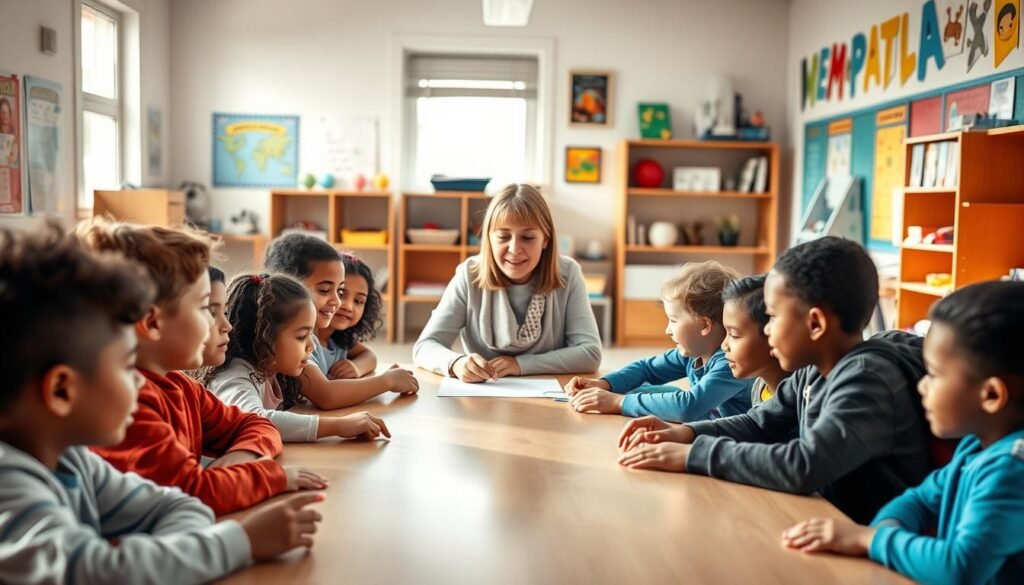
Imagine if a school’s success wasn’t just about high scores. What if it was about welcoming every student to learn together? This thought pushes us to think differently about education.
Inclusive education is a must, not just a kind choice. It’s based on important rules from the United Nations about children and adults with disabilities. These rules make it clear: keeping students out of learning opportunities is wrong.
In India, this means classrooms must meet world standards and follow local laws. Schools should welcome everyone, make learning accessible, and provide personalized support. This helps students do well academically and socially. In the U.S., certain laws ensure education is free and suitable for all students. These laws help shape policies and how they are put into action.
Inclusive education is like a big umbrella. It covers the way schools operate, how we view learning, and our attitudes. It fights against separating students. It encourages them to take part and respects their worth. Through this article, we’ll look at how these rights are not just legal points but real actions that make education fair and caring for everyone.
Key Takeaways
- Inclusive education is a legal obligation under international human rights law, not an optional policy choice.
- A rights-based approach to education requires non-exclusion, equal access, reasonable accommodation, and individualized support.
- Exclusion from schooling violates the Rights of Children in Inclusive Classrooms and undermines social participation.
- Standards from the CRC and CRPD guide implementation and align with India’s push for accessible, quality education for all learners.
- Comparative insights from IDEA and FAPE clarify how legal mandates translate into classroom practice.
- Inclusive education functions as a system, an approach, and an attitude that advances academic and social development.
Understanding Inclusive Classrooms
Schools across India are embracing an inclusive learning approach that welcomes each student. This approach is grounded in international human rights law and follows the Rights of Persons with Disabilities Act, 2016. It aims to make classrooms places where every student’s rights are respected, reducing stigma and reflecting the diverse backgrounds of students from both cities and rural areas.
Definition of Inclusive Education
Inclusive education lets all students learn together with the support they need. It aims to remove barriers and offer equal opportunities for everyone. This approach considers the different needs students may have—like disabilities, language differences, gender, or economic status—making sure the classroom works for everyone.
Countries have a duty to make education accessible to all students under the Convention on the Rights of Persons with Disabilities. This means having flexible curriculums, using assistive technologies, and planning together. These steps help to honor every student’s unique background.
Importance of Inclusion
Inclusive classrooms promote dignity, self-worth, and belonging. Students develop important social skills and teachers learn more about how to help each student. Working together, students and teachers create a supportive community for everyone.
Such an approach also strengthens human rights and community ties. By promoting the full potential of every learner, inclusive education prepares them for active participation in society. This creates strong communities with diverse, capable individuals.
Key Characteristics of Inclusive Classrooms
- Access without exclusion: Students attend general education classes with their peers and receive the support they need.
- Reasonable accommodation: Adjustments, like more time or visual aids, meet individual needs.
- Individualized support: Support services are provided in class, minimizing the need for students to leave the classroom.
- Effective support measures: Data helps tailor interventions that support both academic and social growth.
- Life and social skills: Teaching focuses on communication, teamwork, and advocating for oneself.
These features are put into practice through inclusive strategies like Universal Design for Learning and peer tutoring. When school leaders, policies, and teacher expertise come together, it creates an inclusive environment. This type of environment not only reflects the diversity of the community but also encourages continuous improvement.
Legal Framework Supporting Children’s Rights
India matches its education goals with global standards. These focus on dignity, access, and fairness. Viewing education through a rights-based perspective transforms classrooms. Here, children learn about their rights and how to support different types of learners. Reasonable adjustments and clear responsibilities are emphasized.
At the core is a simple rule: no child should miss out on education because of disabilities. Every student deserves personalized support. This helps them take part fully in learning.
Individuals with Disabilities Education Act (IDEA)
In the U.S., IDEA ensures free, suitable education. It demands special education and services that cater to unique needs. This law also helps young kids through early help and offers grants. These grants improve support in schools.
This law serves as a model for India, showcasing how to approach inclusive education. It proves that focusing on assessment, personalized plans, and clear goals works. Such methods operationalize education rights through detailed plans, safety measures, and reviews. This keeps the focus on supporting every learner.
- Individualized Education Program: a detailed plan highlighting current levels, goals, services, and how progress will be measured.
- Least Restrictive Environment: keeping students in regular classes with needed supports when possible.
- Family Participation: families can give informed consent, access records, and have protections for fairness.
Americans with Disabilities Act (ADA)
The ADA works alongside IDEA. It stops discrimination and ensures everyone gets the same access to public services, including schooling. Schools must make reasonable changes and communicate well. They need to be physically accessible. This lets students participate equally.
In India, ADA’s principles highlight that schools need good design, structure, and trained staff. Schools must follow accessibility rules and have ways to address complaints. This makes the idea of teaching rights to children real. It helps different learners in class, on the bus, and online.
| Principle | IDEA Focus | ADA Focus | Implication for India |
|---|---|---|---|
| Access | Free appropriate public education with tailored services | Nondiscriminatory access to programs and activities | Guarantee enrollment and usable learning environments |
| Individualization | IEP with goals, supports, and progress measures | Reasonable modifications and effective communication | Personalized supports alongside universal access |
| Placement | Least restrictive environment with necessary aids | Integration unless fundamental alteration is required | Prioritize general classrooms with supports |
| Accountability | Procedural safeguards and data reviews | Compliance through policies and remedies | Clear redress systems and performance monitoring |
Together, these laws create a strong strategy. They align legal rights and school methods, invest in training, and check results. This boosts inclusive education, deepens teaching about rights, and keeps supporting all learners at school.
The Role of Parents and Guardians
Families in India are key in applying rules at school. When schools aim for fairness in learning, parents make sure those goals are met in class. Working together, we ensure every kind of learner feels included and valued.
Advocating for Children’s Rights
Advocacy starts by understanding what a child needs and how they shine. Parents can ask for fair treatment, proper support, and special help based on the child’s specific needs. This method matches India’s and global aims for all students to join in and access learning.
- Document needs and goals: Keep records and schoolwork to show why certain aids and services are needed.
- Ask for accessible environments: Make sure there are ramps, quiet spaces, and tech aids for all kinds of learners in daily activities.
- Secure individualized supports: Look for options like Braille, big print texts, or sign language if needed, and ensure the child gets extra help while staying in regular classes.
Parents should also use government rules to ask for changes that help their child learn and take part more. Keeping track of these requests shows if they’re working and how to improve them.
Communication with Educators
Good communication makes common goals a reality every day. Parents and teachers can make a basic plan to monitor special arrangements, teaching methods, and progress. This keeps education inclusive and focused on each child’s rights.
- Identify and track requirements: Create a one-page summary of what works best for the child’s learning, including what to avoid and what helps.
- Coordinate supports in general education: Set times to talk with the teacher, special education staff, and counselor to make sure lessons, tests, and aids work well together.
- Enable life and communication skills: Ensure the child can use sign language, Braille, audio tools, or other communication aids to learn and make friends.
Keeping in touch—through notes, calls, or meetings—lets everyone adjust plans and keeps the student involved and confident in their learning journey.
Educational Rights of Children
Every child is entitled to an education free from bias and barriers. In India, this aligns with the global goal of prioritizing children’s rights in education. The aim is clear: eliminate exclusion, provide support, and ensure dignity so learning is fair and effective.
Equal access to education means more than just having a place to sit in class. It includes reasonable accommodations, timely support, and teaching that meets each child’s unique needs. When schools truly embrace inclusive education, more kids show up for class, fewer leave, and students grow academically and socially.
Right to Equal Access to Education
Kids with disabilities should never be left out of primary or secondary school due to their disabilities. Equal access means things like ramps, lifts, digital devices for reading, and quiet places for those who need them. It also involves staff who know sign language, Braille, or other ways of communicating.
To truly open doors, schools must provide necessary accommodations without waiting. This keeps kids in neighborhood schools, making for a stronger, more inclusive place to learn. Such actions show a commitment to inclusive education and make rights in education a reality every day.
- No discrimination in admissions and exams
- Textbooks and tests everyone can use
- Ways to get around safely on campus
- Help with the costs of assistive devices
Right to Individualized Education Plans (IEPs)
Every kid learns differently. An Individualized Education Plan (IEP) ensures they get the support to reach their goals. In the U.S., these plans are part of a law called IDEA, guaranteeing a free and suitable education. Around the world, similar plans aim for the same thing: support tailored to each child, with clear goals and checks on progress.
Good plans involve parents, teachers, and experts. They detail the help needed, teaching methods, and how progress will be tracked. Rooted in the rights of children, these plans help schools deliver real inclusive education.
- Goals that match what students of the same grade are learning
- Help like more time on tests, materials you can touch, or things to read along with
- Ways to communicate, like Braille, sign language, or AAC
- Regular checks to tweak plans as needed
| Right | What It Requires | School Actions | Evidence of Impact |
|---|---|---|---|
| Equal Access | Non-discrimination and accessible learning | Barrier-free campus, accessible formats, trained staff | Higher attendance, reduced exclusion, stronger peer interaction |
| Reasonable Accommodation | Adjustments without undue delay | Alternate assessments, seating, assistive tech deployment | Improved test completion and classroom participation |
| Individualized Planning | Goals, supports, and monitoring | Team-developed plans, progress data, family input | Measurable gains in literacy, numeracy, and behavior |
| Communication Access | Multiple modes for learning and expression | Braille, ISL interpretation, AAC tools, visual schedules | Enhanced comprehension and independent learning |
| Community Inclusion | Learning in local schools | Neighborhood placement, transport, transition supports | Continuity of schooling and social ties |
Social and Emotional Support in Inclusive Settings
Inclusive education does well with both emotional care and academic focus. In India, schools can bridge policy and practice by blending social inclusion into everyday activities. By adopting inclusive methods, we celebrate everyone’s participation, respect, and the variety of backgrounds in schools.
A supportive climate is intentional. It’s built on structured routines, consistent feedback, and valuing students’ opinions. These steps are essential to aid diverse learners who benefit from regular signals and opportunities to express themselves.
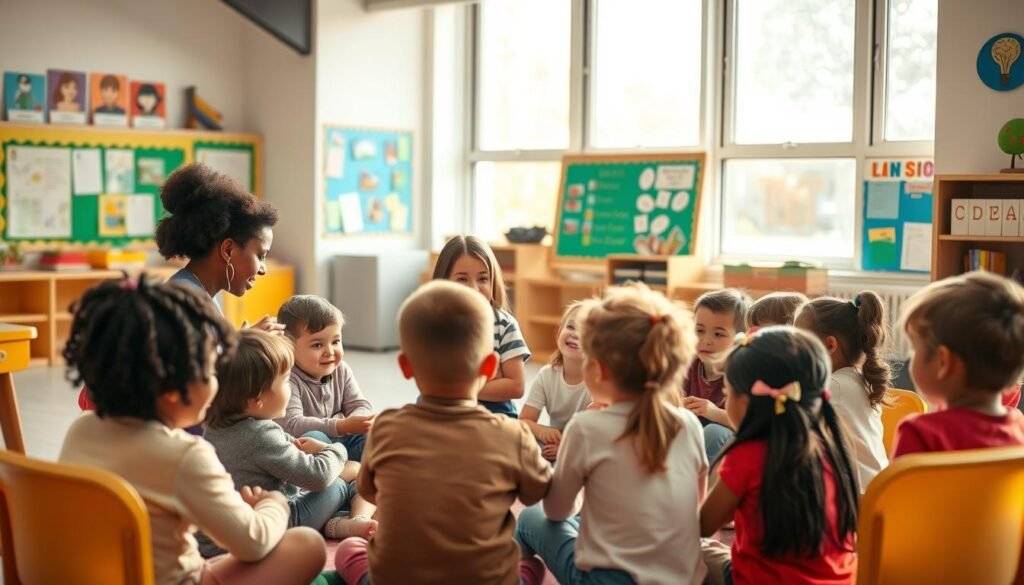
Building Positive Relationships
Creating strong connections begins with organized peer interactions. Using buddy systems, mentoring across grades, and group activities teaches empathy and team spirit. Simple greetings at the start and end of the day show we care.
- Peer support circles that switch roles to increase trust and independence.
- Group work with students of different abilities and clear rules.
- Tools for communication—like visual schedules, Indian Sign Language, and AAC.
Such inclusive strategies lessen stigma and improve access for all. They assist various learners while celebrating the diversity in our schools, across languages, cultures, and skills.
Mental Health Resources
Support for well-being should be part of regular classrooms, not isolated. Short lessons on coping techniques like breathing, positive self-talk, and resolving conflicts can be included in morning gatherings. It’s important for help to be easily accessed and private.
- Units within schools that offer counseling with skilled professionals.
- Programs for early detection that parents agree to, with clear next steps.
- Kits for teachers with strategies for calming, sensory breaks, and trauma-informed approaches.
A detailed plan involves counselors, teachers, and parents working together. When these supports are a normal part of school, inclusive education thrives. It helps all learners feel valued and reflects the variety in our schools smoothly and promptly.
The Role of Educators and Support Staff
Educators and support staff make policies a reality in classrooms across India. They use a rights-based education approach. This ensures every student gets what they need to learn alongside their peers. To them, inclusive education is a commitment where teaching is tailored to meet students’ needs.
Teacher Training and Preparedness
According to Article 24(4) of the Convention on the Rights of Persons with Disabilities, teachers need specific training. This includes learning Indian Sign Language, Braille, and how to teach in ways all can access. Training mixes raising awareness with hands-on communication methods and practical strategies.
They get ready to help different learners with well-planned routines, various teaching methods, and technology. Schools use both national and international standards for this training. They also learn to work as a team with other specialists.
- Core skills: crafting lessons for all, using data for decision-making, and encouraging positive behavior.
- Specialized skills: knowing sign language, reading Braille, and using assistive tech.
- Classroom practices: grouping students flexibly, providing step-by-step guidance, and assessing progress regularly.
Collaboration with Specialists
Good inclusive education hinges on teamwork. Teachers join forces with experts like sign language interpreters and school psychologists. Together, they create personalized supports for regular classroom settings.
This teamwork is similar to IDEA teams, having clear duties, sharing info, and planning together for appropriate accommodations. When these teams agree on goals and supports, lessons mirror a rights-based education ethos. This helps all students learn better, no matter their background.
| Role | Primary Contribution | Tools and Methods | Impact on Learners |
|---|---|---|---|
| General Education Teacher | Leads instruction aligned to grade standards | Universal Design for Learning, flexible assessments, peer supports | Access to rigorous content within inclusive education |
| Special Educator | Designs individualized supports and accommodations | IEP-aligned strategies, progress monitoring, scaffolded tasks | Targeted growth while learning with peers |
| Sign Language Interpreter | Ensures real-time language access | Indian Sign Language interpretation, visual cueing, note facilitation | Equitable participation in discussions and assessments |
| Mobility Trainer | Builds safe, independent navigation | Orientation routines, tactile mapping, route rehearsal | Confident movement around campus and community |
| Assistive Technology Professional | Matches tools to learning needs | Screen readers, AAC devices, switch access, low-tech supports | Increased communication and academic engagement |
| School Psychologist | Addresses learning and behavior needs | Functional assessments, counseling, behavior intervention plans | Improved well-being and sustained attention |
By centering their approach on definite roles, data, and planning together, schools can truly incorporate a rights-based approach to education. This means there’s a strong system in place for aiding diverse learners, upholding their dignity and striving for excellence.
Curriculum Adaptations and Modifications
Indian schools are making education fairer by changing how they teach and test. They create a welcoming space for learning by setting clear goals that all students can meet in different ways. This way of teaching respects every student’s needs and abilities.
These changes touch every subject: from reading and math to science and history. There are special tools like Braille, large print books, sign language, and more. These tools, together with friendly classroom ways, help students learn without struggle and aim high.
Teachers plan with every student in mind, then add help if needed. This avoids rushing to fix problems and makes sure class time focuses on real learning, not just following rules.
Differentiated Instruction
Different teaching methods mix up what students learn, how they learn it, and how they show they understand. In India, this could be easier or harder readings, hands-on math tools, and different ways to prove they’ve learned.
- Content: Use audio books, glossaries in two languages, and books in Braille for the same lessons.
- Process: Try learning in small groups, helping each other, and step-by-step guides.
- Product: Let students use podcasts, posters, models, or short writings to share what they know.
Tests change too: giving more time, different kinds of tests, and speaking instead of writing. This keeps learning challenging but fair, letting everyone move forward together.
Universal Design for Learning (UDL)
UDL thinks about all learners from the beginning. It encourages learning in many ways, understanding ideas in many ways, and showing what you know in many ways. This makes learning accessible for all, with videos that have captions, speech-to-text, and special diagrams for subjects like geography.
- Engagement: Give choices, build interest, and connect lessons to the local area and languages.
- Representation: Share main ideas with pictures, sounds, and signs, including Indian Sign Language.
- Action and Expression: Use keyboards, voice-to-text, or eye-tracking for assignments.
Mixing UDL with extra help means fewer changes later and lessons that make sense for everyone.
| Design Focus | Classroom Example | Learner Benefit | Assessment Alignment |
|---|---|---|---|
| Content Flexibility | NCERT chapter offered in print, audio, and Braille with tactile maps | Access for students with low vision and varied reading styles | Same score criteria for everyone |
| Process Scaffolds | Visual plans, learning tools, and group work in math | Makes learning steps easier and less stressful | Check learning with quick questions and talks |
| Product Choice | Portfolio with podcast, lab model, and short thoughts | Many ways to show learning | Grading is fair, based on set standards |
| Language Access | Dual-language guides and sign language help | Better understanding for students who speak more than one language | Different ways to respond, same learning goals |
| Assistive Technology | Tools like speech-to-text and switches for easier access | Helps students take part on their own | Keeps tests fair with clear objectives |
Together, these approaches make classrooms more welcoming and effective. They meet legal and educational goals by making sure everyone can learn well.
Inclusive Practices for Diverse Learners
Various languages, cultures, and abilities shape Indian classrooms. The CRPD ensures educational access and participation are rights. By planning for diversity early on, schools can better support diverse learners with well-thought-out designs.
Practice aligns policy with pedagogy: Article 24 highlights the need for instruction in suitable languages and communication means. It promotes learning environments that encourage active participation. These guidelines help teachers plan lessons, assessments, and classroom activities effectively.
Culturally Responsive Teaching
Culturally responsive teaching acknowledges students’ identities and fosters academic achievements. It incorporates students’ native languages, local history, and community insights into the curriculum. This method enriches education by tailoring content and communication to students’ learning preferences.
- Language access: Introduce bilingual glossaries, Indian Sign Language, and captioned media to reflect the school’s diversity in lessons.
- Relevant materials: Combine NCERT textbooks with local literature and data from resources like NITI Aayog, making concepts relatable.
- Responsive communication: Employ various formats—print, audio, visual, and tactile—to accommodate students with different needs respectfully.
Assessment should mirror instruction. Let students choose how to demonstrate their knowledge, whether orally, in writing, through signing, or by project. This prevents unnecessary barriers unrelated to the skill assessed.
Strategies for Engaging All Students
Student engagement increases with varied ways to access ideas, express what they’ve learned, and connect with peers. These practices bring legal obligations to life in India’s diverse classrooms.
- Augmentative and alternative communication: Use AAC boards, apps, and tactile symbols so all students can join discussions.
- Multiple modalities: Teach with diagrams, models, stories, and real-life data. Let students respond with essays, infographics, prototypes, and presentations.
- Peer support and mentoring: Form mixed-ability groups, switch roles, and have peer note-takers to encourage teamwork and improve achievement.
- Individualized supports: Adjust seating, lighting, and the environment to match each student’s needs, helping them focus better.
- Clear routines and feedback: Display agendas and use visual timers. Give specific feedback promptly to maintain progress and fair participation.
Integrating these strategies strengthens diversity in schools. They provide consistent, student-focused approaches to support diverse learners, upholding inclusive education’s promise every day.
Addressing Challenges in Inclusive Classrooms
Schools in India are trying to match their goals with what’s really happening. A rights-based approach in education means every student should learn in the same classroom. To make this work, we need clear rules, ready-to-help support, and training everywhere.
Common Barriers to Inclusion
- Discriminatory gatekeeping that puts children in separate classes, not in their local schools.
- Lack of needed help, like special technology, different kinds of tests, or a varied pace.
- Not enough personalized help, including resource rooms that don’t have enough staff or time.
- Teachers not ready on how to teach students with disabilities, using Braille, sign language, or teaching in many languages.
- Split services and money issues that delay help for young kids and make it hard to keep help going as they grow.
These hurdles stop inclusive education from working well and weaken policies. They also break the trust between families and schools, keeping students from growing academically and socially.
Solutions for Effective Inclusion
Make school plans that respect every student’s rights and match India’s laws and world standards. Make sure every child can go to a good, local school and not be left out of general education.
- Provide what is needed: things like captioning, ramps, quiet places, special graphics, computers that talk, and test changes.
- Offer personal help: sharing teachers, help from professionals, speech and occupational therapy, and plans that use student data.
- Better teacher training: hire and train teachers, including those with disabilities, in sign language, Braille, and understanding disabilities.
- Access to different learning methods: teach with Indian Sign Language, Braille, and other ways for students who are blind or deaf.
- Create classrooms where everyone can join in: use planning that helps everyone learn, study buddies, and group work for better learning and friendship.
When inclusive education policies come with organized help and early start, like the IDEA in the US, schools can support everyone better. In simple words: regular money, known roles, and ongoing training make inclusive schools possible.
| Challenge | Action | Outcome |
|---|---|---|
| Separate placements by default | Guarantee non-exclusion and enroll in neighborhood schools | More friends and continuous learning |
| No reasonable accommodation | Provide tech aids, flexible schedules, and easy-to-use materials | Better participation and test scores |
| Limited specialist support | Add therapists and special teachers to team teaching | Specific help in the regular classroom |
| Teacher skill gaps | Teach about sign language, Braille, UDL, and understanding disabilities | Better teaching for all students’ needs |
| Fragmented funding | Set clear and open budget for inclusion | Steady help and on-time support |
By following a rights-based education daily and keeping a strong inclusive policy, schools can avoid big problems. This means always having the right staff, help when needed, and a culture where including everyone is regular, not unusual.
Advocacy and Awareness
Real change starts where policy meets real life – in schools, on the streets, and in homes. Advocacy for inclusive education in India ties legal duties to everyday habits. These habits include using clear language, having accessible materials, and treating everyone with respect, honoring their dignity. When families, schools, and local bodies work together, children actually live their rights. This makes education more than just words on paper.
Raising Awareness About Inclusion
Awareness leads to action. The United Nations Convention on the Rights of Persons with Disabilities pushes for respect and fairness. It tells schools how to make sure everyone can join in equally. This helps teachers explain that inclusion is a basic right, not a special favor.
Using easy-to-understand guides, school assemblies, and local news can change how people think. Adding lessons on children’s rights helps everyone. It shows that fairness helps all students and improves schools for everyone.
- Message clarity: explain inclusion, rights, and accommodations with examples everyone understands.
- Visibility: share successes of inclusion at morning gatherings, fairs, and meetings with parents.
- Feedback loops: listen to what students and parents say to improve and fight unfairness.
Tools like government briefings and public outreach are effective. For instance, the U.S. Department of Education uses them to help schools. Adapting these methods to fit India can promote inclusive education in all languages and areas.
Community Resources and Support
Strong networks keep inclusion going. Local governments, school boards, and rights groups work together. They offer training, mentorship, and tools that help students. This teamwork makes supporting inclusion a daily habit for everyone.
- Peer mentoring: support groups led by students encourage working together and fight stigma.
- Skills access: training on communication and moving around helps students use school and community spaces.
- Resource hubs: places that offer adapted lessons, software for reading, and sign language help.
Universities and groups that care about rights can create workshops and help lines for quick solutions. When these efforts match treaty and policy goals, support for inclusive education grows. It also becomes more respected.
| Action | Lead Stakeholders | Evidence of Impact | Resources Needed |
|---|---|---|---|
| Parent and student awareness drives | School management committees, district education officers | Higher attendance and reduced discriminatory incidents | Plain-language guides, translations, community radio slots |
| Teacher upskilling on accommodations | State councils of educational research and training, universities | Improved lesson access and learner participation | Training modules, coaching cycles, observation tools |
| Peer mentoring and support circles | Student councils, special educators | Stronger belonging and collaboration across classes | Facilitator training, schedules, reflection checklists |
| Assistive technology access | District resource centers, NGOs | Increased independent learning and navigation | Screen readers, AAC devices, mobility aids |
| Rights-focused communication strategy | Education departments, media units | Greater public understanding of children’s rights education | Message toolkits, media briefs, monitoring surveys |
When we focus on proper communication, training, and technology, supporting inclusion becomes normal. By following shared rules and being responsible, education keeps improving. It stays focused on the rights and success of every student.
Future Directions in Inclusive Education
In India, the focus on inclusive education is changing. Now it’s about improving the whole education system, not just special programs. With guidance from Article 24 of the Convention on the Rights of Persons with Disabilities, schools are making reasonable accommodations standard. This shift puts children’s rights at the heart of learning, helping students of all backgrounds learn in their local languages and cultural settings.
Trends in Inclusive Practices
There are three main trends in inclusive education. First, there’s more one-on-one help in general education classes. Second, teacher training now includes preparing for diverse learning needs. And third, all students have the right tools to communicate effectively. Teachers learn about disability awareness and methods like Indian Sign Language and Braille. Schools are creating groups where students can support each other and learn social skills. This makes sure that students who are blind, deaf, or deafblind can learn in ways that work for them.
Research at Maastricht University suggests that aligning national policies with international treaties can help. This alignment prevents students from being left out and increases access to education, which is crucial for inclusive policies.
Vision for the Future of Education in the U.S.
The United States has its own approach to supporting students with disabilities. The Individuals with Disabilities Education Act promises free and appropriate education for all, starting early. It supports this promise with grants for new ideas. The way the U.S. sticks to its policies could be a guide for India. Combining rights with strong support systems is the key.
India can learn from the U.S. by matching laws with Article 24’s goals, offering teachers real-world training, and using data to help students better. The goal is to make inclusion in education real and equal for every child, linking policies directly to what happens in classrooms.
FAQ
What does “Rights of Children in Inclusive Classrooms” mean in practice?
How does international law define inclusive education?
Why is inclusion important for children and schools?
What are the key characteristics of an inclusive classroom?
How does the Individuals with Disabilities Education Act (IDEA) relate to inclusion?
What is the role of the Americans with Disabilities Act (ADA) in education?
How can parents and guardians advocate for inclusive education?
What communication strategies help families work with educators?
What is the right to equal access to education?
Are individualized education plans required under international law?
How do inclusive settings build positive relationships?
Why are mental health resources part of inclusion?
What training do teachers need for inclusive education?
How should schools collaborate with specialists?
What is differentiated instruction in an inclusive classroom?
How does Universal Design for Learning (UDL) support inclusion?
What is culturally responsive teaching in inclusive education?
Which strategies engage all students in diverse classrooms?
What are common barriers to inclusion?
What solutions make inclusion effective?
How can communities raise awareness about inclusive education?
Which community resources support inclusive learning?
What trends are shaping inclusive education?
What is the future vision for inclusive education in the U.S. and beyond?

