


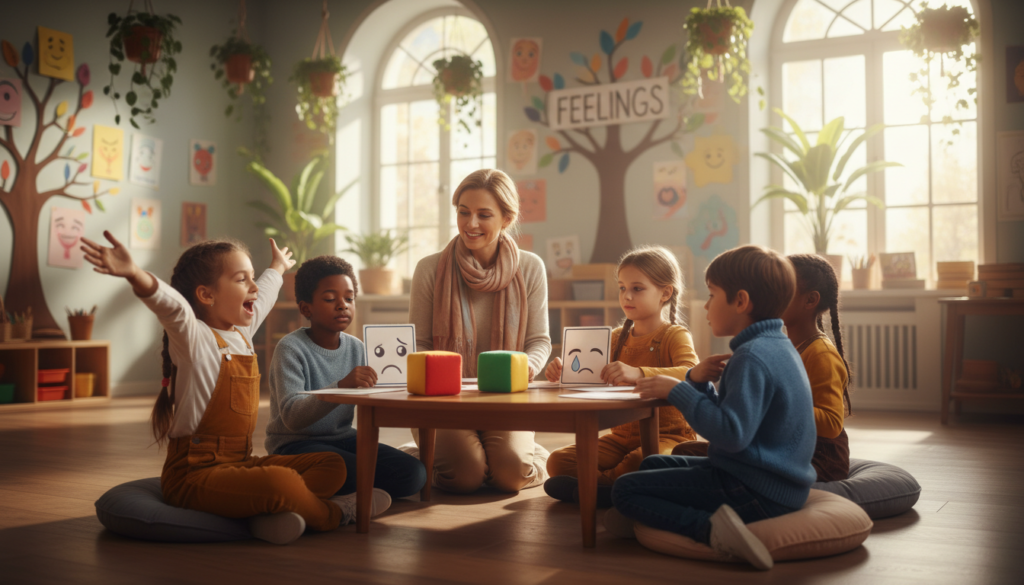
Can we predict which children will grow into happy, successful adults? Research shows that kids with strong emotional intelligence often lead happier lives. But what makes emotional intelligence so important?
Teaching social skills and emotional intelligence is key for kids’ development. It helps them make better friends, do well in school, and stay mentally healthy. Studies show that these skills help kids do well in school and get along better with others.
As parents, knowing how vital these skills are is the first step. By helping our kids develop social-emotional skills, we prepare them for success in the future.
Key Takeaways
- Emotional intelligence is linked to happiness and success in life.
- Fostering social skills and emotional intelligence improves relationships and academic performance.
- Children with strong social-emotional skills tend to have better mental health.
- Guiding children in developing these skills is key for their long-term success.
- Parents play a big role in supporting their child’s social-emotional development.
Understanding Social-Emotional Development
It’s key for parents to grasp social-emotional development to help their child grow emotionally and socially. This growth includes self-concept, self-awareness, self-regulation, and more. It also covers how a child relates to others and adapts to new situations.
Definition and Importance
Social-emotional development is about kids learning to handle their feelings and connect with others. It’s vital for their mental health, school success, and social skills.
Key aspects of social-emotional development include:
- Developing self-awareness and understanding one’s emotions
- Cultivating empathy and understanding the perspectives of others
- Practicing self-regulation to manage emotions and behaviors
Stages of Development
Social-emotional growth happens in stages, each with its own traits and goals. Knowing these stages helps parents offer the right support.
The stages include:
- Infancy: Trust and attachment formation
- Toddlerhood: Exploration of independence and testing boundaries
- Early childhood: Development of emotional regulation and social skills
- Middle childhood: Refining social skills and developing friendships
Key Components
The main parts of social-emotional development work together. They are:
- Self-awareness: Understanding one’s emotions and values
- Empathy: Recognizing and understanding others’ feelings
- Self-regulation: Managing one’s emotions and behaviors
- Social skills: Forming and maintaining healthy relationships
Knowing these components helps parents support their child’s growth.
The Role of Parents in Social-Emotional Growth
Parents play a key role in helping their children grow emotionally and socially. They do this through everyday interactions. By being supportive, parents help their kids build strong relationships and stay mentally healthy.
Creating a Safe Environment
A safe and stable home is vital for a child’s emotional growth. Parents can make this happen by setting a daily routine. This routine should include times for meals, homework, and fun activities.
This routine makes kids feel secure. It helps lower their stress and anxiety.
- Establish a daily routine that includes time for relaxation and play.
- Encourage children to express their feelings through various forms of communication.
- Model healthy emotional regulation by managing your own emotions effectively.
Studies show that parents can help by setting a routine, letting kids make choices, and praising them in specific ways. This approach boosts security and helps kids develop important communication skills.
Encouraging Open Communication
Good communication is key to building strong relationships. Parents should make their kids feel safe to share their thoughts and feelings. This means listening well, understanding their emotions, and responding thoughtfully.
“When parents listen attentively to their children and validate their feelings, they help their children develop a stronger sense of self and improve their ability to communicate effectively.”
By promoting open talk, parents help their kids develop essential communication skills. These skills are vital for forming and keeping healthy relationships as they grow.
Milestones in Social-Emotional Development
The journey of social-emotional development is filled with key milestones for different ages. Knowing these milestones helps parents and caregivers support their children. It also helps spot any developmental delays early on.
Infants and Toddlers
Infants and toddlers start learning basic social-emotional skills. They learn to recognize and respond to emotions first through faces and then words. By 12 months, they show stranger anxiety, knowing who they know.
Toddlers, aged 1 to 3, want to be independent. They test limits and may throw tantrums as they learn to control their feelings.
Preschoolers
Preschoolers, aged 3 to 5, get better at social skills. They start to develop friendships and show empathy. They also learn through imaginative play, which helps them understand different roles.
At this age, they learn to express feelings with words instead of just actions. This is a big step in emotional growth.
School-Age Children
School-age kids, 6 and up, grow a lot in social-emotional skills. They make more complex friendships and understand social rules. They also feel more confident in themselves.
They get better at understanding and managing their emotions. They use better ways to deal with stress. They can also feel and understand others’ feelings better, making deeper connections.
It’s important to remember that every child grows at their own pace. This is true for kids who are neurodivergent or have disabilities. Parents and caregivers should watch for these differences and ask for help if needed.
Supporting Emotional Regulation
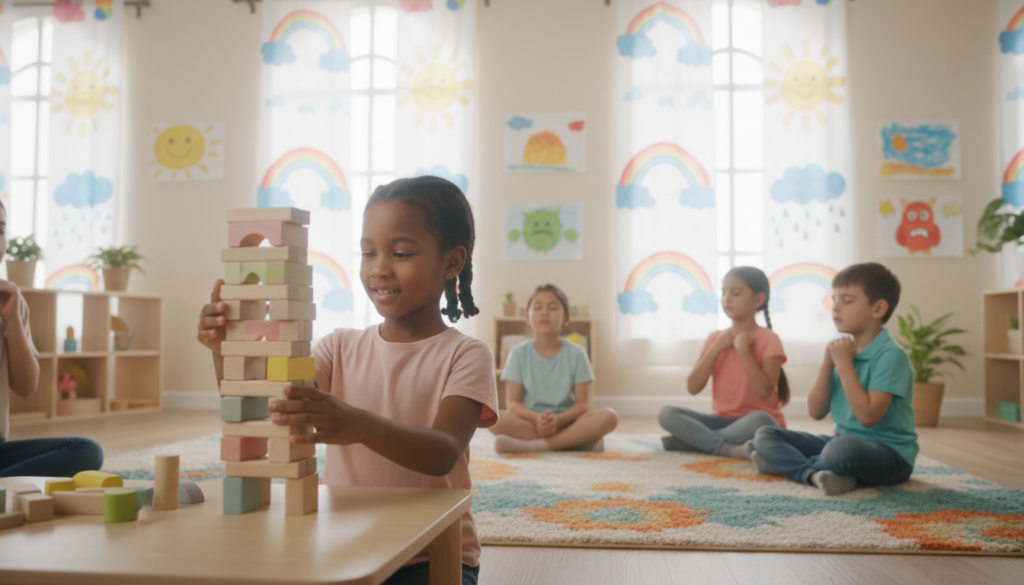
Emotional regulation is key for kids to handle their feelings. It helps them deal with all emotions, from happiness to sadness. This skill is important for their mental health, school work, and making friends.
Recognizing Emotions
First, kids need to know their feelings. Parents can teach them to spot emotions like happiness and sadness. It’s good to talk about why they feel certain ways.
For example, if a child is mad, say, “You seem really upset. It looks like you’re angry because your toy broke.” This helps them understand their feelings and learn new words for them.
Key Strategies for Recognizing Emotions:
- Labeling emotions
- Discussing causes and consequences
- Encouraging emotional expression
Coping Strategies for Kids
After knowing their feelings, kids need ways to handle them. Teaching them to calm down, like singing or deep breathing, helps a lot. These methods improve their emotional control.
“Teaching children to manage their emotions is not about suppressing their feelings but about helping them develop healthy ways to express and regulate their emotions.”
Some good ways to cope include:
- Deep Breathing Exercises: Teach kids to breathe slowly to calm down.
- Physical Activity: Get them moving to release energy.
- Creative Expression: Let them show feelings through art or music.
By teaching these strategies, parents help kids manage their emotions better. This boosts their happiness and ability to bounce back from tough times.
Fostering Social Skills
Teaching children social skills is complex. It involves learning to interact, manage feelings, and build strong bonds. These skills help kids get along in different settings and make lasting friendships.
Play-Based Learning
Play is key in teaching social skills. It teaches kids to work together, talk things out, and solve problems. Play sparks creativity and imagination, letting kids try out different roles and situations safely. For example, role-playing games help kids understand and deal with various social situations better.
Play also helps kids practice sharing, taking turns, and working together. These skills are essential for building strong, lasting friendships.
Peer Interactions
Playing with peers is vital for social skill development. It lets kids learn from each other, develop empathy, and see things from different angles. Positive interactions with peers boost a child’s self-confidence, making them more open to social activities.
Parents can help by setting up playdates, joining group activities, or encouraging sports. These activities give kids a chance to use their social skills in different ways, helping them build and keep meaningful relationships.
The Impact of Early Experiences
Early experiences shape a child’s emotional intelligence. Bonding and attachment are key. They influence a child’s social and emotional growth.
This early period is vital. It sets the stage for emotional control, social skills, and well-being.
Bonding and Attachment
Bonding and attachment are very important. Secure attachment helps with emotional control. Insecure attachment can make it hard to manage feelings and form good relationships.
Parents can help with secure attachment. They can be responsive, create a nurturing space, and have positive interactions.
The Influence of Parenting Styles
Parenting styles greatly affect a child’s emotional intelligence. Different styles can either help or hinder a child’s growth. For example, authoritative parenting is warm, responsive, and sets clear rules. It leads to better emotional control and social skills.
On the other hand, authoritarian or neglectful parenting can harm a child’s emotional development. Knowing this can help parents make better choices for their child’s growth.
By focusing on early experiences and supportive parenting, parents can greatly impact their child’s emotional development. This lays the foundation for a lifetime of emotional well-being and resilience.
Importance of Emotional Intelligence
Teaching kids about emotional intelligence can lead to many good things. It helps them have better mental health and social skills. Emotional intelligence means knowing and understanding your own and others’ feelings. It helps guide how you think and act.
Definition and Benefits
Emotional intelligence includes empathy, self-regulation, and social skills. Empathy lets kids feel and share others’ feelings. Self-regulation helps them control their own emotions and actions. Social skills help them get along with others.
There are lots of benefits to emotional intelligence. Kids with high emotional intelligence often have better relationships, do well in school, and have better mental health. A study found that emotional intelligence is connected to better relationships, school performance, and mental health.
“Emotional intelligence is the ability to perceive and express emotion, to assimilate emotion in thought, to understand and reason with emotion, and to regulate emotion.”
Ways to Foster Emotional Intelligence
To help kids grow emotionally, parents and teachers can use several methods. They can:
- Show emotional intelligence themselves by being empathetic and self-regulated.
- Talk to kids about their feelings, helping them understand their emotions.
- Teach them ways to handle their feelings, like deep breathing or counting.
- Help them make friends through play and group activities, improving social skills.
By using these methods, we can help kids develop emotional intelligence. This will help them succeed in many areas of life.
Behavior Management Strategies
Understanding how to manage behavior is key for kids’ growth. Good behavior management helps kids learn to control themselves. This is vital for their social and emotional development.
Parents can use positive reinforcement and clear rules to guide their kids. These methods help kids know what’s expected of them. They also encourage good behavior.
Positive Reinforcement
Positive reinforcement is about praising good actions. It can be through words, hugs, or small treats. This approach makes a supportive space for kids to act well.
For example, praising a child for sharing teaches them kindness. This habit helps them grow in communication skills and learn to get along with others.
Setting Boundaries
Clear rules are also critical. They show kids what’s okay and what’s not. By setting rules and consequences, parents teach self-control.
Like, making a rule to put toys away after play teaches responsibility. Sticking to this rule shows kids the value of following rules.
Activities to Enhance Social-Emotional Skills
Teaching children social-emotional skills is fun and interactive. These skills are key for their emotional and social growth. By adding special activities to their day, parents can help kids understand and control their feelings. They also learn to empathize and make strong friendships.
Interactive Games
Games are great for learning social skills. Games that teach sharing, taking turns, and working together are perfect. For example, Candy Land and Chutes and Ladders teach kids about rules and sportsmanship.
Games like charades and Pictionary help kids work together and respect each other. They learn to cooperate and have fun together.
Games also help kids manage their feelings. Winning or losing teaches them to handle different emotions. Parents can help kids understand and share their feelings in a healthy way.
Role-Playing Exercises
Role-playing is another great way to teach social skills. It lets kids act out different situations and learn how to react. For instance, playing a scenario where they share a toy teaches them about kindness and understanding.
Role-playing can be fun with props and costumes. Parents can create scenarios that are like real life. This makes learning more real and meaningful. Kids practice solving problems, sharing feelings, and understanding others.
By adding games and role-playing to their daily life, parents help kids grow. These activities boost emotional and social skills. They also create a supportive environment for growth and learning.
Understanding Mental Health and Development
It’s key to understand mental health to help kids grow well. Mental health covers a child’s feelings, thoughts, and how they act. It helps them make friends, do well in school, and handle stress.
Signs of Emotional Distress
Spotting emotional trouble in kids is important. Look for signs like:
- Persistent sadness or hopelessness
- Not wanting to play or be with friends
- Changes in eating or sleeping
- Having trouble focusing or making choices
- Talking about wanting to hurt themselves
These signs can vary by age. Young kids might act out more, like being really upset or angry. Older kids might talk more about their feelings.
When to Seek Professional Help
Knowing when to get help is key. If your child shows signs of emotional trouble, see a mental health expert. Half of all mental health problems start by age 14, and early help makes a big difference.
A professional can check what’s going on, find the cause, and make a plan to help. Parents and caregivers should know where to find help. This includes:
- Local mental health services and therapists
- Support groups for parents and kids
- Online resources and hotlines
- School counseling services
By acting early and getting help, parents can greatly support their child’s mental health. This helps create a good environment for their social and emotional growth.
Cultural Influences on Development
Cultural factors, like family and community, greatly affect a child’s social and emotional growth. The way kids grow up is shaped by their culture.
The Role of Family Dynamics
Family dynamics are key in a child’s social and emotional growth. Different cultures have different family structures and values. These influence how kids interact and understand their feelings.
For example, some cultures focus on the family first, while others value individual success. This shapes how kids see themselves and others.
Key aspects of family dynamics that influence social-emotional development include:
- Parenting styles and their impact on emotional regulation
- Sibling relationships and their role in social skill development
- Extended family involvement and its effect on a child’s support network
Community Engagement
Being involved in the community is also important for a child’s growth. Activities, networks, and cultural events help kids develop socially and emotionally.
Community engagement can provide opportunities for children to:
- Develop social skills through interactions with peers and adults
- Learn cultural values and practices
- Build resilience through diverse experiences
The following table illustrates how different cultural factors can influence social-emotional development:
| Cultural Factor | Impact on Social-Emotional Development |
|---|---|
| Collectivist vs. Individualist Cultures | Influences whether a child prioritizes group harmony or personal achievement |
| Family Structure | Affects the support network available to a child |
| Community Involvement | Provides opportunities for socialization and learning cultural values |
It’s important for parents and caregivers to understand these cultural influences. By doing so, they can better support a child’s growth. This helps kids become emotionally smart and socially skilled.
Resources for Parents
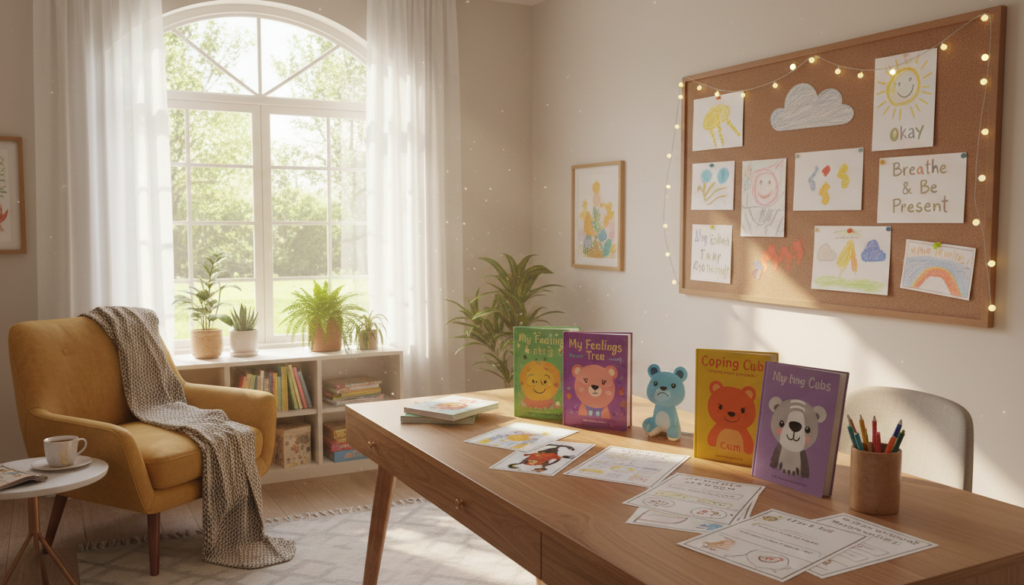
Parents have many resources to help their kids grow emotionally. These tools offer valuable info and support. They help parents deal with the challenges of raising emotionally smart kids.
Parents can find many materials and networks to support their child’s growth. Here are some key resources to check out.
Books and Articles
Many books and articles give tips on raising emotionally smart kids. Some top picks include:
- “The Whole-Brain Child” by Daniel J. Siegel and Tina Payne Bryson, with practical tips for emotional well-being.
- “Unconditional Parenting” by Alfie Kohn, which suggests new ways to raise emotionally intelligent kids.
- Articles from Child Development Perspectives and The Journal of Applied Developmental Psychology, filled with research on child growth.
Online Support Networks
Online groups also offer great support for parents. They can connect, share, and get advice. Some top online resources are:
- Zero to Three, with forums, webinars, and articles on early childhood.
- The Gottman Institute, providing research-based parenting tips, including on emotional intelligence.
- Online parenting groups on Facebook and Reddit, where parents can find support and share experiences.
By using these resources, parents can better understand how to support their kids’ emotional growth. It’s key for parents to stay informed and connected to help their children thrive.
Conclusion: Nurturing Growth
Fostering social-emotional development is a long-term effort. It needs patience, understanding, and support. As parents, it’s key to help your child develop self-awareness.
Essential Insights
This guide shows how important it is to create a safe space. It also stresses the need for open talks and helping with emotions. By doing this, parents can help their kids grow emotionally and socially.
Continuing the Journey
Parents should keep learning and adjusting as their child grows. This way, they can offer support that fits their child’s changing needs. This support helps build a strong base for their child’s future well-being and success.
Good social-emotional development strategies can greatly help a child. They can improve relationships and help the child reach their goals.
FAQ
What is social-emotional development, and why is it important for children?
How can parents support their child’s social-emotional growth?
What are the key milestones in social-emotional development for different age groups?
How can parents help their child develop emotional regulation skills?
What is the role of play-based learning in fostering social skills?
How do early life experiences impact social-emotional development?
What is emotional intelligence, and how can parents foster it in their child?
What are some effective behavior management strategies for supporting social-emotional development?
How can parents identify signs of emotional distress in their child?
What resources are available to support parents in nurturing their child’s social-emotional development?

