


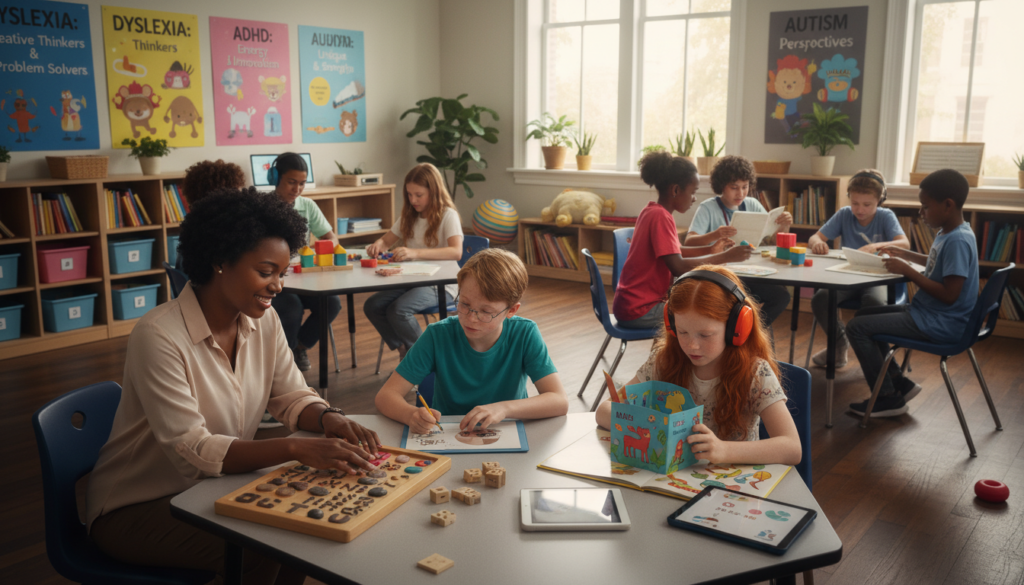
Did you know nearly 5% of students in India face invisible learning barriers? These aren’t about their smarts. The National Center for Education Statistics says 2.4 million public school students had specific learning disabilities in 2022-2023. These disorders affect basic skills, but often aren’t found until later in life.
The way we see learning changed with the DSM-5. It merged reading, math, and writing disorders into one. Studies show 5 to 15% of school-age kids face these issues. About 80% of them have reading problems, known as dyslexia.
It’s vital to understand these differences in India’s schools. Kids with these issues are smart, but their brains process info differently. It’s not because they’re less intelligent.
Spotting these issues early and helping kids can make a big difference. It sets them up for success in school and later in life. This helps teachers, parents, and experts in India’s schools know how to help.
Key Takeaways
- Nearly 2.4 million students face learning challenges affecting reading, writing, and mathematics skills
- The DSM-5 unified three separate disorders into one diagnostic category
- Approximately 80% of affected students experience reading-related difficulties, including dyslexia
- These conditions represent neurological differences, not limitations in overall intelligence
- Early detection and targeted support significantly enhance long-term academic success
- India’s educational system is working to raise awareness and develop support plans
- Between 5-15% of school-age children worldwide experience these neurodevelopmental disorders
Understanding Specific Learning Disabilities
Supporting children with learning challenges starts with understanding specific learning disabilities. These conditions affect how students learn and show what they know. They have typical intelligence but face learning hurdles.
Many people get learning disabilities wrong. Some think it’s because of not trying hard enough or bad teaching. Others mix it up with being smart but not learning well or acting out.
The truth is, learning disabilities come from the brain. They need special help and understanding.
What These Disorders Actually Mean
Specific learning disabilities are brain-based problems. They make it hard to read, write, and do math. These issues affect how we understand and use language.
These neurologically-based processing problems make learning basic skills tough. Reading, writing, and math are often hit hard. But, they can also mess with higher skills.
Organization, planning, and thinking abstractly can be tough. Memory, both short and long-term, might struggle too. Paying attention can also be hard.
It’s key to know that people with learning disabilities are usually smart. They just have hidden challenges. This is why they seem okay but struggle in certain areas.
It’s hard to figure out why a smart kid can’t show what they know. Teachers and parents might not get it. It’s a big challenge.
Cognitive processing difficulties are different from other learning issues. They’re not the same as problems caused by seeing or hearing issues. Those need different help.
These disorders are not the same as being less smart. They’re not about being lazy or not trying. They’re real brain differences.
The Indian Context and Statistics
In India, understanding specific learning disabilities has grown a lot. More people are learning about it. But, there’s not as much data as in Western countries.
India’s many languages make diagnosing harder. Kids might learn in one language at home and another at school. This makes it tough to figure out what’s going on.
There are big differences in schools across the country. Richer cities have better resources. But, poor areas struggle to get help.
More people are getting help now. This is because there’s less shame about these issues. Teachers are learning more too.
Studies say 10% to 15% of kids in India might have these disabilities. This is similar to other places. But, cities might seem to have more cases because they have better services.
But, getting help is hard, even in cities. Many families in poor areas don’t know about these issues. There aren’t enough experts to test kids quickly.
It’s also expensive to get tested. This is a big problem for many families. The government is trying to help, but it’s not the same everywhere.
But, things are getting better. More kids are getting the help they need. This means they can do better in school.
Types of Specific Learning Disabilities
There are four main types of learning disabilities. Each one has its own set of challenges and how the brain works differently. The DSM-5 helps identify these areas of weakness in reading, writing, and math.
Processing disorders are another type of learning challenge. They affect how the brain handles sensory information. This makes it hard to process sounds and visuals.
Dyslexia
Dyslexia is the most common learning disability, affecting about 20% of the population. It makes reading hard, even for those who are smart and have had good education. People with dyslexia have trouble linking sounds to letters.
They struggle with breaking down words into sounds and recognizing rhymes. Reading is slower and takes more effort. This makes learning to read a big challenge.
As people grow, dyslexia shows up in different ways. Young ones might have trouble with speech and learning letters. Older kids and adults might avoid reading and prefer other ways to get information.
Dyscalculia
Dyscalculia is a math learning disability. It makes understanding numbers and doing math hard. People with dyscalculia have trouble with basic math facts and solving problems.
They find it hard to understand math symbols and do calculations. Simple tasks like telling time or counting money are also tough. This shows how math processing is different for them.
Despite being smart in other areas, dyscalculia makes math hard. Early help and special teaching can improve math skills and reduce math anxiety.
Dysgraphia
Dysgraphia is a writing disability. It affects both motor skills and thinking about writing. Students with dysgraphia have trouble with handwriting and organizing their writing.
They also struggle with spelling and putting sentences together. This makes writing hard because of the need to control the body and think about words.
This makes it hard to write and think at the same time. The effort to write well takes away from thinking about what to write. This can make written work seem less smart than it really is.
Auditory and Visual Processing Disorders
Auditory Processing Disorder (APD) makes it hard to understand sounds, even with normal hearing. The brain has trouble processing sounds. This makes it hard to tell sounds apart and follow directions.
Visual Perceptual and Visual Motor Deficits affect how the brain sees and moves. They make it hard to notice small differences in letters and follow along while reading. Drawing and writing are also very hard.
Both of these disorders make learning and everyday tasks harder. They affect reading, math, and writing. Special help is needed to overcome these challenges.
| Learning Disability | Primary Area Affected | Key Characteristics | Prevalence Rate |
|---|---|---|---|
| Dyslexia | Reading and phonological processing | Difficulty with word reading accuracy, decoding, fluency, and connecting letters to sounds | 20% of population |
| Dyscalculia | Mathematical understanding and calculation | Struggles with number sense, math symbols, memorizing facts, and organizing numbers | 5-7% of population |
| Dysgraphia | Written expression and fine motor skills | Illegible handwriting, inconsistent spacing, poor spelling, difficulty composing text | 7-15% of population |
| Processing Disorders | Auditory and visual information interpretation | Difficulty distinguishing sounds in words or recognizing visual differences despite normal sensory function | 3-5% of population |
Knowing about these different disabilities helps teachers and schools help students better. Each one needs special help and teaching. Understanding these differences is key to helping students succeed in school.
Signs and Symptoms of Specific Learning Disabilities
Identifying specific learning disabilities requires spotting certain signs. These signs are different from normal developmental changes. It’s important to watch for them in various settings like home, school, and social areas.
Parents, teachers, and healthcare workers need to work together. They should look for patterns that suggest learning difficulties. This helps to tell if it’s a long-term issue or just a temporary problem.
Signs show up in three main areas: early development, school performance, and behavior. Each area gives clues that help in diagnosing and planning help. Knowing all the symptoms helps to give the right support to children.
Developmental Markers in Early Childhood
Looking for early signs of learning disabilities is key. These signs appear before kids start formal school. They often show up in basic skills needed for reading and math.
One early sign is phonological awareness. This means knowing and playing with sounds in words. Kids might struggle to match sounds with letters, which is key for reading.
Language skills also give clues. Some kids talk later or have a small vocabulary. They might find it hard to follow long instructions. These signs suggest possible language processing issues.
Other early signs include trouble remembering things like days of the week. Kids might struggle with fine motor skills like writing. They might not be interested in books or activities with letters and numbers. While kids develop differently, persistent signs need professional help.
Academic Performance Patterns
Specific learning disabilities show up as ongoing school struggles. These problems last at least six months even with good teaching. This rule helps tell learning disabilities apart from short-term issues or bad teaching.
Reading is often the biggest challenge. Kids might read slowly, make lots of mistakes, and not understand what they read. This makes reading hard and can lead to avoiding it.
Learning disabilities don’t mean kids are not smart or don’t try hard. They show how the brain processes information differently. This needs special ways to help each child reach their full ability.
Writing is another big problem for many kids with learning disabilities. They might keep making spelling mistakes, struggle with grammar, and have trouble organizing their writing. Their writing doesn’t always show what they know or can say.
Math is also hard for many kids. They might struggle with basic number concepts or have trouble with math facts. They might need to count slowly, even when they know the answers. This makes math hard to understand and solve.
| Academic Domain | Specific Difficulties | Observable Indicators | Impact on Learning |
|---|---|---|---|
| Reading | Word recognition, fluency, comprehension | Slow reading pace, frequent errors, difficulty retelling stories | Limited access to curriculum content across all subjects |
| Writing | Spelling, grammar, organization, expression | Inconsistent spelling, incomplete sentences, difficulty structuring essays | Reduced ability to demonstrate knowledge through written assessments |
| Mathematics | Number sense, calculation, reasoning | Counting on fingers, difficulty with word problems, computational errors | Struggles with mathematical concepts and real-world applications |
| Oral Language | Vocabulary, comprehension, expression | Limited word retrieval, difficulty following complex directions | Challenges participating in discussions and understanding lectures |
Learning disabilities can make school harder and harder over time. Kids fall behind as school gets tougher. This can make them feel less confident and might make them want to give up on school.
Behavioral and Emotional Manifestations
Students with learning disabilities often show signs that go beyond just school struggles. These signs come from trying hard but not getting it right. Knowing these signs helps tell if it’s a learning issue or something else.
Task avoidance is a common sign. Kids might not want to start certain tasks, like reading or writing. They might get tired easily or pretend to be sick to avoid hard work. This shows they’ve learned to avoid tasks that are hard for them.
Physical signs can also show up. Kids might get very tired when they write, even for a little bit. They might ask for things to be repeated because they have trouble hearing. They might seem clumsy because they have trouble with moving their body.
In class, kids might have trouble following along or understanding fast conversations. They might make small math mistakes, even if they know the answers. These signs show they process information differently.
Emotions can also give clues. Kids might get very anxious before tests or when they have to read out loud. They might be very hard on themselves or seem not to care about their mistakes. Changes in how they feel about themselves can also be a sign.
Looking at both the main symptoms and the secondary signs helps make a correct diagnosis. This way, families and teachers can get the right help for kids. Early signs mean kids can get the support they need sooner.
Diagnosis and Assessment
Diagnosing specific learning disabilities requires a detailed approach. It goes beyond simple tests to understand how a child thinks and learns. This method checks how a child does in school, their past development, and their brain function. It uses many sources of information.
This way, kids get the right help and special education that fits their needs. It helps them learn better.
Tests can tell if a child has a learning disability or not. They look at how well a child does in different areas of thinking. This careful process helps avoid mistakes and gives the right support to those who need it.
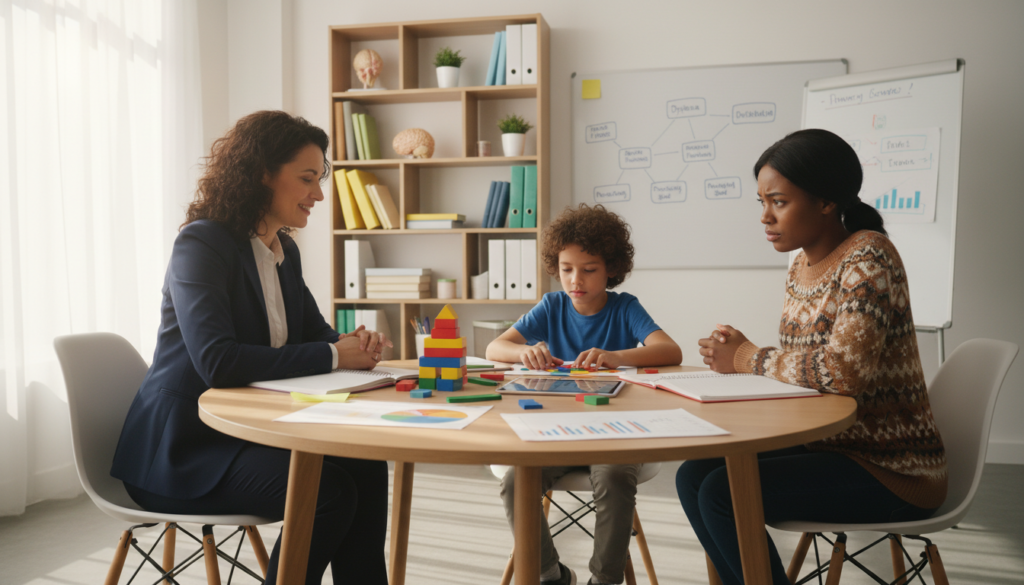
Critical Value of Timely Identification
Finding out early if a child has a learning disability is very important. It affects their school, social, and emotional life. Studies show kids who get help early do better than those who don’t.
The young brain can change and adapt more easily when problems are caught early. This makes it easier to help them.
Not finding out about learning disabilities can lead to big problems. Kids might feel sad, anxious, or think they’re not good enough. They might feel like they’re failing because they can’t learn like others.
Getting help early can stop a lot of trouble and frustration. When people understand that learning problems are not because of lack of effort or smarts, it helps. It keeps kids motivated and stops them from avoiding school.
Helping kids early on is key. They learn best when they’re young. Waiting too long means they miss out on important learning times.
Comprehensive Evaluation Procedures
Checking for learning disabilities involves many steps. It uses different tests and looks at many things. The DSM-5 sets rules to make sure it’s done right and not too often.
The first step is to see if a child has trouble in school for at least six months. This makes sure it’s not just a short problem. Schools try different ways to help before they decide if it’s a learning disability.
The second step is to see if the child’s skills are really far behind what’s expected. This uses tests and a deep look at how the child does in school. The difference between what they can do and what they should be able to do must be big enough to cause problems.
The third step is to make sure the problem started during school years. This is because some people might not show problems until they’re older. For people over 17, looking at their past is enough.
The fourth step is to rule out other reasons for the problems. This means looking at health, family history, and how the child has been taught. It’s important to make sure it’s really a learning disability.
Under the IDEA, schools must check if a child might have a learning disability. This law helps make sure kids get the help they need. The check-up looks at many things, including what parents and teachers say, the child’s past, and how they do in school.
| Assessment Component | Purpose | Information Gathered | Timeline |
|---|---|---|---|
| Developmental History | Identify early markers and family patterns | Pregnancy complications, developmental milestones, family learning history | Initial consultation |
| Clinical Observation | Assess behavior and task approach | Attention span, frustration tolerance, problem-solving strategies | Throughout evaluation |
| Parent/Teacher Interviews | Understand functional difficulties across settings | Academic performance patterns, behavioral concerns, social functioning | Week 1-2 |
| School Records Review | Document academic progress and interventions | Report cards, standardized test scores, previous support services | Week 1 |
| Formal Testing | Measure cognitive abilities and achievement levels | IQ scores, academic skill levels, processing strengths and weaknesses | Week 2-4 |
Psychometric Instruments and Testing Approaches
Standardized tests are key in figuring out learning disabilities. They measure how well a child thinks and does in school. These tests are tested and checked to make sure they work for everyone.
They look at reading, writing, and math skills. Tests like the Woodcock-Johnson and Wechsler Individual Achievement Test are used. They compare how a child does to others of the same age or grade.
Cognitive tests check how smart a child is and how they process information. The WISC and Stanford-Binet Intelligence Scales are common. They look at different thinking skills like understanding words and solving problems.
Neuropsychological tests look at how a child thinks and learns. They check things like attention and memory. Tests like the NEPSY-II and Delis-Kaplan Executive Function System give a detailed look at how a child thinks.
Tests are analyzed to find patterns. This helps figure out if a child has a learning disability. It shows where they are strong and where they need help. This helps plan how to help them.
How a child does with different teaching methods is also important. This shows if they really have a learning disability. It helps decide if they need special help in school.
The final report puts together all the information. It explains what the child’s learning profile is and what help they need. It helps families and teachers work together to help the child reach their full ability.
Strategies for Support in the Classroom
The classroom is a key place for helping students with learning disabilities. Studies show that using proven teaching methods can really help students improve in reading, writing, and math. Special education services help kids with learning disabilities get better at these skills in a supportive setting.
Good classroom support means using many strategies together. Teachers need to help each student learn in their own way while keeping up with grade-level work. The individualized education program is a key guide for making these changes.
Helping students means giving them focused, detailed, and tailored instruction. This can make a big difference in their learning. We look at three main ways teachers can make learning spaces that work for all students.
Instructional Modifications for Diverse Learners
Differentiated instruction is a way to teach that changes how content is presented and how students learn. It helps students with learning disabilities by focusing on their strengths and helping with their challenges. Special education services help teachers use these strategies well.
At the heart of differentiated instruction are multisensory approaches. These use sight, sound, and touch to help students learn. For example, students with dyslexia might practice tracing letters on sandpaper while saying the sounds out loud. Kids with dyscalculia might use hands-on tools to understand math concepts.
Explicit, systematic teaching of basic skills is also key. Studies show that the best ways to help students with reading disabilities focus on phonics, decoding, and comprehension. Teachers break down complex skills into simpler parts, giving lots of practice before moving on.
Scaffolded instruction gives temporary help that teachers gradually remove as students get better. This help can include things like graphic organizers, sentence frames, and vocabulary banks.
- Graphic organizers that visually structure information relationships
- Sentence frames that provide syntactic templates for written expression
- Step-by-step procedural checklists for multi-stage tasks
- Vocabulary banks for easy access to academic terms
- Model examples showing what’s expected
Flexible groupings let teachers work with small groups on specific skills. An individualized education program sets the right level of challenge and support. The goal is to keep high standards while helping students.
Digital Tools and Assistive Resources
Technology helps students with learning disabilities in many ways. It can make tasks easier and also help improve skills. Digital tools have made it easier for students to access learning materials in ways that work for them.
Text-to-speech software helps students with reading challenges by turning text into sound. This lets them understand material that’s hard to read. It helps with both learning and improving reading skills.
Speech-to-text tools help students with writing challenges. They can dictate their ideas, which the software writes down. This lets students focus on what they want to say without worrying about spelling or handwriting.
Math software and calculators help students with math problems. They provide tools for understanding math concepts and solving problems. Treatments for math challenges often include using digital tools to make math more concrete.
Other tech supports include:
- Organizational apps with reminders
- Audiobooks for alternative reading
- Digital note-taking tools
- Mind-mapping software for planning
- Educational games for skill-building
Students with learning disabilities often need special help in school. This can include extra time for tests, using computers instead of writing, and smaller classes with technology.
Professional Partnerships in Education
Working together is key for helping students with learning disabilities. Teachers and special education experts team up to create effective plans. This partnership helps students learn in the best way possible.
Co-teaching is a way for teachers to work together in the same classroom. They can divide the class or work in different areas of the room. This helps students get the help they need in a supportive setting.
Consultative support is another way teachers can work together. Special education experts help general education teachers with ideas for teaching and supporting students. This helps teachers learn how to support students with different needs.
Integrated service delivery means students get special help in regular classrooms. Special education teachers work with small groups or help one-on-one. This approach helps students feel included while getting the help they need.
Good teamwork means talking regularly and sharing ideas. It also means being ready to change plans as needed. This helps students get the best support as they grow and learn.
Role of Parents and Guardians
Parents and guardians play a big role in helping kids learn. They help with emotional and practical support, and they speak up for their kids’ needs. The home is where kids learn basic skills and show signs of learning differences.
Teachers often notice when kids might have learning disabilities first. But parents see their kids in different situations. This helps understand how learning disabilities show up in different ways.
Working together, families and schools can help kids overcome learning challenges. If parents worry about their child’s learning, they should ask for an evaluation.
Observing Developmental Patterns in Daily Life
At home, parents see learning patterns that might not be seen in school. They notice signs that suggest their kids might have learning disabilities.
When kids struggle to learn letters and numbers, it might mean they have processing issues. Some kids are great at talking but have trouble writing. This is a sign that parents should pay attention to.
When kids avoid reading or homework, it could mean they’re facing learning challenges. These behaviors are more than just being stubborn. They show real struggles with learning.
Difficulty following instructions at home can also show up in school. Parents might notice their kids need to hear instructions many times. This is important for teachers to know too.
In India, cultural views can affect how families see learning differences. Some families might feel ashamed to ask for help. But learning disabilities are just part of who someone is, not because of their family.
Keeping records of homework struggles helps a lot. Parents should write down when they first noticed problems and what happened. This helps teachers understand what’s going on.
Creating Effective Study Environments
Helping with homework and study habits is important. It helps kids learn better and feel better too. The right study space at home can make a big difference.
Having a quiet, organized space for homework helps kids focus. It should have everything they need and be free from distractions. This helps them learn better.
Breaking down big tasks into smaller ones helps avoid feeling overwhelmed. Kids with learning challenges do better with short, focused study sessions. This helps them stay on track.
Using different ways to study, like reading out loud or making things with markers, helps kids learn in their own way. This makes learning more fun and helps them remember things better.
Using tools like notebooks and calendars helps kids stay organized. Parents should work with their kids to set up these systems. This helps kids learn to take care of themselves.
Teaching kids how to manage their time is important. Visual timers and daily schedules help them understand time better. Parents should be patient and remember that learning takes time.
Helping kids with homework should help them learn to do things on their own. When they get stuck, parents can help them figure it out. This helps kids learn to solve problems by themselves.
Building Collaborative Educational Partnerships
Working well with teachers is key to helping kids with learning disabilities. This teamwork makes sure kids get the help they need in school and at home.
Keeping in touch with teachers helps a lot. Parents can share what’s happening at home and get updates from teachers. This helps everyone understand how kids are doing.
The Individuals with Disabilities Education Act (IDEA) helps kids with learning disabilities get the help they need. Parents play a big role in making sure kids get the right education.
Having someone to help with the IEP process can be very helpful. These experts know a lot about special education and can help make sure kids get what they need.
Being ready for IEP meetings is important. Parents should know what’s in the evaluation reports and have questions ready. This helps make sure kids get the education they deserve.
Understanding how teachers teach and help kids can help parents too. Knowing how teachers help with reading or give extra time for homework helps parents help their kids at home.
Being an advocate for your child means speaking up and asking for what they need. It’s important to be respectful but clear. This helps make sure kids get the help they need, even if there are disagreements.
When families and schools work together, kids with learning disabilities can do great things. With the right support and communication, kids can reach their full learning and personal growth.
Intervention Programs in India
In India, learning disability intervention includes government policies, school efforts, and organizational support. These systems offer assessments, special lessons, and help for students with learning issues. They draw from the individualized education program model but fit India’s unique needs.
Special education in India is a team effort. Government agencies, non-profits, and schools work together. This teamwork helps support students across different places and backgrounds.
Government Initiatives
India’s laws and policies set the stage for helping students with learning disabilities. The Right to Education Act ensures free education for kids aged 6 to 14, including those with disabilities. It sees education as a right, not just a privilege.
The Rights of Persons with Disabilities Act (RPWD) 2016 protects people with learning disabilities. It makes sure they get the support and accommodations they need in school.
The National Education Policy supports inclusive education. It says students learn at their own pace. This policy encourages teaching that fits each student’s needs, not just one way.
- Inclusive Education for Disabled at Secondary Stage (IEDSS): This program helps schools include students with disabilities. It provides tools, special teachers, and makes schools more accessible.
- Samagra Shiksha: This program combines elementary and secondary education. It includes special education services, accessible schools, and educational materials.
- State-Level Interventions: States have their own programs. They include special rooms, special teachers, and assessments in schools. But, not all states have the same level of support.
Despite good policies, challenges affect service delivery. There’s a lack of trained teachers, not enough money, and not enough awareness. Also, services are often better in cities than in rural areas.
But, these efforts show that India recognizes learning disabilities as important. They aim to include all students in education, following international best practices. Yet, there are challenges in making this work in India’s diverse schools.
Non-Governmental Organizations
Non-profits play a big role in helping students with learning disabilities in India. They start new ideas, train teachers, and raise awareness. These efforts help the government improve its services.
Some key groups include:
- National Association for the Blind (NAB): Helps visually impaired students with special programs and assessments.
- Action for Ability Development and Inclusion (AFADI): Offers a wide range of services like assessments, therapy, and educational support for students with disabilities.
- Specialized Learning Disability Centers: Focus on learning disabilities. They do assessments, special lessons, teacher training, and workshops for parents.
NGOs provide many services. They do evaluations, special lessons, teacher training, and help raise awareness. They also offer help based on how much families can pay.
But, there are problems. Families in rural areas or with little money find it hard to get help. The services are mostly in cities, leaving many places without access.
School-Based Support Services
Schools in India also help students with learning disabilities. They offer support right in the classroom. This approach is more relevant and less stigmatizing than outside help.
Here are some ways schools help:
- Resource Rooms: Special places for extra help from trained teachers. Students get support while staying in regular classrooms for other subjects.
- Remedial Programs: Special lessons to improve reading, writing, or math skills. They use special teaching methods and lots of practice.
- Learning Support Coordinators: Teachers who help with accommodations, work with regular teachers, and check on student progress.
- Inclusive Classroom Practices: Teaching that meets all students’ needs. It uses flexible methods and supports students with disabilities.
Creating an individualized education program is the best way schools can help. Not all schools do this, but those that do make plans that fit each student’s needs.
| Intervention Type | Primary Focus | Service Providers | Accessibility |
|---|---|---|---|
| Government Programs | Policy implementation and infrastructure development | Government schools, state education departments | Wide geographic reach with implementation gaps |
| NGO Services | Specialized assessment and remediation | Charitable organizations, private foundations | Concentrated in urban areas, variable affordability |
| School-Based Support | Contextual intervention within educational settings | Special educators, resource teachers, coordinators | Depends on individual school resources and commitment |
Good school support needs the right resources. This includes special teachers, the right tools, and places for extra help. How well teachers work together affects how well students do.
Putting special education services in regular schools is a big step for India. It shows a move towards including all students in education. This approach helps students with disabilities learn in regular classrooms with the right support.
But, there are challenges. There aren’t enough special teachers, the right tools, or enough training for regular teachers. Improving this is key to better support for students.
Building Self-Esteem in Children with Learning Disabilities
Children with learning disabilities need as much emotional support as they do academic help. When they struggle with reading, writing, or math, their self-confidence often drops. Studies show that these kids are more likely to feel anxious and have low self-esteem than their peers.
These feelings come from facing constant academic struggles and feeling like they don’t measure up. Without help, these issues can lead to serious mental health problems. It’s vital to address the emotional side of learning disabilities as a key part of the solution.
Having a learning disorder doesn’t mean someone can’t succeed. People with dyslexia, for example, are often very creative. The key is to help kids see their strengths and find ways to manage their challenges.
Recognizing Effort Over Outcomes
Changing how we praise kids is key to helping them with learning disabilities. Instead of just focusing on grades, we should celebrate their effort and progress. This helps them understand that their abilities can grow.
By praising the process, not just the result, we teach kids about the value of hard work and persistence. Instead of saying “You’re so smart,” we can say “I see how you broke that problem down into smaller steps.”
This mindset is called a growth mindset. It’s essential for kids with learning disabilities. They need to know that their struggles are because of how their brain works, not because they’re not trying hard enough.
There are many ways to boost self-esteem:
- Always acknowledge effort and progress, showing kids they’re moving forward, even if it’s small steps
- Give specific feedback that points out what they did well, not just general praise
- Make it okay to struggle by sharing that everyone faces challenges and that’s how we grow
- Share stories of people who overcame learning disabilities to show that success is possible
- Keep high expectations but offer the right support, so kids feel believed in
Real encouragement is different from empty praise. It means paying close attention to what kids do well and celebrating their growth. This helps them learn to assess themselves accurately and understand what works best for them.
Ignoring learning disorders can lead to big problems later on. These include lower grades, mental health issues, and trouble finding a job.
Developing Self-Direction and Advocacy Skills
Helping kids with learning disabilities become independent is a big goal. This means giving them more control over their learning as they get older.
Teaching kids to speak up for themselves is very important. They need to understand their learning style, ask for help when needed, and ask for special accommodations. This takes time and practice, but it’s worth it.
Parents and teachers can help by explaining learning differences in a way kids can understand. For example, kids with dyslexia might learn that their brain processes words differently, but that’s okay.
Teaching kids to think about their own learning helps them become better learners. They learn to ask themselves if they understand something and what they can do to get help.
This way of learning makes kids more active and in charge of their own education. They start to take more responsibility for their learning, like organizing their work and asking for help when they need it. Adults help at first, but then step back as kids get better at doing things on their own.
In India, where schools often focus a lot on grades, teaching kids to be independent is a big challenge. But research shows that kids who learn to advocate for themselves do better in school and feel better about themselves.
Identifying and Nurturing Areas of Competence
While it’s important to help kids with their weaknesses, it’s also important to celebrate their strengths. Kids with learning disabilities often have talents in areas that schools don’t always notice.
Studies show that kids with learning disabilities are often very creative and good at solving problems in new ways. These strengths are just as important as their challenges.
Recognizing kids’ strengths helps them feel good about themselves and gives them motivation. It also helps them see that they are more than their learning difficulties. And it can open doors to careers that play to their strengths.
Here are some ways to celebrate kids’ strengths:
- Look for areas where kids naturally excel, whether it’s in sports, music, or technology
- Give them chances to develop these skills through activities and classes
- Let them share their knowledge with others to build confidence
- Use their interests to help them learn new things and develop skills
- Always celebrate their strengths just as much as their academic achievements
In India, where schools often focus too much on grades, it’s important to find a balance. Parents and teachers need to make sure kids have time to explore their interests and develop their strengths.
Building self-esteem in kids with learning disabilities takes a lot of effort. It’s about praising their effort and strategy, helping them become independent, and celebrating their strengths. When kids understand their learning style, can manage their challenges, and see their unique talents, they feel confident to tackle school and life’s challenges.
Inclusive Education Practices
Teachers who understand learning disabilities can better serve students. They create inclusive environments that meet students’ needs. This knowledge helps teachers adjust their teaching to fit different learning styles.
Teachers who know about learning disabilities work well with special educators and parents. Together, they develop the best educational plans. This teamwork helps students with learning disabilities learn with their peers in regular classrooms.
Advantages of Inclusive Classroom Environments
Inclusive education helps students with learning disabilities a lot. Studies show they do better in inclusive settings than in separate classrooms. They get to learn at their own pace and from their peers.
Students with learning disabilities also benefit socially. They make friends, feel less stigmatized, and learn social skills naturally. They get both special instruction and social experiences in inclusive classrooms.
Regular students also gain from inclusive classrooms. They learn about diversity, become more accepting, and develop empathy. They see different teaching methods and prepare for a diverse world.
- Increased awareness of disability and human diversity
- Enhanced acceptance of individual differences and varied learning styles
- Development of empathy, patience, and helping behaviors
- Exposure to differentiated teaching methods that benefit all learners
- Preparation for diverse workplaces and communities
Inclusive education benefits schools and communities too. Schools use resources better, work together more, and value diversity. When special education fits with regular education, schools become more flexible and responsive.
Implementation Obstacles and Difficulties
Indian schools face big challenges in inclusive education. Teacher preparation gaps are a major issue. Many teachers don’t know how to teach students with different learning needs.
Teachers need time to plan together but often don’t have it. They must work together to help students but lack the time. This makes it hard to work as a team.
There are also resource problems:
- Large class sizes that limit individualized attention and differentiation
- Inadequate assistive technology and specialized instructional materials
- Limited access to special education services within general education settings
- Insufficient training on inclusive teaching strategies and accommodations
- Lack of administrative support for inclusive program development
Some teachers have negative attitudes towards inclusive education. They might not expect much from students with learning disabilities. Parents of regular students might worry about the pace of learning. These attitudes need to change through training and showing the benefits of inclusive education.
Students with learning disabilities face challenges too. They might struggle to make friends, find the curriculum hard to follow, and feel bad about themselves. Schools need to support them well to overcome these challenges.
Evidence-Based Teaching Strategies
Universal Design for Learning (UDL) is a key approach for inclusive teaching. It makes learning flexible and accessible from the start. This way, students can learn in ways that fit their strengths and needs.
Co-teaching brings together general and special educators in the same classroom. This way, students get extra help while learning with their peers. It works best when teachers plan together and respect each other’s roles.
Tiered intervention systems offer different levels of support. This includes:
- Tier 1: High-quality core instruction with universal accommodations for all students
- Tier 2: Targeted small-group interventions for students requiring additional support
- Tier 3: Intensive individualized instruction aligned with individualized education program goals
Using peers to help with learning is another strategy. Peer tutoring and group work help students learn and build friendships. It’s good for both the students getting help and those helping.
Technology can make learning more personal in group settings. Tools like assistive technology and educational software help students learn at their own level. Teachers need training to use these tools effectively.
Good inclusive teachers have high hopes for their students. They know learning disabilities affect specific skills, not overall smarts. By focusing on strengths and creating safe spaces, teachers help all students grow and feel good about themselves.
Coping Strategies for Students
Students with cognitive processing difficulties can overcome academic challenges with the right strategies. These strategies help turn daily struggles into opportunities for growth. Learning disabilities affect skills like organization and attention, but support can help students reach their full ability.
Students with learning disabilities can use their strengths to their advantage. The strategies discussed here are practical and help students manage their challenges. They need clear instructions, practice, and adjustments to fit their needs.
Structured Approaches to Managing Time
Time management is hard for students with learning disabilities. They struggle with time perception and keeping track of deadlines. Executive functioning issues make it hard to manage time on their own.
Visual schedules help students organize their time. They use planners with color-coded blocks to see their day or week. This makes it easier to plan and stay on track.
Task prioritization helps students focus on what’s important. The Eisenhower Matrix helps them decide what to do first. This approach reduces stress and helps them stay organized.
Breaking down big projects into smaller parts helps with working memory. Students tackle one section at a time. This approach prevents procrastination and boosts confidence.
Timers and alarms help students stay on schedule. They use digital tools to keep track of time. This is helpful during homework and tests.
“People with learning disabilities can achieve success in school, at work, in relationships, and in the community with appropriate support and intervention.”
Buffer time helps students who process information slowly. They add extra time to their schedules. This reduces stress and prevents delays.
| Time Management Strategy | Cognitive Challenge Addressed | Implementation Approach | Expected Outcome |
|---|---|---|---|
| Visual schedule systems | Working memory limitations | Color-coded calendars with graphic organizers | Improved awareness of commitments and transitions |
| Task prioritization methods | Executive functioning difficulties | Eisenhower Matrix for categorizing activities | Reduced overwhelm and logical task sequencing |
| Project decomposition | Multi-step processing challenges | Breaking assignments into interim milestones | Prevention of procrastination and regular progress |
| External time awareness tools | Attention and time perception issues | Timers, alarms, and countdown displays | Enhanced time monitoring during tasks |
Systematic Organization Approaches
Students with learning disabilities often struggle with organization. This is due to challenges with planning and memory. Recognizing this as a neurological issue helps set the right expectations.
Dedicated notebooks and folders help students stay organized. They use color-coding to categorize materials. This makes it easier to find what they need.
Assignment tracking sheets help students remember due dates. They keep a log of all assignments. This helps them stay on top of their work.
Organizing their backpack helps students save time. They have a system for where things go. This makes it easier to find what they need.
Creating a distraction-free study space is important. Students set up a space with everything they need. This helps them focus.
Digital organization tools are helpful for some students. They use cloud storage and apps to stay organized. This is great for those who prefer technology.
Emotional Regulation and Wellness Practices
Chronic struggles in school can make students anxious. They need help managing stress. Emotional regulation skills are key to success.
Breathing exercises are a quick way to reduce stress. Students learn techniques to calm themselves. This is useful in any situation.
Progressive muscle relaxation helps with physical tension. Students tense and relax muscles to release stress. Regular practice makes it more effective.
Guided imagery helps students relax by imagining peaceful scenes. They create a “safe space” to escape stress. This supports emotional control.
Mindfulness helps students stay present and accept their feelings. Mindfulness practices reduce anxiety. This helps them handle challenges better.
Stress management is a valuable skill for life. It helps students succeed in school and beyond. It’s important for their overall well-being.
Combining time management, organization, and stress reduction creates a strong plan. Students develop strategies that work for them. Success comes from practice and feedback.
Policy and Legislation in India
Policy and legislation are key to inclusive education in India. They create laws that protect students with learning disabilities. These laws have grown stronger over time, making education more accessible and fair.
India’s approach to education is unique but shares the goal of fairness and access. Unlike the U.S., India has its own laws for special education. These laws protect students with specific learning needs.
Implementing these policies is a challenge in India. Different areas have different resources and awareness levels. This affects how well these laws help students and families.
| Legislation | Year Enacted | Primary Focus | Key Provisions for Learning Disabilities |
|---|---|---|---|
| Right to Education Act | 2009 | Universal elementary education | Prohibits discrimination, ensures neighborhood school access, mandates continuous evaluation |
| National Education Policy | 2020 | Comprehensive education reform | Emphasizes personalized learning, flexible curriculum, specialized educators, technology integration |
| Rights of Persons with Disabilities Act | 2016 | Comprehensive disability rights | Explicitly includes specific learning disabilities, requires reasonable accommodations, prohibits discrimination |
Fundamental Right to Free Education
The Right of Children to Free and Compulsory Education Act of 2009 is a big step for India. It makes education free and compulsory for kids aged 6 to 14. This law makes education a fundamental right, not just a goal.
For students with learning disabilities, this law is very important. It stops schools from denying admission based on learning difficulties. This helps students who might face barriers in regular schools.
The law also makes sure kids are in age-appropriate classes and are evaluated in a way that helps them learn. This is good for students with learning disabilities. But, it doesn’t provide specific help for them like other countries do.
But, schools face challenges in following this law. Teachers often don’t know how to help students with learning disabilities. Over time, the government and courts have helped clarify how to include these students.
Comprehensive Educational Reform Vision
The National Education Policy 2020 is India’s biggest plan for education in years. It says students learn in different ways and at different speeds. This is a big change from the old way of teaching that didn’t fit everyone.
NEP 2020 talks about learning diversity and how to include everyone. It wants schools to have special teachers for students with learning disabilities. It also suggests setting up centers for assessment and help.
The policy also wants to change how we teach. It wants to move away from just memorizing and towards learning that shows you understand. This could help students with learning disabilities who often struggle with old teaching methods.
NEP 2020 also talks about using technology to help students learn in their own way. It sees digital tools as a way to make learning more accessible for all. This could really help students with different learning needs.
Even though NEP 2020 is a big step, it’s just a plan. Making it real in schools will take a lot of work. It will need money, training for teachers, and better schools.
Comprehensive Disability Rights Protection
The Rights of Persons with Disabilities Act of 2016 is the strongest law for disability rights in India. It includes specific learning disabilities in its definition of disabilities. This is a big step forward, as older laws didn’t cover learning disabilities well.
The law requires schools to make changes to help students with disabilities. This includes things like more time on tests, different ways to show what you know, and technology to help. It also stops schools from refusing to admit students because of their disability.
The law also makes sure schools are accessible for everyone. This means physical changes, materials that are easy to use, and ways to communicate that work for everyone. This helps students with disabilities like dyslexia or dysgraphia.
But, making sure this law is followed is a big challenge. It’s hard to make sure schools all over India follow the law. Raising awareness among teachers, school leaders, and families is very important.
These three laws together make a strong foundation for education in India. They recognize and support students with learning disabilities. Even though there are challenges, these laws are a big step towards inclusive education in India.
Future Trends and Research
Research labs and classrooms in India are seeing big changes. New tech is helping us understand and support learning disabilities better. This mix of science, education, and technology is opening new doors for students with learning challenges.
Studies are giving us deeper insights into learning disabilities. Early intervention is key to helping students. While there’s no special medicine for these issues, the right teaching methods can make a big difference.
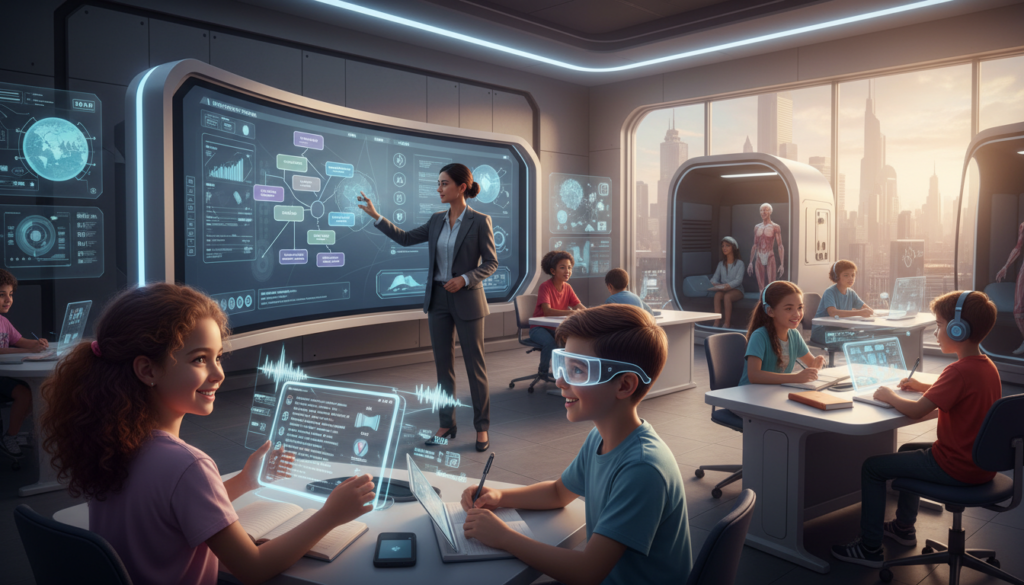
Technological Innovations Reshaping Learning Support
Artificial intelligence is changing how we help students learn. It uses adaptive learning that adjusts to each student’s needs. This tech looks at how students respond and changes the learning experience to fit them better.
Virtual reality is creating new ways to learn. It uses sights and sounds to help students understand complex ideas. This is great for students who learn better through seeing and doing than just reading.
Advanced tools are helping students overcome their challenges. They can read and write better with the help of technology. This lets students express their ideas freely, without being held back by writing.
- AI-driven personalization: Learning platforms adapt content presentation, pacing, and complexity based on individual response data and learning trajectories
- Gamified environments: Educational games provide immediate feedback and incremental challenges that maintain engagement while building foundational skills
- Mobile accessibility: Smartphone ubiquity democratizes access to organizational tools, reminder systems, and learning supports previously requiring specialized equipment
- Learning analytics: Data visualization systems track progress with granular detail, informing instructional adjustments and documenting growth patterns
- Augmented reality overlays: Digital information layers onto physical environments provide contextual supports and real-time guidance during learning activities
The digital world brings both chances and challenges to education. It’s important to make sure all students have access to these new tools. We need to balance screen time with hands-on learning and keep the human touch in teaching.
Pedagogical Innovations Transforming Instruction
Response to Intervention (RTI) is changing how we help students. It offers different levels of support based on how well students learn. This way, students get the right help without being held back.
Universal Design for Learning (UDL) is making lessons more accessible. It makes sure everyone can learn, not just those with special needs. It uses different ways to teach and learn to fit all kinds of students.
| Innovative Approach | Core Principle | Primary Benefit | Implementation Challenge |
|---|---|---|---|
| Project-Based Learning | Competency demonstration through varied modalities | Reduces reliance on traditional assessment formats that disadvantage students with dyslexia | Requires substantial teacher planning and assessment redesign |
| Competency-Based Progression | Advancement based on mastery, not time | Eliminates artificial failure points by focusing on skills mastery | Needs flexible schedules and tracking systems |
| Strength-Based Instruction | Builds on existing strengths, not deficits | Boosts motivation and self-confidence while teaching coping strategies | Requires a shift from traditional special education models |
| Collaborative Teaching Models | General and special educators work together | Brings specialized knowledge into inclusive classrooms, benefiting all | Needs administrative support, scheduling, and training |
New teaching methods are recognizing that one way doesn’t fit all. Flexible, responsive teaching is becoming more common. This is helping students in India reach their full potentials, despite their challenges.
Scientific Investigations Advancing Understanding
Neuroimaging is showing us how learning disabilities affect the brain. Studies have found differences in brain activity when people with dyslexia read. This helps us understand these conditions better.
Genetics research is uncovering the role of genes in learning disabilities. Twin studies show that genetics play a big part in reading and math skills. This could lead to earlier diagnosis and targeted help.
Studies are comparing different teaching methods to see what works best. They’ve found that focused teaching can really help students with reading challenges. Similar results have been seen for math and writing difficulties.
Long-term studies are following students with learning disabilities into adulthood. They show that with the right support, these students can succeed. Early help is key to a better future.
Research is working to bring new ideas from the lab to the classroom. This is a big challenge, but it’s essential for improving education. Researchers in India are playing a big role in this effort.
Research has shown that the most effective treatments for specific learning disorders with impairment in reading are structured and targeted strategies that address phonological awareness, decoding skills, comprehension and fluency.
There’s no special medicine for learning disabilities, so we focus on teaching and behavior. But, medicine can help with related issues like ADHD and anxiety. A complete approach combines education with medical care when needed.
Future research will focus on finding better ways to identify and help students. We want to make sure all students can reach their full potentials, no matter their challenges.
Resources for Learning Disabilities in India
Finding reliable information and support is key for families, teachers, and those with Specific Learning Disabilities. India’s education scene is growing, with more options available.
Books and Publications
Books and guides are vital for learning about and tackling learning issues. The International Dyslexia Association publishes detailed guides on reading problems and how to help. The Learning Disabilities Association of America shares research on various disabilities.
In India, local books and materials consider language and culture. The National Institute for the Empowerment of Persons with Multiple Disabilities makes materials in local languages. Journals like the Journal of Learning Disabilities share the latest research.
Websites and Online Communities
Online platforms offer support and information. The National Center for Learning Disabilities has a wealth of resources on identifying and helping with learning issues. Indian government websites also have info on special education and rights.
Online groups for parents offer emotional support and tips. Teachers can share ideas and work together online. These spaces help people with learning disabilities find support and understanding.
FAQ
What exactly are specific learning disabilities, and how do they differ from general learning difficulties?
How common are learning disabilities in India, and why do statistics vary so widely?
Can a child have more than one type of learning disability simultaneously?
At what age can learning disabilities be diagnosed, and is early intervention truly necessary?
What specific accommodations help students with dyslexia succeed in school?
How can parents support their child with a learning disability without doing homework for them?
What role do special educators play in supporting students with learning disabilities in inclusive classrooms?
Are learning disabilities the same as intellectual disabilities or low IQ?
What legal rights do children with learning disabilities have in Indian schools?
Can children with learning disabilities attend regular schools in India, or do they require special schools?
How do I know if my child needs a formal evaluation for a learning disability?
What is the difference between accommodations and modifications in special education?
What is an Individualized Education Program, and how does it work in the Indian context?
Can learning disabilities be cured or outgrown, or are they lifelong conditions?


The PsyForU Editorial Collective is the research and editorial team of PsyForU Research International. The collective prepares educational, psychological, mental-health-awareness, inclusion, neurodiversity, and research-methodology content for students, parents, educators, researchers, and general readers. PsyForU content is intended for awareness, education, and capacity-building and should not be treated as clinical diagnosis, therapy, medical advice, legal advice, or emergency mental-health support.