


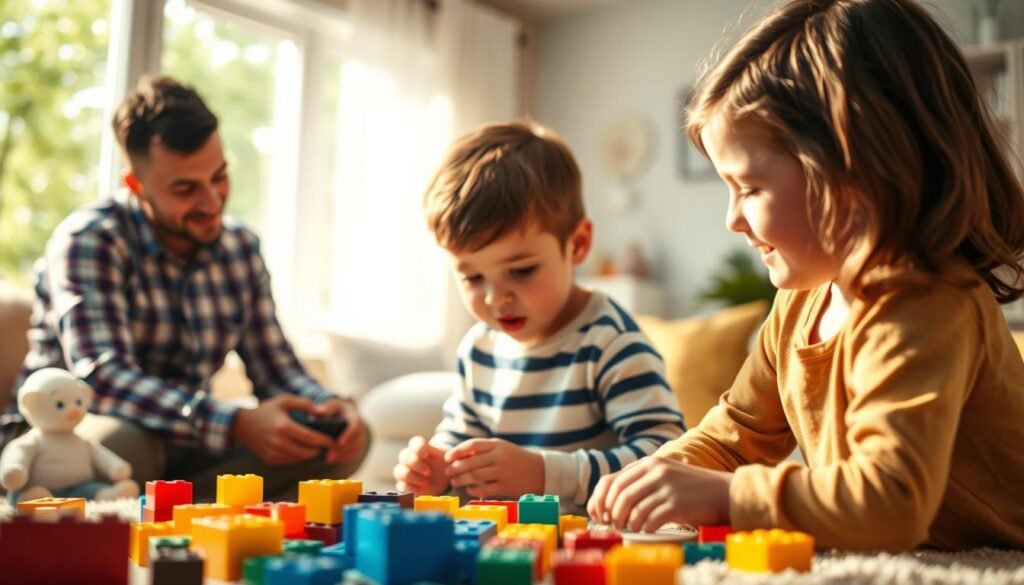
The most powerful classroom for children with developmental differences lies in ordinary moments. Young children learn best through direct participation in their environment. This is crucial for teaching social skills autism interventions, where natural contexts create meaningful growth opportunities.
Toddlers and young children acquire knowledge by doing. They explore their world through daily activities. These routine experiences contain embedded learning opportunities that structured sessions can’t replicate.
Transforming everyday activities into learning experiences creates frequency and relevance for developmental progress. This approach extends autism social skills therapy beyond clinical settings. It provides repeated opportunities to practice new abilities across various environments.
Consistent, contextualized instruction throughout daily routines helps children generalize skills. This method complements structured interventions, creating the intensity needed for meaningful progress. It also aids in transferring abilities to different situations.
Key Takeaways
- Children learn effectively through active participation in everyday activities rather than isolated instruction sessions
- Natural contexts provide relevance and reinforcement that enhance skill acquisition
- Daily routines offer repetitions necessary for children with developmental differences to generalize new abilities
- Caregivers and educators become agents of change by recognizing routine moments as learning opportunities
- Combining structured interventions with everyday practice creates intensity and frequency for meaningful progress
- Contextualized learning in familiar environments helps children transfer abilities across different settings
Why Everyday Moments Matter for Social Learning
Daily life offers countless chances for authentic social learning. Children with autism face many situations requiring social interaction and communication. These moments create teaching opportunities beyond clinical settings.
Daily life builds the foundation for skill development. Research shows children focus on their immediate environment. This present-moment awareness creates ideal learning conditions when caregivers use natural teaching opportunities.
Using daily routines as lessons is effective due to natural learning environments. Children with autism process information differently. These factors reveal why everyday moments are powerful for developing social skills.
The Power of Natural Teaching Environments
Natural settings have advantages that clinical environments can’t match. Children learn skills in contexts where they’ll use them. This ensures instruction addresses real-world demands directly.
Learning in everyday activities makes skills immediately useful. This creates natural reinforcement cycles. When a child successfully requests a snack, the reward follows instantly.
The outcome itself provides stronger reinforcement than any artificial reward system. This makes the learning more effective and lasting.

Naturalistic interventions embed instruction within child-initiated interactions. They follow the child’s interests rather than imposing teaching sequences. This approach recognizes that motivation greatly influences learning outcomes.
Daily routines provide critical repetition. Children encounter similar situations multiple times each day. This allows for practice without drill-based instruction. Each occurrence offers a chance to use emerging skills in meaningful contexts.
Natural environments provide immediate feedback through social consequences. Successful communication gets appropriate responses. Failures prompt problem-solving. These feedback loops teach children to monitor their effectiveness and adjust accordingly.
How Children with Autism Learn Best in Context
Children with autism excel at pattern recognition and procedural learning. Routine-based instruction leverages these cognitive strengths. Consistent contexts help children identify social exchange patterns and develop reliable navigation skills.
Everyday routines reduce abstract cognitive demands. Children experience social rules as part of activities they understand. This concrete experience supports comprehension and application of social skills.
Research shows autism affects how the brain processes information. Many individuals have enhanced local processing but struggle with global integration. Autism social interaction strategies that use specific contexts work with these processing differences.
Skill generalization is a major challenge in autism intervention. Children may show competence in therapy but not in real-life situations. This often results from learning too far from functional contexts.
Children with autism respond better to natural learning contexts. Many are less sensitive to social praise or abstract rewards. They respond strongly to functional outcomes and preferred activities.
Using daily routines as lessons embeds instruction within motivating contexts. Success yields meaningful results, sustaining engagement more effectively than external reinforcement systems.
Everyday moments provide distributed learning opportunities. This matches optimal spacing for memory consolidation. Daily routines offer frequent, brief learning episodes. This distribution helps transform new skills into established competencies.
| Learning Environment | Skill Generalization | Natural Motivation | Practice Frequency | Functional Application |
|---|---|---|---|---|
| Clinical/Therapy Settings | Requires explicit training for transfer across contexts | Relies on artificial reinforcement systems | Scheduled sessions with gaps between practice | Delayed; skills learned separate from use contexts |
| Structured Home Programs | Moderate; some context similarity to natural use | Mixed; combines natural and artificial motivators | Planned opportunities within routines | Moderate; closer approximation to real situations |
| Everyday Routine Contexts | Minimal need; learning occurs in application context | High; functional outcomes provide intrinsic motivation | Multiple daily opportunities through natural routines | Immediate; skills used as they are learned |
| Community Settings | High ecological validity; authentic social demands | Very high; real-world consequences drive engagement | Variable; depends on activity schedules | Direct; learning and application are simultaneous |
Several factors explain why learning in everyday routines produces better outcomes. These include cognitive processing patterns, motivational systems, and generalization challenges. Natural environments provide structure, repetition, and motivation that children with autism need.
Caregivers can transform daily life into an ongoing intervention. This supports continuous skill development in meaningful contexts. Recognizing learning potential in ordinary moments is key to this approach.
Understanding Social Skills Development in Autism
Children with autism process social information differently. Their brains interpret and respond to social cues in unique ways. These differences are not character flaws, but variations in how they handle complex social data.
Autism communication strategies require recognizing different social learning paths. Research shows structured, repeated, and contextual learning experiences benefit children with autism most. Parents can use daily activities to provide intense support for their child’s learning.
This approach turns everyday moments into powerful teaching opportunities. It aligns with how children naturally acquire new skills.
Core Social Communication Challenges
Autism brings specific social communication challenges. Social reciprocity, the natural flow in conversations, often needs explicit teaching. This includes knowing when to start talks and how to respond appropriately.
Joint attention is another challenge area. Many children with autism struggle to focus on people and objects at once. This skill is crucial for shared experiences and learning from others.
Perspective-taking affects how children understand others’ thoughts and feelings. This theory of mind challenge impacts their ability to predict behavior and navigate social situations.
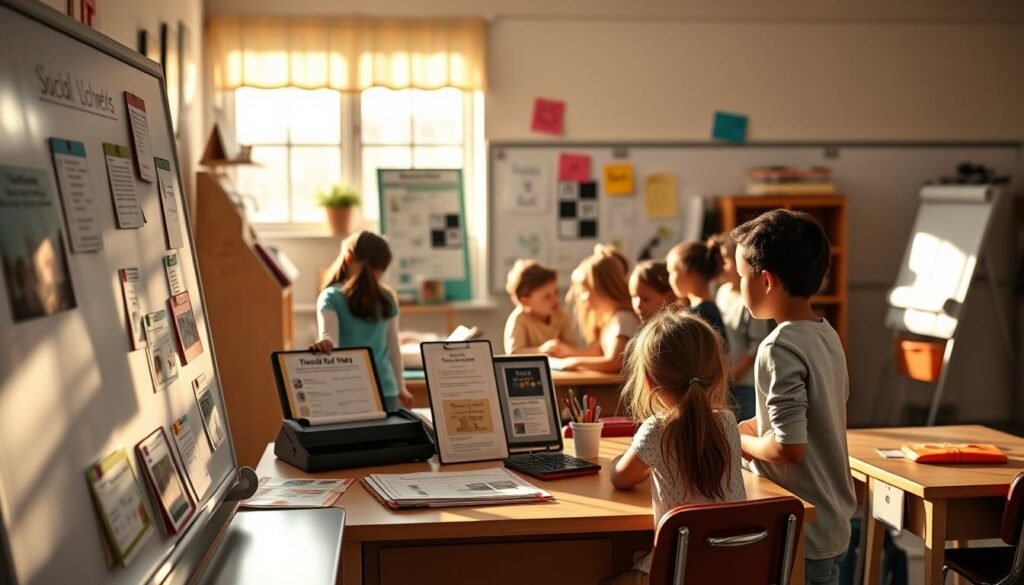
Pragmatic language use presents significant obstacles. Children may struggle with:
- Understanding context-dependent meanings and figurative language
- Adjusting communication style based on the listener or situation
- Recognizing and repairing communication breakdowns
- Maintaining appropriate topics and conversational relevance
- Interpreting indirect requests or implied meanings
Nonverbal communication interpretation is also challenging. Facial expressions, body language, and tone of voice convey crucial social information. Children with autism may not automatically process these social pragmatics autism aspects.
Understanding these challenges helps families develop targeted strategies. Each challenge offers a chance for structured learning within daily routines.
The Role of Repetition and Consistency in Skill Building
Children with autism need more practice to master social skills. This reflects differences in learning consolidation, not limited potential. Consistency across settings, people, and situations speeds up skill acquisition.
Learning intensity directly influences progress. Research shows distributed practice throughout the day is more effective than isolated sessions. Embedding supports in various activities promotes learning for both parents and children.
Systematic reinforcement strengthens new skills. Clear, immediate feedback connects actions to positive outcomes. Consistent reinforcement builds strong neural pathways for appropriate social behaviors.
Errorless learning is vital in skill building. Providing support ensures success during practice and builds confidence. Gradually reducing supports creates independent skill execution.
Effective strategies use varied practice opportunities. This helps children recognize constant social elements across contexts. For example, greeting routines keep core elements while adapting to different settings.
| Learning Component | Neurotypical Development | Autism Spectrum Development | Instructional Implication |
|---|---|---|---|
| Practice Trials Needed | Moderate repetition with incidental learning | Extensive repetition with explicit instruction | Embed multiple daily opportunities for same skill |
| Feedback Requirements | Implicit social feedback often sufficient | Explicit, immediate, consistent feedback essential | Provide clear verbal and visual reinforcement |
| Skill Generalization | Naturally transfers across contexts | Requires systematic practice in varied settings | Plan deliberate practice in multiple environments |
| Learning Context | Incidental learning from observation | Structured teaching within natural contexts | Design intentional teaching moments in routines |
Using social communication strategies with proper intensity changes the learning path. Families can structure daily interactions to provide optimal learning conditions.
How Daily Routines Create Natural Learning Opportunities
Daily routines are powerful for teaching social skills. They provide repetition and consistency that work well for children with autism. Predictable routines reduce cognitive load, allowing focus on social learning.
Routines use procedural memory, a common strength in autism. When activities follow set sequences, children can focus on social aspects. Morning routines and mealtimes become stable contexts for practicing social skills.
Familiar activities offer chances to practice social pragmatics autism skills naturally. Turn-taking during breakfast and requesting items while dressing occur in meaningful contexts. This helps children understand why social skills matter.
Natural consequences in routines provide immediate reinforcement. When a child requests help successfully, they get assistance. These natural rewards strengthen skills better than artificial systems.
Routines also help with generalization. Similar activities happen in different settings. Practicing skills within routines helps children recognize patterns across diverse situations.
Embedding strategies throughout daily schedules increases learning opportunities. Children encounter many brief learning moments across various activities. This distributed practice speeds up skill retention.
Visual supports in routines enhance learning. Schedule boards and social scripts make abstract expectations visible. These tools reduce language processing demands.
Routines allow adjusting complexity while maintaining progress. Families can increase expectations gradually as competence grows. This approach ensures continuous challenge without overwhelming the child.
Creating a Foundation: Setting Up Your Home for Success
A structured environment supports natural engagement for children with autism. The right setup can help them focus and learn better. A good environment reduces anxiety and allows children to concentrate on learning.
Three key elements form an autism-friendly learning environment. These are consistent routines, visual communication systems, and well-designed spaces. Together, they create ideal conditions for social skill development in everyday family life.
Establishing Predictable Daily Routines
Consistent daily sequences help children with autism understand expectations. Predictable routines support learning by reducing uncertainty about what’s next. This allows children to focus on social learning rather than figuring out their environment.
Morning routines set the tone for the day. They offer chances to practice greetings and follow directions. A structured morning might include set wake-up times, hygiene activities, and breakfast preparation.
Afternoon and evening routines maintain the day’s momentum. They might include after-school snacks, homework, play, dinner, and bedtime prep. Consistency helps children learn expectations and improve skills over time.
Balance between structure and flexibility is key. While consistency provides security, children also need exposure to small changes. This builds adaptability within familiar structures.
Routine complexity should match a child’s developmental level. Younger children benefit from simpler sequences with more adult guidance. As skills improve, routines can become more complex and independent.
Designing Visual Supports and Communication Tools
Many people with autism process visual information better than auditory. Visual supports for autism help with understanding and communication. They turn abstract ideas into concrete, reviewable formats.
Visual schedules show the sequence of daily activities. They answer the question, “What happens next?” First-then boards simplify transitions. Choice boards help with decision-making and expressing preferences.
Effectiveness depends on matching tools to individual needs. Some children respond best to photographs. Others can use more abstract symbols. The right choice depends on the child’s comprehension level.
Strategic placement of visual supports is crucial. Visual supports should be at the child’s eye level where decisions happen. This ensures children can use them independently.
Fading strategies prevent over-reliance on visual supports. As children learn routines, supports can be gradually simplified. This maintains independence while preventing regression.
Other visual tools can address specific teaching goals. These include social scripts, visual timers, emotion charts, and task analyses. Each tool helps with different aspects of communication and understanding.
Creating Designated Social Learning Spaces
The physical environment greatly affects learning and engagement. Well-arranged spaces set expectations and reduce distractions. Welcoming entry areas near doorways provide natural opportunities for greeting practice.
Entry areas should invite connection upon arrival. A small table near the door can display interesting items. These create natural conversation starters and encourage social interaction.
Comfortable conversation areas support face-to-face interaction practice. Soft seating arranged for easy eye contact works well. These spaces are best in central family areas for casual, everyday interactions.
Organized play zones clarify expectations about available materials. Arranging materials in meaningful ways enhances appeal and accessibility. Clear containers with labels support independent use and teach organizational skills.
Sensory considerations are crucial for children with autism. Lighting, noise levels, and textures all impact comfort. Spaces that respect individual sensory needs help children stay regulated and ready to learn.
Flexible spaces prevent rigidity while maintaining structure. The same area can serve multiple functions at different times. Clear cues help children understand expectations in each configuration, teaching contextual awareness.
Teaching Social Skills Autism Through Morning Routines
Morning routines offer great chances to teach social skills to kids with autism. These daily patterns are predictable and repetitive. They involve family members and various social demands that children will face throughout their lives.
Morning activities create an ideal learning environment for social communication therapy. Kids with autism learn best when skills are taught in real-life situations. These routines include important social behaviors like greetings, teamwork, and following directions.
Practicing Greetings and Eye Contact
The first social interaction each day is key for teaching social skills. Families can use a prompt hierarchy to guide children. This starts with full physical and verbal help, then gradually reduces support as the child improves.
Creating multiple greeting chances provides more practice. A child might greet a parent when waking up, then a sibling, and finally another caregiver. Each interaction is a chance to learn and get positive feedback.
Teaching eye contact needs careful thought, considering neurodiversity views. Some families focus on “thinking with your eyes” instead of direct eye contact. Others teach brief eye contact for greetings, as it’s often expected in social situations.
Effective teaching requires good data collection. Families can use simple tallies to track progress over time. This data shows patterns and helps adjust teaching methods as needed.
- Physical prompt: Guiding the child’s hand in a wave while modeling the verbal greeting
- Verbal prompt: Saying “Remember to say good morning” before the interaction
- Visual prompt: Pointing to a picture card showing a greeting gesture
- Independent performance: Child initiates greeting without any external support
Building Turn-Taking During Breakfast Preparation
Breakfast activities are great for teaching turn-taking skills. Parents can create sequences that need taking turns. This could include adding ingredients or setting the table. It’s important to make turns clear and visible.
Talking about turns helps children understand social interactions better. A parent might say, “My turn to pour milk. Your turn to add cereal.” This clear labeling shows how turns work in different situations.
Visual aids help kids who learn better through seeing. Families can use cards with photos and “My Turn” written on them. Or, they can make a picture schedule showing alternating actions between parent and child.
Over time, families can make turn-taking more complex. This might involve different actions, more people, or longer waiting times. This approach builds patience and social flexibility.
| Turn-Taking Level | Activity Example | Skills Developed |
|---|---|---|
| Basic Alternation | Taking turns placing toast slices on plates | Understanding sequential patterns, impulse control |
| Different Actions | One person pours juice while other distributes napkins | Flexibility, recognizing varied contributions |
| Multiple Participants | Three family members rotate setting table items | Waiting for extended periods, tracking complex sequences |
| Variable Duration | Turns that involve quick versus longer tasks | Patience, adapting to unpredictable timing |
Following Multi-Step Directions for Getting Ready
Morning routines are perfect for teaching language and organization skills. These routines involve many steps, like washing, dressing, and gathering belongings. This helps with social cooperation and cognitive organization.
Breaking down complex tasks prevents overwhelm and builds skills step by step. Start with simple directions like “Please brush your teeth.” Gradually increase to two or more steps as the child improves.
Visual aids help understanding and independence during morning routines. A picture checklist allows children to track their progress without constant reminders. This builds self-reliance and reduces family stress.
Systematic prompt fading helps children become more independent. Start with hands-on guidance, then gradually reduce help. Adjust the pace based on the child’s progress, not a set timeline.
Tailor teaching to each child’s level and learning style. Some kids might need picture schedules with simple words. Others might do well with written lists. Consider breaks between tasks or continuous sequences based on preference.
The most effective intervention occurs not in isolated therapy rooms but embedded within the authentic contexts where children live, learn, and grow each day.
Teaching social skills during real morning routines helps kids learn when to use these skills. This approach makes it easier for children to use their new skills in different situations. It’s more effective than learning in simulated scenarios.
Mealtime as Social Skills Training
The dinner table is a powerful classroom for social practice at home. It offers chances to build communication skills in a familiar setting. Meals happen often, creating consistent environments for children with autism to practice social behaviors.
Each phase of mealtime presents unique teaching opportunities. From preparing food to cleaning up, children can learn essential skills. These everyday activities help develop abilities that transfer to other social contexts.
Shared meals are ideal for addressing communication challenges. Children need to make requests, answer questions, and follow table rules. These real-life situations provide a foundation for meaningful skill development.
Teaching Conversation Skills and Reciprocal Communication
Conversation requires many skills working together. These include starting topics, keeping discussions going, and listening actively. For children with autism, these exchanges benefit from tailored autism communication strategies.
Mealtime offers natural conversation chances without the stress of unfamiliar situations. For new communicators, adults can model expanded language. If a child says “juice,” an adult might say, “You want more juice. Here’s your apple juice.”
Children at intermediate levels can use conversation starter techniques. Visual cards with topics like “something funny” can help start talks. Adults can then ask questions to keep the conversation going.
Advanced communicators need practice with subtle conversation skills. These include understanding others’ views and knowing when people lose interest. Adults can teach these skills through explicit instruction and in-the-moment coaching.
It’s important to balance adult-led teaching with child-initiated topics. This approach keeps children motivated and engaged. It shows that their communication matters while building more advanced conversation skills.
Practicing Table Manners and Social Etiquette
Table manners are important social behaviors that affect social acceptance. These learned behaviors vary across cultures and families. It’s crucial to focus on expectations that match family values and social settings.
Effective teaching starts by choosing which behaviors to address based on age and importance. A step-by-step approach using modeling, prompting, and reinforcement works best. Adults should consistently show desired behaviors and give clear feedback.
Visual aids help explain abstract social rules around table etiquette. A checklist showing steps like “wait for everyone” and “use utensils” provides concrete reminders. Checking off completed tasks offers a sense of accomplishment.
Teaching table manners involves breaking complex behaviors into smaller steps. For example, “using utensils” might start with using a spoon, then a fork, and finally a knife. This gradual approach prevents overwhelming the learner.
| Table Manner Skill | Teaching Strategy | Visual Support Example | Progression Timeline |
|---|---|---|---|
| Waiting to eat until everyone is served | Use visual timer showing wait duration, provide preferred activity during waiting | Picture sequence showing serving process and “start eating” cue | Start with 30-second waits, gradually increase to 3-5 minutes |
| Using appropriate voice volume | Model different volume levels, use volume meter visual, provide immediate feedback | Visual volume scale with “inside voice” indicator | Initially reinforce any volume reduction, shape toward consistent appropriate volume over 4-6 weeks |
| Requesting items politely | Script and rehearse polite request phrases, prompt before meals, fade prompts systematically | Written or picture script: “Please pass the [item]” with visual of desired item | Begin with full prompting, reduce to partial prompts within 2-3 weeks, achieve independence in 1-2 months |
| Staying seated throughout meal | Set clear expectation, use visual timer for meal duration, reinforce sitting behavior incrementally | Visual schedule showing meal duration and “all done” symbol | Start with shorter expected durations (5-10 minutes), extend by 2-3 minutes weekly until age-appropriate duration achieved |
Cultural considerations are important when setting table manner expectations. Appropriate behavior varies across cultures. Families should prioritize behaviors that matter in their specific cultural context. The goal is to prepare children for successful social participation in their communities.
Using Requesting and Sharing as Teaching Moments
Requesting is a basic communication skill that mealtimes naturally encourage. Setting up the environment creates opportunities for asking. Placing items in view but out of reach or using hard-to-open containers can prompt requests.
Teaching requesting skills across different forms ensures children can express needs. This includes gestures, sounds, words, and communication devices. The teaching approach should match the child’s current abilities while gently expanding their skills.
Effective autism communication strategies for teaching requesting include the progressive time delay method. Adults wait longer before helping, creating chances for the child to ask. This method starts with immediate help and gradually extends to 3-5 second delays.
Sharing behaviors develop through communication and social skill-building. Young children may not be ready for true sharing. Teaching starts with brief turn-taking using preferred items. Clear signals show when the child will get the item back.
Visual aids like timers and “my turn/your turn” cards explain sharing concepts. As children understand turn-taking, adults can extend sharing time. They can also introduce sharing with peers instead of just familiar adults.
Mealtimes offer real sharing chances with preferred foods. Instead of forcing immediate sharing, adults can give everyone portions of favorite foods. This makes sharing feel less like losing something. Praising sharing attempts while acknowledging difficulties encourages positive behavior.
It’s crucial to balance teaching and enjoying family time during meals. Not every meal needs to be a lesson. Some meals can focus on connection and fun. This approach prevents mealtime from feeling demanding while still allowing social practice at home.
Using Play and Recreation for Social Practice at Home
Play-based interventions create chances for children with autism to practice social skills. These activities are motivating and naturally reinforcing. Play is more than just fun. It helps children learn complex social behaviors.
Kids learn best when doing things they like. Play meets this need while teaching social skills. The home offers unique benefits for play-based learning. It’s familiar and flexible.
There are different types of play activities. Play with people includes games like peek-a-boo and hide-and-seek. Play with toys involves blocks, puzzles, and pretend play. Both free and guided play help kids develop skills.
Implementing Structured Play Therapy Techniques
Structured play therapy teaches social skills through planned activities. It balances child interests with learning goals. This approach uses proven methods adapted for home use.
Choosing the right play materials is key. They should match the child’s level and interests. Good materials encourage teamwork and communication.
Start by setting a regular playtime routine. This helps the child know when learning will happen. Include setup, play, and reflection phases.
Adults use specific techniques during play. Modeling shows desired behaviors. Prompting offers support to help the child succeed. Expanding builds on the child’s actions.
Script-fading is very effective for children with autism. It starts with full verbal scripts for interactions. Then, prompts decrease as the child learns. This helps kids create their own dialogue.
“The goal of structured play is not to control every aspect of the child’s play, but rather to create conditions that make social learning more likely while preserving the child’s agency and enjoyment.”
Video modeling shows target behaviors in play contexts. Parents can make videos of peers playing. Watching these before play helps visual learners.
Balance structure with free play. This keeps kids motivated and helps them use skills in real life. Let children make choices about play themes and materials.
Teaching Turn-Taking and Flexibility Through Board Games
Board games are great for teaching turn-taking and flexible thinking. They have clear rules and outcomes. This structure supports learning while keeping kids engaged.
Choose games based on skill level. Start with simple cause-effect games. Move to more complex games as skills improve.
| Skill Level | Game Characteristics | Example Activities | Target Skills |
|---|---|---|---|
| Emerging | Immediate turns, sensory feedback, simple rules | Pop-up games, marble runs, simple matching | Basic turn-taking, cause-effect understanding |
| Developing | Short waiting periods, luck-based outcomes, 2-3 players | Candy Land, Chutes and Ladders, simple card games | Waiting skills, accepting varied outcomes, following multi-step rules |
| Advanced | Strategy elements, longer gameplay, competitive elements | Connect Four, Uno, cooperative board games | Flexible thinking, perspective-taking, emotional regulation during wins/losses |
| Proficient | Complex rules, abstract strategy, longer time investment | Chess, card strategy games, role-playing games | Advanced planning, reading opponents, adapting strategies |
Visual aids help during board games. Turn indicators show whose turn it is. Visual timers help kids understand waiting times.
Use special strategies for common challenges. Start with cooperative games for kids who struggle with losing. Gradually move to competitive games with support.
Cognitive flexibility grows by changing game rules. This helps kids handle uncertainty and adjust their thinking. Parents can model flexible problem-solving during games.
Developing Theory of Mind During Pretend Play Activities
Pretend play helps develop theory of mind autism skills. This means understanding others’ thoughts and feelings. Kids with autism often struggle with pretend play and theory of mind.
Theory of mind development happens in stages. It starts with understanding different viewpoints. It ends with grasping complex mental states. Pretend play offers chances to practice each stage.
Start with basic pretend play. Use objects as they’re meant to be used. Then, use objects to represent other things. Finally, create complex scenarios with different characters.
Begin by showing simple pretend actions. Use a block as a phone or pretend to drink from an empty cup. Explain what you’re doing to help kids understand.
Create scenarios with characters who know different things. This helps kids recognize that others have different knowledge. It’s a key theory of mind development skill.
“Pretend play serves as a natural laboratory for theory of mind development because it requires children to simultaneously hold multiple representations in mind—what is real and what is pretend, what different characters know and believe.”
Practice taking different perspectives during play. Have kids switch roles to see things from other viewpoints. This helps develop empathy and understanding.
Use false belief scenarios in pretend play. These teach that people act based on what they believe, even if it’s wrong. This is an advanced theory of mind autism skill.
Create play situations with characters feeling different emotions. This teaches that people react differently to the same event. It helps kids understand emotional diversity.
Talk about mental states during play. Use words like “thinks,” “believes,” and “feels.” This helps kids understand internal experiences.
Connect pretend play lessons to real life. Remind kids of play scenarios during actual social situations. This helps them use their new skills in everyday life.
Shopping Trips and Community Outings as Learning Opportunities
Community outings turn everyday errands into powerful learning experiences for children with autism. Families visit stores, libraries, and restaurants as part of their regular activities. These settings offer rich opportunities to practice social skills in real-world contexts.
These outings expose children to diverse social situations and environments. They encounter different people, sensory experiences, and social expectations. Practicing peer interaction skills in public prepares children for greater independence.
Learning in natural settings improves skill retention and application. Children can practice social behaviors where they’ll use them most. This makes the skills more functional and meaningful.
Preparing for Social Interactions in Public Settings
Successful outings start with thorough preparation. Planning ahead reduces anxiety and increases positive outcomes. This creates a foundation for confident participation in public.
Social stories help children understand what to expect during outings. These personalized narratives describe events, people, and appropriate behaviors. Visual schedules show the order of activities, providing predictability.
Role-playing at home lets children practice expected behaviors. Families can simulate store lines, greeting librarians, or ordering food. This builds confidence and allows for safe mistake-making.
Analyzing locations helps caregivers plan appropriate supports. Consider these factors when preparing for outings:
- Sensory considerations: Lighting intensity, noise levels, crowd density, temperature, and potential overwhelming stimuli
- Social demands: Required interactions with staff or community members, waiting expectations, and social proximity to strangers
- Duration and timing: Length of the outing, time of day affecting crowd levels, and alignment with the child’s optimal alertness periods
- Available supports: Quiet spaces for breaks, familiar items for comfort, and natural reinforcers present in the environment
Portable visual supports offer on-the-spot guidance in public. Laminated cards showing behaviors or communication boards can be carried discreetly. These tools provide prompts without drawing excess attention.
Discussing expectations before leaving home sets clear conduct guidelines. Reviewing rules for different locations helps children understand context-appropriate behaviors. For example, voice volume expectations differ between libraries and playgrounds.
Practicing Greetings and Brief Conversations with Community Members
Community outings offer chances to practice real conversations with genuine feedback. Unlike rehearsed scenarios, interactions with cashiers and librarians serve functional purposes. These experiences teach children that social communication has practical uses.
Regular visits to the same locations build familiarity with staff members. Repeated interactions provide scaffolded social practice with increasing complexity. This helps children develop comfort over time.
Prepare for interactions by discussing who the child might meet. Simple scripts offer starting points for greetings like “Good morning” or “Thank you.” As comfort grows, encourage expanded exchanges about weather or products.
Caregivers can provide subtle prompts without being intrusive. Gentle touches or visual cues can remind children to make eye contact. The goal is to foster independence while offering minimal necessary support.
| Community Setting | Interaction Opportunity | Social Skills Practiced | Preparation Strategy |
|---|---|---|---|
| Grocery Store | Greeting cashier, requesting help finding items | Greetings, asking questions, saying thank you | Role-play checkout process, practice item location questions |
| Library | Checking out books, asking librarian for assistance | Speaking quietly, requesting help, following directions | Review library rules, practice whisper voice, plan questions |
| Restaurant | Ordering food, interacting with server | Making choices, speaking clearly, using manners | Review menu beforehand, practice ordering phrases, discuss tipping |
| Post Office | Mailing packages, greeting postal workers | Waiting in line, following instructions, transaction completion | Explain mailing process, practice waiting strategies, prepare package together |
Debriefing after interactions reinforces learning and encourages reflection. Discussing successes builds confidence for future interactions. Addressing challenges constructively helps children see mistakes as learning opportunities.
Collaborating with community members enhances the learning experience. Brief chats with cashiers about the child’s goals can create supportive partnerships. Many appreciate knowing how their patience helps a child’s social development.
Teaching Waiting Skills and Managing Transitions
Waiting is often challenging for children with autism in public settings. Teaching effective strategies prevents frustration and behavioral issues. This ensures more successful community experiences.
Visual timers make abstract time concepts more concrete. Sand timers or apps show children exactly how long they need to wait. This reduces anxiety and provides a tangible endpoint to focus on.
Structured distraction techniques occupy attention during waiting periods. Portable activities like fidget toys or I-spy games redirect focus. Plan these strategies in advance for easy access when needed.
Teaching waiting-specific social cues helps children recognize their turn approaching. Learning to spot when the person ahead moves or their number is called builds awareness. This enhances independent participation in community settings.
Reinforcement systems strengthen tolerance and patience. Token boards for appropriate waiting or surprise rewards encourage this critical skill. Natural reinforcers, like finally reaching the front of a line, also provide meaningful consequences.
Managing transitions between locations requires similar preparation. Visual schedules showing outing sequences provide predictability. Verbal warnings with visual countdowns help children prepare for changes.
Teaching flexible thinking prepares children for unexpected changes in public. Practicing coping strategies for disappointments builds resilience. This adaptability extends beyond specific situations to broader life skills.
Community experiences strengthen social skills and independence for children with autism. Authentic interactions and varied demands create unique learning opportunities. With preparation and practice, outings become valuable teaching moments for greater societal participation.
Implementing Social Stories for Everyday Situations
Social stories for ASD help children with autism understand complex social situations. They turn unwritten social rules into visual narratives. Parents can use daily activities to create learning opportunities with social stories.
These tools build genuine social understanding by explaining the why behind expectations. This is crucial for children with autism spectrum disorder. They need explicit instruction about reasoning and perspective-taking.
Implementing social stories requires careful planning. Stories should address specific challenges while remaining accessible to the child. Personalized stories can reduce anxiety and increase independence in daily activities.
How to Create Personalized Social Stories for Your Child
Start by identifying situations that challenge your child. Observe carefully to note circumstances that cause difficulty or stress. This helps create stories that address real needs.
Carol Gray’s framework uses four sentence types. Descriptive sentences explain situations objectively. Perspective sentences describe others’ feelings and thoughts. Directive sentences suggest appropriate responses. Affirmative sentences reinforce meaning and express common values.
The recommended ratio balances these components thoughtfully. Use two to five descriptive, perspective, or affirmative sentences for every directive sentence. This ensures stories focus on understanding rather than just giving commands.
Personalize stories beyond just using the child’s name. Include their interests and match vocabulary to their level. Reflect family values and cultural practices in the stories.
Visual supports enhance comprehension for most children with autism. Use photographs, picture symbols, or simple drawings. Visuals should complement the text, not distract from it.
When and Where to Use Social Stories Effectively
Introduce stories well before the target situation. This reduces anxiety by providing predictability. Review stories multiple times before encountering the actual situation.
The context for story review varies based on the child’s needs. Some focus better one-on-one, while others benefit from group instruction. Establish specific times for story review to create consistency.
Digital formats can be helpful for some families. Tablets or computers can present stories with audio narration. Video social stories show actual footage of situations.
The physical location of story implementation matters too. Review grocery store behavior stories in the car outside the store. This creates immediate contextual connections.
Reviewing Stories Before and After Social Situations
Pre-situation review activates information when children need it most. Frame the review as a helpful reminder. Use calm and encouraging tones to build confidence.
Post-situation review celebrates successes and addresses challenges. Point out specific story elements the child applied successfully. This builds awareness of how preparation supports success.
When challenges occur, use post-situation review as a teaching opportunity. Discuss which parts worked well and what was difficult. This can reveal needed story modifications or additional support strategies.
Examples of Social Stories for Common Daily Activities
Here are examples of social stories for common situations. Personalize these templates to match your child’s needs and vocabulary level.
Morning Routine Story Example:
Every morning, I wake up in my bedroom. My family wakes up too. I get out of bed and go to the bathroom.
After using the bathroom, I wash my hands with soap and water. Then I get dressed in the clothes Mom put out.
When I’m dressed, I go to the kitchen for breakfast. My family is happy when I follow my routine.
Grocery Store Story Example:
Sometimes my family goes to the grocery store. It can be noisy and bright. Dad gets a shopping cart.
We walk through the store aisles looking for food. I can ask Dad politely if we can buy certain foods.
When we finish shopping, we go to the checkout line. I can help put groceries on the counter.
Transition to New Activity Story Example:
During the day, I do different activities. A grown-up will tell me when it’s time to change. Mom might say “Five more minutes” before an activity ends.
When time is up, Mom will say “Time to clean up now.” I will try to stop what I’m doing.
I can take a deep breath and put my toys away. Then I can start the new activity.
Praise and Reinforcement Strategies That Work
Evidence-based praise and reinforcement techniques create responsive learning environments. These methods turn daily interactions into teaching opportunities. They motivate children to practice and refine social behaviors.
Reinforcement strategies provide immediate feedback on desirable behaviors. They increase the chances of repeating newly learned skills. These methods build positive associations with social interaction.
Applying ABA Therapy Principles at Home
Families can use aba therapy for autism principles at home without formal training. This approach is based on how consequences shape behavior. Pleasant outcomes make behaviors more likely to occur again.
Several applied behavior analysis concepts are useful for teaching social skills. Positive reinforcement involves rewarding target behaviors immediately. For social skills, this could include praise or preferred activities.
Prompting is another technique families can use. Prompts are cues that increase success likelihood. The prompting hierarchy ranges from verbal hints to physical guidance.
Shaping teaches complex behaviors by reinforcing small steps. This approach celebrates incremental progress. For example, parents might initially reinforce any verbal response to questions.
Identifying effective reinforcers is crucial in applying aba therapy social skills principles. Reinforcer preferences vary among children. Systematic preference assessments help discover what motivates each child.
Reinforcers fall into several categories:
- Tangible items: Physical objects like toys, books, or collectibles that the child values
- Activity-based reinforcers: Opportunities to engage in preferred activities such as screen time, outdoor play, or special outings
- Social reinforcers: Attention, praise, hugs, or interactive games with family members
- Sensory experiences: Access to preferred sensory input such as music, movement activities, or textured materials
Simple preference assessments involve offering choices and observing selections. More formal approaches track selection frequency across repeated trials. This information guides the selection of meaningful reinforcers.
Understanding reinforcement schedules optimizes learning outcomes. Continuous reinforcement works best for new skills. Intermittent reinforcement promotes maintenance and generalization of established skills.
Creating Effective Reward Systems for Social Behaviors
Structured reward systems provide frameworks for consistent praise and reinforcement. Token economies offer immediate acknowledgment while building tolerance for delayed gratification. Visual charts show concrete progress representations.
Digital applications provide technological alternatives that appeal to some children. They offer built-in tracking features that simplify data collection for families.
Designing effective reward systems requires attention to several elements:
- Target behavior selection: Identify specific social skills that are developmentally appropriate and functionally important for the child
- Operational definitions: Define behaviors in observable, measurable terms that allow reliable assessment of occurrence
- Reinforcement ratios: Determine how many instances of the behavior are required to earn rewards, balancing motivation with realistic expectations
- System fading: Plan for gradual reduction of structured rewards as behaviors become more automatic and naturally reinforced
Target behaviors should be stated positively, describing desired actions. Operational definitions eliminate ambiguity about behavior occurrence. Balancing immediate and delayed reinforcement is an important developmental consideration.
Potential pitfalls include over-reliance on external motivation. Families should pair tangible rewards with social reinforcement. Consistency challenges often arise when multiple caregivers implement systems differently.
Using Natural Consequences as Reinforcement
Natural consequences are inherent outcomes that follow behaviors without artificial intervention. They create powerful learning opportunities. These consequences support generalization and long-term maintenance more effectively than arbitrary rewards.
Natural consequences are logically connected to behaviors. Arbitrary consequences are imposed externally without inherent connection. Natural reinforcement offers several advantages for social skills development.
Structuring environments to ensure natural consequences are salient requires thoughtful planning. The goal is creating learning opportunities where social skills produce obvious, reinforcing outcomes.
Combining structured systems with natural consequences provides comprehensive support. Initial learning often requires more intensive artificial reinforcement. Gradually shifting to natural consequences promotes independence and generalization.
Families can assess natural consequence effectiveness by observing behavior increases. If behaviors don’t increase, supplemental structured reinforcement may be necessary. The most effective approaches honor individual differences while applying applied behavior analysis principles.
Teaching Nonverbal Communication and Reading Social Cues
Nonverbal signals carry deep social meaning. Autistic learners often need explicit instruction to understand these unspoken patterns. This includes facial expressions, body language, and vocal tones.
Children learn from language-rich settings. These provide chances to practice nonverbal skills. The key is making hidden social info clear through structured teaching.
Helping Children Recognize Facial Expressions
Facial expression skills are vital for social understanding. Teaching starts with basic emotions like happiness and sadness. It then moves to complex ones like confusion and pride.
Good teaching uses many methods. Photos show real emotions to study. Mirrors let kids practice making faces. Videos display how expressions change over time.
Emotion games make learning fun. Kids guess feelings from facial displays. These methods suit different learning styles and keep students engaged.
Linking expressions to contexts is crucial. A surprised face makes sense with unexpected events. An angry look relates to frustration. This helps kids understand why people show certain expressions.
Daily life offers practice chances. Parents can point out expressions during regular talks. TV shows are great for spotting character emotions.
Some autistic people use thinking strategies instead of intuition. This approach is equally valid and useful. It shows different brain paths to similar outcomes.
Teaching Personal Space Awareness in Daily Activities
Personal space is key for social comfort. Issues here often cause negative reactions from peers. Teaching this abstract concept needs concrete, visual methods.
Visual aids make space measurable. Hula hoops show personal zones on the floor. Kids learn to keep arm’s length from strangers. These demos create easy-to-remember guidelines.
Space rules change with context. Family allows closer contact than strangers. Crowded places need less space than open areas. Cultural norms also affect spacing.
Daily routines offer practice. Morning greetings help learn greeting distances. Waiting in lines teaches queue spacing. Family can give gentle feedback on spacing.
Gradual practice builds spatial awareness. Kids start far apart and slowly move closer. They watch for comfort signs from others. This builds skills for real social situations.
Interpreting Tone of Voice and Body Language
Voice tone and posture show emotions and intentions. These can contradict words, confusing autistic learners. Structured teaching helps decode these complex signals.
Tone exercises focus on vocal qualities. Kids compare the same sentence in different emotions. They start with clear differences before learning subtle changes.
Body language lessons follow a similar path. Children learn open vs. closed positions and relaxed vs. tense states. Photos, videos, and live demos aid learning.
Advanced skills combine multiple nonverbal cues. Real talks mix facial expressions, tone, and gestures. Learning to watch all these builds full understanding.
Noticing mismatches between words and body language is crucial. When “I’m fine” comes with a sad face, nonverbal cues often tell the truth.
Practice Activities for Social Cues Training
Concrete exercises at home and school build nonverbal skills. These range from basic matching to complex interpretation. Varied practice prevents boredom while reinforcing key abilities.
Emotion games match photos to feeling words or situations. Kids pick faces for given scenarios. This links contexts to emotional displays.
Video exercises use short clips for discussion. Pausing allows talk about expressions and body language. Questions guide observation and interpretation.
Role-play creates safe practice for nonverbal behaviors. Kids learn proper distances and friendly greetings. Feedback helps correct errors and reinforce good attempts.
The following table outlines progression of autism social cues training activities from foundational to advanced levels:
| Skill Level | Activity Type | Example Exercise | Materials Needed | Duration |
|---|---|---|---|---|
| Beginner | Basic Expression Matching | Match emotion photos to feeling words using four basic emotions | Photo cards, word cards | 10-15 minutes |
| Intermediate | Contextual Interpretation | Watch video clips and identify character emotions based on multiple cues | Video player, short clips, discussion questions | 15-20 minutes |
| Advanced | Mixed Message Analysis | Identify incongruence between verbal and nonverbal signals in scenarios | Role-play scripts, video examples | 20-25 minutes |
| Generalization | Real-Time Community Practice | Observe and discuss nonverbal cues during actual social outings | Natural environments, guided observation | Ongoing integration |
Space games make learning fun. The “bubble game” imagines personal bubbles that shouldn’t touch. Measuring with arms or tape creates visual guides for proper distances.
Tone practice involves copying emotional sounds. Kids say simple phrases in different moods. Recording lets them hear and improve their attempts.
Daily life offers natural practice. Point out family members’ nonverbal cues during normal activities. Remind kids to check their own signals before social events.
This approach respects brain differences while building social skills. Some cues may stay hard despite practice. Using thinking strategies is valid, not a flaw. Multiple paths lead to social success across brain types.
Developing Emotional Regulation Through Daily Routines
Children on the spectrum can learn to manage emotions through daily routines. This helps build social skills and improves quality of life. Parents can teach emotion skills during everyday activities, not just in tough situations.
Practicing emotional awareness in daily routines helps kids learn in a low-stress way. This method allows children to develop skills gradually across different settings. Turning regular activities into learning chances creates a natural environment for growth.
Identifying and Labeling Emotions in Real-Time
Teaching kids to recognize and name feelings is crucial for managing emotions. Many with autism struggle to identify their emotions. This makes answering “How do you feel?” challenging and requires clear instruction.
Parents can start by setting up emotion check-ins throughout the day. These could be during breakfast, transitions, and bedtime. Adults should model this by sharing their own feelings and reasons.
Visual emotion scales make abstract feelings more concrete. The Zones of Regulation uses colors to categorize emotions. Emotion thermometers show intensity levels from calm to overwhelmed. These tools help kids learn to express their feelings accurately.
Children also benefit from recognizing physical signs of emotions. For example, a fast heartbeat might mean excitement or anxiety. Tight shoulders could signal stress. Rapid breathing might show fear. This awareness helps kids manage emotional regulation autism challenges early.
| Emotion Identification Strategy | Implementation Method | Daily Routine Integration | Expected Outcome |
|---|---|---|---|
| Scheduled Check-Ins | Ask “How do you feel?” at consistent times with visual supports | Morning wake-up, before meals, bedtime | Develops habit of emotional self-monitoring |
| Physiological Cue Recognition | Teach connection between body sensations and emotions | During physical activities, transitions, challenging tasks | Enables early identification before escalation |
| Emotion Modeling | Adults verbally label their own emotions with explanations | Throughout all daily interactions and activities | Provides language models and normalizes emotional expression |
| Visual Emotion Tools | Use zones, thermometers, or emotion charts consistently | Visible in common areas for easy reference | Creates concrete reference system for abstract concepts |
Adults should give specific feedback when kids identify emotions. Instead of general responses, parents should acknowledge and expand on what they observe. This helps reinforce the connection between feelings and physical signs.
Teaching Coping Strategies During Transitions and Changes
Transitions can be tough for kids with autism due to executive functioning autism challenges. These moments require shifting attention, remembering new tasks, and adapting to different environments. This complexity often leads to emotional struggles.
Preparing in advance can reduce transition stress. Visual timers show how much time is left in an activity. Giving warnings at different intervals helps kids gradually prepare for changes.
Transition objects can comfort kids during changes. A favorite toy or special card can help bridge activities. Consistent verbal or musical cues can also signal specific transitions.
Teaching coping strategies helps kids manage anxiety independently. Deep breathing and counting exercises can be useful tools. The “first-then” language structure clarifies sequences and reduces uncertainty.
Building tolerance for surprises requires gradual exposure and flexibility training. Parents can introduce small, manageable changes during calm times. This helps expand children’s ability to handle unexpected situations.
During tough transitions, adults should validate feelings while guiding kids to use coping strategies. This approach recognizes that executive functioning autism challenges are real neurological issues, not behavioral choices.
Using Visual Supports for Emotional Expression and Regulation
Visual tools are effective for emotional development in autism. They make abstract concepts more concrete and accessible. Children can use these supports independently to manage their feelings.
Emotion charts that link feelings to coping strategies create comprehensive support systems. These charts guide kids toward appropriate responses when they feel certain emotions. This reduces the mental effort needed during tough moments.
Visual scripts offer step-by-step guidance for managing specific emotional situations. These scripts make the regulation process clear and teachable. They help externalize the steps needed to handle feelings effectively.
Social stories about emotions explain why feelings happen and how to manage them. These stories can address common challenges like visiting new places or handling frustration. Reading these stories builds understanding and practical skills.
Visual schedules increase predictability and reduce anxiety throughout the day. Seeing upcoming activities helps kids prepare mentally for transitions. This proactive approach addresses emotional regulation autism challenges by removing common triggers.
Break cards and help cards allow nonverbal communication of emotional needs. Kids can use these to request breaks or support without speaking. This is especially helpful when emotional stress makes talking difficult.
Personalized regulation toolboxes contain strategies matched to each child’s needs and preferences. Some kids might prefer movement, while others like quiet activities. Testing different methods helps find what works best for each child.
The physical environment can include visual emotional supports. Calm spaces with sensory materials and emotion tools provide safe areas for regulation practice. This shows that feelings are valued and support is available.
These visual supports aim to build genuine emotional skills, not just manage behavior. The goal is to develop competence through compassionate, systematic teaching within daily family life.
Facilitating Peer Interaction at Home and School
Children on the autism spectrum need thoughtful planning for meaningful peer connections. Authentic friendships emerge through positive experiences with same-age peers. These relationships offer unique learning opportunities not found in adult-directed settings.
Successful autism peer interaction requires structured opportunities balancing support and autonomy. Children with autism often struggle with unpredictable peer exchanges. They need explicit teaching of social rules within safe environments.
Variety enhances engagement and skill application across social contexts. As children progress, families can mix elements from different settings. Cooperative games during snack time or shared hobbies during outdoor activities foster natural peer connections.
Planning and Structuring Successful Playdates
Careful preparation turns playdates into valuable learning opportunities. Choosing compatible playmates is crucial. Consider shared interests, complementary temperaments, and matched social skill levels.
Pre-playdate preparation sets the stage for success. Create personalized social stories to preview the interaction. Include activity sequence, peer names, house rules, and appropriate social behaviors.
Structured planning addresses common challenges in unstructured peer time. Effective autism peer interaction strategies include several key elements:
- Limiting initial playdate duration to 45-60 minutes to prevent fatigue and overwhelm
- Planning specific activities rather than relying on ambiguous “free play” expectations
- Preparing backup activities for transitions between planned engagements
- Arranging the environment to minimize sensory overload through lighting, noise control, and space organization
- Ensuring adequate adult supervision positioned to support without hovering
Balance structured activities with flexible interaction opportunities. Start with highly structured activities that have clear rules and defined roles. Board games, craft projects, or cooking activities offer predictability while creating natural interaction points.
Gradually decrease structure as children develop competence. This might involve child-selected activities, longer playdates, or less predictable elements like outdoor play.
Coaching Through Social Situations Without Over-Directing
Supportive coaching provides guidance while preserving children’s social autonomy. Over-directing undermines authentic relationship building. Children need space to navigate challenges, make mistakes, and develop problem-solving skills.
Strategic positioning allows adults to observe without intruding. Stay in the room while engaged in a quiet activity. This enables quick intervention when necessary while showing trust in children’s abilities.
Subtle prompting techniques maintain natural interaction flow while providing essential support:
- Narration makes implicit social information explicit without directly instructing (“I notice Sam is waiting for a turn”)
- Indirect suggestions offer options without commanding (“Some kids like to take breaks when games get frustrating”)
- Environmental arrangement creates opportunities rather than forcing interactions (placing preferred toys in shared spaces)
- Modeling demonstrates appropriate responses through casual commentary or parallel play
Consider multiple factors when deciding to intervene. Safety concerns always warrant immediate action. Also consider frustration levels, peer responses, potential for natural resolution, and teaching opportunities.
Post-playdate debriefing consolidates learning without creating shame. Highlight successful strategies, gently explore challenges, and problem-solve for future situations. This builds social awareness while reinforcing positive self-concept.
Building Friendships Through Shared Interests and Activities
Authentic friendships often develop around common passions. Identify and leverage a child’s genuine interests to create bridges to like-minded peers. Even intense or unconventional interests can foster connections.
Interest-based clubs and activities provide structured contexts for organic social interaction. A dinosaur enthusiast might connect in a paleontology club. A train lover could build relationships through model railroad groups.
These settings reduce social pressure by focusing on shared engagement. Discussions flow naturally from collaborative activities. Social demands occur within a framework of built-in topics and mutual purpose.
Structured, interest-based activities offer distinct advantages for peer connections:
| Activity Context | Social Benefits | Skill Development |
|---|---|---|
| Special interest clubs | Connects with like-minded peers; reduces need for small talk | Conversation skills around familiar topics; sustained engagement |
| Team sports or activities | Builds sense of belonging; creates shared experiences | Cooperation, following group norms, celebrating collective success |
| Creative arts classes | Parallel participation with natural interaction points | Turn-taking with materials, giving and receiving feedback |
| Technology or gaming groups | Structured rules reduce ambiguity; clear objectives | Strategic thinking, negotiation, managing competition |
Resist redirecting children from intense interests to more “socially acceptable” activities. These passions represent authentic aspects of the child’s identity. Peers sharing these interests are more likely to appreciate the child’s enthusiasm and knowledge.
Supporting Peer Interaction in School Settings
Schools offer unique opportunities for developing peer relationships. Structured days and consistent peer exposure create contexts for building connections. However, classroom and playground demands can overwhelm children without proper support.
Collaborate with educational teams to implement tailored autism peer interaction strategies. Peer buddy systems pair children with autism and typically developing classmates. These relationships work best when buddies receive basic autism training and clear guidance.
Peer-mediated interventions train classmates to initiate interactions and include children with autism. Research shows these approaches often surpass adult-directed interventions for generalizing social skills. Peers provide age-appropriate models and natural reinforcement through friendship.
School-based social skills groups offer explicit instruction in controlled environments. Small groups practice specific competencies through structured activities, role-playing, and guided discussion. This format allows immediate practice with feedback while building a supportive peer network.
Lunch bunch programs create structured social opportunities during typically unstructured time. Small groups eat together with adult facilitation, practicing conversation skills and cooperative problem-solving. These work well when including both children with autism and socially skilled peers.
Recess support addresses challenging playground social contexts. Structured programs might include organized games, designated play areas, or adult-facilitated small group interactions. Visual supports showing equipment schedules or game options reduce anxiety about navigating complex social environments.
Regular home-school communication ensures consistent approaches and reinforces social learning. Teachers can share successful peer interactions for families to celebrate. Families can alert teachers to social goals practiced at home, enabling school-based practice opportunities.
Troubleshooting Common Challenges and Setbacks
Families using autism social interaction strategies often face obstacles. Progress may stall, behaviors escalate, or approaches fail in new settings. These challenges are normal parts of learning, not signs of failure.
Social development rarely progresses in a straight line. Kids might use skills in one setting but struggle in another. Many factors can cause changes in performance.
What to Do When Progress Seems Slow or Stalled
Slow progress can frustrate families who work hard to teach skills. A problem-solving approach helps identify issues and make needed changes.
First, check if skills match the child’s current abilities. Tasks should be challenging but not too hard. Assessment of prerequisite skills shows if the child is ready for the target behavior.
Next, ensure teaching methods fit the child’s learning style. Some kids learn best visually, others through movement or sound. Match instruction to the child’s strengths.
The following framework guides analysis of stalled progress:
- Frequency and intensity assessment: Determine whether practice opportunities occur often enough to support skill acquisition, as infrequent exposure limits learning consolidation
- Reinforcement evaluation: Verify that consequences following target behaviors provide sufficient motivation, adjusting reward systems when current incentives lose effectiveness
- Environmental interference analysis: Identify sensory, social, or physical factors that may disrupt attention or create competing demands during teaching moments
- Task complexity review: Break multi-step skills into smaller components to determine which specific elements present difficulty
- Generalization planning: Ensure instruction occurs across varied contexts, materials, and people to prevent overly narrow skill development
Collecting data helps distinguish real plateaus from normal learning ups and downs. Simple daily notes can reveal patterns over time.
However, moving from simply having opportunities to promoting active engagement for a toddler with communication delays can be challenging. It may require careful planning and support by you and your early intervention provider. Families may need help to expand meaningful activities with new ideas or to add new types of routines and activities that will build your child’s inventory of experiences.
Sometimes, families need expert help. Therapists and behavior analysts can offer specialized assessment and intervention design. Seeking extra support shows resourcefulness, not inadequacy.
Managing Meltdowns During Teaching Moments
Social skills practice can sometimes lead to behavioral escalation. Understanding why behaviors occur helps families respond effectively.
Behaviors usually serve specific purposes. These include escaping demands, getting desired items, seeking sensory input, or communicating needs.
Analyzing what happens before, during, and after a behavior reveals patterns. This information guides how to respond.
Safety comes first during escalation. De-escalation techniques include reducing demands, providing space, and removing dangerous objects. Plan for high-risk situations in advance.
Preventive strategies reduce meltdown frequency more effectively than reactive management:
- Recognize early warning signs such as increased stimming, verbal protests, or physical tension that signal rising distress before full escalation
- Provide breaks proactively based on observed tolerance patterns rather than waiting until overwhelm occurs
- Adjust demand levels to match current capacity, recognizing that factors like fatigue, hunger, or sensory overload reduce frustration tolerance
- Address underlying needs including sensory regulation, anxiety management, and communication support that influence behavioral stability
Balance teaching with emotional protection. Some discomfort builds resilience, but overwhelming stress hinders learning. Watch for signs of stress to decide when to pause.
After meltdowns, focus on reconnecting. Briefly acknowledge the difficulty, then engage in preferred activities. Allow time for recovery before discussing the event.
Adapting Strategies for Different Settings and Situations
Applying learned skills to new settings is challenging for children with autism. Skills mastered at home may not transfer to school or social situations.
This difficulty stems from how these children process environmental cues. Stimulus overselectivity means they may focus on irrelevant details rather than the broader context.
Promoting generalization requires planning. Teach skills in multiple contexts from the start. Practice with different people, materials, and locations to prevent narrow learning.
Vary teaching materials and formats to expand skill application. Use different visual supports, practice partners, and times of day. This creates flexible skill use.
The following sequence supports effective cross-setting adaptation:
- Master in natural environment: Establish initial competence within authentic daily routines where skills will ultimately function
- Vary systematically: Gradually change one element at a time (person, location, materials) while maintaining other factors constant
- Provide supported practice: Accompany the child during initial attempts in new settings, offering prompts and reinforcement
- Fade support gradually: Reduce assistance incrementally as independent performance emerges in the target context
- Program common stimuli: Include consistent elements across settings (visual supports, specific language, familiar materials) that cue appropriate behavior
Teach when and where to use specific social behaviors. This prevents overgeneralization. Collaborate with teachers and therapists for consistent support across settings.
View challenges as opportunities to refine your approach. Flexible, responsive methods adapt to changing needs and circumstances. This keeps learning on track.
Conclusion
Teaching social skills to children with autism happens in everyday life. Simple moments like mealtime chats and bedtime routines can lead to significant growth. These opportunities arise when approached with purpose and understanding.
Small, repeated actions create lasting impacts. Regular rituals build impressions that stay for life. These moments add up to crucial learning experiences that shape development.
This guide offers strategies that respect individual learning styles. It also maintains meaningful goals for progress. Natural settings help children grasp when and why social behaviors matter.
Success needs family commitment and teamwork with experts. It also requires patience with the growth process. Social skills keep developing from childhood through adulthood.
Start using these methods today. Begin with one routine or meal. Small changes can grow into valuable teaching moments. These honor your child’s strengths while building skills for independence.
Every moment holds potential. Amazing progress comes from everyday life. Recognize and use the learning chances in daily activities.
FAQ
How often should I practice social skills with my autistic child during daily routines?
What are the most important visual supports for autism communication I should create first?
How can I teach my autistic child to make eye contact without causing distress?
What should I do when my child has a meltdown during a social skills teaching moment?
How do I know if my child is ready for playdates with peers?
Can I effectively implement ABA therapy principles at home without professional training?
How long does it typically take to see progress when teaching social skills through daily routines?
What’s the difference between social stories and visual schedules, and when should I use each?
How can I teach theory of mind to my autistic child through everyday activities?
Should I correct my child’s social mistakes immediately or wait until later to address them?
How do I help my autistic child generalize social skills learned at home to school and community settings?
What are the most common mistakes parents make when teaching social skills at home?
How can I balance structured social skills teaching with allowing my child to be themselves and honor their neurodiversity?
What professional services should complement home-based social skills teaching?

