


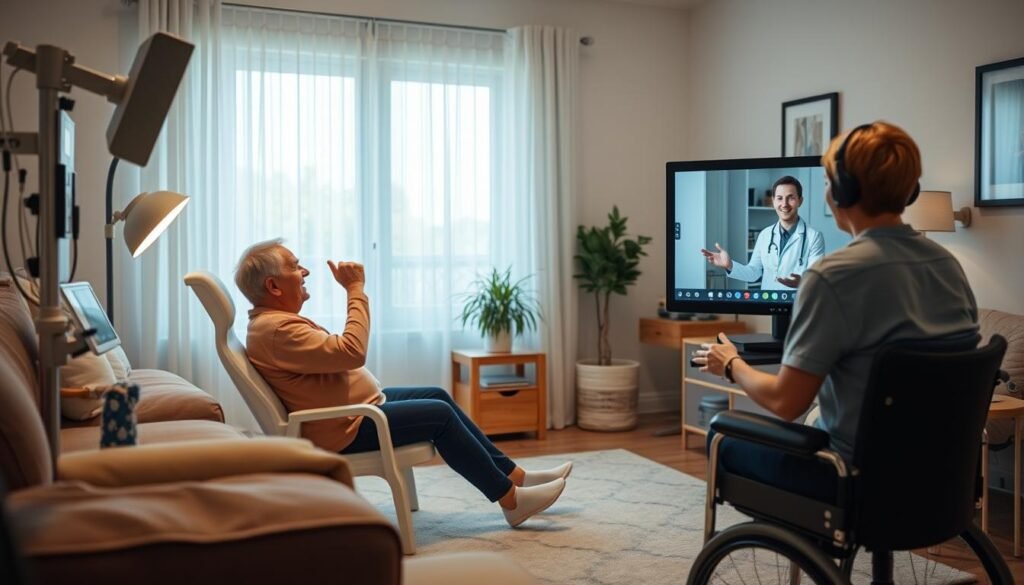
The healthcare world is changing fast, bringing new ways to help patients recover. “The future of healthcare is not just about treating the body, but about treating the whole person.” This idea is coming true with telerehabilitation. It uses technology to offer rehab services from a distance.
Telerehabilitation, or virtual rehab, lets patients get online rehab therapy at home. This breaks down barriers and keeps care going smoothly. It’s helping people recover from telerehab stroke and manage musculoskeletal rehabilitation.
Key Takeaways
- Telerehabilitation is a growing field in modern healthcare.
- It enables remote delivery of rehabilitation services.
- Virtual rehab can support recovery after stroke.
- Musculoskeletal rehabilitation can be managed through online therapy.
- Telerehabilitation enhances continuity of care and overcomes geographical barriers.
The Evolution of Telerehabilitation in Modern Healthcare
From its start in 1998, telerehabilitation has grown fast. This is thanks to new tech in computer science and telemedicine. Now, rehab services are easier to get and more convenient for patients.
Definition and Core Components of Virtual Rehabilitation
Virtual rehab, or telerehabilitation, means getting care from home. It uses telehealth platforms for things like checking up, therapy, and learning new skills.
Key Terminology and Concepts
To get telerehabilitation, you need to know some important words:
- Telehealth: This is when you get healthcare from a distance.
- Rehabilitation psychology: It’s about helping people get better after a disability.
- Virtual rehab: This is when you get rehab through digital tools.
The Rehabilitation Continuum of Care
Telerehabilitation fits into a big picture of care. It goes from preventing problems to long-term care. It helps patients move smoothly from hospital to home care.
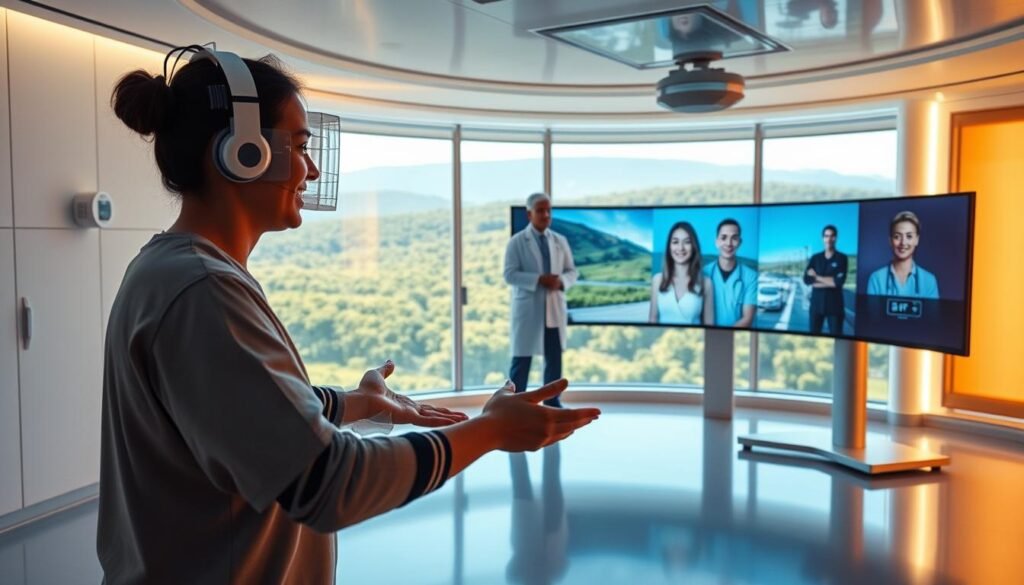
Adding telerehabilitation to care plans makes treatment better. It lets healthcare teams give more tailored care, leading to better results for patients.
The Science Behind Remote Rehabilitation Efficacy
Telerehabilitation works because it uses neuroplasticity to help people recover. It includes online brain injury rehab and virtual physical therapy. These methods help the brain adapt and change.

Neuroplasticity Principles in Virtual Settings
Neuroplasticity is key to telerehabilitation’s success. It’s the brain’s ability to make new connections. This is important for both physical and mental recovery.
Neural Adaptation Mechanisms
Telerehabilitation programs aim to activate neural adaptation. They use exercises and activities to help the brain recover. This way, the brain can work around damaged areas.
Feedback Systems in Remote Learning
Feedback systems are vital in telerehabilitation. They give patients instant feedback on their progress. This helps them make better choices and improve their rehab.
Telerehabilitation combines neuroplasticity with advanced feedback systems. This makes it a powerful tool for recovery. It’s a key part of modern rehab practices.
Essential Technology for Telerehabilitation Success
To make telerehabilitation work, you need to know about the right tech. The success of telerehabilitation programs depends on good tech, like hardware and internet.
Hardware Requirements for Providers and Patients
Healthcare providers and patients need the right tools for telerehabilitation. This means computers, tablets, or smartphones that can handle the work.
Camera and Video Equipment Options
Good camera and video gear is key for virtual rehab exercises. You can choose from:
- High-definition webcams
- Smartphones with advanced cameras
- Specialized video conferencing equipment
Connectivity and Bandwidth Considerations
A strong internet connection is essential for digital telemedicine. Think about:
- Minimum upload and download speeds
- Reliable internet service providers
- Backup connectivity options (e.g., mobile hotspots)
The move to telehealth services is making tech better and easier to use. With the right tech, healthcare providers can make their telerehabilitation programs a success.
Brain Recovery Applications Through Telerehabilitation
Telerehabilitation is a key tool in post-stroke care. It offers patients therapy programs from home. This method uses technology for brain injury rehabilitation online, making care more accessible.
Post-Stroke Rehabilitation Protocols
Rehabilitation for stroke patients through telerehabilitation is tailored. It includes motor recovery exercise programs and speech and language therapy approaches. These are designed for each patient’s needs.
Motor Recovery Exercise Programs
Motor recovery exercises are vital for post-stroke care. Telerehabilitation platforms guide patients through these exercises. Virtual reality and gaming make them more fun and effective.
Speech and Language Therapy Approaches
Speech and language therapy is also key. Remote speech therapy helps patients improve their communication. They practice speech, comprehension, and conversation with a therapist’s guidance.
| Therapy Type | Description | Benefits |
|---|---|---|
| Motor Recovery | Exercise programs to regain motor functions | Improved mobility, strength |
| Speech and Language | Therapy sessions for communication skills | Enhanced speech clarity, comprehension |
In conclusion, telerehabilitation is a vital approach for brain recovery, mainly for stroke patients. It provides access to telerehab stroke programs and brain injury rehabilitation online. This way, patients can get the care they need to recover well.
Musculoskeletal Recovery Through Virtual Platforms
Virtual platforms have changed how we recover from surgeries and injuries. Telerehabilitation lets patients get personalized therapy at home. This makes care more accessible and effective.
Joint Replacement Rehabilitation Programs
Joint replacement surgeries, like for knees and hips, need a lot of rehab. Virtual programs help with this. They offer structured exercises and keep an eye on progress.
Knee and Hip Recovery Protocols
Recovery plans for knees and hips include:
- Exercises to improve flexibility
- Workouts to build muscle
- Ways to manage pain
Progress Monitoring Methods
Tracking progress in rehab involves:
- Video chats with therapists
- Wearable tech to track activity
- Reports from patients on pain and function
These virtual tools help healthcare give personalized care. It’s both effective and easy to use. Telerehabilitation shows how healthcare is changing, using tech to help patients get better.
Key Benefits of Telerehabilitation Services
Telerehabilitation is changing healthcare for the better. It offers many benefits that help patients get better faster. It solves problems that traditional therapy can’t.
Improved Access to Specialized Care
Telerehabilitation makes it easier for people to get the care they need. This is great for those who can’t easily get to therapy.
Rural and Underserved Population Benefits
People in rural areas or who can’t get to therapy often struggle. Telerehabilitation helps by bringing online occupational therapy to them. This makes their healthcare better.
Specialist Consultation Opportunities
Telerehabilitation lets patients get advice from experts without leaving home. This makes patients happier and helps them get better faster.
Telerehabilitation also has other benefits:
- It makes it easier to schedule appointments.
- It saves patients time and money by reducing travel.
- It lets patients get care that’s tailored just for them.
- It keeps patients supported every step of the way.
Healthcare providers can offer better care with telerehabilitation. As healthcare changes, telerehabilitation will play a bigger role in helping patients.
Limitations and Challenges of Telerehabilitation
Telerehabilitation has changed physical therapy a lot. But, it’s not perfect. It has some big challenges, like in physical checks and hands-on therapy.
Physical Assessment Constraints
One big problem with telerehab is checking patients’ health from afar. Remote physiotherapy mostly relies on what patients say and videos. But, these can miss important details.
It’s hard to check some health issues without touching the patient. For example, checking muscle strength or joint stability is tough with just digital tools.
Manual Therapy Limitations
Manual therapy is key in regular physiotherapy. But, it’s hard to do in telerehab. Things like massage and joint work need hands-on touch. This is hard to do over the internet.
Objective Testing Challenges
Testing patients to see how they’re doing is another big challenge. Some tests can be done remotely, but others need special tools or a doctor’s direct watch.
The problems with physical checks and hands-on therapy show we need new ways to make telerehab better. By facing these issues, we can make remote therapy more effective and complete.
Patient Selection: Who Benefits Most from Telerehabilitation
Choosing the right patients is key for telerehabilitation success. The right ones can really benefit from virtual therapy. But, the wrong ones might struggle, which could slow down their healing.
Ideal Candidates for Virtual Rehabilitation
Finding the best candidates means looking at their health and mental state. Some health issues are better suited for telerehabilitation than others.
Clinical Condition Considerations
People with stable, long-term health issues or those recovering from surgery do well with telerehabilitation. This includes those with stroke, joint replacements, and some muscle injuries.
Psychosocial Readiness Factors
It’s also important to consider if a patient is ready mentally and emotionally. They need to be motivated, have a supportive home, and know how to use technology well for telerehabilitation.
| Clinical Condition | Psychosocial Readiness | Telerehabilitation Suitability |
|---|---|---|
| Stable chronic conditions | High motivation | Highly suitable |
| Post-surgical recovery | Supportive environment | Suitable |
| Complex neurological cases | Limited technological literacy | Less suitable |
Healthcare providers can pick the best patients for telerehabilitation by looking at these factors. This helps get better results and makes patients happier.
Setting Up a Successful Home-Based Rehabilitation Environment
A well-structured home rehabilitation space is key for the best results from virtual rehab. It should be designed to meet the patient’s specific needs. This ensures safety and effectiveness during therapy.
Creating an Effective Exercise Space
Several factors are important for an effective exercise space. The area should be free from distractions and hazards. This lets the patient focus on their exercises.
The space also needs to be well-ventilated and have good lighting. This helps the patient stay comfortable and focused.
Safety Assessment Checklist
- Clear the area of any tripping hazards or obstacles.
- Ensure good lighting to improve visibility.
- Use non-slip mats or flooring to prevent falls.
- Keep emergency contact numbers nearby.
Equipment Modifications for Limited Space
If space is limited, you might need to adapt or choose smaller equipment. For example, resistance bands are great because they are versatile and take up little space.
| Equipment | Space Requirement | Adaptability |
|---|---|---|
| Resistance Bands | Minimal | High |
| Exercise Balls | Moderate | Moderate |
| Treadmill | High | Low |
By planning carefully, patients can get the most out of virtual rehab at home. It’s not just about creating a safe space. It’s also about choosing the right equipment for the space you have.
Measuring Progress in Virtual Rehabilitation Programs
Telerehabilitation’s success depends on accurately tracking patient progress. This is done using remote assessment tools and techniques. It’s a detailed way to check how patients are doing in a virtual setting.
Remote Assessment Tools and Techniques
Remote assessment in telerehabilitation uses digital tools and methods. These include:
- Video conferencing for real-time assessments
- Mobile apps for tracking patient activity and symptoms
- Wearable devices for monitoring physical activity
- Online questionnaires for patient-reported outcomes
Validated Digital Outcome Measures
Validated digital outcome measures are key for reliable assessments in telerehabilitation. Examples include:
- Digital versions of traditional outcome measures, such as the Barthel Index
- Sensor-based assessments for measuring movement and activity
- Patient-reported outcome measures (PROMs) collected through secure online platforms
Self-Report Instrument Selection
Choosing the right self-report instruments is essential for capturing patient experiences and outcomes. Clinicians should consider:
- The specific condition or disorder being treated
- The patient’s cognitive and technical abilities
- The frequency and duration of assessments needed
Insurance Coverage and Reimbursement for Telerehabilitation
It’s important to know about insurance and payment rules for telerehabilitation. This is true for both those who provide and those who use these services. As telerehabilitation grows, understanding insurance rules gets more complex.
Current Policies and Regulations
Insurance rules for telerehabilitation vary a lot. This is because of different types of insurance providers. Medicare, Medicaid, and private insurers each have their own rules.
Medicare and Medicaid Guidelines
Medicare is starting to cover more telerehabilitation services, thanks to COVID-19. But, Medicaid rules differ by state. This means coverage can vary a lot across the country.
Private Insurer Variations
Private insurers are also starting to cover telerehabilitation. But, how much they cover can differ a lot. Some might need you to get approval before they cover it.
| Insurer | Coverage for Telerehabilitation | Specific Requirements |
|---|---|---|
| Medicare | Expanding coverage, specially after COVID-19 | May need prior approval |
| Medicaid | Different in each state | Each state has its own rules |
| Private Insurers | Different for each provider | May need approval or specific rules |
In summary, more insurance plans are starting to cover telerehabilitation. But, the details of what’s covered and how to get paid can change a lot. It’s key for both healthcare providers and patients to keep up with these changes.
Telerehabilitation vs. Traditional In-Person Therapy
Telerehabilitation is becoming more popular, and its effectiveness is being studied. It’s important to compare it with traditional therapy to see what works best.
Comparative Effectiveness Research
Research on telerehabilitation and traditional therapy shows mixed results. Some studies say telerehabilitation works just as well for some conditions.
Outcome Equivalence Studies
Studies show telerehabilitation can match traditional therapy in results. For example, a study on stroke patients found telerehabilitation helped them just as much as in-person therapy.
“Telerehabilitation has the power to make more people get the help they need. This is true for those who can’t easily get to therapy or live far away.”
Patient Satisfaction Comparisons
How happy patients are is also important. Most patients like telerehabilitation because it’s easy to use. But some miss the face-to-face time with therapists.
| Aspect | Telerehabilitation | Traditional Therapy |
|---|---|---|
| Accessibility | High | Limited by location |
| Patient Satisfaction | Generally High | Variable |
| Effectiveness | Comparable to Traditional Therapy | High |
In summary, telerehabilitation and traditional therapy both have their good points. But research shows telerehabilitation can be a good choice for many. It offers similar results and makes patients happy.
Case Studies: Successful Telerehabilitation Implementations
Telerehabilitation has changed the game in healthcare, showing great results in brain recovery. This section shares key case studies. They show how telerehabilitation boosts patient results.
Brain Recovery Success Stories
Telerehabilitation is a game-changer for brain injury recovery, including strokes. Here are some success stories and outcomes.
Stroke Recovery Protocols and Outcomes
A patient with a severe stroke faced big challenges. Thanks to telerehabilitation, they got better. They had:
- Daily sessions with a physical therapist
- Feedback on their progress
- Therapy plans adjusted as needed
They made huge strides in motor skills, gaining back their independence.
Cognitive Rehabilitation Approaches
A patient with TBI also saw big gains through telerehabilitation. They worked on:
- Improving memory
- Enhancing attention and focus
- Mastering problem-solving
They got better at thinking and doing daily tasks, even returning to work.
These stories highlight telerehabilitation’s power in brain recovery. It uses tech and tailored plans to help patients get better.
The Future of Telerehabilitation Technologies
New technologies are changing telerehabilitation. Looking ahead, we see better patient care and easier rehab processes.
Emerging Tools and Platforms
Next-generation monitoring systems are changing how we track patient progress. They give real-time data, helping doctors make better choices.
Next-Generation Monitoring Systems
These systems use advanced sensors and AI. They track patient movements and progress accurately. This helps in following rehabilitation goals.
Telerehabilitation-Specific Innovations
New tools like virtual reality (VR) and augmented reality (AR) are coming. They make therapy more fun and engaging for patients.
| Technology | Description | Benefits |
|---|---|---|
| Next-Generation Monitoring Systems | Advanced sensors and AI for real-time monitoring | Precise tracking, data-driven decisions |
| Virtual Reality (VR) | Immersive therapy environments | Enhanced patient engagement, motivation |
| Augmented Reality (AR) | Interactive therapy sessions | Increased patient participation, personalized therapy |
The future of telerehabilitation looks promising. New technologies will greatly improve patient recovery and healthcare.
Implementing Telerehabilitation in Clinical Practice
For telerehabilitation to work well, it needs to fit smoothly into current clinical workflows. As more healthcare providers start using virtual rehab, they must figure out how to add it to their usual routines.
Workflow Integration Strategies
Getting telerehabilitation to work right is key. It means looking at what healthcare already does and finding the best spots to add telerehab.
Staff Role Optimization
Changing how staff works is important for telerehab to succeed. This might mean teaching staff to use new tech and adjust their jobs for online patient care.
- Training staff on telerehabilitation platforms
- Redefining roles to include virtual patient management
- Ensuring technical support is available
Scheduling and Time Management
Managing time well is vital for mixing online and in-person care. This means setting up new ways to schedule telerehab sessions.
Key considerations include:
- Allocating appropriate time for virtual sessions
- Managing patient expectations regarding response times
- Coordinating with other healthcare providers
By paying attention to these areas, healthcare teams can make telerehab a big part of their work. This improves care for patients and makes workflows more efficient.
Conclusion: Maximizing the Telerehabilitation of Brain and Musculoskeletal Conditions
Telerehabilitation is key for recovery from brain and musculoskeletal issues. It uses technology to offer care that’s both accessible and specialized. This approach boosts patient results. To get the most out of telerehabilitation, we need to keep innovating, implement it well, and focus on the patient.
The science behind telerehabilitation is based on how our brains can change and adapt. This is possible in virtual settings. The right technology is vital for both providers and patients. For example, apps for brain recovery after a stroke and virtual programs for joint replacement show telerehabilitation’s wide range.
Looking ahead, we should work on better technology, pick the right patients, and make insurance cover telerehabilitation better. This way, telerehabilitation can keep growing and offer top-notch care. It will help shape the future of rehabilitation.
FAQ
What is telerehabilitation, and how does it work?
What are the benefits of telerehabilitation for brain recovery?
How does telerehabilitation support musculoskeletal recovery?
What technology is required for effective telerehabilitation?
Are there any limitations to telerehabilitation?
How is progress measured in telerehabilitation programs?
Is telerehabilitation covered by insurance?
How does telerehabilitation compare to traditional in-person therapy?
What are the future directions of telerehabilitation technologies?
How can I implement telerehabilitation in my clinical practice?
What are the key factors in determining patient suitability for telerehabilitation?

