



What if we’ve been wrong about autism communication strategies for years? Instead of seeing differences as limits, new studies show they are unique brain variations. These need special ways to understand and connect.
The CDC says about 1 in 54 kids in the U.S. have autism spectrum disorder. Most importantly, they struggle with social interactions and talking.
Research by Centelles and colleagues found that people with autism process body cues differently. Mishra’s team also found unique ways toddlers with ASD make gestures. This shows how vital autism language development studies are.
This research tells us that we need to change how we help people with autism. We should focus on understanding their brains, not just fixing what seems wrong. This shift is key to helping them succeed.
Key Takeaways
- Autism affects 1 in 54 children in the U.S., with social interaction challenges as core characteristics
- Recent research reveals distinct patterns in how individuals with autism process body motion and social cues
- Gesture production differences in toddlers with ASD highlight unique developmental pathways
- Effective interventions require understanding neurological variations instead of viewing them as deficits
- Scientific research must guide the development of specialized approaches for autistic individuals
Understanding How Autism Affects Communication
Autism changes how the brain handles communication signals. This leads to unique ways autistic people understand and share thoughts. Studies show that why communication looks different in autism is due to brain differences, not because they can’t communicate.
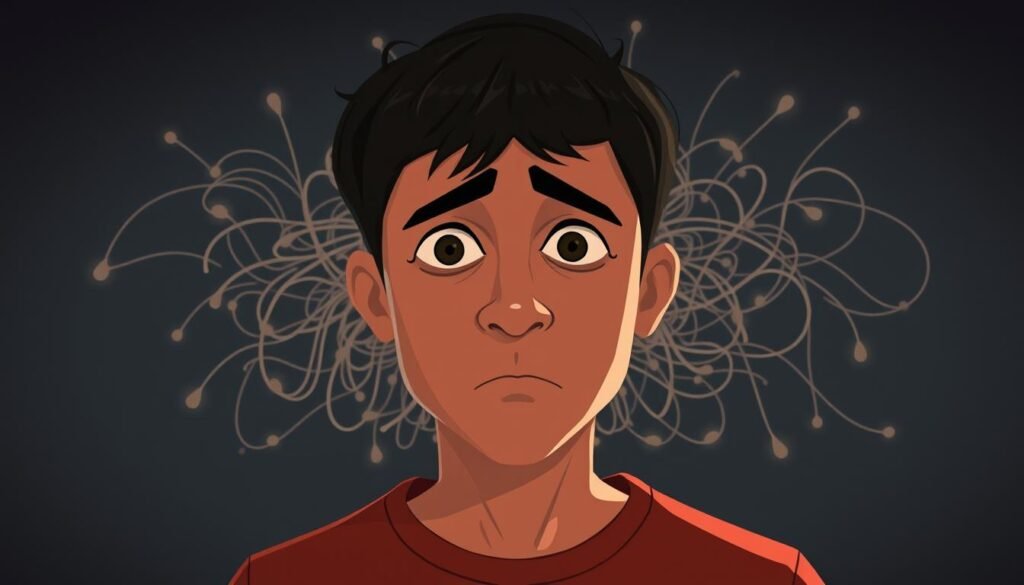
The NIH says kids with autism often live in their own world. They struggle to talk and connect with others. But, this misses the point that autistic minds are rich in internal communication.
Neurological Differences in Communication Processing
The autistic brain uses different paths to understand language and social signals. This affects how they read gestures, facial expressions, and words. A study by Dimitrova et al. (2017) showed that autistic kids might not get gestures as well as others.
Autistic communication involves paying close attention to details and analyzing things systematically. This can make social interactions both hard and special.
Common Communication Challenges
Autism brings similar communication challenges to everyone. These include:
- Difficulty interpreting nonverbal cues like body language and tone
- Challenges with reciprocal conversation flow
- Literal interpretation of figurative language
- Sensory processing impacts on communication reception
Patten et al. (2014) found unique vocal patterns in autistic infants. These patterns show the early signs of communication differences.
Individual Variations on the Spectrum
Communication styles vary a lot among autistic people. Some are great at talking but struggle with social cues. Others are skilled in nonverbal autism techniques but find speaking hard.
Knowing these differences helps tailor support to each person. Their communication style shows their unique brain and sensory processing.
Why Communication Looks Different in Autism
Autism changes how people communicate because of sensory processing, social thinking, and planning challenges. These brain differences make communication unique for each person. It’s why traditional forms of communication might not work the same for autistic individuals.
Sensory Processing Impact
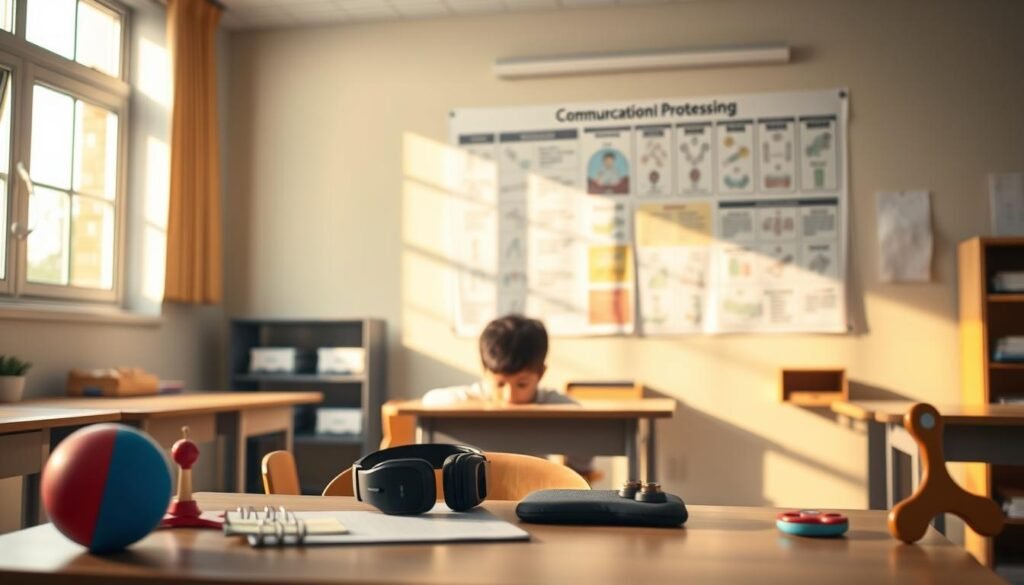
Sensory differences play a big role in how people with autism communicate. Studies show that these differences affect both verbal and nonverbal communication. Some might find sounds too loud, while others need louder signals.
These differences also affect how gestures and language develop. Things like lighting and noise levels can help or hurt how well someone communicates.
Social Communication Differences
People with autism often struggle with understanding social cues. The National Autistic Society (2017) says autism can make nonverbal communication and social interactions harder. This makes it tough to read facial expressions and body language.
Conversations might not flow as smoothly because of these differences. It’s why behavioral communication can seem different.
Executive Function Challenges
Executive function issues affect how well someone plans and organizes their communication. Talbott et al. (2020) found that these challenges impact how gestures and spoken language develop in toddlers with autism. It takes a lot of effort to keep conversations going and adapt to new situations.
| Communication Factor | Typical Development | Autism Differences | Impact on Communication |
|---|---|---|---|
| Sensory Processing | Integrated sensory input | Hyper/hyposensitivity | Affects receptive abilities |
| Social Cognition | Intuitive social understanding | Explicit learning needed | Impacts interaction patterns |
| Executive Function | Flexible response planning | Structured support required | Influences communication timing |
Forms of Communication in Autism
People with autism use many ways to communicate. They go beyond just talking to use nonverbal autism tools and body language. It’s important to understand these different ways to help them connect better.
Verbal Communication Patterns
Autism often shows in how people talk. Echolalia is when someone repeats words or phrases. It’s not just repeating, but a way to communicate.
Some people with autism have special words for things they love. This helps them talk about their interests. They might use lines from movies or books to connect with others.
Nonverbal Communication Methods
Studies show that people with autism use gestures in special ways. They might point or use complex gestures to mean something. This is part of their nonverbal communication methods.
Facial expressions and body language are also important. They might seem different, but they mean a lot. Tools like picture cards and sign language help when talking is hard.
Behavioral Communication Signals
Some behaviors that seem hard are actually ways to communicate. Research shows that people with autism use movements and actions to share their feelings and needs.
Self-stimulatory behaviors can show if someone is excited, stressed, or needs something. Changes in routine can mean they’re uncomfortable or confused. Paying attention to these signals helps understand what they’re trying to say.
Recognizing Communication Attempts
Autism shows itself in small ways that need careful watching. Caregivers and experts must pay close attention. Research by Pickard and Ingersoll (2015) shows how different kinds of communication relate to language and imitation skills.
The National Autistic Society says communication ranges from pre-intentional reactions to purposeful intentional messaging. This helps us see that even simple actions can mean something.
Identifying Subtle Communication Cues
Small signs of communication include changes in body language, eye contact, and voice tone. These tiny changes are full of meaning. Joint attention behaviors, as studied by Hurwitz and Watson (2016), are key for autistic kids.
Spotting these signs means noticing changes in breathing, hand gestures, and wanting to be close. These signs often come before we see clear messages.
Understanding Behavioral Messages
Actions that seem hard can actually be complex ways of saying something. Repetitive movements, sounds, and actions around us often tell us what someone needs or feels. Parents play a big role in helping kids with language by understanding these messages.
Responding Appropriately to Communication Attempts
Good responses help kids keep trying to communicate. Responsive communication partnerships mean we accept all kinds of messages. When we get what autistic kids are trying to say, we help them feel understood.
Good responses include saying back what we think they mean, adding to their message, and making changes to help them communicate better next time.
The Parent’s Role in Language Development
Research shows that parents play a key role in helping kids with autism learn to communicate. Studies by Bottema-Beutel and colleagues found that supported joint engagement and parents’ quick responses help kids grow their language skills. The National Institutes of Health says parents should be part of treatment programs and help with communication every day.
Parents are their kids’ main communication partners. They get to see and respond to their kids’ small attempts to talk. This helps their kids keep growing in their communication skills.
Creating Communication-Rich Environments
Good communication environments have lots of visual and auditory supports at home. Parents can set up special areas for talking, like communication boards autism families use every day. These spaces should have easy-to-use visual aids, books, and fun materials that encourage kids to talk more.
Putting communication tools in places like kitchens, playrooms, and bedrooms makes them easy to find. This turns these areas into places where kids can practice talking.
Modeling Effective Communication
Parents show kids how to communicate by using simple language and visual aids. They use systems like the pecs system for autism during daily activities. Responsive interaction techniques help parents build on their child’s attempts to communicate while keeping them engaged.
Supporting Daily Communication Practice
Adding communication practice to daily routines helps kids learn more. Activities like mealtime, bedtime, and playtime are great for language skills. Parents learn to understand and respond to different ways kids communicate, leading to more success in talking.
Visual Supports for Autism Communication
Research shows that visual supports for autism help people understand and share their thoughts better. The National Autistic Society says these tools are key. They make complex words easier to get. Visual schedules autism help many people, no matter their age or how they communicate.
These methods make hard ideas easy to see and use. They help people feel less stressed and more in control. They also help them join in daily life more fully.
Types of Visual Communication Tools
Picture cards are a basic visual support for autism. They show things, actions, and ideas clearly. Symbol systems go from simple pictures to complex symbols for different thinking styles.
Communication boards have common words and phrases. Digital tools add fun and flexibility. They can change as a person grows.
Creating Effective Visual Schedules
Good visual schedules autism need to be clear and the same every time. Each part should have clear pictures and simple words. This makes it easy to follow along.
Putting things in order helps people see what comes next. Color coding and the same look make things easier to understand. This helps reduce confusion and boosts understanding.
Implementing Visual Supports in Daily Routines
Putting visual supports where they’re needed helps a lot. They’re great for morning, meals, and bedtime. This makes routines smoother.
Using them everywhere helps them work best. Family, teachers, and helpers need to use them the same way. This keeps things consistent.
Checking and updating visual supports often is important. As people grow and change, so do their needs. Keeping supports current helps everyone communicate better.
The PECS Communication System
The PECS communication system is a step-by-step way to start meaningful talks. Studies show it greatly helps in improving communication skills. It uses pictures to help kids who can’t speak.
This method turns communication problems into chances to learn. Each step builds on what’s learned before. It makes talking easier through pictures.
Understanding PECS Phases
The PECS system has six phases. Phase I is about exchanging pictures. Phase II adds distance and keeping trying.
Phase III teaches picking the right picture. Phase IV is about making sentences with pictures. Phases V and VI are about answering questions and commenting on their own.
| Phase | Primary Skill | Communication Goal | Duration Range |
|---|---|---|---|
| Phase I | Basic Exchange | Request preferred items | 2-4 weeks |
| Phase II | Distance & Persistence | Seek communication partner | 3-6 weeks |
| Phase III | Picture Discrimination | Select specific pictures | 4-8 weeks |
| Phase IV | Sentence Structure | Combine multiple pictures | 6-12 weeks |
Setting Up a PECS Program
To start, you need to get your environment ready. Communication partners must learn how to help. The area should be quiet and focused on talking.
You’ll need pictures, boards, and sheets to track progress. Stories for kids with autism can help explain how to communicate.
Advancing Through PECS Levels
How fast you move through PECS depends on how well you do each step. Systematic advancement makes sure you have a strong base. Regular checks help you know when to slow down or speed up.
AAC Devices for Autism Communication
Augmentative and Alternative Communication (AAC) devices are changing the game for people with autism. These tools help them express themselves and connect with others. Studies show that AAC devices for autism make it easier for people to join in and talk freely, no matter where they are.
The National Institutes of Health sees these devices as game-changers. They let users create speech with buttons for everyday things and ideas. Today, we have apps and digital boards that fit each person’s needs.
Types of AAC Technology
Today’s AAC devices for autism come in many forms. Speech-generating devices make sounds when you touch them. Tablets with apps offer custom symbols and voices.
Communication boards use pictures for simple interactions. There are also high-tech devices and low-tech options like picture cards. These help people communicate on the go.
Selecting the Right AAC Device
Finding the right device is all about knowing what you need. Cognitive abilities, motor skills, and where you’ll use it matter a lot. Speech-language pathologists help figure out what’s best through careful checks and tests.
When choosing, think about how much you need to carry, how easy it is to use, and how much you know about technology. Trying out different devices helps you make the best choice.
Training and Implementation Strategies
Using AAC devices for autism right needs a good plan. Users need to learn how to use the device and talk with it. People around them should also know how to help and respond.
Success comes from using the device a lot in different places. It’s important to keep checking and adjusting the device as needs change.
Social Stories for Communication Development
Social stories are a special way to teach complex ideas to people with autism. They make learning about social situations easier. Studies show that social stories for autism help people learn by breaking down big ideas into smaller parts.
These stories are made to help with specific communication problems. They use a simple format that makes people feel less stressed. This helps a lot with talking, understanding body language, and dealing with social situations.
Creating Effective Social Stories
Good social stories have a clear structure. They include descriptive sentences, perspective sentences, and directive sentences. The stories should be factual and objective and not judgmental.
Adding pictures or symbols makes the stories easier to understand. This helps keep the reader interested. The language should be easy to understand and introduce new words slowly.
Using Social Stories for Communication Skills
It’s important to introduce social stories in a planned way. They work best when they’re introduced before a situation happens. Speech therapy autism often uses them to teach communication skills.
Practicing the stories often helps solidify what’s learned. Reading them many times helps build confidence for using them in real life.
Adapting Stories for Individual Needs
Every person is different, so social stories need to be tailored. Some people need detailed stories, while others prefer simple ones. You can change the format to suit someone’s needs, like using videos or printed stories.
Checking in regularly makes sure the stories are working. Updating them as needed keeps them relevant and helps with continued learning.
Speech Therapy Approaches for Autism
Speech-language pathologists use special methods for speech therapy for autism spectrum disorder. These methods help with different ways people with autism communicate. They focus on both talking and nonverbal skills, making sure each person gets the right help.
Evidence-Based Speech Therapy Methods
Studies show that certain therapies work well for autism. One method is naturalistic language interventions. It uses activities the child likes to teach new communication skills.
Structured teaching helps by using clear rules and visual aids. Social communication therapies work on skills like taking turns and understanding nonverbal cues.
| Therapy Method | Primary Focus | Implementation Setting | Target Skills |
|---|---|---|---|
| Naturalistic Intervention | Child-led learning | Natural environments | Spontaneous communication |
| Structured Teaching | Systematic instruction | Clinical/classroom | Specific language targets |
| Social Communication | Pragmatic skills | Group settings | Interactive communication |
| Augmentative Communication | Alternative methods | All environments | Functional communication |
Working with Speech-Language Pathologists
Working together with speech-language pathologists is key for autism language development. They do tests to find out what a child can do well and what they need to work on. Then, they make a plan that fits the family’s needs and values.
The NIH says speech-language pathologists do tests and make plans for kids with ASD.
Home Practice Strategies
Practicing at home helps kids keep improving. Families learn to notice and help with communication. They also make their home a place where language grows.
It’s important for therapists and families to talk often. This way, the plan stays right for the child’s changing needs. Working together helps kids make progress in all areas of communication.
Emotion Recognition and Expression Techniques
Teaching autistic learners to recognize and express emotions is key. Research shows that kids with autism struggle with emotions and talking. This makes learning to understand and share feelings very important.
Teaching emotions to those with autism needs special methods. Studies show that adults with autism often get facial expressions wrong. This knowledge helps create better ways to teach emotion recognition for autistic children through learning activities.
Teaching Emotion Identification
Teaching emotions starts with pictures and real-life examples. Using photos, drawings, and scenarios helps kids with autism understand emotions. Structured practice sessions help them get better at recognizing emotions through feedback.
Supporting Emotional Expression
Helping autistic individuals express emotions is vital. This includes teaching the right words and showing how to express feelings. Safe practice areas help build confidence in sharing emotions.
Using Visual Emotion Tools
Visual tools make emotions easier to understand. Emotion charts and digital apps help identify and share feelings. These tools act as communication bridges in everyday life.
Sensory Processing and Communication Strategies
Sensory sensitivities greatly affect how we communicate. We need to find ways to adapt to each person’s unique processing style. The National Autistic Society says that differences in sensory processing make it hard to talk effectively. We must assess these challenges and use sensory processing strategies to help with communication.
Understanding Sensory Communication Barriers
There are three main ways sensory processing issues affect talking. Hypersensitivity makes it hard to handle everyday sounds and sights. This can make it tough to talk in normal places.
On the other hand, hyposensitivity means not noticing sensory inputs well. This can make it hard to stay focused when trying to talk. Sensory seeking behaviors also disrupt conversations as people seek out intense sensory experiences.
Creating Sensory-Friendly Communication Environments
Changing the environment is key to better communication. We can reduce distractions, control the light, and lower background noise. Nonverbal autism tools work best in these special settings.
Having quiet areas helps when too much is happening. Keeping the environment the same helps people get ready for talking.
Adapting Communication for Sensory Needs
We need to adjust how we talk to match each person’s sensory needs. We can slow down and use visual aids for those who have trouble hearing. We can also use touch to help people stay focused.
| Sensory Profile | Communication Adaptation | Environmental Modification | Tool Selection |
|---|---|---|---|
| Hypersensitive | Reduced volume, slower pace | Quiet spaces, dim lighting | Visual schedules, written cues |
| Hyposensitive | Enhanced input, clear signals | Structured seating, defined boundaries | Tactile prompts, vibrating devices |
| Sensory Seeking | Movement breaks, fidget tools | Flexible seating, sensory corners | Interactive communication boards |
By combining sensory and communication goals, we can make our help more effective. This can reduce bad behaviors and improve life quality.
Effective Autism Communication Strategies for Daily Life
Daily life offers many chances to improve communication skills. Making changes to the environment and how we interact can help. Studies show that using systematic autism communication strategies in different places can greatly improve communication. It also reduces frustration for those on the spectrum.
The National Autistic Society suggests a few key strategies. These include using simple language, calling someone by their name to get their attention, and giving them enough time to process. These methods are backed by research and are key to successful daily communication.
Environmental Modifications
To make communication easier, we need to organize our spaces well. Visual supports for autism should be placed in key areas. This helps provide constant chances for communication.
Lowering background noise and organizing things clearly helps focus. Setting up clear visual boundaries also aids in communication. These changes make environments more predictable and supportive of communication.
Communication Timing and Pacing
Understanding how fast someone processes information is key to good communication. Many autistic individuals need more time to process and respond. Being patient is essential for successful conversations.
Letting there be natural pauses and avoiding rushing helps. This approach respects the individual’s communication pace while keeping the conversation flowing.
Building Communication Routines
Integrating communication into daily routines helps in learning and generalizing skills. Regular routines provide a framework for practicing communication in different situations.
Activities like morning routines, meal prep, and bedtime offer chances to use autism communication strategies. These structured approaches help develop communication skills throughout the day.
| Strategy Type | Implementation Method | Expected Outcome | Time Frame |
|---|---|---|---|
| Environmental Setup | Visual supports placement | Increased independence | 2-4 weeks |
| Timing Adjustments | Extended processing time | Improved comprehension | 1-2 weeks |
| Routine Integration | Consistent daily practice | Skill generalization | 4-8 weeks |
| Sensory Modifications | Noise reduction techniques | Enhanced focus | Immediate |
Troubleshooting Communication Challenges
When autism communication strategies hit a snag, a structured approach helps find solutions. Communication issues in autism need careful analysis to find the root cause. This way, we can develop effective fixes.
Common Communication Breakdowns
Misunderstandings happen when people have different ways of communicating. Behavioral escalations often show that communication needs aren’t being met. Things like noise, lighting, or too many people can also mess up communication.
When communication needs are too much, it can cause problems. Repetitive behaviors or withdrawal might mean someone is overwhelmed, not just not wanting to talk.
Problem-Solving Strategies
Fixing communication issues starts with observing and recording how people communicate. Environmental modifications can solve problems faster than teaching new skills. Making communication easier by adjusting timing and reducing complexity helps a lot.
Working together to solve problems is key. Trial periods let teams test changes before making them permanent.
When to Seek Professional Help
If communication problems keep happening, even with trying different things, it’s time to get professional help. Regression in communication skills or more behavioral issues mean it’s urgent. Speech therapy for autism spectrum disorder offers specialized help when usual methods don’t work.
Getting a full evaluation helps find out why communication is breaking down. It leads to targeted plans to improve communication.
Building Lifelong Communication Success
Research from the National Institutes of Health shows that detailed, tailored communication support greatly improves skills for those with autism. Early, intense help leads to the best results over a person’s life.
Understanding each person’s unique needs is key to effective communication strategies for autism. Every individual on the autism spectrum has their own way of communicating. They need support that is both responsive and personalized.
Improving communication skills in autism is not just for kids. It’s a lifelong process that needs constant support and teamwork. Using visual aids, technology, and making environments more sensory-friendly are all important. These help create a supportive environment for everyone.
Success in communication comes from working together. People with autism, their families, teachers, and speech therapists all play a role. Together, they create places where everyone can communicate and grow.
Good communication strategies do more than just help with talking. They also improve social skills, school performance, and overall happiness. This knowledge gives hope and practical advice to those helping people with autism communicate better.
FAQ
What are the most effective autism communication strategies for nonverbal children?
How do I know if my child with autism is trying to communicate through behavior?
What role do parents play in supporting autism language development at home?
How do visual schedules help with autism communication development?
What is the PECS system and how does it work for autism communication?
How do I choose the right AAC device for my child with autism?
How can social stories improve communication skills in autism?
What should I expect from speech therapy for autism spectrum disorder?
How do sensory processing issues affect autism communication?
What are the most important visual supports for autism communication?
How can I help my child with autism recognize and express emotions?
When should I seek professional help for autism communication challenges?
What are the key components of effective autism communication strategies?


The PsyForU Editorial Collective is the research and editorial team of PsyForU Research International. The collective prepares educational, psychological, mental-health-awareness, inclusion, neurodiversity, and research-methodology content for students, parents, educators, researchers, and general readers. PsyForU content is intended for awareness, education, and capacity-building and should not be treated as clinical diagnosis, therapy, medical advice, legal advice, or emergency mental-health support.