


Introduction
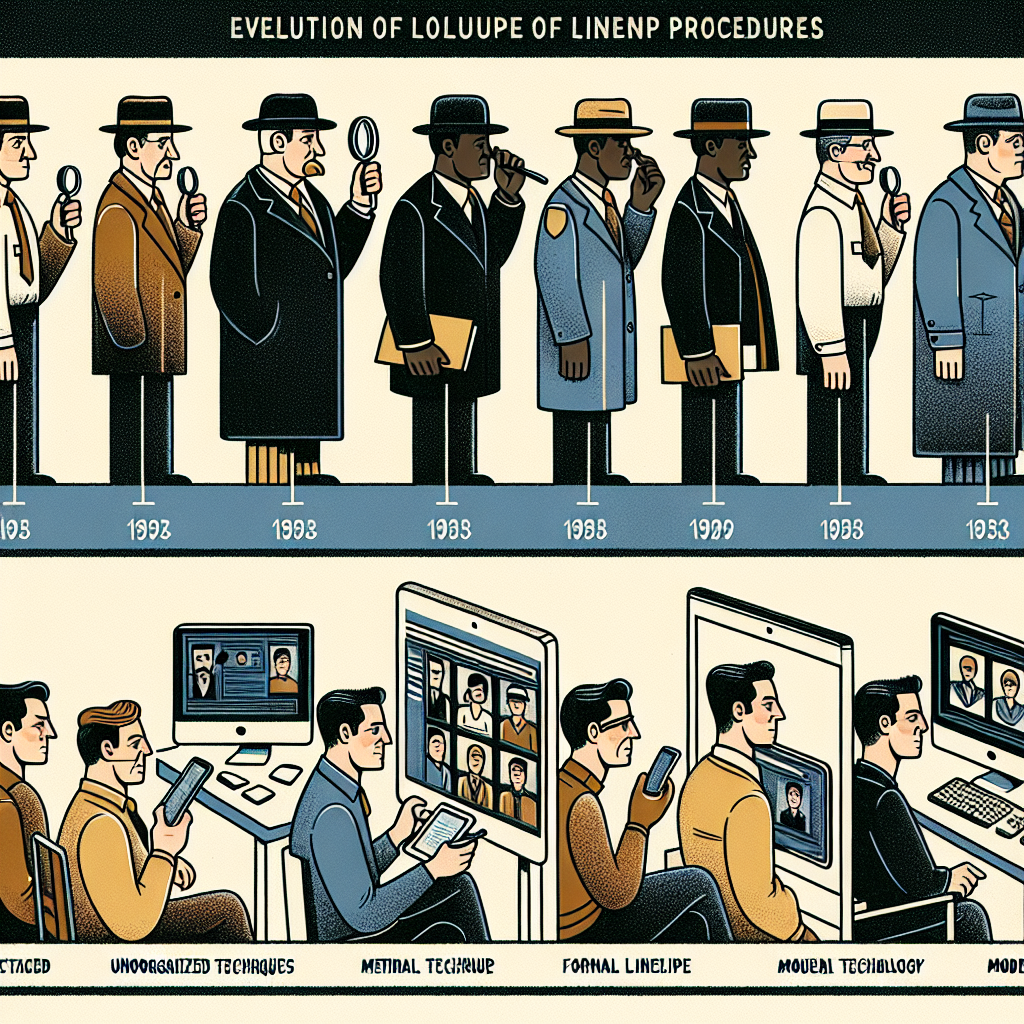
In the fast-paced world of law enforcement, the accuracy and reliability of lineup procedures can significantly impact the outcomes of criminal investigations. The effectiveness of these procedures has evolved over time, moving from traditional methods to the incorporation of modern technology. This evolution is not merely a glimpse into procedural history; it is a testament to the ongoing quest for justice and the safeguarding of individual rights. In this article, we’ll take a deep dive into The Evolution of Lineup Procedures: From Classic Techniques to Modern Technology, exploring the challenges, innovations, and case studies that illustrate this transformation.
A Brief History of Lineup Procedures
The Classic Techniques
In the early days of criminal investigations, lineup procedures were simplistic and based primarily on eyewitness testimony. Police departments relied on face-to-face confrontations, where witnesses were shown a group of individuals to identify a suspect. The classic lineup often included:
- Physical Lineups: Real-life scenarios where a suspect stands alongside others, typically in identical clothing.
- Photo Lineups: A selection of photographs presented to the witness to identify the perpetrator.
While these techniques served their purpose, they were fraught with limitations such as suggestion biases and memory recall issues.
The Flaws of Historical Lineups
The classic techniques of lineup procedures failed to account for various psychological factors affecting eyewitness testimony. Studies have shown that witnesses could be unduly influenced by the appearance of individuals or by the police officer’s behavior during the procedure.
Case Study: The New Jersey v. Henderson
One notable case highlighting the pitfalls of classic lineup techniques is New Jersey v. Henderson (2011). In this case, the Supreme Court of New Jersey recognized the inherent risks associated with eyewitness identifications, urging for the incorporation of guidelines for conducting lineups. This landmark ruling paved the way for reforms in lineup procedures to reduce the chances of mistaken identifications.
The Shift to Science-Based Approaches
Understanding Memory and Perception
As the flaws in classic techniques became apparent, researchers began focusing on the psychological underpinnings of memory and perception. This transition marked a critical phase in The Evolution of Lineup Procedures: From Classic Techniques to Modern Technology.
Key Studies on Memory:
| Study | Findings |
|---|---|
| Loftus & Palmer (1974) | Eyewitness recollection can be altered by the wording of questions. |
| Wells & Bradfield (1998) | Witnesses are more likely to identify a familiar-looking person rather than the actual suspect. |
These findings highlighted the need for more scientifically grounded methods in conducting lineups.
The Introduction of Recommended Practices
Recognizing the potential for error, law enforcement agencies began adopting best practices based on scientific research. The introduction of the double-blind lineup is one such reform that has had a profound impact on lineup accuracy. In this setup, neither the administrator nor the witness knows who the suspect is, thus reducing the risk of cues or biases.
The Role of Technology
Technological Innovations in Lineup Procedures
The dawn of the digital age has transformed lineup procedures in unprecedented ways. Technology not only facilitates better lineup administration but also enhances accuracy and reliability.
-
Computer-Generated Lineups: Some police departments are now utilizing software to generate photo lineups. These systems can automatically select images based on physical characteristics, ensuring a more randomized selection.
- Virtual Reality Environments: Groundbreaking research has begun to explore the use of virtual reality in eyewitness identifications. Participants can navigate through realistic scenarios, providing a more immersive and potentially less suggestive environment for identification.
Case Study: The Ohio Innocence Project
The Ohio Innocence Project serves as a poignant illustration of how technology can improve lineup procedures. After numerous wrongful convictions, the project advocated for the incorporation of advanced lineup techniques and recorded procedures. This initiative has shown promising results in identifying the right suspects while minimizing the risks associated with eyewitness misidentifications.
Implementing Best Practices
Training Officers and Witnesses
Education and training stand at the forefront of evolving lineup procedures. Best practices must be taught to law enforcement officers and those involved in conducting lineups with witnesses. This training includes:
-
Understanding Human Memory: Officers should be educated about the malleability of human memory and how it can be influenced.
- Conducting Double-Blind Lineups: Training on implementing double-blind procedures ensures that administrative cues are minimized.
Tracking and Evaluating Lineup Efficacy
Data-driven decision-making is becoming increasingly vital in criminal justice. Departments are beginning to record and analyze lineup outcomes, using this information to enhance consistency and success rates.
Table: Best Practices Checklist for Police Departments
| Practice | Implementation Status |
|---|---|
| Double-blind lineups | ✅ Implemented |
| Use of computer-generated images | ✅ Partially Implemented |
| Training for law enforcement | ❌ Needs Improvement |
| Data tracking & evaluation | ✅ Implemented as Pilot Program |
The Future of Lineup Procedures
Integrating Artificial Intelligence (AI)
AI technologies are on the horizon as a game-changer for lineup procedures. By analyzing vast datasets and past identification successes, AI could potentially predict lineup outcomes, further enhancing reliability.
Ethical Considerations
With the rise of AI comes significant ethical considerations. Concerns regarding privacy, consent, and algorithmic bias must be addressed alongside technological advancements. A careful balance will be essential to ensure fairness and justice.
Conclusion
The journey through The Evolution of Lineup Procedures: From Classic Techniques to Modern Technology underscores an indelible truth: the continuous need for improvement in law enforcement practices. As society evolves, so too must the methods we utilize in the pursuit of justice.
The blend of psychological insights with technological advancements offers hope for more accurate and reliable eyewitness identifications. Let’s continue to advocate for informed practices that champion justice while protecting the rights of all individuals involved.
FAQs
-
What is the significance of double-blind lineups?
- Double-blind lineups reduce bias by ensuring that both the witness and the lineup administrator are unaware of the suspect’s identity, thereby minimizing suggestive cues.
-
How does technology improve lineup procedures?
- Technology offers computer-generated images and even virtual reality setups, enhancing the realism and randomness of lineups while reducing suggestibility.
-
What role do psychological studies play in lineup procedures?
- Psychological studies highlight the limitations of human memory and suggest the need for scientifically informed practices to improve the accuracy of eyewitness identifications.
-
Are all police departments adopting modern lineup techniques?
- While many departments are beginning to adopt best practices, there is still significant variability across jurisdictions. Ongoing training and advocacy are essential.
- What are the ethical concerns surrounding AI in lineup procedures?
- The primary concerns include privacy, the accuracy of AI predictions, and potential algorithmic biases, all of which must be handled with care to protect individual rights.
As we continue to learn from past mistakes and embrace new technologies, we must remain steadfast in our dedication to justice, accuracy, and fairness in our legal systems.


The PsyForU Editorial Collective is the research and editorial team of PsyForU Research International. The collective prepares educational, psychological, mental-health-awareness, inclusion, neurodiversity, and research-methodology content for students, parents, educators, researchers, and general readers. PsyForU content is intended for awareness, education, and capacity-building and should not be treated as clinical diagnosis, therapy, medical advice, legal advice, or emergency mental-health support.