


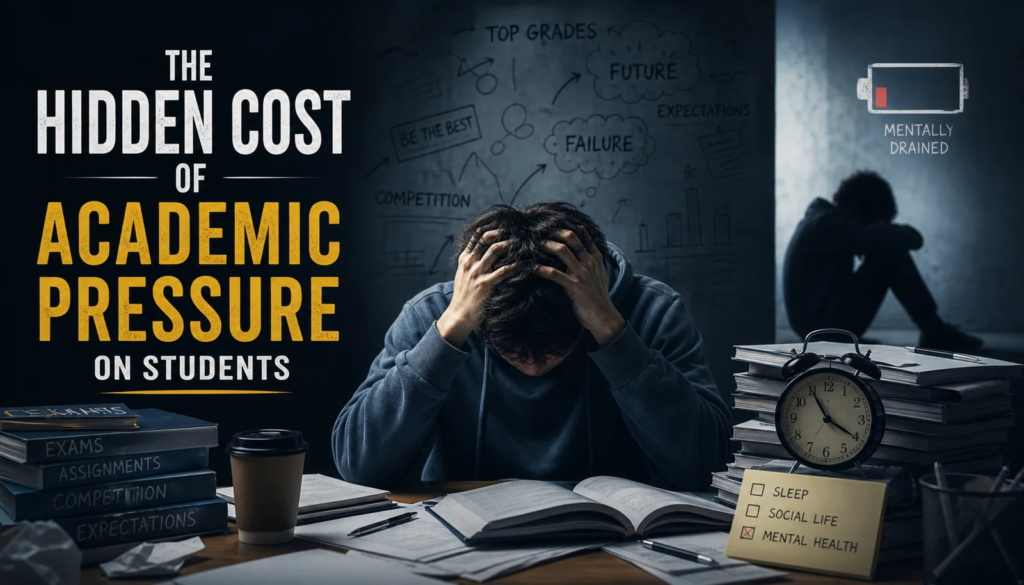
The Hidden Cost of Academic Pressure on Students: An Essential Guide to Protecting Success, Well-Being, and Future Potential
Introduction: The Report Card Doesn’t Show the Whole Story
A student can bring home straight A’s and still be quietly falling apart.
They can win awards, join advanced classes, prepare for competitive exams, and appear “successful” by every traditional measure—while sleeping four hours a night, fearing failure, losing interest in friendships, and tying their entire self-worth to a number on a page.
That is The Hidden Cost of Academic Pressure on Students: the emotional, physical, social, and developmental toll that often remains invisible until it becomes a crisis.
Academic ambition is not the enemy. High expectations can motivate students, open doors, and help young people discover what they are capable of achieving. But when achievement becomes a student’s identity, when grades feel like survival, and when every mistake feels catastrophic, the cost becomes far too high.
Today’s students are navigating a world where competition begins early. Standardized tests, college admissions, scholarships, rankings, parental expectations, social media comparisons, and fear of an uncertain future all intensify the pressure. Many students are not simply trying to learn—they are trying to prove they are worthy.
This article explores The Hidden Cost of Academic Pressure on Students in depth: what it looks like, why it happens, how it affects mental and physical health, and what parents, educators, and students can do to create a healthier path to achievement.
What Is Academic Pressure?
Academic pressure refers to the stress students feel to perform well in school, meet expectations, and achieve specific outcomes such as high grades, awards, admissions, or career opportunities.
Some academic pressure is normal. A deadline can encourage focus. A challenging exam can build discipline. A caring teacher or parent can inspire a student to try harder.
The problem begins when pressure becomes constant, overwhelming, or tied to a student’s value as a person.
The Hidden Cost of Academic Pressure on Students often appears when learning is replaced by performance anxiety. Students stop asking, “What can I understand?” and begin asking, “What happens if I fail?”
Common Sources of Academic Pressure
| Source of Pressure | How It Shows Up | Possible Hidden Cost |
|---|---|---|
| Parents and family expectations | “You must be the best” or “Our future depends on you” | Guilt, fear, perfectionism |
| School culture | Rankings, competition, heavy homework loads | Burnout, comparison, anxiety |
| College admissions | Pressure to build the “perfect” profile | Over-scheduling, identity loss |
| Social media | Seeing peers post achievements | Insecurity, self-doubt |
| Economic uncertainty | Fear of not getting a stable job | Chronic stress, panic about the future |
| Student self-expectations | “Anything less than perfect is failure” | Shame, low self-worth |
The hidden cost of academic stress on students is not always caused by one person or one system. It is often the result of many pressures stacking up until students feel trapped.
Why The Hidden Cost of Academic Pressure on Students Is Growing
Many adults remember school as stressful, but today’s academic environment is different in important ways.
Students now face pressure from multiple directions at once. They are expected to achieve academically, participate in extracurricular activities, volunteer, build leadership experience, maintain friendships, prepare for the future, and often manage an online identity.
At the same time, young people hear constant messages about competition: limited seats, selective programs, global job markets, rising tuition, and “falling behind.”
This creates a culture where students feel they must optimize every hour.
The result is that The Hidden Cost of Academic Pressure on Students becomes normalized. Exhaustion is treated as dedication. Anxiety is treated as ambition. Overwork is praised as discipline.
But students are not machines. They are developing human beings whose brains, bodies, and identities are still forming.
The Emotional Cost: Anxiety, Shame, and Fear of Failure
One of the most serious parts of The Hidden Cost of Academic Pressure on Students is emotional distress.
Academic pressure can make students feel that their future depends on every assignment, quiz, or exam. A single mistake may feel like proof that they are not smart enough or good enough.
Over time, this can lead to:
- Chronic anxiety
- Panic before exams
- Fear of disappointing parents or teachers
- Shame after small mistakes
- Emotional numbness
- Loss of joy in learning
- Perfectionism
- Low self-esteem
A student under intense pressure may look responsible on the outside but feel terrified inside.
They may say things like:
- “If I don’t get an A, I’m a failure.”
- “My parents will be so disappointed.”
- “Everyone else is doing better than me.”
- “I can’t rest until everything is perfect.”
- “I don’t know who I am if I’m not successful.”
These thoughts reveal a painful truth: the hidden cost of academic performance pressure is often an identity crisis.
When students believe achievement equals worth, every academic setback becomes personal.
The Physical Cost: When Stress Moves Into the Body
Stress is not just emotional. It lives in the body.
When students experience constant academic pressure, their nervous system can remain in a state of alert. This “fight-or-flight” response is useful in short bursts, but damaging when it becomes a daily reality.
Physical Effects of Academic Pressure
| Physical Symptom | How Academic Pressure May Contribute |
|---|---|
| Headaches | Tension, lack of sleep, screen fatigue |
| Stomach pain | Stress-related digestive problems |
| Sleep problems | Late-night studying, racing thoughts |
| Fatigue | Over-scheduling and poor recovery |
| Weakened immunity | Chronic stress affecting the body’s defenses |
| Appetite changes | Anxiety, irregular routines |
| Muscle tension | Stress held in shoulders, neck, or jaw |
| Rapid heartbeat | Panic or exam anxiety |
This is a major reason The Hidden Cost of Academic Pressure on Students should be treated as a health issue, not simply a school issue.
A student who is constantly tired, sick, or tense cannot learn effectively. Their brain needs rest to consolidate memory, regulate emotion, and solve problems creatively.
Ironically, pressure intended to improve academic results can reduce the very conditions students need to perform well.
The Mental Health Cost: Burnout, Depression, and Hopelessness
Academic burnout is more than being tired after a difficult week. It is a state of emotional, mental, and physical exhaustion caused by prolonged stress.
Students experiencing burnout may still attend class and complete assignments, but internally they feel drained and disconnected.
Signs of Academic Burnout
- Feeling exhausted even after sleeping
- Losing motivation for school
- Becoming cynical or emotionally detached
- Struggling to concentrate
- Procrastinating due to overwhelm
- Feeling nothing is ever enough
- Avoiding assignments or classes
- Becoming unusually irritable or withdrawn
The hidden cost of school pressure on students can also include depression. When students feel trapped in expectations they cannot meet, they may begin to lose hope.
This is especially dangerous when students believe they cannot talk openly about their struggles. Many high-achieving students hide distress because they fear being judged, punished, or seen as weak.
That silence can make The Hidden Cost of Academic Pressure on Students even more damaging.
The Social Cost: Friendships, Family, and Isolation
Students are not meant to grow through academics alone. Friendships, family connection, play, hobbies, and rest are essential parts of healthy development.
Yet intense academic pressure often pushes these parts of life aside.
Students may skip social events to study. They may quit hobbies because they “don’t look good enough” on applications. They may withdraw from friends because they feel too tired or ashamed. Family conversations may become dominated by grades, tests, and future plans.
Over time, relationships can become strained.
A student may begin to feel loved only when they perform well. Parents may believe they are encouraging success while unintentionally creating fear. Teachers may praise achievement without noticing emotional exhaustion.
This is another layer of The Hidden Cost of Academic Pressure on Students: it can quietly replace connection with performance.
What Students May Lose Socially
| Area of Life | What Pressure Can Take Away |
|---|---|
| Friendships | Time, emotional availability, trust |
| Family connection | Warmth replaced by performance conversations |
| Hobbies | Joy replaced by resume-building |
| Play and creativity | Reduced imagination and exploration |
| Community involvement | Activities chosen for status, not meaning |
| Self-expression | Fear of doing anything “unproductive” |
Healthy students need more than achievement. They need belonging.
The Learning Cost: When Grades Replace Curiosity
One of the most overlooked parts of The Hidden Cost of Academic Pressure on Students is the damage it can do to genuine learning.
When students are under extreme pressure, they may become focused on outcomes rather than understanding. They ask, “Will this be on the test?” instead of “Why does this matter?”
This can produce short-term performance but weaken long-term growth.
Pressure Can Encourage:
- Memorization without understanding
- Cheating or academic dishonesty
- Fear of asking questions
- Avoidance of difficult subjects
- Choosing easy classes to protect grades
- Reduced creativity
- Less intellectual risk-taking
Students who are terrified of failure often avoid challenges. They may prefer safe success over meaningful growth.
That is why the hidden cost of academic pressure on learners is not just stress—it is a narrower, more fearful relationship with education.
True learning requires curiosity, mistakes, experimentation, and reflection. A pressure-heavy environment makes all of those feel risky.
Case Study 1: Maya, the “Perfect” Student Who Couldn’t Sleep
Background:
Maya is a composite case based on common patterns seen among high-achieving students. She is 16, enrolled in advanced classes, active in student leadership, and preparing for college entrance exams. Her teachers describe her as disciplined and mature.
At home, Maya’s parents often remind her that education is the key to a better future. They love her deeply, but most conversations revolve around grades, applications, and scholarships.
Maya studies late into the night. She checks her grades repeatedly online. When she earns a 92 instead of a 98, she cries privately and promises herself she will work harder.
Eventually, Maya begins experiencing headaches, stomach pain, and insomnia. Her grades remain strong, so few people notice that she is struggling.
Analysis:
Maya’s story illustrates The Hidden Cost of Academic Pressure on Students who appear successful. Because her performance stays high, adults assume she is coping well. But her body and mind are showing clear warning signs.
The key issue is not that Maya works hard. It is that she feels unsafe being imperfect. For students like Maya, support must include reassurance that their worth is not conditional on achievement.
Case Study 2: South Korea’s Exam Culture and National Pressure
South Korea is often discussed in global conversations about education because of its strong academic performance and highly competitive exam culture. Many students spend long hours in school and private tutoring centers, especially while preparing for university entrance exams.
The national college entrance exam, commonly known as the CSAT or Suneung, is treated as a major life event. On exam day, flights may be adjusted, workplaces may open later, and communities take steps to reduce distractions for test-takers.
This level of public attention shows how deeply education is tied to opportunity and social mobility.
However, the pressure can also be intense. Students may feel that one exam determines their future. Long study hours, limited sleep, and fierce competition contribute to stress and mental health concerns.
Analysis:
This example shows The Hidden Cost of Academic Pressure on Students at a societal level. When an entire culture communicates that academic results determine life success, students may internalize enormous pressure.
The lesson is not that academic excellence is harmful. South Korea’s educational dedication has produced impressive outcomes. But the human cost reminds us that systems must balance performance with student well-being.
Case Study 3: A School That Reduced Homework and Improved Balance
Some schools have begun rethinking the relationship between workload and learning. In several high-performing school communities, educators have experimented with homework audits, later start times, no-homework weekends, wellness days, and assessment redesign.
One example comes from school reform initiatives associated with student well-being organizations such as Challenge Success, which works with schools to examine stress, schedules, homework, and definitions of success.
In schools that take this work seriously, the goal is not to lower standards. It is to remove unnecessary overload and make learning more meaningful.
Students often report that when workloads become more balanced, they sleep more, participate more fully in class, and feel less trapped by academic expectations.
Analysis:
This case demonstrates that The Hidden Cost of Academic Pressure on Students is not inevitable. Schools can maintain rigor while reducing harmful stress. The most effective reforms usually involve listening to students, reviewing actual workload, training teachers, and helping families redefine success.
The Family Cost: When Love Sounds Like Pressure
Most parents want the best for their children. They push because they care. They worry about competition, financial security, college admissions, and future stability.
But even loving messages can become pressure if students hear them as conditional approval.
A parent may say, “We just want you to do your best.”
A student may hear, “If my best is not excellent, I am a disappointment.”
A parent may say, “You need to think about your future.”
A student may hear, “One mistake will ruin my life.”
This communication gap is central to The Hidden Cost of Academic Pressure on Students.
Pressure-Based vs. Support-Based Communication
| Pressure-Based Message | Support-Based Alternative |
|---|---|
| “Why did you lose marks?” | “What felt difficult, and how can we help?” |
| “You must be the best.” | “We care about your growth, not comparison.” |
| “Don’t disappoint us.” | “We love you regardless of the result.” |
| “You can rest after you succeed.” | “Rest helps you succeed and stay healthy.” |
| “Your future depends on this.” | “This matters, but one result does not define you.” |
Parents do not need to stop caring about academics. They need to communicate that love is bigger than performance.
The Equity Cost: Pressure Does Not Affect Every Student the Same Way
The hidden cost of academic pressure on students is shaped by culture, income, identity, family background, and opportunity.
For some students, academic success feels like the only path out of poverty. For others, family expectations may be tied to immigration sacrifice, community pride, or generational dreams. Some students work jobs, care for siblings, translate for parents, or face discrimination while also trying to succeed in school.
This means academic pressure is not equally distributed.
A student from a low-income family may feel pressure to win scholarships.
A first-generation college applicant may feel pressure to navigate unfamiliar systems alone.
A student from a marginalized community may feel pressure to prove they belong.
A student with a learning difference may feel pressure to keep up in systems not designed for them.
When discussing The Hidden Cost of Academic Pressure on Students, we must avoid blaming students or families. Many pressures come from larger social and economic realities.
Real solutions require compassion and structural change.
The Digital Cost: Grades, Notifications, and Endless Comparison
Technology has changed academic pressure in powerful ways.
Online grade portals allow students and parents to check scores instantly. Assignment platforms send constant reminders. Group chats buzz with classmates comparing answers, deadlines, and test results. Social media adds another layer: acceptance letters, awards, study routines, productivity posts, and curated success stories.
Students rarely get a mental break.
The hidden cost of academic pressure in the digital age is that school follows students everywhere.
A disappointing grade can appear on a phone during dinner. A classmate’s achievement can appear before bedtime. A reminder about missing work can trigger panic on a weekend.
Digital tools are useful, but without boundaries they can intensify The Hidden Cost of Academic Pressure on Students.
Healthy Digital Boundaries
- Avoid checking grades late at night
- Turn off non-essential school notifications after a set time
- Do not compare study routines on social media
- Set family rules around grade portal checking
- Use technology for planning, not self-punishment
- Take screen-free breaks after intense study periods
Students need time when they are not being measured.
The Identity Cost: “Who Am I If I’m Not the Best?”
Perhaps the deepest part of The Hidden Cost of Academic Pressure on Students is identity narrowing.
When students are repeatedly praised only for achievement, they may begin to believe their value comes from being smart, successful, or exceptional.
This can be fragile.
If a student’s identity is “the smart one,” what happens when they struggle?
If they are “the top student,” what happens when someone scores higher?
If they are “the future doctor,” what happens if they discover a different passion?
Academic pressure can make students afraid to change, explore, or be ordinary.
A healthy identity is broader. Students should know they are valuable as friends, siblings, artists, athletes, helpers, thinkers, citizens, and human beings—not just as performers.
Achievement should be something students pursue, not something they must become.
Warning Signs Adults Should Never Ignore
Because The Hidden Cost of Academic Pressure on Students is often hidden, adults need to watch for changes in behavior, mood, and health.
Red Flags of Harmful Academic Pressure
| Warning Sign | What It May Mean |
|---|---|
| Frequent crying over grades | Fear of failure or perfectionism |
| Sleep loss | Overload, anxiety, poor boundaries |
| Avoiding school | Burnout, panic, shame |
| Sudden drop in grades | Emotional distress or exhaustion |
| Irritability | Chronic stress or lack of rest |
| Loss of interest in hobbies | Depression or over-scheduling |
| Physical complaints | Stress affecting the body |
| Extreme fear of disappointing others | Conditional self-worth |
| Social withdrawal | Isolation, shame, depression |
| Statements of hopelessness | Immediate need for support |
If a student talks about self-harm, not wanting to live, or feeling like a burden, take it seriously and seek immediate professional help.
No grade is worth a student’s life.
How Students Can Manage Academic Pressure in Healthier Ways
Students cannot always change the system around them, but they can learn tools to protect their well-being.
1. Separate Worth from Performance
A grade measures performance on a task. It does not measure intelligence, character, future potential, or human value.
Try replacing “I failed” with “This result shows me what to work on.”
2. Use Recovery as a Strategy
Rest is not laziness. Sleep, movement, social connection, and downtime improve memory, focus, and emotional regulation.
A tired brain is not an efficient brain.
3. Break Work Into Smaller Steps
Academic pressure grows when tasks feel huge. Break assignments into small actions:
- Open the document
- Write the title
- List three ideas
- Draft one paragraph
- Review after a break
Progress reduces panic.
4. Talk Before the Pressure Becomes a Crisis
Students often wait until they are overwhelmed to ask for help. It is better to speak early.
Talk to a teacher, parent, counselor, coach, mentor, or trusted friend.
5. Build a Life Outside Grades
Protect one activity that has nothing to do with achievement. Music, walking, drawing, cooking, sports, reading, volunteering, or simply spending time with friends can help students remember they are more than their results.
These habits reduce The Hidden Cost of Academic Pressure on Students by restoring balance and identity.
How Parents Can Help Without Adding Pressure
Parents play a powerful role. They can either intensify stress or become a student’s safest support system.
What Helps Most
- Praise effort, strategy, honesty, and resilience
- Ask about feelings before grades
- Keep routines around sleep and meals
- Avoid comparing siblings or classmates
- Share stories of your own mistakes and recovery
- Make home emotionally safe after setbacks
- Encourage balance, not constant productivity
- Watch for signs of burnout
- Seek professional help when needed
Parents can also ask one simple question:
“Do you feel supported or pressured by the way we talk about school?”
The answer may be uncomfortable, but it can transform the relationship.
Reducing The Hidden Cost of Academic Pressure on Students does not mean abandoning expectations. It means making sure expectations are held with warmth, flexibility, and unconditional love.
How Teachers and Schools Can Reduce Harmful Pressure
Schools are central to the solution. Teachers often see stress patterns before anyone else does.
Practical School-Level Changes
| Strategy | Why It Helps |
|---|---|
| Coordinate major deadlines | Prevents overload across classes |
| Review homework quality and quantity | Reduces busywork |
| Offer retakes or revisions | Encourages learning from mistakes |
| Teach study skills | Reduces panic and inefficient work |
| Normalize help-seeking | Lowers shame |
| Provide mental health support | Identifies students at risk |
| Avoid public ranking | Reduces comparison |
| Include student voice | Reveals hidden workload and stress |
| Create balanced schedules | Protects sleep and recovery |
Schools can still be rigorous. In fact, healthy rigor is better than fear-based rigor.
A strong education challenges students while also respecting their humanity.
Rethinking Success: From Pressure to Purpose
The solution to The Hidden Cost of Academic Pressure on Students is not to tell young people that achievement does not matter. It does matter. Education can expand opportunity, confidence, and independence.
But success must be redefined.
A healthy definition of student success includes:
- Academic growth
- Emotional resilience
- Curiosity
- Integrity
- Healthy relationships
- Self-awareness
- Physical well-being
- Adaptability
- Purpose
- Joy
Grades can open doors, but they are not the whole house.
Students need to learn not only how to succeed, but how to live well while succeeding.
A Better Model: Healthy Challenge vs. Harmful Pressure
Not all stress is bad. Students grow when they face meaningful challenges with enough support.
The goal is not a pressure-free life. The goal is a healthier relationship with challenge.
| Healthy Challenge | Harmful Academic Pressure |
|---|---|
| Encourages growth | Creates fear |
| Allows mistakes | Punishes imperfection |
| Includes rest | Glorifies exhaustion |
| Builds confidence | Creates shame |
| Supports curiosity | Focuses only on scores |
| Adapts to the student | Demands constant performance |
| Encourages help-seeking | Makes struggle feel unacceptable |
| Builds long-term resilience | Leads to burnout |
Understanding this difference is essential to addressing The Hidden Cost of Academic Pressure on Students.
Students do not need to be rescued from all difficulty. They need support, perspective, and systems that allow them to grow without breaking.
Long-Tail Keyword Variations for Contextual SEO
Here are useful long-tail variations related to The Hidden Cost of Academic Pressure on Students that fit naturally into discussions, articles, and educational resources:
- hidden effects of academic pressure on students
- emotional impact of academic stress on students
- how academic pressure affects student mental health
- physical symptoms of school-related stress
- academic burnout in high school students
- pressure to succeed in school and student anxiety
- student stress caused by grades and exams
- how parents can reduce academic pressure
- unhealthy academic expectations for teenagers
- the cost of excessive homework on student well-being
- exam pressure and student mental health
- signs of academic burnout in students
- balancing academic success and mental health
- how schools can reduce student pressure
- why grades should not define student worth
Using these variations helps explore The Hidden Cost of Academic Pressure on Students without repeating the exact phrase unnaturally.
Action Plan: What Each Group Can Do This Week
For Students
- Choose one night this week to sleep at least eight hours.
- Tell one trusted person about a school-related stressor.
- Stop checking grades after a certain evening time.
- Replace one self-critical thought with a realistic one.
- Do one activity purely for enjoyment.
For Parents
- Ask about your child’s stress before asking about grades.
- Say clearly: “Our love is not based on your results.”
- Avoid comparisons with other students.
- Review your child’s schedule for overload.
- Model healthy rest yourself.
For Teachers
- Ask students how long assignments actually take.
- Coordinate deadlines with colleagues.
- Offer one opportunity for revision or reflection.
- Remind students that mistakes are part of learning.
- Watch for quiet students who seem overwhelmed.
For Schools
- Conduct a student stress survey.
- Audit homework loads.
- Provide mental health resources visibly.
- Train staff to recognize burnout signs.
- Create a culture where well-being and achievement work together.
These steps may seem small, but they directly address The Hidden Cost of Academic Pressure on Students by making support practical and visible.
Conclusion: Achievement Should Not Cost Students Their Well-Being
Academic success can be powerful. It can build confidence, create opportunity, and help students discover their strengths. But when success requires chronic stress, lost sleep, emotional distress, isolation, and fear, the price is too high.
The Hidden Cost of Academic Pressure on Students is not always visible in report cards, college acceptance letters, or honor roll lists. It appears in headaches, panic, perfectionism, silence, burnout, and the quiet belief that being loved depends on being exceptional.
We can do better.
Parents can love without conditioning. Teachers can challenge without shaming. Schools can pursue excellence without overload. Students can strive without sacrificing their health or identity.
The goal is not to lower dreams. The goal is to build a healthier path toward them.
Because the best kind of education does not just prepare students for exams. It prepares them for life.
FAQs About The Hidden Cost of Academic Pressure on Students
1. What is The Hidden Cost of Academic Pressure on Students?
The Hidden Cost of Academic Pressure on Students refers to the emotional, physical, social, and mental health consequences of excessive school-related stress. These may include anxiety, sleep problems, burnout, depression, isolation, perfectionism, and loss of motivation.
2. Is academic pressure always bad?
No. Some pressure can motivate students and help them grow. The problem occurs when pressure becomes constant, overwhelming, fear-based, or tied to a student’s self-worth. Healthy challenge supports growth; harmful pressure creates distress.
3. How can parents tell if their child is under too much academic pressure?
Warning signs include sleep loss, frequent crying over grades, irritability, headaches, stomach pain, withdrawal from friends, loss of interest in hobbies, fear of failure, or saying they feel hopeless. Sudden behavior changes should be taken seriously.
4. How does academic pressure affect mental health?
Academic pressure can contribute to anxiety, depression, burnout, panic, perfectionism, and low self-esteem. When students feel their future or family approval depends entirely on performance, stress can become emotionally overwhelming.
5. What can schools do to reduce The Hidden Cost of Academic Pressure on Students?
Schools can coordinate deadlines, reduce unnecessary homework, provide counseling support, avoid public rankings, teach study skills, offer revision opportunities, and create a culture where mistakes are treated as part of learning.
6. How can students reduce academic stress?
Students can manage stress by getting enough sleep, breaking tasks into smaller steps, asking for help early, setting boundaries around grade-checking, practicing self-compassion, and maintaining activities outside academics.
7. Can high achievement and good mental health exist together?
Yes. Students can achieve at high levels while staying healthy, but they need balance, rest, supportive relationships, realistic expectations, and room to make mistakes. Sustainable success is healthier than fear-driven performance.
8. What should I do if a student expresses hopelessness or thoughts of self-harm?
Take it seriously. Stay with the student if there is immediate danger, contact a trusted adult or mental health professional, and reach emergency services or a crisis hotline in your country. No academic concern is more important than safety.

