


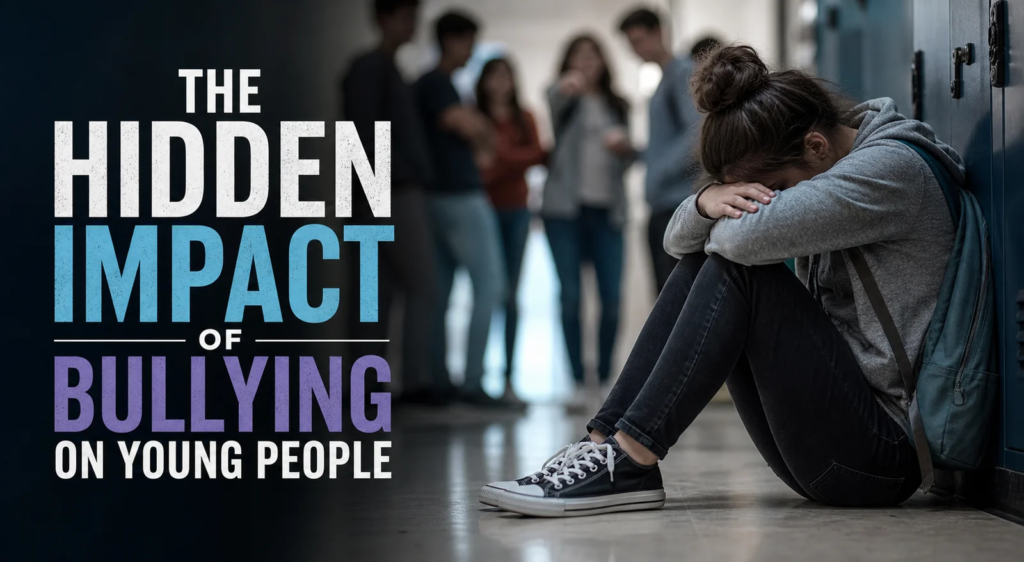
The Hidden Impact of Bullying on Young People: The Essential Guide to What Adults Often Miss
Introduction: The Hurt That Doesn’t Always Leave a Bruise
A young person can walk into school smiling, answer “I’m fine,” get decent grades, laugh at the right moments, and still be quietly unraveling.
That is one of the most difficult truths about bullying: the damage is often invisible long before it becomes obvious. A cruel comment, a group chat exclusion, a humiliating nickname, a shove in the hallway, a rumor that spreads faster than the truth—each incident may look small from the outside. But inside a young person’s mind and body, bullying can become a steady alarm system that never fully switches off.
The Hidden Impact of Bullying on Young People is not limited to sadness or fear. It can affect sleep, appetite, memory, school performance, friendships, identity, confidence, physical health, family relationships, and even a young person’s beliefs about their future. It can shape how they trust others, how they see themselves, and how safe they feel in the world.
What makes this topic urgent is that many young people do not report bullying. Some fear retaliation. Some believe adults will dismiss it. Some are embarrassed. Others have been told to “toughen up,” “ignore it,” or “stop being so sensitive.” Meanwhile, the hidden effects continue to grow.
This article explores The Hidden Impact of Bullying on Young People in depth: what it looks like, why it matters, how it shows up in everyday life, and what parents, educators, peers, and communities can do to respond with wisdom and compassion.
Understanding Bullying: More Than “Kids Being Kids”
Bullying is not ordinary conflict. Conflict happens when two people have a disagreement or misunderstanding and there is relatively equal power between them. Bullying involves a real or perceived power imbalance and repeated or targeted harm.
Bullying can be physical, verbal, social, psychological, sexual, discriminatory, or digital. It can happen in classrooms, playgrounds, sports teams, buses, neighborhoods, online games, messaging apps, and social media platforms.
Common Types of Bullying
| Type of Bullying | What It Looks Like | Hidden Impact |
|---|---|---|
| Physical bullying | Hitting, pushing, tripping, damaging belongings | Fear, hypervigilance, bodily stress, avoidance |
| Verbal bullying | Insults, threats, name-calling, mocking | Shame, anxiety, low self-worth |
| Social bullying | Exclusion, rumors, public humiliation | Loneliness, identity confusion, distrust |
| Cyberbullying | Harassment online, image-sharing, group chat attacks | 24/7 stress, loss of safe space, panic |
| Discriminatory bullying | Targeting race, disability, religion, gender, sexuality, body size | Internalized shame, isolation, trauma |
| Sexual bullying | Unwanted comments, rumors, coercion, harassment | Fear, embarrassment, trauma responses |
A key part of understanding The Hidden Impact of Bullying on Young People is recognizing that the visible incident is rarely the whole story. The insult may last ten seconds. The emotional replay may last months.
Why the Hidden Impact Is So Powerful
Young people are still developing emotionally, socially, neurologically, and physically. Their brains are learning how to interpret danger, belonging, trust, rejection, and identity. When bullying happens repeatedly, it can interfere with these developmental processes.
Bullying is especially damaging because it attacks three basic human needs:
- Safety – “Am I physically and emotionally safe here?”
- Belonging – “Do I have a place in this group?”
- Worth – “Am I acceptable as I am?”
When these needs are threatened, the body and mind respond as if survival is at stake. That is why The Hidden Impact of Bullying on Young People can be far deeper than adults initially realize.
The Emotional Impact: Shame, Fear, and Silent Suffering
One of the most common hidden effects of bullying is emotional distress. Young people may feel sadness, anger, embarrassment, confusion, helplessness, or intense shame.
But many do not express these feelings directly. Instead, they may say:
- “I hate school.”
- “Nobody likes me.”
- “I don’t care.”
- “I’m just tired.”
- “Leave me alone.”
- “It’s not a big deal.”
These statements can be clues. A young person may minimize bullying because admitting the pain feels humiliating. They may also worry that adults will make the situation worse.
Common Emotional Effects
| Emotional Response | How It May Appear |
|---|---|
| Anxiety | Avoiding school, stomachaches, panic before class |
| Depression | Withdrawal, loss of interest, hopeless comments |
| Anger | Outbursts, irritability, aggression at home |
| Shame | Self-blame, hiding, refusing to talk |
| Fear | Hypervigilance, clinginess, trouble sleeping |
| Emotional numbness | “I don’t care,” flat mood, detachment |
The emotional side of The Hidden Impact of Bullying on Young People often begins with a simple but devastating belief: “Something is wrong with me.”
That belief can last long after the bullying stops unless someone helps the young person challenge it.
The Psychological Impact: When Bullying Rewrites Self-Image
Bullying does not simply hurt feelings. It can shape identity.
If a child is repeatedly called “stupid,” “ugly,” “weird,” “fat,” “weak,” or “unwanted,” those words can become internal scripts. Over time, the young person may begin to see themselves through the bully’s lens.
This is one of the most damaging parts of The Hidden Impact of Bullying on Young People: the bully’s voice can become the young person’s inner voice.
How Bullying Can Affect Self-Image
- A confident student stops raising their hand.
- A talented athlete quits the team.
- A creative child hides their interests.
- A young person changes how they dress, speak, eat, or behave to avoid attention.
- A teenager begins to believe they are unlikeable or “too much.”
Bullying can also contribute to perfectionism. Some young people respond by trying to become “untouchable.” They overachieve, stay silent, avoid mistakes, and constantly monitor themselves. Adults may praise them for being disciplined, not realizing the behavior is driven by fear.
The Physical Impact: The Body Keeps Score
Bullying is often discussed as a social or emotional issue, but it also affects the body. When a young person experiences repeated stress, the nervous system may remain in a heightened state. The body prepares for danger again and again.
This can lead to physical symptoms such as:
- Headaches
- Stomachaches
- Nausea
- Sleep problems
- Fatigue
- Muscle tension
- Changes in appetite
- Weakened concentration
- Increased visits to the school nurse
A young person may not say, “I’m being bullied.” They may say, “My stomach hurts every morning.”
That is why adults need to understand The Hidden Impact of Bullying on Young People as a whole-body issue, not just a behavior problem between students.
Stress Response and Bullying
| Stress Response | What Happens | Possible Signs |
|---|---|---|
| Fight | The young person feels threatened and reacts aggressively | Anger, defiance, arguments |
| Flight | The young person tries to escape the situation | School refusal, skipping class |
| Freeze | The young person shuts down | Silence, confusion, numbness |
| Fawn | The young person tries to please others to avoid harm | People-pleasing, loss of boundaries |
These reactions are not “bad attitudes.” They are survival strategies.
Academic Consequences: When Learning Feels Unsafe
A young person cannot fully focus on algebra, history, reading, or science while scanning the room for danger.
Bullying affects learning because attention is limited. If a student is worried about being mocked, pushed, excluded, photographed, or threatened, their brain prioritizes safety over academic engagement.
Hidden Academic Effects
- Declining grades
- Missing assignments
- School avoidance
- Difficulty concentrating
- Loss of motivation
- Fear of participating
- Dropping extracurricular activities
- Increased absenteeism
The academic side of The Hidden Impact of Bullying on Young People is often misread. Adults may think a student is lazy, distracted, or oppositional. In reality, the student may be exhausted from surviving the school day.
A bullied child may also avoid high-performing behavior because achievement can attract attention. They may intentionally do less well to blend in.
Social Consequences: Isolation, Distrust, and Loneliness
Bullying can damage a young person’s ability to trust others. This is especially true when peers witness bullying and do nothing, laugh along, or join in.
For young people, peer relationships are not trivial. They are central to development. Friendships teach belonging, cooperation, emotional regulation, identity, and conflict resolution. When bullying poisons the social environment, it can leave a young person feeling fundamentally unsafe around others.
The Social Ripple Effect
Bullying can cause a young person to:
- Avoid group activities
- Stop inviting friends over
- Withdraw from clubs or sports
- Assume others secretly dislike them
- Become suspicious of kindness
- Cling to one friend out of fear
- Struggle with future relationships
This is a crucial part of The Hidden Impact of Bullying on Young People: the harm extends beyond the bully and target. It affects bystanders, friendship groups, classroom climate, and the wider school culture.
Cyberbullying: When There Is No Safe Place to Go
In the past, some young people could escape bullying when they got home. Today, digital spaces can carry bullying into bedrooms, family dinners, weekends, and holidays.
Cyberbullying may include:
- Cruel messages
- Exclusion from group chats
- Fake accounts
- Public humiliation
- Sharing private images
- Spreading rumors
- Posting edited photos or videos
- Harassment in online games
The hidden impact of cyberbullying is intensified by several factors:
- Permanence – Posts can be saved, shared, and resurfaced.
- Audience size – Humiliation can reach many people quickly.
- Anonymity – Unknown attackers increase fear.
- No clear escape – The phone becomes both a lifeline and a threat.
- Social pressure – Young people may feel unable to disconnect.
Cyberbullying is a major part of The Hidden Impact of Bullying on Young People because it blurs the boundary between school and home. The young person may feel watched even when alone.
The Impact on Mental Health
Bullying is associated with increased risk of anxiety, depression, loneliness, low self-esteem, self-harm, and suicidal thoughts. Not every young person who is bullied will develop a mental health condition, but bullying can be a powerful risk factor—especially when it is severe, prolonged, or combined with other stressors.
Warning Signs That Need Immediate Attention
| Warning Sign | Why It Matters |
|---|---|
| Talking about wanting to disappear or die | May indicate serious distress |
| Giving away belongings | Possible sign of hopelessness |
| Sudden withdrawal from everyone | May indicate depression or fear |
| Self-harm marks or unexplained injuries | Needs compassionate assessment |
| Extreme changes in eating or sleeping | Signals emotional overload |
| Refusing school with panic | May reflect trauma or severe anxiety |
If a young person expresses thoughts of self-harm or suicide, adults should take it seriously, stay calm, stay with them, remove immediate dangers if possible, and contact emergency services, a crisis line, or a mental health professional.
Part of addressing The Hidden Impact of Bullying on Young People is refusing to dismiss warning signs as “drama” or “attention-seeking.” Distress is communication.
Case Study 1: Maya and the “Friendly Jokes” That Weren’t Friendly
Background:
Maya, a 12-year-old student, was known as quiet, artistic, and high-achieving. A group of classmates began making comments about her clothes and calling her “grandma” because she preferred oversized sweaters and reading during lunch. At first, teachers overheard the comments and assumed they were harmless teasing.
Over several months, the jokes became more frequent. Maya stopped drawing in her sketchbook at school. She began eating lunch in the bathroom. Her grades remained high, so adults did not immediately recognize the problem.
At home, she became irritable and cried over small things. When her mother asked what was wrong, Maya said, “I’m just tired.”
Eventually, a teacher noticed that Maya flinched when certain students walked into the room. The teacher gently checked in, documented what Maya shared, and involved the school counselor. The school addressed the behavior, moved Maya’s seating, contacted families, and helped Maya rebuild peer connections through an art club.
Analysis
Maya’s story shows how The Hidden Impact of Bullying on Young People can be missed when a child continues to perform academically. Her grades masked her distress. The bullying looked like teasing, but the repeated humiliation changed her behavior, confidence, and sense of safety.
The key turning point was adult observation. The teacher noticed body language, not just academic performance. This matters because young people often reveal distress through patterns before they reveal it through words.
Case Study 2: Jayden and the Group Chat That Followed Him Home
Background:
Jayden, 15, was added to a class group chat where students shared homework reminders and jokes. Over time, a few classmates began targeting him with memes about his weight and screenshots of awkward photos from school. When Jayden left the chat, someone added him back. When he blocked people, the posts continued elsewhere.
He began staying up late checking his phone, afraid of what might be posted next. His sleep worsened. He stopped attending basketball practice because teammates were in the chat. His parents noticed he was always exhausted but assumed he was overusing his phone.
After Jayden finally showed his older sister the messages, the family saved screenshots, reported the accounts, contacted the school, and requested a meeting. The school investigated, disciplined students according to policy, and arranged counseling support. Jayden also worked with a therapist on rebuilding confidence and setting digital boundaries.
Analysis
Jayden’s experience highlights a modern dimension of The Hidden Impact of Bullying on Young People: cyberbullying can create constant emotional surveillance. The phone becomes a source of threat, yet disconnecting can also feel socially dangerous.
Adults sometimes frame the solution as “just turn off your phone,” but for young people, digital spaces are deeply tied to friendships, school, and identity. Effective support must combine documentation, platform reporting, school action, emotional care, and digital safety planning.
Case Study 3: Lina and Identity-Based Bullying
Background:
Lina, 14, recently transferred to a new school. She wore a religious head covering and was one of the few students from her cultural background. Some classmates asked invasive questions, mocked her lunch, and made comments about her family’s accent. A student pulled at her scarf “as a joke.”
Lina did not report the bullying because she worried teachers would not understand. She also did not want to upset her parents, who had encouraged her to be strong. Over time, she became quieter, stopped bringing traditional food, and asked to change how she dressed.
A school staff member who had received training on discriminatory bullying noticed the pattern and spoke privately with Lina. The school responded by addressing the specific incidents, supporting Lina’s family, and implementing classroom discussions on respect, identity, and bias.
Analysis
Lina’s story reveals why The Hidden Impact of Bullying on Young People can be especially severe when bullying targets identity. The harm is not only personal; it sends a message that a young person’s culture, religion, body, disability, gender, sexuality, or family background is unacceptable.
Identity-based bullying requires more than stopping individual incidents. Schools must address the climate that allows bias to seem normal.
Why Young People Often Stay Silent
One of the most heartbreaking parts of The Hidden Impact of Bullying on Young People is how often victims suffer alone.
Young people may not report bullying because they:
- Fear retaliation
- Believe adults will not help
- Feel ashamed
- Think they caused it
- Worry about being called a snitch
- Want to protect parents from stress
- Do not recognize the behavior as bullying
- Have seen adults ignore similar behavior before
- Fear losing access to friends or online spaces
Silence should not be mistaken for resilience. A young person may look calm because they have learned that speaking up feels unsafe.
The Role of Bystanders: The Audience Matters
Bullying often depends on an audience. Laughing, sharing, liking, forwarding, watching silently, or walking away can reinforce the bully’s power.
But bystanders can also interrupt harm.
Bystander Responses
| Response | Example | Potential Impact |
|---|---|---|
| Direct support | “That’s not okay. Leave them alone.” | Interrupts the behavior |
| Distraction | “Come with me, I need help with something.” | Helps the target exit |
| Documentation | Saving screenshots or noting incidents | Supports reporting |
| Private support | “I saw what happened. Are you okay?” | Reduces isolation |
| Reporting | Telling a trusted adult | Activates protection |
Teaching bystanders matters because The Hidden Impact of Bullying on Young People is reduced when peers make it clear that cruelty does not earn social status.
How Bullying Affects Families
Bullying does not only affect the young person. It can place stress on the entire family.
Parents may feel guilt, anger, confusion, or helplessness. Siblings may notice mood changes. Family routines can become centered around school refusal, emotional outbursts, or crisis management.
Sometimes parents respond too quickly with anger, contacting other families or posting online. While understandable, this can escalate the situation. Young people often need adults to be calm, strategic, and protective.
Helpful Family Responses
- Listen without interrupting.
- Believe the young person.
- Avoid blaming questions like “Why didn’t you stand up for yourself?”
- Document incidents.
- Ask what support they want.
- Contact the school through appropriate channels.
- Create a safety plan.
- Seek counseling if distress continues.
- Reassure them: “This is not your fault.”
Families are central to healing The Hidden Impact of Bullying on Young People because home can become the place where the young person’s dignity is restored.
How Schools Can Respond Effectively
Schools play a major role in preventing and addressing bullying. A strong response is not limited to punishment. It includes prevention, accountability, support, culture-building, and follow-up.
Essential School Actions
| Level | Action | Purpose |
|---|---|---|
| Prevention | Clear anti-bullying policies, student education | Sets expectations |
| Detection | Anonymous reporting, trained staff, observation | Finds hidden harm |
| Response | Investigations, documentation, consequences | Stops behavior |
| Support | Counseling, safety planning, peer support | Helps healing |
| Culture | Inclusion programs, restorative work, bystander training | Changes norms |
| Follow-up | Check-ins after incidents | Prevents recurrence |
A school that understands The Hidden Impact of Bullying on Young People does not wait for a crisis. It watches for patterns, takes reports seriously, and protects students from retaliation.
The Long-Term Effects: What Can Carry Into Adulthood
For some young people, bullying becomes a painful memory that fades with support and time. For others, the effects can continue into adulthood.
Long-term effects may include:
- Difficulty trusting people
- Social anxiety
- Fear of rejection
- Chronic self-doubt
- Perfectionism
- People-pleasing
- Avoidance of conflict
- Depression or anxiety
- Body image struggles
- Workplace sensitivity to criticism
- Difficulty forming close relationships
This does not mean bullied young people are doomed. Many become deeply empathetic, resilient, creative, and socially aware. But healing is easier when adults take The Hidden Impact of Bullying on Young People seriously early on.
The Difference Between Resilience and Endurance
Adults often encourage resilience, but resilience is sometimes misunderstood.
Resilience does not mean silently enduring harm. It does not mean “toughening up” while adults do nothing. True resilience grows when young people are supported, believed, protected, and taught healthy coping skills.
Endurance says: “Survive it alone.”
Resilience says: “You are not alone, and we will help you through this.”
Understanding this difference is essential to addressing The Hidden Impact of Bullying on Young People. We should not ask children to become stronger in unsafe environments while ignoring the environment itself.
Practical Signs Adults Should Watch For
Bullying is often hidden in changes of pattern.
Behavioral Clues
- Avoiding school or certain classes
- Asking to be picked up early
- Losing belongings repeatedly
- Changing routes to school
- Becoming secretive with devices
- Quitting activities suddenly
- Sitting alone more often
- Avoiding lunch or recess
Emotional Clues
- Irritability
- Tearfulness
- Mood swings
- Anxiety
- Low confidence
- Sudden anger
- Emotional shutdown
Physical Clues
- Headaches
- Stomachaches
- Trouble sleeping
- Appetite changes
- Unexplained injuries
- Fatigue
These signs do not always mean bullying is happening, but they are invitations to ask gentle questions.
How to Talk to a Young Person Who May Be Bullied
The first conversation matters. If a young person feels judged, rushed, or dismissed, they may shut down.
Try saying:
- “I’ve noticed you seem stressed after school. Want to talk about it?”
- “You’re not in trouble. I just want to understand.”
- “Has anyone been making school feel unsafe or uncomfortable?”
- “Sometimes people are cruel in ways adults don’t see. Is that happening?”
- “Thank you for telling me. I believe you.”
- “This is not your fault.”
- “We’ll make a plan together.”
Avoid saying:
- “Just ignore them.”
- “They’re probably jealous.”
- “You need to fight back.”
- “Why didn’t you tell me sooner?”
- “That doesn’t sound so bad.”
- “Everyone gets teased.”
The way adults respond can either deepen or reduce The Hidden Impact of Bullying on Young People.
Building a Safety Plan
A safety plan gives the young person practical steps and emotional reassurance.
A Simple Bullying Safety Plan
| Question | Example Answer |
|---|---|
| Where does bullying happen most? | Bus, locker room, group chat |
| Who are safe adults? | Counselor, math teacher, coach |
| Who are safe peers? | Two trusted friends |
| What should the young person do during an incident? | Move toward adults, avoid isolated areas |
| How will incidents be documented? | Screenshots, written log |
| What will adults do next? | Contact school, request meeting |
| How will follow-up happen? | Weekly check-ins |
A plan helps transform fear into action. It also shows the young person that adults are taking the situation seriously.
The Importance of Documentation
Documentation is especially important when bullying is repeated, subtle, or denied.
Keep records of:
- Dates
- Times
- Locations
- People involved
- Witnesses
- Screenshots
- Injuries or damaged belongings
- Reports made to school staff
- Responses received
Documentation helps reveal patterns. Since The Hidden Impact of Bullying on Young People often develops through repeated incidents, records can make invisible harm visible.
Supporting Recovery: What Healing Looks Like
Stopping the bullying is essential, but it is not the same as healing. A young person may continue to feel anxious, embarrassed, angry, or unsafe after the behavior ends.
Healing may involve:
- Counseling or therapy
- Rebuilding friendships
- Restoring routines
- Improving sleep
- Rejoining activities
- Practicing assertiveness
- Learning emotional regulation
- Rebuilding self-esteem
- Processing shame
- Creating positive school experiences
Adults should not rush recovery. A young person may need time to trust that the danger has passed.
The recovery phase is a major part of The Hidden Impact of Bullying on Young People because the aftereffects can linger even when the visible bullying stops.
Helping Young People Rebuild Confidence
Confidence returns through repeated experiences of safety, competence, and belonging.
Adults can help by encouraging:
- Creative expression
- Sports or movement
- Clubs based on genuine interests
- Supportive friendships
- Volunteering
- Mentoring
- Journaling
- Positive identity development
- Small achievable goals
It is also powerful to help young people separate what happened to them from who they are.
They are not weak because they were targeted.
They are not responsible for someone else’s cruelty.
They are not defined by the worst thing someone said about them.
The Role of Peer Culture
Bullying prevention is not only about stopping bullies. It is about changing what earns approval.
In some environments, cruelty becomes entertainment. Students laugh because they want safety, status, or acceptance. To prevent bullying, schools and communities must create peer cultures where kindness, courage, and inclusion have social value.
Peer-led initiatives can be effective when they are authentic rather than performative. Young people are more likely to listen when messages come from peers they respect.
This matters because The Hidden Impact of Bullying on Young People is reduced when the entire group rejects humiliation as a source of power.
Case Study 4: A School That Changed the Climate
Background:
A middle school noticed rising reports of social exclusion, hallway harassment, and online conflicts. Instead of treating incidents separately, the leadership team reviewed patterns. They found that bullying often happened in unsupervised transition spaces and continued online after school.
The school introduced several changes:
- More adult presence in hot spots
- Anonymous reporting tools
- Student-led kindness campaigns
- Bystander training
- Restorative conversations when appropriate
- Clear consequences for repeated harm
- Small-group support for targeted students
- Digital citizenship lessons
- Monthly climate surveys
Within a year, reports initially increased because students felt safer speaking up. Later, repeated incidents decreased, and student surveys showed improved feelings of safety.
Analysis
This case demonstrates that addressing The Hidden Impact of Bullying on Young People requires systems, not slogans. Posters are not enough. Effective prevention combines supervision, reporting, education, accountability, and emotional support.
The temporary increase in reports was not failure—it was trust. Students began believing adults would respond.
What Not to Do When a Young Person Reports Bullying
Even caring adults can accidentally respond in harmful ways.
Avoid these mistakes:
-
Minimizing the harm
Saying “It’s just teasing” may increase shame.
-
Forcing immediate confrontation
Making the young person face the bully without preparation can feel unsafe.
-
Blaming the target
Asking “What did you do to cause it?” shifts responsibility.
-
Overreacting publicly
Posting online or confronting families aggressively can escalate risk.
-
Assuming one conversation fixes it
Bullying often requires follow-up.
-
Ignoring online evidence
Digital bullying is real bullying.
- Treating all students equally when power is unequal
Bullying is not mutual conflict.
A thoughtful response helps reduce The Hidden Impact of Bullying on Young People rather than adding another layer of distress.
Prevention Starts Before Bullying Happens
The best anti-bullying work begins early. Children need to learn empathy, boundaries, emotional regulation, and responsible digital behavior before serious harm occurs.
Prevention Strategies
| Setting | Strategy |
|---|---|
| Home | Teach respect, model apologies, discuss online behavior |
| School | Create clear policies, train staff, supervise hot spots |
| Peer groups | Encourage inclusive leadership and bystander courage |
| Sports/clubs | Address hazing, favoritism, and humiliation |
| Online spaces | Teach privacy, reporting, and digital empathy |
| Community | Provide safe youth programs and mental health access |
Preventing The Hidden Impact of Bullying on Young People means creating environments where cruelty is noticed early and belonging is intentionally protected.
The Power of One Supportive Adult
Research and lived experience both point to a simple truth: one supportive adult can make a profound difference.
A young person who feels believed and protected is less likely to internalize bullying as personal failure. They are more likely to seek help, stay connected, and recover.
Supportive adults do not need perfect words. They need presence, patience, and follow-through.
Helpful messages include:
- “I’m glad you told me.”
- “You don’t deserve this.”
- “We will take this seriously.”
- “You have options.”
- “I will check in again.”
- “You are not alone.”
When adults respond this way, they help interrupt The Hidden Impact of Bullying on Young People at one of its deepest points: isolation.
Action Steps for Parents, Teachers, and Communities
For Parents
- Watch for changes in behavior, mood, sleep, and school attitudes.
- Keep communication open and nonjudgmental.
- Document incidents.
- Work with the school calmly but firmly.
- Support friendships and activities outside the bullying environment.
- Seek professional support if distress continues.
For Teachers
- Take “small” incidents seriously.
- Watch classroom dynamics and social patterns.
- Avoid public shaming as discipline.
- Create safe reporting pathways.
- Follow up after interventions.
- Teach bystander skills.
For School Leaders
- Track bullying data.
- Train staff consistently.
- Address discriminatory bullying clearly.
- Supervise high-risk areas.
- Build a culture of belonging.
- Involve families and students in solutions.
For Peers
- Do not laugh, share, or like harmful content.
- Stand beside targeted students.
- Report serious incidents.
- Include isolated classmates.
- Use group influence for good.
For Young People Experiencing Bullying
- Tell a trusted adult.
- Save evidence.
- Stay near safe people and places.
- Remember: bullying is not your fault.
- Ask for help with a plan.
- If you feel unsafe or hopeless, seek immediate support.
Conclusion: Seeing the Invisible, Changing the Outcome
The Hidden Impact of Bullying on Young People is powerful because it often grows quietly. It hides behind good grades, fake smiles, stomachaches, silence, anger, perfectionism, and “I’m fine.”
But hidden does not mean unreachable.
When adults pay attention, listen carefully, document patterns, respond wisely, and create safer environments, the story can change. Young people can recover. Confidence can return. Friendships can be rebuilt. Schools can become places of belonging rather than fear.
The most important takeaway is this: bullying is not a harmless rite of passage. It is not something young people should have to survive alone. Every child deserves to feel safe, valued, and respected.
If we want to reduce The Hidden Impact of Bullying on Young People, we must become better at noticing quiet pain, braver at interrupting cruelty, and more consistent in building cultures where kindness is not weakness—it is leadership.
FAQs About The Hidden Impact of Bullying on Young People
1. What is the hidden impact of bullying on young people?
The Hidden Impact of Bullying on Young People includes emotional, physical, social, academic, and psychological effects that may not be immediately visible. These can include anxiety, depression, sleep problems, school avoidance, low self-esteem, loneliness, and difficulty trusting others.
2. How can I tell if my child is being bullied if they won’t talk about it?
Look for changes in behavior. Warning signs may include refusing school, unexplained stomachaches or headaches, mood changes, lost belongings, secrecy around devices, withdrawal from friends, sleep problems, or sudden loss of interest in activities.
3. Is cyberbullying as serious as in-person bullying?
Yes. Cyberbullying can be extremely harmful because it can happen at any time, spread quickly, and feel impossible to escape. It is a major part of The Hidden Impact of Bullying on Young People because it can invade spaces that should feel safe, including home.
4. Should parents contact the bully’s parents directly?
In many cases, it is better to work through the school or organization first, especially if the bullying involves classmates. Direct parent-to-parent confrontation can sometimes escalate the situation. Document incidents and request a formal meeting with school staff.
5. What should a teacher do if they suspect bullying but have no proof?
The teacher should observe patterns, document concerns, check in privately with the student, increase supervision, and report concerns according to school policy. A lack of proof does not mean nothing is happening.
6. Can bullying cause long-term trauma?
Yes, bullying can contribute to long-term emotional distress, especially when it is repeated, severe, identity-based, or ignored by adults. However, early support, safety, counseling, and strong relationships can greatly improve recovery.
7. What is the best way to help a young person heal after bullying?
Start by believing them. Ensure the bullying has stopped, create a safety plan, rebuild supportive relationships, encourage healthy routines, and consider counseling if anxiety, depression, or fear persists. Healing takes time, but recovery is absolutely possible.

