



Can external factors shape how we learn, or is it driven by our internal processes? This question is key to understanding behaviorism theory and its big impact on teaching.
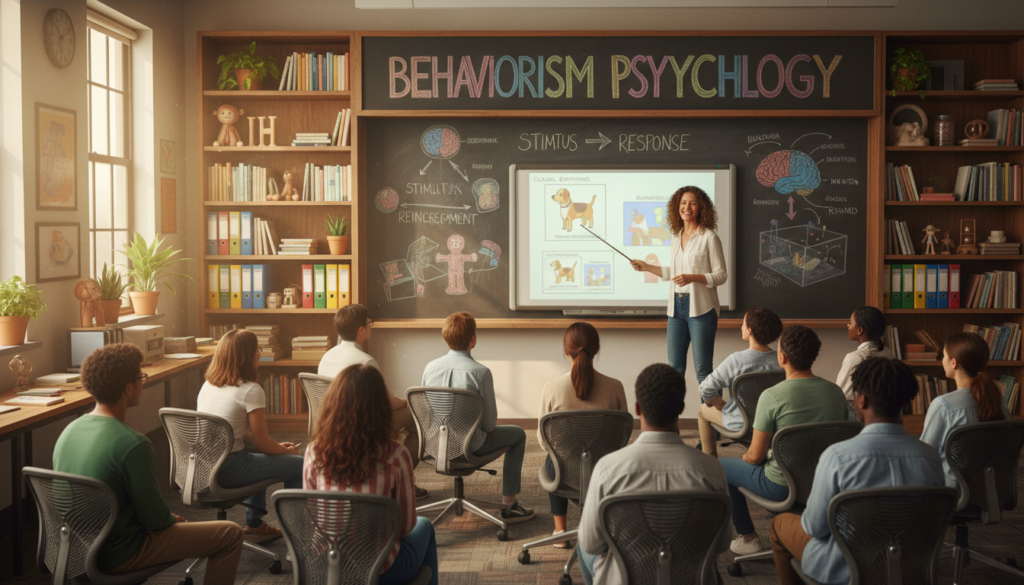
Behaviorism is a branch of psychology that looks at what we can see and do. It says our actions come from learning through rewards and punishments. This idea has changed how teachers teach and students learn.
As we dive into the impact of behaviorism on education, we’ll look at its core ideas. We’ll see how it’s used in schools and how it shapes today’s teaching methods.
Key Takeaways
- Understanding behaviorism is key for teachers to create effective lessons.
- Behaviorism focuses on what we can see and learn through conditioning.
- The theory has been used in schools to boost learning results.
- Behaviorism’s influence is seen in today’s teaching and policies.
- Teachers can learn a lot from knowing how behaviors are shaped.
Introduction to Behaviorism
Behaviorism is a key theory in psychology that has changed how we teach. It focuses on what we can see and measure. This theory has greatly influenced how we view learning and behavior.
“The behaviorist… recognizes no dividing line between man and brute,” said John B. Watson, a leading figure in behaviorism (Behaviorism, 1924). This quote shows what behaviorism is all about. It studies human actions like animal behavior.
Definition of Behaviorism
Behaviorism looks at what we can see and measure in human behavior. It focuses on actions, not what’s inside our minds. This makes it easy to understand human actions.
The heart of behaviorism theory is how the environment shapes us. By knowing how the world around us affects us, teachers can teach better. They can make the classroom a place where good behavior is encouraged.
Key Theorists in Behaviorism
John B. Watson and B.F. Skinner are the main founders of behaviorism. Watson showed how behaviors can be learned through association.
B.F. Skinner, though, is famous for operant conditioning. He said how actions change based on what happens next, like rewards or punishments. His ideas have made teaching better, by using rewards to encourage good behavior.
The work of these key thinkers has shaped behaviorism psychology and its use in schools. By using behaviorism, teachers can make learning places where students do well and behave well.
Historical Context of Behaviorism
In the early 20th century, a new approach in psychology emerged. It was called behaviorism. This movement was a reaction against old methods that focused on thoughts and feelings.
Behaviorism brought a big change. It focused on what we can see and measure. John B. Watson said in 1913 that we should look at actions, not thoughts.
Emergence of Behaviorism in Psychology
Behaviorism became a major part of psychology thanks to John B. Watson and B.F. Skinner. Watson’s 1913 paper was a big start. Skinner’s work on how actions are shaped added to behaviorism’s importance.
“The behaviorist asks: ‘Why don’t we make what we can observe the real field of psychology?’ The behaviorist…recognizes no dividing line between man and brute.” –
Behaviorism also changed education. It made teachers focus on what students do and learn. This helped improve how well students did in school.
Influence of World Events on Education Theories
World events have shaped education, including behaviorism. Wars and economic hard times led to changes in schools. Behaviorism was used to teach discipline and follow rules.
| Event | Influence on Education | Behaviorist Impact |
|---|---|---|
| World War I | Increased focus on nationalism and patriotism in curricula | Emphasis on discipline and obedience |
| Great Depression | Shift towards vocational training | Use of behaviorist techniques to manage classroom behavior |
| World War II | Further emphasis on nationalistic education | Application of behaviorist principles in military training |
Knowing about behaviorism’s history helps us see its effect on today’s schools. By looking at how behaviorism started and grew, we can use it better in teaching today.
Core Principles of Behaviorism
Behaviorist theory is all about how we learn and change our behaviors. These ideas are key to understanding how we learn and teach.
Reinforcement and Punishment
Reinforcement is a big deal in behaviorism. It’s when a behavior is followed by something that changes how likely it is to happen again. There are two kinds: positive and negative. Positive reinforcement adds something good to make a behavior more likely. Negative reinforcement takes away something bad to do the same thing.
Punishment is used to make a behavior less likely. It also comes in two forms: positive and negative. Positive punishment adds something bad. Negative punishment takes away something good.
Conditioning in Learning
Conditioning is a key part of behaviorist theory. It’s how we learn through association. There are two main types: classical and operant. Classical conditioning, found by Ivan Pavlov, links a neutral stimulus with an unconditioned stimulus to get a response. Over time, the neutral stimulus can trigger a response on its own.
Operant conditioning, by B.F. Skinner, connects behavior with its outcomes, like rewards or punishments. It helps us learn or change behaviors based on what happens next.
Knowing these basic ideas of behaviorism is important for teachers and students. They help us understand how to teach and learn best.
Behaviorist Techniques in Education
Behaviorist techniques have changed education a lot. They give teachers tools to manage classroom behavior and help students learn. These methods use operant conditioning, focusing on rewards and punishments to shape behavior.
Positive Reinforcement Applications
Positive reinforcement is a key tool for teachers. It encourages good behavior in students. Teachers give rewards or praise for good actions, making students more likely to do it again.
B.F. Skinner showed that adding a positive stimulus after a behavior makes it stronger. In class, teachers use praise, stickers, or stars to reward students. They also give special privileges to motivate students.
Behavior Modification Strategies
Behavior modification aims to change specific student behaviors. Teachers use token economies and contingency contracts. Token economies give points for good behavior, which can be traded for rewards.
Contingency contracts are agreements between teachers and students. They outline expected behavior and the rewards or consequences. These strategies help students understand what’s expected and why, making learning better.
Using these techniques, teachers can make classrooms positive and supportive. This leads to better learning and personal growth. Positive reinforcement and behavior modification improve classroom management and focus.
The Role of Observational Learning
Albert Bandura’s work on observational learning has changed how we see learning. He showed that we learn by watching and copying others. This idea is key to behaviorism theory.
In schools, students learn from watching teachers and friends. This idea is at the heart of Bandura’s Social Learning Theory. It says learning is about watching and copying others.
Bandura’s Social Learning Theory
Bandura’s theory says learning comes from observing, imitating, and modeling. People learn new things by watching others and seeing what happens next. This helps us understand how we pick up new behaviors, like aggression or social skills.
The theory also talks about how rewards and punishments shape our actions. Seeing others get rewards or punishments makes us more likely to act the same way.
| Key Components | Description |
|---|---|
| Observation | Learning by watching others |
| Imitation | Reproducing observed behaviors |
| Modeling | Demonstrating behaviors for others to imitate |
Implications for Classroom Management
Knowing about observational learning helps teachers manage classrooms better. Teachers can make a positive learning space by showing good behavior and rewarding it.
For example, teachers can teach social skills by showing and rewarding teamwork. This way, students learn from each other and from the teacher too.
Effective classroom management includes:
- Modeling desired behaviors
- Reinforcing positive actions
- Minimizing exposure to negative behaviors
Using these methods, teachers can make classrooms more productive and respectful. This is thanks to the power of observational learning.
Behaviorism in Classroom Settings
Behaviorist theories are key to making classrooms work well. Teachers use these ideas to make a place where students can learn without trouble. This helps students stay focused and keeps the classroom calm.
Structure and Routine
Having a clear plan and routine is important in a classroom. Teachers make a schedule for the day. This makes students feel safe and helps them know what to expect.
Structured routines help teachers use their time better. This means students learn what they need to know.
- Establishing clear rules and expectations
- Creating a daily schedule
- Using visual reminders and cues
Use of Assessment and Feedback
Checking in with students and giving feedback is vital. Teachers use tests to see if students get what’s taught. Constructive feedback helps students do better and shows them what’s right.
- Regular quizzes and assessments to gauge student understanding
- Providing immediate feedback on student performance
- Using positive reinforcement to encourage desired behaviors
Using these methods, teachers can make a great place for learning. Structure, routine, checks, and feedback help manage behavior. This creates a positive and productive classroom.
Advantages of Behaviorism in Education
Behaviorism focuses on what we can see and do. This makes learning more structured. It’s a big plus for schools.
Behaviorism brings many benefits to schools. It makes learning better and more focused. It helps students follow rules and know what to learn.
Improved Student Compliance
Behaviorism makes students follow rules better. It sets clear rules and what happens if they don’t follow them. This helps students know what’s expected.
Key strategies for improving compliance include:
- Clearly defining classroom rules and expectations
- Consistently enforcing consequences for misbehavior
- Using positive reinforcement to encourage good behavior
Clarity in Learning Objectives
Behaviorism also makes learning goals clear. It focuses on specific things students need to do. This makes learning more focused and efficient.
| Aspect | Behaviorist Approach | Outcome |
|---|---|---|
| Learning Objectives | Specific, measurable goals | Clear understanding of expectations |
| Student Assessment | Regular, objective assessments | Accurate measurement of student progress |
| Feedback | Immediate, constructive feedback | Enhanced student performance |
In summary, behaviorism is great for schools. It helps students follow rules and know what to learn. It makes learning better and more focused.
Limitations of Behaviorism
Behaviorism has shaped education, but it has its downsides. Critics say it misses key parts of learning.
Overemphasis on Observable Behavior
Behaviorism focuses too much on what we can see. It looks only at actions, ignoring the deep thinking behind learning. This narrow view can miss the full picture of how students learn.
Neglecting Emotional and Social Factors
Behaviorism also ignores feelings and social interactions. It doesn’t see how important emotional smarts and social skills are in school. This can make learning environments less supportive for students’ growth.
It’s important for teachers and leaders to know these flaws. By understanding both the good and bad of behaviorism, we can improve education. We can create better learning experiences that meet all students’ needs.
Integrating Behaviorism with Other Theories
Using behaviorism with other theories can make learning better. Behaviorism is strong, but mixing it with other ideas gives a fuller view of learning. This mix helps teachers teach more effectively.
Constructivism and Behaviorism
Constructivism says learners build their own knowledge. By mixing behaviorism with constructivism, teachers can make learning richer. For example, positive rewards can help students explore and understand complex ideas better.
Key Benefits of Integration:
- Enhanced student engagement
- Improved knowledge retention
- More effective classroom management
The table below shows how behaviorism and constructivism work together:
| Theory | Key Focus | Educational Application |
|---|---|---|
| Behaviorism | Observable behavior | Reinforcement, conditioning |
| Constructivism | Knowledge construction | Exploration, discovery learning |
Holistic Approaches to Learning
Learning is more than just knowing facts. It’s about thinking, feeling, and socializing too. By blending behaviorism with other theories, teachers can offer a richer learning experience. For instance, mixing behaviorism with social learning theory can boost learning from observing others and encourage good behavior.
In the end, combining behaviorism with other theories makes learning more fun and effective. Teachers can use different theories to create a well-rounded teaching approach. This way, they can help students learn in a more engaging and meaningful way.
Behaviorism in the Indian Context
Indian education has seen big changes with the use of behaviorist ideas. This has changed how teachers teach. The old Indian education system was strict and disciplined. Now, it’s influenced a lot by behaviorist theories.

Traditional Teaching Methods and Behaviorism
In India, old teaching ways use behaviorist ideas like rewards and conditioning. These help shape how students behave and learn. They make learning structured and orderly.
- Reinforcement Techniques: Teachers give rewards and praise to encourage good behavior.
- Conditioning: Students learn to follow rules and routines, helping with classroom order.
Modern Adaptations in Indian Education
Today’s Indian education keeps using behaviorist ideas but also adds new things. There’s a move to mix technology with behaviorist methods to make learning better.
- Personalized Learning: Technology helps give personalized feedback and rewards.
- Interactive Learning Environments: Digital tools make learning fun and interactive for students.
Knowing how behaviorism affects Indian education helps teachers. It shows the mix of old and new teaching methods. This makes learning better for students.
Case Studies in Behaviorism Application
Case studies on behaviorism in education show how theories work in real classrooms. They help us see if behaviorist ideas really help students learn better.
Successful Behaviorist Programs
Many schools have tried behaviorist programs and seen big improvements. For example, using positive reinforcement techniques really boosts student interest and effort.
In a primary school, teachers used a token system to reward good behavior. This led to fewer problems and better grades.
Lessons Learned from Failures
Not every behaviorist program succeeds, and that’s okay. We can learn a lot from what didn’t work. A big mistake is relying too much on punishment, which can make students feel bad and less motivated.
A high school tried a strict behaviorist program but it failed. The program was too rigid and didn’t fit the students’ needs. This shows we need to make behaviorist ideas flexible for each student.
In summary, studying how behaviorism works in schools gives us good and bad examples. By knowing what works and what doesn’t, teachers can make learning better for everyone.
The Future of Behaviorism in Education
Behaviorism’s role in education will evolve with new discoveries in educational psychology. As we move forward, behaviorism will keep shaping how we teach.
Potential Developments in Teaching Practice
The future of behaviorism in education will see more advanced uses of reinforcement and conditioning. Teachers might use technology to make learning more personal. For example, adaptive learning software can give instant feedback, boosting student interest and effort.
Key areas of development may include:
- Integration of behaviorist techniques with emerging technologies
- Enhanced focus on individualized learning plans
- Development of more nuanced reinforcement strategies
Trends in Educational Psychology
Changes in educational psychology will shape behaviorism’s future. As we learn more about learning and behavior, so will our teaching methods. Potential trends include combining behaviorist and constructivist approaches for better learning environments.
Behaviorism’s future will also be influenced by the growing importance of emotional and social factors in learning. This might lead to more complete behaviorist models that include these aspects.
Conclusion
Looking back, we see how behaviorism has changed education. This guide has shown how behaviorism affects teaching, from its main ideas to how it’s used in schools.
Summary of Key Points
Behaviorism has shaped how teachers teach. It focuses on using rewards and punishments to help students learn. Teachers use these ideas to keep classrooms running smoothly and students interested.
Behaviorism also shapes how schools are set up. It makes learning places where routines and tests are key. Using rewards and changing behavior helps students do better and understand what they’re learning.
Key Takeaways:
- Behaviorism focuses on what we can see and measure.
- Using rewards and punishments helps shape student behavior.
- Learning through conditioning is important.
Final Thoughts on Behaviorism’s Role in Education
Behaviorism has its downsides, like ignoring feelings and social stuff. But, it’s also very useful in schools. By mixing behaviorism with other teaching ideas, teachers can make learning more complete.
| Aspect | Behaviorist Approach | Holistic Integration |
|---|---|---|
| Learning Focus | Emphasizes observable behavior | Incorporates emotional and social aspects |
| Teaching Strategies | Uses reinforcement and punishment | Blends behaviorist techniques with other methodologies |
| Learning Environment | Structured with clear routines | Flexible, adapting to diverse needs |
In short, behaviorism has a big impact on teaching and learning. As education keeps changing, the ideas of behaviorism will keep being important in making teaching better.
References and Further Reading
To fully understand behaviorism, it’s important to look at both old and new sources. Many classic texts and recent studies offer a solid base for exploring this topic further.
Foundational Works
Several key texts have shaped the theory of behaviorism. Works by B.F. Skinner and John B. Watson are must-reads for anyone interested in behaviorist ideas.
| Author | Publication Year | Description |
|---|---|---|
| B.F. Skinner | 1938 | The Behavior of Organisms – A seminal work on operant conditioning. |
| John B. Watson | 1913 | Psychology as the Behaviorist Views It – A foundational paper on behaviorist theory. |
| Albert Bandura | 1977 | Social Learning Theory – Explores the role of observation in learning. |
Contemporary Resources
Modern sources like academic journals and online publications also shed light on behaviorism. They show how the field is growing and being applied in education and psychology.
- Journals: Journal of Applied Behavior Analysis, Behavior Modification
- Online Resources: APA PsycNET, Google Scholar
By looking at both old and new sources, researchers and teachers can learn more about behaviorism. This knowledge helps improve teaching and learning methods.
FAQs about Behaviorism in Education
Behaviorism in education can be tricky to grasp. Educators and students often have many questions about it. They want to understand how it works in schools.
Common Queries and Clarifications
Many ask about the role of reinforcement in learning. The behaviorism approach uses reinforcement to encourage good behavior. This makes learning better. Some also wonder if behaviorism ignores the emotional and social sides of learning.
It’s important to remember that behaviorism isn’t for everyone. It can be used with other teaching methods to make learning more complete. By knowing about behaviorism, teachers can find ways to improve learning for everyone.
Practical Applications and Further Insights
Teachers look for ways to use behaviorism in their classrooms. They use positive reinforcement and behavior changes to keep classes in order. This helps students do well in school.
As education changes, knowing about behaviorism helps teachers improve their teaching. It’s a key part of making learning better for all students.
FAQ
What is behaviorism, and how does it impact education?
Who are the key theorists in behaviorism?
How does behaviorism apply to classroom management?
What are the advantages of behaviorism in education?
What are the limitations of behaviorism in education?
How can behaviorism be integrated with other educational theories?
What is the role of observational learning in behaviorism?
How has behaviorism influenced Indian education?
What are some successful applications of behaviorist programs?
What is the future of behaviorism in education?


The PsyForU Editorial Collective is the research and editorial team of PsyForU Research International. The collective prepares educational, psychological, mental-health-awareness, inclusion, neurodiversity, and research-methodology content for students, parents, educators, researchers, and general readers. PsyForU content is intended for awareness, education, and capacity-building and should not be treated as clinical diagnosis, therapy, medical advice, legal advice, or emergency mental-health support.