


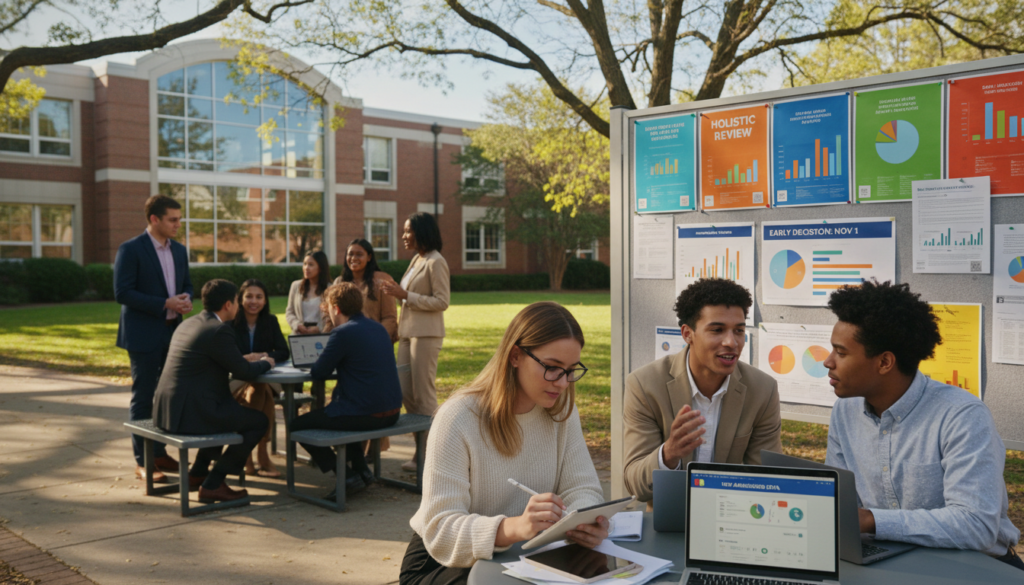
The world of higher education is changing fast. In recent years, how students get into college has shifted a lot. Now, colleges are looking at more than just grades.
Holistic review processes are becoming the norm. This means colleges look at more than just grades. They also consider other important factors.
Test-optional policies are also on the rise. This lets students decide if they want to send in test scores. It’s all about giving students more freedom.
These changes are all about making college admissions fairer. It’s important to understand how these updates help everyone.
Key Takeaways
- The college admission landscape is shifting towards more holistic practices.
- Test-optional policies are becoming more common.
- These changes aim to create a more inclusive admissions environment.
- A broader range of factors are now considered in the admission process.
- The move towards holistic reviews and test-optional policies reflects a commitment to equity.
Overview of Recent Changes in College Admissions
The way colleges look at applicants is changing. Now, they use more than just grades and scores. They want to know more about each student.
Colleges want students from all walks of life. So, they look at more than just grades. They also consider what students do outside of class, their community work, and their personal stories.
The Shift Toward Holistic Review Processes
Many colleges now use a holistic approach. They look at many things, not just grades and scores. This helps them understand each student better.
By looking at what students do outside of class, their community work, and their personal stories, colleges can see what makes each student special. This helps them find the right fit for their campus.
Impact of Test-Optional Policies
Test-optional policies have changed college admissions a lot. Now, students can choose if they want to send in test scores. This gives them more control over their application.
This change has also made colleges think differently about tests. Some colleges see more diversity in their applicants. This is because students who may not have done well on tests are now considered based on other strengths.
| Institution | Test Policy | Impact on Diversity |
|---|---|---|
| University of California | Test-optional | Increased diversity |
| Harvard University | Test-optional | More holistic review |
| University of Michigan | Test-flexible | Broader applicant pool |
The Role of Socioeconomic Factors
Socioeconomic factors are now part of college admissions. Colleges consider a student’s background to make their student body more diverse and fair.
This means looking at a student’s financial situation and the challenges they’ve faced. It helps colleges understand each student’s achievements and what they can bring to campus.
Changes in Standardized Testing Requirements
The college application process is changing. The old way of using SAT and ACT scores is being updated. Now, many schools are letting students choose if they want to send in their scores.
Understanding Test-Optional Policies
Test-optional policies let students decide if they want to send in their SAT or ACT scores. This change is because scores don’t always show how well a student will do in college.
The good things about test-optional policies are:
- Students who don’t do well on tests have more options.
- Colleges can look at more than just test scores.
- It helps students from less wealthy backgrounds who can’t afford test prep.
The Future of SAT and ACT Exams
The SAT and ACT exams are also being looked at differently. Some colleges don’t require them anymore. This shows that these exams might not be the best way to see if a student is ready for college.
Important things to think about include:
- There might be unfairness in how these tests are made and scored.
- How well a student does on the test can depend on how much they studied.
- There are other ways to check if a student is ready for college.
Regional Differences in Testing Needs
Testing needs can vary by region. In some places, SAT or ACT scores are more important. This is because of local school standards or how ready students are for college.
It’s important for colleges to understand these differences. By knowing what different areas need, schools can make their admission rules fairer and more welcoming.
The Growing Importance of Extracurricular Activities
Colleges want well-rounded students, and extracurricular activities play a big role. These activities show an applicant’s skills, passions, and contributions beyond grades.
The latest trends in college admissions show a big change. Now, extracurricular activities are seen as key in the application process. This change is part of a move towards looking at more than just grades.
Shifts in What Colleges Value
Colleges look for students who do well in school and are active outside of it. This includes sports, clubs, volunteer work, and leadership roles. They believe these activities help develop important skills like teamwork and leadership.
“The most successful applicants are those who have demonstrated a deep commitment to their extracurricular activities, showing a clear trajectory of growth and leadership.”
Here’s a table showing different types of extracurricular activities and what they offer:
| Activity Type | Examples | Skills Developed |
|---|---|---|
| Sports | Team sports, individual sports | Teamwork, discipline, physical stamina |
| Clubs and Organizations | Debate club, science club | Leadership, critical thinking, collaboration |
| Volunteer Work | Community service, environmental conservation | Empathy, social responsibility, organizational skills |
Diversity in Student Background and Contributions
Diversity in student backgrounds and contributions is highly valued. This diversity makes college communities richer by bringing together people with different experiences and skills.
Advancements in college acceptance processes now focus on finding students who excel in extracurricular activities and bring unique perspectives to campus.
In conclusion, the growing importance of extracurricular activities shows a shift towards a more holistic approach in college admissions. Students are encouraged to explore their interests outside the classroom to contribute to their college communities.
Digital Applications and Remote Interviews
Digital applications and remote interviews are changing how students connect with colleges. The COVID-19 pandemic has sped up this change. Now, the college application process is more open and flexible.
With digital applications, students can apply from anywhere. This makes applying easier and helps the environment by reducing paper use.
The Rise of Virtual College Tours
One big plus of digital applications is virtual college tours. These tours let students see what campus life is like. Virtual tours are great for students who can’t visit in person or are from far away.
These tours include interactive parts like live chats and 360-degree views. They help students decide which college is best for them.
How Remote Interviews Are Conducted
Remote interviews are now a big part of applying to college. They happen over video calls. Preparation is key to do well, with a good internet connection and a quiet space.
In a remote interview, you’ll talk about your school work, activities, and interests. It’s a chance for both you and the college to see if it’s a good match.
By using digital apps and remote interviews, colleges can offer a better experience. They can also reach students all over the world.
Changes in Recommendation Letter Requirements
In the world of college admissions, recommendation letters are very important. They show a student’s skills, qualities, and how they can contribute to college life.
The Role of Counselors and Teachers
Counselors and teachers play a big role in writing recommendation letters. Effective recommenders share insights into a student’s strengths and achievements. This makes their letters more meaningful.
To get great recommendations, students should give their recommenders enough time. They should also share information about their achievements and goals. This helps recommenders write personal and informative letters.
Strategies for Effective Recommendations
To make recommendation letters count, students can take a few steps. First, pick recommenders who really know them. Second, give them a resume or a list of achievements and goals. This helps them focus on the student’s best moments.
- Give recommenders enough time to write the letter.
- Provide them with information about achievements and goals.
- Choose recommenders who know the student well.
By following these steps, students can get strong recommendation letters. These letters will support their college applications.
Financial Aid and Scholarship Opportunities
Financial aid and scholarships are changing a lot, showing big shifts in the college application process. Colleges are adjusting to meet the needs of students better. This means a new way of helping with money for school.
“The way we think about financial aid is changing,” notes a recent report. “Colleges are moving beyond traditional need-based aid to more nuanced forms of assistance that consider a range of factors, including academic achievement and extracurricular involvement.”
Adjustments in Financial Aid Packages
Colleges are looking at their financial aid packages again. They want to make sure they help students in the best way. Now, they’re giving more personalized aid, based on each student’s situation and alterations in admission criteria.
For example, some schools are giving need-based grants. These grants help cover a lot of tuition fees for students who really need it.

New Scholarship Programs
New scholarship programs are also coming up. They aim to help students from different backgrounds and reward academic success. These programs are more open, celebrating a wider range of achievements and talents.
For example, some colleges offer merit-based scholarships. These scholarships go to students who show great talent in subjects like science, technology, engineering, and mathematics (STEM).
Understanding these changes is key for students and families. Keeping up with the latest in financial aid and scholarships helps students reach their educational dreams.
The Role of Technology in Admissions
Technology is changing college admissions, making it more efficient and based on data. The latest trends show how tech is improving the process.
Technology plays a big role in college admissions. One key area is the use of Artificial Intelligence (AI) in reviewing applications. AI algorithms can analyze huge amounts of data fast, helping find the best candidates.
Use of Artificial Intelligence in the Process
AI is making the admissions process smoother, from first checks to predicting student success. AI tools can reduce bias by looking at facts, helping create a more diverse student body.
AI also makes the admissions experience better for applicants. It gives them updates and feedback on time. This helps admissions staff too, making their work easier.
Data Privacy and Ethics Concerns
Using AI and other tech brings benefits but also raises privacy and ethics issues. Colleges must protect applicant data and follow strict privacy rules. They should also be clear about data use.
There are big ethical questions about AI in admissions. Schools must be careful not to add to biases. They need to make sure AI tools are fair and equal.
Trends in Diversity and Inclusion Initiatives
Diversity and inclusion are key in college admissions today. They show a shift towards making places more fair and welcoming. Colleges are working hard to attract and support students from different backgrounds.
Colleges’ Commitment to Diversity
Colleges are showing their dedication to diversity in many ways. They use targeted recruitment, support programs, and diverse curriculum. These efforts aim to build a campus culture that values and celebrates all kinds of diversity.
Some important strategies include:
- Holistic review processes that consider a wide range of student experiences and backgrounds.
- Scholarship programs for underrepresented minority students.
- Cultural centers and student organizations for diverse students.
Measuring the Success of Inclusion Practices
Colleges track their diversity and inclusion efforts to see if they work. They look at enrollment and graduation rates for underrepresented students. They also use surveys to check the campus climate and program impact.
The table below shows some key metrics for measuring inclusion success:
| Metric | Description | Importance |
|---|---|---|
| Enrollment Rates | Tracking the number of underrepresented students enrolled. | Shows if recruitment is working. |
| Graduation Rates | Monitoring the percentage of underrepresented students who graduate. | Shows if the college supports students to graduation. |
| Campus Climate Surveys | Assessing student perceptions of inclusivity and diversity. | Helps understand the campus environment and where to improve. |
By focusing on diversity and tracking inclusion success, colleges can make learning environments better for everyone.
Implications for Students and Families
The changes in college admission rules have made things more complicated for students and families. As colleges keep changing their ways, it’s key for applicants to keep up and adjust their plans.

How to Navigate the New Landscape
To deal with the shifting college admissions scene, students and families should:
- Stay Informed: Keep an eye on college websites and admissions guides for the newest info on application needs and deadlines.
- Seek Guidance: Talk to school counselors and private advisors for tips on how to succeed in the application process.
- Plan Ahead: Make a schedule for applying, including test prep, document collection, and application submission.
Preparing for Changes in College Applications
To get ready for the changes in college applications, students need to be proactive. They should:
- Enhance Extracurricular Activities: Build a solid record of extracurricular activities that show leadership, dedication, and passion.
- Craft Compelling Essays: Write essays that highlight personal growth, accomplishments, and goals, matching the values of the colleges they’re applying to.
- Secure Strong Recommendations: Work on building good relationships with teachers and mentors for insightful and supportive letters of recommendation.
By understanding the changes in college admissions and adjusting to these new rules, students and families can successfully navigate the complex process. This way, they can reach their educational goals.
Conclusion: The Future of College Admissions
The college admissions process is changing a lot. This is because of new technology, changes in who goes to college, and shifting values in society. As colleges adjust, the way we apply will keep changing, with new ways and standards.
Adapting to a Changing Landscape
The future of college admissions will see more focus on each student’s whole story. This includes their background and financial situation. Colleges will have to find a fair way to balance these changes while keeping things fair for everyone.
Preparing for Ongoing Shifts
To keep up with college admissions, students, families, and teachers need to know what’s new. They should be ready to meet new needs and follow new steps. This means understanding how college applications and admissions are changing.
By welcoming these changes and staying informed, we can make sure college admissions work well for everyone. It will be fair, open, and fair for all.
FAQ
What are the latest updates to the college admission process?
How are colleges changing their evaluation processes for applicants?
What is the impact of test-optional policies on college admissions?
How are socioeconomic factors being considered in the admissions process?
What changes are occurring in standardized testing requirements?
Why are extracurricular activities becoming more important in college admissions?
How has the college admissions process become more digital?
What role do recommendation letters play in college admissions?
How are colleges reassessing their financial aid packages?
How is technology transforming the college admissions process?
What initiatives are colleges implementing to promote diversity and inclusion?
How can students and families navigate the changing college admissions landscape?

