


Have you ever wondered where your most brilliant thoughts actually come from? We often experience moments of sudden clarity. Yet the journey of how ideas form remains mysterious to most of us.
Creativity has long been considered a rare gift. Many think it’s something bestowed upon a fortunate few. But what if this belief limits our true potential?
Modern research reveals a different story about the creative thought process. Ideas don’t simply arrive from nowhere. They emerge through intricate neural processes, emotional landscapes, and lived experiences.
Each insight builds upon memories and observations. Unconscious connections happen beneath our awareness. These elements combine to spark new thoughts.
Three distinct perspectives illuminate this fascinating process. Psychology examines how ideas form through brain activity and synaptic connections. Philosophy considers them as mental representations arising from our deeper consciousness.
Anthropology reveals that our surroundings shape creative thinking. Communal exchanges also influence how we generate ideas. Culture plays a vital role in innovation.
Understanding these pathways empowers us. We become active participants in our own creative awakening. This beats passively waiting for inspiration’s arrival.
This knowledge transforms creativity from an elusive mystery. It becomes a cultivable capacity within each person. Anyone can develop their creative abilities.
Key Takeaways
- Creativity is a cultivable skill, not just an innate gift reserved for a select few
- Ideas emerge through complex neural pathways, emotional experiences, and unconscious mental connections
- Three disciplines offer unique insights: psychology focuses on brain processes, philosophy examines consciousness, and anthropology explores cultural influences
- Understanding the creative thought process empowers you to actively participate in generating innovative solutions
- Modern neuroscience reveals that imagination develops through practice and intentional cultivation
- Your lived experiences and observations serve as essential building blocks for original thinking
Introduction to Creativity
Creativity is both a birthright and a practice. It’s a human capacity that grows through conscious work. Many people think creativity belongs only to artists, musicians, and writers.
This narrow view limits what creativity truly means. Understanding its nature helps us see why it matters so much. This foundation shapes how ideas form and grow in our lives.
What Creativity Means and Why It Matters
According to Britannica, creativity represents the ability to bring something new into existence. This definition captures the essence of creative action. Dr. Mark Runko emphasizes that authenticity forms the heart of genuine creative expression.
Honest expression matters more than technical perfection. Many people confuse creativity with imagination. Yet they represent distinct cognitive processes that work together.
Imagination allows us to create mental pictures without sensory input. It creates the internal landscape where possibilities take form. Creativity, by contrast, transforms those visualizations into something tangible and new.
It moves ideas from thought into the visible world. This distinction frees us from limiting beliefs about creative capacity.
There can be no ideas without creativity, nor creativity without ideas.
This interdependence reveals creativity’s fundamental nature. Ideas and creativity dance together in mutual expression. Neither exists in isolation—they require each other to manifest.
The importance of creativity extends beyond artistic domains. We find creative problem-solving essential across all vocations and life situations:
- Software developers create elegant solutions to complex technical challenges
- Teachers design innovative approaches that reach diverse learners
- Parents generate creative responses to daily family dynamics
- Healthcare professionals develop adaptive strategies for patient care
- Business leaders envision new possibilities in changing markets
Every field requires cognitive innovation. This means approaching situations with fresh perspective and generating novel solutions. Creativity is a fundamental human capacity, not a special gift for the chosen few.
Creativity’s Essential Role in Human Growth
Creativity represents our species’ most profound evolutionary advantage. Other animals adapt through biological evolution across generations. Humans adapt through creative innovation within individual lifetimes.
We imagine new tools, social structures, and solutions to environmental challenges. This capacity has enabled humanity to thrive across diverse ecosystems. Our creative ability helps us succeed in different circumstances.
Research in creative cognition research reveals important findings. Developing creative capacity strengthens neural pathways and enhances cognitive flexibility. These benefits extend beyond intellectual gains to emotional resilience and psychological well-being.
Children naturally embody the creative spirit. They approach the world with fresh eyes and boundless curiosity. Watch a young child explore—they see possibilities everywhere, unconstrained by limiting beliefs.
This natural creativity represents our original state. It’s our birthright as human beings. As we mature, social conditioning often diminishes this creative vitality.
We learn “correct” answers, appropriate behaviors, and safe choices. The wild energy of childhood creativity becomes domesticated. Yet studies in creative cognition research show that creative capacity remains within us, waiting for reactivation.
Reclaiming this creative birthright becomes both psychological necessity and spiritual practice. Reconnecting with our creative capacity touches something essential to our humanity. We remember who we were before the world told us who we should be.
This reconnection with creative spirit enhances our sense of purpose. It deepens our engagement with life itself. The development of creative capacity supports human flourishing at every stage.
From childhood through elder years, creativity offers a pathway to meaning. It provides connection and continued growth. Creativity represents not merely a skill but a fundamental aspect of our humanity.
Theories of Creativity
Our understanding of creativity has traveled a fascinating path. It moved from ancient temples where muses whispered divine secrets to modern laboratories mapping neural pathways. This journey reveals how our knowledge has expanded over time.
Each era’s worldview shaped its explanation of where ideas originate. The evolution of creativity theories mirrors humanity’s broader shift from spiritual interpretation to scientific investigation. Yet the wisdom embedded in older perspectives continues to inform contemporary thinking.
We find ourselves at a unique moment in history. The accumulated insights from centuries of contemplation now merge with empirical research. This synthesis offers a richer understanding than either approach could provide alone.
This invites us to appreciate creativity in new ways. We can see it as both a measurable cognitive process and a profound expression of human consciousness.
The Ancient Roots of Creative Understanding
For most of human history, creative inspiration was understood as something that came from beyond the individual. The ancient Greeks attributed breakthrough ideas to the Muses, divine beings who bestowed artistic gifts upon chosen mortals. This wasn’t superstition but rather an acknowledgment that creative insights often arrive unbidden.
The Roman philosopher Cicero spoke of the daemon, an external guiding spirit. This spirit whispered wisdom during moments of creative flow. These historical perspectives on creativity recognized an essential truth: our most profound ideas emerge from depths beyond conscious control.
While we now have different explanations for this phenomenon, the experience itself remains unchanged across millennia.
The philosophical traditions of Europe continued this exploration through different lenses. René Descartes and John Locke, despite their differing approaches, both believed that ideas came from the soul. They saw creative thoughts as spontaneous, reflexive expressions of an intangible essence that separated humans from other creatures.
Descartes viewed creative thoughts as evidence of the soul’s divine nature. Locke emphasized their spontaneous character.
These early thinkers grasped something significant about unconscious idea formation, even without modern neuroscience. They recognized that creative breakthroughs don’t follow linear logic or conscious planning. Instead, they arrive in flashes of insight, often when the conscious mind relaxes its grip.
Modern Scientific Approaches to Creativity
The twentieth century brought systematic scientific inquiry to creative thinking. J.P. Guilford’s Structure of Intellect theory marked a pivotal shift. His work described intelligence and creativity as interconnected cognitive processes rather than mysterious gifts.
He mapped creativity as a measurable system with identifiable components. This opened doors for empirical research.
This period also witnessed the rise and fall of the “right brain/left brain” myth. For years, popular culture assumed the right hemisphere controlled all creative thinking while the left handled logic. Modern neuroscience has thoroughly debunked this oversimplification, revealing that creativity engages multiple brain regions working in complex harmony.
Contemporary theories of creativity emphasize several key insights:
- Creative thinking involves whole-brain engagement, not isolated hemispheres
- Unconscious processing plays a crucial role in generating novel connections
- Environmental and emotional factors significantly influence creative capacity
- Creativity operates through both domain-general and domain-specific mechanisms
The concept of unconscious idea formation has gained particular prominence in recent research. Scientists now understand that the brain continues working on problems beneath conscious awareness. It makes unexpected connections while we sleep, daydream, or engage in unrelated activities.
This validates ancient intuitions about inspiration arriving unbidden.
| Theoretical Approach | Time Period | Core Belief | Key Contribution |
|---|---|---|---|
| Divine Inspiration | Ancient to Medieval | Creativity comes from external spiritual sources | Recognized the non-conscious nature of creative insight |
| Philosophical Dualism | 17th-18th Century | Ideas originate in the soul or mind | Emphasized spontaneous, reflexive quality of creative thought |
| Cognitive Psychology | Mid-20th Century | Creativity as measurable mental processes | Mapped creativity as interconnected cognitive systems |
| Neuroscience Integration | Late 20th-21st Century | Whole-brain engagement in creative thinking | Revealed complex neural networks underlying creativity |
Current research bridges the gap between mystical and mechanical explanations. We now recognize that creativity is neither purely spiritual nor entirely algorithmic. Instead, it represents a profound human capacity that emerges from complex interactions.
Creativity arises from the interplay between conscious effort and unconscious processing. It also involves individual psychology and environmental context.
This integrated understanding respects both the systematic nature of creative processes and their seemingly magical quality. During creation, we engage deliberate practice and technique while simultaneously allowing space for insights. These insights emerge from beyond conscious awareness.
The theories that guide our understanding today honor both dimensions of this experience.
The Creative Process
Creativity doesn’t arrive fully formed. It emerges through stages that honor both conscious effort and unconscious processing. Understanding this journey helps us navigate our own creative path with greater awareness and self-compassion.
The creative process isn’t a mechanical sequence. It’s a living rhythm that flows between different states of mind. Recognizing these natural patterns helps us work with our innate creative intelligence.
The Natural Rhythm of Creative Unfolding
Most models of creativity recognize four essential phases. Ideas pass through these stages on their journey to manifestation. These stages help us understand how our minds transform raw inspiration into tangible expression.
Preparation marks the beginning. We immerse ourselves in gathering knowledge, observing patterns, and asking meaningful questions. This phase requires conscious effort and focused attention.
The incubation phase follows, inviting us to step back. During this crucial period, our unconscious mind works behind the scenes. We must embrace activities that seem unproductive—walking in nature, taking showers, or simply daydreaming.
Illumination arrives as the breakthrough moment. The sudden “aha” experience happens when insight crystallizes into consciousness. These moments often catch us by surprise, emerging when we’ve released our grip on the problem.
Finally, verification brings ideas into reality through refinement and implementation. We test, adjust, and polish our insights. This stage requires the same dedication as preparation but serves a different purpose.
These phases don’t march in strict linear order. Instead, they create a spiral dance where we may circle back through stages. A single creative project might involve several preparation-incubation-illumination cycles before reaching verification.
Effective idea generation techniques work because they honor these stages. Brainstorming supports preparation by gathering diverse perspectives. Mind mapping facilitates both preparation and illumination by revealing hidden connections.
The Inner Conditions That Shape Creative Expression
Multiple factors influence how smoothly we move through the creative process. Understanding these elements helps us create internal conditions that support our creative unfolding.
Cognitive processes form the foundation of creative thinking. These mental activities include attention, perception, memory, and problem-solving. They provide the raw materials and mechanisms for creativity.
Memory supplies the building blocks from which new combinations emerge. Every creative insight recombines existing knowledge in novel ways. The richer and more diverse our memory stores, the more connections become possible.
Two neural networks play particularly important roles in creativity. The default mode network (DMN) activates during rest and passive pursuits like daydreaming. This network enables free-flowing thought and the unconscious processing essential for incubation.
The executive control network (ECN) handles analytical thinking and focused attention. This network dominates during preparation and verification phases. The ECN brings structure and rigor to our creative work.
Perhaps most crucial is network switching. This is our brain’s ability to toggle between these two modes. Research shows that highly creative individuals excel at flexibly shifting between free-flowing DMN activity and focused ECN engagement.
Effective idea generation techniques often work by facilitating this network switching. Activities that alternate between open exploration and focused analysis help our brains move fluidly. Understanding these neural rhythms helps us structure our creative sessions to support natural brain function.
Other factors shape our creative capacity as well. Emotional states influence both network activation and cognitive flexibility. Our physical environment affects attention and perception.
By recognizing these interconnected influences, we cultivate greater mastery over our creative process. We learn which conditions support our personal creative rhythm. This awareness transforms creativity from mysterious gift to cultivable skill.
The Role of Environment
Environment acts as an invisible creative partner. It can amplify our imaginative potential or quietly limit it. The relationship between our surroundings and original thinking runs deeper than surface aesthetics.
Physical spaces and social worlds shape how freely our ideas emerge. They influence how our thoughts develop over time.
We can become conscious architects of our environment. This awareness unlocks pathways to more consistent creative expression. Ordinary spaces transform into sanctuaries for innovation.
Creating Spaces That Nurture Innovation
Physical space holds remarkable power over creative output. The walls around us matter. Light falling through windows affects our thinking.
Even room temperature communicates with our subconscious mind. These elements invite us to explore new thoughts. They can also discourage us from venturing beyond familiar patterns.
Workspace design becomes an act of creative intention. Arrange your environment with deliberate attention to both function and inspiration. This signals respect for the creative process itself.
Consider these essential elements when designing your creative sanctuary:
- Ergonomic foundations that support physical comfort during extended work sessions
- Natural lighting that honors our biological rhythms and reduces mental fatigue
- Living elements like houseplants that connect us to organic growth cycles
- Visual anchors such as meaningful artwork or photographs that spark contemplation
- Intentional simplicity that minimizes distractions without creating sterile emptiness
- Color choices that influence mood and energy levels throughout the day
These components work together to create psychological flow. Flow is that timeless immersion where self-consciousness dissolves. We merge completely with our creative work.
Hours pass like minutes during flow. The boundary between creator and creation blurs.
This state requires environmental support to emerge consistently. Distractions fragment our attention before flow can establish itself. Discomfort pulls us back to bodily awareness.
Visual chaos scatters our focus across too many stimuli. A well-designed space prevents these interruptions.
Think of creative spaces like children’s playrooms filled with possibility. Art supplies sit within reach. Inspiring posters hang on walls.
Objects invite interaction and exploration. This playful approach reminds us that creativity thrives on experimentation.
Seeking new experiences expands our creative capacity. Travel introduces us to different cultural perspectives. Museums show how others have solved creative challenges.
Literature transports us into unfamiliar mental landscapes. Each new experience becomes raw material for future creative combinations.
The Power of Human Connection in Creative Work
Social influences shape creative thinking with equal force to physical surroundings. We exist as fundamentally relational beings. Our ideas expand or contract based on the company we keep.
Collaboration introduces perspectives that challenge our comfortable assumptions. Working alongside others exposes us to different problem-solving approaches. We discover blind spots in our own thinking.
Dialogue helps us articulate vague intuitions into clearer concepts. Diverse perspectives act as creative cross-pollination. Ideas from separate domains blend into novel combinations.
An engineer’s systematic approach might intersect with an artist’s intuitive methods. This generates solutions neither could reach alone.
Yet solitude plays an equally essential role in creative development. Deep work requires quiet space. We need time alone to integrate external stimuli into our unique perspective.
| Social Element | Creative Benefit | Implementation Strategy |
|---|---|---|
| Collaborative Sessions | Challenges assumptions and expands perspective | Schedule regular brainstorming with diverse team members |
| Solitary Reflection | Allows deep integration and original synthesis | Protect daily blocks of uninterrupted thinking time |
| Cross-Domain Conversations | Generates unexpected idea combinations | Seek discussions with people outside your field |
| Supportive Community | Provides safety for risk-taking and experimentation | Cultivate relationships that celebrate creative exploration |
The wisdom lies in cultivating both dimensions. Community provides inspiration and exchange. Solitude offers integration and depth.
Neither extreme serves us well. Constant collaboration exhausts our capacity for reflection. Perpetual isolation starves us of fresh input and perspective.
Surrounding ourselves with people who celebrate creative exploration changes us internally. We grant ourselves permission to take necessary risks. We dare to share half-formed ideas without fear of judgment.
We experiment with approaches that might fail. This social permission becomes particularly powerful from people with different backgrounds.
Conversations with individuals who see the world differently expose us to alternative thinking. They reveal that our “obvious” solutions aren’t universal truths. These solutions are culturally conditioned patterns.
The environment we create reflects our commitment to creative growth. Consciously curate spaces that honor focused attention. Also honor relational exchange.
This builds the foundation for sustained creative practice.
Neuroscience of Creativity
Understanding the neural foundations of creativity opens a doorway to appreciating how our minds generate original ideas. The science reveals something profound yet accessible: creativity isn’t mystical luck reserved for the chosen few. Instead, it emerges from biological processes we can understand and nurture.
This knowledge empowers us without diminishing wonder. Just as understanding how a flower grows doesn’t make the blossom less beautiful, exploring the neural pathways of creativity enriches the creative experience. Our brain’s architecture naturally supports innovation and imagination.
The Orchestra of Brain Regions
Multiple brain regions work together to create the symphony of creative thought. Each area contributes its unique function, forming an integrated system. This collaboration happens continuously, often without our conscious awareness.
The prefrontal cortex, located behind our forehead, serves as the executive director of creative thinking. It handles decision-making, planning, and problem-solving. Within this region, the ventromedial prefrontal cortex regulates emotions and enables self-reflection.
The temporal lobes process our memories and emotions, providing the experiential raw material from which new ideas emerge. Think of them as vast libraries storing every experience, feeling, and learned concept. During creation, we draw from these archives, combining elements in fresh ways.
The parietal lobes integrate sensory information and enable spatial reasoning. The occipital lobes process visual information. Together, they allow us to mentally visualize scenarios we’ve never actually witnessed.
The limbic system houses our emotional center, including two critical structures. The hippocampus acts as our memory librarian, storing and retrieving information. The amygdala functions as our emotional alarm system, processing feelings that color our experiences.
| Brain Region | Primary Function | Creative Contribution |
|---|---|---|
| Prefrontal Cortex | Executive functions and emotional regulation | Decision-making and self-reflection during creation |
| Temporal Lobes | Memory and emotion processing | Providing experiential material for new ideas |
| Parietal & Occipital Lobes | Sensory integration and visual processing | Mental visualization and spatial reasoning |
| Limbic System | Emotion and memory formation | Creating associative connections for insights |
The neural pathways of creativity become particularly fascinating when we examine network interactions. Two major networks alternate to produce creative breakthroughs. The default mode network activates during rest, daydreaming, and unfocused attention.
The executive control network engages during focused analysis and refinement. It evaluates ideas, solves specific problems, and brings structure to creative chaos. The dance between these networks allows us to both generate wild possibilities and critically evaluate their merit.
We need both networks working in harmony. The default mode network provides the spark, while the executive control network shapes that spark into something useful. This biological understanding reveals why alternating between relaxation and focused work often yields the best creative results.
Chemical Messengers of Innovation
Neurotransmitters serve as chemical messengers that influence our creative capacity. These molecules transmit signals between neurons, affecting how we think, feel, and generate ideas. Understanding their role demystifies the biological basis of creative states.
Dopamine stands out as particularly significant for creativity. This neurotransmitter gets released during creative activities, generating feelings of pleasure and motivation. It creates a positive feedback loop, reinforcing creative behavior and encouraging us to persist.
Higher dopamine levels correlate with increased cognitive flexibility and the ability to form unexpected connections between concepts. This explains why creative work often feels rewarding on a fundamental level. Our brain chemistry literally rewards us for thinking creatively.
The dopamine system also connects motivation with action. During creative flow, dopamine helps maintain focus and engagement. This biological mechanism supports sustained creative effort, making lengthy projects feel less burdensome and more naturally engaging.
This biological understanding empowers us in practical ways. Creativity isn’t reserved for genetic lottery winners or divinely inspired artists. Rather, it emerges from natural brain processes that we can actively support through lifestyle choices and deliberate practice.
We can nurture our creative capacity by understanding these neural foundations. Quality sleep supports memory consolidation in the hippocampus. Physical exercise increases dopamine production.
The science reveals something hopeful: every human brain possesses the fundamental architecture for creative thinking. Our task becomes creating conditions that allow these natural processes to flourish. We don’t need to force creativity through sheer willpower alone.
Emotional Factors in Creativity
Feelings are not barriers to innovation. They are invisible threads that weave through every creative moment. Our emotional landscape connects deeply to our ability to generate original ideas.
Understanding how emotions fuel creative thought unlocks new pathways. This awareness helps us achieve more authentic expression. The connection runs deeper than most people realize.
Our emotional states don’t simply accompany creativity. They actively participate in every stage of idea formation. Memory, emotion, and imagination integrate to create the foundation for all creative work.
How Feelings Shape Original Ideas
The connection between feelings and creation operates through multiple brain channels. Research shows that various memory types work with emotional processing. Together, they boost creative capacity significantly.
The amygdala processes emotions deep in our brain. This small almond-shaped structure directly contributes to how ideas take form. It plays a crucial role in creative thinking.
This emotional processing helps us recognize what matters in our work. Something that resonates emotionally signals our brain to pay attention. This particular idea or direction deserves our focus.
Without this emotional compass, we would struggle with creative choices. We couldn’t distinguish meaningful creative paths from random mental noise. Emotions guide us toward what truly matters.
Many assume only positive emotions facilitate creativity. Joy and enthusiasm certainly open doors to free-flowing ideation. They encourage bold risk-taking and experimentation.
Yet the reality proves far more nuanced. Contemplative sadness and melancholy can deepen creative work unexpectedly. These quieter emotional states add layers of meaning and authenticity.
Artists, writers, and musicians throughout history have drawn from all feelings. They use the full spectrum of human emotion. This creates their most powerful work.
The key lies not in which emotions we experience but our relationship with them. Allow emotions to move through without resistance or over-identification. They become valuable information rather than obstacles.
This emotional fluidity supports the creative process. It doesn’t hinder our work. The relationship we build with our feelings matters most.
| Emotional State | Creative Impact | Best Application | Potential Challenge |
|---|---|---|---|
| Joy and Enthusiasm | Increases risk-taking and ideation volume | Brainstorming sessions, experimental projects | May lack depth or critical evaluation |
| Contemplative Sadness | Adds emotional depth and authenticity | Reflective work, meaningful narratives | Can slow momentum if prolonged |
| Curiosity and Wonder | Drives exploration and novel connections | Research phases, learning new skills | May scatter focus across too many directions |
| Frustration | Motivates problem-solving and persistence | Overcoming creative blocks, refinement | Can trigger self-doubt if unmanaged |
Working Skillfully With Difficult States
Stress and anxiety present particular challenges to creative thinking. Chronic stress occupies our mental bandwidth with rumination and worry. This mental clutter crowds out the spaciousness creative ideas need.
Mental rumination acts like background noise that never stops. It occupies cognitive resources that would otherwise support innovation. These resources are essential for original thinking.
The goal isn’t to eliminate all negative emotions. That would be both impossible and undesirable. Instead, we learn to work skillfully with difficult states.
Meditation offers a powerful tool for changing our relationship with challenging emotions. Through regular practice, we develop capacity to observe difficult feelings. We don’t become consumed by them.
This creates space between stimulus and response. It separates feeling from reaction. We gain the ability to choose our responses.
Physical exercise provides another essential pathway for managing emotions. Movement discharges stress held in the body. It literally shakes loose the tension that constricts our thinking.
Many creative breakthroughs occur during or after physical activity. The mind relaxes its grip during movement. New connections can form more easily.
The relationship between emotions and creativity flows in both directions. Managing emotional states supports creative work. Engaging in creative activities powerfully supports emotional wellbeing.
This bidirectional relationship creates a positive feedback loop. Each side strengthens the other. The benefits multiply over time.
Creative expression triggers dopamine release in our brain. This happiness hormone naturally elevates mood. It creates feelings of satisfaction and reward.
The focused absorption that comes with creative work quiets anxious thoughts. It reduces rumination significantly. Our minds find peace in creative flow.
Studies show that regular creative activity reduces stress and anxiety. It also decreases depression levels. Creative practice lowers heart rate and creates physiological changes.
These changes are associated with relaxation and wellbeing. The benefits extend beyond mental health. Our bodies respond positively to creative engagement.
We can support creativity by managing difficult emotions and support emotional health through creative practice. This integrated approach recognizes constant dialogue between feeling states and creative capacity. Neither dominates the other in this enriching exchange.
Psychological Traits of Creative Individuals
Certain personality traits act as doorways to creative expression. Understanding these traits helps us unlock our own innovative potential. These aren’t fixed qualities that separate “creative people” from everyone else.
Instead, they represent capacities we can nurture through conscious practice.
The most encouraging insight from creativity research is this: creative ability grows through deliberate cultivation. Some individuals may start with natural inclinations. However, the psychological traits associated with creativity respond to intentional development.
We can strengthen these mental muscles just as we build physical strength through exercise.
The Power of Openness to Experience
Openness to experience stands as the strongest predictor of creative capacity among all personality traits. This characteristic reflects our willingness to engage with novelty, complexity, and ambiguity. Those who score high in openness venture beyond familiar territory into the unknown with curiosity.
People with high openness demonstrate several key qualities. They show intellectual curiosity about diverse subjects. They appreciate aesthetic experiences across various art forms.
Most importantly, they feel comfortable with unconventional ideas that challenge mainstream thinking.
These individuals question assumptions rather than accepting them reflexively. Everyone agrees on the “right” way to do something. Open-minded people ask: “But what if we tried something different?”
The beautiful truth is that openness can be cultivated through intentional practice. We strengthen this psychological capacity by exposing ourselves to diverse perspectives. Reading literature from unfamiliar cultures expands our mental frameworks.
Engaging with art forms outside our comfort zone stretches our aesthetic appreciation.
Travel—whether physical or through books—introduces us to different ways of thinking and living. Even deliberately challenging our own beliefs builds openness. Each act of intentional curiosity strengthens this creative foundation.
Two Modes of Creative Cognition
The distinction between divergent thinking and convergent thinking illuminates how creative minds operate. Psychologist J.P. Guilford introduced these concepts to describe two complementary modes of thought. Understanding both helps us harness their power more effectively.
Divergent thinking represents the expansive phase of creativity. It involves generating multiple possibilities and making unexpected connections. This free-flowing approach creates links between seemingly unrelated concepts.
Think of divergent thinking as the brainstorming mind that says “yes, and…” rather than “no, but…” It’s lateral thinking that considers various possible outcomes instead of rushing toward the expected solution. This mode suspends judgment to explore the full landscape of possibilities.
Children naturally excel at divergent thinking because they haven’t yet learned which solutions are “supposed” to work. Without preconceived notions about the “right” answer, they consider all possibilities with equal seriousness. A child asked to imagine uses for a brick might suggest building material or a doorstop.
This isn’t childish thinking—it’s beginner’s mind. It’s a state of open receptivity that creative adults must consciously reclaim. We become less divergent as we learn conventional solutions, but we can reawaken this capacity.
Convergent thinking then applies analysis, evaluation, and refinement. This analytical mode uses structured rules to narrow possibilities and find optimal solutions. It asks: “Which of these ideas actually works best?”
Convergent thinking provides the critical judgment necessary to transform wild ideas into practical innovations.
Both modes are essential partners in creativity. Divergent thinking generates the raw material—the clay. Convergent thinking shapes it into form—the sculpture.
The most creatively successful individuals dance fluidly between these modes. They know when to expand possibilities and when to focus their choices.
We can practice divergent thinking through specific exercises that build this mental capacity:
- Alternative uses: Choose an everyday object like a paperclip or coffee mug. Set a timer for five minutes and list as many uses as possible, no matter how unusual.
- Forced connections: Select two completely unrelated objects or concepts. Challenge yourself to find five ways they might connect or combine into something new.
- “What if” questions: Regularly ask questions that challenge conventional assumptions. What if gravity worked backwards? What if plants could talk? These playful inquiries stretch divergent thinking muscles.
- Random word association: Pick a random word from a dictionary and connect it to your current project or problem. The arbitrary connection forces novel associations.
The key to developing divergent thinking is suspending judgment during the generative phase. Resist the urge to immediately evaluate ideas. Let the convergent phase come later, after you’ve explored the full range of possibilities.
These psychological traits—openness to experience and the ability to move between divergent and convergent thinking—form the foundation of creative capacity. Neither is mysterious or magical. Both respond to deliberate cultivation, inviting us to strengthen our creative potential through conscious practice.
Creative Problem-Solving Techniques
Creative problem solving turns abstract ideas into tangible strategies for everyday challenges. We all possess the capacity for creativity. However, transforming that potential into practical solutions requires specific techniques.
These methods honor both expansive creative thinking and focused discipline. They help us address real obstacles effectively.
The techniques we explore here serve as doorways into deeper creative capacity. Some approaches emphasize quantity and freedom. Others provide structure and direction.
Understanding when to apply each method makes the difference. It separates scattered effort from breakthrough insights.
Modern complexity demands creative problem solving—not just as useful but essential. Our challenges transcend conventional boundaries. They require thinking that breaks new ground.
The Power of Collective Idea Generation
Brainstorming stands as one of the most recognized approaches. This collaborative technique gathers people together to rapidly generate ideas. Practiced skillfully, brainstorming can yield dozens of original concepts within minutes.
The effectiveness of brainstorming depends on several key factors. First, we must establish psychological safety—an environment where unconventional suggestions are welcomed. Without this foundation, participants self-censor their most interesting ideas.
Setting clear time limits creates productive urgency. Our minds work more efficiently with finite windows. This constraint paradoxically enhances creative output rather than limiting it.
The best way to have a good idea is to have lots of ideas.
Documentation matters tremendously during brainstorming sessions. Every suggestion should be captured, even those that seem impractical initially. Seemingly absurd ideas often contain seeds of breakthrough solutions.
The classic brainstorming approach follows specific guidelines that maximize creative output:
- Suspend judgment during the generation phase—evaluation comes later
- Encourage wild ideas that push beyond conventional thinking
- Build on others’ suggestions to create combinatory innovations
- Aim for quantity over quality in the initial stages
- Stay focused on the specific problem or challenge at hand
Facilitation plays a crucial role in effective brainstorming. A skilled facilitator keeps energy high and ensures all voices are heard. The facilitator also protects emerging ideas from premature criticism.
Group brainstorming works best for generating abundant possibilities. However, research shows that individuals should later engage in focused refinement. This two-phase approach combines collective thinking with solitary reflection.
We can also explore structured variations like brainwriting. Participants write ideas silently before sharing. This method ensures that quieter individuals contribute equally.
Visual Mapping for Deeper Connections
Mind mapping offers a more structured yet visually intuitive approach. This technique starts with a central concept placed at the center. From there, we branch outward with related ideas.
Unlike linear lists or conventional outlines, mind maps reveal connections between seemingly separate concepts. These visual networks often illuminate solutions that wouldn’t emerge through sequential thinking. The spatial arrangement engages different cognitive pathways than verbal processing.
Creating an effective mind map involves several elements. The central theme anchors the entire structure. Primary branches extend from this center, representing major categories.
Secondary branches then subdivide these categories into increasingly specific details. This creates a comprehensive visual network.
Colors and images enhance mind mapping effectiveness. Our brains process visual information differently than text. Even simple icons or color-coding can significantly improve both creation and recall.
Mind maps serve dual purposes in creative problem solving. They help generate new ideas through free association. They also organize existing information into coherent patterns.
Mind mapping helps us see the whole landscape at once. This bird’s-eye view often reveals patterns invisible when examining individual elements. Connections emerge organically as the map develops.
The SCAMPER technique provides another powerful framework for generating creative solutions. This acronym guides us through seven different ways to modify existing ideas:
| SCAMPER Element | Question to Ask | Creative Application |
|---|---|---|
| Substitute | What can we replace? | Change materials, processes, or approaches |
| Combine | What can we merge together? | Blend ideas, products, or methods |
| Adapt | What else is similar? | Apply solutions from different contexts |
| Modify | How can we change attributes? | Alter size, shape, or characteristics |
| Put to another use | What other applications exist? | Repurpose existing elements creatively |
Constraint-based thinking offers another pathway to creative solutions. Based on Eliyahu M. Goldratt’s Theory of Constraints, this approach identifies the primary bottleneck. By focusing creative energy on this single constraint, we often achieve more.
This focused approach asks: What one thing, if changed, would create the greatest positive impact? The answer directs our creative resources where they matter most. Limitations become catalysts rather than obstacles.
Each technique we’ve explored offers a different doorway into creative capacity. Wisdom lies in knowing which approach suits which situation. Some challenges call for the expansive energy of group brainstorming.
Others benefit from the structured visualization of mind mapping. Still others require the focused intensity of constraint-based thinking.
We grow our creative problem-solving abilities through practice and experimentation. No single method works perfectly for every challenge or every person. The journey involves discovering which techniques resonate with our unique thinking style.
As we develop proficiency with these tools, creative problem solving becomes less about techniques. It becomes more about embodying a creative approach to life itself. Eventually, we internalize the principles and respond creatively without conscious effort.
The Influence of Culture on Creativity
Our cultural heritage walks beside us, offering both wings and boundaries to our imaginative flight. Culture shapes not only what we create but how we understand creativity itself. The psychological formation of ideas happens within cultural contexts that determine which thoughts are valued.
These contexts also decide which expressions are encouraged. They determine which forms of cognitive innovation receive recognition and support.
Every creative act carries the invisible imprint of cultural waters we swim in daily. These influences operate so deeply that we rarely notice them. We only see them when we encounter different cultural approaches to imagination and innovation.
Recognizing this cultural dimension opens pathways to expand our creative repertoire beyond default programming.
The anthropological perspective reveals that cognitive innovation flourishes through cultural exchange and diffusion—ideas spreading from culture to culture. Each context adds unique interpretations. Innovation, prosperity, and exchange become aspects of communal society where members share thoughts and bring ideas to life.
Cross-Cultural Perspectives on Creative Expression
Different cultures cultivate distinctly different approaches to creative thinking and expression. These variations reflect deeper philosophical orientations about the relationship between individual and community. They also show different views on tradition and innovation, form and emptiness.
Eastern cultural frameworks often emphasize collective creativity and harmonious integration. Rather than celebrating the lone genius, these traditions honor creative works that respect lineage. They value works that introduce subtle innovations while maintaining connection to the past.
The Japanese concept of “ma”—negative space—treats emptiness as creatively essential. It recognizes that what is not present matters as much as what is.
This perspective shifts cognitive innovation away from constant addition toward thoughtful restraint. It invites creators to consider space, silence, and absence as active creative elements. These become more than voids to fill.
Western cultural traditions have historically elevated individual creative genius and originality as departure from convention. These frameworks celebrate creative works that deliberately disrupt established patterns. The emphasis falls on personal vision, unique voice, and breakthrough innovation.
Neither approach holds superiority over the other. Each offers wisdom that expands our creative possibilities. We benefit most when we learn to move fluidly between different cultural frameworks.
“Creativity is not a solitary act but a dialogue with culture—a conversation between individual imagination and collective inheritance that produces new possibilities while honoring what came before.”
Indigenous cultures worldwide demonstrate creativity deeply interwoven with spiritual practice, seasonal rhythms, and community needs. Here, art, function, and meaning unite rather than separate into distinct categories. Creative expression serves purposes beyond individual self-expression or aesthetic pleasure alone.
These traditions reveal that cognitive innovation can emerge from constraint and purpose rather than unlimited freedom. Different forms of brilliance emerge when creativity serves community wellness, seasonal celebrations, or spiritual connection.
Studying diverse cultural approaches expands our creative vocabulary. It offers alternative pathways when our default cultural programming reaches its limits or feels constraining.
| Cultural Framework | Creative Emphasis | Innovation Approach | Key Values |
|---|---|---|---|
| Eastern Traditions | Collective harmony | Subtle variation within tradition | Balance, negative space, integration |
| Western Traditions | Individual genius | Disruption and originality | Uniqueness, breakthrough, novelty |
| Indigenous Practices | Community function | Purposeful adaptation | Spiritual connection, seasonal wisdom |
| Cross-Cultural Synthesis | Integrated approaches | Adaptive cognitive innovation | Cultural exchange, diffusion, flexibility |
Cultural Limits and Encouragement of Creativity
Cultural contexts create the landscape we navigate as creative individuals. Some cultures explicitly value and reward cognitive innovation, providing resources, recognition, and institutional support. Others prioritize conformity and tradition, viewing deviation with suspicion or concern.
These structural factors profoundly shape creative development. Educational systems either nurture or suppress creative capacities through pedagogical approaches. Schools emphasizing standardized testing and conformity limit opportunities for divergent thinking and experimental learning.
Educational environments that celebrate curiosity cultivate stronger creative capacities. Those that tolerate productive failure and encourage question-asking help students develop their abilities. The difference lies not in individual talent but in systemic support for creative development.
Economic structures determine whether creative work can be sustained as viable livelihood. Cultures that provide funding, patronage, or market opportunities enable more people to dedicate time to cognitive innovation. Without economic pathways, creative talents remain hobbies rather than vocations.
Media environments shape which creative expressions gain visibility and influence. Dominant platforms determine whose voices are heard and which aesthetic standards prevail. Understanding these gatekeeping mechanisms helps creators navigate cultural systems more strategically.
Recognizing these structural factors prevents us from attributing creative struggles solely to personal inadequacy. Often, difficulties reflect systemic limitations rather than individual deficiencies. This awareness reduces shame and redirects energy toward finding supportive contexts.
Every culture contains subcultures and communities that resist mainstream limitations. These alternative spaces create different rules, values, and support systems. Seeking out and contributing to such communities becomes part of the creative path itself.
The concept of diffusion—how ideas spread from culture to culture—proves as important as how ideas originate. Cognitive innovation accelerates when cultural boundaries become permeable, allowing cross-pollination of perspectives, techniques, and inspirations. Creative breakthroughs often emerge at cultural intersections where different traditions meet and merge.
We can consciously cultivate this cross-cultural creativity by exposing ourselves to diverse artistic traditions. Study, collaboration, and genuine cultural exchange expand our creative toolkit. This helps us move beyond single-culture limitations.
Understanding cultural influence on creativity invites both gratitude and discernment. We honor the gifts our cultural heritage provides while recognizing its boundaries. We appreciate collective wisdom while questioning limiting beliefs.
We work within cultural contexts while remaining open to transformation. Encounter with difference helps us grow and expand our creative possibilities.
The Role of Education in Fostering Creativity
How we teach determines what children learn and whether they keep their creative capacity. Educational systems can cultivate vibrant creative minds or diminish them through rigid structures. The approaches we choose today shape how future generations think and solve problems.
This relationship between education and creativity extends far beyond childhood classrooms. It influences our capacity for innovation across entire lifetimes.
Teaching Methods That Nurture Creative Minds
Traditional educational models often emphasize finding single correct answers to predetermined questions. Systems that reward only conformity and memorization actively suppress creative development. Creative pedagogy represents a fundamental shift in how we approach learning itself.
According to PBS Ideastream, creativity fosters mental growth in children by providing opportunities for trying new ideas. This approach allows young learners to express feelings authentically. It celebrates what makes them unique.
The National Association for the Education of Young Children confirms that creative art processes support more than artistic skills. These activities enhance motor development while building self-regulation and self-control. Children learn best when there’s freedom to create anything with available materials.
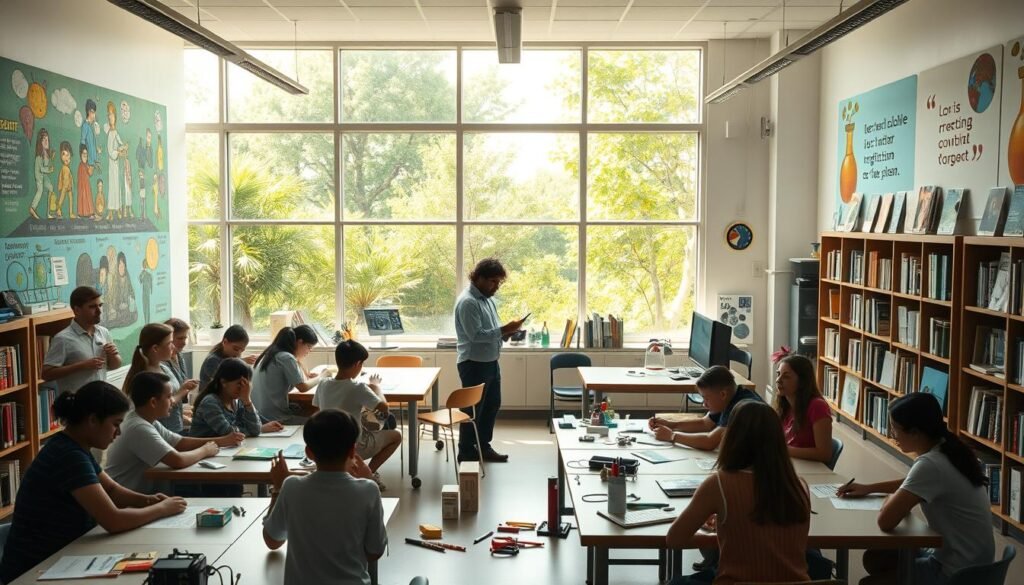
Something remarkable happens when children experiment freely with art supplies, building blocks, or dramatic play. They learn to generate and test ideas naturally. They develop tolerance for ambiguity and persistence through challenges—essential capacities for creative thinking.
Teachers transform from dispensers of predetermined knowledge into facilitators of discovery. This shift creates classrooms where exploration matters as much as arriving at answers. Students practice idea generation techniques organically through open-ended activities that honor individual expression.
Continuing Creative Growth Beyond School Years
Creativity doesn’t conclude when formal schooling ends. Adult learning offers unique opportunities for creative expansion that build upon life experience.
As we accumulate diverse experiences, we gain richer material for creative synthesis. Pursuing learning across varied domains builds the cross-domain knowledge from which creative insights emerge. Taking classes in unfamiliar subjects or developing new skills expands our creative possibility space.
This commitment to lifelong learning signals that we remain students of existence itself. We maintain the beginner’s mind that creativity requires.
Idea generation techniques benefit tremendously from expansive knowledge bases. Our minds make unexpected connections when we understand concepts from multiple fields. The psychology graduate who studies cooking discovers insights about human behavior through recipe creation. The engineer who learns poetry finds new approaches to technical problem-solving.
Lifelong learners cultivate flexibility in their thinking patterns. They recognize that answers exist beyond their current understanding. This openness creates fertile ground for innovation and original thought throughout adulthood.
Educational systems that honor creativity throughout life recognize a profound truth. Learning and creativity are intertwined aspects of human development. Fostering one naturally strengthens the other, creating individuals capable of generating meaningful ideas across their entire lifespan.
The Impact of Technology on Creativity
We live in a paradox where devices unlock creative expression but also suffocate our deepest creative impulses. Technology has fundamentally reshaped how ideas form in our minds and manifest in the world. This transformation brings both remarkable opportunities and hidden dangers that demand our conscious attention.
The digital landscape offers unprecedented access to creative tools once available only to professionals. A teenager in a small town can now compose music, design graphics, or publish writing. These tools rival those used by industry experts.
Yet this democratization comes with a cost that many fail to recognize until they’ve already paid it.
Creative cognition research increasingly focuses on understanding how digital environments influence our capacity for original thinking. Scientists study not just what tools we use, but how these tools reshape neural pathways. The findings reveal a complex relationship that requires wisdom to navigate effectively.
Digital Tools for Creative Expression
The revolution in creative software has removed barriers that once limited artistic expression. Visual artists can experiment with techniques that would have required expensive materials and years of training. Musicians compose entire symphonies using digital instruments that fit in a laptop.
Writers share their work instantly with global audiences, receiving feedback that sharpens their craft.
Creativity apps have transformed how we approach idea generation. Digital brainstorming tools offer structured frameworks for capturing thoughts that might otherwise slip away. Mind mapping software visualizes connections between concepts in ways that paper and pen cannot replicate.
Brain training apps provide another dimension of support. Applications focused on cognitive reframing help users identify and challenge thought patterns that block creative flow. The Clarity app, which uses cognitive behavioral therapy principles, guides users through analyzing their thoughts and emotions.
This therapeutic approach removes psychological obstacles that stand between intention and creative action.
Digital collaboration platforms have dissolved geographical boundaries. Creative partnerships now span continents, bringing together diverse perspectives that enrich projects. Cloud-based tools enable real-time cooperation on writing, design, music, and countless other creative endeavors.
Yet we must acknowledge the shadow side of this digital abundance. The very devices that enable creativity also generate relentless distraction. Constant notifications fragment our attention, making sustained focus required for deep creative work nearly impossible.
Multitasking degrades both cognitive performance and creative quality, despite our cultural celebration of doing many things at once.
Creative cognition research confirms what many of us have experienced: distraction-free environments remain critical for meaningful creative work. This requires intentional practices like silencing phones, closing unnecessary browser tabs, and committing fully to creative sessions. The quality of our creative output depends on protecting this focused space.
| Digital Tool Category | Creative Benefits | Potential Challenges | Mindful Usage Strategy |
|---|---|---|---|
| Creative Software | Democratizes professional techniques, enables experimentation, reduces material costs | Learning curve, over-reliance on presets, comparison with expert work | Focus on skill-building, limit tutorial consumption, practice fundamentals |
| Brainstorming Apps | Captures ideas anywhere, organizes thoughts visually, provides structured frameworks | Can replace deep thinking with surface collection, notification distractions | Designated capture times, regular offline review, disable non-essential alerts |
| Brain Training Tools | Challenges limiting beliefs, provides therapeutic frameworks, builds cognitive flexibility | May substitute for professional help, screen time addition, passive consumption | Use as complement to therapy, set time limits, actively apply techniques |
| Collaboration Platforms | Global partnerships, real-time feedback, diverse perspectives, shared resources | Communication overload, time zone challenges, dilution of individual vision | Clear communication protocols, scheduled sync times, protect solo creative sessions |
Future Innovations in Creativity
The horizon of creative technology stretches beyond what we can fully envision today. Artificial intelligence stands at the frontier of this evolution, presenting both extraordinary opportunity and existential questions. AI tools can now generate art, compose music, and write coherent text.
This capability forces us to reconsider what creativity means and whether human originality remains essential.
Some view AI as a collaborative partner that amplifies human creativity rather than replacing it. Artists use machine learning algorithms to explore aesthetic directions they might never have discovered independently. Writers employ AI assistants to overcome blocks or generate alternative phrasings.
Musicians collaborate with algorithmic composers to create hybrid works that blend human emotion with computational possibility.
Yet others worry that AI threatens the deeply human act of creation. If machines can produce work indistinguishable from human creativity, what value remains in the human creative process? This question touches on profound issues of meaning, purpose, and what makes us uniquely human.
Creative cognition research will play a vital role in understanding how AI affects our creative capacities. Early studies suggest that using AI tools may enhance some creative skills while potentially atrophying others. The key lies in maintaining human agency and intention rather than passively consuming machine-generated content.
Virtual and augmented reality technologies promise new dimensions of creative expression. These immersive environments might enable artistic experiences impossible in physical space. Sculptors could work in three-dimensional virtual studios.
Writers might craft interactive narratives that readers physically enter. Musicians could create spatial compositions that surround listeners in new ways.
Yet these innovations risk deepening our disconnection from embodied experience. If we spend increasing time in virtual worlds, we may lose touch with physical sensations. Natural rhythms have always nourished human creativity.
The challenge is integrating new technologies without abandoning the grounding that physical presence provides.
Wisdom in this technological age requires conscious discernment. We must regularly ask whether specific technologies genuinely serve our creative development or merely create the appearance of creativity. This means evaluating not just what tools can do, but what they do to us as we use them.
The future of creativity depends on our ability to harness technology’s benefits while protecting the conditions that creativity requires. This includes designated offline time for deep work, intentional management of notifications and digital distractions. Balance becomes the essential skill for navigating this paradox.
Creativity and Mental Health
Exploring how creativity touches our psychological wellbeing reveals a deeply personal landscape. The connection between creative expression and mental health extends far beyond simple cause and effect. This relationship deserves our compassionate attention and thoughtful understanding.
Stories often link creativity with suffering, yet the truth reveals something far more complex. Creative practice can serve as both a pathway to healing and a reflection of our inner world. Understanding this connection helps us support both our creative development and psychological wellness.
Moving Beyond the Tortured Artist Myth
The “tortured artist” stereotype has shaped our cultural understanding of creativity for generations. This narrative suggests that psychological pain fuels creative depth and that suffering is necessary for meaningful work. Yet this romanticized view creates a dangerous myth that may discourage people from seeking help.
Research reveals a more balanced reality about creative minds and mental health. Certain mental health conditions appear more common among highly creative individuals, but the relationship isn’t straightforward. Creative people aren’t creative because they suffer, nor do they necessarily suffer because they’re creative.
Specific psychological traits create a shared foundation for both creativity and vulnerability. Emotional sensitivity, openness to experience, and intense absorption may facilitate creative work while increasing susceptibility to challenges. These traits allow creative individuals to perceive the world with remarkable depth and nuance.
The key insight transforms our understanding completely. Creativity can flourish with or without psychological distress. Treating mental health conditions generally enhances rather than diminishes creative capacity, providing greater emotional resources and clearer mental space.
Harnessing Creativity as Therapeutic Practice
Engaging in creative activities offers powerful therapeutic benefits for our mental wellness. Simple practices like coloring in adult coloring books significantly improve psychological wellbeing. Creative pursuits reduce stress, anxiety, and depression through multiple interconnected mechanisms that support mind and body.
The process of creative absorption induces a psychological flow state, those timeless experiences where we become completely engaged. These flow experiences quiet anxious rumination and create mental space away from worry. Our conscious awareness merges with the creative task, providing respite from self-criticism and negative thought patterns.
Creative expression triggers natural neurochemical responses that elevate our mood. The process stimulates dopamine production, often called the happiness hormone and a natural anti-depressant. This biochemical reward reinforces our creative practice and creates positive associations with the work itself.
The focused attention required for creative tasks produces measurable physiological benefits. Regular creative engagement reduces heart rate and lowers physiological stress markers throughout the body. These calming effects extend beyond the creative session, influencing our baseline stress levels over time.
Creative practice also provides a container for processing difficult emotions. We can transform psychological pain into meaningful work, giving shape and form to overwhelming feelings. This externalization helps us gain perspective and create distance from intense emotional experiences.
Meditation complements creative practice beautifully, helping clear mental space for divergent thinking. Just five minutes of mindful breathing before creative sessions can transform our relationship with the work. This brief mindfulness practice offers a break from the harsh inner critic that inhibits creative flow.
Consider implementing this simple meditation routine:
- Find a comfortable seated position in your creative space
- Close your eyes and focus attention on your natural breath
- Notice thoughts without judgment, gently returning to the breath
- Continue for five minutes before beginning creative work
- Approach your creative session with curiosity rather than expectation
Regular creative engagement supports long-term cognitive health. Creative activities keep the mind sharp and reduce dementia risk as we age. The mental flexibility required for creative thinking builds cognitive reserve that protects brain function over time.
Creative practice also combats loneliness through community connection. Joining a writing group, art class, or music ensemble naturally brings us together with others. These social connections provide additional mental health benefits beyond the creative work itself.
| Therapeutic Approach | Mental Health Benefit | How It Works | Recommended Frequency |
|---|---|---|---|
| Creative Flow Activities | Reduces anxiety and rumination | Induces psychological flow state that quiets worried thoughts | 3-5 sessions weekly |
| Mindfulness Before Creating | Decreases self-criticism | Creates mental space and silences inner critic | 5 minutes before each session |
| Expressive Art Making | Processes difficult emotions | Provides safe container for emotional exploration | As needed during challenging times |
| Group Creative Practice | Reduces loneliness and isolation | Builds social connections through shared interests | Weekly group sessions |
Other therapeutic approaches integrate creativity with psychological healing. Cognitive behavioral techniques help challenge creative blocks and self-limiting beliefs. Art therapy provides access to unconscious material that may be difficult to reach through words alone.
Recognizing creativity and mental health as mutually supportive dimensions of our wellbeing matters deeply. Tending to our psychological health creates optimal conditions for creativity to flourish. Engaging in regular creative practice supports our mental wellness through multiple biological, psychological, and social pathways.
We don’t need to choose between creative productivity and mental health care. We can embrace both as complementary practices that enhance each other. Creative expression becomes medicine, while psychological wellness provides the foundation for our most authentic and sustained creative work.
Gender and Creativity
Creative potential knows no gender boundaries. Yet the paths to creative expression remain profoundly shaped by gendered experiences. The relationship between gender and the creative thought process reflects not biological destiny but cultural expectations.
Differences emerge more from what society allows than what nature determines. Understanding this dynamic opens pathways to richer, more inclusive creative communities. It invites us to question whose voices we hear and whose contributions we value.
This exploration matters not just for fairness, though fairness is essential. Diversity unlocks humanity’s full creative capacity.
How Social Patterns Shape Creative Expression
The story of gender and creativity is largely a story of opportunity. Throughout history, women faced systematic exclusion from creative fields that shaped culture and innovation. Their contributions were often uncredited or dismissed as lesser forms of expression.
Women’s work frequently received different labels than men’s equivalent efforts. What men created was called “art,” while women’s parallel efforts were categorized as “craft.” Male writers produced “literature,” while women wrote “domestic fiction.”
These distinctions carried weight beyond semantics. They determined who received resources, recognition, and historical remembrance.
Different creative domains became strongly gendered over time. Visual arts and literature offered some access to women, though male dominance persisted. Musical composition, architecture, and philosophy remained almost exclusively male preserves.
Contemporary research reveals no significant differences in creative potential between genders. Yet gendered patterns in creative expression persist due to ongoing socialization. From early childhood, girls and boys receive different encouragement for creative exploration.
Girls often face channeling toward communal and nurturing creative activities. Boys receive more support for individualistic creative ambition.
Stereotype threat creates another barrier. This phenomenon—anxiety about confirming negative stereotypes—can suppress creative performance. The creative thought process flourishes in psychological safety, which gendered expectations can undermine.
Women and gender minorities often encounter harsher criticism for equivalent creative work. They face greater skepticism about their capabilities and receive lower compensation. These realities shape the willingness to pursue creative paths in the first place.
Building Inclusive Creative Spaces
Supporting diversity in creativity requires both structural change and individual awareness. We can start by examining our own assumptions about what creative excellence looks like. The default image of “creative genius” remains predominantly masculine in popular culture.
Several practical approaches can foster more inclusive creative communities:
- Actively seek diverse voices: Make deliberate efforts to discover and amplify creative work by women and gender minorities
- Challenge evaluation biases: Question whether criticism applies equally across genders or reflects unconscious stereotypes
- Provide equitable resources: Ensure funding, space, recognition, and advancement opportunities distribute fairly
- Create mentorship connections: Help emerging creators find mentors who share their gender identity and understand their challenges
- Build genuine inclusion: Move beyond tokenism to create environments where diverse perspectives are truly welcomed and valued
Mentorship matters enormously in creative development. Seeing successful creators who share one’s gender identity expands the sense of what’s possible. It provides not just inspiration but practical knowledge about navigating obstacles.
Educational institutions and arts organizations carry special responsibility. They shape who receives training, whose work gets exhibited or published, and which contributions enter history. Their commitment to equity changes the creative landscape for generations.
The benefits of gender diversity extend beyond individual fairness. Diverse creative teams generate more innovative solutions than homogeneous groups. Different perspectives, experiences, and approaches combine to produce richer outcomes.
Creating inclusive spaces enriches everyone’s creative thought process. Exposure to different viewpoints and methods strengthens creative thinking. It pushes us beyond familiar patterns into new territories of possibility.
Gender diversity in creativity ultimately serves our collective flourishing. Every voice excluded represents ideas never born, problems never solved, beauty never created. By dismantling barriers and building truly inclusive creative communities, we unlock humanity’s full potential.
This work requires ongoing commitment. Cultural patterns established over centuries don’t dissolve quickly. Yet each step toward genuine inclusion moves us closer to a creative landscape that celebrates human diversity.
The Economics of Creativity
Examining creativity through an economic lens reveals something powerful. Innovative thinking fuels more than personal expression—it drives entire economies. The relationship between creative work and financial systems shows a complex dance.
Understanding this connection helps us navigate sustaining creative lives. It also honors the deeper purposes that creativity serves.
Creative work generates substantial value beyond the canvas or concert hall. This economic dimension brings both opportunity and tension for creators.
How Creative Work Drives Economic Prosperity
The creative economy has become a cornerstone of modern prosperity. Industries built on imagination now contribute significantly to national income. They also provide employment across developed nations.
Creative industries encompass a broad spectrum of fields. These sectors transform ideas into tangible economic value through various channels:
- Visual and performing arts that enrich cultural landscapes and attract tourism
- Design and architecture that shape our physical environments and user experiences
- Digital media and gaming that create immersive worlds and new forms of engagement
- Publishing and film that tell stories and preserve cultural memory
- Advertising and marketing that connect products with human needs and desires
These creative industries demonstrate remarkable resilience during economic challenges. They often weather downturns better than traditional sectors. They adapt quickly to changing circumstances.
The concept of the creative class highlights how creative workers influence regions. Cities compete to attract these individuals, recognizing that creativity catalyzes broader economic development. Each creative job typically supports additional employment in related sectors.
However, this economic framing presents uncomfortable questions. Valuing creativity primarily for productivity may cause us to lose something essential. The pressure to monetize every creative impulse can distort development.
Many creative workers face precarious circumstances despite the sector’s overall economic contributions. Inadequate compensation, unstable employment, and exploitation remain persistent challenges. Economic growth doesn’t automatically translate to individual wellbeing.
Innovation as Competitive Advantage in Modern Business
Beyond traditionally creative fields, imaginative thinking has become essential for business success. Organizations increasingly recognize that cognitive innovation drives their ability to solve problems. It also helps them develop products and adapt to constant change.
Companies invest heavily in fostering creative capabilities across their workforce. They hire creative professionals into diverse roles and implement training programs. They also attempt to build cultures that support experimentation.
Design thinking methodologies exemplify how creative processes inform strategic business planning. This approach brings empathy, experimentation, and iteration into decision-making. These decisions were traditionally dominated by analytics and efficiency metrics.
| Traditional Business Approach | Creative Economy Approach | Key Difference |
|---|---|---|
| Linear problem-solving processes | Iterative exploration and prototyping | Embraces uncertainty and learning |
| Risk minimization focus | Calculated experimentation | Views failure as information |
| Efficiency as primary goal | Innovation alongside efficiency | Balances optimization with discovery |
| Individual expertise valued | Collaborative creativity emphasized | Leverages diverse perspectives |
The value proposition is clear: organizations that harness cognitive innovation gain competitive advantages. They respond more nimbly to disruption and create more compelling customer experiences. They also develop breakthrough solutions.
Yet tensions persist between creativity’s exploratory nature and business demands for predictability. Creative work requires psychological safety, time for incubation, and tolerance for ambiguity. These qualities challenge conventional management practices focused on measurable outcomes.
The most successful organizations learn to hold this creative tension. They provide enough structure and resources to enable productive work. They also maintain sufficient freedom for genuine innovation to emerge.
The challenge is not to make creativity economically productive, but to keep economic systems from colonizing the creative spirit entirely.
Understanding the economics of creativity empowers us to navigate practical realities. We can sustain creative lives by recognizing how value flows through economic systems. We also maintain awareness of how these frameworks shape creative possibility.
This awareness allows creative individuals to engage commerce strategically rather than reactively. We can make conscious choices about which opportunities align with our creative vision. The goal isn’t to reject economic considerations but to integrate them wisely.
Case Studies in Creativity
The lived experiences of creative pioneers make abstract concepts vivid and actionable. Theories and principles find their truest expression in stories of real people. These case studies reveal universal patterns and deeply personal approaches each creator develops.
Examining specific examples bridges understanding creativity intellectually and practicing it authentically. Real stories show how creativity works in action.
The Creative Practices of Remarkable Innovators
Maya Angelou’s disciplined writing practice offers profound insights into balancing structure with openness. She rose before dawn and rented sparse hotel rooms. Her space included only a Bible and dictionary.
Writing longhand on yellow legal pads until mid-afternoon, she created space for unconscious idea formation. Her process combined rigorous routine with receptivity to inspiration. She edited ruthlessly, understanding that creativity requires both generation and refinement.
Composer Igor Stravinsky approached his craft with similar discipline but different techniques. He worked at the piano every morning regardless of inspiration. He treated composition as craftsmanship requiring daily practice.
Rather than waiting for muses to visit, he invited them through consistent showing up. This perspective transforms creativity from mystical gift to learnable skill.
Mathematician Andrew Wiles took a contrasting path solving Fermat’s Last Theorem. He spent seven years in solitary contemplation. His breakthrough arrived through sustained, undistracted attention to one complex problem.
This demonstrates how different creative challenges demand different approaches.
Artist Frida Kahlo transformed personal suffering into profound visual narratives. Her work demonstrates how autobiography and imagination interweave. She didn’t separate her life from her creativity but made them inseparable.
Architect Frank Lloyd Wright obsessively drew and redrew designs. His thousands of sketches reveal creativity as process rather than single flash. Iteration helped him refine his vision.
Despite their diverse methods, these creators share common threads:
- Disciplined practice that doesn’t depend on mood or inspiration
- Tolerance for ambiguity and inevitable failures along the way
- Deep domain knowledge combined with willingness to break conventions
- Trust in both conscious craft and unconscious emergence of ideas
Analyzing Breakthrough Creative Projects
The development of the iPhone illustrates how successful projects integrate multiple forms of innovation. Steve Jobs insisted on intuitive interface design that prioritized human experience. Engineers wanted to showcase technological capabilities, but Jobs understood that true innovation serves human needs first.
This project combined technological advancement, design thinking, and deep understanding of human behavior. The result transformed entire industries.
Lin-Manuel Miranda’s creation of “Hamilton” demonstrates how constraints can enable creativity. Historical facts provided structure, while hip-hop rhythms offered fresh musical vocabulary. The project succeeded because Miranda embraced limitations as creative frameworks rather than obstacles.
Working within boundaries paradoxically opened new possibilities.
The Mars Rover missions showcase collaborative creativity across disciplines. Engineers, scientists, and artists contributed unique perspectives to solve unprecedented challenges. No single discipline held all answers; breakthrough emerged from synergy.
These successful projects share identifiable patterns:
- Clear vision combined with adaptive flexibility as circumstances change
- Collaborative synergy that transcends individual contributions
- Iterative refinement through multiple prototypes and drafts
- Persistence through obstacles that would discourage lesser commitment
The Mars Rover team didn’t achieve success on first attempt. They tested, failed, learned, and tried again. This cycle of iteration proved essential to eventual breakthrough.
Creativity isn’t mystical inspiration but rather disciplined process, strategic thinking, and courageous commitment to bringing ideas into material form.
These case studies teach us that creativity combines multiple elements. We need both structure and spontaneity, individual vision and collaborative input. Technical skill and imaginative leaps work together.
The most successful creators develop practices that honor all these dimensions. They show up consistently and trust their unconscious processes. They welcome failure as teacher and persist through inevitable challenges.
These stories remind us that creativity is accessible. It doesn’t require genius or special circumstances. It requires dedication, courage, and willingness to learn from both successes and failures.
Conclusion
Creativity is not a mystical gift for the chosen few. It lives within each of us, waiting to emerge. The right conditions help it flourish.
Synthesizing Our Understanding
Understanding how ideas form changes our relationship with creativity. Original thoughts arise through specific brain mechanisms. They don’t appear from thin air.
Neural pathways of creativity involve intricate connections. Memory systems, emotional centers, and cognitive regions all work together.
Creative capacity thrives on balance. It requires both structure and freedom. Quiet reflection and collaborative energy both matter.
Each person carries unique creative potential. Personality traits, environmental influences, and cultural background shape it. Life experiences also play a role.
Creativity and ideas are inseparable. Each gives birth to the other. We all can bring something new into existence.
Continuing the Journey Forward
Research on creativity continues expanding in promising directions. Neuroscience advances reveal deeper insights. Scientists learn more about how ideas form within our brains.
Researchers at Stanford University and MIT explore artificial intelligence’s role. They study how AI can augment human creative potential. They also question what makes our creativity distinctly human.
Educational systems worldwide experiment with new methods. They nurture creative thinking from childhood through adulthood.
The mystery of creativity will never be fully explained. Perhaps that’s how it should remain. Our task is working skillfully with both understanding and wonder.
Bring awareness to your creative process. Stay open to inspiration’s grace. May these insights support your own creative unfolding.
FAQ
What exactly is creativity, and is it only about artistic expression?
How do ideas actually form in the brain?
What are the stages of the creative process?
What’s the difference between divergent and convergent thinking?
How does the environment affect creativity?
Do you have to be in a positive mood to be creative?
What is the default mode network and why does it matter for creativity?
Can creativity be learned, or is it an innate gift?
What is the psychological flow state and how do I achieve it?
How does culture influence creativity?
What creative problem-solving techniques actually work?
Is there really a connection between creativity and mental illness?
How does education either support or suppress creativity?
How does technology impact creativity?
Why does taking a shower or walking often lead to creative breakthroughs?
What role does collaboration play in creativity?
How can I overcome creative blocks?
What personality traits support creativity?
How does memory influence creativity?
What is cognitive innovation and how does it relate to creativity?


The PsyForU Editorial Collective is the research and editorial team of PsyForU Research International. The collective prepares educational, psychological, mental-health-awareness, inclusion, neurodiversity, and research-methodology content for students, parents, educators, researchers, and general readers. PsyForU content is intended for awareness, education, and capacity-building and should not be treated as clinical diagnosis, therapy, medical advice, legal advice, or emergency mental-health support.