


Introduction
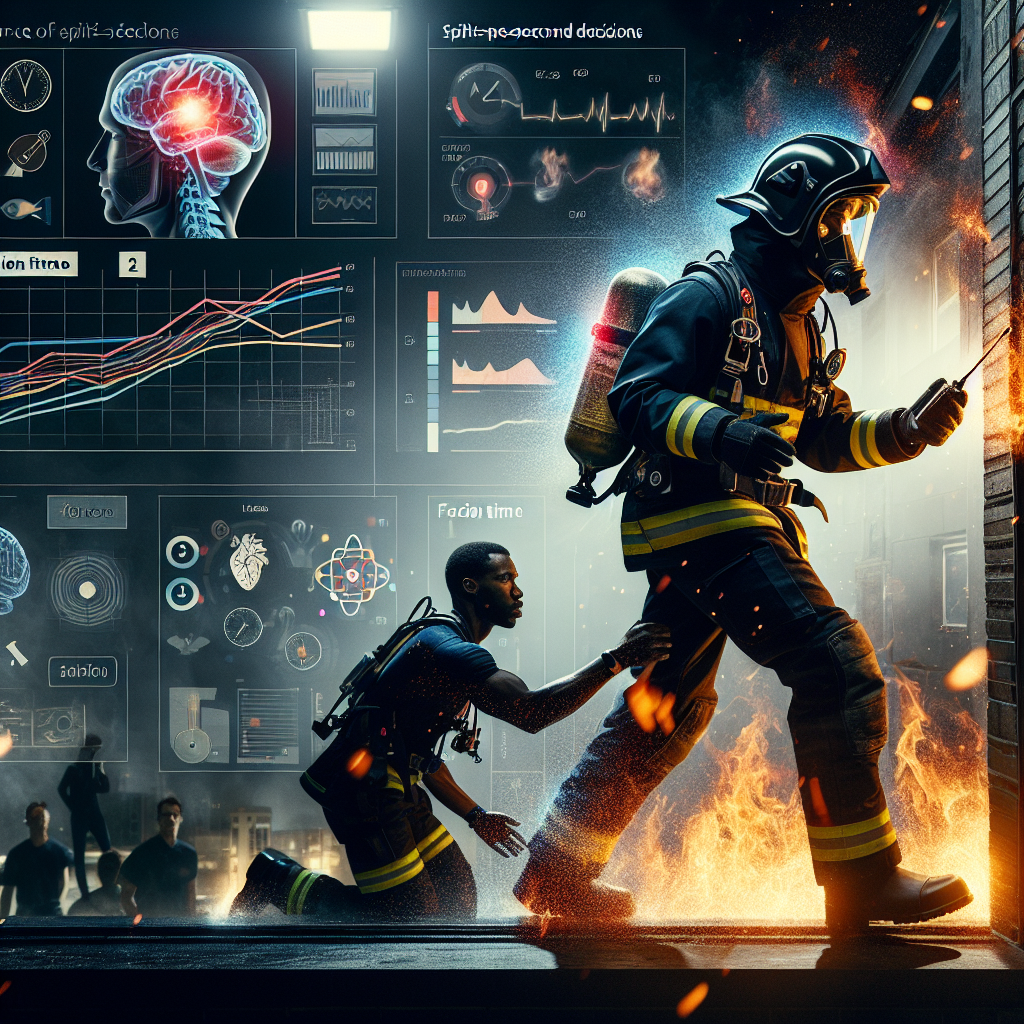
In an age where the difference between triumph and disaster often comes down to mere moments, understanding The Science of Split-Second Decisions: Reaction Time in High-Stakes Situations has never been more critical. Whether it’s a police officer responding to a sudden threat, a pilot navigating turbulence, or an athlete racing towards victory, the capacity to make instant decisions can have far-reaching Consequences. These split-second choices not only determine outcomes—they can change lives forever.
This article delves deeply into the mechanisms behind our reaction times during high-stakes situations, revealing the extraordinary science that governs our ability to respond swiftly and effectively. By unearthing the biological, psychological, and environmental factors contributing to reaction time, we aim to empower individuals in various fields to enhance their decision-making abilities under pressure.
Understanding Reaction Time
What is Reaction Time?
Reaction time is defined as the interval between stimulus perception and the subsequent response. It’s a complex process that begins with sensory input: visual, auditory, or tactile information triggers neurons to send signals to the brain. From there, the brain processes this information and initiates a physical response by activating muscles.
Types of Reaction Time
-
Simple Reaction Time: Involves a single stimulus and a single response, such as hitting a breaking button when a light turns on.
-
Choice Reaction Time: Involves multiple stimuli and responses, requiring the decision-maker to choose which action to take.
- Discriminative Reaction Time: Involves filtering irrelevant stimuli and focusing on the appropriate one, such as deciding which of two balls thrown is closer and should be caught first.
The Neuroscience Behind Quick Decisions
Brain Functions Related to Reaction Time
The brain’s ability to process information quickly relies on various regions working in unison. The sensory cortex receives the initial stimuli, while the prefrontal cortex evaluates responses, and the motor cortex executes them. Here are some critical components:
- Thalamus: Acts as a relay center for sensory information.
- Basal Ganglia: Involved in movement regulation and decision-making.
- Cerebellum: Responsible for fine motor control and coordination.
The Role of Neurotransmitters
Neurotransmitters like dopamine and adrenaline play significant roles in enhancing reaction times. For instance, adrenaline heightens alertness and prepares the body for rapid responses, a mechanism rooted in our physiological response to stress—often termed the "fight or flight" response.
Case Studies Illustrating Reaction Time in Action
Case Study 1: Police Officers in High-Pressure Situations
A 2015 study published in the Journal of Police and Criminal Psychology analyzed police officers’ reactions during simulated scenarios involving active shooter situations. The findings revealed that well-trained officers had faster reaction times due to extensive exposure to high-stress environments and scenarios similar to those they might encounter in real life.
Relevance: This case study illustrates how repeated exposure to high-pressure situations can enhance decision-making capabilities.
Case Study 2: The Aviation Industry
In a controlled experiment, pilots were put through a series of emergency scenarios to test their reaction times. Results indicated that pilots with simulator training performed significantly better than those who relied solely on textbook knowledge.
Relevance: This highlights the necessity for practical application and training in improving reaction time outcomes, particularly when decisions could have catastrophic outcomes.
Case Study 3: Competitive Sports
A study from the University of Exeter explored the reaction times of elite athletes in various sports. Results showed that athletes like sprinters exhibit remarkable reaction speeds due to rigorous practice, mental conditioning, and physical training.
Relevance: This underscores the necessity of not just physical readiness but mental acuity in response situations.
The Psychological Factors Influencing Reaction Time
Stress and its Impact
It’s well-documented that stress can either hinder or enhance reaction time. Excessive stress may lead to panic, deteriorating performance, while moderate levels can boost focus and alertness.
Experience vs. Impulse
Experience often wins in high-stakes scenarios. Practiced individuals often rely on instinct more than conscious thought, leading to quicker, often more accurate responses. The familiarization with typical stressors and decision-making processes allows for a more refined reaction time.
Environmental Influences on Reaction Time
External Stimuli
Factors such as noise, light conditions, and time pressure can significantly affect an individual’s reaction time. In a chaotic environment, distractions can cloud judgment and slow reaction times.
Training Environments
Creating controlled, high-stakes scenarios for practice—think simulated shooting ranges for police officers or collaborative simulators for pilots—can yield improvements in reaction times.
Enhancing Reaction Time: Actionable Insights
Training Regimen
-
Simulations and Role-Playing: Engage in realistic scenario training to better prepare for actual high-stakes situations.
-
Mindfulness Techniques: Incorporate mindfulness and meditation as part of your routine to manage stress and enhance focus.
- Physical Conditioning: Regular physical activity not only sharpens reflexes but also conditions the brain to process stimuli more efficiently.
Cognitive Techniques
-
Decision-Making Frameworks: Develop frameworks to streamline decision-making processes under pressure.
- Mental Visualization: Practice visualizing scenarios and the necessary responses to cement knowledge and preparedness.
FAQs Section
-
What is the average human reaction time?
- The average human reaction time is approximately 200 to 250 milliseconds.
-
Does age affect reaction time?
- Yes, reaction times typically slow down as people age, due to changes in processing speed and cognitive decline.
-
Can reaction time be improved?
- Absolutely! Through targeted training, simulations, and mental conditioning, individuals can enhance their reaction times significantly.
-
Are there specific exercises to improve reaction time?
- Yes, exercises like fast-paced video games, agility drills, or reflex training can improve reaction times.
- What role does nutrition play in reaction time?
- Nutrition significantly impacts cognitive function and athletic performance; a balanced diet supports optimal brain and body function.
Conclusion
The study of The Science of Split-Second Decisions: Reaction Time in High-Stakes Situations reveals critical insights into how humans react under pressure. From understanding the neuroscience behind these quick responses to implementing practical training techniques, the lessons learned can have profound applications across various fields, including law enforcement, aviation, and sports.
As we continue to navigate an unpredictable world, enhancing our reaction time will not only equip us for challenges but empower us to seize opportunities in the blink of an eye. Embrace these strategies, engage in proactive training, and prepare for the high-stakes decisions that await.
By understanding and applying these principles, we can become the architects of our own fate—capable of making split-second decisions that yield positive outcomes.


The PsyForU Editorial Collective is the research and editorial team of PsyForU Research International. The collective prepares educational, psychological, mental-health-awareness, inclusion, neurodiversity, and research-methodology content for students, parents, educators, researchers, and general readers. PsyForU content is intended for awareness, education, and capacity-building and should not be treated as clinical diagnosis, therapy, medical advice, legal advice, or emergency mental-health support.