


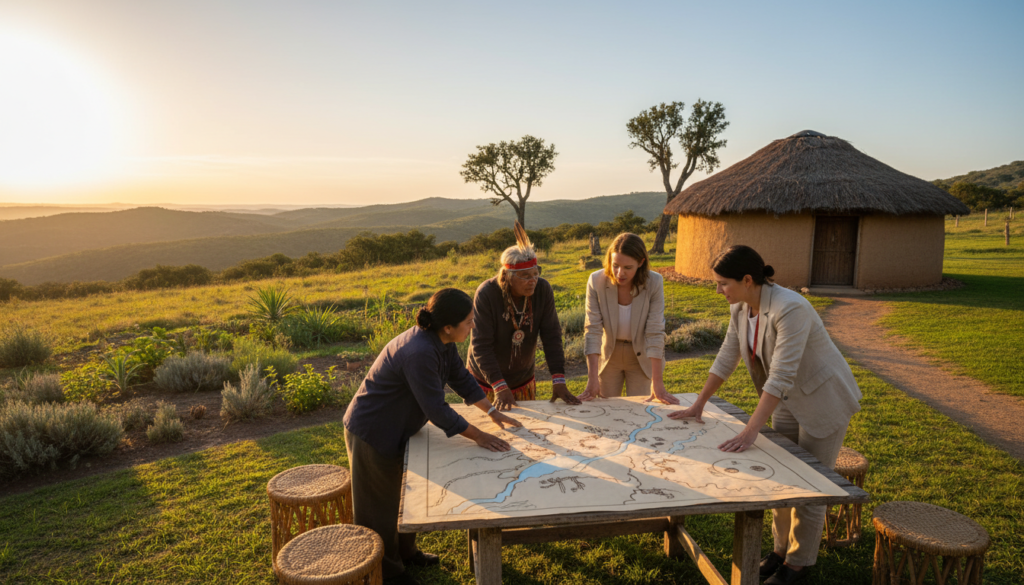
Can ancient wisdom from Indigenous communities solve today’s big problems? This is at the core of indigenous knowledge systems research. It connects old traditions with today’s global issues. World leaders are focusing on Indigenous Knowledge Systems at big UN meetings.
Indigenous Knowledge Systems are a deep well of wisdom about people and nature. This knowledge has been shared for generations. It includes practices, beliefs, and understanding that grow while staying true to culture.
The Convention on Biological Diversity officially values traditional knowledge through Article 8j. It sees it as key to saving biodiversity. The Kunming-Montreal Biodiversity Framework also highlights its role in sustainable futures. But this iks academic discipline does more than protect the environment.
Now, experts, policymakers, and practitioners see the value of these knowledge systems. They offer complete solutions to big global problems. What was once ignored in Western schools is now a vital field needing serious study and teamwork.
Key Takeaways
- Indigenous Knowledge Systems are a dynamic, living wisdom passed down through generations.
- International frameworks like the Convention on Biological Diversity officially value traditional knowledge in solving global challenges.
- The field has grown from being seen as just cultural studies to a respected area of study, linking ancient wisdom with modern research.
- IKS offers complete, culturally-based solutions that go beyond saving biodiversity to tackle complex sustainability issues.
- Understanding this field means appreciating its unique ways of knowing, which are different from Western knowledge.
- Working together between Indigenous knowledge keepers and researchers opens up new ways to solve global problems.
Defining Indigenous Knowledge Systems in Academic Context
In today’s academic world, Indigenous Knowledge Systems stand out as unique ways of knowing. They challenge traditional Western views on knowledge. It’s important to define these systems clearly while respecting their cultural depth.
Universities worldwide are now recognizing the value of iks theoretical framework approaches. These approaches honor indigenous epistemologies without oversimplifying them.
The study of Indigenous Knowledge Systems is a key area where anthropology, ecology, education, and cultural studies meet. These knowledge traditions offer new ways to understand human and environmental relationships. As research institutions in India and globally focus more on indigenous scholarship, defining these systems accurately is key.
What Constitutes Indigenous Knowledge Systems
Indigenous Knowledge Systems are complete ways of understanding the world. They cover human, animal, and natural world relationships, passed down through generations. These systems combine observation, inquiry, and experience into a cohesive framework.
In India, Indic knowledge systems show this integrated approach. Ancient scholars combined philosophy, mathematics, medicine, astronomy, and ethics into a unified educational framework. They saw education as a transformative process, not just information transfer.
Indigenous Knowledge Systems have several key components. They include ecological knowledge about local plants, animals, climate, and resource management. They also have social and governance structures that define community relationships and decision-making.
These systems also preserve spiritual and cosmological beliefs. These beliefs give meaning, purpose, and ethical frameworks for human behavior. They often emphasize living in harmony with the environment and caring for future generations.
They also maintain practical skills and technologies adapted to specific environments. This includes agricultural techniques, construction methods, and medicinal preparations.
The traditional knowledge research methodology used to study these systems must account for their holistic nature. Researchers cannot extract individual components without understanding their relationships to the broader knowledge framework. Each element connects to and reinforces others, creating resilient systems that have sustained communities through environmental and social changes.
Knowledge validation within these systems operates differently than Western scientific peer review. Indigenous communities validate knowledge through practical application, intergenerational consensus, and alignment with established cultural principles. Elders and knowledge keepers serve as repositories and arbiters of authentic traditional knowledge, ensuring accuracy and appropriate transmission.
Historical Evolution of IKS as an Academic Discipline
The recognition of Indigenous Knowledge Systems as a legitimate academic discipline followed a complex historical trajectory. It was marked by colonial exploitation, anthropological documentation, and eventual indigenous-led reclamation. Early Western scholarship often approached indigenous knowledge through extractive lenses, viewing communities as research subjects. This colonial-era research framework caused significant harm and established patterns of appropriation that contemporary scholars work to rectify.
In the mid-20th century, anthropologists and ethnographers began documenting indigenous practices, such as ethnobotany and traditional medicine. Yet, these efforts often occurred without meaningful community consent or benefit-sharing. The knowledge recorded in academic journals and institutional archives remained inaccessible to the communities from which it originated, creating ethical dilemmas that resonate today.
The 1970s and 1980s saw significant shifts as postcolonial critiques challenged extractive research paradigms. Indigenous scholars and activists demanded recognition of their knowledge systems as legitimate epistemologies deserving of academic respect. This period saw the emergence of indigenous scholarship development initiatives that trained community members as researchers and advocates for their own knowledge traditions.
International recognition accelerated through United Nations initiatives, such as the Convention on Biological Diversity (1992) and the United Nations Declaration on the Rights of Indigenous Peoples (2007). These frameworks established indigenous peoples’ rights to their knowledge, cultures, and traditional practices. Academic institutions responded by creating dedicated research centers, degree programs, and ethical protocols for IKS research.
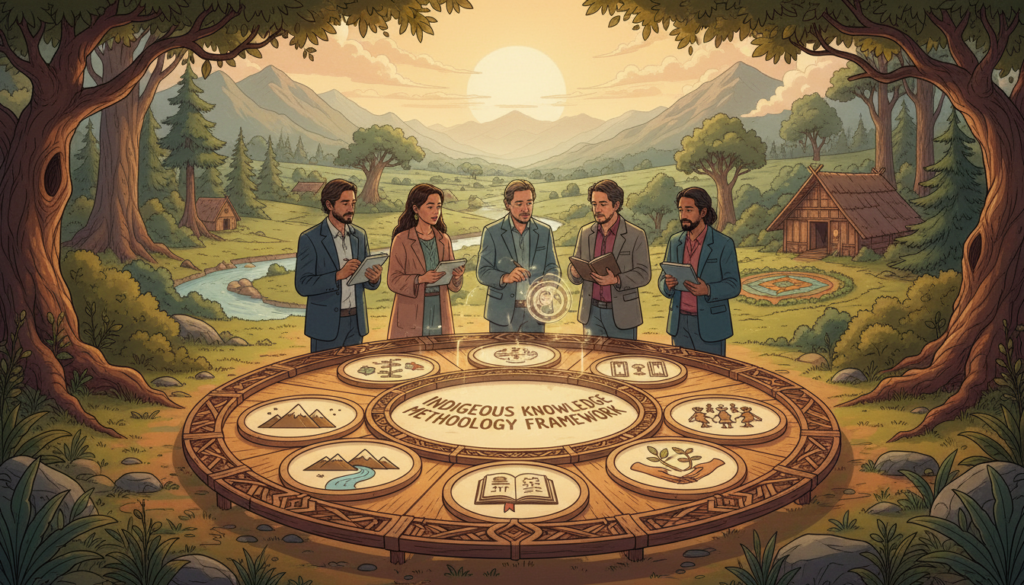
In India, the formalization of IKS as an academic field gained momentum through multiple institutional developments. The establishment of specialized centers at universities and the inclusion of traditional knowledge in national education policies marked significant progress. The National Education Policy 2020 explicitly calls for integration of Indian knowledge systems throughout the curriculum, recognizing their value for contemporary education.
Contemporary IKS scholarship emphasizes collaborative research models where indigenous communities maintain authority over their knowledge. This represents a fundamental departure from earlier extractive approaches. The evolution continues as institutions develop appropriate iks theoretical framework models that accommodate indigenous ways of knowing without forcing them into Western academic structures.
Distinguishing Characteristics of Indigenous Knowledge
Indigenous Knowledge Systems have unique characteristics that differentiate them from Western scientific paradigms. Understanding these distinguishing features is essential for researchers, policymakers, and educators working to integrate traditional knowledge into contemporary contexts. These characteristics emerge from the specific historical, cultural, and environmental contexts in which indigenous communities developed their knowledge systems.
The distinctiveness of Indigenous Knowledge Systems extends beyond content to encompass fundamental differences in knowledge creation, validation, transmission, and application. Researchers employing traditional knowledge research methodology must recognize these differences to conduct ethical and meaningful scholarship. The following subsections explore two critical distinguishing characteristics in depth.
Holistic and Interconnected Nature
Indigenous Knowledge Systems operate through holistic frameworks that integrate physical, mental, spiritual, and emotional dimensions of understanding. This contrasts sharply with Western scientific traditions that typically separate these domains into distinct disciplines. The holistic approach recognizes that true understanding requires attention to relationships and connections, not isolated facts.
In practice, this holistic nature means that ecological knowledge connects intrinsically to social structures, spiritual beliefs, and ethical principles. For example, traditional agricultural practices in indigenous communities incorporate not only technical knowledge about soil and crops but also ceremonial practices, social cooperation systems, and spiritual relationships with the land. These elements function as an integrated whole, not separate components.
The interconnected characteristic manifests in how knowledge keepers teach and transmit understanding. Instead of presenting information in linear, compartmentalized sequences, indigenous pedagogies use stories, experiences, and demonstrations that reveal multiple layers of meaning simultaneously. A single teaching story might convey ecological information, moral guidance, historical knowledge, and spiritual wisdom together.
This holistic approach offers significant advantages for addressing complex contemporary challenges. Climate change, biodiversity loss, and social inequality require integrated solutions that account for multiple interconnected factors. Indigenous Knowledge Systems provide models for such integrated thinking, demonstrating how communities have historically managed complex socio-ecological systems sustainably.
Researchers studying these holistic systems face methodological challenges when using conventional academic frameworks designed for reductionist analysis. The iks theoretical framework must accommodate interconnectedness without forcing artificial separations. This requirement has led to the development of systems thinking approaches and relational methodologies specific to IKS research.
Place-Based and Context-Specific Knowledge
Indigenous Knowledge Systems demonstrate profound place-based characteristics, developing in intimate relationship with specific landscapes, ecosystems, and environmental conditions. This place-based nature means that knowledge remains deeply rooted in particular geographic and cultural contexts. Communities develop detailed understanding of their local environments through centuries of observation and interaction, creating knowledge that proves highly relevant for local decision-making.
The context-specific dimension extends beyond physical geography to encompass social, cultural, and historical contexts. Knowledge practices that work effectively in one indigenous community may not transfer directly to another, even within similar environments. Each community’s unique history, social structures, and cultural values shape how they develop and apply knowledge.
This place-based characteristic offers both strengths and limitations. The strength lies in the precision and applicability of knowledge for specific contexts. Indigenous communities possess unparalleled understanding of their local ecosystems, including subtle variations in species behavior, microclimate patterns, and seasonal cycles. This detailed local knowledge often surpasses what generalized scientific models can provide.
Yet, the context-specific nature creates challenges for scaling or generalizing indigenous knowledge. Researchers and policymakers cannot simply extract practices from one community and apply them elsewhere without careful adaptation. The traditional knowledge research methodology must account for this specificity, avoiding inappropriate generalizations while identifying principles that might inform broader applications.
In India, the tremendous diversity of indigenous communities across varied ecological zones demonstrates this place-based characteristic. Tribal communities in the Himalayan regions possess knowledge systems adapted to mountain ecosystems, while those in coastal areas have developed expertise in marine resource management. Forest-dwelling communities maintain sophisticated understanding of biodiversity conservation practices specific to their environments.
Contemporary efforts toward indigenous scholarship development must respect this place-based nature while facilitating knowledge exchange between communities. Creating platforms where indigenous knowledge holders can share insights across contexts, while maintaining control over their knowledge, represents an ongoing challenge and opportunity for IKS research institutions.
| Characteristic Dimension | Indigenous Knowledge Systems | Western Scientific Knowledge | Research Implications |
|---|---|---|---|
| Knowledge Integration | Holistic and interconnected across physical, spiritual, social, and ecological domains | Compartmentalized into distinct disciplines and specializations | Requires integrative research frameworks that honor connections between knowledge domains |
| Geographic Relevance | Place-based and context-specific to particular landscapes and communities | Seeks universal principles and generalized applications | Demands careful attention to local contexts and limitations on knowledge transferability |
| Validation Mechanisms | Community consensus, intergenerational transmission, practical effectiveness | Peer review, replication, empirical testing | Necessitates respect for indigenous validation processes alongside academic standards |
| Temporal Orientation | Long-term intergenerational perspective emphasis on sustainability | Often short-term project-based timelines | Requires extended research relationships and commitment beyond typical grant cycles |
Understanding these distinguishing characteristics fundamentally shapes how researchers approach Indigenous Knowledge Systems. The holistic and place-based nature demands research methodologies that move beyond extractive data collection toward genuine collaborative partnerships. Academic institutions developing IKS programs must create structures that accommodate these unique characteristics without forcing indigenous knowledge into incompatible Western frameworks.
The characteristics explored in this section establish foundational understanding for deeper engagement with IKS epistemology, research methodologies, and practical applications. Recognizing Indigenous Knowledge Systems as distinct yet equally valid ways of knowing creates possibilities for meaningful dialogue between knowledge traditions and collaborative approaches to addressing contemporary challenges.
Epistemological Foundations of Indigenous Knowledge Research
Indigenous Knowledge Systems research has a unique framework. It changes how we see knowledge and its value. These iks epistemological frameworks come from long years of observing and learning together. But, colonization pushed these ways of knowing to the side.
Indigenous epistemology challenges old ways of thinking in research. It’s key for researchers to truly connect with indigenous communities and their knowledge.
Indigenous Ways of Knowing and Being
Indigenous epistemology studies look at how knowledge is made and understood. It’s about learning by doing and observing nature. Watching natural patterns over time is a big part of indigenous knowledge.
Dreams and visions are important ways to understand in many cultures. Knowledge is checked by the whole community before it’s accepted. This is different from Western ways that focus on individual work.
Indigenous views don’t separate the mind from the body. They see people as part of nature, not outside it. This is different from Western science that sees things as separate.
Knowledge is based on local experiences. Each community learns from their own land and climate. This knowledge is specific and can’t be made universal without losing its meaning.
Ontological Perspectives in IKS Studies
The indigenous epistemology is tied to how they see reality. Ontology in IKS research asks big questions about existence. It shapes how communities create and check knowledge.
Indigenous views see reality as connected and changing. All things are linked in webs of time and space. This view changes research from just collecting data to building relationships.
In the 20th century, IKS was pushed aside by modernization. But, these views have stayed alive through stories and culture.
Relationality and Reciprocity
Relationality is key in iks epistemological frameworks. All beings are connected. These connections create duties and shape how knowledge is used.
Reciprocity is the rule for these connections. Taking from nature means giving back. Learning from elders means helping the community. Research becomes about building relationships, not just getting information.
This view changes how research is done. Researchers must work with communities and respect their ways. Here are some key principles:
- Start with real partnerships with indigenous communities
- Make sure research helps the community, not just the researcher
- Respect rules for sacred knowledge and practices
- Keep relationships going after research is done
- See indigenous people as knowledge holders, not just subjects
Spirituality in Knowledge Creation
Spirituality is part of knowledge making in many indigenous cultures. It’s not separate from observing the world. Spiritual beliefs help people live in harmony with nature.
These beliefs are different from some religions that say humans should control nature. Indigenous views teach humility and respect for the natural world. Making knowledge is a sacred act.
Ceremonies and rituals help share important knowledge. They show the sacred nature of wisdom. Spiritual rules guide knowledge holders to be respectful and accountable.
Adding spirituality to indigenous epistemology studies challenges old academic ideas. Western science usually separates spiritual beliefs from science. But, indigenous ways show how these can work together.
Knowledge Validation in Indigenous Contexts
Indigenous communities validate knowledge in their own ways. They use long-term observation and the wisdom of elders. This ensures knowledge is reliable over time.
Knowledge is checked by the community before it’s accepted. This prevents personal views from changing shared understanding. It’s a social process.
Knowledge is also tested in real life. If it works in farming, medicine, or managing resources, it’s valued. Theories that don’t work are not trusted.
Knowledge must also fit with cultural values and spiritual teachings. If it goes against these, it’s questioned, even if it seems true. This way, new knowledge fits with what’s already known.
Knowledge systems have always borrowed from others. But, the knowledge of colonized peoples has been ignored. Recognizing how indigenous communities validate knowledge offers new ways to think about research.
| Validation Mechanism | Indigenous Approach | Western Academic Approach |
|---|---|---|
| Time Frame | Multigenerational observation and testing across decades or centuries | Short-term studies typically spanning months to few years |
| Authority Source | Elders and recognized knowledge holders within community | Credentialed experts with academic degrees and publications |
| Verification Process | Consensus among knowledge holders and practical effectiveness | Peer review, experimental replication, statistical significance |
| Knowledge Integration | Consistency with cultural values and spiritual teachings | Compatibility with existing theoretical frameworks and paradigms |
These iks epistemological frameworks show smart ways to make sure knowledge is reliable. The ideas behind Indigenous Knowledge Systems research offer deep insights for today’s scholarship. Researchers working with IKS need to understand these ways to work with respect and effectiveness.
Understanding IKS as a Research Field: Scope and Contemporary Relevance
IKS is a broad field that’s becoming more important as we look for sustainable solutions. It helps us tackle big challenges beyond just ecology and medicine. Studies show how cultural knowledge systems scholarship is key for managing natural resources and health.
IKS research covers many areas, like gender equality and economic growth. It’s also vital for protecting the environment, health, and biodiversity. This is recognized by scholars and policymakers alike.
Core Research Domains and Thematic Areas
IKS includes studies in philosophy, linguistics, and more. Each area needs its own methods. Traditional ecological knowledge is a big part of this field.
Indigenous medicine is another key area. It combines traditional practices with modern medicine. This shows how both can benefit each other.
Traditional governance and languages help us understand community decision-making. Arts and aesthetics show cultural values through creativity. These areas offer unique insights.
Indigenous astronomy and agriculture show sustainable ways of living. Learning systems in indigenous cultures teach us about knowledge sharing. Each area brings something special to our understanding.
Spiritual knowledge is a big part of IKS. It connects to the whole worldview of indigenous cultures. Researchers must be respectful and sensitive when exploring these areas.
Interdisciplinary Connections and Collaborations
IKS research goes beyond traditional subjects. It needs iks interdisciplinary approaches to respect indigenous knowledge. Scholars from many fields work together, creating a deeper understanding.
Working together, indigenous communities and academics make valuable contributions. Anthropologists and ecologists document environmental practices. Linguists and educators create teaching materials that respect cultures.
Medical and agricultural research benefit from indigenous knowledge. These partnerships require careful planning and respect for cultural rights. This ensures that research is done ethically.
| Academic Discipline | Indigenous Knowledge Domain | Research Focus Area | Collaborative Outcome |
|---|---|---|---|
| Ecology | Traditional Environmental Knowledge | Biodiversity Conservation | Integrated Resource Management |
| Medicine | Indigenous Healing Systems | Therapeutic Applications | Complementary Health Approaches |
| Education | Indigenous Pedagogies | Learning Methodologies | Culturally Responsive Curriculum |
| Agriculture | Traditional Farming Practices | Sustainable Food Systems | Climate-Resilient Cultivation |
Philosophy and environmental studies benefit from indigenous knowledge. Public health uses indigenous wellness concepts for holistic care. These examples show the wide range of applications.
IKS research requires new ways of working together. It’s important to respect indigenous knowledge and expertise. Successful projects focus on learning together, not just taking knowledge.
Global and Local Significance of IKS Research
IKS research is critical today as we face big challenges. It helps protect biodiversity and adapt to climate change. The Kunming-Montreal Biodiversity Framework recognizes indigenous knowledge’s role in conservation.
Climate change efforts use traditional ecological knowledge. The Paris Agreement values indigenous knowledge in climate resilience. These agreements show global recognition of cultural knowledge systems scholarship.
Indigenous perspectives are key for sustainable development and health. Cultural preservation and health innovations rely on indigenous knowledge. This knowledge is essential for sustainable health outcomes.
Nature’s contribution to more sustainable health outcomes is increasingly recognized across medical and public health communities.
Educational reforms use indigenous pedagogies for inclusivity. Social justice movements connect indigenous knowledge to broader equity struggles. These examples show how indigenous insights can be applied in various ways.
IKS research is also important locally. It helps communities preserve their culture and pass on knowledge. It addresses specific environmental and social issues in each area.
In India, the diversity of indigenous knowledge reflects the country’s rich culture and ecology. Research supports community efforts to preserve traditions while facing modern challenges. The goal is to balance local relevance with broader applicability.
Global recognition of IKS is growing through agreements and academic programs. Universities focus on indigenous studies, and funding supports community involvement. This recognition drives more research in iks interdisciplinary studies.
IKS research is vital in many areas, from environment to education. As global challenges grow, indigenous knowledge offers valuable insights for a sustainable future. This recognition fuels ongoing research in iks interdisciplinary studies.
Theoretical Frameworks Guiding IKS Research
Indigenous Knowledge Systems scholarship uses unique theories that question Western knowledge dominance. These iks theoretical frameworks help researchers analyze indigenous knowledge in academic settings. They address historical power imbalances and challenge Western epistemologies.
Colonization created a knowledge hierarchy, separating Western knowledge from indigenous knowledge. This separation affects research today. The development of indigenous knowledge systems has been interrupted, leading to unequal knowledge exchange.
Western science is often given more credibility, even when it uses indigenous knowledge. No knowledge system is universally valid. Each is shaped by its cultural context, influencing its methods, values, and applications.
Postcolonial and Decolonial Theoretical Approaches
Postcolonial theory looks at how colonial power affects knowledge production today. It shows how Western epistemologies are favored. Researchers using this approach study how indigenous knowledge has been devalued and erased.
This theory reveals how colonial mentalities persist in research. It shows how indigenous knowledge must be validated through Western methods. It also highlights the marginalization of indigenous scholars in academia.
Decolonial theory goes beyond critique, advocating for epistemic justice. It seeks to decenter Western knowledge. It recognizes that colonialism was not just political but also epistemic. Decolonial theorists argue for multiple valid knowledge systems.
Decolonial theory challenges what counts as legitimate knowledge. It questions who decides validity and how knowledge claims are assessed.
These iks scholarly approaches highlight the need to challenge colonial knowledge structures. They emphasize the importance of recognizing indigenous methods of knowing. Decolonial approaches help researchers examine their own positionality and the power dynamics in research.
Critical Indigenous Theory and Tribal Critical Race Theory
Critical Indigenous Theory focuses on indigenous philosophies and methodologies. It places indigenous worldviews at the center of analysis. Indigenous scholars have developed sophisticated theories that reflect their ontologies and epistemologies.
This framework emphasizes several key principles. It centers indigenous sovereignty, recognizes ongoing colonization, validates indigenous methodologies, acknowledges spirituality, and emphasizes collective knowledge ownership.
Tribal Critical Race Theory examines how colonialism, racism, and power intersect in indigenous experiences. It extends critical race theory to address indigenous peoples’ unique position. It analyzes how settler colonialism creates distinct forms of oppression.
TCRT shows how indigenous knowledge is erased and appropriated. Their knowledge is dismissed as primitive while being used commercially and scientifically. This highlights the complex power dynamics in traditional knowledge scholarship.
These frameworks guide researchers in understanding knowledge within historical and cultural contexts. They provide tools for examining barriers faced by indigenous scholars in academia.
Systems Thinking and Relational Frameworks
Indigenous knowledge systems operate on holistic, interconnected models. Systems thinking helps researchers understand these complex networks. Indigenous worldviews emphasize relationships between entities and environments.
Relational frameworks recognize knowledge as connected through people, land, ancestors, and future generations. This perspective reshapes research design. It requires building ongoing relationships based on reciprocity and mutual benefit.
The following table illustrates key distinctions between relational indigenous frameworks and conventional research paradigms:
| Aspect | Indigenous Relational Frameworks | Conventional Research Paradigms |
|---|---|---|
| Knowledge Location | Embedded in relationships between entities and environments | Contained in texts, data, and individual expertise |
| Research Purpose | Community benefit and relationship strengthening | Knowledge advancement and publication outputs |
| Time Orientation | Cyclical, connecting past, present, and future generations | Linear progression toward future discoveries |
| Validity Standards | Community recognition and practical application | Peer review and replication protocols |
These iks theoretical frameworks acknowledge the importance of understanding knowledge within its relational context. Systems thinking provides methodological approaches for studying indigenous knowledge while respecting its interconnected nature.
Cyclical Time and Seasonal Knowledge Patterns
Many indigenous traditions view time as circular, with seasonal patterns organizing knowledge. This temporal orientation shapes how information is structured and transmitted. Cyclical time perspectives recognize that knowledge returns and renews.
Seasonal knowledge patterns reflect deep environmental observations and their connections to human activities. Agricultural practices and ecological management strategies align with natural cycles. This approach emphasizes regeneration and renewal over linear progression.
The cyclical framework influences research methodologies. It suggests that knowledge gathering should span multiple seasonal cycles. Single-point observations miss essential temporal patterns. IKS scholarly approaches that incorporate cyclical time require extended community engagement.
Intergenerational Knowledge Transmission Models
Indigenous communities have developed sophisticated pedagogical systems for knowledge transmission. These intergenerational transmission models use storytelling, apprenticeship, and experiential learning. Unlike formal schooling, indigenous pedagogies integrate knowledge with daily activities and community participation.
Storytelling encodes complex information in memorable narrative forms. Stories contain layered meanings that reveal deeper insights as learners mature. This pedagogical approach recognizes that knowledge understanding develops over lifetimes.
Apprenticeship models emphasize learning through observation and practice. Elders assess readiness for advanced knowledge based on demonstrated understanding and character. This approach contrasts with standardized curricula that assume uniform learning progression.
These transmission models offer alternative educational frameworks. They demonstrate effective knowledge transfer methods that have sustained communities. Research into these systems provides insights applicable beyond indigenous contexts, focusing on experiential learning, mentorship, and community-based education.
Decolonizing Research Methodologies in IKS
Research in Indigenous Knowledge Systems needs big changes to fix past harms. The old ways of doing research hurt indigenous communities a lot. Now, we must change how we do research to respect and partner with indigenous peoples.
Old policies made a big gap between Western and indigenous knowledge. Western science is seen as better, even when it uses indigenous knowledge. We need to bridge this gap with decolonizing research practices.
Working with IKS means showing respect and curiosity. We need to break stereotypes and make room for indigenous ways of knowing. Education systems must change to include indigenous methods.
Understanding Colonial Impact on Indigenous Research
Old research ways helped colonialism by taking knowledge without asking. Studies and expeditions treated indigenous peoples as objects, not partners. They took cultural knowledge without giving credit.
This hurt has lasted for a long time. Trust issues between indigenous communities and researchers are deep. Past wrongs make communities wary of new research.
Old research made indigenous knowledge seem less important. It ignored the deep wisdom in traditional practices. This made communities lose control over their knowledge.
This hurt has made indigenous voices less heard in research. Research was often done without community input. This imbalance is what iks research methodology aims to fix.
Core Principles of Decolonizing Research Practices
Changing research means putting community first. Decolonizing research methods start with respecting indigenous knowledge. Researchers should work with communities as equals, building trust and respect.
Being accountable to communities is key. This means talking openly about research plans and findings. Researchers should focus on helping communities, not just their careers.
Respecting indigenous ways of knowing is important. Researchers need to understand and follow cultural rules for sharing knowledge. This means knowing what knowledge is public and what is sacred.
- Recognition of indigenous sovereignty over knowledge and research processes
- Commitment to research that generates tangible community benefits
- Respect for cultural protocols governing knowledge access and sharing
- Accountability through transparent communication and shared decision-making
- Reflexivity about researcher positionality and inherent power dynamics
Researchers need to think about their own biases. This self-awareness helps in building better relationships and understanding. Decolonizing research means always questioning power and its role in research.
Shifting Power Dynamics in Research
Changing research means giving power to communities. They should decide what research to do and how. This challenges the old way where researchers control everything.
One way to share power is through advisory boards. These boards help choose methods and ensure research is culturally appropriate. Communities should have a say in budgets and timelines.
Communities should own their data. Researchers should only be temporary custodians. This ensures communities can control how their data is used.
Centering Indigenous Voices and Perspectives
Listening to indigenous voices means not imposing Western views. Decolonizing research practices let communities share their own knowledge. This respects their ways of knowing.
Indigenous voices should guide research from start to finish. Community members should be co-researchers. Their insights help ensure findings are accurate and meaningful.
Research should be shared in ways that make sense to indigenous communities. Reports should be in local languages and formats that are easy to understand. Communities should get to review and approve findings before they are shared widely.
Implementing Self-Determination in Research Design
Self-determination means letting communities decide what research to do. They should choose topics based on their needs, not external interests. This ensures research is relevant and important to them.
Research should use indigenous methods alongside Western ones. Traditional ways of learning and sharing knowledge are valid. Iks research methodology opens up new ways to do research.
Protecting traditional knowledge is key. Researchers should work with communities to safeguard sensitive information. This respects the collective nature of indigenous knowledge.
Communities should decide how research is shared. This prevents misuse and ensures benefits go to them. Research agreements should outline how and when findings can be used.
Indigenous Research Paradigms and Methodological Approaches
Research methods based on indigenous worldviews change how we think about knowledge. They focus on relationships, giving back, and working together. These methods come from deep connections to land, culture, and community health.
They turn the old way of research upside down. Now, communities help decide what research to do and how to do it. This way, research affects their lives in meaningful ways.
Indigenous research methods aim to fix past mistakes. They want research to help everyone involved, not just outsiders. In India, this idea goes back to old ways of learning that connected mind and character.
Community-Based Participatory Research Frameworks
Community-based research is a big change from old ways. It makes indigenous communities equal partners in research. They help decide what questions to ask and how to answer them.
It’s about listening to what communities need. They know best about their own knowledge and lands. This approach respects their wisdom and ways of knowing.
This method values teamwork and responsibility. Researchers must listen and respect the communities they work with. It’s about building trust and lasting relationships.
Building Trust and Long-Term Relationships
Building trust is key for good research partnerships. It takes time and effort. Indigenous communities have good reasons to be cautious after past betrayals.
Researchers must spend time getting to know communities. They should join in cultural events and show respect for local leaders. Trust grows from actions, not just words.
These relationships last for years or even decades. Researchers who stay connected and share results show they care. This builds trust and helps research serve community needs.
Research is like a ceremony, and researchers must understand their role in it.
Collaborative Research Design and Implementation
Designing research together means involving community experts from the start. This ensures research tackles real community issues. It also respects local ways of knowing and doing.
Research plans must fit community schedules and traditions. This means being flexible and respecting local rhythms. Data collection methods should honor oral traditions and use indigenous languages.
Community members often lead research efforts. They help collect and analyze data in ways that make sense to them. This builds local research skills and keeps knowledge grounded in community values.
Storytelling and Narrative Inquiry as Research Methods
Storytelling is a powerful way to do research, rooted in indigenous traditions. Stories share deep knowledge about history, ecology, and ethics. They offer a holistic view of the world.
Stories are more than just data. They connect knowledge to people, places, and experiences. This approach respects indigenous ways of knowing and understanding.
Researchers need to listen well and be patient. Stories unfold naturally, not on a schedule. Meaning is found in the story itself, not just the words.
In India, stories hold ancient wisdom about living in harmony with nature. Research that values these stories lets indigenous knowledge shine in its own light.
Participatory Action Research in Indigenous Communities
Participatory action research connects knowledge with community empowerment. It sees research as a tool for change, not just for learning. It focuses on solving real problems in communities.
PAR involves working together to understand and solve issues. It’s about taking action and then reflecting on the results. This approach aligns with indigenous values of action and responsibility.
It builds community strength and supports self-determination. Communities gain skills and confidence through the research process. This turns research into a tool for community development.
Action-Oriented Knowledge Creation
Indigenous research focuses on making a difference in communities. Success is measured by real improvements, not just papers. It reflects values of knowledge serving life and relationships.
Projects might work on language, food systems, or cultural practices. Research helps communities achieve their goals while sharing valuable knowledge. This knowledge stays relevant to local needs while contributing to broader discussions.
Results are shared in ways that help communities, like videos or educational materials. Academic papers might come later, but they’re secondary. This puts community benefits first.
Respecting indigenous knowledge systems leads to success. When they meet scientific thinking, both sides benefit. Local research methods are key to development that respects community history and culture.
Traditional Ecological Knowledge as a Research Domain
Indigenous communities have developed deep ecological understanding over generations. This knowledge is now a key area of research, showing sustainable ways to care for the environment. Modern science is starting to recognize the value of this knowledge.
Traditional Ecological Knowledge (TEK) includes the knowledge, practices, and beliefs of indigenous communities. It’s about understanding the relationships between living beings and their environment. This knowledge has been passed down through generations.
Studies show that indigenous knowledge is essential for managing natural resources effectively. It offers practical solutions to today’s environmental challenges.
The importance of traditional ecological knowledge research is growing. It helps protect the environment, improve public health, and conserve biodiversity worldwide. Indigenous communities have a deep understanding of ecosystems developed over centuries.
Indigenous knowledge systems often surpass Western science in understanding ecosystems. This is because they have a long history of observing and interacting with their environment.
Indigenous spiritual beliefs offer a responsible way to live in harmony with nature. They see humans as part of the ecosystem, not separate from it. This perspective is valuable for finding sustainable ways to manage the environment.
Frameworks for Studying Traditional Ecological Knowledge
Studying traditional ecological knowledge requires frameworks that respect indigenous ways of knowing. Researchers must understand that ecological knowledge is deeply connected to culture, spirituality, and society. This approach honors the interconnected nature of indigenous knowledge systems.
The cultural-ecological framework examines how cultural practices and beliefs interact with ecosystems. It looks at how indigenous practices adapt to environmental changes while maintaining ecosystem health.
The adaptive management framework sees TEK as dynamic and evolving. Indigenous communities test and adjust their practices based on environmental responses. This framework aligns with modern ecosystem-based management approaches.
Researchers must consider different standards of evidence and validation processes in traditional ecological knowledge research. Indigenous knowledge emphasizes experiential learning, oral transmission, and spiritual relationships with nature.
The holistic research framework integrates multiple knowledge domains. It examines ecological knowledge alongside social organization, ceremonial practices, language, and cosmology. This approach reveals how cultural elements contribute to environmental management.
TEK in Natural Resource Management Research
Indigenous knowledge systems are vital for managing natural resources. They offer practical solutions to complex challenges. Traditional ecological knowledge research has documented successful applications in fisheries, forestry, water resources, wildlife conservation, and landscape management.
In fisheries management, indigenous communities have developed sophisticated understanding of fish behavior and migration patterns. Their practices often achieve sustainable harvest levels that modern fisheries struggle to maintain.
Forestry applications of TEK include fire management and selective harvesting. Indigenous fire management practices maintain ecosystem health and reduce wildfire risk. Research shows that traditional burning creates mosaic landscapes with high biodiversity and resilience.
Nature’s contribution to sustainable health outcomes is increasingly recognized. Traditional ecological knowledge provides frameworks for understanding and accessing these contributions while maintaining ecosystem integrity.
The following table illustrates key applications of traditional ecological knowledge across natural resource management domains. It shows the breadth and practical value of indigenous practices:
| Resource Domain | Traditional Practice | Ecological Mechanism | Management Outcome |
|---|---|---|---|
| Fisheries Management | Seasonal harvest restrictions and spatial closures | Protects spawning populations and critical habitats | Sustained fish populations across generations |
| Forest Stewardship | Cultural burning and selective harvesting | Maintains species diversity and reduces fuel loads | Resilient forests with reduced wildfire severity |
| Water Resources | Watershed protection through sacred site designation | Preserves riparian zones and recharge areas | Consistent water quality and flow regulation |
| Wildlife Conservation | Habitat management and harvest quotas based on population indicators | Maintains predator-prey balance and age structure | Stable wildlife populations supporting subsistence needs |
| Rangeland Management | Rotational grazing following seasonal indicators | Prevents overgrazing and promotes plant regeneration | Productive grasslands with minimal degradation |
Water resource management is another area where traditional ecological knowledge is valuable. Indigenous communities have developed detailed understanding of watershed hydrology and groundwater dynamics. They have created systems to capture, store, and distribute water according to ecological principles.
Wildlife management applications show how indigenous peoples maintain sustainable relationships with animal populations. They use population monitoring, habitat enhancement, and harvest regulations to maintain healthy wildlife populations while supporting community subsistence needs.
Biodiversity Conservation Through Indigenous Practices
Indigenous practices have maintained biological diversity across millennia. They support both human needs and ecosystem health. Traditional ecological knowledge research documents how cultural practices and resource use patterns contribute to conservation outcomes.
Research shows that indigenous territories often have higher biodiversity levels than protected areas managed through conventional conservation approaches. This reflects the effectiveness of traditional land management practices in maintaining ecosystem health.
The cultural keystone species concept illustrates how indigenous relationships with particular species generate broader conservation benefits. Communities invest effort in maintaining populations of culturally important species. This creates conditions that benefit associated species and ecosystem processes.
Sacred Groves and Protected Landscapes
Sacred groves are a well-documented example of how spiritual and cultural practices function as effective conservation mechanisms. These landscapes serve as biodiversity refugia, watershed protection areas, and gene banks for rare and endangered species. Traditional knowledge studies have documented sacred groves across diverse cultural contexts.
In the Indian context, sacred groves have preserved remnant forest patches in heavily modified landscapes. They maintain species diversity, provide critical habitat for wildlife, and preserve genetic diversity of economically important species. The spiritual significance attached to these landscapes ensures community-based protection that often proves more effective than formal legal protection.
The sacred is not separate from the ecological; it creates conditions for long-term biodiversity conservation that purely utilitarian approaches often fail to achieve.
Sacred grove systems demonstrate sophisticated understanding of landscape ecology and ecosystem processes. Communities protect areas encompassing critical watershed functions, diverse microclimates, and connectivity corridors between habitat patches. The positioning and size of sacred groves reflect ecological principles that maintain regional biodiversity and ecosystem services.
Research documents various protection mechanisms operating within sacred grove systems. Absolute protection prohibits any resource extraction from the most sacred sites. Regulated use allows specific activities during particular seasons or life events. Graduated protection creates buffer zones with varying restriction levels around core sacred areas. These layered protection systems create landscape heterogeneity supporting diverse species requirements.
Traditional Agricultural Biodiversity
Indigenous farming systems have maintained extraordinary genetic diversity in crop varieties and livestock breeds. They have developed site-specific agricultural techniques adapted to local environmental conditions. Traditional agricultural practices create integrated agroecological systems that support both food security and ecosystem health.
Crop diversity maintained through traditional agriculture includes hundreds of locally adapted varieties. Farmers save seeds, exchange them, and cultivate multiple varieties simultaneously. This genetic diversity provides resilience against crop failures, climate variability, and emerging pest pressures.
Traditional agricultural systems employ polyculture approaches that cultivate multiple crop species in the same fields. These systems mimic natural ecosystem diversity while providing complementary nutritional benefits and reducing pest and disease pressures. Intercropping combinations often reflect sophisticated understanding of plant interactions, nutrient cycling, and microclimate modification. Research demonstrates that traditional polycultures frequently achieve higher total productivity per unit area than monoculture systems while maintaining soil fertility.
Livestock diversity preservation through indigenous practices includes maintaining rare breeds adapted to local conditions and management systems. Traditional pastoralists select for traits including disease resistance, feed efficiency under marginal conditions, and specific product qualities. These breeds represent irreplaceable genetic resources for future agricultural adaptation, particular under climate change scenarios.
Integrated crop-livestock-forest systems demonstrate the landscape-level application of traditional ecological knowledge for biodiversity conservation. These systems create structural and compositional diversity that supports wild species while producing diverse agricultural outputs. Trees provide fodder, fuel, and microbimate modification. Livestock recycle nutrients and manage vegetation. Crops utilize the enhanced soil fertility. This integration creates productive landscapes with conservation value exceeding that of either agriculture or conservation areas alone.
Traditional knowledge studies continue revealing how indigenous agricultural biodiversity contributes to contemporary challenges including climate adaptation, nutritional security, and sustainable intensification. The genetic diversity and agroecological principles embedded in traditional farming systems offer practical solutions that complement scientific breeding and agronomic research. Recognition of indigenous farmers as innovators and knowledge holders transforms agricultural development approaches toward more inclusive and effective strategies.
Ethnoscience and Indigenous Scientific Knowledge Systems
Ethnoscience shows that science is not just Western. Indigenous peoples around the world have their own ways of understanding nature. They use observation, experimentation, and passing down knowledge to future generations.
These traditions cover many areas, like astronomy, math, medicine, and more. They show that science can be found in many cultures. This knowledge has been built up over time through careful study and practice.
Indigenous knowledge systems are broad and deep. They include studies in philosophy, math, medicine, and more. These systems were built on observation, debate, and practical experience. They see learning as a way to grow both mind and character.
Ethnoscience challenges the idea that science only comes from the West. It shows that indigenous science and scholarship use methods similar to Western science. This helps us see how different cultures explain the world.
Celestial Observations and Cosmological Understanding
Indigenous communities have made detailed studies of the sky. They use this knowledge for navigation, planning, and ceremonies. Their understanding of the stars is often as accurate as modern science.
Indigenous astronomy combines science with stories. This creates knowledge that serves many purposes. For example, Pacific Islanders used the stars to navigate across oceans.
This knowledge is valuable for modern astronomy. It helps us understand ancient monuments and historical events. By combining indigenous and Western science, we gain a deeper understanding of the universe.
Therapeutic Knowledge and Healing Traditions
Traditional medicine systems are based on careful study and practice. They use plants and treatments that have been tested over time. Today, scientists are studying these medicines to see if they can help modern health problems.
Indigenous healing looks at health in a holistic way. It considers spiritual, emotional, and physical health. Ayurveda and other systems have documented many medicinal plants and developed treatments based on observation.
Studying traditional medicine raises important questions about rights and ethics. Indigenous communities have knowledge about medicines that they have developed over centuries. It’s important to make sure they benefit from this knowledge and that it is used ethically.
Agricultural Innovation and Food Production Systems
Indigenous farming systems are advanced and sustainable. They have developed ways to grow crops, manage pests, and conserve water. These methods are now being recognized by modern agriculture.
Indigenous farmers have created many crop varieties that are well-suited to local conditions. This diversity is important for food security as the climate changes. Their farming practices are often more sustainable than industrial farming.
The value of indigenous farming is being recognized by scientists. Their methods are often more productive and better for the environment. This shows that indigenous science offers practical solutions for today’s challenges in food production and sustainability.
Bridging Indigenous and Western Scientific Knowledge
Today, experts see that mixing indigenous and Western science can lead to lasting solutions. This mix can tackle big global problems like climate change and losing biodiversity.
This blending needs respect, curiosity, openness, and real dialogue. We must break down old views that put Western science above Indigenous Knowledge. This is key for fair knowledge sharing.
No knowledge system works for everyone. Each one is shaped by its culture and years of practice. Understanding this is the first step to linking different ways of knowing.
The Two-Eyed Seeing Approach
Mi’kmaq Elder Albert Marshall came up with Two-Eyed Seeing, or Etuaptmumk. It’s about seeing with one eye the strengths of Indigenous knowledge and with the other the strengths of Western knowledge.
Using both eyes together gives a fuller view for everyone. This method says no to making one knowledge system less than the other.
Two-Eyed Seeing is about real dialogue that values all knowledge systems. It has worked in research, education, and policy in many places, including India’s diverse indigenous communities.
“Two-Eyed Seeing refers to learning to see from one eye with the strengths of Indigenous knowledges and ways of knowing, and from the other eye with the strengths of Western knowledges and ways of knowing, and to using both these eyes together, for the benefit of all.”
This approach sees that different knowledge systems have their own ways of understanding the world. Two-Eyed Seeing stops one system from being more important than the other.
Complementary Strengths of Different Knowledge Systems
Western science is good at controlled tests, measuring things, and applying findings widely. These skills help in making research that can be repeated and used everywhere.
Indigenous knowledge, on the other hand, deeply understands local areas. It comes from generations of watching and learning. This knowledge gives a complete view of the world, including nature, society, and spirit.
Western science works on short-term projects, while Indigenous knowledge spans generations. This means Indigenous knowledge offers insights into long-term changes and patterns.
| Knowledge System Aspect | Western Scientific Approach | Indigenous Knowledge Approach |
|---|---|---|
| Primary Methodology | Controlled experimentation and hypothesis testing | Long-term observation and experiential learning |
| Knowledge Validation | Peer review and replication | Community consensus and practical effectiveness |
| Time Framework | Project cycles (months to years) | Intergenerational transmission (decades to centuries) |
| Scope of Understanding | Specialization and specific variables | Holistic integration of multiple dimensions |
| Ethical Framework | Research ethics protocols | Relational responsibility and reciprocity |
Indigenous ethics focus on responsibility, relationships, and giving back to people and nature. These values are important for sustainable practices that Western science is starting to see as key.
Maintaining Integrity of Both Systems
To avoid taking knowledge without permission, we need to be careful. Both systems must stay true to their own ways of knowing and doing things.
It’s important to see that different knowledge systems can’t always be compared directly. This helps protect Indigenous knowledge from being forced into Western ways.
Ways to keep both systems intact include letting Indigenous communities control their knowledge sharing. We also need to document knowledge properly and share benefits fairly. This ensures Indigenous communities keep their intellectual and cultural property safe.
Education programs that mix both knowledge systems are showing good results. They teach students to value different ways of understanding the world.
Research partnerships that respect both systems have led to good results in many areas. The key to success is:
- Research driven by Indigenous communities
- Shared decision-making
- Learning from each other
- Long-term commitment
- Sharing benefits fairly
Both sides are learning from each other. Western scientists value Indigenous data for understanding big issues like climate change. At the same time, Indigenous communities are choosing Western tools that fit their values.
This respectful exchange enriches both knowledge systems. It shows the power of working together.
This approach can help in many areas, not just ecology and medicine. It can improve disaster planning, building, water management, and food security by combining different knowledge types.
To make knowledge sharing fair, we need to understand that mixing doesn’t mean making everything the same. Both systems should stay true to themselves while working together. This is what Two-Eyed Seeing is all about.
Research Methods and Data Collection in IKS Studies
Collecting data in Indigenous Knowledge Systems needs a big change from old ways to new ones that respect cultures. The methods used in this field know that indigenous knowledge is passed down through stories, not written texts. This makes it hard for researchers to find ways to honor these traditions while also doing good science.
Choosing the right research methods means understanding community rules, being sensitive to cultures, and knowing that indigenous knowledge is all about relationships. Researchers should aim for a way of collecting data that helps both the science and the community. This way, communities keep their knowledge safe and are part of the research.
Qualitative Research Techniques for IKS
The way IKS research is done focuses on understanding stories, context, and meaning. This approach fits well with how indigenous knowledge is shared. It sees knowledge as part of a bigger picture, not just numbers.
Traditional knowledge is all about stories, learning by doing, and seeing the world as a whole. Qualitative research lets us dive deep into this knowledge in its natural setting. It values understanding over just collecting lots of data.
Before starting research, building strong relationships with communities is key. This can take months or even years. It’s about building trust and respect, which are important in indigenous cultures.
In-Depth Interviews with Knowledge Holders
Deep interviews are a main way to record indigenous knowledge. But, these interviews must follow the right cultural rules, which are different from usual research interviews. Researchers need to get permission from community leaders or cultural liaisons to talk to elders and knowledge holders.
These interviews are more about building relationships than just asking questions. Elders might share knowledge through stories or examples, not just direct answers. It’s important to be patient and let them think before answering.
It’s also key to thank and compensate knowledge holders for sharing. Many communities see their knowledge as valuable property that should be respected. Compensation can be money, but it can also be other ways of showing appreciation.
Knowledge holders should decide what information to share and how it will be used. Researchers should ask before starting what kind of knowledge the elder is okay with discussing. Some knowledge is only for certain people or times.
Participant Observation in Community Settings
Participant observation means spending a lot of time in communities, doing daily activities and ceremonies. This method recognizes that indigenous knowledge is learned by doing, not just by reading. By participating, researchers get a deeper understanding of how knowledge is used.
Researchers need to be careful about how much they participate and observe. They must be sensitive to cultural norms and explain their role clearly. Some activities might welcome observers, while others need privacy.
This kind of research takes a long time, often spanning seasons or years. It allows researchers to see knowledge in different contexts and understand its dynamic nature.
Ethnographic Approaches in Indigenous Research
Ethnographic methods for indigenous research need big changes from traditional anthropology. Old ethnography often treated indigenous people as exotic, while new ethnography focuses on indigenous perspectives and involves communities in the research. It sees indigenous people as experts in their own knowledge systems.
Collaborative ethnography lets community members help with all parts of the research. This approach recognizes that indigenous people are the true experts on their knowledge. Researchers act as helpers and documenters, not the only ones interpreting the culture.
Ethnographic writing should avoid old stereotypes that make indigenous knowledge seem less valuable. Instead, it should show traditional knowledge as sophisticated and based on long observation and experimentation. This way, it respects indigenous traditions while making them understandable to others.
Learning local languages or working with skilled interpreters is often necessary. Many indigenous concepts don’t have direct translations in English or other colonial languages. Knowing the language helps understand complex ideas accurately.
Documentation and Knowledge Preservation Methods
There’s a big challenge in documenting Indigenous Knowledge Systems because much of it is not written down. The methods for documenting must respect cultural rules about sharing knowledge. Not all knowledge should be recorded, and some might need special access controls to protect it.
Researchers need to talk with communities about what to document and how. These decisions should be made by the communities, not outsiders. Documentation projects should first benefit the community, with academic uses as a secondary goal.
Digital repositories are becoming key for preserving and sharing IKS. These repositories can include audio, videos, and manuscripts. They help keep knowledge safe and make it accessible to those who need it.
Audio-Visual Documentation Ethics
Recording ceremonies and practices through audio and video needs careful thought about ethics. Getting consent means explaining how the recordings will be used and stored. Communities should have the right to control how their knowledge is used and accessed.
Some ceremonies and practices have sacred elements that should not be recorded or should only be recorded with strict controls. Researchers must respect these rules to avoid cultural harm and keep good relationships with communities.
Communities should own and control all recordings made during research. This means giving them copies, involving them in decisions, and getting their permission for wider use. Some communities even have their own archives to keep their knowledge safe.
Before starting, clear agreements should be made about how recordings will be stored and used. This includes who can access them, what approvals are needed, and how long they will be kept.
Digital Archiving and Access Control
Digital technologies are great for keeping knowledge safe, but they also raise important questions about access and control. The methods for digital archiving must let indigenous communities control who can see their knowledge. This includes deciding who can access different types of knowledge and under what conditions.
Creating systems that respect indigenous control over knowledge requires technical solutions for access controls. Some knowledge might be open to all, while others are restricted to certain groups or individuals. These systems must be easy for community members to use.
Keeping restricted knowledge safe in digital spaces is a big challenge. The methods for digital preservation focus on using technology and community rules together. Just blocking access might not be enough if knowledge can be shared in other ways.
Keeping digital archives alive for the long term needs ongoing support, technical updates, and community involvement. If archives become inaccessible, they fail in their mission. Communities should help plan for the long-term care of these archives.
| Research Method | Primary Purpose | Key Ethical Considerations | Community Benefit |
|---|---|---|---|
| In-Depth Interviews | Document knowledge holder perspectives and traditional teachings | Proper protocols for approaching elders, compensation, knowledge holder control | Preserves elder wisdom for future generations |
| Participant Observation | Understand knowledge in practical application and cultural context | Negotiating appropriate participation level, respecting ceremonial boundaries | Demonstrates practical value of traditional practices |
| Collaborative Ethnography | Comprehensive cultural documentation with community interpretation | Avoiding objectification, ensuring indigenous authority in analysis | Community-controlled cultural record and self-representation |
| Audio-Visual Recording | Preserve knowledge in original language and presentation format | Ongoing consent, sacred knowledge restrictions, community ownership | Multimedia resources for language and cultural education |
| Digital Archiving | Long-term preservation and controlled access to documented knowledge | Access control systems, preventing unauthorized use, indigenous data sovereignty | Centralized repository supporting research and intergenerational transfer |
Using traditional knowledge research methods with modern technology offers new chances to preserve knowledge while protecting indigenous rights. Researchers must be humble and recognize that indigenous communities are the true experts on their knowledge systems.
IKS Research in the Indian Context
Indigenous Knowledge Systems research in India is complex. It combines ancient traditions with modern academic studies. The country has a vast wealth of knowledge in philosophy, ethics, mathematics, medicine, language, and cosmologies.
Scholars call this collective knowledge Indic knowledge systems. It shows how people have understood the world through observation and experience for thousands of years.
Researchers using iks methodology in India face unique challenges. They must respect the diversity of knowledge traditions. Studies cover various fields, including philosophy, linguistics, mathematics, medicine, and governance.
They also look at literature and spiritual inquiry. This shows how knowledge has evolved through observation and practice.
Today, scholars must balance recognizing shared knowledge with respecting different epistemological frameworks. This is key when analyzing cultural knowledge systems across India’s diverse landscapes and populations.
Diversity of Indigenous Knowledge Traditions in India
India is home to hundreds of tribal communities, linguistic groups, and regional traditions. Each has its own knowledge systems shaped by specific ecological, cultural, and historical contexts. This diversity makes it challenging to speak of a single “Indian” or “Indic” knowledge system without careful qualification.
Researchers must acknowledge that generalizing can erase community knowledge specificity. Each tradition holds generations of wisdom adapted to local environments and social structures. The ways of knowing vary greatly across communities, requiring sensitive methodological approaches.
Tribal Communities and Their Knowledge Systems
Adivasi and tribal populations in India have sophisticated knowledge systems. These differ from dominant caste Hindu traditions. They have developed extensive ecological knowledge through close relationships with forests, mountains, and coasts.
Their governance systems are based on collective decision-making and environmental stewardship. Tribal knowledge includes unique spiritual practices, linguistic traditions, and specialized biodiversity understanding.
For example, the Dongria Kondh of Odisha know the medicinal plants of the Niyamgiri hills well. The Khasi people of Meghalaya have created living root bridges, showing advanced plant biology and engineering knowledge.
Yet, tribal knowledge has been marginalized in Indian narratives. Colonial and post-colonial scholarship often overlooked these traditions. Today, there is a push to center tribal epistemologies as vital parts of India’s knowledge diversity.
Knowledge traditions in India vary greatly, reflecting adaptations to different environments. Coastal communities have developed maritime knowledge for navigation, fishing, and understanding tides. This knowledge supported trade and fishing economies for centuries.
Himalayan communities have expertise in high-altitude agriculture, medicinal plants, and avalanche prediction. Ladakh’s water management systems are adapted to cold desert conditions. Communities in Uttarakhand have preserved biodiversity through traditional forest management.
Desert communities in Rajasthan and Gujarat have created water conservation systems like stepwells and tanks. Their knowledge of groundwater, drought-resistant crops, and pastoral animal husbandry has enabled survival in arid environments. Agricultural communities across various climates have developed specific farming practices, seed varieties, and crop rotation systems.
This diversity shows that effective iks methodology must consider geographical and ecological differences. Research approaches suitable for coastal regions may not work for mountain communities, requiring flexible documentation and preservation methods.
Institutional Framework for IKS Research in India
A growing infrastructure supports Indigenous Knowledge Systems research in India. This includes dedicated research centers, academic programs, funding mechanisms, and policy frameworks. This development reflects growing recognition of traditional knowledge’s value in academia and government.
Universities and research institutes are setting up structured programs to document, preserve, and promote indigenous knowledge. The framework includes research centers focused on specific knowledge domains, digital repositories for traditional knowledge, and funding for fieldwork and documentation projects.
Despite this, capacity gaps remain. Only 25 percent of higher education institutions have trained faculty for IKS courses. This shortage highlights the need for more investment in faculty development and curriculum design to support cultural knowledge systems study.
National Education Policy 2020 and IKS Integration
The National Education Policy 2020 aims to integrate Indigenous Knowledge Systems into educational curricula. This policy sees IKS as essential to Indian identity and valuable for addressing contemporary challenges. It mandates the inclusion of traditional knowledge in subjects like science, mathematics, arts, and humanities.
This approach offers both opportunities and challenges for IKS scholarship. It can validate marginalized knowledge systems and create academic opportunities for indigenous scholars. Yet, concerns exist about how IKS will be integrated and whether it respects community intellectual property rights.
There is a risk that state-sponsored programs may favor certain traditions over others. This could distort the cultural context of traditional knowledge. The balance between recognition and respect for diverse knowledge systems is critical.
IKS Research Centers and Academic Programs
New universities and research institutes are dedicated to IKS scholarship. They are developing specialized programs and research priorities. The IKS Division at the Ministry of Education coordinates efforts to integrate traditional knowledge into mainstream education.
These centers pursue diverse research agendas. Some focus on philosophical and textual traditions, while others emphasize applied research in areas like traditional medicine and sustainable agriculture. They aim to develop iks methodology that respects community protocols and meets academic standards.
Academic programs at all levels are expanding to include IKS components. Interdisciplinary programs combine traditional knowledge with fields like environmental science and public health. These programs aim to train scholars who can work at the intersection of traditional and modern knowledge systems.
Government Initiatives Supporting Traditional Knowledge
The government supports traditional knowledge through various initiatives. The Traditional Knowledge Digital Library (TKDL) is a major project that has cataloged traditional medicinal knowledge. It creates a database accessible to patent offices worldwide to prevent biopiracy.
Government funding supports research projects documenting tribal knowledge and regional practices. Programs provide grants for fieldwork, creating audiovisual archives, and publishing research on traditional knowledge systems. Intellectual property protections are being developed to safeguard community knowledge from unauthorized commercial exploitation.
Yet, state involvement in indigenous knowledge governance raises important questions. Critics worry that government-led documentation may not adequately involve communities in decisions about their knowledge. Concerns exist about whether protection mechanisms truly serve community interests or facilitate state or corporate access to traditional knowledge.
| Knowledge Domain | Regional Tradition | Core Practices | Research Focus |
|---|---|---|---|
| Traditional Medicine | Ayurveda (Pan-Indian) | Herbal remedies, dietary practices, therapeutic protocols | Clinical efficacy studies, pharmacological analysis |
| Water Management | Rajasthan Desert Systems | Stepwells, rainwater harvesting, groundwater conservation | Hydrological engineering, climate adaptation |
| Forest Ecology | Tribal Communities (Northeast) | Jhum cultivation, biodiversity management, sacred groves | Sustainable agriculture, conservation biology |
| Architectural Knowledge | Vernacular Traditions (Multiple Regions) | Climate-responsive design, local materials, construction techniques | Sustainable building, cultural heritage preservation |
The institutional landscape for IKS research in India is evolving. It presents both promising developments and ongoing challenges. Effective integration requires balancing academic rigor with respect for community knowledge sovereignty. This ensures research benefits indigenous communities, not just extracts knowledge for external gain.
Ethical Considerations and Protocols in IKS Research
Research with Indigenous Knowledge Systems comes with big ethical duties. It’s about respecting the sacred nature of traditional knowledge and avoiding past exploitation. The relationship between researchers and indigenous communities has often been unfair, with knowledge taken without permission or benefit.
It’s important to recognize the historical injustices faced by indigenous communities. This history shapes the way researchers should approach their work. It’s about respecting indigenous knowledge and engaging in open dialogue.
In India, where there are many indigenous traditions, research must be tailored to each community. It needs enough funding to follow real ethical practices, not just follow rules.
Free Prior and Informed Consent Procedures
Free Prior and Informed Consent is key in indigenous research. It means communities have the right to say yes or no to research. This includes recognizing the community’s collective authority over their knowledge.
“Free” means consent must be given without pressure. Communities should feel free to say no without fear. “Prior” means consent must come before any research starts, giving communities time to decide.
“Informed” consent means giving full details about the research. This includes what the research is about, how it will be done, and how the results will be used. This information should be in a way that community members can understand.
- Community identification: Find the right community leaders and decision-making structures.
- Information sharing: Share research details in many ways, like talking, writing, and showing pictures.
- Deliberation time: Give enough time for the community to discuss and agree.
- Documentation: Record consent in a way that fits the community’s culture.
- Ongoing consent: Remember that consent is an ongoing process, not just a one-time thing.
Cultural knowledge research frameworks need to respect indigenous decision-making. This means adapting to their ways and honoring their traditions.
Intellectual Property Rights and Traditional Knowledge Protection
Protecting indigenous intellectual property is a big challenge. Western laws don’t always match indigenous views on knowledge. Indigenous knowledge is seen as shared, spiritual, and not owned by one person.
Cultural knowledge preservation efforts must find ways to protect communities from having their knowledge taken. Traditional knowledge databases are one way to do this. They document indigenous knowledge to prevent others from claiming it as their own.
Power imbalances and intellectual property issues make it hard to integrate knowledge fairly. Education systems need to change to respect indigenous knowledge. This is important to avoid IKS being used without proper recognition or sharing of benefits.
| Protection Mechanism | Primary Function | Implementation Challenges | Indian Context Examples |
|---|---|---|---|
| Traditional Knowledge Databases | Document knowledge to establish prior art and prevent patent claims | Risk of making protected knowledge publicly accessible | Traditional Knowledge Digital Library (TKDL) |
| Customary Law Recognition | Legal acknowledgment of indigenous governance over knowledge | Integration with national legal frameworks | Scheduled Tribes and Other Traditional Forest Dwellers Act, 2006 |
| Geographical Indications | Protect location-specific traditional products and practices | Establishing community ownership instead of individual claims | Darjeeling tea, Basmati rice protections |
| Prior Informed Consent Requirements | Mandate consent before accessing traditional knowledge | Monitoring and enforcement across diverse research contexts | Biological Diversity Act, 2002 provisions |
Researchers must understand these protective measures and work within frameworks that respect community knowledge sovereignty. This includes making clear agreements about who owns the knowledge, how it will be used, and who will benefit before starting the research.
Benefit Sharing Agreements
Benefit-sharing agreements are important. They ensure that indigenous communities get something back when their knowledge is used in research. This is a big change from the old way of taking knowledge without giving anything back.
Benefits can be more than just money. Training community members in research skills is valuable. Giving them jobs in the research process is fairer than just studying them.
Academic benefits include sharing research findings in ways that communities can understand. This might include co-authoring papers or presenting findings to the community first. Communities can choose what benefits they want, like education or cultural support.
Good benefit-sharing agreements need clear talks with community leaders. They should outline what benefits will be given, when, and how they will be checked. Benefits should be fair and meaningful to the community, not just a small gesture.
Preventing Biopiracy and Knowledge Misappropriation
Biopiracy is a big threat to cultural knowledge preservation. It happens when companies or researchers use traditional knowledge for profit without permission or sharing benefits. It’s hard to stop biopiracy, but there are ways to try.
There have been cases where companies have patented traditional medicines or plant varieties without permission. This shows how vulnerable indigenous knowledge is to being taken without respect or benefit.
Using traditional knowledge without permission or sharing benefits is not just unfair. It’s a form of colonialism and cultural violence against indigenous peoples.
To prevent biopiracy, several steps can be taken:
- Access and Benefit Sharing protocols: Laws that require permission and sharing before using genetic resources or traditional knowledge.
- Patent examination improvements: Better checking of patent applications against traditional knowledge databases to stop wrong claims.
- Community knowledge governance: Supporting communities in making rules for who can access their knowledge and under what conditions.
- International cooperation: Working together to enforce agreements like the Nagoya Protocol to protect traditional knowledge.
- Monitoring and enforcement: Creating ways to find and deal with misappropriation.
Researchers have a big role in stopping biopiracy. They should not help in unfair research, support laws that protect indigenous knowledge, and follow ethical practices that respect community rights and benefits.
Cultural Sensitivity and Research Protocols
Cultural sensitivity in IKS research is more than just being polite. It means really understanding and respecting cultural norms and traditions. Cultural knowledge research frameworks need to be flexible but also keep high ethical standards.
Respecting sacred knowledge is a big challenge. Many indigenous traditions have rules about who can know certain things. Researchers must respect these rules, not just see them as obstacles.
Seasonal and ceremonial times affect when research can happen. Some times are not good for research because of important cultural events or practices. Researchers should be flexible and willing to wait when needed.
Cultural rules for researchers vary a lot. These might include how to dress, who to talk to, and how to behave in sacred places. Being culturally humble is key to doing research the right way.
Cultural humility means knowing your own cultural limits and being open to learning. It’s about being willing to make mistakes and learn from them. Researchers should not think they know everything just because they’ve done some research or talked to a few people.
Working with cultural mentors or community liaisons helps researchers understand cultural rules. These relationships should be valued and compensated, not seen as just help.
How research is documented should fit the community’s preferences. Some communities might prefer oral records over written ones. Researchers need to adapt their methods to respect these preferences while getting the job done.
In indigenous research, “doing no harm” means more than just avoiding physical harm. It includes cultural, spiritual, social, and psychological harm. Researchers must think about all these kinds of harm when planning and doing their research.
Building Research Capacity in Indigenous Knowledge Studies
To strengthen research in indigenous scholarship, we need a detailed plan. This plan should cover training, curriculum development, and finding ways to keep funding going. The field of Indigenous Knowledge Systems is facing a big challenge. It needs to grow the people and places needed for research while keeping cultural values and community control.
Despite growing interest in IKS, only 25% of higher education institutions have trained faculty for IKS courses. This shows a big gap that needs to be filled with teamwork.
This gap is not just about training teachers. It also includes preparing students, making resources for courses, finding money for research, and building networks. Building strong IKS research needs careful work in many areas. Each part helps the others, making a strong system for indigenous scholarship.
Training Indigenous Scholars and Researchers
Training indigenous scholars is key for moving forward in IKS research. Indigenous researchers bring important views, cultural understanding, language skills, and connections to their communities. Their work makes research better by using the right cultural views.
But, indigenous scholars face big barriers in getting into higher education and academic jobs. Money is a big problem for many indigenous students. Being far from universities is also a challenge, making it hard for students from remote areas to keep up with their studies and stay connected to their communities.
Being in Western academic settings can also be hard for indigenous students. These settings often don’t value indigenous knowledge systems and ways of knowing. Western ways of thinking can make it hard for indigenous scholars to feel valued.
There are efforts to help overcome these barriers. Scholarships for indigenous students help with money problems. Mentorship programs connect new scholars with experienced ones who understand their challenges. These programs offer support, encouragement, and advice for navigating academic settings.
Indigenous-controlled educational institutions offer different paths that focus on indigenous knowledge and teaching methods. These places create safe spaces for indigenous students to learn without losing their cultural identities. They show that doing well in school and staying true to one’s culture can go together.
Developing IKS Curriculum and Academic Programs
Creating IKS curricula is a big challenge that needs careful planning. Schools must design programs that are both rigorous and respect indigenous teaching methods. This balance requires ongoing talks between school leaders, teachers, and indigenous communities to make sure IKS research is truly represented.
Curriculum development must figure out how to mix indigenous and Western knowledge systems fairly. Good curricula see both knowledge systems as valuable. They give students the chance to learn from traditional knowledge and academic methods, helping them work across different ways of knowing.
Indigenous communities must have a say in designing curricula. This ensures that curricula truly show indigenous knowledge and respect cultural rules about sharing knowledge. Community involvement also builds trust and makes programs real partnerships, not just academic takeovers.
Preparing teachers to teach IKS is a big challenge. Teachers need training to teach indigenous content and use teaching methods that fit. Organizing special workshops for teachers to learn how to include IKS in their courses is a key step. These workshops should give hands-on help, show good examples, and encourage working together across different fields.
Graduate Programs in Indigenous Studies
Universities are starting graduate programs in Indigenous Studies. These programs offer Master’s and Doctoral degrees and are a big step towards growing the next generation of IKS scholars. They give deep academic training while keeping indigenous views and methods at the center.
These programs mix classes in indigenous knowledge, research methods, and special topics with projects in the community. Students learn by working with indigenous communities, not just from books. This hands-on learning is what makes IKS programs different from regular degrees.
Programs vary in how they are set up, showing different ways to teach indigenous knowledge. Some keep traditional academic structures but add indigenous content. Others change graduate education to fit indigenous teaching methods. Both ways offer valuable lessons for the field.
| Program Type | Structural Approach | Key Features | Primary Focus |
|---|---|---|---|
| Traditional Framework Programs | Conventional coursework with indigenous content | Structured seminars, thorough exams, thesis needs | Academic research training with IKS focus |
| Indigenous-Centered Programs | Redesigned around indigenous pedagogies | Learning in the community, ceremonial parts, elder guidance | Teaching indigenous knowledge through academic credentials |
| Hybrid Models | Combining both approaches | Flexible paths, various ways to prove knowledge | Mixing indigenous and Western academic traditions |
Professional Development Opportunities
Continuing education is key for scholars, teachers, and practitioners who want to learn more about indigenous scholarship. There are many ways to grow professionally, each with its own benefits. Conferences are places to share research and build networks. They help exchange knowledge and form partnerships.
Workshops focus on specific skills or topics, giving practical knowledge. Online courses make learning easier for those who can’t go to in-person events. They offer a chance to learn from anywhere, saving money.
Learning from indigenous knowledge holders is perhaps the most valuable professional development. These experiences give a deep understanding that classroom learning can’t match. They build relationships that are key for ethical, collaborative research.
Establishing Research Partnerships and Networks
Working together strengthens IKS research by sharing resources, knowledge, and support. Good partnerships link universities, indigenous communities, research centers, government agencies, and international groups. These networks help projects that one place can’t do alone and build shared knowledge.
Research partnerships should be based on fairness and shared benefits. Indigenous communities should be real partners in research, not just subjects. Agreements should clearly say how research will help communities and respect traditional knowledge.
Networks help coordinate research projects, avoiding duplication and combining findings. They create groups where researchers can share, get advice, and work together. These connections help researchers in a field that often lacks support in mainstream academia.
Funding Sources for IKS Research
Finding steady money for IKS research is a big challenge. Enough money is needed for developing and using IKS curricula, supporting students, paying indigenous knowledge holders, and doing community-based research. But, funding often favors Western scientific research over traditional knowledge, making it hard for IKS scholars.
There are many ways to fund IKS research, each with its own rules and needs:
- Government research grants offer a lot of money but often need proposals in Western scientific terms, making it hard for indigenous research
- Indigenous-controlled funding bodies give money just for indigenous research, with rules that value indigenous methods
- International development organizations support IKS research linked to sustainable development, environmental protection, or cultural preservation
- Private foundations are starting to see the value of IKS and offer funding with more flexible rules than government sources
- University research funds provide internal support, but competition from other fields often limits money for IKS projects
We need to keep pushing for dedicated funding for IKS research. Funding agencies must change how they judge research to value IKS methods as much as Western ones. This change needs ongoing effort from IKS researchers, indigenous advocates, and supporters in funding groups. Without enough money, even the best plans can’t help IKS research grow and keep important cultural knowledge alive.
Conclusion
Understanding iks as a research field opens up new ways to change education, protect the environment, and share global knowledge. Indigenous Knowledge Systems are more than old stories. They are alive, tackling today’s big problems like climate change and unfairness.
Exploring iks epistemology shows that changing education is not just about adding new content. It’s about changing how we see and share knowledge. This means valuing all kinds of knowledge equally and respecting each other’s ways of knowing.
To make this vision real, everyone must work together. Schools, funding groups, researchers, policymakers, and indigenous communities need to join forces. They must support indigenous ways of learning and research with respect and care.
When Indigenous Knowledge Systems meet science, the results can be amazing. This happens when we listen, learn, and talk openly. Ideas like Two-Eyed Seeing show how we can respect both indigenous wisdom and scientific discovery.
Creating a fairer, greener, and kinder world of knowledge is a big task. It needs everyone’s effort to improve human and environmental well-being. Growing IKS research is not just a trend. It’s a vital step toward wisdom that benefits all of us and our planet.

