


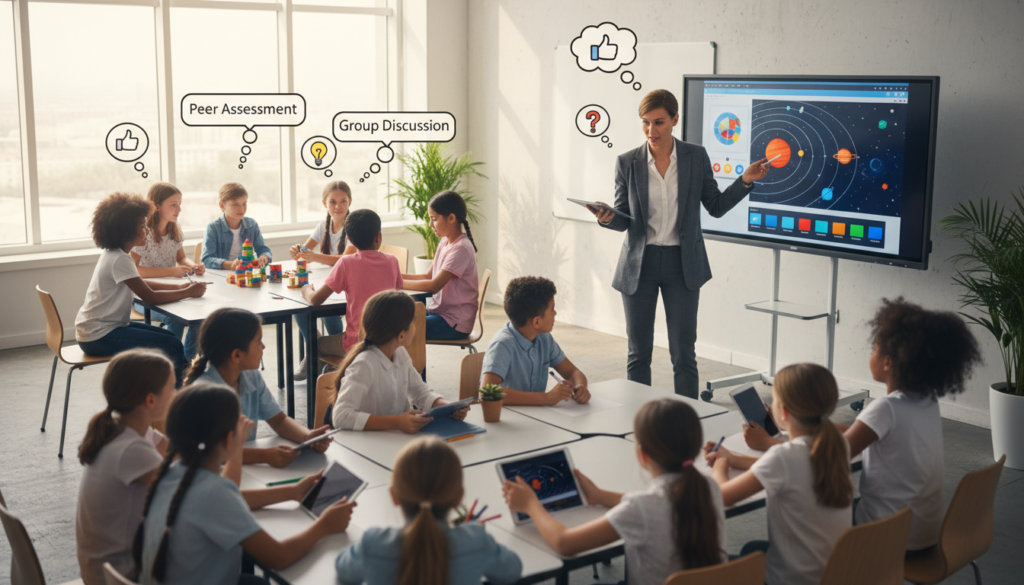
Are traditional teaching methods really getting students ready for success? As educators, we aim to create learning spaces that promote growth and achievement. The secret to outstanding teaching is rethinking classroom assessment with a clear goal in mind.
Effective assessment strategies are key to better student learning and teaching. By moving from just checking to real assessment, teachers can understand students better. This helps them adjust their teaching to meet student needs.


This method helps teachers spot where students need more help. This leads to better teaching and better results for students.
Key Takeaways
- Assessment is vital for better student learning and teaching.
- Rethinking classroom assessment is key for exceptional teaching.
- Good assessment strategies give teachers insights into student understanding.
- Meaningful assessment leads to better teaching and student success.
- Teachers can find out where students need extra help through assessment.
Understanding Assessment in Education
Assessment is key for teachers to improve teaching and student learning. It’s not just for grading; it shapes teaching, motivates students, and checks if learning goals are met.
Importance of Assessment in Teaching
Assessment helps teachers see how students are doing and where they need help. It guides teachers to adjust their methods to fit all students’ needs. Good teacher assessment techniques make education better.
Assessment is important in many ways:
- It finds out what students don’t know and tracks their progress.
- It helps teachers plan lessons that fit each student’s needs.
- It gives students feedback to keep them motivated and thinking about their learning.
- It checks if what’s taught is working and if materials are good.
Types of Assessments: Formative vs. Summative
There are two main types of assessments: formative and summative. Formative assessments happen during learning to check on progress and give feedback. Examples are quizzes, class talks, and peer reviews. They help teachers adjust their teaching.
Summative assessments are at the end to see how much students learned. They include final tests, projects, and standardized tests. These show how well students did and are used to check if schools are doing well.
Aligning Assessments with Learning Objectives
It’s important to match assessments with learning goals. This makes sure evaluations are fair and measure what they’re meant to. By linking assessments to goals, teachers can focus their teaching and prepare students well.
To do this, teachers should:
- Make clear learning goals.
- Create assessments that measure these goals.
- Use different types of assessments to reach all students.
- Keep reviewing and changing assessments to keep them useful.
Key Principles of Effective Assessment Strategies
Improving teaching through assessment is key. It requires understanding effective assessment principles. These strategies are essential for better education and student learning.
Clarity of Learning Goals
Clear learning goals are a must. They guide both teachers and students. Clear learning goals help make sure assessments measure what’s taught.
To be clear, teachers should:
- Specify learning objectives clearly
- Align assessments with these objectives
- Communicate expectations to students
Reliability and Validity in Assessments
Reliability and validity are key. Reliability means consistent results. Validity means measuring what it’s supposed to. Both are vital for fair assessments.
| Aspect | Description | Example |
|---|---|---|
| Reliability | Consistency of assessment results | Consistent scoring rubrics |
| Validity | Accuracy of what is being measured | Aligning test questions with learning objectives |
Ensuring Fairness and Equity
Fairness and equity are essential. They ensure all students can show their knowledge. It’s important to avoid biases and make assessments accessible.
Strategies for fairness and equity include:
- Using diverse assessment methods to cater to different learning styles
- Avoiding cultural biases in assessment content
- Providing accommodations for students with disabilities
By focusing on clear goals, reliable and valid assessments, and fairness, educators can improve teaching and learning. These efforts lead to better student outcomes and a fairer education system.
Formative Assessment Techniques for Classrooms
Classrooms that use formative assessment techniques are more engaging and responsive. Teachers can adjust their teaching based on how well students understand the material. This helps students learn better.
Classroom Polls and Quizzes
Classroom polls and quizzes are great for checking how well students get it. Teachers can use digital tools to make these assessments easier and faster. This way, they can see how students are doing right away.
Benefits of Classroom Polls and Quizzes:
- Immediate feedback on student understanding
- Increased student engagement through interactive technology
- Ability to adjust instruction based on real-time data
Observations and Peer Reviews
Observations and peer reviews give teachers a good look at how students are learning. By watching students and checking their work, teachers can see where students might need help.
Effective implementation of observations and peer reviews involves:
- Clear criteria for assessment
- Training students to provide constructive feedback
- Regularly reviewing and adjusting the assessment criteria as needed
Interactive Learning Journals
Interactive learning journals help students think about their learning. Teachers can learn a lot from these journals. They help teachers see where students might need more help.
Best practices for implementing interactive learning journals include:
- Establishing clear guidelines for journal entries
- Regularly reviewing and providing feedback on journal entries
- Encouraging students to reflect on their learning and set goals for improvement
Summative Assessment Approaches
Summative assessments are key in measuring how well students have learned. They check student learning at the end of a lesson or course. This gives a full picture of what they’ve achieved.
Final Projects and Presentations
Final projects and presentations are a top way to check student learning. They let students show off what they know in a big way. This shows they can think deeply and solve problems.
Key benefits of final projects and presentations include:
- Encouraging deeper learning and understanding
- Developing critical thinking and problem-solving skills
- Enhancing student engagement and motivation
Standardized Testing: Pros and Cons
Standardized testing is also used a lot. It gives a fair way to measure how students do, but it has its downsides.
The advantages of standardized testing include:
- Providing a uniform measure of student achievement
- Facilitating comparisons across different schools and regions
But, criticisms of standardized testing include:
- Potential bias in test design and implementation
- Overemphasis on test preparation, potentially at the expense of deeper learning
Effective Use of Rubrics
Rubrics are very important in summative assessments. They give clear rules for judging how well students do. A good rubric is clear, specific, and matches the learning goals.

The key elements of a good rubric include:
- Clear and concise language
- Specific criteria for assessment
- A range of performance levels
With well-made rubrics, teachers can make sure assessments are fair and accurate. This helps show how well students have learned and what they need to work on.
Integrating Technology in Assessment
Today, teachers use technology to make assessments better and more engaging. This change has made it easier to check how well students are doing. It also helps teachers give feedback quickly and accurately.
Digital Tools for Assessment Management
Digital tools have changed how we handle assessments in schools. They help teachers make, give, and score tests faster. Some top digital tools include:
- Online quiz platforms like Kahoot and Quizlet
- Assessment management systems such as Turnitin and Canvas
- Data analytics tools to track student performance
Online Feedback Mechanisms
Getting feedback on time is key for students to get better. Online tools make it easy for teachers to give detailed feedback. This makes learning more fun and interactive.
Utilizing Learning Management Systems
Learning Management Systems (LMS) are now a big part of education. They help teachers keep track of how students are doing. LMS platforms like Moodle, Blackboard, and Google Classroom offer a place for all course materials and feedback.
The table below shows some main features of popular LMS platforms:
| LMS Platform | Assessment Features | Feedback Tools |
|---|---|---|
| Moodle | Quizzes, assignments, peer review | Gradebook, assignment feedback |
| Blackboard | Tests, assignments, discussion boards | Grade center, assignment comments |
| Google Classroom | Assignments, quizzes, peer review | Commenting, grading |
By using these tech tools, teachers can make assessments better. This helps meet the needs of all students in a more efficient way.
Feedback Strategies to Enhance Learning
To improve teaching, educators must focus on feedback strategies. Feedback is key in education, helping students know how they’re doing and where they can get better.
Timely and Constructive Feedback
Feedback should be given quickly to be most helpful. Timely feedback lets students adjust their learning when it’s fresh in their minds. Constructive feedback gives specific tips for improvement.
Teachers can use many ways to give feedback, like:
- Regular one-on-one meetings with students
- Detailed comments on assignments and projects
- Peer review sessions led by the teacher
Self-Assessment and Peer Feedback
Getting students to assess themselves and give feedback to peers is also key. Self-assessment helps students understand their own learning better. Peer feedback builds a sense of community and teamwork.
| Feedback Method | Benefits |
|---|---|
| Self-Assessment | Promotes independent learning, helps identify personal strengths and weaknesses |
| Peer Feedback | Encourages collaboration, develops critical thinking skills |
Strategies for Encouraging Improvement
To make feedback work best, teachers should use strategies that push for growth. This includes setting clear goals, letting students reflect on their learning, and helping them improve weak areas.
By using these feedback strategies, teachers can make a learning space that supports and challenges students. This helps improve student results and shows how well teaching is working.
Cultural Sensitivity in Assessment
In today’s classrooms, it’s key to have assessments that are fair for everyone. This means making sure all students have a chance to succeed, no matter their background. By doing this, we can avoid biases that might hold some students back.
Understanding Diverse Student Backgrounds
It’s important for teachers to know about the different cultures in their classrooms. This knowledge helps them create assessments that everyone can do well on. It’s about making sure the assessments fit all students’ learning styles.
- Recognize the cultural differences that exist within the classroom.
- Be sensitive to the linguistic diversity among students.
- Understand how cultural background can influence learning and assessment outcomes.
Adapting Assessments for Inclusivity
To make assessments more inclusive, we need to think about what each student needs. This might mean giving tests in different languages or using examples that are familiar to everyone. It’s also important to make sure the format of the assessment works for all students.
Strategies for adapting assessments include:
- Using diverse examples and contexts in assessment questions.
- Providing alternative assessment formats, such as oral presentations or project-based assessments.
- Ensuring that assessment materials are free from cultural bias.
Building a Supportive Assessment Environment
Creating a positive classroom atmosphere is key to helping students feel confident and calm. Teachers can do this by building a supportive culture, giving clear instructions, and providing feedback that helps and encourages.
By understanding and valuing the diversity in our classrooms, we can make assessments better for everyone. This approach not only makes assessments fairer but also helps students succeed and feel good about their learning.
Assessment Data: How to Analyze and Use It
Using assessment data is key in today’s education. It helps teachers tailor their teaching to fit each student’s needs. This approach can greatly improve how well students learn.
Collecting and Interpreting Data
First, teachers gather data from many sources. This includes quizzes, exams, projects, and observations. They then look at this data to see how well students are doing.
For example, a teacher might use a quiz to check if students get a certain idea. The quiz results show which areas students need more help with.

Using Data to Inform Instruction
After understanding the data, teachers can change their teaching methods. They make sure their teaching fits what students need.
If many students are having trouble with a concept, the teacher can go back to it. They might use different ways to teach it to help students understand better.
Making Data-Driven Decisions
Using data to make decisions is important for better learning. Teachers can create special plans, adjust how fast they cover material, and find out who needs extra help.
The table below shows how data can guide educational choices:
| Assessment Data Insight | Educational Decision | Potential Outcome |
|---|---|---|
| Students struggle with a specific math concept. | Implement targeted math intervention. | Improved student understanding and performance in math. |
| Students perform well on project-based assessments. | Increase the use of project-based learning in the curriculum. | Enhanced student engagement and deeper learning. |
| Disparities in student performance across different demographics. | Develop strategies to address equity gaps, such as additional support for underperforming groups. | More equitable educational outcomes. |
By focusing on data, teachers can make learning more effective. This leads to better teaching and learning for everyone.
Collaborative Assessment Strategies
Collaborative assessment strategies are changing how we teach, making it more inclusive and effective. “Collaboration is the key to success in assessment design,” say educational experts. This method makes assessments better and creates a supportive learning space.
Teacher Collaboration for Assessment Design
Teachers working together is key to making good assessments. They share their knowledge to make assessments that really show what students have learned. This teamwork helps make sure assessments are fair for everyone.
Benefits of Teacher Collaboration:
- Assessments are more valid and reliable
- More diverse perspectives lead to better assessments
- Teachers share their best practices and resources
Engaging Students in Assessment Creation
Getting students involved in making assessments is a smart move. It helps teachers see how students view the assessments. This way, teachers can make the assessments clearer and more relevant.
Student involvement can take various forms, including:
- Peer review processes
- Student-led assessment design workshops
- Feedback mechanisms for assessment tasks
Benefits of Group Assessments
Group assessments are great for teaching teamwork and communication. They prepare students for the real world, where working together is key.
“Group assessments not only evaluate students’ knowledge but also their ability to work collaboratively, a skill highly valued in the workplace.”
The benefits of group assessments include:
| Benefit | Description |
|---|---|
| Teamwork Skills | Enhances students’ ability to work collaboratively |
| Communication Skills | Improves students’ ability to articulate their thoughts and ideas |
| Problem-Solving Skills | Fosters creative problem-solving through collaborative efforts |
Challenges in Assessment Implementation
Implementing assessments in schools comes with many challenges. It’s important to find ways to check how well students and teachers are doing. But, there are many obstacles that can get in the way.
Overcoming Resistance to Change
One big challenge is getting educators and school leaders to accept new ways of assessing. They might not understand new methods or feel uneasy about changing old ways. It’s key to give them the training they need.
Training should show them how new methods can help students and teachers. It’s about making sure everyone knows the benefits.
Strategies for overcoming resistance include:
- Providing workshops and training sessions on new assessment methods
- Sharing success stories and case studies of effective assessment implementation
- Involving educators in the decision-making process for assessment design
Addressing Resource Limitations
Not having enough money, poor facilities, or outdated technology can also be big hurdles. To tackle these, educators can use open-source assessment tools. They can also work together with other schools to share resources.
| Resource Limitation | Potential Solution |
|---|---|
| Lack of Funding | Seek grants or partnerships with educational organizations |
| Inadequate Infrastructure | Utilize cloud-based assessment tools |
| Insufficient Technological Tools | Explore free or low-cost digital assessment platforms |
Managing Time Constraints
Time is another big challenge. Teachers have to fit designing, running, and grading assessments into their busy schedules. To handle this, they can use efficient assessment design principles and technology to make things easier.
Here are some tips for managing time well:
- Using technology for automated grading and feedback
- Implementing peer assessment and self-assessment techniques
- Designing assessments that integrate with existing curriculum activities
By tackling these challenges, teachers can use better assessment methods. This will help improve how well students and teachers are doing.
Innovative Assessment Ideas for Classroom Engagement
Teachers are always looking for new ways to make learning fun and interactive. They use effective assessment tools for teachers that help students learn and feel included. This makes the classroom a more exciting place.
One great way to do this is through project-based learning. Students get to solve real-world problems using what they’ve learned. It’s a hands-on way to show they understand the material.
Project-Based Learning Assessments
Project-based learning lets students apply what they know to real-life situations. It helps them learn deeply and develop important skills. These include working together, speaking clearly, and thinking critically.
- Have students work in groups on projects that need research and presentation.
- Use rubrics that check both the process and the end result.
- Let students get feedback and improve their work.
Creative Demonstrations of Learning
Creative assessments let students show what they know in their own way. They can use art, drama, or multimedia. This way, everyone can show their skills, no matter how they learn best.
When students choose how to show their learning, teachers get a better picture of what they know. It’s a win-win for everyone.
Engaging Gamified Assessments
Gamified assessments make learning fun by adding game elements. It makes students more excited to participate. It turns learning into a fun challenge.
Examples include educational games, quizzes with game features, and interactive challenges. These tests can check many skills, like solving problems and thinking critically.
Using new ideas like project-based learning, creative assessments, and gamified tests makes learning better. It keeps students interested and helps teachers see how well they’re doing.
Professional Development for Educators
Teachers need to keep learning to improve their assessment skills. As education changes, teachers must learn new ways to assess students. This helps them give the best education possible.
Training on Assessment Best Practices
Training programs teach teachers how to make and use good assessments. They learn about making assessments that are fair and reliable. They also learn about using technology and giving feedback.
Effective training lets teachers see where students need help. It helps them change their teaching to help students more. It also makes teachers always want to get better.
Workshops and Resources Available in India
India has many workshops and resources for teachers to improve their skills. Places like the National Council of Educational Research and Training (NCERT) and schools offer these. They have workshops, webinars, and online courses on how to assess better.
- Workshops on competency-based assessments
- Training sessions on using digital tools for assessment
- Webinars on innovative assessment techniques
Continuous Improvement in Assessment Skills
Teachers must always get better at assessing. They should take part in training and learn on their own. They should also work with other teachers.
By embracing a culture of continuous improvement, teachers keep their assessment methods up to date. This ensures they meet the highest standards in education.
Future Trends in Educational Assessment
Education is changing fast, and so are the ways we test students. Technology and new teaching methods are making assessments better. Teachers need new ways to check if students really get what they’re learning.
Emerging Technologies in Assessment
AI and machine learning are big in testing now. They make tests more personal and useful. With AI, teachers can create tests that fit each student’s needs better.
Competency-Based Assessments
These tests check if students can do specific things. They give a clear picture of what students know. This helps teachers help students better. It’s a big change in how we teach and test.
Global Perspectives on Assessment Innovations
Testing is a big deal worldwide, with many countries trying new things. Looking at what others do can help teachers here. It helps shape the future of testing in India and everywhere.
FAQ
What is the significance of assessment strategies in teaching?
What are the different types of assessments used in education?
How can educators ensure fairness and equity in assessments?
What is the role of technology in assessment?
How can educators use assessment data to inform instruction?
What are some innovative assessment ideas for classroom engagement?
How can educators overcome resistance to change in assessment practices?
What is the importance of cultural sensitivity in assessment?
How can educators use feedback to enhance student learning?
What are the benefits of collaborative assessment strategies?
What are the future trends in educational assessment?


The PsyForU Editorial Collective is the research and editorial team of PsyForU Research International. The collective prepares educational, psychological, mental-health-awareness, inclusion, neurodiversity, and research-methodology content for students, parents, educators, researchers, and general readers. PsyForU content is intended for awareness, education, and capacity-building and should not be treated as clinical diagnosis, therapy, medical advice, legal advice, or emergency mental-health support.