


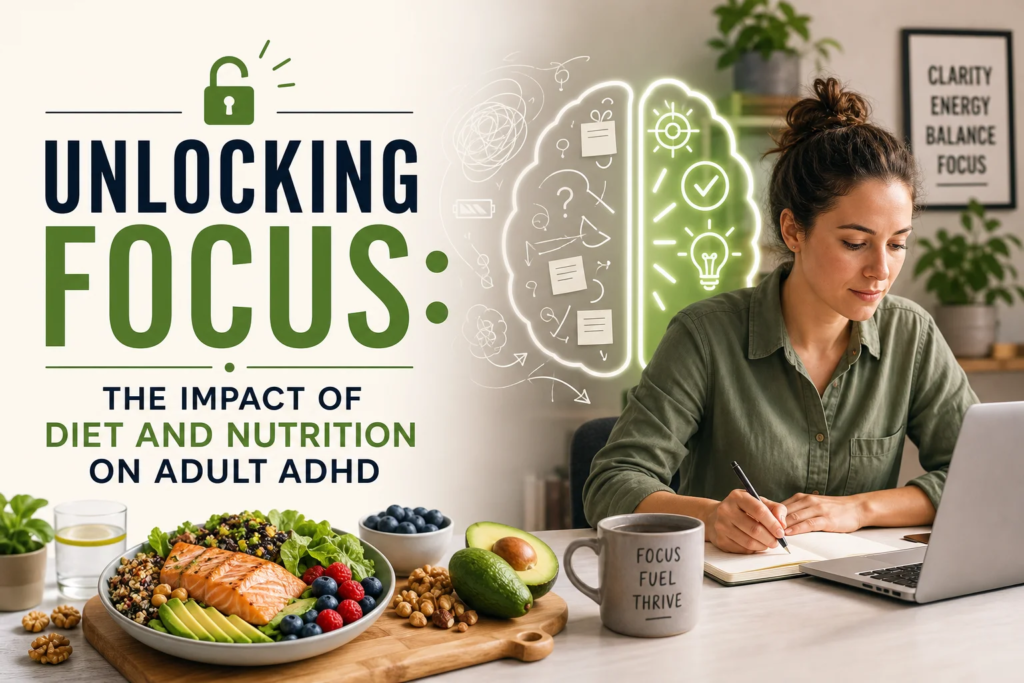
Unlocking Focus: The Impact of Diet and Nutrition on Adult ADHD — The Ultimate Guide to Eating for Clarity, Energy, and Better Self-Regulation
Introduction: What If Your Next Focus Tool Was on Your Plate?
Adult ADHD can feel like living with 27 browser tabs open—three playing music, one frozen, and none labeled clearly. You may know what you need to do, but getting started, staying focused, regulating emotions, or maintaining steady energy can feel frustratingly unpredictable.
Medication, therapy, coaching, sleep routines, and environmental supports are all important parts of ADHD management. But one powerful area is often overlooked: food.
That’s where Unlocking Focus: The Impact of Diet and Nutrition on Adult ADHD becomes more than a catchy phrase. It becomes a practical, everyday strategy. While diet does not “cure” ADHD, nutrition can influence brain chemistry, blood sugar stability, inflammation, sleep quality, gut health, and energy regulation—all of which can affect attention, impulsivity, mood, and executive function.
This article explores Unlocking Focus: The Impact of Diet and Nutrition on Adult ADHD through evidence-informed strategies, real-world case studies, practical tables, and sustainable meal ideas. The goal is not perfection. It is building a way of eating that helps your brain feel more supported, less chaotic, and better equipped for daily life.
Important note: Nutrition can support ADHD management, but it should not replace medical treatment. If you take medication or have health conditions, consult a qualified healthcare professional before making major dietary changes or taking supplements.
Understanding Adult ADHD: Why Nutrition Matters
Adult ADHD is commonly associated with challenges in attention, working memory, emotional regulation, planning, impulse control, and motivation. These symptoms are linked to differences in brain networks and neurotransmitters such as dopamine and norepinephrine.
Food affects the brain in several ways:
- It provides raw materials for neurotransmitter production.
- It influences blood sugar, which affects energy and concentration.
- It contributes to inflammation or anti-inflammatory balance.
- It impacts gut bacteria, which may affect mood and cognition.
- It can support or disrupt sleep, which strongly affects ADHD symptoms.
This is the foundation of Unlocking Focus: The Impact of Diet and Nutrition on Adult ADHD: the brain is not separate from the body. When the body is under-fueled, overstimulated, inflamed, or nutritionally depleted, focus often suffers.
Many adults with ADHD also struggle with eating patterns themselves. Skipped meals, late-night snacking, impulsive food choices, caffeine overuse, and inconsistent routines are common. So, the question is not simply “What foods are healthy?” It is “What foods are realistic, repeatable, and helpful for an ADHD brain?”
The ADHD Brain and Blood Sugar: The Focus Connection
One of the most practical nutrition concepts for adult ADHD is blood sugar stability.
When you eat a meal high in refined carbohydrates but low in protein, fiber, and fat, blood sugar can rise quickly and then crash. That crash may show up as:
- Brain fog
- Irritability
- Restlessness
- Fatigue
- Sugar cravings
- Difficulty concentrating
- Feeling “wired but tired”
For many adults, Unlocking Focus: The Impact of Diet and Nutrition on Adult ADHD starts with reducing these energy crashes.
Blood Sugar and Focus: A Simple Comparison
| Eating Pattern | Likely Effect on Energy | Possible ADHD Impact |
|---|---|---|
| Coffee only for breakfast | Quick stimulation, later crash | Jitters, anxiety, poor focus |
| Sugary cereal or pastry | Fast spike, fast drop | Distractibility, cravings |
| Protein + fiber breakfast | Slower, steadier energy | Improved concentration |
| Skipped lunch | Low fuel, impulsive snacking later | Mood swings, low patience |
| Balanced meals every 3–5 hours | More consistent energy | Better task persistence |
A balanced meal does not need to be complicated. A strong ADHD-friendly plate usually includes:
- Protein: eggs, Greek yogurt, chicken, tofu, fish, lentils
- Fiber-rich carbohydrates: oats, beans, berries, vegetables, whole grains
- Healthy fats: olive oil, avocado, nuts, seeds
- Colorful plants: leafy greens, peppers, carrots, berries
This approach is central to diet and nutrition for adult ADHD focus because it supports steady energy rather than dramatic highs and lows.
Protein: The Morning Game-Changer for Adult ADHD
If there is one nutritional habit that often makes an immediate difference, it is eating enough protein—especially earlier in the day.
Protein provides amino acids, which help the body produce neurotransmitters involved in alertness, motivation, and mood. A protein-rich breakfast may help reduce mid-morning crashes, impulsive snacking, and the “I can’t start anything” feeling.
ADHD-Friendly Protein Ideas
| Quick Protein Option | Why It Works |
|---|---|
| Greek yogurt + berries + chia seeds | Protein, fiber, omega-3 fats |
| Eggs + whole-grain toast + spinach | Protein and micronutrients |
| Smoothie with protein powder + banana + peanut butter | Fast, portable, low effort |
| Tofu scramble + avocado | Plant-based, filling |
| Cottage cheese + fruit + walnuts | High protein, easy prep |
| Turkey or hummus wrap | Good for breakfast or lunch |
For many people, Unlocking Focus: The Impact of Diet and Nutrition on Adult ADHD begins not with a strict diet, but with asking: “Did I eat enough protein today?”
A practical target many adults use is 20–30 grams of protein at breakfast, though individual needs vary based on body size, activity level, health conditions, and goals.
Omega-3 Fatty Acids: Brain-Supportive Fats Worth Knowing
Omega-3 fatty acids—especially EPA and DHA—are found in fatty fish such as salmon, sardines, trout, and mackerel. They are also available in fish oil and algae-based supplements.
Research suggests omega-3s may offer modest benefits for ADHD symptoms, particularly when EPA levels are higher. They are not a replacement for medication, but they may be a supportive tool.
Omega-3 Food Sources
| Food | Omega-3 Type | ADHD-Friendly Tip |
|---|---|---|
| Salmon | EPA/DHA | Bake once, use leftovers in wraps |
| Sardines | EPA/DHA | Add to toast or salads |
| Trout | EPA/DHA | Mild flavor, easy dinner |
| Chia seeds | ALA | Add to yogurt or smoothies |
| Flaxseed | ALA | Use ground flax for better absorption |
| Walnuts | ALA | Keep pre-portioned snack bags |
A key part of Unlocking Focus: The Impact of Diet and Nutrition on Adult ADHD is choosing fats that support the brain rather than relying heavily on ultra-processed, low-nutrient foods.
If you are considering omega-3 supplements, talk with a healthcare professional—especially if you take blood thinners, have surgery planned, or have a bleeding disorder.
Micronutrients and ADHD: Small Nutrients, Big Roles
Certain vitamins and minerals play important roles in attention, mood, sleep, and cognitive performance. Deficiencies do not cause all ADHD symptoms, but they can worsen fatigue, irritability, and brain fog.
Nutrients Commonly Discussed in Adult ADHD Nutrition
| Nutrient | Why It Matters | Food Sources |
|---|---|---|
| Iron | Supports dopamine-related pathways and energy | Lean meat, lentils, spinach, fortified cereals |
| Zinc | Involved in neurotransmitter function | Beef, pumpkin seeds, chickpeas, oysters |
| Magnesium | Supports relaxation, sleep, nervous system function | Nuts, seeds, leafy greens, dark chocolate |
| Vitamin D | Linked to mood and immune regulation | Sunlight, fatty fish, fortified foods |
| B vitamins | Help energy metabolism and brain function | Eggs, legumes, whole grains, meat |
| Folate | Supports neurotransmitter synthesis | Leafy greens, beans, asparagus |
| Iodine | Supports thyroid function and energy | Iodized salt, seafood, dairy |
Testing is important. Supplementing blindly can be risky, especially with iron, zinc, and fat-soluble vitamins. The smarter path in Unlocking Focus: The Impact of Diet and Nutrition on Adult ADHD is to identify gaps and address them intentionally.
The Gut-Brain Axis: Could Digestion Affect Focus?
The gut and brain communicate through the nervous system, immune system, hormones, and microbial metabolites. This relationship is often called the gut-brain axis.
Some adults with ADHD report digestive issues, irregular eating patterns, or sensitivity to certain foods. While the science is still developing, gut health may influence mood, inflammation, and mental clarity.
Gut-supportive habits include:
- Eating fiber-rich foods daily
- Including fermented foods if tolerated
- Staying hydrated
- Reducing ultra-processed food intake
- Eating at regular intervals
- Managing stress and sleep
Examples of gut-friendly foods:
- Yogurt or kefir with live cultures
- Sauerkraut or kimchi
- Lentils and beans
- Oats
- Berries
- Onions, garlic, asparagus
- Ground flaxseed
In the larger conversation of Unlocking Focus: The Impact of Diet and Nutrition on Adult ADHD, gut health matters because focus is rarely just about willpower. It is about the whole system working together.
Ultra-Processed Foods: Convenient, Craveable, and Complicated
Ultra-processed foods are designed to be easy to overeat. They often combine refined carbohydrates, added sugars, salt, artificial flavors, and industrial fats in ways that activate reward pathways.
For adults with ADHD, this can be especially challenging. ADHD is associated with reward sensitivity and impulsivity, which may make highly palatable foods harder to resist—especially during stress, boredom, or fatigue.
This does not mean you must eliminate all processed foods. That approach can backfire. Instead, aim to reduce dependence on foods that leave you feeling foggy, tired, or out of control.
A More ADHD-Friendly Approach
Instead of: “I can never eat chips again.”
Try: “I’ll pair chips with a protein-rich lunch instead of eating them alone when I’m starving.”
Instead of: “I need a perfect diet.”
Try: “I need a reliable food environment that makes good choices easier.”
Instead of: “I failed because I ordered takeout.”
Try: “Can I add a salad, protein, or vegetables to make this meal more supportive?”
This practical mindset is essential to Unlocking Focus: The Impact of Diet and Nutrition on Adult ADHD because shame does not improve executive function. Systems do.
Food Additives, Sugar, and Elimination Diets: What Does the Evidence Say?
Few topics in ADHD nutrition create more debate than sugar, food dyes, and elimination diets.
Sugar
Sugar does not directly “cause” ADHD. However, high-sugar eating patterns can contribute to unstable energy, sleep disruption, cravings, and mood swings. For adults with ADHD, these effects can amplify existing difficulties.
Artificial Food Dyes
Some research suggests certain children may be sensitive to artificial colors or additives, with increased hyperactivity or behavioral changes. Evidence in adults is less clear, but some adults report feeling better when they reduce dyes and highly processed snack foods.
Elimination Diets
Elimination diets involve removing suspected trigger foods and reintroducing them systematically. They may help some individuals, especially those with food sensitivities, migraines, digestive symptoms, or inflammatory conditions. However, they can become overly restrictive and stressful if done without guidance.
A balanced view of Unlocking Focus: The Impact of Diet and Nutrition on Adult ADHD is this: do not assume one food is the villain, but do pay attention to patterns.
Food and Symptom Tracking Table
| What to Track | Example |
|---|---|
| Meal timing | Breakfast at 9 a.m., lunch skipped |
| Foods eaten | Coffee, muffin, pasta, soda |
| Focus level | 2/10 afternoon focus |
| Mood | Irritable, anxious |
| Sleep | 5 hours, poor quality |
| Medication timing | Took stimulant at 8 a.m. |
| Notes | Craved sweets at 3 p.m. |
Tracking for 1–2 weeks can reveal useful patterns without turning food into an obsession.
Caffeine and Adult ADHD: Helpful Tool or Hidden Trap?
Many adults with ADHD self-medicate with caffeine before they are diagnosed. Coffee, energy drinks, and tea can temporarily improve alertness. But caffeine can also increase anxiety, disrupt sleep, suppress appetite, and interact with stimulant medications.
Caffeine is not automatically bad. The key is timing and dose.
ADHD-Friendly Caffeine Guidelines
| Strategy | Why It Helps |
|---|---|
| Avoid caffeine on an empty stomach | Reduces jitters and crashes |
| Set a caffeine cutoff time | Protects sleep quality |
| Watch energy drinks | Often high in sugar and stimulants |
| Pair coffee with protein | Supports steadier energy |
| Monitor anxiety | Too much caffeine can mimic restlessness |
In Unlocking Focus: The Impact of Diet and Nutrition on Adult ADHD, caffeine deserves respect. It can be a useful tool, but it is not a substitute for sleep, food, or treatment.
Hydration: The Overlooked Focus Habit
Even mild dehydration can affect concentration, mood, and fatigue. Adults with ADHD may forget to drink water, especially when hyperfocused or busy.
Simple hydration strategies:
- Keep a large water bottle visible.
- Use flavor enhancers like lemon, mint, or berries.
- Drink water before coffee.
- Pair drinking water with transitions: waking, meals, medication, meetings.
- Use an app or smart bottle if reminders help.
Hydration may sound basic, but Unlocking Focus: The Impact of Diet and Nutrition on Adult ADHD often depends on basic habits done consistently.
Meal Timing and ADHD Medication: Why Appetite Matters
Many ADHD medications, especially stimulants, can suppress appetite. This may lead to skipping lunch and then feeling ravenous at night. The result can be evening overeating, poor sleep, and inconsistent nutrition.
Strategies that may help:
- Eat breakfast before medication fully kicks in.
- Plan a protein-rich lunch that is easy to eat.
- Use smoothies if solid food feels unappealing.
- Keep nutrient-dense snacks nearby.
- Eat a balanced dinner rather than “making up” with sugar-heavy foods.
Medication-Friendly Meal Ideas
| Situation | Meal/Snack Idea |
|---|---|
| Low appetite in morning | Smoothie with protein powder, berries, nut butter |
| Medication suppresses lunch hunger | Greek yogurt, trail mix, boiled eggs |
| Afternoon crash | Apple + peanut butter, hummus + crackers |
| Late-night hunger | Turkey wrap, oatmeal with nuts, cottage cheese |
| Busy workday | Pre-packed bento box with protein, fruit, nuts |
For adults taking medication, Unlocking Focus: The Impact of Diet and Nutrition on Adult ADHD includes aligning meals with appetite windows instead of forcing an unrealistic eating schedule.
The Mediterranean-Style Pattern: A Strong Foundation
One of the most ADHD-friendly dietary patterns is a Mediterranean-style approach. It emphasizes whole foods, healthy fats, fish, legumes, vegetables, fruits, nuts, seeds, and whole grains.
This pattern supports brain health, cardiovascular health, and blood sugar stability. It is also flexible, which matters for long-term success.
Mediterranean-Style ADHD Plate
| Food Group | Examples |
|---|---|
| Protein | Fish, chicken, eggs, lentils, beans, tofu |
| Healthy fats | Olive oil, avocado, nuts, seeds |
| Fiber-rich carbs | Oats, quinoa, brown rice, sweet potatoes |
| Vegetables | Spinach, tomatoes, peppers, broccoli |
| Fruits | Berries, oranges, apples, grapes |
| Flavor boosters | Herbs, garlic, lemon, spices |
This is not about eating “perfectly Mediterranean.” It is about using a proven, brain-supportive pattern as a foundation for Unlocking Focus: The Impact of Diet and Nutrition on Adult ADHD.
ADHD-Friendly Meal Planning: Make It Easy or It Won’t Happen
Meal planning advice often fails adults with ADHD because it assumes endless motivation, time, and organization. A better approach is to create “low-friction food systems.”
The 3-Level Meal System
| Level | When to Use | Example |
|---|---|---|
| Level 1: No-cook | Exhausted, overwhelmed | Greek yogurt + granola + berries |
| Level 2: Minimal prep | Normal busy day | Rotisserie chicken + bagged salad + microwave rice |
| Level 3: Cooked meal | More energy/time | Salmon + roasted vegetables + quinoa |
This system removes all-or-nothing thinking. If you cannot cook, you still eat. If you cannot meal prep, you still have options.
ADHD Pantry Staples
- Canned tuna or salmon
- Beans and lentils
- Microwave rice or quinoa
- Frozen vegetables
- Eggs
- Greek yogurt
- Protein powder
- Nut butter
- Whole-grain wraps
- Oats
- Trail mix
- Hummus
- Pre-washed salad greens
The most effective strategy in Unlocking Focus: The Impact of Diet and Nutrition on Adult ADHD is not the fanciest plan. It is the plan you can repeat on a hard day.
Case Study 1: The Breakfast Shift That Changed the Workday
Profile: “Maya,” 34, marketing manager, diagnosed with ADHD in adulthood.
Challenge: She relied on coffee until noon, then crashed hard around 2 p.m. She described her afternoons as “foggy, irritated, and impossible.”
Intervention: Maya began eating a protein-rich breakfast before coffee: eggs with toast, Greek yogurt bowls, or a protein smoothie. She also kept almonds and fruit at her desk.
Result: Within three weeks, she reported fewer energy crashes, better emotional control during meetings, and less late-night snacking.
Analysis
Maya’s experience illustrates a core principle of Unlocking Focus: The Impact of Diet and Nutrition on Adult ADHD: stimulant energy is not the same as nourished energy. Coffee gave her temporary alertness, but food gave her stability. Her results were not magical—they were physiological.
Case Study 2: Reducing Ultra-Processed Snacks Without Restriction
Profile: “Jordan,” 41, software developer.
Challenge: Jordan often hyperfocused for six hours, forgot meals, then ate large amounts of chips, candy, and takeout at night. He felt ashamed and physically sluggish.
Intervention: Instead of banning snacks, he created a “landing meal” after work: a turkey wrap, pre-cut vegetables, hummus, and sparkling water. He still allowed chips but portioned them with dinner rather than eating from the bag.
Result: Evening binge-like eating decreased. Sleep improved, and Jordan noticed fewer next-morning focus problems.
Analysis
This case shows that diet and nutrition for adult ADHD focus must account for executive function. Jordan did not need more discipline. He needed a prepared transition meal and fewer decisions during his most vulnerable time of day.
Case Study 3: Omega-3s, Mood, and Consistency
Profile: “Elena,” 29, graduate student.
Challenge: Elena experienced distractibility, mood dips, and inconsistent meals. She disliked cooking and often ate toast, pasta, and coffee.
Intervention: With guidance from her clinician, she added two servings of fatty fish per week and used an algae-based omega-3 supplement. She also built simple meals around canned salmon, eggs, and frozen vegetables.
Result: After two months, she described feeling “more even,” though still needing medication and study strategies. Her focus improved most when nutrition was paired with sleep routines.
Analysis
Elena’s story reflects the realistic promise of Unlocking Focus: The Impact of Diet and Nutrition on Adult ADHD. Nutrition helped, but it worked best as part of a broader ADHD support plan.
Case Study 4: Food Sensitivity Tracking and Better Clarity
Profile: “Sam,” 38, teacher.
Challenge: Sam experienced bloating, afternoon fatigue, and unpredictable focus. He suspected food triggers but felt overwhelmed by elimination diets.
Intervention: A dietitian helped him track meals, sleep, medication timing, and symptoms for two weeks. Patterns suggested that large, refined-carb lunches worsened fatigue, while balanced meals improved afternoon teaching energy.
Result: Sam did not need a strict elimination diet. He simply changed lunch composition: more protein, vegetables, and slower-digesting carbs.
Analysis
Sam’s case highlights an important point in Unlocking Focus: The Impact of Diet and Nutrition on Adult ADHD: sometimes the issue is not a specific “bad food,” but meal balance, portion size, timing, and sleep.
Foods That May Support Adult ADHD Management
No single food will transform ADHD, but certain categories are especially helpful.
Brain-Supportive Foods
| Food Category | Examples | Potential Benefit |
|---|---|---|
| High-protein foods | Eggs, fish, tofu, chicken, yogurt | Supports neurotransmitters and satiety |
| Omega-3-rich foods | Salmon, sardines, chia, flax | Supports brain and mood health |
| High-fiber carbs | Oats, beans, berries, quinoa | Stabilizes blood sugar |
| Leafy greens | Spinach, kale, arugula | Provides folate and magnesium |
| Nuts and seeds | Walnuts, pumpkin seeds, almonds | Healthy fats and minerals |
| Fermented foods | Yogurt, kefir, kimchi | Supports gut health |
| Colorful produce | Berries, peppers, carrots | Antioxidants and micronutrients |
This is a useful food framework for anyone interested in Unlocking Focus: The Impact of Diet and Nutrition on Adult ADHD without becoming trapped in rigid dieting.
Foods and Patterns That May Worsen Symptoms for Some Adults
Again, this varies by person. But many adults with ADHD notice worse focus or mood when their diet is dominated by:
- Sugary drinks
- Skipped meals
- Low-protein breakfasts
- Highly refined carbohydrates
- Excessive caffeine
- Alcohol close to bedtime
- Ultra-processed snacks eaten alone
- Large lunches with little protein
- Not enough water
- Inconsistent meal timing
The goal of nutrition strategies for adult ADHD is not fear. It is awareness. If a food pattern makes your symptoms harder, you deserve to know that—and to have realistic alternatives.
Alcohol, Sleep, and ADHD Nutrition
Alcohol deserves special mention because it can affect sleep architecture, impulse control, medication safety, mood, and next-day focus.
Even if alcohol helps you fall asleep, it often reduces sleep quality. Poor sleep can intensify ADHD symptoms the next day, creating a cycle of fatigue, caffeine dependence, cravings, and emotional reactivity.
If you drink, consider tracking:
- How much you drink
- What time you stop
- Sleep quality
- Next-day anxiety
- Focus and motivation
- Medication interactions
A serious approach to Unlocking Focus: The Impact of Diet and Nutrition on Adult ADHD includes understanding how evening habits affect next-day cognition.
Supplements for Adult ADHD: What to Consider Carefully
Supplements can be helpful in specific situations, especially when correcting deficiencies. But more is not always better.
Commonly discussed supplements include:
- Omega-3 fatty acids
- Vitamin D
- Magnesium
- Zinc
- Iron
- B-complex vitamins
- Probiotics
Before taking supplements:
- Ask whether you have a confirmed deficiency.
- Check for medication interactions.
- Choose third-party tested brands when possible.
- Avoid megadoses unless medically supervised.
- Track outcomes objectively.
Supplements are not the centerpiece of Unlocking Focus: The Impact of Diet and Nutrition on Adult ADHD. Food patterns, sleep, hydration, and consistency usually matter more.
A 1-Day ADHD-Friendly Meal Example
Here is a simple day of eating designed for steady energy and realistic preparation.
| Time | Meal | Why It Helps |
|---|---|---|
| Morning | Greek yogurt + berries + chia + walnuts | Protein, fiber, omega-3 fats |
| Mid-morning | Coffee after breakfast | Reduces jitters |
| Lunch | Chicken or tofu wrap + vegetables + hummus | Balanced, portable |
| Afternoon | Apple + peanut butter | Fiber + fat + protein |
| Dinner | Salmon or lentils + rice + roasted vegetables | Omega-3s or plant protein, fiber |
| Evening | Herbal tea + cottage cheese if hungry | Supports satiety without sugar crash |
This meal plan reflects Unlocking Focus: The Impact of Diet and Nutrition on Adult ADHD in practical form: balanced, simple, and flexible.
The “Focus Plate” Method
If tracking macros feels overwhelming, use the Focus Plate.
Build a Focus Plate
- ½ plate: vegetables or fruit
- ¼ plate: protein
- ¼ plate: fiber-rich carbohydrate
- Add: healthy fat
- Drink: water
Examples:
- Eggs + avocado + sautéed spinach + toast
- Tuna salad + whole-grain crackers + carrots
- Lentil bowl + quinoa + cucumber + olive oil dressing
- Chicken stir-fry + brown rice + broccoli
- Tofu + sweet potato + greens + tahini sauce
This is one of the simplest tools in Unlocking Focus: The Impact of Diet and Nutrition on Adult ADHD because it reduces decision fatigue.
Emotional Eating and ADHD: Compassion First, Strategy Second
Adults with ADHD may use food for stimulation, comfort, or emotional regulation. This is not a character flaw. Food is rewarding, accessible, and fast. If your brain craves dopamine, crunchy chips or sweet snacks can feel like instant relief.
Instead of attacking emotional eating with shame, ask:
- Am I hungry, tired, bored, anxious, or overstimulated?
- Did I eat enough earlier?
- Do I need protein, rest, movement, or connection?
- Can I pause for two minutes before deciding?
- Can I plate the food rather than eating from the package?
The compassionate side of Unlocking Focus: The Impact of Diet and Nutrition on Adult ADHD is recognizing that behavior has a reason. Once you understand the reason, you can build a better support system.
How to Start: A 7-Day Nutrition Reset for Adult ADHD
Do not overhaul everything at once. Choose small changes with high impact.
Day 1: Add protein to breakfast
Try eggs, yogurt, tofu, cottage cheese, or a smoothie.
Day 2: Drink water before caffeine
Notice whether jitters decrease.
Day 3: Build one Focus Plate
Protein + fiber carb + colorful produce + healthy fat.
Day 4: Create an emergency snack kit
Include nuts, protein bars, tuna packets, fruit, or roasted chickpeas.
Day 5: Add omega-3 foods
Try salmon, sardines, trout, chia, flax, or walnuts.
Day 6: Track energy crashes
Write down food, sleep, caffeine, and focus levels.
Day 7: Plan three low-effort meals
Choose meals you can make when motivation is low.
This step-by-step approach brings Unlocking Focus: The Impact of Diet and Nutrition on Adult ADHD into real life. You do not need a perfect diet. You need a repeatable starting point.
Common Mistakes to Avoid
1. Trying to change everything overnight
Big changes often collapse under ADHD-related overwhelm.
2. Skipping meals to “save time”
This usually costs more time later through brain fog and cravings.
3. Overusing caffeine
Caffeine can help temporarily but may worsen anxiety and sleep.
4. Ignoring protein
Low-protein eating often leads to unstable hunger and energy.
5. Relying only on supplements
Supplements cannot replace consistent meals.
6. Treating nutrition as a cure
ADHD is neurodevelopmental. Nutrition supports management; it does not erase ADHD.
Avoiding these mistakes makes Unlocking Focus: The Impact of Diet and Nutrition on Adult ADHD more sustainable and less stressful.
Long-Tail Keyword Variations Explored Naturally
For readers searching for related guidance, this article also addresses:
- Diet and nutrition for adult ADHD focus
- Best foods for adults with ADHD
- Adult ADHD meal planning tips
- Nutrition strategies for ADHD symptoms in adults
- ADHD-friendly breakfast ideas
- Omega-3 benefits for adult ADHD
- Blood sugar and ADHD concentration
- Foods that may worsen ADHD symptoms
- How protein affects ADHD focus
- Gut health and adult ADHD nutrition
These variations all connect to the larger theme of Unlocking Focus: The Impact of Diet and Nutrition on Adult ADHD.
Conclusion: Focus Is Built, Not Forced
Adult ADHD can make focus feel unreliable, but that does not mean you are powerless. Nutrition is one of the most practical ways to support your brain every day.
The biggest lesson from Unlocking Focus: The Impact of Diet and Nutrition on Adult ADHD is this: food is not a moral issue. It is information. It is fuel. It is structure. It is one part of a larger toolkit that may include medication, therapy, coaching, sleep, exercise, and environmental design.
Start small. Add protein to breakfast. Drink water before coffee. Build one balanced meal. Keep emergency snacks nearby. Notice how your body responds. Over time, these small choices can create steadier energy, fewer crashes, better mood regulation, and more dependable focus.
You do not need to eat perfectly to support your ADHD brain. You need a system that works when life is busy, motivation is low, and your attention is stretched thin.
That is the real promise of Unlocking Focus: The Impact of Diet and Nutrition on Adult ADHD: not perfection, but progress—one meal, one habit, one clearer day at a time.
FAQs: Unlocking Focus Through Diet and Nutrition for Adult ADHD
1. Can diet cure adult ADHD?
No. Diet cannot cure ADHD. Adult ADHD is a neurodevelopmental condition influenced by brain structure, chemistry, genetics, and environment. However, nutrition can support focus, energy, mood, sleep, and emotional regulation. Unlocking Focus: The Impact of Diet and Nutrition on Adult ADHD is about symptom support, not a cure.
2. What is the best diet for adult ADHD?
There is no single best diet for everyone, but many adults benefit from a balanced, Mediterranean-style eating pattern. This includes protein, vegetables, fruits, whole grains, legumes, nuts, seeds, olive oil, and omega-3-rich fish. The best ADHD diet is one that supports stable energy and is realistic to maintain.
3. Should adults with ADHD avoid sugar completely?
Not necessarily. Sugar does not cause ADHD, and complete restriction can backfire. However, high-sugar meals or drinks may contribute to energy crashes, cravings, irritability, and poor concentration. Pairing sweet foods with protein, fiber, or fat can reduce blood sugar spikes.
4. Are omega-3 supplements helpful for adult ADHD?
Omega-3s may provide modest benefits for some people, especially formulas higher in EPA. Food sources like salmon, sardines, trout, chia seeds, flaxseed, and walnuts are also helpful. Always speak with a healthcare professional before starting supplements, especially if you take medication or have medical conditions.
5. What should adults with ADHD eat for breakfast?
A protein-rich breakfast is often helpful. Good options include eggs, Greek yogurt, cottage cheese, tofu scramble, protein smoothies, or nut butter with whole-grain toast. Protein in the morning may support steadier energy and better concentration.
6. Can caffeine help adult ADHD symptoms?
Caffeine may temporarily improve alertness, but it can also increase anxiety, suppress appetite, and disrupt sleep. Adults taking stimulant medication should be especially cautious and discuss caffeine use with their clinician.
7. How do I meal plan if ADHD makes planning difficult?
Use simple systems instead of complicated plans. Keep no-cook meals, emergency snacks, and repeatable staples available. Try the 3-Level Meal System: no-cook meals for hard days, minimal-prep meals for busy days, and cooked meals when you have more energy.
8. Are food dyes or additives linked to ADHD symptoms?
Some individuals may be sensitive to certain food dyes or additives, though evidence is stronger in children than adults. If you suspect a connection, track symptoms and consider working with a dietitian before making major restrictions.
9. What is the easiest first step?
Start with breakfast. Add 20–30 grams of protein if appropriate for your body and health needs. This one habit often improves energy stability and reduces later cravings.
10. Is nutrition still important if I take ADHD medication?
Yes. Medication and nutrition can work together. Food supports energy, mood, sleep, and overall health. If medication suppresses appetite, planning easy meals and snacks becomes even more important.

