


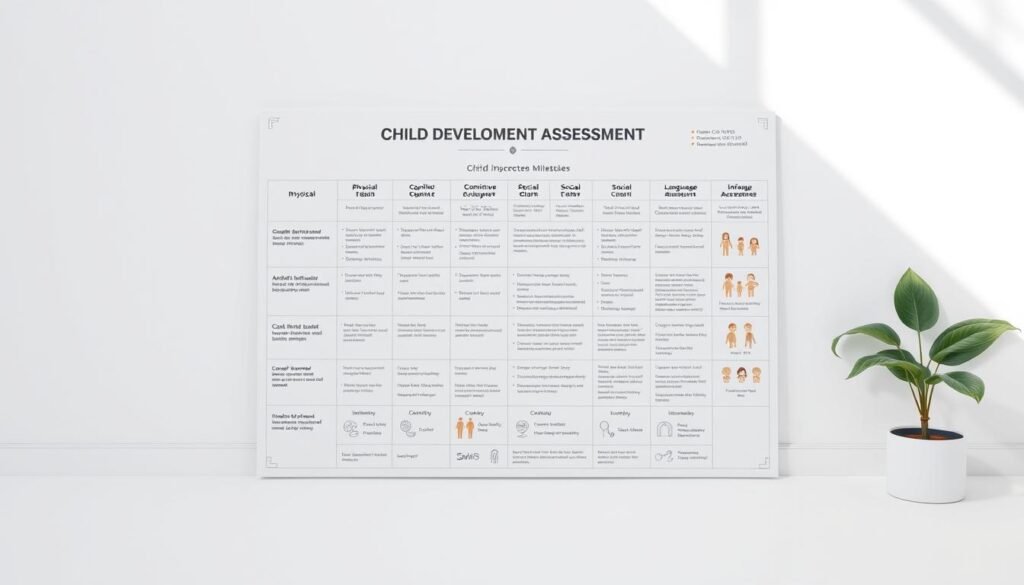
Healthcare professionals track specific behavioral and physical markers to measure growth in infants and young children. These markers show if development is progressing as expected.
The Centers for Disease Control and Prevention (CDC) identifies key observable skills as important indicators. Examples include taking a first step, smiling for the first time, and waving goodbye. These infant behavior markers reveal critical progress across multiple growth areas.
Child development stages occur across five distinct domains. These include gross motor, fine motor, language, cognitive, and social-emotional abilities. Each domain adds to a complete picture of maturation.
Pediatric assessment tools use standardized reference points to evaluate growth patterns. They help distinguish typical development from potential delays. Healthcare providers, educators, and caregivers monitor progress using this framework.
Understanding this assessment system helps families and professionals support children during formative years.
Key Takeaways
- Developmental milestones are observable skills and behaviors that indicate typical growth in infants and children
- The CDC defines these markers as physical and behavioral signs including walking, talking, and social interactions
- Assessment occurs across five primary domains: gross motor, fine motor, language, cognitive, and social-emotional development
- Healthcare professionals use standardized milestone frameworks as pediatric assessment tools to evaluate progress
- These markers help distinguish between typical development patterns and potential delays requiring intervention
- Child development stages progress interdependently, with advancement in one area often supporting growth in others
Introduction to Developmental Milestones
Pediatric growth markers provide a framework for tracking children’s development. These markers show how kids grow physically, cognitively, socially, and emotionally. Researchers studied thousands of children throughout the twentieth century to identify these patterns.
The resulting framework serves as a cornerstone of modern pediatric care. It also guides educational practice. Scientists found consistent patterns of skill acquisition across diverse populations.
The Centers for Disease Control and Prevention (CDC) tracks key behaviors in children. Kids reach milestones in how they play, learn, speak, act, and move. These behaviors form building blocks for growth and continued learning.
Normal child development follows predictable sequences. Individual children show variations in timing. This progressive nature reflects how development unfolds over time.
Children’s Hospital of Philadelphia (CHOP) identifies different milestones for each age range. These categories include cognition (thinking, reasoning, problem-solving). They also cover motor coordination (gross and fine motor skills).
Social interaction involves peer contact and group play. Adaptive behaviors include dressing, eating, and washing. Each domain reflects different neurological systems and environmental influences.
Healthcare professionals rely on these standardized criteria for surveillance and screening. They use them during well-child visits. Parents gain concrete expectations for their children’s growth.
Early identification of developmental delays becomes possible. This enables prompt intervention when it provides the greatest benefit.
Developmental milestones facilitate communication among the interprofessional team of pediatricians, therapists, educators, and specialists who collaborate in supporting children’s development.
Child maturation patterns unfold across multiple dimensions simultaneously. Physical milestones depend on neuromuscular maturation and practice opportunities. Cognitive milestones reflect brain development in the prefrontal cortex and hippocampus.
Language milestones require neurological readiness and linguistic exposure. Social-emotional milestones emerge from temperament, attachment relationships, and social experiences. Each domain progresses according to its own timeline.
Delays in one area may impact progress in others. This interconnection makes comprehensive developmental assessment essential.
| Developmental Domain | Primary Neurological Systems | Key Environmental Factors | Assessment Focus |
|---|---|---|---|
| Physical Development | Neuromuscular pathways, motor cortex | Opportunities for movement and practice | Gross and fine motor skill acquisition |
| Cognitive Development | Prefrontal cortex, hippocampus | Stimulation, problem-solving experiences | Thinking, reasoning, memory formation |
| Language Development | Broca’s and Wernicke’s areas | Linguistic exposure, conversational interaction | Receptive and expressive communication |
| Social-Emotional Development | Limbic system, amygdala | Attachment relationships, social experiences | Emotional regulation, peer interaction |
Contemporary approaches recognize milestones as flexible guidelines, not rigid pass-fail criteria. They accommodate normal variation while remaining sensitive to concerning patterns. This balanced perspective acknowledges individual differences in development.
The historical foundation reveals remarkable consistency across populations. This suggests underlying biological mechanisms govern maturation. Most children demonstrate similar developmental progressions despite individual variations.
This universality supports using milestones as benchmarks. It also respects cultural and individual diversity.
Parents can track their children’s progress without undue anxiety about minor timing variations. Healthcare providers conduct systematic surveillance to identify children needing further evaluation. Educators design age-appropriate learning experiences that align with typical child maturation patterns.
The framework continues to evolve as research refines our understanding. New insights into brain development inform updated milestone guidelines. This ongoing refinement ensures developmental assessment remains scientifically sound and clinically relevant.
Importance of Tracking Milestones
Milestone tracking turns routine pediatric care into a proactive approach that maximizes developmental outcomes. Child health monitoring through systematic milestone observation helps families and healthcare providers identify concerns early. Early intervention yields the greatest benefit for children’s development.
This preventive strategy has become a cornerstone of modern pediatric practice. Decades of research support its effectiveness in improving long-term outcomes for children.
The American Academy of Pediatrics recommends developmental screening at every well-child visit. Standardized assessments occur at 9, 18, and 30 months. Autism-specific screening happens at 18 and 24 months, reflecting the critical importance of early detection.
The Science Behind Early Detection
The developing brain shows remarkable plasticity during the first five years of life. Neural pathways remain highly responsive to environmental input and therapeutic intervention during this critical window. Targeted interventions before age three can leverage this neuroplasticity to establish compensatory pathways.
According to StatPearls, identifying developmental milestones helps providers recognize delayed development more effectively. This facilitates earlier interventions and improves outcomes. The CDC emphasizes that early identification and intervention lead to more positive results.
Research consistently demonstrates that early intervention programs produce better outcomes than delayed treatment approaches. Children who receive services before age three show greater gains in cognitive, motor, and social-emotional domains. This advantage persists throughout childhood and often into adolescence.
A comprehensive baby milestone chart serves multiple functions beyond simple documentation. It provides a reference framework for understanding typical development. These charts help distinguish normal variation from genuine delays and facilitate communication between families and healthcare professionals.
Practical Advantages for Families
Parents and caregivers gain substantial benefits from systematic milestone tracking. The process enhances parent-child interaction quality as caregivers become more attuned to their children’s emerging capabilities. This awareness enables families to scaffold learning experiences appropriately.
Regular developmental screening increases confidence in parenting abilities through concrete knowledge of developmental expectations. Families report reduced anxiety when they understand what to expect at different ages and stages. A structured baby milestone chart offers reassurance when children’s development follows expected patterns.
The tracking process facilitates earlier recognition of individual children’s strengths and challenges. This knowledge allows families to celebrate accomplishments meaningfully and seek appropriate support when needed. Parents avoid the common pitfall of “wait and see” approaches that delay necessary intervention.
Improved communication with healthcare providers represents another significant advantage. Families who track milestones arrive at appointments prepared with specific observations and questions. The shared framework of child health monitoring creates efficient dialogue between families and clinicians.
| Age of Intervention | Developmental Gains | Long-term Outcomes | Family Benefits |
|---|---|---|---|
| Before 12 months | Maximum neuroplasticity utilization, rapid skill acquisition | 85-90% reach age-appropriate levels by school entry | Reduced stress, enhanced bonding, confident parenting |
| 12-36 months | Strong plasticity response, good skill development | 70-80% achieve functional independence in affected areas | Effective coping strategies, community connections |
| After 36 months | Moderate response, slower progress | 50-65% reach grade-level performance with ongoing support | Need for extensive resources, advocacy skills development |
| After 60 months | Limited plasticity, compensatory strategies needed | 40-50% require continued specialized services | Significant family adjustment, long-term planning required |
From a public health perspective, population-level tracking enables identification of environmental risk factors. Communities can allocate resources strategically to populations with elevated rates of developmental delay. This systematic approach to child health monitoring benefits individual families while strengthening public health infrastructure.
The distinction between normal developmental variation and genuine delays represents a crucial outcome of proper milestone tracking. Proper developmental screening prevents both over-pathologization of individual differences and dangerous under-recognition of significant problems. This balanced approach respects developmental diversity while ensuring children who need support receive it promptly.
Healthcare providers use milestone tracking to determine which children require comprehensive evaluation. This triage function prevents overwhelming specialty services while ensuring timely access for those who need it most. The efficiency gained through systematic screening benefits the entire healthcare system.
Engagement with early intervention programs becomes more effective when families understand developmental expectations. Programs report better outcomes when families actively participate in goal-setting and treatment planning. The knowledge gained through milestone tracking empowers families to become collaborative partners in their children’s care.
The Different Types of Developmental Milestones
Child development happens across multiple connected areas. Each area shows a different part of growth. Health groups like StatPearls identify five main areas: gross motor, fine motor, language, cognitive, and social-emotional development.
These areas work together in real life. A child building with blocks uses hand control, space thinking, and problem-solving at once. This shows why tracking all areas matters more than watching just one skill.
Physical Growth and Motor Coordination
Physical development includes growing strength, coordination, and movement control. This area splits into two parts that grow at different times. Gross motor skills use large muscles and whole-body movements, while fine motor abilities need precise control of small muscles.
Gross motor milestones include basic movements that help kids explore and gain independence. The CDC shows these typical examples:
- Rolling over independently at approximately 6 months
- Sitting without support by 6-8 months
- Walking unassisted around 12 months
- Running and jumping by 18-24 months
- Hopping on one foot by age 4
Fine motor skills grow alongside gross motor skills. These abilities depend on brain pathways connecting to hand and finger muscles. Early milestones include reaching for objects at 4 months and using a pincer grasp by 9 months.
Motor skills let kids do more complex self-care tasks as they grow. Toddlers learn to stack blocks, turn pages, and feed themselves with utensils. Preschoolers master drawing shapes, cutting with scissors, and buttoning clothing.
Thinking, Reasoning, and Learning Abilities
Cognitive milestones show how children understand and interact with their world. These mental processes include attention, memory, problem-solving, and abstract reasoning. Brain areas grow significantly during early childhood to support these expanding abilities.
Early cognitive achievements show rapid learning during infancy. Babies recognize familiar faces by 2 months and explore objects by 6 months. By 9 months, they understand the meaning of “no.”
Language acquisition is a special part of cognitive development. Children progress from cooing and babbling to speaking first words around 12 months. By age 2, most children combine two words into simple phrases.
Thinking abilities become more sophisticated as children mature. Two-year-olds follow two-step instructions and sort objects by color or shape. Preschoolers engage in pretend play, understand time concepts, and solve simple puzzles.
Emotional Awareness and Social Connections
Social and emotional development involves forming relationships and managing feelings. This area grows through brain development, especially connections that enable emotional control. Early attachment experiences significantly shape these abilities.
Infants display basic social-emotional behaviors from birth. Newborns prefer human faces and voices. By 6 months, babies typically show stranger anxiety, indicating they know the difference between familiar and unfamiliar people.
Toddlerhood brings rapid growth in emotional expression and social interaction. Children begin parallel play around age 2, playing alongside peers without direct interaction. They develop a stronger sense of self and often assert independence.
Preschool years bring growing empathy and cooperation. Children share toys, take turns during games, and show concern for sad friends. They develop theory of mind—understanding that others have different thoughts and feelings.
Understanding these different areas helps parents and professionals identify where children excel or need extra support. A child might show advanced physical development while experiencing delays in language, highlighting why area-specific assessment matters.
Age Range for Developmental Milestones
Children develop according to predictable timeframes. Each period brings unique capabilities and achievements. The infant growth timeline, toddler years, and middle childhood represent distinct phases.
Understanding these patterns helps parents establish realistic expectations. It also helps identify areas needing additional support.
Brain development interacts with environmental experiences throughout childhood. Each age range builds upon previous achievements. This creates a foundation for future learning.
Infancy (0-12 Months)
The infant growth timeline represents the fastest developmental period in human life. Specific capabilities emerge at predictable intervals throughout this crucial first year. The Centers for Disease Control and Prevention tracks these important changes.
At two months, babies begin smiling at familiar faces. They demonstrate head control by lifting their heads when on their stomachs. These early achievements signal emerging motor coordination and social awareness.
By six months, infants reach significant physical milestones. These include sitting without support and recognizing familiar faces consistently. This period marks enhanced trunk stability and deepening attachment relationships.
At nine months, most infants achieve mobility through crawling. They demonstrate cognitive growth by understanding simple commands like “no.” Motor skills and language comprehension reflect advancing brain development.
The twelve-month mark typically brings age-appropriate milestones. These include taking first independent steps and using single words intentionally. These achievements represent extraordinary neurological and physical growth.
Premature infants require adjusted expectations. StatPearls notes that babies born early need age correction when evaluating developmental progress. A baby born at 32 weeks would typically reach milestones approximately two months behind.
Early Childhood (1-5 Years)
Toddler developmental progress accelerates dramatically during early childhood. Foundational skills become increasingly sophisticated. The Children’s Hospital of Philadelphia provides detailed benchmarks for this transformative period.
At eighteen months, children typically use around eight words. They walk quickly with improved coordination. This represents the beginning of the vocabulary explosion.
By age two, most children construct 2-3 word sentences. They demonstrate gross motor skills like kicking balls. These capabilities reflect advancing cognitive organization and physical coordination.
Three-year-olds typically ride tricycles. They play cooperatively with peers, showing enhanced social-emotional competencies. This age marks significant progress in peer relationships and emotional regulation.
Four-year-olds draw recognizable people and tell coherent stories. These skills demonstrate symbolic representation and narrative abilities. They indicate maturing cognitive processes supporting academic readiness.
By age five, children know letters and count to ten. They dress independently, showing developmental stages by age. This consolidation of skills creates readiness for the next developmental phase.
Middle Childhood (6-12 Years)
Middle childhood involves refinement and integration of previously acquired capabilities. Physical abilities become smoother and more automatic. This enables participation in complex sports and coordinated activities.
Cognitive development advances toward concrete operational thinking. Children demonstrate logical reasoning, classification skills, and systematic problem-solving. Academic learning accelerates across reading, mathematics, science, and other content areas.
Language becomes a sophisticated tool for abstract communication. Children develop metalinguistic awareness. They understand language as a system they can manipulate and analyze.
Social-emotional development focuses on peer group identification and moral reasoning. Children gain increasing independence from family. They develop complex social relationships and understanding of social expectations.
| Age Range | Physical Milestones | Cognitive Milestones | Social-Emotional Milestones |
|---|---|---|---|
| 2 Months | Lifts head, smiles socially | Tracks moving objects with eyes | Calms when spoken to, recognizes parents |
| 6 Months | Sits without support, rolls over | Recognizes familiar faces, responds to own name | Shows joy and displeasure, enjoys social play |
| 12 Months | Takes independent steps, uses pincer grasp | Understands simple commands, uses single words | Shows stranger anxiety, seeks comfort from caregivers |
| 2 Years | Kicks balls, climbs furniture | Uses 2-3 word sentences, follows two-step instructions | Shows defiant behavior, parallel play with peers |
| 5 Years | Rides bicycle with training wheels, dresses independently | Knows letters and numbers, counts to 10 | Cooperates with friends, understands rules and turns |
| 8-12 Years | Refined motor coordination, participates in team sports | Logical reasoning, academic skill mastery | Peer group identification, moral reasoning development |
Understanding these age-based progressions enables appropriate expectations for each developmental period. Individual variation around these norms reflects genetic factors, environmental influences, and experiential opportunities. These factors shape each child’s unique developmental trajectory.
Common Milestones: What to Expect
Parents often wonder what skills their children should develop at different ages. Understanding typical developmental patterns helps families track their children’s growth across multiple areas. These child development stages show skills most children gain in sequence.
The concept of normal child development includes both universal progressions and expected timeframes. These milestones reflect statistical averages rather than absolute requirements for every child. Healthcare professionals use these reference points to assess whether children’s development falls within expected parameters.
Typical Milestone Examples
Child development stages unfold systematically during the first five years of life. Each achievement builds upon previous capabilities. The physical domain demonstrates this progression clearly.
Infants develop head control before sitting independently, which comes before crawling, standing, and walking. This pattern ensures that foundational motor skills support more complex movements.
Specific examples from early infancy through preschool years illustrate normal child development trajectories. At two months, babies react to noises and focus best from eight to ten inches away. By four months, infants express excitement through squealing and begin rolling from back to sides.
The progression continues with remarkable consistency. At six months, babies make sounds to express emotion and pass objects between hands. Nine-month-olds engage in interactive games like peek-a-boo and use gestures to communicate intentions.
The first birthday marks significant transitions across child development stages. One-year-olds may show shyness around strangers, indicating attachment formation. Stacking two blocks demonstrates fine motor control and spatial reasoning.
By 18 months, toddlers scribble with crayons and show interest in other children. This combines motor skills with social curiosity.
Language development accelerates dramatically during the second year. Two-year-olds typically kick balls, displaying gross motor coordination. They use two to three-word sentences to express needs and observations.
Preschool years bring sophisticated achievements across all domains. Three-year-olds use pronouns correctly and ride tricycles. Four-year-olds draw recognizable people and maintain conversations.
By age five, children sing the alphabet and count to ten. This reflects literacy and numeracy readiness.
| Age Range | Physical Milestones | Cognitive/Language Milestones | Social-Emotional Milestones |
|---|---|---|---|
| 2-4 Months | Reacts to noises, rolls back to sides, focuses 8-10 inches | Coos, tracks objects visually, explores through mouthing | Smiles responsively, shows preference for caregivers |
| 6-9 Months | Passes objects between hands, sits independently, crawls | Makes sounds for emotion, understands object permanence | Plays peek-a-boo, uses gestures, shows stranger anxiety |
| 12-18 Months | Stacks two blocks, walks independently, scribbles | Says first words, follows simple directions, explores actively | Shows shyness, demonstrates attachment, shows interest in peers |
| 2-3 Years | Kicks balls, runs steadily, rides tricycles | Uses 2-3 word sentences, uses pronouns, asks questions | Engages in parallel play, shows defiance, imitates adults |
| 4-5 Years | Draws people, catches balls, demonstrates balance | Has conversations, sings alphabet, counts to 10 | Cooperates with peers, shows empathy, follows rules |
These examples illustrate sequential progression where earlier achievements provide foundations for subsequent capabilities. Cognitive development follows similar patterns, progressing from simple sensorimotor exploration to object permanence. Each stage builds systematically upon previous learning.
Variability in Milestones
Understanding individual variation in development is equally important as knowing typical timelines. Research shows that normal child development encompasses a range of ages for achieving specific milestones. Some children reach particular markers earlier or later than average while still following healthy paths.
This variability reflects multiple interacting factors. Genetic differences influence maturation rates, while temperamental variations affect children’s interest in different activities. Environmental factors such as practice opportunities and cultural emphases shape skill development.
“Children develop at their own pace, so don’t be alarmed if your child takes a slightly different course. Some children may skip over milestones, while others take more time.”
Many children show uneven developmental profiles with relative strengths in some domains. A child might demonstrate advanced language skills while taking longer to master physical coordination. These variations typically represent normal diversity rather than developmental concerns.
Some children skip certain milestones entirely without developmental significance. For instance, some infants never crawl but proceed directly from sitting to walking. This alternative pathway represents individual variation in development rather than delay.
The crucial distinction lies between normal variation and developmental delay. Normal variation involves differences in timing or sequence while maintaining progressive development across all domains. Children following varied paths still achieve milestones systematically.
Conversely, developmental delay involves consistent failure to achieve milestones outside expected age ranges. Regression in previously acquired skills also warrants comprehensive evaluation. Understanding these distinctions helps families recognize when professional consultation becomes appropriate.
The principle of individual variation in development reassures families that diversity in achievement timing usually reflects normal differences. Children’s unique genetic makeup, temperament, experiences, and opportunities create distinct developmental journeys. Healthcare providers consider this variability when assessing whether a child’s progression falls within normal child development.
Delayed Milestones: When to Be Concerned
Spotting developmental differences requires careful observation and knowledge of early warning signs. While children grow at their own pace, certain patterns show the need for professional help. Getting the right support can change a child’s long-term outcomes.
Developmental delays show up as significant lags in reaching milestones compared to other children. These delays may affect one area or multiple areas of functioning. Research shows that early identification with quick intervention produces much better results.
Parents and caregivers have valuable insights into their child’s development. Parental intuition about developmental concerns proves accurate quite often. Doctors take these concerns seriously.
“Don’t wait. If your child is not meeting one or more milestones, has lost skills he or she once had, or you have other concerns, act early. Talk with your child’s doctor, share your concerns, and ask about developmental screening.”
Recognizing Red Flags Across Development Areas
Understanding early warning signs helps you spot potential concerns quickly. These indicators vary by age and developmental area. Certain patterns consistently signal the need for evaluation.
Gross motor concerns include poor head control lasting beyond four months of age. Not sitting alone by nine months or walking by eighteen months needs assessment. Watch for toe-walking, uneven movement patterns, or loss of motor skills.
Fine motor development raises concerns with fisted hands beyond three months. Not grasping objects by six months or transferring items by nine months needs attention. Missing pincer grasp by twelve months is also important.
Language delays merit particular attention given their connection to school success and social skills. Research shows that language development predicts reading skills and thinking abilities. Early help produces the best results.
Critical language-related early warning signs include:
- Absence of babbling by twelve months
- No single words produced by sixteen months
- Fewer than fifty words or no two-word combinations by twenty-four months
- Regression in previously acquired language abilities at any age
- Marked difficulty understanding simple directions
Cognitive development concerns emerge through lack of interest in objects or people. No pretend play by twenty-four months or trouble following simple instructions matters. Children who show no problem-solving attempts need evaluation.
Social-emotional indicators include lack of social smiling by three months. Missing shared enjoyment by six months or limited eye contact raises concerns. Watch for children who don’t respond to their name by twelve months.
Additional concerns arise when children show no interest in peers or can’t engage reciprocally. Extreme difficulty with routine changes beyond typical phases also matters.
The following table presents key developmental delay indicators organized by domain:
| Developmental Domain | Primary Red Flags | Critical Age Markers | Intervention Priority |
|---|---|---|---|
| Gross Motor | Poor head control, inability to sit, delayed walking | 4, 9, and 18 months | Physical therapy referral |
| Fine Motor | Persistent fisting, no grasp, absent pincer grip | 3, 6, and 12 months | Occupational therapy evaluation |
| Language | No babbling, limited words, absent combinations | 12, 16, and 24 months | Speech-language pathology |
| Cognitive | Limited interest, no pretend play, difficulty learning | 24 months and beyond | Developmental assessment |
| Social-Emotional | No social smile, limited eye contact, no peer interest | 3, 6, and 12 months | Autism screening, behavioral evaluation |
Navigating Professional Evaluation and Support Systems
Consulting healthcare professionals is the essential first step with developmental concerns. Your child’s pediatrician serves as the initial contact for developmental screening. They coordinate further evaluation when needed.
The American Academy of Pediatrics recommends standardized developmental screening at specific intervals. These occur at nine months, eighteen months, and thirty months. Autism-specific screening should happen at eighteen and twenty-four months.
Pediatricians use validated developmental assessment tools to check progress systematically. These instruments include the Ages and Stages Questionnaires. They also use the Denver Developmental Screening Test and Modified Checklist for Autism.
Initial screening that identifies concerns leads to referral to specialized professionals. Developmental specialists bring expertise in comprehensive evaluation beyond routine screening.
Specialist referrals typically include:
- Neurodevelopmental pediatricians who assess complex developmental patterns
- Developmental-behavioral pediatricians specializing in behavioral and learning concerns
- Pediatric neurologists evaluating neurological function and development
- Child psychologists conducting detailed cognitive and behavioral assessments
Comprehensive evaluation by specialists includes detailed developmental testing across all domains. Medical workup investigates potential underlying causes. Hearing and vision screening rules out sensory contributions to developmental differences.
Assessment for specific conditions occurs when clinical presentation suggests these possibilities. This includes autism spectrum disorder, intellectual disability, or genetic syndromes.
Early intervention programs provide crucial support services for children from birth through age three. These federally mandated programs operate in every state. They offer evaluations and services at no cost to families.
Referral to early intervention should occur promptly upon identifying concerns. This allows services to begin while diagnostic evaluation proceeds.
For children aged three and older, special education services through local school districts provide support. These programs offer individualized education plans tailored to each child’s needs.
The timeline from concern identification to service delivery should proceed rapidly. Research shows that intervention effectiveness correlates strongly with early initiation. Children benefit most when support begins during periods of maximum brain development.
Parents should not wait for complete diagnostic clarity before accessing services. Comprehensive evaluation and intervention can happen at the same time. This ensures children receive beneficial support without unnecessary delay.
This dual approach recognizes that understanding the underlying cause matters. However, it should not prevent children from accessing services that promote developmental progress.
Healthcare professionals emphasize that positive screening results require follow-up with comprehensive evaluation. A single screening tool provides preliminary information but cannot establish a definitive diagnosis. Multiple assessments create the foundation for accurate identification and appropriate planning.
Encouraging Developmental Progress
Active encouragement of developmental milestones creates rich opportunities for children to advance their capabilities. Parents and caregivers can implement targeted developmental activities that accelerate growth across multiple domains. Environmental enrichment significantly influences the pace and quality of skill acquisition.
Research shows that intentional engagement through skill-building strategies produces measurable improvements in children’s developmental trajectories. Age-appropriate activities provide the scaffolding children need to progress from current abilities to more advanced competencies. Understanding which activities best support development empowers caregivers to create environments that optimize learning opportunities.
Supporting Physical Growth Through Movement
Activities to promote physical development must align with children’s current capabilities while offering appropriate challenges. For infants, foundational activities establish the building blocks for future motor skills. Tummy time strengthens neck, shoulder, and core muscles essential for sitting and crawling.
The Children’s Hospital of Philadelphia recommends specific approaches for two-month-olds that support early physical development. Singing together and talking with a soothing, animated voice encourages responsive interaction. Varying sound and slowly moving objects for babies to watch builds tracking abilities.
As infants reach six months, physical development activities expand to include more interactive floor play. Safe environments for movement exploration allow babies to practice rolling, reaching, and early crawling attempts. Making music part of each day encourages rhythmic movement and body awareness.
Toddlers benefit from progressive challenges that build upon emerging abilities. One-year-olds need opportunities for supported walking, climbing age-appropriate structures, and manipulating objects of varied sizes. Setting clear rules about safe exploration zones allows freedom of movement within protective boundaries.
The preschool years introduce more complex physical development activities requiring coordination and planning. Three-year-olds thrive with opportunities to run, jump, balance on one foot, and pedal riding toys. Exercise together as a family models healthy habits while providing practice with throwing, catching, and kicking.
| Age Range | Gross Motor Activities | Fine Motor Activities | Daily Practice Time |
|---|---|---|---|
| 2-6 Months | Tummy time, reaching for objects, rolling practice | Grasping rattles, exploring textures, hand-to-mouth coordination | 15-20 minutes across day |
| 6-12 Months | Crawling, pulling to stand, cruising furniture | Transferring objects, pincer grasp, banging toys | 30-45 minutes across day |
| 1-3 Years | Walking, climbing stairs, running, kicking balls | Stacking blocks, turning pages, using utensils | 60-90 minutes across day |
| 3-5 Years | Hopping, balancing, pedaling, throwing/catching | Cutting with scissors, drawing shapes, buttoning | 90-120 minutes across day |
Fine motor development requires systematic exposure to activities demanding increasing precision. Young toddlers benefit from stacking blocks, completing simple puzzles, and manipulating playdough. As dexterity improves, children can progress to stringing beads, using shape sorters, and practicing with zippers.
Five-year-olds ready for kindergarten should have regular opportunities to color, cut, and paste with supervision. These activities build the hand strength and control needed for writing.
“The richness of children’s experiences significantly influences not just the pace of development, but the ultimate level of skill achievement across all domains.”
Building Cognitive Capacity Through Exploration
Enhancing cognitive skills requires environments abundant with opportunities for exploration, problem-solving, and discovery. Effective developmental activities for cognitive growth allow children to investigate cause-and-effect relationships and test hypotheses. Adult support should scaffold learning through appropriate guidance without removing challenge or imposing predetermined solutions.
For infants and young toddlers, cognitive development flourishes through object play that allows investigation of properties and relationships. Hiding and finding games develop object permanence. Simple cause-and-effect toys teach that actions produce predictable results.
Six-month-olds benefit particularly from shared book experiences where caregivers point to and name pictures. This simple activity builds multiple cognitive milestones simultaneously: vocabulary acquisition, understanding that pictures represent real objects, and attention span. Playing on the floor together creates opportunities for demonstrating problem-solving and allowing babies to imitate actions.
As cognitive abilities mature through the toddler years, enhancement strategies become more sophisticated. One-year-olds should have access to books they can manipulate independently, turning pages and pointing to familiar objects. Naming objects throughout daily routines builds receptive and expressive vocabulary rapidly.
Three-year-olds require daily reading experiences that introduce new vocabulary and concepts beyond their immediate environment. Talking about colors, shapes, and numbers during everyday activities embeds mathematical thinking in natural contexts. Counting stairs, sorting laundry by color, and identifying shapes in the environment transform routine tasks into skill-building strategies.
Asking open-ended questions promotes reasoning and prediction skills essential for academic success. Queries like “What do you think will happen if…” encourage children to articulate their thinking and consider alternative possibilities. Allowing time for responses demonstrates that their ideas have value and builds confidence.
Memory and matching games systematically develop working memory capacity and attention control. Starting with simple two-card matches for toddlers and progressing to more complex games provides graduated challenges. These developmental activities also teach turn-taking, following rules, and managing emotions associated with winning and losing.
Five-year-olds benefit from activities that build kindergarten readiness across multiple domains. Teaching phone number and address provides practical information while developing memorization skills. Pointing to signs and words during community outings builds environmental print awareness and letter recognition.
Language development intertwines intimately with cognitive growth, flourishing in environments characterized by rich linguistic input. Talking with children throughout daily activities, reading books beginning in infancy, and using varied vocabulary accelerates language acquisition. Singing songs and reciting rhymes develops phonological awareness.
The principle underlying all effective encouragement strategies involves following children’s leads and interests to maintain engagement and motivation. Activities imposed without regard for children’s developmental readiness often generate frustration rather than learning. Offering specific, genuine praise that reinforces effort and progress builds intrinsic motivation and resilience.
Realistic expectations based on developmental stage prevent disappointment from age-inappropriate demands. Children require sufficient time for skill practice and consolidation before advancing to more complex challenges. Celebrating individual children’s unique patterns of strengths while supporting areas of relative challenge fosters positive self-concept.
The Role of Environment in Development
Every child develops within a unique environmental ecosystem that profoundly influences their growth. Contemporary developmental science recognizes that genetic potential does not unfold in isolation. Instead, child development stages emerge through complex interactions between biological programming and environmental contexts.
StatPearls emphasizes that development reflects “genetically programmed neurological maturation interacting with environmental experiences and learning opportunities.” This perspective moves beyond the traditional nurture versus nature debate. It acknowledges that both elements work together continuously throughout childhood.
The CDC stresses the importance of environments that support healthy development. These include responsive caregiving, adequate nutrition, and safety from toxins and trauma. Research demonstrates that early childhood development programs effectively promote optimal outcomes when these environmental factors align properly.
How Family Context Shapes Growth
Family dynamics constitute the most influential environmental context for young children’s development. The quality of attachment relationships establishes the foundation for lifelong patterns. Parental sensitivity, responsiveness, and consistency create the secure base from which children confidently explore their world.
Parenting practices affect outcomes across multiple developmental domains. These practices include:
- The balance between warmth and structure in daily interactions
- Communication patterns that model language and emotional expression
- Disciplinary approaches that teach self-regulation
- Cognitive stimulation provided through conversations and activities
- Consistency in routines that create predictability and security
Family stress can significantly disrupt toddler developmental progress and affect children at all ages. Economic hardship, parental mental health challenges, and substance abuse create environments where caregiving quality may suffer. These stressors directly impact children through elevation of stress hormones that affect brain development.
However, protective factors within families buffer children from adversity. Strong social support networks and effective coping strategies promote resilience. Family strengths enable positive adaptation even in challenging circumstances.
Socioeconomic status operates as a powerful environmental influence through multiple pathways. Material resources affect nutrition quality, healthcare access, housing conditions, and neighborhood safety. Parental education predicts the quantity and quality of language input children receive during critical periods.
Education and Play as Developmental Catalysts
High-quality early childhood education programs provide environments specifically designed to support developmental progress. These programs feature developmentally appropriate curricula and trained educators who understand child development principles. Such settings enable individualized attention and create environments rich in language and learning materials.
Structured activities in quality educational settings promote school readiness skills across cognitive, social, and physical domains. Early intervention programs connect families with required services including home visits and counseling. These interventions prove particularly effective when implemented during sensitive developmental periods.
Play represents the primary medium through which young children learn and grow. Through play, children develop:
- Cognitive skills through problem-solving and symbolic representation
- Physical abilities through active movement and coordination challenges
- Language competence through peer and adult interaction
- Social-emotional capacities through negotiation, cooperation, and role exploration
Different play types emerge sequentially and serve distinct developmental functions. Solitary play, parallel play, associative play, and cooperative play each contribute uniquely to toddler developmental progress. Adult facilitation enhances play’s developmental benefits when appropriately balanced with children’s autonomous exploration.
Environmental enrichment promotes optimal brain development through varied sensory experiences. Opportunities for exploration, cognitive challenges, and social interaction all strengthen neural pathways. This enrichment enhances cognitive reserve and improves developmental outcomes across domains.
Conversely, environmental toxins pose significant risks to neurological development. Lead exposure, air pollution, and other neurotoxic substances impair attention and impulse control. Effects prove most pronounced when exposure occurs during sensitive periods of rapid brain development.
Cultural contexts shape developmental pathways through values and practices. Different cultures emphasize autonomy versus interdependence and communication styles. While developmental milestones reflect universal biological patterns, they are interpreted within cultural frameworks.
Screen media exposure represents an increasingly salient environmental influence in modern childhood. Research indicates that excessive screen time associates with language delays and attention difficulties. Professional organizations recommend strict limitations on screen exposure for young children to protect developmental progress.
The cumulative effects of these multiple environmental dimensions underscore an important reality. Supporting healthy development requires comprehensive approaches that address family functioning and reduce environmental risks. Communities and policies must prioritize children’s developmental needs by ensuring access to quality education.
Developmental Milestones and Special Needs
Early identification transforms outcomes for children facing developmental challenges. A baby milestone chart shows when patterns differ from expected growth. Developmental screening helps doctors and families spot these differences early.
Early detection allows access to interventions during critical developmental windows. These early years offer the best chance for meaningful progress. Timely support capitalizes on the brain’s natural ability to adapt and grow.
Milestone delays and special needs show up in different ways. Some conditions cause delays across multiple areas of development. Others create specific challenges while leaving other areas relatively strong.
Understanding these patterns helps families and professionals start appropriate evaluations. Early support addresses each child’s unique needs. Evidence shows intervention during infancy yields substantially better outcomes than delayed support.
Recognizing Conditions Through Early Screening
Systematic milestone monitoring helps identify several developmental conditions. Special needs identification processes detect characteristic patterns. Autism spectrum disorder shows distinctive differences in social communication and behavior.
Research identifies potential autism signs emerging as early as six months. Children with autism often show reduced eye contact and limited social smiling. They may show minimal response to their name and restricted behaviors.
Developmental screening for autism should occur at 18 and 24 months. Standardized instruments provide reliable assessment tools. The Modified Checklist for Autism represents one evidence-based screening option.
“Many children with autism spectrum disorder do not receive a diagnosis until after age 5.”
This diagnostic delay highlights the importance of vigilant screening during well-child visits. Significant gaps persist between initial symptoms and formal diagnosis. These gaps represent lost opportunities for early intervention.
Intellectual disability involves global cognitive delays affecting reasoning and problem-solving. It impacts adaptive functioning across multiple contexts. Children typically show delays across various baby milestone chart categories.
These delays include language acquisition and cognitive problem-solving. Self-care skills development also shows slower progress. Multiple areas of development require careful monitoring and support.
Cerebral palsy primarily impacts motor development through characteristic patterns. These include muscle tone abnormalities and asymmetric movement. Persistent primitive reflexes also indicate potential cerebral palsy.
Motor challenges frequently occur alongside other difficulties. Cognition, communication, and behavior may all be affected. Comprehensive assessment beyond motor domains alone is necessary.
Hearing impairment profoundly influences language development. Indicators include delayed babbling and limited speech sounds. Lack of response to environmental sounds signals potential hearing loss.
Universal newborn hearing screening programs identify hearing loss early. Periodic audiological assessment remains essential throughout childhood. Language delays emerging later require prompt hearing evaluation.
Comprehensive workup for developmental delays extends beyond behavioral observation. Medical investigations identify underlying conditions. Recommended assessments include hearing screening and thyroid function testing.
Lead testing and microarray analysis provide additional information. These evaluations identify medical or genetic conditions. They help explain developmental patterns observed through milestone monitoring.
| Condition | Primary Milestone Areas Affected | Screening Timeline | Diagnostic Tools |
|---|---|---|---|
| Autism Spectrum Disorder | Social-emotional, communication, behavior | 18 and 24 months | M-CHAT, ADOS-2, clinical observation |
| Intellectual Disability | Cognitive, language, adaptive functioning | Ongoing developmental surveillance | Cognitive testing, adaptive behavior scales |
| Cerebral Palsy | Gross motor, fine motor, posture | Early infancy through toddlerhood | Neurological exam, neuroimaging, motor assessment |
| Hearing Impairment | Language, speech, auditory responsiveness | Newborn screening, ongoing monitoring | Audiological evaluation, otoacoustic emissions |
Creating Individualized Support Frameworks
Effective support for children with special needs requires individualized intervention approaches. Comprehensive assessment examines each child’s distinctive profile. This tailored methodology acknowledges that no single strategy fits all children.
Assessment processes examine areas of challenge and strengths. Family priorities, cultural contexts, and environmental factors influence development. Understanding these elements creates more effective intervention plans.
Children with autism benefit from intensive behavioral approaches. Structured teaching methodologies and systematic social skills instruction show strong results. Communication support may include alternative communication systems when verbal language proves limited.
Sensory integration strategies address sensory processing differences frequently associated with autism. Family education programs equip caregivers with effective strategies. These programs support development across daily routines.
Children with intellectual disabilities benefit from systematic skill-building curricula. Instruction emphasizes concrete learning experiences with extensive practice opportunities. Functional life skills receive equal emphasis alongside academic content.
Motor delays and cerebral palsy warrant coordinated therapeutic intervention. Physical therapy addresses strength, range of motion, and balance challenges. Occupational therapy focuses on fine motor skills and self-care abilities.
Some children require orthopedic intervention or spasticity management through medication. Assistive technology enhances participation in daily activities. Multiple therapeutic approaches work together for maximum benefit.
Individualized intervention becomes formalized through legal mechanisms ensuring appropriate support. The Individualized Family Service Plan serves infants and toddlers. The Individualized Education Program guides services for preschool and school-age children.
These documents specify measurable goals and delineate services and supports. They identify service settings and establish methods for progress monitoring. Legal protections ensure children receive necessary support.
Multidisciplinary teams constitute the foundation of effective special needs support. Teams integrate expertise from developmental specialists, therapists, and educators. Psychologists, social workers, and primary care providers contribute specialized knowledge.
Coordination among team members prevents fragmentation. Consistency in approaches ensures comprehensive support. All areas of need receive appropriate attention.
“A specific diagnosis is not required to refer to Early Intervention.”
This principle holds profound implications for access to services. Children demonstrating developmental delays qualify for early intervention based on testing results. Diagnostic labels are not required to begin support.
This policy enables support to commence immediately. Diagnostic confirmation may require months to complete. Children receive help without unnecessary delays.
Family-centered practice principles recognize families as essential team members. Intervention planning incorporates family priorities and values. Building on family strengths creates more effective support.
Education enables family members to support development throughout daily interactions. Emotional support addresses broader needs that arise. Connection to family support resources provides ongoing assistance.
Special needs identification through milestone monitoring serves a preventive function. Early detection and intervention prevent secondary complications. Foundational delays require timely attention to prevent additional challenges.
Children who receive timely support demonstrate better developmental trajectories. Enhanced adaptive functioning and improved quality of life result from early intervention. Critical early periods offer the best opportunity for meaningful progress.
Resources for Tracking Developmental Milestones
Families can access many tools to track their child’s growth and development. These range from simple apps for parents to professional tests used by doctors. Quality resources help families watch their child’s progress and spot concerns early.
Digital tools work alongside traditional community support to help families get guidance. Parents use free apps to track achievements while doctors use professional assessment tools. This approach reaches families from all backgrounds and supports early identification of delays.
Digital Applications and Professional Screening Instruments
The Centers for Disease Control and Prevention offers a free Milestone Tracker mobile application. Parents can review age-appropriate milestones and track their child’s achievements. The app sends reminders for well-child visits and offers tips to support development.
The CDC provides downloadable milestone checklists organized by age. These checklists come in multiple languages for diverse populations. Parents can complete them before pediatric visits to discuss development efficiently.
These family-oriented tracking tools help with education and monitoring. However, they don’t replace professional screening by healthcare providers.
Healthcare providers use several validated professional screening tools. The Ages and Stages Questionnaires (ASQ) is completed by parents. It checks communication, gross motor, fine motor, problem-solving, and personal-social skills at specific ages.
The Parents’ Evaluation of Developmental Status (PEDS) captures parental concerns systematically. It identifies children who need further evaluation. The Denver Developmental Screening Test II assesses multiple developmental areas through observation and parent report.
Autism-specific screening includes the Modified Checklist for Autism in Toddlers, Revised with Follow-Up (M-CHAT-R/F). This tool identifies children at risk for autism during routine visits. Specialists use comprehensive tests like the Bayley Scales and Mullen Scales of Early Learning.
Community Networks and Intervention Programs
State early intervention programs provide essential developmental support. These programs serve children from birth to three years under federal law. They offer free or low-cost evaluation and service coordination.
Eligible children receive therapy services including speech, physical, and occupational therapy. Families also get support services. Parents can contact these programs directly without a doctor’s referral.
The CDC directs families to cdc.gov/FindEI to locate state programs. Visit cdc.gov/Concerned for guidance on addressing developmental concerns. Local health departments can also connect families to appropriate services.
School districts provide Child Find services for children ages three to five. These services offer free evaluations for preschool children. Qualified children receive individualized education programs with specialized instruction.
Community organizations extend support beyond formal intervention systems. Developmental disability councils and autism support groups offer family education. They provide support groups, resource navigation, and advocacy assistance.
University Centers for Excellence in Developmental Disabilities offer comprehensive services. They provide evaluation, intervention, training, and community service through academic partnerships.
Online resources include the American Academy of Pediatrics’ HealthyChildren.org and National Institutes of Health. Families should use evidence-based resources from credible sources. Healthcare providers guide families toward reliable information and away from unproven approaches.
| Resource Type | Primary Users | Key Features | Access Method |
|---|---|---|---|
| CDC Milestone Tracker App | Parents and caregivers | Age-based checklists, reminders, progress reports, multilingual support | Free mobile download |
| Professional Screening Tools (ASQ, PEDS, Denver-II) | Healthcare providers | Validated assessment, standardized scoring, developmental domain coverage | Administered during well-child visits |
| Early Intervention Programs (IDEA Part C) | Children birth to 3 years | Free evaluation, service coordination, therapy services, family support | Direct contact via cdc.gov/FindEI or local health departments |
| Community Organizations | Families and caregivers | Education, support groups, advocacy, resource navigation | Local referrals, online directories, healthcare provider recommendations |
Multiple resources work together to support developmental monitoring and evaluation. Primary care pediatricians coordinate care and conduct developmental screening. They make referrals to specialists when needed, ensuring concerns lead to proper assessment and intervention.
Conclusion: Supporting Healthy Development
Understanding normal child development requires balancing knowledge of typical patterns with recognition of individual differences. The CDC emphasizes a crucial message for parents everywhere. “You know your child best. Don’t wait,” they advise concerned families.
“If your child is not meeting one or more milestones, has lost skills he or she once had, or you have other concerns, act early.” This guidance reflects the fundamental principle that parental observation holds significant value in developmental monitoring.
Recognizing Individual Developmental Patterns
The question “What Are Developmental Milestones?” extends beyond memorizing age-specific markers. These indicators function as screening tools rather than competitive benchmarks. Each child follows a unique trajectory influenced by temperament, environment, and biological factors.
StatPearls research demonstrates that early identification enables prompt intervention. It promotes improved child development outcomes through coordinated interprofessional healthcare teams.
Taking Action With Confidence
Children’s Hospital of Philadelphia (CHOP) encourages families with reassuring guidance. “Your CHOP provider will help you distinguish whether your child is experiencing delays and how to address them.” They recommend contacting pediatricians immediately when developmental concerns arise.
Effective parenting support combines trusting parental instincts with professional expertise. The partnership between families and healthcare providers creates a comprehensive system. Concerns receive thorough investigation and children benefit from combined care.
Early action carries minimal risk while delayed identification may miss critical intervention periods. These periods optimize development and provide the best outcomes for children.
FAQ
What exactly are developmental milestones and why are they important?
At what age should my baby start walking, and should I be concerned if they haven’t walked by their first birthday?
How can I tell the difference between normal developmental variation and a true developmental delay?
When should my child start talking, and what are signs of potential language delays?
Are developmental milestone charts the same across different cultures?
What should I do if I suspect my child has a developmental delay?
Can too much screen time affect my child’s developmental milestones?
Is it normal for my child to be ahead in some areas and behind in others?
What is the difference between gross motor and fine motor development?
How often should my child be screened for developmental delays?
What are the most important activities I can do to support my baby’s cognitive development?
Should I be concerned if my child loses a skill they previously had?
What is the role of play in reaching developmental milestones?
Are there specific red flags for autism spectrum disorder in early development?
How does premature birth affect developmental milestones?
What questions should I ask my pediatrician about my child’s development?

