


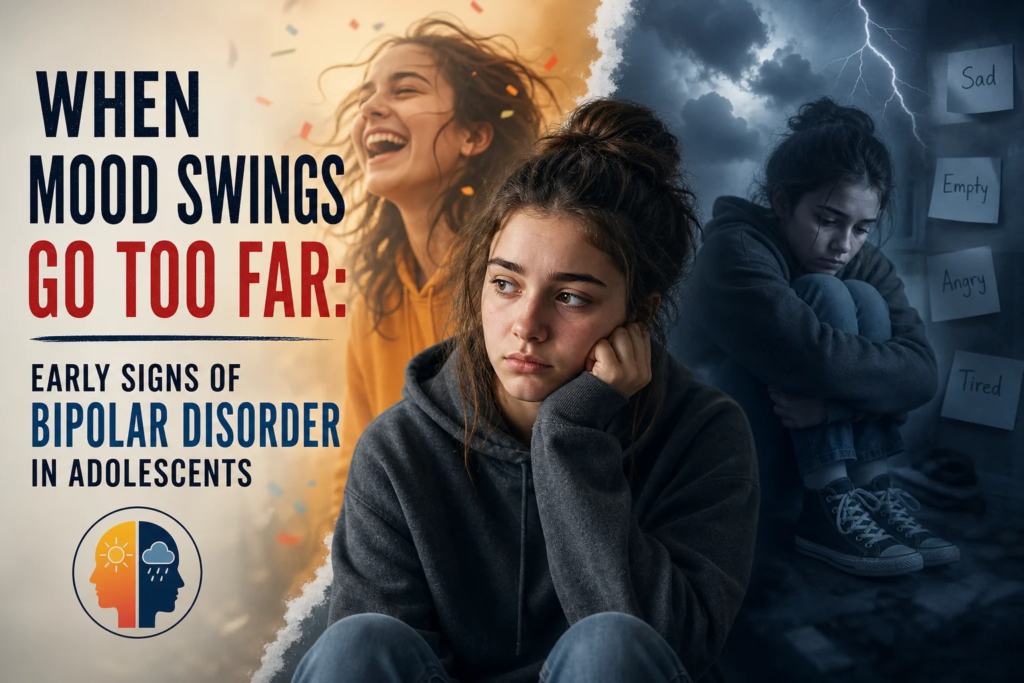
When Mood Swings Go Too Far: Early Signs of Bipolar Disorder in Adolescents — The Essential Guide for Parents, Teachers, and Caregivers
A teenager slams a door, cries over a text message, laughs hysterically an hour later, then refuses to come to dinner. Is it normal adolescence—or something more serious?
That question can keep parents awake at night. Adolescence is already a season of emotional intensity. Hormones shift, friendships become complicated, identity develops, academic pressure rises, and the brain is still under construction. Moodiness, irritability, and dramatic reactions can be part of growing up.
But sometimes, mood swings become more than ordinary teenage turbulence.
When Mood Swings Go Too Far: Early Signs of Bipolar Disorder in Adolescents is not just a clinical topic—it is a deeply human one. It affects families, schools, friendships, self-esteem, safety, and a young person’s future. Recognizing the early signs can make an enormous difference because early support often leads to better stability, stronger coping skills, and reduced risk of crisis.
This article explores When Mood Swings Go Too Far: Early Signs of Bipolar Disorder in Adolescents in a practical, compassionate, and evidence-informed way. You’ll learn what bipolar disorder can look like in teens, how it differs from normal moodiness, what warning signs deserve attention, and what steps families can take.
Important note: This article is for education only. It does not diagnose or replace medical care. If you suspect bipolar disorder or any serious mental health condition in an adolescent, consult a licensed mental health professional, pediatrician, or child and adolescent psychiatrist.
Understanding Bipolar Disorder in Adolescents
Bipolar disorder is a mood disorder characterized by significant shifts in mood, energy, activity level, sleep, thinking, and behavior. These shifts are more intense and disruptive than typical emotional ups and downs.
In adolescents, bipolar disorder can be especially difficult to recognize because symptoms may overlap with:
- Normal teenage mood changes
- Depression
- Anxiety
- ADHD
- Trauma responses
- Substance use
- Sleep deprivation
- Oppositional behavior
- Autism spectrum-related emotional regulation challenges
- Disruptive mood dysregulation disorder
That’s why the theme When Mood Swings Go Too Far: Early Signs of Bipolar Disorder in Adolescents matters so much. The issue is not whether a teen has emotions. All teens do. The issue is whether mood episodes become extreme, persistent, impairing, and unsafe.
Bipolar disorder commonly involves episodes of depression and episodes of mania or hypomania.
Main Types of Bipolar Disorder
| Type | Key Features | What It May Look Like in Adolescents |
|---|---|---|
| Bipolar I Disorder | At least one manic episode, often with depressive episodes | Extreme energy, little sleep, impulsive or risky behavior, possible psychosis |
| Bipolar II Disorder | Hypomanic episodes and major depressive episodes | Periods of increased energy and confidence followed by deep depression |
| Cyclothymic Disorder | Chronic mood fluctuations that are less severe but persistent | Long-term pattern of emotional highs and lows affecting functioning |
| Other Specified Bipolar Disorders | Symptoms don’t fully meet criteria but still cause impairment | Unusual mood episodes that concern family or school professionals |
The adolescent presentation may not always look like the classic adult version. Teens may show more irritability than euphoria, mixed symptoms, rapid mood changes, or behavioral explosions. This is one reason early signs of bipolar disorder in adolescents are often missed or misunderstood.
Normal Teen Moodiness vs. Bipolar Warning Signs
Every teenager has bad days. They may be moody, dramatic, private, or reactive. But bipolar-related mood changes are different in intensity, duration, and impact.
The question at the heart of When Mood Swings Go Too Far: Early Signs of Bipolar Disorder in Adolescents is this: Are the mood changes causing serious disruption in the teen’s life, relationships, safety, sleep, school, or judgment?
Comparison Table: Typical Mood Swings vs. Possible Bipolar Symptoms
| Feature | Typical Adolescent Mood Swings | Possible Bipolar Warning Signs |
|---|---|---|
| Duration | Minutes to hours, often tied to events | Days or longer, sometimes without clear trigger |
| Sleep | Stays up late but gets tired | Sleeps very little yet feels energized |
| Energy | Varies with stress or schedule | Noticeably excessive or unusually low |
| Behavior | Irritable, emotional, withdrawn at times | Risk-taking, reckless spending, unsafe sex, aggression, extreme impulsivity |
| Thinking | Worried, dramatic, sensitive | Racing thoughts, grandiose ideas, unrealistic confidence |
| Speech | Talks fast when excited | Pressured speech that is hard to interrupt |
| Functioning | Usually maintains school/friendships | Grades, friendships, hygiene, or responsibilities decline |
| Safety | Rare self-harm thoughts may occur in distress | Suicidal thoughts, self-harm, psychosis, dangerous behavior |
A key distinction is impairment. If mood changes repeatedly derail school performance, family life, friendships, sleep, or safety, it may be time to seek professional evaluation.
The Early Signs: When Mood Swings Go Too Far in Teens
The phrase When Mood Swings Go Too Far: Early Signs of Bipolar Disorder in Adolescents points to a cluster of symptoms—not one single behavior.
A teen who is irritable for a day is not automatically showing bipolar disorder. A teen who has a burst of confidence before a performance is not necessarily hypomanic. But patterns matter.
Below are signs parents, teachers, and caregivers should watch closely.
1. Dramatic Changes in Sleep Without Feeling Tired
Sleep is one of the most important clues.
Many teenagers stay up late. But in bipolar mania or hypomania, a teen may sleep only two or three hours and still seem unusually energized the next day.
They may say:
- “I don’t need sleep.”
- “My brain is too fast to sleep.”
- “I have too many ideas.”
- “I feel amazing even though I barely slept.”
This is different from insomnia, where a teen wants to sleep but can’t and feels exhausted. In mania or hypomania, the reduced need for sleep is often paired with increased energy.
Why Sleep Matters
Sleep disruption can be both a symptom and a trigger. Adolescents are especially vulnerable because school schedules, screens, social media, caffeine, and stress already interfere with sleep.
In conversations about early signs of bipolar disorder in adolescents, sleep deserves serious attention.
2. Unusually Elevated or Irritable Mood
Mania is often imagined as extreme happiness, but in adolescents, it may appear as severe irritability, agitation, or explosive anger.
A teen may become:
- Extremely cheerful or silly in a way that seems out of character
- Intensely angry over small frustrations
- Argumentative and impossible to redirect
- Overconfident or defiant
- Emotionally “wired” or restless
This is where When Mood Swings Go Too Far: Early Signs of Bipolar Disorder in Adolescents can become confusing. Irritability is common in teens, but bipolar-related irritability is often more intense, prolonged, and combined with other changes such as decreased sleep, racing thoughts, and impulsivity.
3. Racing Thoughts and Pressured Speech
A teen experiencing hypomania or mania may speak rapidly, jump between topics, interrupt constantly, or seem unable to slow down.
They might describe their mind as:
- “Going 100 miles per hour”
- “Full of ideas”
- “Too loud”
- “Impossible to turn off”
Parents may notice conversations become hard to follow. Teachers may observe that the teen talks excessively, dominates discussions, or submits assignments filled with scattered ideas.
Racing thoughts can also appear during anxiety, ADHD, or trauma-related hyperarousal. That’s why context and pattern are essential.
4. Grandiosity or Unrealistic Confidence
Healthy confidence is wonderful. But grandiosity is different.
A teen may suddenly believe they are destined to become famous overnight, start a business with no plan, write a novel in one weekend, or claim they have special powers, talents, or insight.
Examples include:
- “I’m smarter than all my teachers.”
- “I don’t need school. I’m going to be a millionaire by next month.”
- “Everyone is jealous because I’m chosen for something huge.”
- “Rules don’t apply to me.”
Grandiosity becomes especially concerning when paired with risky behavior, little sleep, and poor judgment.
This is one of the more recognizable clues in When Mood Swings Go Too Far: Early Signs of Bipolar Disorder in Adolescents, but it may be dismissed as arrogance unless caregivers look at the whole pattern.
5. Risky, Impulsive, or Out-of-Character Behavior
Adolescents naturally test limits. But bipolar-related impulsivity can be sudden, extreme, and dangerous.
Possible behaviors include:
- Reckless driving
- Sneaking out at night
- Substance use
- Unsafe sexual behavior
- Spending large amounts of money
- Aggression or physical fights
- Posting inappropriate content online
- Running away
- Dangerous dares or stunts
What makes this different from ordinary risk-taking is the intensity and sudden personality shift. A previously cautious teen may suddenly act as if consequences do not exist.
When discussing bipolar disorder warning signs in teenagers, risky behavior is one of the most urgent symptoms to take seriously.
6. Depressive Episodes That Go Beyond Sadness
Bipolar disorder includes depressive episodes, which may appear before any obvious manic or hypomanic symptoms. In fact, many adolescents are first identified as depressed.
Teen depression may include:
- Persistent sadness or emptiness
- Irritability
- Loss of interest in activities
- Withdrawal from friends
- Changes in appetite or weight
- Sleeping too much or too little
- Fatigue
- Feelings of worthlessness
- Poor concentration
- Drop in grades
- Self-harm
- Thoughts of death or suicide
A major challenge in When Mood Swings Go Too Far: Early Signs of Bipolar Disorder in Adolescents is that bipolar depression can look similar to unipolar depression. A careful history of mood elevation, sleep changes, family history, and antidepressant reactions can help professionals make a more accurate assessment.
7. Mixed Episodes: The Most Overlooked Warning Sign
Mixed symptoms occur when depressive and manic features appear together. This can be especially distressing and risky.
A teen may feel hopeless and suicidal while also feeling agitated, restless, impulsive, and unable to sleep.
Signs of mixed states may include:
- Severe irritability
- Racing thoughts with despair
- Agitation
- Insomnia
- Panic-like energy
- Self-harm urges
- Sudden anger
- Dangerous impulsivity
Mixed states are one reason early evaluation is vital. A teen may not look “happy” or “manic,” but they may still be experiencing bipolar-related mood instability.
8. Psychotic Symptoms During Severe Mood Episodes
In severe cases, mania or depression may include psychosis. This means a teen may have hallucinations or delusions.
Examples include:
- Hearing voices others do not hear
- Believing they have supernatural powers
- Thinking people are spying on them
- Believing they are receiving special messages
- Having paranoid fears that are disconnected from reality
Psychotic symptoms require prompt professional attention. If a teen is acting dangerously, confused, suicidal, or disconnected from reality, seek emergency help.
In the broader conversation about When Mood Swings Go Too Far: Early Signs of Bipolar Disorder in Adolescents, psychosis is not always present, but when it is, it should never be ignored.
Symptom Pattern Chart: What to Track Over Time
Because adolescent moods fluctuate, tracking patterns is often more helpful than relying on memory.
| What to Track | Why It Matters | Example Notes |
|---|---|---|
| Sleep hours | Reduced need for sleep may signal hypomania/mania | “Slept 3 hours, high energy next day” |
| Mood rating | Reveals highs, lows, and mixed states | “Mood 9/10, very irritable” |
| Energy level | Helps distinguish fatigue from activation | “Couldn’t sit still” |
| Risky behavior | Shows impairment and safety concerns | “Sneaked out, drove with older friend” |
| Speech/thoughts | Tracks racing thoughts or pressured speech | “Talking nonstop, jumping topics” |
| School functioning | Shows real-world impact | “Missed assignments, argued with teacher” |
| Substance use | Can mimic or worsen symptoms | “Used cannabis at party” |
| Menstrual cycle/hormonal changes | May affect mood patterns | “Mood crash before period” |
| Medications/caffeine | Can influence mood and sleep | “Energy drink at 9 p.m.” |
A mood chart can become a powerful tool when discussing concerns with a clinician. It brings clarity to early signs of bipolar disorder in adolescents and helps reduce guesswork.
Case Study 1: The Straight-A Student Who Stopped Sleeping
Name: Maya, age 15
Background: Maya was a high-achieving student who usually worried about grades. She was responsible, quiet, and close to her younger sister.
Over three weeks, Maya changed noticeably. She slept only two or three hours a night but woke up energized. She began writing a “life-changing” screenplay, talking rapidly about becoming famous. She told her parents school was pointless because she was “beyond the system.”
At first, her parents thought she was simply inspired. Then she spent hundreds of dollars online using saved birthday money, argued intensely when questioned, and posted dozens of dramatic videos late at night. When her English teacher expressed concern, Maya accused the teacher of trying to sabotage her future.
A child psychiatrist later identified symptoms consistent with a hypomanic episode, followed by a depressive crash.
Analysis
Maya’s case illustrates When Mood Swings Go Too Far: Early Signs of Bipolar Disorder in Adolescents because her symptoms were not just emotional. They included reduced need for sleep, grandiosity, pressured speech, impulsive spending, and impaired judgment.
The key clue was the combination of symptoms—not creativity alone, not confidence alone, and not teenage rebellion alone.
Case Study 2: The “Angry Teen” Who Was Actually in a Mixed State
Name: Jordan, age 16
Background: Jordan was known as funny and social but had become increasingly irritable. His parents described him as “explosive.”
For several days, Jordan barely slept. He paced the house, snapped at family members, and said his thoughts were racing. At the same time, he cried privately and told a friend he felt like life was pointless. He started driving recklessly and got into a physical confrontation at school.
Adults initially labeled him defiant. But during a clinical assessment, Jordan described feeling “amped up and miserable at the same time.”
Analysis
Jordan’s story shows why early signs of bipolar disorder in adolescents can be misunderstood as bad behavior. His agitation, insomnia, racing thoughts, despair, and impulsivity pointed toward a possible mixed mood episode.
Mixed states can be especially dangerous because energy and hopelessness may occur together. This combination can increase risk of self-harm or unsafe actions.
Case Study 3: Depression First, Bipolar Later
Name: Sofia, age 14
Background: Sofia became withdrawn during eighth grade. She stopped playing soccer, slept after school for hours, and said she felt worthless. Her parents sought help for depression.
During evaluation, the clinician asked about past periods of unusually high energy. Sofia’s mother remembered a two-week period the previous summer when Sofia slept very little, reorganized her room every night, made elaborate plans to launch a clothing brand, and became unusually irritable when interrupted.
There was also a family history of bipolar disorder in an aunt.
Analysis
Sofia’s case highlights a crucial point in When Mood Swings Go Too Far: Early Signs of Bipolar Disorder in Adolescents: depression may be the first obvious symptom. Without asking about past high-energy episodes and family history, bipolar disorder can be missed.
This matters because treatment decisions may differ when bipolar disorder is suspected.
Risk Factors: Who Is More Vulnerable?
No single factor causes bipolar disorder. It typically develops through a combination of genetic, biological, psychological, and environmental influences.
Common Risk Factors
| Risk Factor | Why It Matters |
|---|---|
| Family history of bipolar disorder | Strong genetic component |
| Early-onset depression | May precede bipolar symptoms in some teens |
| Sleep disruption | Can trigger or worsen mood episodes |
| Substance use | Can mimic, trigger, or intensify symptoms |
| High stress or trauma | May worsen emotional regulation |
| Antidepressant activation | Some teens may become unusually energized or agitated |
| Neurodevelopmental conditions | ADHD or autism may complicate recognition |
| Major life transitions | Moving, divorce, grief, school stress may destabilize mood |
Family history is especially important. If a parent or close relative has bipolar disorder, a teen’s extreme mood episodes deserve careful evaluation.
However, having risk factors does not mean a teen will develop bipolar disorder. It simply means caregivers should be attentive.
Why Bipolar Disorder Is Often Missed in Adolescents
There are several reasons When Mood Swings Go Too Far: Early Signs of Bipolar Disorder in Adolescents can be difficult to identify.
1. Teenagers Naturally Have Emotional Highs and Lows
Parents may assume all intense emotions are normal puberty-related changes.
2. Irritability Can Hide Mania
In adults, mania is often associated with euphoria. In teens, severe irritability may be more noticeable.
3. Depression May Come First
If the teen is initially depressed, clinicians may not immediately see the bipolar pattern.
4. ADHD Can Look Similar
Both ADHD and hypomania can involve distractibility, impulsivity, and talkativeness. The difference is that bipolar symptoms typically occur in episodes and include distinct mood and sleep changes.
5. Substance Use Can Blur the Picture
Cannabis, stimulants, alcohol, and other substances can create mood symptoms or worsen underlying vulnerability.
6. Shame Keeps Teens Quiet
A teen may hide racing thoughts, risky behavior, self-harm, or hallucinations out of embarrassment or fear of punishment.
This is why curiosity works better than accusation. Instead of “What is wrong with you?” try “I’ve noticed you seem overwhelmed and not sleeping. Can we talk about what’s been happening?”
The Role of School: Teachers Often See the First Signs
Teachers, coaches, and school counselors may notice changes before parents do, especially if symptoms affect concentration, social behavior, or academic performance.
Possible school-based warning signs include:
- Sudden drop in grades
- Excessive talking or disruptive energy
- Sleeping in class after nights of little sleep
- Uncharacteristic conflicts with peers
- Grandiose projects that are unrealistic
- Increased absences
- Emotional outbursts
- Risky behavior on campus
- Withdrawal or hopeless writing assignments
Schools should avoid diagnosing. But they can document concerns, communicate respectfully with caregivers, and encourage evaluation.
In the context of When Mood Swings Go Too Far: Early Signs of Bipolar Disorder in Adolescents, school observations can provide valuable evidence of patterns across settings.
What Parents Can Do First
If you suspect bipolar symptoms, the goal is not to panic. The goal is to observe, support, protect, and seek qualified help.
Step 1: Track Symptoms
Write down:
- Sleep duration
- Mood shifts
- Energy changes
- Risky behaviors
- School changes
- Major stressors
- Substance use
- Medication changes
- Family history
Use dates and specific examples.
Step 2: Start a Calm Conversation
Choose a quiet moment. Avoid starting with labels.
Try:
- “I’ve noticed you haven’t been sleeping, but you seem full of energy. What does that feel like?”
- “You seem really overwhelmed lately. I want to understand, not judge.”
- “Some of your recent choices seem unlike you. Are you feeling in control?”
Step 3: Schedule a Professional Evaluation
Start with a pediatrician, therapist, or child and adolescent psychiatrist. A psychiatrist is especially important when bipolar disorder is suspected because medication decisions can be complex.
Step 4: Prioritize Sleep and Routine
A consistent sleep schedule, reduced nighttime screen exposure, predictable meals, and stable routines can help regulate mood.
Step 5: Create a Safety Plan
If there is self-harm, suicidal thinking, psychosis, aggression, or dangerous impulsivity, immediate support is needed.
When to Seek Urgent Help
Seek emergency help immediately if a teen:
- Talks about wanting to die
- Has a suicide plan or access to lethal means
- Is self-harming
- Is hearing voices or seeing things
- Seems disconnected from reality
- Is violent or threatening violence
- Is engaging in dangerous behavior
- Has not slept for several nights and is escalating
- Is severely intoxicated or using dangerous substances
If you are in the United States, call or text 988 for the Suicide & Crisis Lifeline. If there is immediate danger, call emergency services or go to the nearest emergency department.
Any discussion of When Mood Swings Go Too Far: Early Signs of Bipolar Disorder in Adolescents must include safety. Early recognition is valuable, but urgent symptoms require urgent care.
Diagnosis: What a Professional Evaluation May Include
A proper evaluation for bipolar disorder in adolescents usually includes multiple sources of information.
Professionals may assess:
- Current symptoms
- Past mood episodes
- Sleep patterns
- Family psychiatric history
- School functioning
- Medical conditions
- Substance use
- Trauma history
- Medication reactions
- Suicidal thoughts or self-harm
- Psychotic symptoms
- Developmental history
They may speak with parents, the teen, and sometimes teachers or school counselors with permission.
Diagnosis may take time. This can be frustrating, but careful assessment helps avoid mislabeling and improves treatment planning.
Treatment and Support: What Helps Adolescents Stabilize?
Treatment for bipolar disorder is individualized. It often includes a combination of education, therapy, family support, lifestyle structure, school accommodations, and sometimes medication.
1. Psychoeducation
Teens and families learn how bipolar disorder works, what triggers episodes, and how to respond early.
2. Family-Focused Therapy
Family therapy can improve communication, reduce conflict, and help everyone recognize warning signs.
3. Cognitive Behavioral Therapy
CBT may help teens manage negative thoughts, stress, routines, and depression symptoms.
4. Dialectical Behavior Therapy Skills
DBT skills can help with emotional regulation, distress tolerance, self-harm urges, and relationship conflicts.
5. Interpersonal and Social Rhythm Therapy
This approach focuses on stabilizing daily rhythms—sleep, meals, activity, and relationships.
6. Medication Management
Some adolescents benefit from mood stabilizers or certain atypical antipsychotic medications. Medication decisions should be made by a qualified clinician, ideally a child and adolescent psychiatrist.
Families should never start, stop, or change psychiatric medication without medical guidance.
7. School Support
Possible supports include:
- Flexible deadlines during episodes
- Reduced workload after hospitalization
- Quiet testing areas
- Counseling access
- Safety planning
- Communication between family and school
- 504 plan or individualized education support when appropriate
Treatment is not about “fixing” a teen’s personality. It is about reducing suffering, improving stability, and helping the young person build a life that feels manageable and meaningful.
What Not to Do
When families are scared, it’s easy to react in ways that accidentally worsen the situation.
Avoid:
- Dismissing symptoms as “just drama”
- Punishing symptoms without understanding them
- Ignoring sleep loss
- Assuming good grades mean everything is fine
- Waiting for a crisis before seeking help
- Letting shame prevent treatment
- Using labels casually
- Blaming the teen
- Arguing during a mood episode
- Stopping medication suddenly
The more productive approach is calm observation, compassionate boundaries, and professional support.
A Practical Early Warning Plan
One of the most useful tools for families is an early warning plan. This plan identifies what a teen looks like when stable, what early symptoms appear, and what steps to take.
| Stage | Signs | Helpful Actions |
|---|---|---|
| Stable | Regular sleep, manageable mood, school attendance | Maintain routine, therapy, medication plan if prescribed |
| Early Warning | Less sleep, more irritability, racing ideas | Reduce stress, contact therapist, tighten sleep routine |
| Escalating | Risky behavior, aggression, grandiosity, severe depression | Call clinician, increase supervision, remove hazards |
| Crisis | Suicidal thoughts, psychosis, dangerous behavior | Call crisis line/emergency services, seek urgent evaluation |
This kind of plan turns fear into action. It also helps teens feel less blamed because everyone knows what to do when symptoms appear.
The Emotional Side for Parents
Parents often feel guilt, fear, grief, anger, and confusion. Some wonder if they caused it. Others feel embarrassed or isolated.
But bipolar disorder is not a parenting failure. A supportive family can make a profound difference, but the condition itself is complex and biologically influenced.
If you are a parent facing When Mood Swings Go Too Far: Early Signs of Bipolar Disorder in Adolescents, remember:
- You do not need to solve everything alone.
- Early help is a strength, not an overreaction.
- Your teen is more than their symptoms.
- Stability is possible.
- Your calm presence matters.
Support groups, family therapy, and education can help parents become steadier anchors.
The Teen’s Perspective: What It May Feel Like Inside
Adults often focus on behavior: yelling, risk-taking, sleeping all day, refusing school. But inside, the teen may feel frightened and out of control.
They may think:
- “Why can’t I stop?”
- “Something is wrong with me.”
- “No one understands.”
- “I feel amazing, so why is everyone worried?”
- “I feel horrible, but I don’t know how to explain it.”
- “I’m scared I’ll get in trouble if I tell the truth.”
Approaching the teen with respect can open doors.
Instead of saying, “You’re acting crazy,” say, “Your brain and body seem like they’re under a lot of pressure. Let’s figure this out together.”
That shift matters.
Common Myths About Bipolar Disorder in Adolescents
Myth 1: “Teenagers can’t have bipolar disorder.”
They can. While diagnosis requires careful evaluation, bipolar symptoms can emerge in adolescence.
Myth 2: “Bipolar disorder always means happy one minute and sad the next.”
Bipolar disorder is not simply rapid emotional switching. It involves episodes of mood, energy, sleep, and behavior changes.
Myth 3: “If my teen is doing well in school, they can’t be struggling.”
High-performing teens can still experience serious mood symptoms.
Myth 4: “Medication is the only treatment.”
Medication may be important for some teens, but therapy, routines, family support, and school accommodations also matter.
Myth 5: “A diagnosis ruins a teen’s future.”
A diagnosis can be scary, but it can also open the door to effective support. Many people with bipolar disorder live successful, creative, fulfilling lives.
How to Talk to a Clinician About Your Concerns
When scheduling an appointment, be specific. Instead of saying, “My teen is moody,” describe patterns.
You might say:
- “My teen slept three hours a night for four nights and seemed energized.”
- “They became unusually confident and made unrealistic plans.”
- “They had a depressive crash afterward.”
- “There is a family history of bipolar disorder.”
- “They have been impulsive in ways that are out of character.”
- “They described racing thoughts.”
Bring mood charts, school emails, medication lists, and family history notes if possible.
The clearer the information, the easier it is for a professional to evaluate When Mood Swings Go Too Far: Early Signs of Bipolar Disorder in Adolescents in your teen’s real-life context.
Conclusion: Early Recognition Can Change the Story
Adolescence is emotional by nature, but some mood swings cross a line. When changes in mood, sleep, energy, behavior, and judgment become extreme or impairing, it is time to pay attention.
When Mood Swings Go Too Far: Early Signs of Bipolar Disorder in Adolescents is ultimately about hope. Early signs are not a sentence. They are signals. They tell families, schools, and professionals that a young person may need support before life becomes more chaotic or dangerous.
The most important takeaways are:
- Look for patterns, not isolated bad days.
- Sleep changes are a major clue.
- Mania in teens may look like irritability, not happiness.
- Depression may appear before clear manic symptoms.
- Mixed states can be risky and easily misunderstood.
- Professional evaluation is essential.
- Safety concerns require immediate action.
- With support, stability and growth are possible.
If you are worried about a teen, trust your concern. Start a conversation. Track what you see. Reach out for help. A compassionate response today can become the turning point that helps an adolescent move toward safety, self-understanding, and a healthier future.
FAQs About When Mood Swings Go Too Far: Early Signs of Bipolar Disorder in Adolescents
1. How do I know if my teen’s mood swings are normal or bipolar disorder?
Normal teen mood swings are usually tied to events and pass relatively quickly. Bipolar-related mood episodes are more intense, may last days or longer, and often involve changes in sleep, energy, thinking, behavior, and functioning. If mood changes disrupt school, relationships, safety, or daily life, seek professional evaluation.
2. Can bipolar disorder start during adolescence?
Yes. Bipolar disorder can begin in adolescence, although diagnosis should be made carefully by a qualified mental health professional. Early symptoms may include depression, irritability, decreased need for sleep, impulsivity, racing thoughts, or unusual bursts of energy.
3. Is irritability a sign of bipolar disorder in teenagers?
It can be, but irritability alone does not mean bipolar disorder. In adolescents, manic or mixed episodes may show up as severe irritability, agitation, or explosive anger—especially when combined with reduced sleep, racing thoughts, impulsivity, or grandiosity.
4. What should I do if my teen is not sleeping but seems energized?
Track the sleep pattern and contact a healthcare professional, especially if the teen also shows unusual confidence, racing thoughts, risky behavior, or intense irritability. A reduced need for sleep without tiredness can be an important warning sign.
5. Can ADHD be mistaken for bipolar disorder?
Yes. ADHD and bipolar disorder can both involve impulsivity, distractibility, and high energy. However, ADHD is usually more consistent over time, while bipolar disorder tends to involve distinct mood episodes with major changes in sleep, energy, and mood. A professional evaluation can help distinguish them.
6. Are suicidal thoughts common in bipolar disorder?
Suicidal thoughts can occur during bipolar depression or mixed states and should always be taken seriously. If a teen talks about suicide, self-harms, or seems unsafe, seek immediate help. In the U.S., call or text 988 for crisis support.
7. Should I mention bipolar disorder to my teen?
Use gentle language. Instead of leading with a diagnosis, describe what you notice: “I’m concerned because you haven’t been sleeping and seem overwhelmed.” If appropriate, you can say, “Some mood conditions can cause these patterns, and a professional can help us understand what’s going on.”
8. What kind of doctor evaluates bipolar disorder in adolescents?
A child and adolescent psychiatrist is often best equipped to evaluate suspected bipolar disorder, especially when medication may be involved. Pediatricians, psychologists, therapists, and school counselors can also help with referrals and support.
9. Can lifestyle changes help?
Yes. Consistent sleep, regular meals, reduced substance use, stress management, therapy, and predictable routines can support mood stability. However, lifestyle changes are not a substitute for professional treatment when bipolar disorder is suspected.
10. Is bipolar disorder treatable in teens?
Yes. With proper diagnosis, treatment, family support, and safety planning, many adolescents with bipolar disorder improve significantly. Early recognition and consistent care can help teens build stable, fulfilling lives.

