


What if a student’s success isn’t measured by test scores, but by understanding feelings, managing reactions, and making wise choices? This idea shows why emotional skills are key in education. Knowing how to handle emotions isn’t just nice to have; it’s crucial for focusing, remembering things, and feeling motivated to learn.
According to CASEL, learning to handle our feelings, set goals, be empathetic, form relationships, and make smart decisions is vital. When schools see emotional smarts as necessary, students get better at thinking clearly when stressed and staying engaged. This makes learning not just about facts but also about growing as a person.
Evidence backs this up strongly. Research by Joseph A. Durlak, Roger P. Weissberg, and others shows that effective SEL programs can boost grades significantly, while also cutting down stress and sadness. National University notes that focusing on emotional health improves grades, attendance, and behavior, creating a safer and caring environment for everyone to learn.
Equity is also central here. CASEL links social and emotional learning to top-quality education through strong bonds with families and communities. This ensures trust, excellent teaching, and ongoing checks. Studies prove that kids who develop these skills early on do better in school, have solid careers, enjoy good mental health, stay out of trouble, and contribute to society. However, only a few states offer comprehensive SEL programs from kindergarten through 12th grade. This gap means many students miss out on support that could help them a lot.
In essence, learning to understand and manage our emotions supports academic success and builds trust among people. As we delve into the value of emotional skills, we’ll see how SEL enhances learning, happiness, and equality. And we’ll argue that it’s time to expand these proven approaches everywhere.
Key Takeaways
- SEL, as defined by CASEL, equips learners to manage emotions, set goals, and make responsible decisions.
- Well-implemented SEL boosts achievement by an average of 11 percentile points and lowers stress.
- Emotional wellness in education strengthens classroom climate, attendance, and prosocial behavior.
- Equity grows when schools, families, and communities partner to embed SEL across contexts.
- Long-term benefits include higher graduation rates, career success, and better mental health.
- Despite strong evidence, only three states have comprehensive K–12 SEL standards, signaling a policy gap.
Understanding Emotional Skills
Emotional skills help people recognize, understand, and use their feelings to think and act better. In schools, these skills connect choices to their results. This shapes how students plan, work together, and keep going even when things get tough. Learning and emotions are closely linked. Our ability to pay attention, remember things, and behave is built on emotional skills. When students understand their emotions, they learn better and make choices deliberately, not on a whim.
Definition of Emotional Intelligence
Emotional intelligence means understanding your feelings and using them to think smarter and achieve goals. It combines knowing yourself with understanding others. This helps students act kindly and appropriately. Using emotional intelligence makes learning and emotional development better by aligning feelings with goals and actions.
In education, being emotionally literate means you can name your feelings, understand what they mean, and pick the right way to handle them. Students use this knowledge to plan their work, seek help, and stay focused, even under stress. This common understanding helps make classrooms feel more consistent and fair.
Components of Emotional Skills
There are five main parts of emotional intelligence that help in school, at home, and in the community. They improve learning and emotional growth. Plus, they help students understand their feelings better.
- Self-awareness: Recognizing emotions, values, and goals; knowing strengths and weaknesses; linking thoughts, feelings, and actions.
- Self-management: Controlling feelings and actions; handling stress; waiting for rewards; sticking with goals.
- Social awareness: Showing empathy across cultures; understanding social cues; knowing where to find support.
- Relationship skills: Speaking clearly; listening well; working together; avoiding bad peer pressure; solving conflicts; asking for help when needed.
- Responsible decision-making: Considering the results of actions; making safe, ethical, and kind choices in different situations.
These five skills are connected: knowing yourself leads to better self-control; understanding others improves relationships; smart decisions come from using all these skills together. When schools include these in daily activities, students get better at understanding their emotions. Emotional intelligence becomes a key part of school life.
The Role of Emotions in Learning
Emotions guide students’ focus, how hard they try, and their planning skills. In places where feelings are important, students pay more attention and keep trying. Linking learning with emotional growth helps students tackle tasks with more concentration and purpose.
Supportive climates matter. When students trust their teachers and friends, they stress less and learn better. Schools that help with emotions make it easier for students to think instead of just coping.
How Emotions Affect Cognitive Functions
Good feelings open up our minds and make it easier to switch ideas and solve problems. But, feeling anxious can make it hard to focus and find solutions.
Having a routine and getting feedback help our brains with memory, self-control, and planning. This mixes learning with managing feelings, which helps in all subjects.
- Attention: Being calm lets students ignore distractions and understand instructions better.
- Motivation: Caring about goals makes students keep trying, especially when they feel good.
- Executive Control: Having clear rules and time to think improves flexible thinking.
The Connection Between Emotion and Memory
When lessons relate to students’ lives and feel safe, memory improves. Feelings add value to what we learn, telling our brain what’s important. High stress can make it hard to remember things.
Lessons that match students’ experiences make learning easier. Using emotions well in class helps students think about new ideas. This method combines learning with feelings every day.
| Emotional State | Impact on Attention | Effect on Memory | Classroom Strategy |
|---|---|---|---|
| Calm and Supported | Stable focus; fewer off-task shifts | Strong encoding and accurate recall | Predictable routines and brief check-ins |
| Curious and Engaged | Broadened scope; flexible exploration | Deeper consolidation through relevance | Choice in tasks and real-world examples |
| Stressed or Anxious | Narrowed attention; vigilance over learning | Shallow encoding; fragmented retrieval | Breathing cues, pacing, and scaffolds |
| Confident and Prepared | Sustained attention over complex work | Efficient retrieval and transfer | Clear success criteria and rehearsal |
Benefits of Developing Emotional Skills in Education
Schools focusing on emotions along with thinking see big benefits. This focus improves attendance, concentration, and progress. Emotional skills becoming a daily practice means students join in more, and teachers redirect less. This makes for better learning every day.
Enhanced Academic Performance
Studies, including those by Roger P. Weissberg and Joseph A. Durlak, show students gain an average of 11 percentile points. This is through programs that enhance self-control and social skills. These programs merge thinking and feeling, aiding in planning and goal setting.
Better school attendance suggests these emotional skills support effort and test scores.
Improved Classroom Behavior
When students learn empathy and how to see things from others’ views, classrooms become more peaceful and team-oriented. Maurice J. Elias’s research and the Collaborative for Academic, Social, and Emotional Learning’s work show an increase in kind behaviors like helping and respectful communication. Schools adopting these practices see less misbehavior and bullying, proving emotional skills create safer learning places.
Greater Motivation and Engagement
Students stick with tough tasks when they feel skilled and connected. Teachers build this through focusing on students’ belief in themselves and their purposes. This approach enhances learner’s drive from within. As learners become more emotionally skilled, they take charge of their goals and keep going despite challenges. This outlook boosts their curiosity and participation all day.
Emotional Skills and Student Well-being
For students to thrive, schools must focus on emotional wellness every day. Incorporating social and emotional learning into the daily routine is key. It creates a safe and trusting environment that promotes growth and helps students manage their emotions.
Practical systems matter: Schools need a broad approach to meet everyone’s needs. Quick activities like morning reflection and deep breathing help start the day calmly.
Managing Stress and Anxiety
Students need clear methods to understand and control their feelings. Check-ins for identifying emotions and calm-down areas for privacy are important. Role-playing also helps them handle tough situations without acting on impulse.
By integrating social and emotional learning (SEL) with mental health care, schools can address various needs effectively. This approach reduces stress, strengthens connections, and improves emotional control. It ensures students can learn in a stigma-free atmosphere.
- Self-management: Techniques like breathing cues and counting help during transitions.
- Self-monitoring: Tracking moods and progress with mood meters and journals.
- Co-regulation: Adults set examples with their behavior and supportive words.
Building Resilience
To become resilient, students need to be self-aware, optimistic, and focused on goals. Setting small goals and learning from failures are part of this process. This way, they grow emotionally by practicing and improving, not by being perfect.
A positive and caring school atmosphere helps students feel included. This sense of belonging encourages active participation, persistence, and emotional control. These factors help them overcome challenges.
- Protective relationships: Programs like advisory periods and mentoring build trust.
- Growth mindsets: Seeing mistakes as learning opportunities helps with future actions.
- Early SEL exposure: Learning emotional skills early reduces risky behavior and promotes health.
These efforts make schools places where emotional wellness is a priority. They focus on emotional growth through daily, teachable actions.
Teaching Emotional Skills in the Classroom
Good teaching mixes practice with thinking about it. Schools should match their daily activities, teaching, and family work together. This makes students more focused, classes calmer, and decisions clearer. These are key benefits of learning social and emotional skills, and they help in all subjects.
Programs that use the SAFE approach—Sequenced, Active, Focused, and Explicit—build habits step by step. Teachers make learning about feelings part of lessons with short activities, structured talks, and setting goals. Morning meetings create rules, and ending the day with reflection wraps everything up nicely.
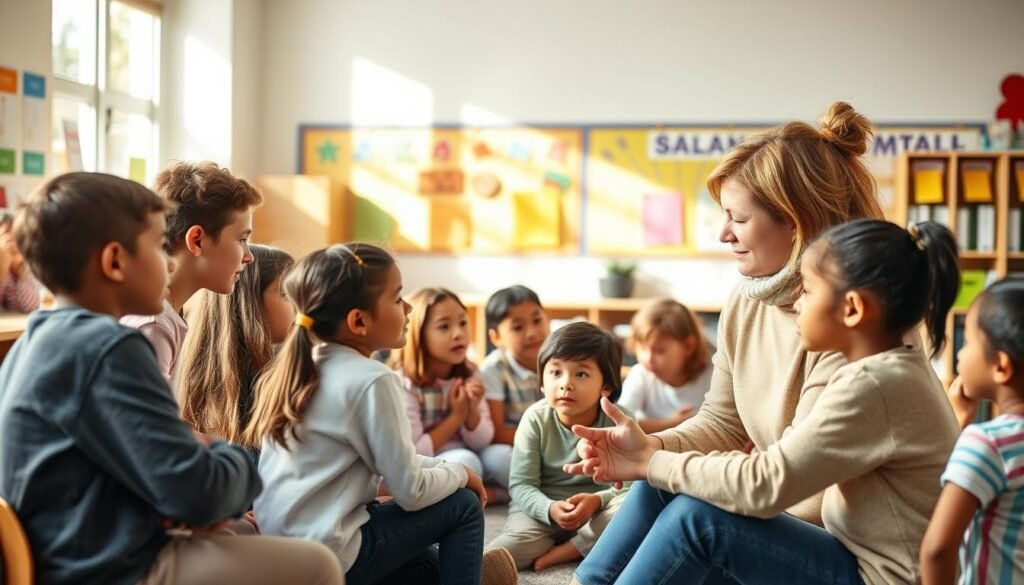
Incorporating Social-Emotional Learning (SEL)
SEL fits into main lessons without taking time from academics. In English, students look at characters’ reasons, talk about choices, and try to understand others’ views. In math, students work in pairs, explain how they solve problems, and learn to trust through feedback.
Social studies leads to debates about different values. Short activities like think-pair-share and exit slips set clear rules for learning and growing emotionally. Checking in every day, tracking goals, and reflecting often show how much progress everyone is making.
- Sequenced: Units move from knowing about feelings to controlling them.
- Active: Through playing roles, sharing with peers, and writing quickly, practice keeps going.
- Focused: Spending five to ten minutes daily helps skills grow.
- Explicit: Talking clearly about skills helps with learning about emotions.
Working together is key. When schools work with families and groups in the community, rules stay the same everywhere. CASEL offers free training for teachers to make routines better, boosting the benefits of social and emotional learning.
Activity-Based Approaches
Short, inexpensive activities make SEL real. Writing about feelings increases self-awareness. Classrooms helping each other build empathy across ages and teach mentoring. Picking roles in group projects teaches teamwork and being responsible.
Playing roles from history and interviewing peers about news helps understand different views and know about the media. Spaces for calming down and structured check-ins make controlling emotions normal. This helps students focus better and join tasks confidently after a break.
- Journaling: Talk about feelings, what causes them, and plan what to do next.
- Group projects: Choose roles, make rules, and use guides for feedback.
- Role-play: Practice how to apologize, say no, or ask for help.
- Check-ins: Measure mood or quick feelings before starting hard tasks.
After-school programs focused on SEL make students feel better about themselves and more connected to school. Research shows better grades and test scores, and fewer behavior problems. These are signs of how social and emotional learning supports school goals.
| Classroom Practice | Primary SEL Skill | Academic Tie-In | Assessment Method |
|---|---|---|---|
| Morning Meeting | Self-management; relationship skills | Agenda review; participation norms | Observation checklist; student self-ratings |
| ELA Character Debate | Social awareness; responsible decision-making | Text evidence; rhetoric | Rubric for claims, evidence, and empathy |
| Math Partner Talk | Communication; emotional literacy in learning | Problem explanation; error analysis | Peer feedback forms; exit slips |
| Calm-Down Corner | Self-regulation | Task re-entry; stamina | Re-entry time logs; focus ratings |
| Historical Role-Play | Perspective-taking | Primary sources; causation | Reflection prompts; discussion notes |
| After-School SEL Club | Goal setting; resilience | Project planning; study skills | Progress trackers; attendance and grade trends |
Key takeaway: When schools use everyday routines, clear teaching, and fun activities together, both learning and emotional growth get faster. This way, learning about feelings becomes part of all lessons.
Emotional Skills for Teachers
Teachers are key in setting the classroom’s emotional environment. They show emotional smarts through their actions, making every day predictable. This helps students feel valued and secure. Such an atmosphere is vital for their emotional and academic growth. It also keeps students focused and engaged.
Why it matters now: How teachers and students interact is crucial. It affects focus, motivation, and trust. Using emotional support and clear rules helps students grow independently and do well in school and with friends.
Importance of Teacher Emotional Intelligence
Teachers who recognize and manage their stress can make their classrooms run smoother. They spot what upsets them, name their feelings, and choose how to react in a respectful way. This helps everyone feel respected.
When teachers balance thinking and feeling, everyone feels they belong. Regular check-ins, adapting the pace, and talking respectfully make a big difference. Over time, this approach boosts students’ emotional and academic skills, especially in stressful times.
“Students remember how teachers made them feel—respected, capable, and ready to try again.”
Strategies for Educators to Model Emotional Skills
- Model self-awareness: Say what you’re feeling as it happens—“I feel rushed; I’ll take a breath.” This shows that being emotionally smart is a skill you can learn.
- Teach self-management: Before tests, do short exercises like breathing to help focus and remain calm.
- Think aloud for choices: Share your thoughts on being fair, safe, and the effects of actions. This teaches how to make good decisions.
- Embed routines: Daily activities like morning meetings show the importance of understanding and fixing mistakes.
- Coach reflection: Help students set goals and improve their plans. This is crucial for their emotional and academic growth.
- Learn together: Be part of groups that focus on learning new ways to teach emotional skills. This helps keep your teaching fresh and effective.
| Teacher Practice | What Students See | SEL Skill Highlighted | Classroom Impact |
|---|---|---|---|
| Emotion naming during instruction | Clear language for feelings | Self-awareness, emotional intelligence | Lower confusion; quicker recovery after setbacks |
| Brief co-regulation routines | Breathing and pause cues | Self-management, emotional regulation in school | Calmer transitions; steadier attention spans |
| Ethical think-alouds for decisions | Transparent reasoning | Responsible decision-making | Fewer conflicts; higher trust in fairness |
| Restorative conversations | Repair after harm | Relationship skills, empathy | Improved peer climate; durable norms |
| Goal-setting and progress checks | Visible growth over time | Self-efficacy, promoting emotional growth in students | Greater persistence; clearer ownership of learning |
With consistent modeling and common language, classrooms turn into stable communities. Students watch adults handle stress, show empathy, and make ethical decisions. They learn to do the same.
The Impact of Parental Involvement
Families start shaping learning and feelings way before school kicks in. When parents and schools match up in what they expect, kids get ready daily routines. They also share a way to talk about feelings and choices. This shared approach boosts learning about emotions and forms good habits.
Consistent messages matter: agreeing on key skills like knowing yourself, feeling for others, and making smart choices is vital. Students get to try these out in real life. This method boosts students’ emotional growth and keeps family and cultural values strong.
Role of Parents in Fostering Emotional Skills
Learning about emotions starts early at home. Things like bedtime chats, smooth changes, and talking about feelings give kids a safe space. Parents teach by taking a moment to breathe and pick their words carefully.
- Use quick emotion check-ins: “What are you feeling, and what do you need?”
- Set goals together: pick one behavior to work on this week and check how it goes.
- Talk about others’ viewpoints while reading books or news: “How might someone else see this?”
- Learn how to handle disagreements: listen, think back, suggest, and agree on what to do next.
Working together with schools and local groups helps give consistent guidance. This teamwork cuts down on feeling alone, raises the sense of belonging, and keeps kids growing emotionally and learning, no matter where they are.
Collaborative Learning at Home
Home can reflect classroom habits in short, easy activities. Five-minute tasks build knowledge about emotions easily without stressing out. Simple wins, like cooling down after a spat, are key lessons.
- Make a family rule book with a few guidelines: be kind, stay honest, fix the harm.
- Keep a list of emotion words on the fridge to get better at expressing feelings.
- Have a family meeting every week: share what’s good, what’s tough, and what to try next.
- Take part in after-school activities that promote teamwork, helping others, and making choices.
When families, schools, and community programs work together, students get clear examples everywhere. This unity boosts self-starting skills, makes friendships stronger, and continues to grow students’ emotional skills. This comes from practice that is both caring and strong.
Emotional Skills and Social Interactions
Strong relationships start with small actions: saying hi to a classmate, sharing materials, or offering feedback. These actions highlight the value of emotional skills, promoting emotional wellness in schools worldwide. They make trust and inclusion common in classrooms.
Empathy and Peer Relationships
Empathy begins by observing cues like tone, posture, and speed, then checking if we understand correctly. Naming and echoing feelings make others feel recognized. This practice turns groups into supportive circles.
Social understanding and relational skills also help lessen prejudice. By considering others’ viewpoints, students connect across different backgrounds. This approach enhances emotional wellness and stresses emotional skills for safer, kinder communities.
Conflict Resolution Skills
Conflicts become learning opportunities when students have the right tools. Simple steps like pausing, naming the issue, and making a choice help manage conflicts calmly. With guidance, students move from blaming to solving problems and seek help when needed.
Activities like group work, role-play, and set discussions offer chances to practice. They teach active listening, how to resist peer pressure, and how to achieve mutual goals. These experiences bolster emotional smarts and maintain emotional wellness in schools.
| Skill Focus | Classroom Practice | Observable Behaviors | Impact on Climate |
|---|---|---|---|
| Empathy | Perspective circles and reflective listening | Paraphrases feelings; asks clarifying questions | Higher trust; fewer social rifts |
| Active Listening | Structured dialogues with turn-taking cards | Maintains eye contact; summarizes key points | Reduced interruptions; clearer understanding |
| Negotiation | Cooperative problem-solving in teams | Generates options; evaluates trade-offs | Fairer agreements; shared ownership |
| Self-Regulation | Pause-breathe-choose routines | Uses pause words; manages tone and pace | Fewer escalations; steady focus |
| Help-Seeking | Clear pathways to peer mediators and adults | Requests support early; names specific needs | Quicker resolutions; stronger safety |
| Belonging | Norms for inclusive language and roles | Invites quieter voices; rotates leadership | Wider participation; durable peer ties |
Through these methods, students learn to see emotional skills as everyday habits. This leads to fewer issues, more teamwork, and a culture that values emotional intelligence as much as educational achievement.
When schools match their routines with fair support systems, emotional wellness becomes apparent everywhere. This approach helps students deal with conflicts, mend relationships, and keep their education progressing smoothly.
Measuring Emotional Skills Development
Reliable measurements show how emotional learning changes over time and place. Schools can pinpoint learning patterns and benefits of social emotional learning with the right tools. They do this without boiling it down to just one score.
Using established frameworks makes evaluations more rigorous. The SAFE model—sequenced, active, focused, explicit—makes lessons clear and easy to measure. The CASEL framework guides teams to examine classrooms and communities. It focuses on fairness and improving continually.
Tools and Assessments for Educators
Educators mix direct evidence and perception data to understand emotional regulation and other skills. It’s more effective to use short tools frequently than long ones rarely.
- Student self-assessments: quick scales on self-awareness and relationship skills that show daily changes.
- Teacher observation rubrics: structured guides to rate behaviors linked to lessons and routines.
- Climate surveys: surveys that measure how students feel about their safety and connection at school.
- Participation logs: records of involvement in SEL lessons and activities.
- Implementation checks: reviews to ensure SEL practices are being applied correctly, following the SAFE model.
| Measure | What It Captures | Frequency | Decision Use |
|---|---|---|---|
| Student Self-Assessment | Perceived growth in self-management and relationship skills | Biweekly | Adjust goals; tailor reflection prompts |
| Observation Rubric | Visible behaviors linked to emotional regulation in school | Weekly | Refine routines; plan modeling moments |
| Climate Survey | Sense of belonging, safety, engagement | Quarterly | Target classroom and schoolwide supports |
| Participation Log | Exposure to explicit and embedded SEL activities | Ongoing | Verify access; schedule booster sessions |
| SAFE Fidelity Check | Sequenced, active, focused, explicit delivery | Monthly | Strengthen lesson design and pacing |
Tracking Progress Over Time
Monitoring progress considers skill signs and context clues. Teams look past grades to find SEL benefits in everyday life and over time.
- Monitor attendance, prosocial behaviors, and feelings of belonging.
- Include measures of self-confidence and stress to gauge learning readiness.
- Apply different support levels: universal for all, targeted for those needing extra help.
- Use CASEL standards to build comprehensive records for ongoing improvement.
Linking class evidence with school trends maps out emotional growth clearly. This approach guides responsive teaching and helps stabilize emotional regulation. It works lesson by lesson, year after year.
Future Implications of Emotional Skills in Learning
In the United States, everyone agrees that Emotional Skills are crucial in education. This is because emotional development impacts memory, attention, and desire to learn. Schools now see the need to integrate social and emotional learning to enhance safety and success.
The agreement is strong: combining academic challenges and emotional well-being leads to the best outcomes. This approach shows the great benefits of social emotional learning. It also outlines ways to help students grow emotionally.
Trends in Educational Psychology
Studies led by experts like Joseph A. Durlak found that good SEL programs can boost grades, better behavior, and reduce stress. Figures like David Conley and Karen Bierman propose a lifespan approach. This covers from early childhood through to higher education.
Systemic models join schools, families, and communities to push forward equality and continuous learning. This broad perspective highlights the importance of Emotional Skills in education. It also shows the widespread benefits of social emotional learning.
Preparing Students for the Workforce
Skills like self-management and empathy are highly valued by employers. Studies by J. David Hawkins and Stephanie Jones link early SEL to better adult life outcomes. Investing in emotional learning early has public and economic benefits.
State plans now match SEL with career readiness, focusing on equity. This helps prepare students for today’s diverse and challenging world.
Expanding this effort requires training for teachers based on current research. Universities and SEL programs teach educators important skills. Such as giving constructive feedback and creating a welcoming class environment.
By focusing on reflection and teamwork, schools show the value of Emotional Skills. They provide lasting benefits of social emotional learning. And they support students’ emotional and career growth from start to finish.
FAQ
Why do emotional skills matter in learning?
What is emotional intelligence in education?
What are the main components of emotional skills?
How do emotions affect cognitive functions?
What is the connection between emotion and memory?
How do emotional skills enhance academic performance?
In what ways do emotional skills improve classroom behavior?
How do emotional skills increase motivation and engagement?
How can schools help students manage stress and anxiety?
How do emotional skills build resilience?
What does effective SEL instruction look like in the classroom?
Which activity-based approaches work best?
Why is teacher emotional intelligence important?
How can educators model emotional skills effectively?
What role do parents play in fostering emotional skills?
How can families support collaborative learning at home?
How do emotional skills shape peer relationships?
What are effective conflict resolution skills for students?
Which tools help educators measure emotional skills?
How should schools track SEL progress over time?
What trends are shaping the future of emotional skills in learning?
How do emotional skills prepare students for the workforce?

